
White Rattlesnake Root (Prenanthes alba)
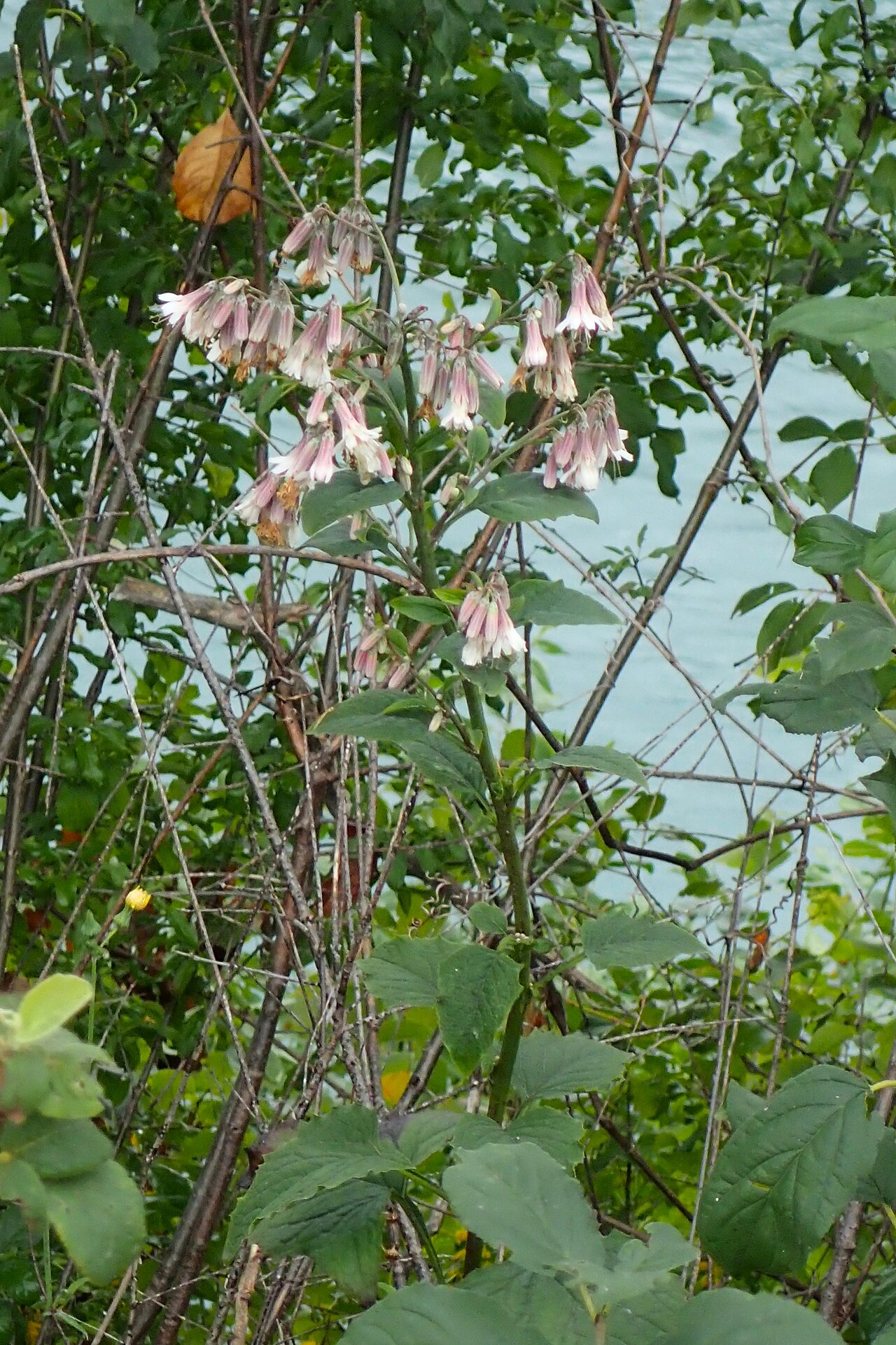
Prenanthes alba, known as White Rattlesnake Root (USDA: white rattlesnakeroot), and also called white lettuce, is a tall woodland perennial of the aster family (Asteraceae). Some recent floras place it in the genus Nabalus as Nabalus albus. It is native from New England and southern Canada west to the Dakotas and Saskatchewan and south to North Carolina, Kentucky, Missouri and Arkansas.
Like its relatives the wild lettuces and chicory, it has milky sap and flower heads made only of strap-shaped florets. In late summer and fall its smooth, often purplish, waxy stems rise 2 to 5 feet and carry drooping clusters of creamy white to pinkish, bell-like flower heads. Its leaves are remarkably variable: the lower ones are long-stalked and arrowhead-shaped or deeply lobed, while the upper ones are small and narrow.
White rattlesnake root grows in rich to dry deciduous woods, woodland edges, thickets and savannas. It is a good choice for shady and part-shady gardens, where it adds late-season flowers when few other woodland plants are blooming, and it is an important fall nectar and pollen source for bumble bees.
Identification
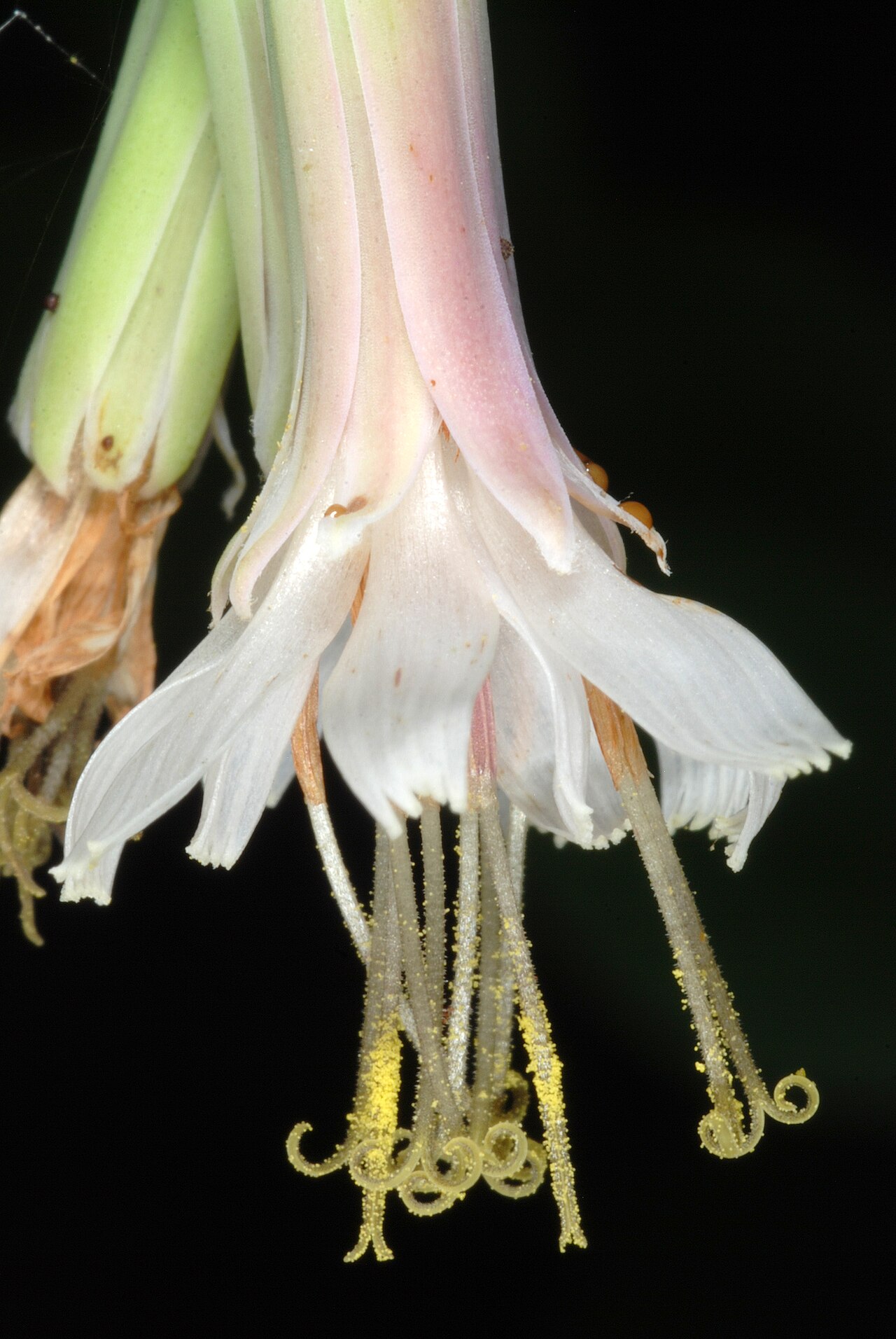
White rattlesnake root is easiest to recognize in late summer, when its tall purplish stems bear clusters of drooping, bell-shaped flower heads with a ring of purple bracts and a reddish-brown tuft of bristles inside.
Growth Form
A perennial herb with a single, stout, unbranched stem that branches only in the flowering portion, usually 2 to 5 feet tall. The stem is smooth, often purple or reddish, and coated with a whitish, waxy bloom. All parts have milky sap. The plant grows from a thick, tuberous root, which gave rise to the name rattlesnake root.
Leaves
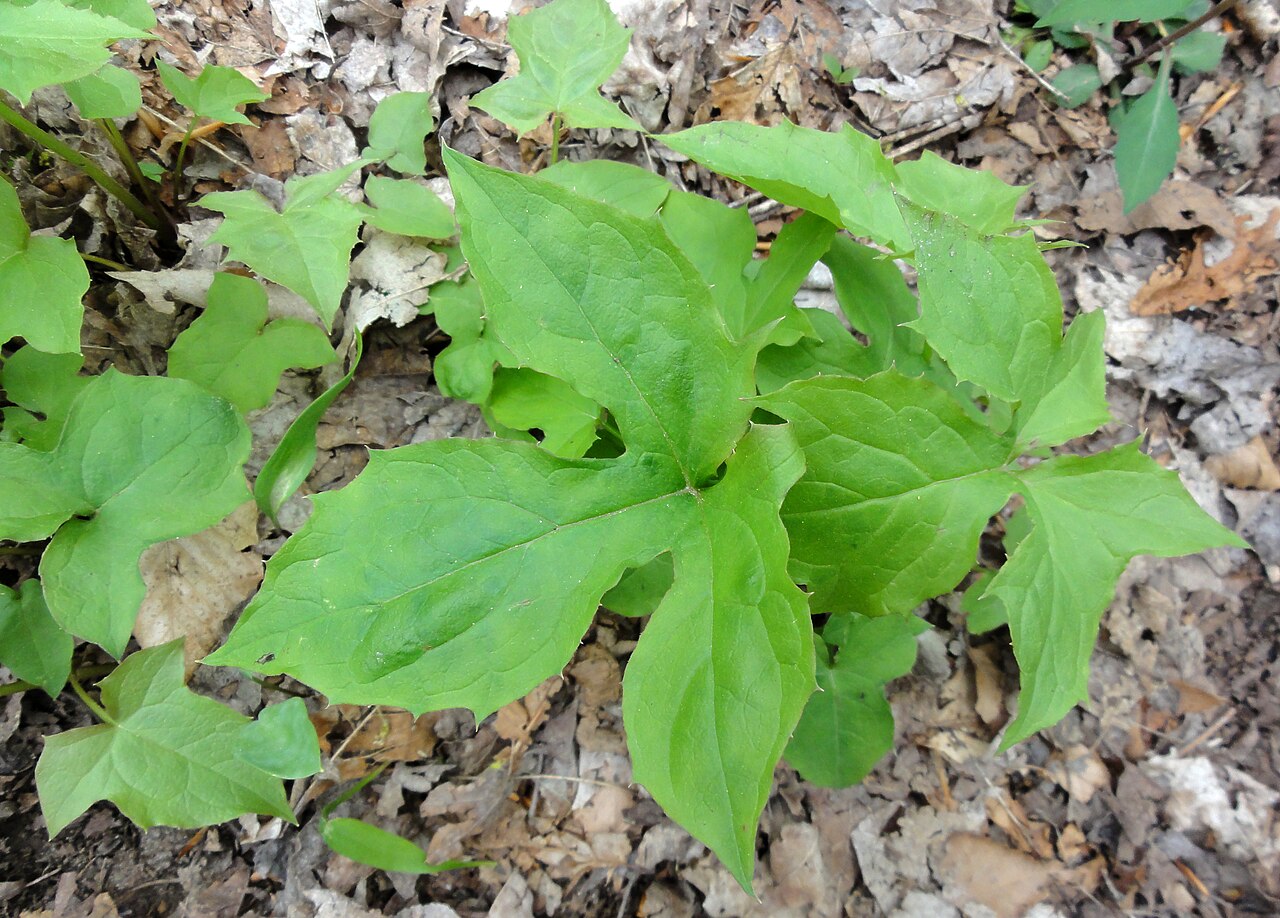
The leaves are alternate and very variable. The lower leaves have long stalks and broad blades that are triangular, heart- or arrowhead-shaped, or deeply divided into three to five lobes, up to about 8 inches long. Leaves become smaller, shorter-stalked and less lobed upward on the stem, and those among the flowers are small and narrow. The leaves are smooth and often pale beneath.
Flowers
From August to October, the upper stem branches into loose, narrow clusters of nodding flower heads. Each head is cylindrical to bell-shaped, about 1/2 inch long, with a ring of smooth, purplish to greenish bracts around about 8 to 13 small, creamy white to pale pink florets. The florets are all strap-shaped, like those of chicory, and their long, curled styles hang below the head. The flowers have a light fragrance.
Fruit
Each floret produces a small, ribbed seed topped with a tuft of reddish-brown to cinnamon-colored bristles (pappus), which carries it on the wind. The color of these bristles is a useful field mark.
Look-alikes
Tall rattlesnake root (Prenanthes altissima) has smaller, greenish to cream heads with only about five florets and a straw-colored pappus, and its stems are not waxy. Rough rattlesnake root (P. aspera) of prairies has erect, not drooping, heads and rough, hairy leaves. Lion’s foot (P. serpentaria) of the East has hairy bracts and pinkish to purplish heads.
Safety
White rattlesnake root is not known to be seriously toxic, but its milky sap can irritate sensitive skin, and its traditional use as a snakebite remedy is folklore with no proven effect. Do not use it as a medicine, and seek medical help for any snakebite.
Quick Facts
| Scientific Name | Prenanthes alba (also Nabalus albus) |
| Family | Asteraceae (aster family) |
| Plant Type | Herbaceous perennial |
| Mature Height | 2–5 ft |
| Mature Spread | 1–2 ft |
| Growth Rate | Moderate |
| Sun Exposure | Part shade to shade; tolerates morning sun |
| Water Needs | Moderate; average to dry soil |
| Soil Type | Loam, sandy loam or rocky soil rich in humus; well-drained |
| Soil pH | About 5.5–7.5 |
| Bloom Time | August–October |
| Flower Color | Creamy white to pale pink, with purplish bracts |
| Fall Color | Leaves fade to yellow-brown |
| Fruit | Small achenes with reddish-brown bristles, wind-dispersed |
| Deer Resistant | Low; often browsed |
| USDA Hardiness Zones | 3–8 |
Native Range
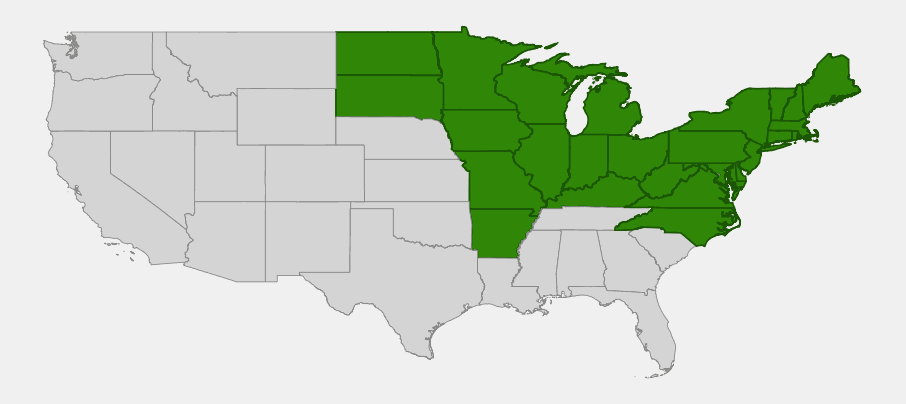
White rattlesnake root is native to eastern and central North America. USDA PLANTS records it from 26 states, from Maine and the other New England states west through New York, Pennsylvania, the Ohio Valley and the Great Lakes states to Minnesota, Iowa, Missouri and the eastern Dakotas, and south in the Appalachians to Virginia, West Virginia, Kentucky and western North Carolina, with outlying southern populations in the Ozarks of Arkansas. In Canada it ranges from Quebec and Ontario west to Manitoba, Saskatchewan and Alberta.
It is most common in the Great Lakes region and the Northeast. At the western edge of its range it reaches the wooded river valleys and hills of eastern North and South Dakota and the forest margins of the Canadian prairie provinces. In the South it is mostly a plant of the mountains and the Ozark Plateau.
It grows in rich mesic to dry deciduous and mixed woods, oak and oak–hickory forests, woodland edges, thickets, clearings, savannas and shaded roadsides. It tolerates fairly dry, rocky or sandy soils better than many woodland wildflowers and often appears in light gaps after logging or storms.
📋 Regional plant lists featuring White Rattlesnake Root: New York, Pennsylvania & Northern New Jersey · Ohio & Indiana · Michigan, Wisconsin & Eastern Minnesota · Kentucky & Tennessee · Connecticut, Massachusetts & Rhode Island · New Hampshire, Maine & Vermont · Maryland, Virginia & West Virginia · Delaware, Southern New Jersey & Long Island · Illinois, Iowa & Missouri · North & South Carolina · Arkansas, Louisiana, Eastern Oklahoma & Eastern Texas · North Dakota, South Dakota & Western Minnesota
Growing & Care Guide
White rattlesnake root is not often sold, but some native plant nurseries in the Midwest and Northeast offer it as plants or seed. It is easy to grow in a woodland garden once established.
Light
It grows best in part shade or light shade, such as under deciduous trees or along a woodland edge. It tolerates fairly deep shade, where it flowers less, and morning sun if the soil is not too dry.
Soil & Water
Plant it in well-drained loam, sandy loam or rocky woodland soil with leaf litter or compost. It tolerates average to somewhat dry conditions once established and does not need rich or wet soil. Water during long dry spells in the first year. A natural leaf mulch is all the fertility it needs.
Planting Tips
Set plants 1 to 2 feet apart in spring or fall. Its basal leaves are interesting through the summer, and its tall flower stems rise among lower woodland plants in late summer. Combine it with wood asters, wreath goldenrod, white snakeroot and woodland sedges for a fall-blooming shade garden.
Pruning & Maintenance
Little care is needed. Leave the stems standing after flowering so the seeds can disperse, and cut them down in late winter or spring. Deer often browse the stems; plant it among other plants or protect it if deer pressure is high.
Propagation
Grow it from fresh seed sown outdoors in fall or given about 30 to 60 days of cold, moist stratification before sowing in spring. Seed should be lightly covered or surface-sown. Plants can also be divided carefully in early spring, keeping the tuberous root intact.
Landscape Uses
- Woodland and shade gardens: late-season flowers under deciduous trees
- Woodland edges and savannas: tall, airy stems among asters and goldenrods
- Pollinator gardens: fall nectar and pollen for bumble bees
- Naturalized plantings: reseeds lightly in woodland openings
- Restoration: oak woodland and savanna understory restoration
Wildlife & Ecological Value
White rattlesnake root blooms late in the season and provides pollen and nectar when many woodland plants have finished flowering.
For Pollinators
Its nodding flowers are visited mainly by bumble bees, which cling to the heads from below, as well as by other native bees, flower flies and some butterflies. It is a useful late-summer and fall resource for bumble bee queens building reserves before winter.
For Birds
The small seeds are eaten by some songbirds, and the plant’s insect visitors provide food for birds that hunt along woodland edges.
For Mammals
White-tailed deer readily browse the leaves and stems, and rabbits and woodchucks eat the young growth. Heavy deer browsing can keep it from flowering in many woodlands.
Ecosystem Role
As a long-lived woodland perennial, it is part of the late-season flowering layer of oak and mixed forests. Its wind-dispersed seeds allow it to colonize gaps and edges, and its presence often indicates relatively intact woodland ground layers.
Cultural & Historical Uses
The name “rattlesnake root” comes from an old belief that the plant’s bitter roots could be used to treat snakebite. Early American writers recorded such uses, but there is no evidence that it works. The genus name Prenanthes comes from Greek words meaning “drooping flower,” a reference to the nodding heads.
Another old name for the plant is “lion’s foot,” which refers to the shape of its lobed leaves; today that name is usually used for a related species, Prenanthes serpentaria. The name “white lettuce” refers to its relationship with true lettuce and wild lettuces, which share its milky sap and strap-shaped florets.
Botanists have long discussed whether the North American rattlesnake roots belong in the same genus as the European Prenanthes purpurea. Genetic studies led some authors to move them to the genus Nabalus, so you may see this plant listed as Nabalus albus in newer field guides.
Frequently Asked Questions
Why is it called rattlesnake root?
The name comes from an old folk belief that the bitter, tuberous roots could treat snakebite. There is no evidence that it works, and it should not be used as a remedy.
Is it the same as white snakeroot?
No. White snakeroot (Ageratina altissima) is a different plant with flat clusters of fuzzy white flowers, and it is toxic to livestock. White rattlesnake root has drooping, bell-like heads of strap-shaped florets and milky sap.
How do I tell it from tall rattlesnake root?
White rattlesnake root has waxy, often purple stems, heads with about 8 to 13 creamy to pinkish florets and a reddish-brown pappus. Tall rattlesnake root has smaller, greenish heads with about five florets and a straw-colored pappus.
Does it grow in shade?
Yes. It grows naturally in woods and along woodland edges and does well in part shade to fairly deep shade, though it flowers best with some sun.
What pollinates it?
Bumble bees are its main visitors, along with other native bees and flower flies. It blooms from late summer into fall, when bumble bees need late-season food.

Looking for a nursery that carries White Rattlesnake Root?
Browse our native plant nursery directory: Arkansas · Connecticut & Delaware · Illinois, Indiana & Iowa · Kentucky, Maine, Maryland, Massachusetts, Michigan, Minnesota & Missouri · New Hampshire, New Jersey, New York, North Carolina, North Dakota & Ohio · Pennsylvania, Rhode Island, South Dakota, Vermont & Virginia · West Virginia & Wisconsin