Wild Sarsaparilla (Aralia nudicaulis)
Aralia nudicaulis, known as Wild Sarsaparilla, is a low, rhizomatous perennial of shaded forest floors across the northern and eastern United States and Canada. Despite its common name, it is unrelated to the tropical vines that originally supplied true sarsaparilla; the name comes from the pleasant, aromatic scent of its rhizome, which early settlers used as a substitute flavoring. A member of the ginseng family (Araliaceae), it is a quiet, reliable presence in hardwood and mixed forests, more often recognized by hikers for its carpet of three-parted compound leaves than for its small, inconspicuous flowers.
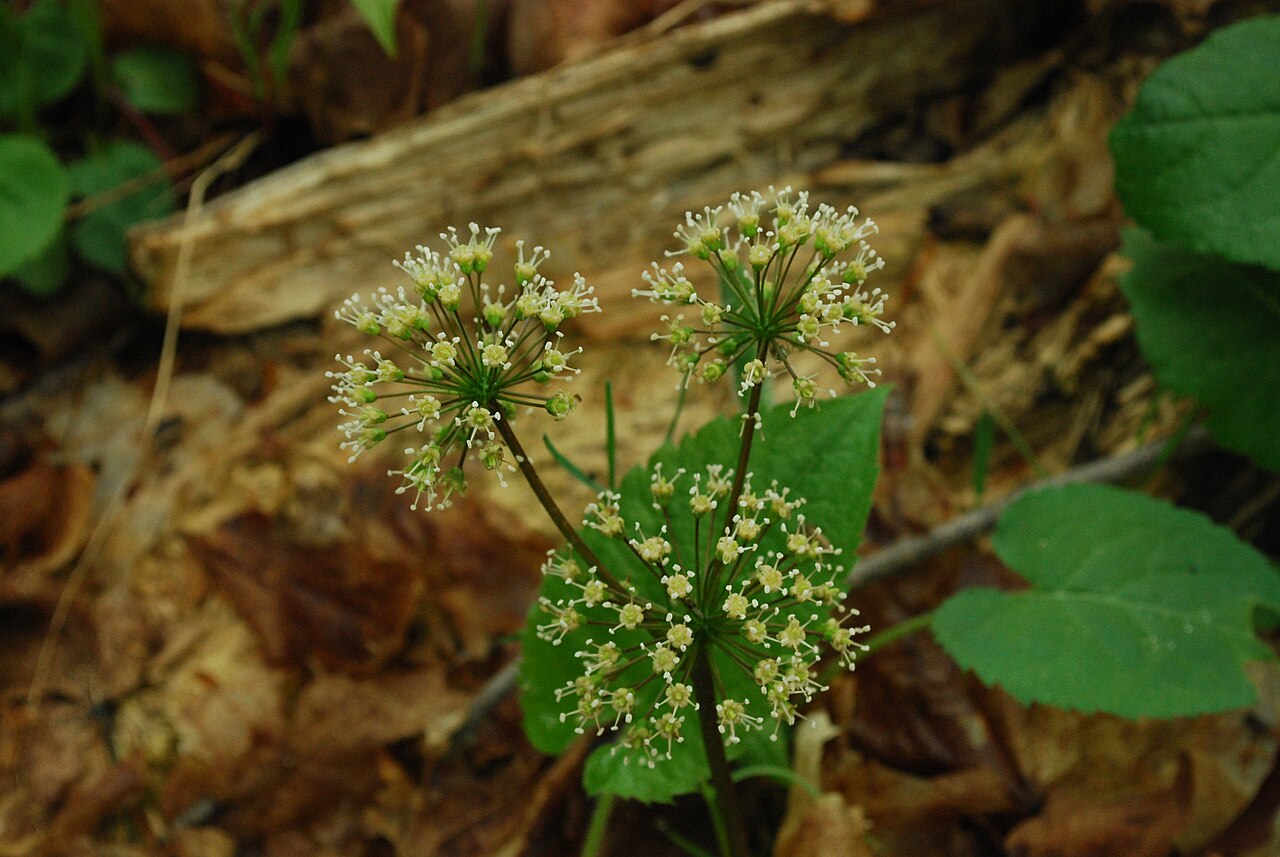
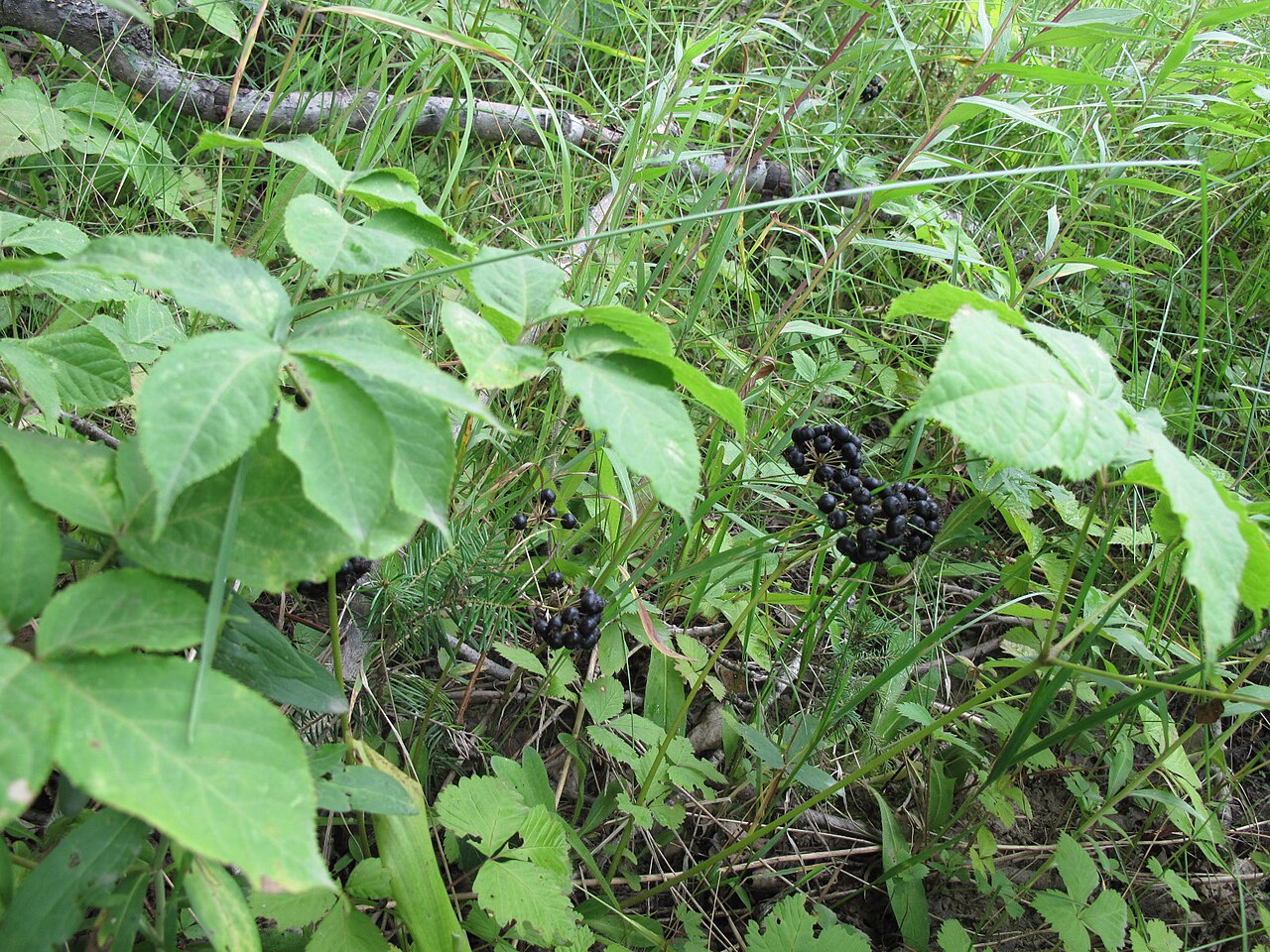
The plant’s single, leafless-looking flower stalk is the source of its species name nudicaulis, “naked stem” — the true leaf stalk rises separately and arches out to display its leaflets, so the flower cluster appears to stand on a bare stem beside it. In late spring, three ball-shaped umbels of tiny greenish-white flowers emerge at about the same height as the foliage, largely hidden beneath the leaf canopy, then ripen by midsummer into clusters of dark purple-black berries.
Wild sarsaparilla spreads by creeping underground rhizomes to form loose colonies across the forest floor, making it an effective, low-maintenance native ground cover for shaded gardens that mimic its woodland habitat. It asks for little beyond shade and reasonably moist, humus-rich soil, and it pairs naturally with ferns, trilliums, and other spring woodland wildflowers.
Identification
Wild sarsaparilla is an herbaceous perennial typically standing 12 to 24 inches tall, spreading by rhizomes into patches rather than remaining as an isolated clump.
Leaves
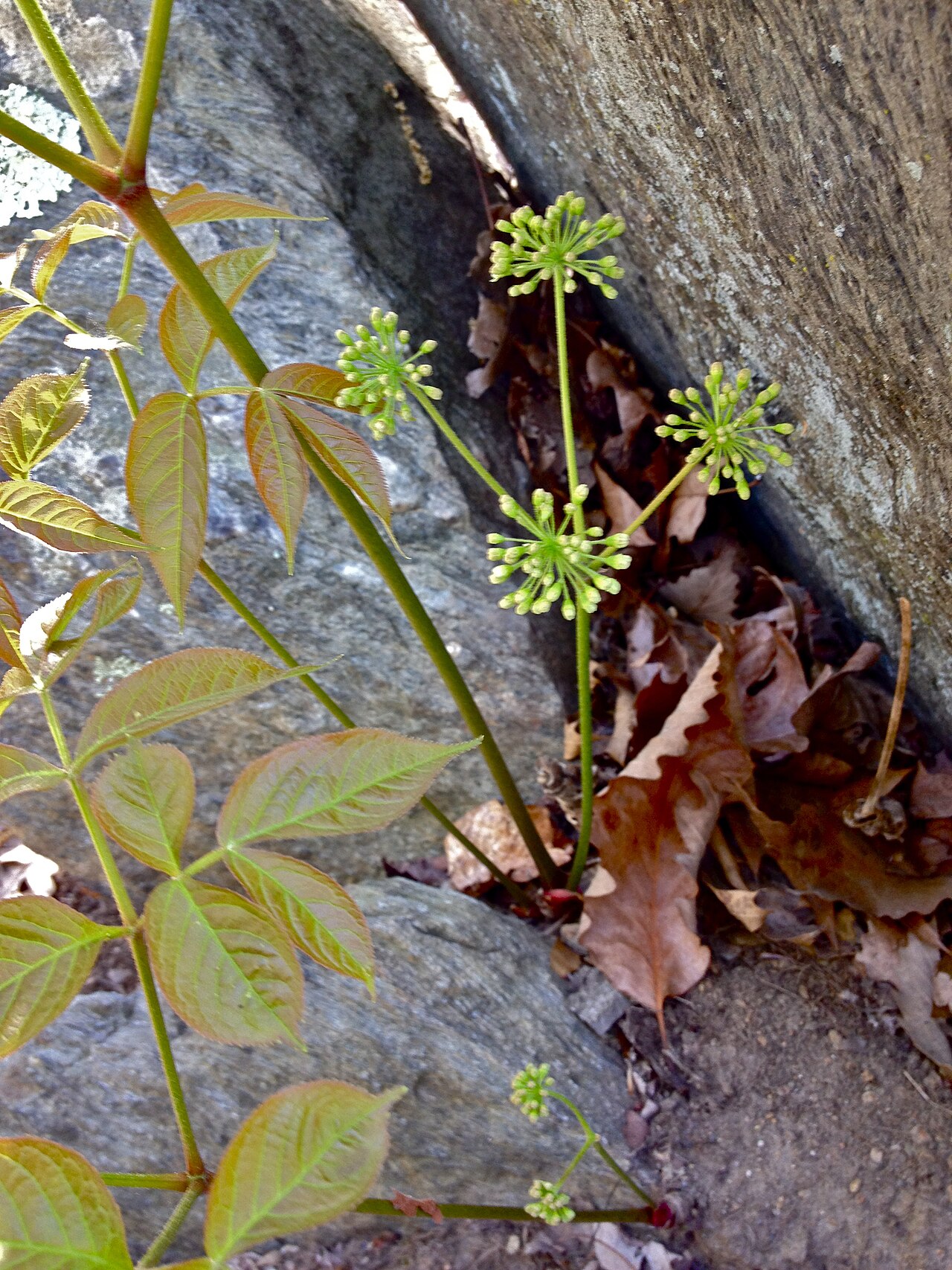
Each plant produces a single leaf on a long stalk, divided into three main divisions that are each further divided into three to seven toothed, oval leaflets — a doubly or triply compound arrangement. The whorled, three-part look of the leaflets can superficially resemble poison ivy, but wild sarsaparilla lacks woody stems and has finer, more numerous leaflets with serrated edges. The foliage emerges reddish in spring, matures to a rich green, and begins to decline by mid- to late summer, often well before the berries ripen.
Flowers
A separate, shorter stalk produces three rounded umbels of tiny, five-petaled, greenish-white flowers, each umbel 1.5 to 2 inches across. The flower stalk typically stays low enough that the blooms are partly concealed beneath the leaf canopy, blooming from May to July depending on latitude and elevation.
Fruit & Seeds
By mid- to late summer, the flower clusters ripen into rounded clusters of small, dark purple to blue-black berries, each containing several seeds. The berries persist after the leaves begin to yellow and die back, making the fruiting stems more conspicuous against the darkening forest floor than the flowers ever were.
Quick Facts
| Scientific Name | Aralia nudicaulis |
| Family | Araliaceae (Ginseng) |
| Plant Type | Herbaceous Perennial Ground Cover |
| Mature Height | 12–24 in |
| Mature Spread | Indefinite; spreads by rhizome into colonies |
| Growth Rate | Moderate, spreading steadily once established |
| Sun Exposure | Part Shade to Full Shade |
| Water Needs | Moderate; moist, humus-rich soil |
| Soil Type | Rich, humusy, well-drained forest soil |
| Soil pH | 5.0–6.5 (acidic to slightly acidic) |
| Bloom Time | May – July |
| Flower Color | Greenish-white |
| Fall Color | Foliage yellows and dies back by late summer |
| Fruit | Clusters of small purple-black berries |
| Deer Resistant | Moderate; occasionally browsed |
| USDA Hardiness Zones | 2–8 |
Native Range
Wild sarsaparilla is native across a broad swath of northern and eastern North America, from Newfoundland and the Maritime provinces west through the Great Lakes region, the northern Great Plains, and the northern Rockies to the inland Pacific Northwest, and south through New England, the mid-Atlantic, and the Appalachian Mountains into the hill country of the Carolinas, Georgia, and Tennessee.
Across this range it is a plant of shaded forest floors: mixed hardwood and conifer woods, cool ravines, and montane coniferous forest in its western outliers. It is often abundant beneath a closed canopy, forming loose colonial patches alongside ferns, wild ginger, trilliums, and other spring-ephemeral or shade-tolerant woodland species. In the southern Appalachians it becomes restricted to higher, cooler elevations, reflecting the species’ overall preference for cool, moist, northern forest conditions.
Wild sarsaparilla is absent from the warmer coastal plain and the dry interior West; outside of the Rocky Mountain and inland Northwest populations noted here, do not expect it to thrive without irrigation and heavy shade well south or west of its mapped native range.
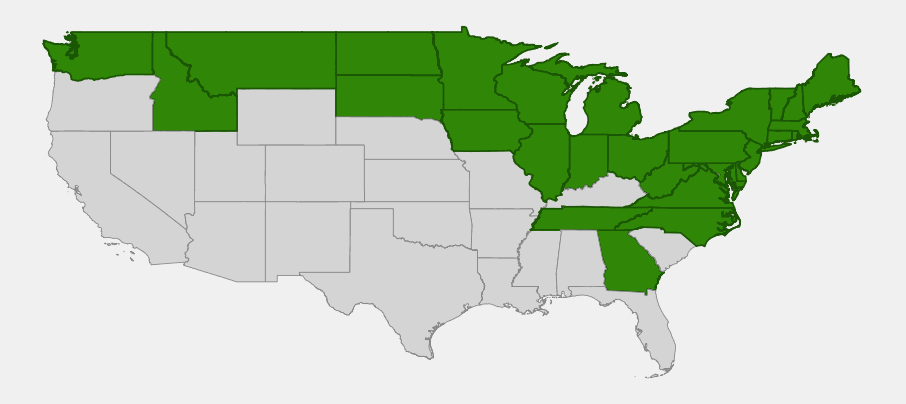
📋 Regional plant lists featuring Wild Sarsaparilla: New Hampshire, Maine & Vermont · Connecticut, Massachusetts & Rhode Island · New York, Pennsylvania & Northern New Jersey · Delaware, Southern New Jersey & Long Island · Maryland, Virginia & West Virginia · North Carolina & South Carolina · Georgia, Alabama & Mississippi · Kentucky & Tennessee · Ohio & Indiana · Illinois, Iowa & Missouri · Michigan, Wisconsin & Eastern Minnesota · North Dakota, South Dakota & Western Minnesota · Montana & Wyoming · Idaho, Eastern Oregon & Eastern Washington
Growing & Care Guide
Wild sarsaparilla is an undemanding, low-maintenance native ground cover for anyone with a shaded, wooded garden area looking for an alternative to non-native pachysandra or English ivy. It spreads reliably but politely, filling bare ground beneath trees without smothering neighboring plants.
Light
Part shade to full shade is essential; this is a plant of closed forest canopy and will scorch or fail to thrive in direct sun, particularly in warmer parts of its range. Dappled light under deciduous trees or the deeper shade of conifers both suit it well.
Soil & Water
Give it rich, humus-laden soil similar to a natural forest floor — a top-dressing of leaf mold or compost each fall helps replicate those conditions. It prefers consistently moist but well-drained soil and does not tolerate prolonged drought or standing water. Established colonies are more resilient to brief dry spells once their rhizome network matures.
Planting Tips
Set out container-grown plants or rhizome divisions in spring or fall, spacing them 12 to 18 inches apart to allow the colony to fill in naturally over two to three growing seasons. Mulch with shredded leaves to conserve moisture and suppress competing weeds while the colony establishes.
Pruning & Maintenance
Wild sarsaparilla needs essentially no pruning. The foliage naturally yellows and dies back by late summer; simply leave it in place to decompose and feed the soil, consistent with its forest-floor habit. Thin a colony only if it begins crowding out a specific neighboring plant you want to preserve.
Propagation
The easiest method is dividing the spreading rhizomes in early spring or fall, replanting sections with at least one growth bud. Seed propagation is possible but slow, requiring a period of cold, moist stratification before germination, and seedlings take several years to form a noticeable patch.
Landscape Uses
- Woodland ground cover beneath deciduous or mixed-canopy trees
- Native alternative to non-native shade ground covers
- Shaded slope stabilization once a colony is established
- Native plant and wildlife gardens paired with ferns and spring ephemerals
- Naturalized woodland edges and forest restoration plantings
Wildlife & Ecological Value
Though its flowers are small and easily overlooked, wild sarsaparilla contributes to forest ecology across much of its range, both as a nectar source and, later in the season, as fruit for wildlife.
For Pollinators
The small, greenish-white umbels attract a range of flies, small native bees, and beetles, which are drawn to the open, easily accessible flower structure typical of the ginseng family. Though individually modest, the flowers bloom reliably across dense colonies, providing a dependable, if subtle, nectar source in the shaded forest understory during late spring and early summer.
For Birds
Ruffed grouse and various thrushes feed on the ripe purple-black berries in mid- to late summer, helping disperse the seeds to new patches of forest floor.
For Mammals
Black bears and small mammals, including chipmunks and mice, consume the berries where they are abundant. White-tailed deer browse the foliage occasionally, though it is not a preferred food source.
Ecosystem Role
As a widespread, rhizomatous ground layer species, wild sarsaparilla helps stabilize forest floor soil, suppress erosion on shaded slopes, and fill the understory niche beneath a closed canopy where few flowering plants persist through the full growing season. Its early, dense foliage also provides cover for ground-dwelling insects and small wildlife.
Cultural & Historical Uses
Wild sarsaparilla holds a long history of traditional use among Indigenous peoples across its range, including Ojibwe, Algonquin, and other northeastern and Great Lakes nations, who used preparations of the aromatic rhizome within their own traditional medicine and food practices, often for purposes that were specific to particular communities and not uniformly recorded or shared outside them.
European settlers adopted the rhizome’s sweet, aromatic flavor as a substitute for true sarsaparilla (derived from tropical Smilax vines) and for sassafras root, using it historically to flavor homemade root beer and other beverages — a practice that gave the plant its common name despite its lack of any botanical relationship to true sarsaparilla. The berries have also been noted historically as edible, with a mildly spicy, sweet taste, though they were never a significant food source compared with other forest fruits.
This history of flavoring and folk use reflects the plant’s historical role in regional foodways and herbal tradition rather than any established modern medicinal application; its chief value to gardeners and naturalists today lies in its reliability as a native woodland ground cover rather than in any practical use of the plant itself.
Frequently Asked Questions
Is wild sarsaparilla related to true sarsaparilla?
No. True sarsaparilla comes from tropical Smilax vines unrelated to Aralia nudicaulis. The common name reflects the similar aromatic scent of the rhizome, historically used as a substitute flavoring, not a botanical relationship.
Does wild sarsaparilla spread aggressively?
It spreads by rhizome to form loose colonies over a few growing seasons, but it is well-behaved in a woodland setting and is easy to contain or thin if it reaches beyond where you want it. It is not considered weedy or invasive within its native range.
Can wild sarsaparilla grow in sun?
No. It is a plant of the closed forest canopy and needs part to full shade; direct sun, especially in the afternoon, will scorch the foliage and weaken the colony over time.
Why does my wild sarsaparilla die back in late summer?
This is normal. The foliage naturally yellows and dies back by late summer, sometimes before the berries fully ripen, as the plant redirects energy to its rhizomes for the following year. No intervention is needed.
Is wild sarsaparilla good for a shade garden instead of non-native ground covers?
Yes — it is one of the more reliable native alternatives to introduced shade ground covers like English ivy or pachysandra, spreading at a manageable pace while supporting local pollinators and forest wildlife far better than non-native options.

Looking for a nursery that carries Wild Sarsaparilla?
Browse our native plant nursery directory: Maine, Maryland, Massachusetts, Michigan, Minnesota & Montana · New Hampshire, New Jersey, New York, North Carolina, North Dakota & Ohio · Pennsylvania, Rhode Island, South Dakota, Tennessee, Vermont & Virginia · Connecticut, Delaware & Georgia · West Virginia & Wisconsin · Idaho, Illinois, Indiana & Iowa · Washington