Golden Columbine (Aquilegia chrysantha)
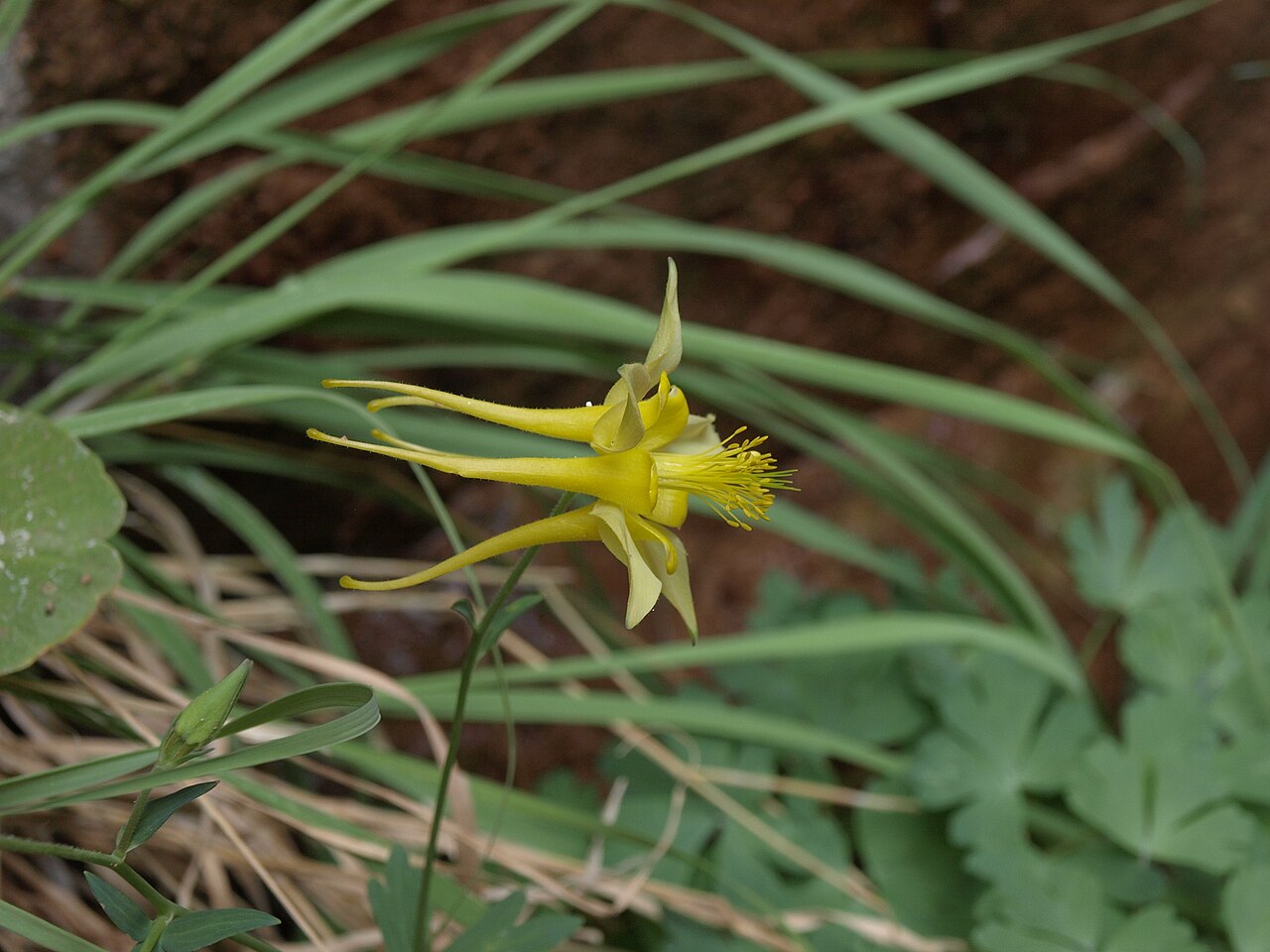
Aquilegia chrysantha, the Golden Columbine, is a perennial wildflower of the southwestern mountains, prized for its long-spurred, lemon-yellow flowers that hover above ferny, blue-green foliage from late spring into summer. It belongs to the buttercup family (Ranunculaceae) and is one of the larger, more vigorous columbines native to North America, often standing taller and blooming longer than its better-known eastern relative, red columbine (Aquilegia canadensis).
In the wild, golden columbine grows in the moist microclimates tucked into an otherwise dry landscape: canyon seeps, spring-fed grottos, streambanks, and shaded rock crevices in the mountains of Arizona, New Mexico, and neighboring states. Where water is reliable, it can form substantial colonies, its pale flowers glowing against sandstone or granite in the dappled light of a canyon wall. The combination of drought-tolerant surroundings and a genuinely moisture-loving plant makes it a telltale sign of a spring or seep for hikers who know to look for it.
For gardeners in the Southwest, golden columbine is one of the most rewarding native perennials to grow: long-blooming, reliably self-seeding without becoming weedy, and a magnet for hummingbirds and long-tongued moths. It thrives in part-shade borders, rock gardens with consistent moisture, and naturalized plantings near a downspout or drip line where it can count on extra water.
Identification
Golden columbine is an herbaceous perennial forming a basal clump of compound leaves, with flowering stems rising well above the foliage. Mature plants typically reach 1.5 to 4 feet tall, taller in moist, shaded sites than in drier, sunnier ones.
Leaves
The leaves are twice-compound (biternate), divided into rounded, lobed leaflets similar to those of meadow rue or other columbines, with a soft blue-green cast. Basal leaves are long-stalked and form a loose mound; stem leaves are smaller and fewer, reduced upward toward the flowers. The foliage has a delicate, almost fern-like texture that remains attractive even when the plant is not in bloom.
Flowers
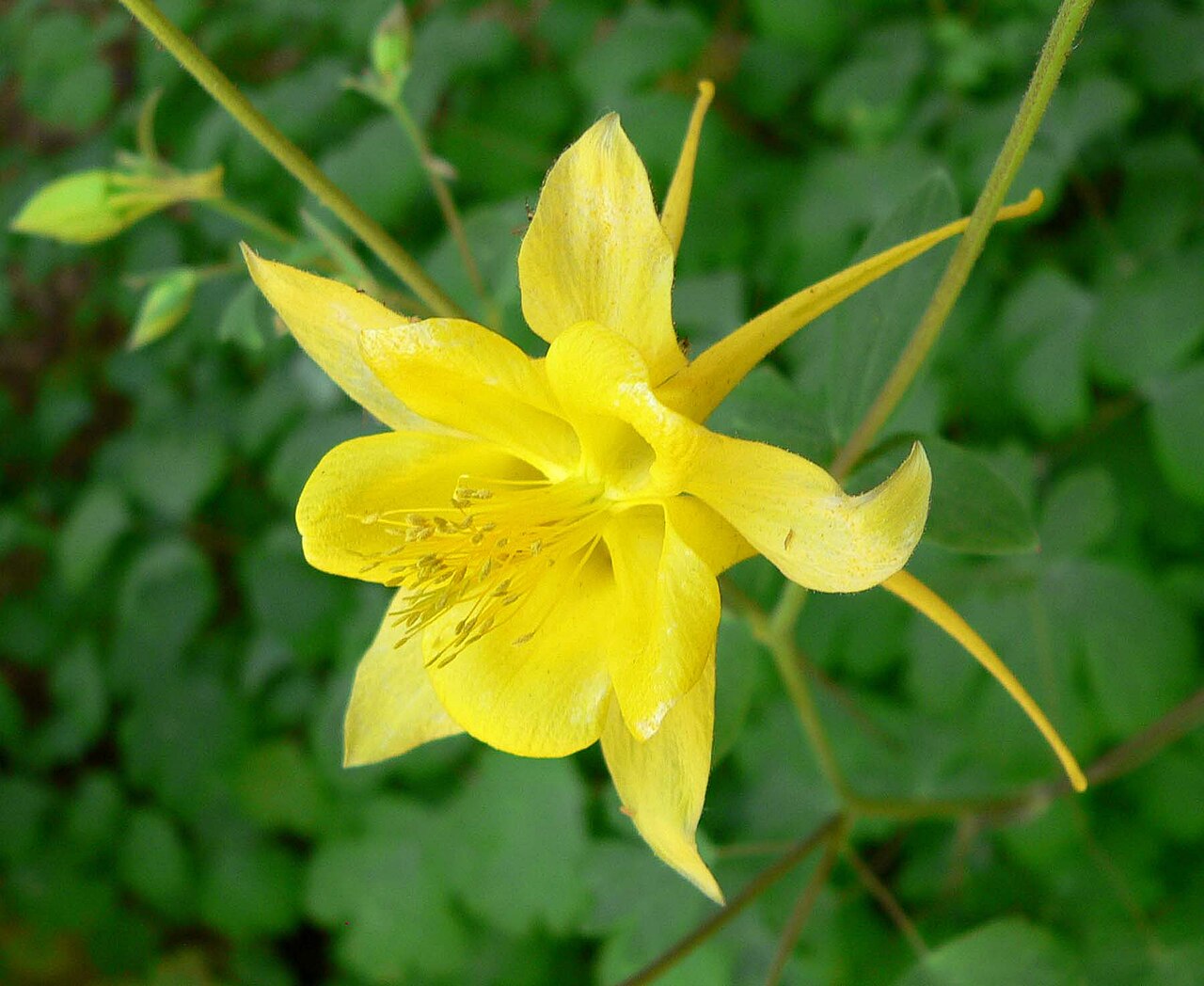
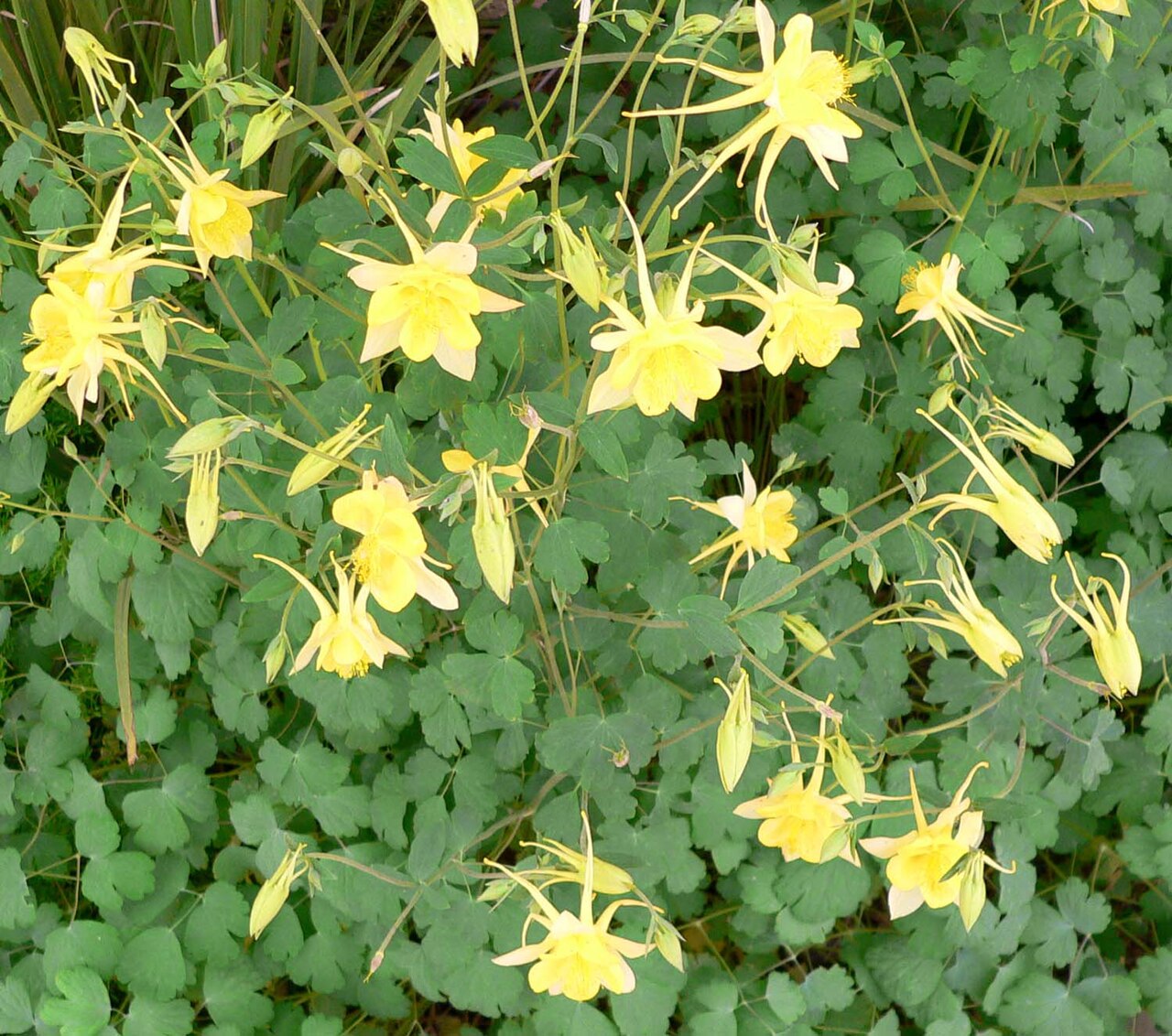
The flowers are the plant’s signature feature: nodding at first, then turning upright as they open, each bloom has five pale to golden-yellow sepals and five true petals, each petal extended into a long, straight nectar spur up to 2 to 3 inches long. A cluster of showy yellow stamens projects from the flower’s center. Flowers are borne singly or in loose clusters atop branching stems and bloom over a long season, typically April through August depending on elevation and moisture, with the longest display where soil moisture is most consistent.
Fruit & Seeds
After flowering, each bloom produces a cluster of five slender, upright follicles that split open along one seam to release numerous small, shiny black seeds. Plants self-sow readily in favorable sites, and a single clump can gradually spread into a loose colony over several years.
Quick Facts
| Scientific Name | Aquilegia chrysantha |
| Family | Ranunculaceae (Buttercup) |
| Plant Type | Herbaceous Perennial Wildflower |
| Mature Height | 1.5–4 ft |
| Mature Spread | 1–2 ft |
| Growth Rate | Moderate |
| Sun Exposure | Part Shade to Full Shade (tolerates more sun with reliable moisture) |
| Water Needs | Moderate to High; thrives near seeps and streams |
| Soil Type | Moist, well-drained; rocky or loamy |
| Soil pH | 6.0–7.5 (neutral to slightly alkaline) |
| Bloom Time | April – August |
| Flower Color | Pale to golden yellow |
| Fall Color | None notable; foliage dies back |
| Fruit | Dry follicles with numerous small black seeds |
| Deer Resistant | Yes, generally avoided by deer |
| USDA Hardiness Zones | 4–8 |
Native Range
Golden columbine is native to the mountains and canyons of the southwestern United States, most abundant in Arizona, where it occurs in populations across much of the state, and in central, southwestern and southern New Mexico. Smaller, more isolated populations occur in southern Utah (Washington County), scattered mountain ranges of western Texas, and a single disjunct, rare occurrence in El Paso County, Colorado, where it is treated as the distinct variety rydbergii. Its range continues south into the mountains of northern Mexico.
Throughout this range, golden columbine is a plant of reliable moisture in an otherwise arid landscape. It grows in canyon bottoms, spring-fed seeps, shaded grottos, and along perennial or intermittent streams, typically from about 4,000 to 9,000 feet in elevation. It is a hallmark species of Arizona’s sky-island canyons, including well-known populations at Oak Creek Canyon and in the Grand Canyon’s side drainages.
Because it depends on dependable moisture, golden columbine is absent from the surrounding dry mesas and grasslands even where those areas fall within its general mountain range; it should not be expected to thrive without supplemental water outside of a true seep, streamside, or irrigated garden bed.
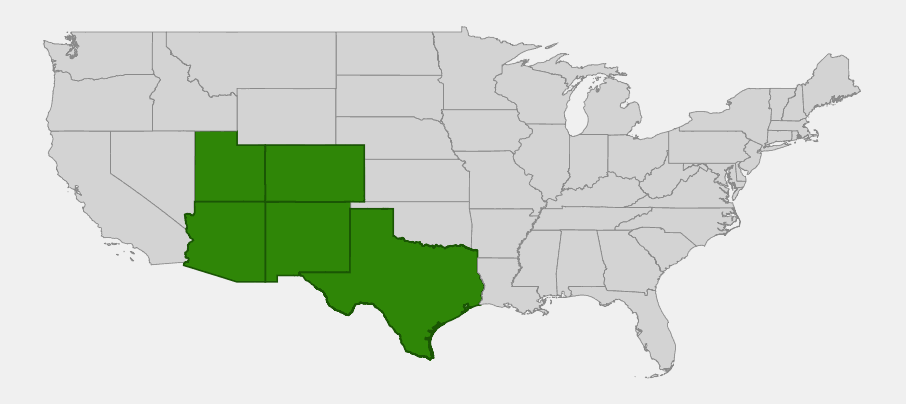
📋 Regional plant lists featuring Golden Columbine: Arizona & New Mexico · Utah & Western Colorado
Growing & Care Guide
Golden columbine is one of the easier native perennials to establish in a southwestern garden, provided it gets the one thing it truly needs: consistent moisture. Give it that, and it will reward you with months of flowers and years of reliable, well-behaved self-seeding.
Light
In hot, low-elevation gardens, part shade to full shade is best, mimicking the canyon walls and tree cover of its native seeps. At higher, cooler elevations, or in a site with reliable irrigation, it tolerates more sun, including nearly full sun in the morning with afternoon shade. Too much hot afternoon sun without adequate water will scorch the foliage and shorten the bloom period.
Soil & Water
Plant golden columbine in moist, well-drained soil; it does not tolerate standing water or heavy, waterlogged clay. A site near a downspout, at the base of a slope, along a drip irrigation line, or beside a water feature replicates the seeps it favors in the wild. Established plants have some drought tolerance but perform best, and bloom longest, with regular watering through the growing season. A layer of mulch helps conserve soil moisture between waterings.
Planting Tips
Set out container plants in fall or early spring. Space plants 12 to 18 inches apart to allow for the mature clump and some self-seeding room. Golden columbine also grows readily from seed sown in fall for natural cold stratification, or started indoors with 3 to 4 weeks of cold treatment before spring sowing.
Pruning & Maintenance
Deadhead spent flower stalks to tidy the plant and extend bloom, or leave some seed heads in place to allow self-sowing. Cut foliage back if it declines in late summer heat; a fresh flush of leaves often follows with cooler weather and rain. Columbine leaf miner can tunnel through leaves in some gardens; it is mostly cosmetic and rarely worth treating with anything beyond removing the worst-affected leaves.
Propagation
Golden columbine is most easily propagated from seed, which germinates readily after a cold, moist stratification period. Plants also self-sow where conditions suit them. Division is possible but stressful to the taproot and rarely necessary, since seed-grown plants establish quickly and bloom within their second year.
Landscape Uses
- Shaded rock gardens with supplemental moisture
- Woodland and canyon-style gardens beneath trees or along a wall
- Streamside and water-feature plantings
- Hummingbird and pollinator gardens
- Naturalized plantings near downspouts or irrigation lines
- Container and patio plantings in part shade
Wildlife & Ecological Value
Golden columbine’s long nectar spurs make it a specialist plant for pollinators equipped to reach the nectar at their tips, and its months-long bloom season makes it an important nectar source in canyon habitats where flowering plants can be scarce.
For Pollinators
The long spurs are tailored to hawkmoths (sphinx moths), which hover at the flower and unfurl a long proboscis to reach the nectar, pollinating the flower in the process. Bumblebees and other bees often rob nectar by biting through the spur tip, and native bees also visit for pollen. The extended bloom period provides a dependable nectar source through much of the growing season.
For Birds
Hummingbirds, particularly broad-tailed and black-chinned hummingbirds in the Southwest, are frequent visitors and effective pollinators, well matched to the tubular spurs. The flowers are a reliable mid-elevation nectar stop during spring and summer hummingbird migration and breeding season.
For Mammals
Golden columbine is largely avoided by deer and other large browsers, which makes it a dependable choice in gardens where deer pressure limits other flowering perennials. Small mammals and birds occasionally feed on the seeds after the follicles split open.
Ecosystem Role
As one of the few consistently flowering perennials at canyon seeps and springs, golden columbine helps anchor pollinator activity in these moisture-dependent microhabitats, which function as corridors and refuges within an otherwise arid landscape. Its presence is also a useful field indicator of a reliable water source.
Cultural & Historical Uses
Columbines in the genus Aquilegia, including golden columbine, held a place in the traditional plant knowledge of Indigenous peoples across the Southwest, including Hopi, Zuni, and Apache communities, who incorporated columbine into traditional practices tied to specific ceremonies and uses passed down within those communities. As with many culturally significant plants, specific preparations and uses were often closely guarded and are not uniformly documented.
Golden columbine was brought into cultivation relatively early among the many North American columbine species, valued by plant collectors and early botanists for its larger flowers, longer spurs, and extended bloom season compared with other wild columbines. It has since become a parent species in ornamental columbine breeding, contributing its yellow coloring and vigor to numerous garden hybrids and cultivars sold well outside its native range.
Today, golden columbine’s primary cultural value is horticultural rather than medicinal: it is a mainstay of native-plant gardening in the Southwest, prized for extending the flowering season in shaded, moist garden niches where few other regionally native perennials perform as reliably.
Frequently Asked Questions
Is golden columbine toxic?
Like other columbines, Aquilegia chrysantha contains compounds that can be irritating if ingested in quantity, particularly in the seeds and roots. It is not used as food and should be kept away from curious pets and children; treat it as an ornamental, not an edible plant.
How is golden columbine different from red columbine (Aquilegia canadensis)?
Golden columbine has pale yellow flowers with straight spurs and is native to southwestern mountain seeps, while red columbine has red-and-yellow nodding flowers with curved spurs and is native across much of the eastern and central United States. Golden columbine also tends to grow taller and bloom over a longer season where it has steady moisture.
Does golden columbine need full shade?
Not necessarily. It naturally grows in shaded canyon seeps, but with reliable water it tolerates considerably more sun, especially at higher elevations. The key factor is moisture, not shade alone — give it consistent water and it can handle more sun than many gardeners expect.
Will golden columbine spread or become invasive in my garden?
It self-seeds readily in moist sites, forming a loose, expanding clump over a few years, but it is not aggressive or weedy. Volunteer seedlings are easy to remove or transplant if they come up somewhere unwanted.
How long does golden columbine bloom?
It has one of the longest bloom seasons among native columbines, often flowering from April into August where soil moisture stays consistent, especially if spent flower stalks are deadheaded to encourage continued blooming.

Looking for a nursery that carries Golden Columbine?
Browse our native plant nursery directory: Arizona · Colorado · New Mexico · Utah & Texas