Lyreleaf Sage (Salvia lyrata)
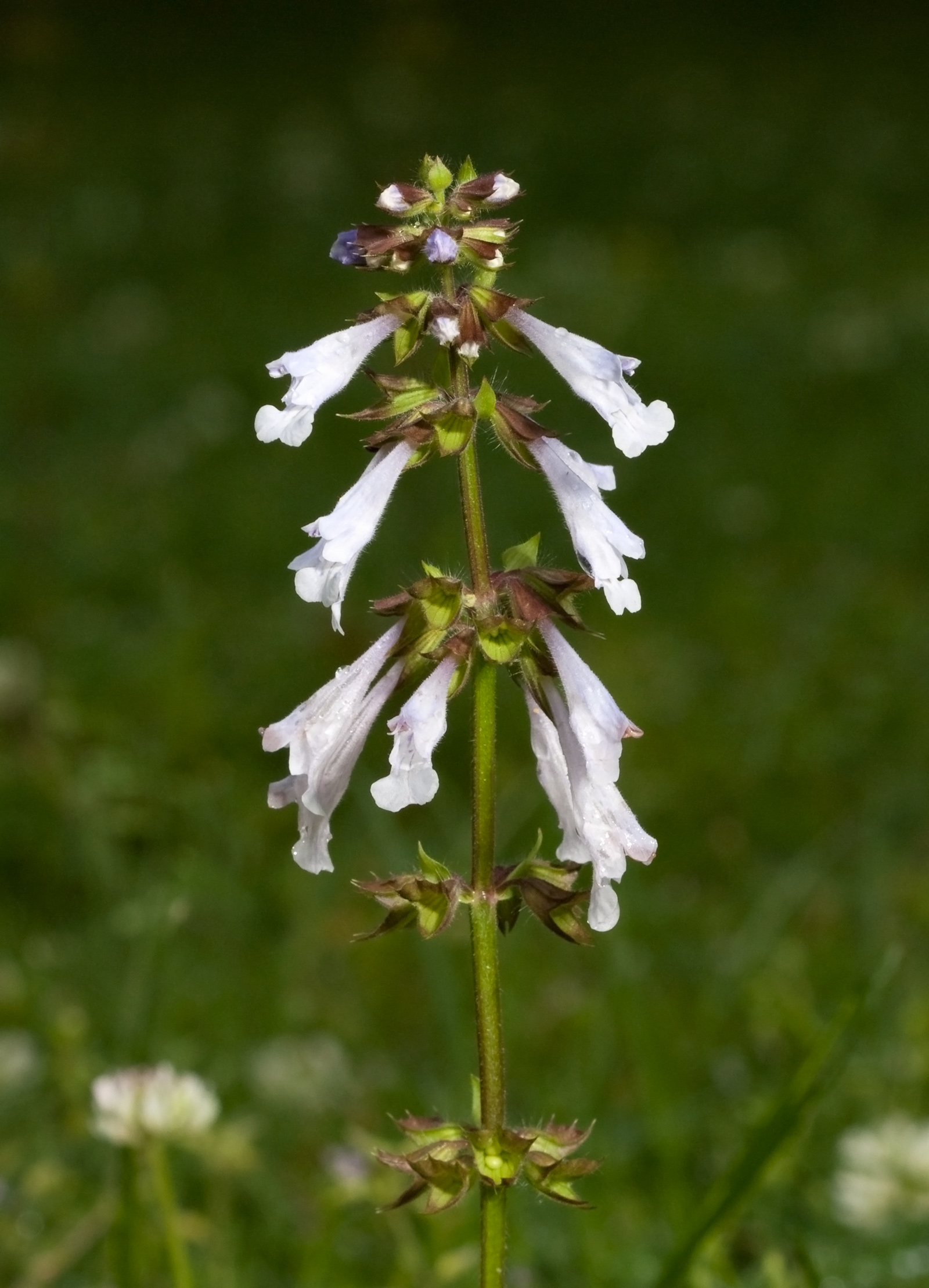
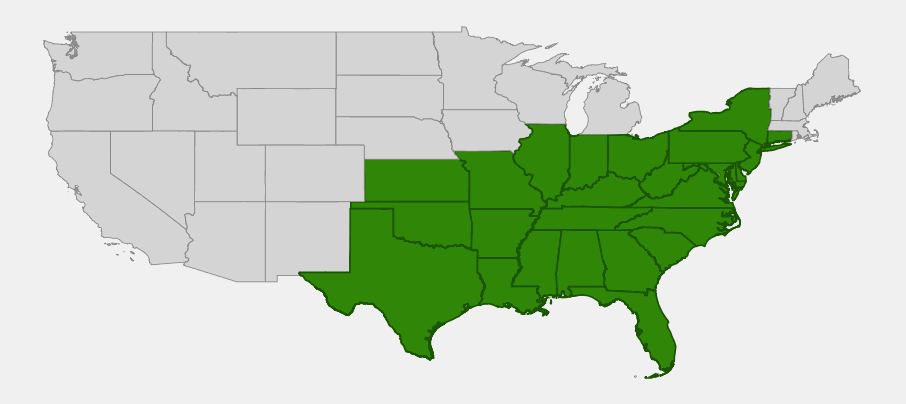
Salvia lyrata, commonly called Lyreleaf Sage or Cancerweed, is a low, ground-hugging perennial in the mint family (Lamiaceae) native to a broad swath of the eastern and central United States, from the edge of New England and the Mid-Atlantic south to Florida and west to Texas, Oklahoma and Kansas. It spends most of the year as a flat rosette of deeply lobed leaves pressed close to the ground, then sends up a single square flower stalk in spring topped with widely spaced whorls of pale lavender-blue, two-lipped flowers.
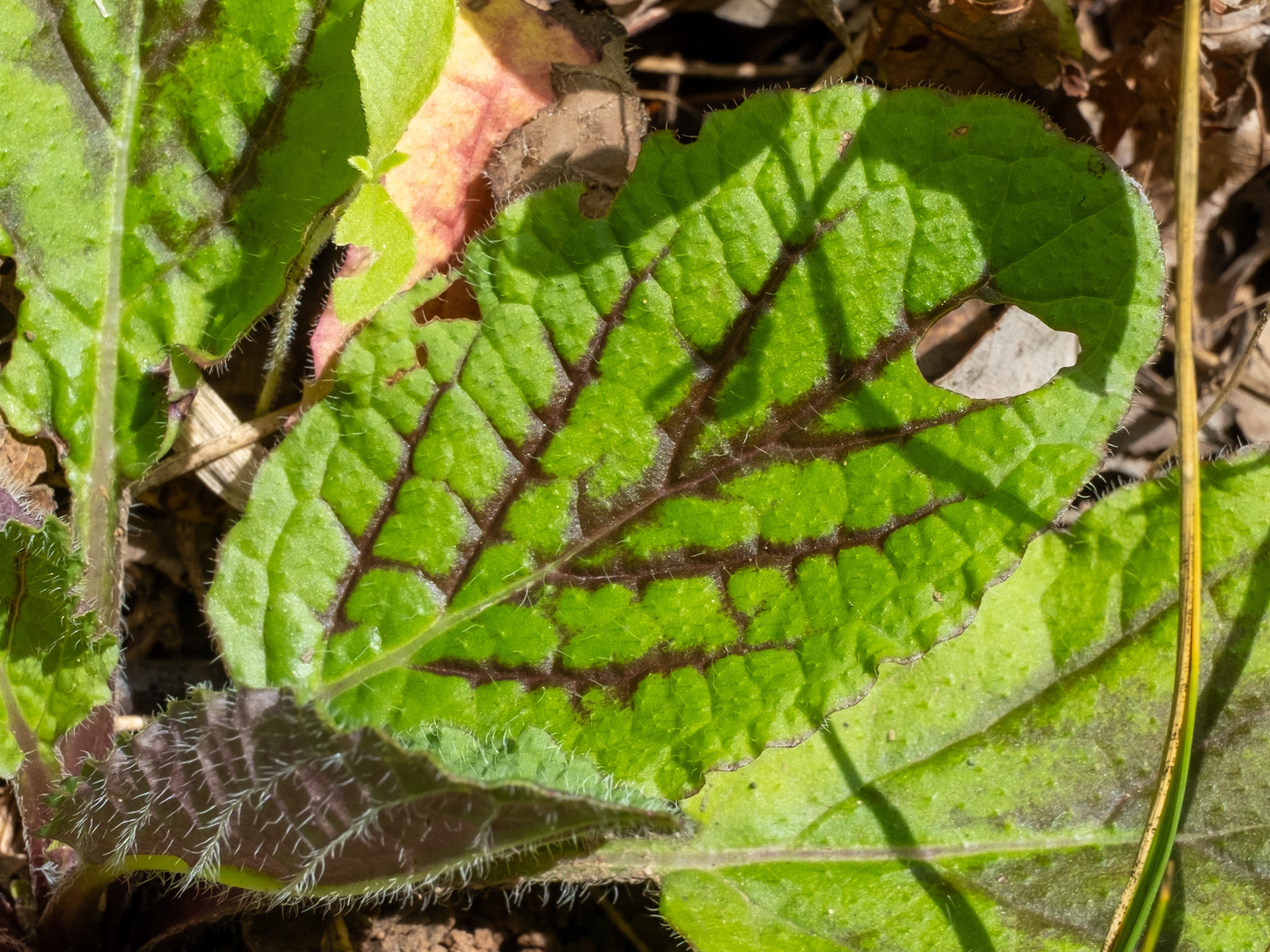
The species takes its scientific name from the shape of its basal leaves, which are irregularly lobed and pinched in the middle in a way that resembles a lyre. Those leaves often carry dark wine-purple veining, especially in cooler weather or in the purple-leaved selections grown in gardens, giving the rosette real ornamental value even before the flower stalk appears. Lyreleaf sage grows easily in sun or light shade, in lawns, fields, open woods and roadsides, and it self-seeds readily once established.
Because it tolerates mowing, foot traffic and a wide range of soils, Lyreleaf sage has become a popular low-maintenance groundcover and lawn alternative for pollinator gardens across its native range. It is less showy than many garden sages, but its early, reliable bloom and its usefulness as a bee plant make it a worthwhile addition to naturalistic plantings.
Identification
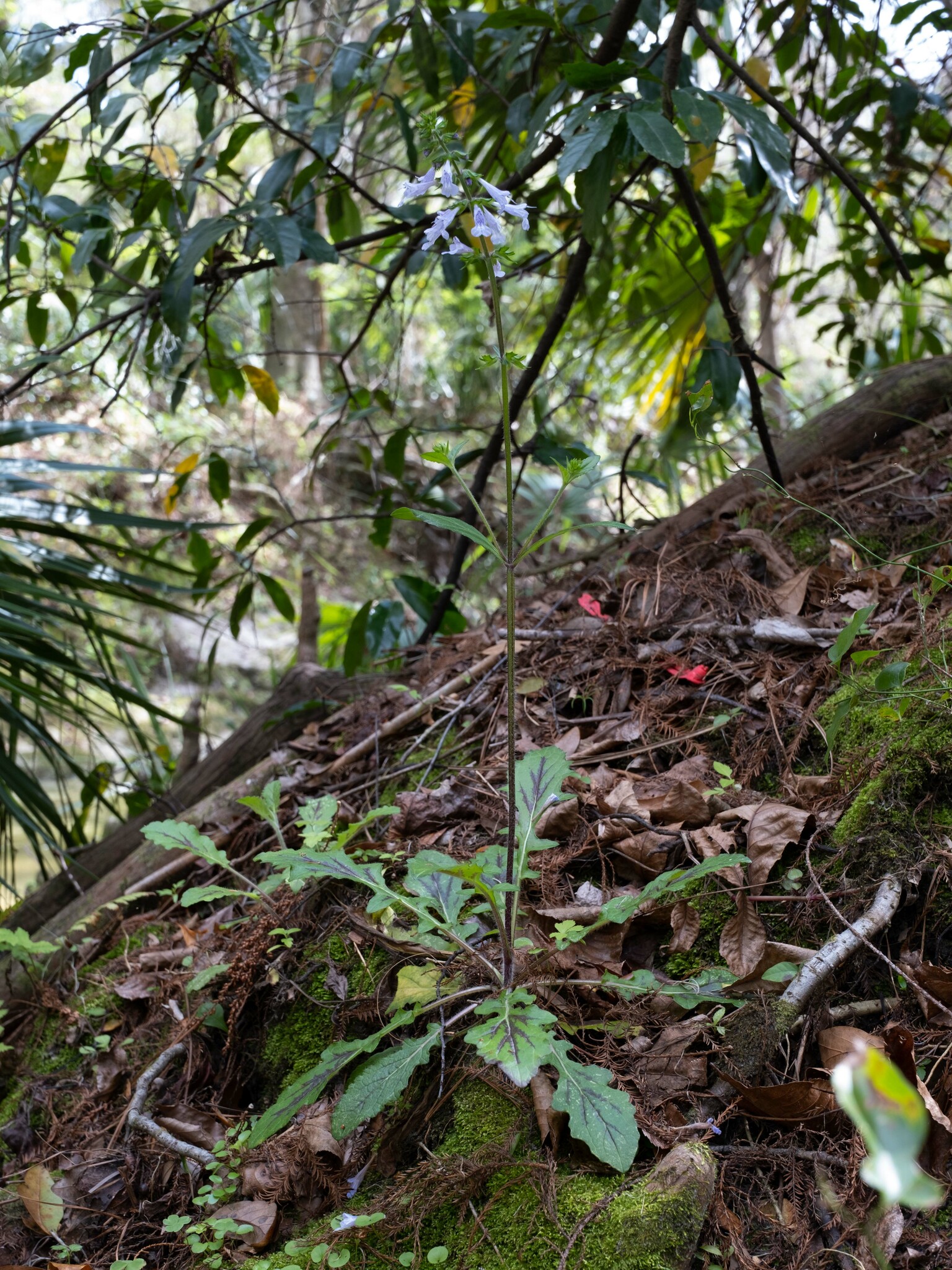
Lyreleaf sage forms a flat basal rosette 6 to 10 inches across, from which a single square, hairy flower stalk rises 1 to 2 feet tall in spring. The plant is easy to overlook until it blooms, since the rosette alone can be mistaken for a dandelion or other lobed-leaf weed at a glance.
Leaves
Basal leaves are 2 to 8 inches long, oblong to obovate in outline, and deeply and irregularly pinnately lobed, with the terminal lobe largest and rounded — the “lyre” shape that gives the plant its name. The leaf surface is often hairy, and the central vein and larger side veins are frequently tinged dark purple or maroon, especially on younger leaves and in cool weather. Stem leaves, where present, are few, much smaller, and mostly opposite.
Flowers
Flowers are borne in widely spaced whorls around a square stem, each flower about ¾ to 1 inch long with the typical two-lipped salvia shape: a short, straight upper lip and a larger, drooping, three-lobed lower lip. Color ranges from pale lavender-blue to violet, occasionally nearly white. Bloom is heaviest from April through June, with occasional later flowering.
Fruit & Seeds
Like other mints, each flower matures into a calyx holding four small nutlets. The dried flower stalks and calyxes often persist into summer, and the plant readily self-sows from the resulting seed, which is part of why it spreads so effectively in lawns and open ground.
Quick Facts
| Scientific Name | Salvia lyrata |
| Family | Lamiaceae (Mint) |
| Plant Type | Herbaceous perennial, basal rosette |
| Mature Height | Rosette 4–6 in; flower stalk 1–2 ft |
| Mature Spread | 6–10 in per rosette; spreads by self-seeding |
| Growth Rate | Moderate; self-sows freely |
| Sun Exposure | Full Sun to Part Shade |
| Water Needs | Average; tolerates both moist and fairly dry soils |
| Soil Type | Adaptable; sandy, loamy or clay, well-drained preferred |
| Soil pH | Acidic to neutral |
| Bloom Time | April – June |
| Flower Color | Lavender-blue to violet |
| Fall Color | None distinct; rosette often purple-tinged in cool weather |
| Fruit | Inconspicuous dry nutlets |
| Deer Resistant | Moderate to high |
| USDA Hardiness Zones | 6–9 |
Native Range
Lyreleaf sage is native across much of the eastern and central United States. Its range runs from Connecticut — where it is rare and reaches its northeastern limit — south through the Mid-Atlantic states and the Southeast to Florida, and west through Kentucky, Tennessee, the lower Midwest and Kansas to Oklahoma and Texas. BONAP county records show it essentially throughout this region, though it thins out and becomes local at the northern and western edges of its range.
Typical habitat is open ground with at least some sun: lawns, meadows, pastures, roadsides, open woodlands and clearings. It tolerates mowing far better than most wildflowers, since the flat basal rosette sits below the blade height of a typical mower, which is why it persists and spreads in lawns across the Southeast. It is equally at home in more naturalistic settings such as open pine woods and old fields.
Within this large range, Lyreleaf sage is common and not a conservation concern across most states, though it is listed as rare at the northern edge of its range in Connecticut. It is not documented as native north or east of southern New England, and plantings there should be treated as garden introductions rather than local natives.
📋 Regional plant lists featuring Lyreleaf Sage: Arkansas, Louisiana, Eastern Oklahoma & Eastern Texas · Georgia, Alabama & Mississippi · Kentucky & Tennessee · Ohio & Indiana · Illinois, Iowa & Missouri · Maryland, Virginia & West Virginia · North Carolina & South Carolina · New York, Pennsylvania & Northern New Jersey · Delaware, Southern New Jersey & Long Island · Connecticut, Massachusetts & Rhode Island · Nebraska, Kansas & Eastern Colorado
Growing & Care Guide
Lyreleaf sage is one of the easiest native perennials to establish, since it asks for very little and spreads on its own once it finds a spot it likes.
Light
It flowers most heavily in full sun to part sun, but the rosette tolerates light to moderate shade, making it a flexible choice for woodland edges as well as open lawns and meadows. In deeper shade, expect fewer flower stalks and a looser rosette.
Soil & Water
Lyreleaf sage is remarkably adaptable, growing in sandy, loamy or clay soils and tolerating both average garden moisture and fairly dry spells once established. It prefers acidic to neutral soil but is not fussy. Avoid consistently waterlogged ground.
Planting Tips
Start from nursery plants or seed sown in fall for spring germination. Space rosettes about 10 to 12 inches apart if planting as a groundcover, since they will fill in through self-seeding. It establishes readily in disturbed or open ground and needs no special soil preparation.
Pruning & Maintenance
Essentially no maintenance is required. Mowing after the spring bloom removes the spent flower stalks and keeps the rosettes tidy without harming the plant, since the growing point sits at ground level. Deadheading before seed set will reduce self-sowing in beds where a tidier, less spready look is wanted.
Landscape Uses
- Lawn alternative and meadow planting, since it tolerates mowing after bloom
- Pollinator gardens paired with other spring bloomers such as Common Blue Violet
- Naturalized groundcover for open woodland edges and old fields
- Rock gardens and gravel plantings, where its low rosette tucks in well
- Erosion control on gentle, sunny slopes
- Foliage interest from purple-leaved selections even when not in bloom
Wildlife & Ecological Value
Lyreleaf sage blooms early enough in spring to provide one of the season’s first reliable nectar sources in open habitats across its range.
For Pollinators
Bees, including native bees, bumblebees and honeybees, are the main visitors, drawn to the tubular flowers held in open whorls that are easy to work along the stalk. The early bloom time makes it valuable forage before many summer wildflowers have started.
For Birds
The small seeds are eaten by some ground-foraging songbirds, and the low, dense rosettes provide minor cover for ground-dwelling insects that in turn feed birds.
For Mammals
Browsing pressure is generally light; the plant has a reputation for decent deer resistance, likely related to its mildly aromatic, mint-family foliage.
Ecosystem Role
As a low groundcover that tolerates mowing and disturbance, Lyreleaf sage helps hold open, sunny ground in lawns, pastures and old fields, offering a pollinator resource in habitats that might otherwise be dominated entirely by turf grass or bare soil between mowings.
Cultural & Historical Uses
The common name “Cancerweed” reflects a historical belief, recorded in 19th- and early 20th-century folk medicine, that the plant’s bitter leaves could be used as an external treatment for skin growths and sores. This use is a matter of historical record only; Lyreleaf sage has no established modern medicinal use, and no contemporary herbal or food use is recommended here.
Beyond its old folk-remedy name, Lyreleaf sage’s modern significance is mostly horticultural and ecological: it has become popular in native-plant and pollinator gardening circles as an easy, early-blooming perennial, and several cultivars have been selected for extra-dark purple foliage that holds its color through the growing season.
In much of its native range, Lyreleaf sage is simply a familiar sight each spring, a scattering of pale blue flower spikes rising out of lawns and roadside grass before most of the growing season’s wildflowers have gotten started.
Frequently Asked Questions
Is Lyreleaf sage the same as culinary sage?
No. Culinary sage is Salvia officinalis, a different, unrelated species from the Mediterranean. Lyreleaf sage is a native wildflower grown for its flowers and foliage and as a pollinator plant, not as a kitchen herb.
Will Lyreleaf sage take over my lawn?
It can spread readily by self-seeding in open, sunny turf, especially where mowing is infrequent. Many gardeners welcome this as a low-maintenance, pollinator-friendly lawn alternative; where a uniform lawn is the goal, more frequent mowing before seed set will keep it in check.
Does Lyreleaf sage need full sun?
It flowers best in full to part sun but tolerates light shade, growing as a looser rosette with fewer flower stalks under a woodland canopy.
Is Lyreleaf sage deer resistant?
It has a reputation for moderate to high deer resistance, likely related to its aromatic mint-family foliage, though browsing pressure can vary locally.
Is the “Cancerweed” name based on a real medicinal use?
The name comes from historical folk medicine, not a proven or recommended treatment. No reliable modern medicinal use of the plant is established, so it should be grown and enjoyed as an ornamental and pollinator plant rather than used for home remedies.

Looking for a nursery that carries Lyreleaf Sage?
Browse our native plant nursery directory: CT, DE, FL, GA · IL, IN, KS · KY, LA, MD, MS, MO · NJ, NY, NC, OH, OK · PA, SC, TN, TX, VA · WV