Creeping Sage (Salvia sonomensis)
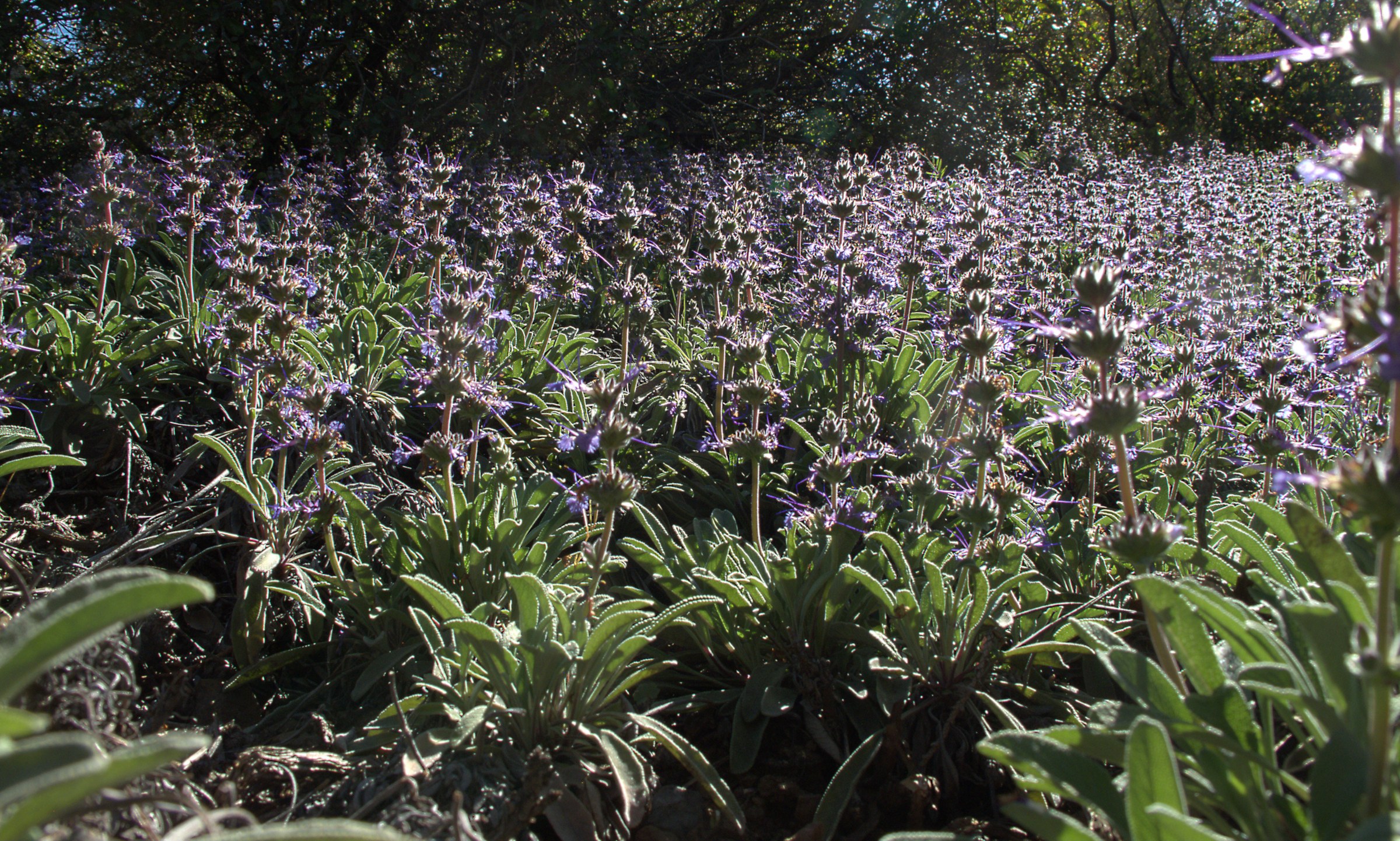
Salvia sonomensis, commonly known as Creeping Sage or Sonoma Sage, is a low, mat-forming subshrub in the mint family (Lamiaceae) native to California, where it grows as one of the state’s most useful evergreen groundcovers for dry, sunny slopes. Despite the species name, it is not limited to Sonoma County — its range runs from the Sierra Nevada foothills north of Fresno to Mount Shasta, south through the Coast Ranges to Santa Barbara County, with a disjunct population in San Diego County.
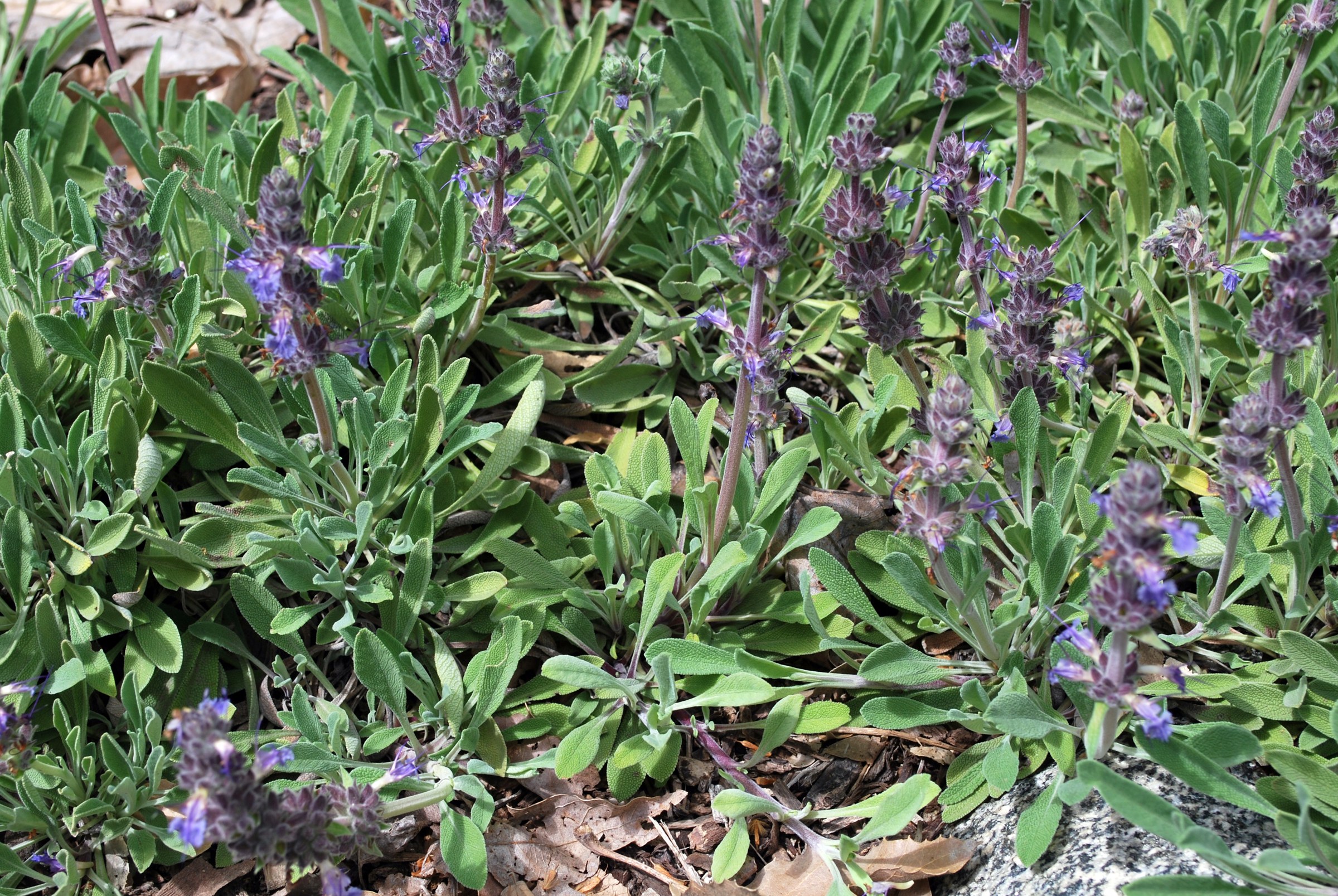
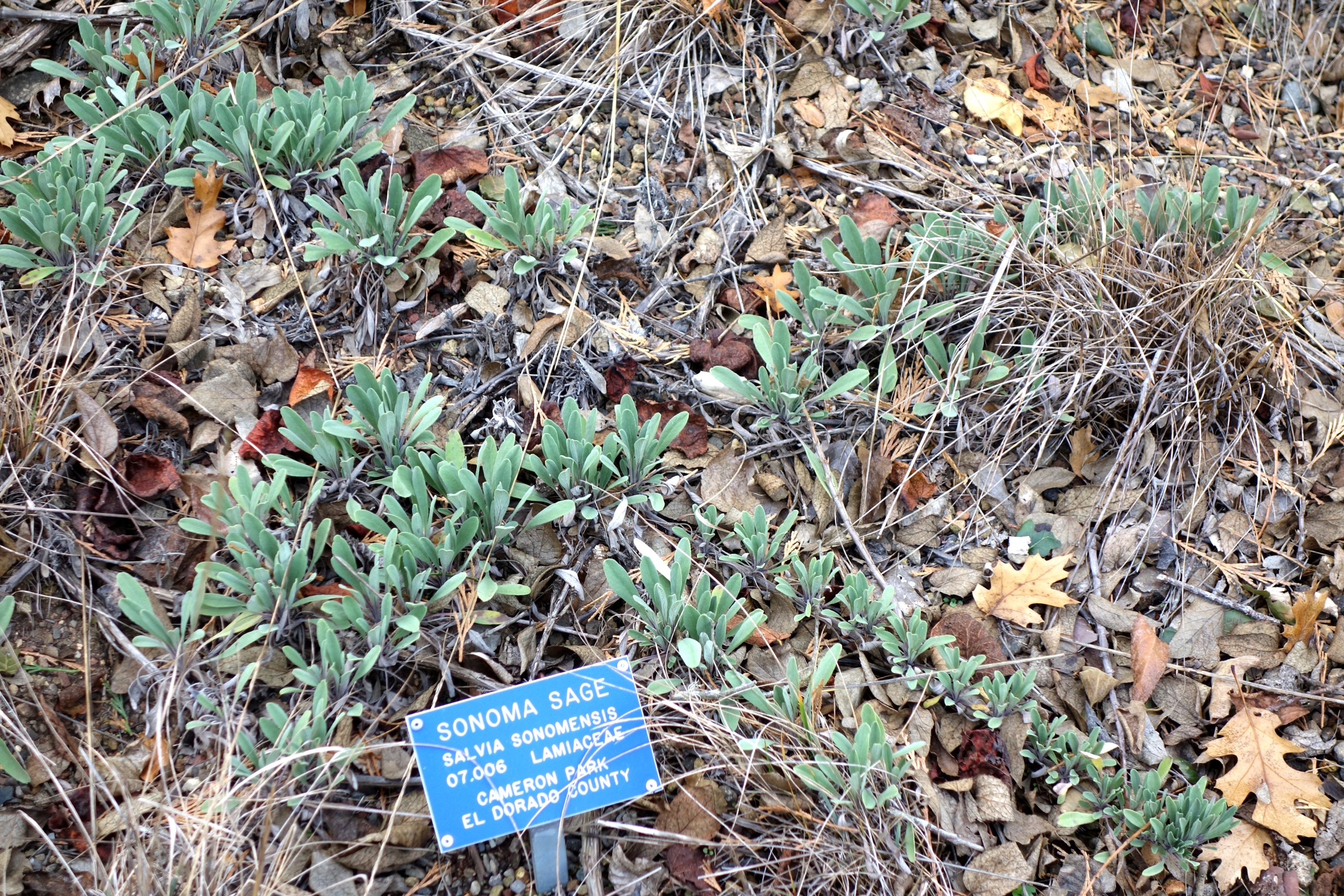
Creeping sage spreads by rooting stems that stay close to the ground, forming a dense, gray-green carpet rarely more than a foot tall but often several feet across. In spring the mat sends up short spikes of pale lavender to blue-violet, two-lipped flowers that stand just above the foliage, drawing bees and butterflies to otherwise bare, rocky ground. The aromatic, finely hairy leaves give off a sage scent when brushed, and they stay evergreen through the mild California winter in most of its range.
Because it tolerates heat, drought and poor soil while staying low and tidy, Creeping sage has become a favorite groundcover in California native-plant gardens, used on slopes, under oaks and in place of thirsty turf. It is sometimes confused with other low California salvias, but its creeping, rooting stems and small, relatively narrow leaves set it apart.
Identification
Creeping sage grows as a low, spreading mat, typically 6 to 12 inches tall but spreading 3 to 6 feet or more as its trailing stems root where they touch soil. Over time a single plant can cover a substantial patch of ground, making it one of the most effective low groundcovers among California native shrubs.
Stems & Foliage
Stems are slender, flexible and somewhat woody at the base, rooting readily at the nodes as they spread along the ground. Leaves are opposite, narrow to oblong, ¾ to 2 inches long, gray-green and covered in fine hairs that give the foliage a soft, slightly silvery cast. Crushed leaves release a distinct sage aroma, a useful field mark alongside the plant’s low, mat-forming habit.
Flowers
Flower spikes rise just 4 to 10 inches above the foliage mat, each bearing whorls of small, two-lipped tubular flowers in pale lavender to blue-violet, occasionally nearly white. Bloom is heaviest from April into June, tapering off as the dry California summer sets in.
Fruit & Seeds
As in other salvias, each flower produces a small dry calyx with four nutlets. Seed production is modest; in gardens, the plant spreads mainly by its rooting stems rather than by self-sown seedlings.
Quick Facts
| Scientific Name | Salvia sonomensis |
| Family | Lamiaceae (Mint) |
| Plant Type | Evergreen mat-forming subshrub / groundcover |
| Mature Height | 6–12 in (flower spikes slightly taller) |
| Mature Spread | 3–6 ft or more, rooting as it spreads |
| Growth Rate | Moderate |
| Sun Exposure | Full Sun to Part Shade |
| Water Needs | Low once established |
| Soil Type | Well-drained; tolerates rocky, sandy or clay soils |
| Soil pH | Slightly acidic to neutral |
| Bloom Time | April – June |
| Flower Color | Pale lavender to blue-violet |
| Fall Color | None distinct (evergreen gray-green foliage) |
| Fruit | Inconspicuous dry nutlets |
| Deer Resistant | High (aromatic foliage) |
| USDA Hardiness Zones | 8–10 |
Native Range
Creeping sage is native to California, where it occurs in two general bands: through the Sierra Nevada foothills from around Fresno County north to the Mount Shasta area, and through the Coast Ranges from the Bay Area and Sonoma County south to Santa Barbara County, with an additional disjunct population recorded in San Diego County. It is not documented as a native of Oregon or any state outside California, despite occasional broader claims; authoritative California sources including the Lady Bird Johnson Wildflower Center and Calscape list its distribution simply as California.
Typical habitat is dry, open slopes and woodland margins below about 6,000 feet elevation, often under or near oaks, gray pine and chaparral shrubs, on soils that bake dry for much of the summer. It is a classic plant of California’s Mediterranean climate, growing actively with winter and spring rains and going largely dormant through the long dry season.
Creeping sage is common and not a conservation concern across its range. Because it hybridizes readily with other California salvias such as Black Sage (Salvia mellifera) in the wild and in cultivation, garden centers sometimes sell hybrid selections under the Creeping sage name; gardeners wanting the true species should buy from native plant nurseries that propagate straight species material.
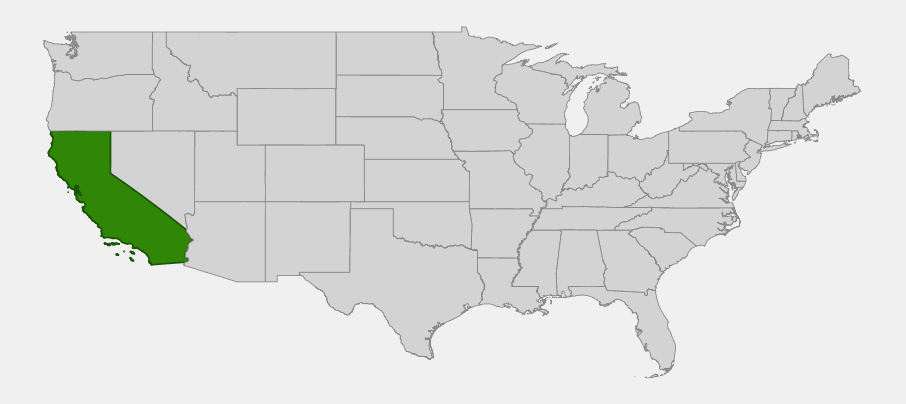
📋 Regional plant lists featuring Creeping Sage: Creeping sage’s native range (California) is not yet covered by a California regional list on this site; see our full native plant directory to browse California natives.
Growing & Care Guide
Creeping sage is one of the most reliable low-water groundcovers for California gardens, thriving on neglect once it is established and asking for almost nothing beyond good drainage and full sun.
Light
Full sun gives the densest mat and best bloom. It also tolerates light to part shade, such as under high oak canopies, where it grows a bit looser but still performs well — a useful trait for the dappled shade found at many California garden sites.
Soil & Water
Good drainage matters more than soil type: Creeping sage handles rocky, sandy or clay soils as long as water does not stand. Water regularly the first year to help the spreading stems root in, then reduce watering sharply — established plants are genuinely drought tolerant and often rot if watered through the summer the way a lawn or perennial bed would be. This makes it an excellent match for California’s dry-summer climate and for gardens converting away from thirsty turf.
Planting Tips
Plant in fall to take advantage of winter and spring rains for establishment. Space plants 3 to 4 feet apart to allow the mat to fill in, since individual plants spread substantially as their stems root along the ground. Avoid summer irrigation zones shared with thirstier plants.
Pruning & Maintenance
Very little pruning is needed. An occasional light trim after bloom keeps the mat tidy and can encourage denser new growth. Avoid heavy summer watering and avoid planting where irrigation will keep the crown wet, which is the most common cause of failure in cultivation.
Landscape Uses
- Slope and bank cover on dry, sunny hillsides where erosion control and low water use both matter
- Lawn replacement and turf alternative in low-traffic areas
- Oak woodland gardens, planted at a distance from the trunk where it tolerates light shade and dry summer soil
- Rock gardens paired with other California natives
- Pollinator gardens, where its spring bloom draws bees before many summer natives flower
- Fire-wise landscaping as a low, well-spaced groundcover in defensible-space plantings
Wildlife & Ecological Value
Creeping sage’s early, low-growing bloom fills an important niche for pollinators working the dry slopes and woodland edges of California’s foothills.
For Pollinators
Native bees and honeybees visit the flower spikes heavily during the spring bloom window, and the dense mat produces a large number of flowers relative to its modest height. Butterflies also visit, though less consistently than bees.
For Birds
Small birds forage among the mat for insects, and the dense, low foliage offers minor ground-level cover, though the plant’s main wildlife contribution is as a nectar source rather than as bird habitat.
For Mammals
The aromatic foliage discourages browsing by deer and other mammals, which is part of why the species holds up so well in California gardens without fencing.
Ecosystem Role
As a mat-forming groundcover on dry slopes, Creeping sage helps stabilize thin, erosion-prone soils in oak woodland and chaparral margins, and its spring bloom is one of relatively few nectar sources on these sites before the dry season sets in.
Cultural & Historical Uses
Creeping sage does not have a widely documented history of use by California Indigenous peoples in the way that some larger California sages, such as White Sage, do; its low, creeping habit and modest leaf size made it less significant as a resource plant than its upright relatives. No medicinal or culinary use is established for the species, and none should be assumed from its common “sage” name, which it shares with many unrelated aromatic plants.
Its modern significance is almost entirely horticultural. As California gardeners have shifted toward low-water, native groundcovers over the past several decades, Creeping sage has become a standard recommendation for slopes and oak-adjacent plantings, valued for exactly the toughness and self-reliance that made it successful on dry wild hillsides long before gardens existed.
Frequently Asked Questions
Is Creeping sage native to Sonoma County specifically?
Not exclusively — despite the species name, its range spans the Sierra Nevada foothills and the Coast Ranges from roughly Shasta County to Santa Barbara and San Diego Counties, not just Sonoma County.
Is Salvia sonomensis native to Oregon?
No. Its documented native range is California only. Treat any Oregon planting as a cultivated introduction, not a local native.
How much water does Creeping sage need?
Very little once established. Water regularly the first year, then taper off; established plants are drought tolerant and often decline if watered through the summer the way a lawn would be.
Can Creeping sage be used as a lawn substitute?
Yes, in low-traffic areas. It forms a dense, low mat that needs no mowing and far less water than turf, though it will not tolerate regular foot traffic the way a true lawn grass does.
Does Creeping sage hybridize with other sages?
Yes, it crosses readily with other California salvias, including Black Sage, both in the wild and in cultivation. Gardeners wanting the true species should buy from nurseries propagating verified straight species material.

Looking for a nursery that carries Creeping Sage?
Browse our native plant nursery directory: California