
Fringed Willowherb (Epilobium ciliatum)
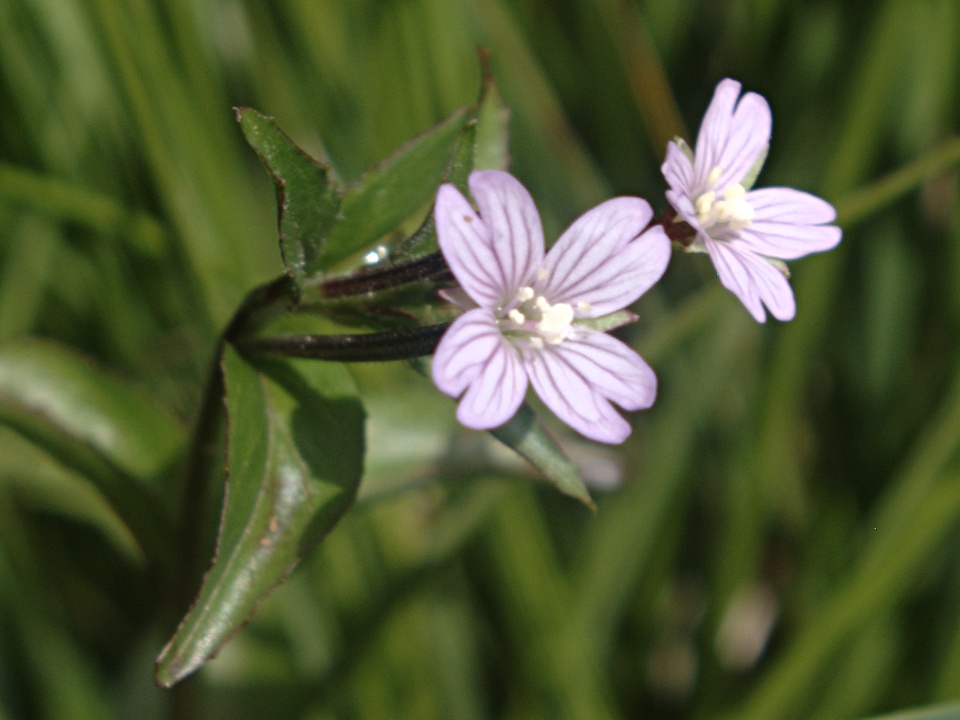
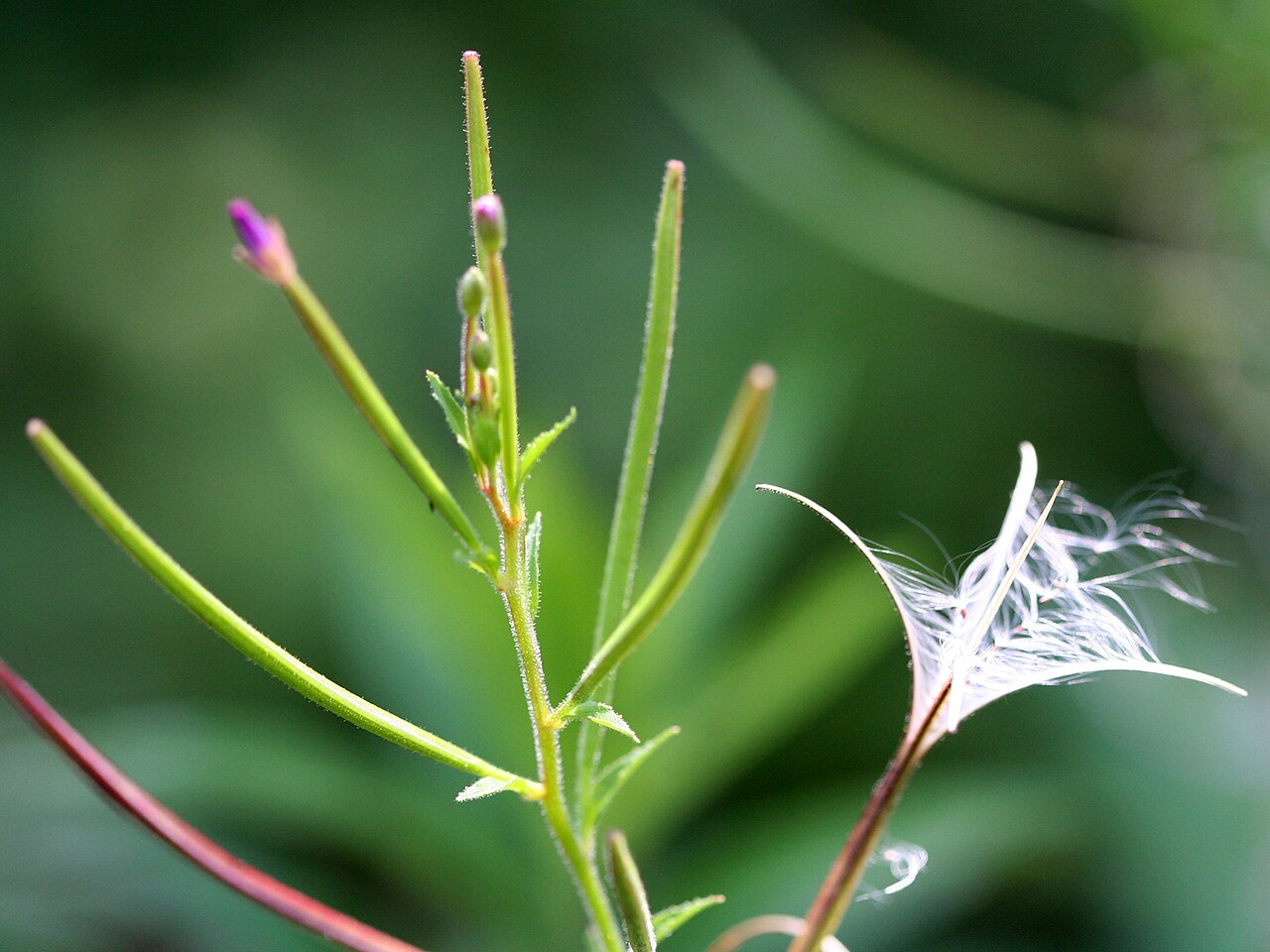
Epilobium ciliatum, known as Fringed Willowherb, American willowherb or northern willowherb, is a widespread perennial wildflower of wet, open ground. It grows 1 to 4 feet tall, with reddish stems, opposite, narrow, toothed leaves, and small white to pink or rose-purple flowers with four notched petals. Each flower sits at the tip of a long, thin seed pod, and in late summer and fall the pods split to release clouds of seeds with silky white tufts that drift on the wind.
It is one of the most widespread native wildflowers in North America, found from Alaska and across Canada south through nearly all of the western and northern United States, and into Mexico and South America. It belongs to the evening primrose family (Onagraceae) and is a smaller cousin of fireweed. Three subspecies are commonly recognized: subsp. ciliatum, with small white to pale pink flowers, the widespread northern and western form; subsp. glandulosum, with larger, rose-purple flowers; and subsp. watsonii of the Pacific Coast.
Fringed willowherb is honest about what it is: a weedy, adaptable native that seeds itself into stream banks, ditches, wet meadows, gravel bars and gardens. It is valuable in wetland and streambank restoration and for small pollinators, but it is not a showy garden plant, and its wind-borne seeds can make it a nuisance in containers and nursery beds. Outside the Americas it has become an invasive weed in Europe and elsewhere, which is a good reminder of how well it spreads.
Identification
Willowherbs (Epilobium) are notoriously hard to tell apart, and fringed willowherb is the most common and variable of them. Look for the combination of a fairly tall plant, toothed leaves, small four-petaled flowers on long capsules, and fine lines of hairs running down the stem.
Stems & Growth Habit
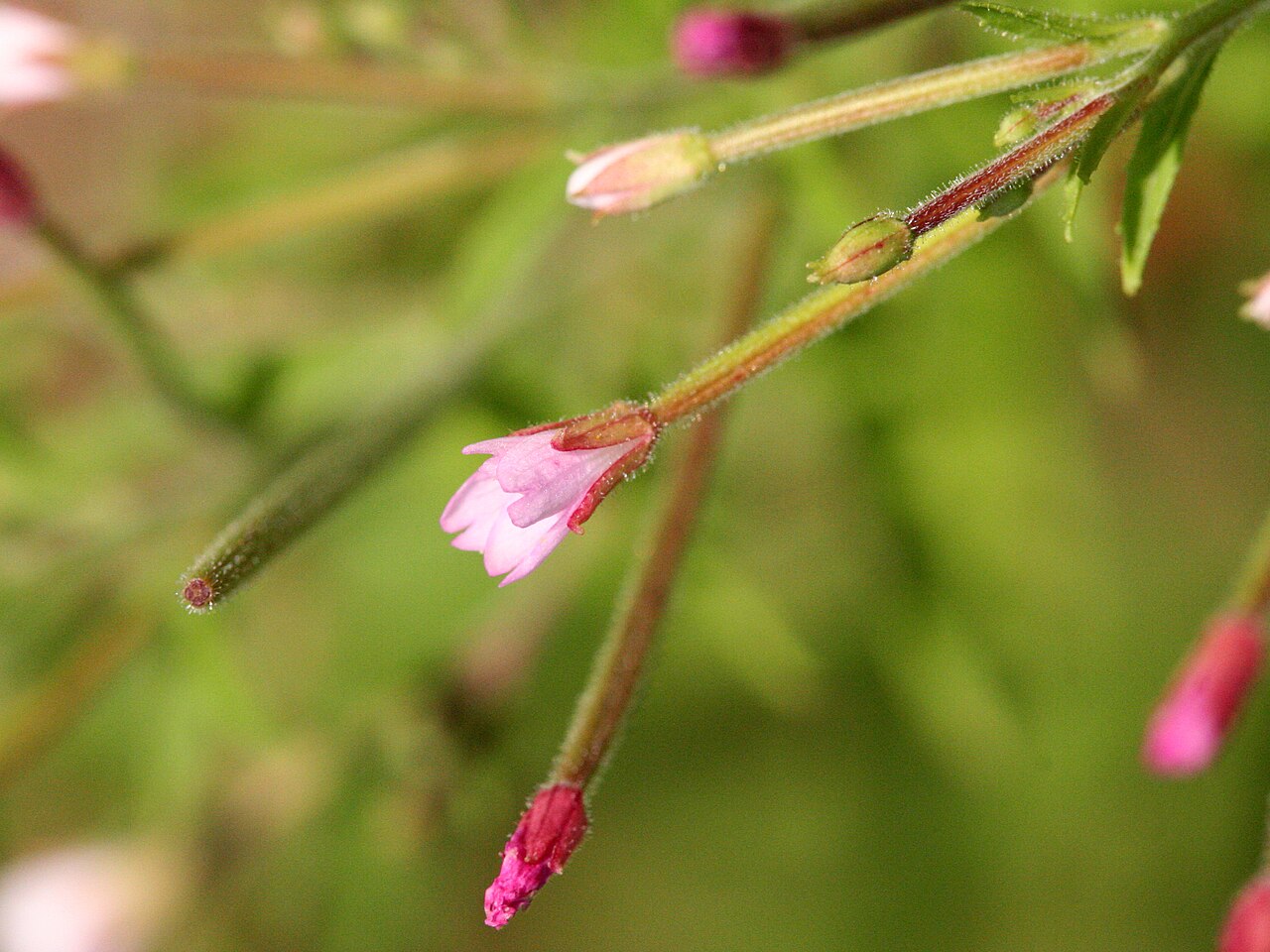
Plants are upright, usually 1 to 3 feet tall and sometimes taller, with one or several stems that are often reddish and branched above. Fine raised lines of short, curved hairs run down the stem from the base of each leaf. The upper parts of the plant, especially the flower stalks, may be covered in small glandular hairs. Plants overwinter as small, fleshy basal rosettes, which is one of the features botanists use to separate it from similar species.
Leaves
The leaves are mostly opposite (becoming alternate near the top), lance-shaped to narrowly egg-shaped, about 1 to 5 inches long, with small, irregular teeth along the edges and short or no stalks. They are green to bluish-green and often flushed with red, especially in sun or late in the season.
Flowers
Flowers bloom from about June to September. They are small, typically ¼ to ½ inch across, with four notched petals that range from white to pale pink in subsp. ciliatum to rose-purple in subsp. glandulosum. The stigma is club-shaped rather than four-lobed, which separates willowherbs like this one from fireweed. Each flower sits at the end of a long, thin, inferior ovary, so a flowering stem looks like a spray of small flowers on slender stalks.
Fruit & Seeds
The ovary grows into a slender, four-sided capsule 1½ to 4 inches long, which splits lengthwise into four strips when ripe. Each capsule releases dozens of tiny seeds, each with a tuft (coma) of silky white hairs. Plants produce huge numbers of seeds, and the fluff can be seen floating along streams and roadsides in late summer.
Similar Species
Purple-leaved willowherb (Epilobium coloratum) of the eastern U.S. has narrower, more sharply toothed leaves, cinnamon-colored seed hairs and often purplish leaves; marsh willowherb (E. palustre) has narrow, untoothed leaves and grows in bogs and fens. Fireweed is much taller, with large magenta flowers in a long spike and alternate leaves.
Quick Facts
| Scientific Name | Epilobium ciliatum Raf. (incl. subsp. ciliatum, glandulosum, watsonii) |
| Family | Onagraceae (evening primrose family) |
| Plant Type | Herbaceous perennial (short-lived); overwinters as basal rosettes |
| Mature Height | 1–4 ft |
| Mature Spread | 1–2 ft |
| Growth Rate | Fast |
| Sun Exposure | Full sun to partial shade |
| Water Needs | High; moist to wet soil |
| Soil Type | Moist sand, gravel, loam or muck; tolerates disturbed soils |
| Soil pH | Acidic to alkaline (about 5.0–8.0) |
| Bloom Time | June–September |
| Flower Color | White to pink or rose-purple |
| Fall Color | Leaves and stems often turn reddish |
| Fruit | Long, slender capsule; seeds with silky white tufts |
| Deer Resistant | Moderately; occasionally browsed |
| USDA Hardiness Zones | 2–9 |
Native Range
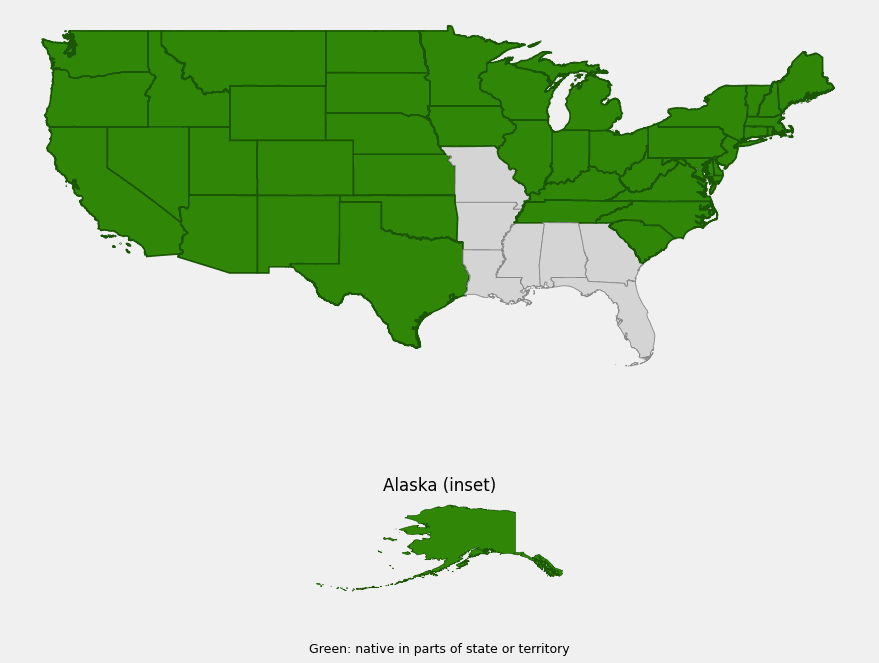
Fringed willowherb ranges across most of North America. USDA PLANTS lists it as native in Alaska and 41 of the lower 48 states, and in every Canadian province and territory except Nunavut. It also grows south through Mexico and in parts of South America and eastern Asia. In Hawaii it is introduced, and it has become a widespread introduced weed in Europe, Australia and New Zealand.
It is common throughout the West, from Alaska and Washington to California, Arizona and New Mexico, and in the Rocky Mountains, the northern Plains and the Great Lakes, Northeast and Appalachian states. In Texas it occurs mainly in the mountains of the Trans-Pecos, and in Oklahoma, Kansas and the Southeast it is scattered and uncommon. It is absent from most of the Gulf Coast states.
It grows in all kinds of moist, open places: stream banks, gravel bars, seeps and springs, wet meadows, marsh edges, lakeshores, ditches, burned areas, logged or disturbed ground, and moist gardens. In the mountains it reaches subalpine meadows, and it is often one of the first plants to colonize bare, wet soil after floods, fires or construction.
📋 Regional plant lists featuring Fringed Willowherb: New York, Pennsylvania & Northern New Jersey · Idaho, Eastern Oregon & Eastern Washington · Ohio & Indiana · Montana & Wyoming · Michigan, Wisconsin & Eastern Minnesota · Kentucky & Tennessee · Nebraska, Kansas & Eastern Colorado · Utah & Western Colorado · Connecticut, Massachusetts & Rhode Island · New Hampshire, Maine & Vermont · Maryland, Virginia & West Virginia · Delaware, Southern New Jersey & Long Island · Arizona & New Mexico · Illinois, Iowa & Missouri · Alaska · North & South Carolina · South & West Texas · North Dakota, South Dakota & Western Minnesota · Western Oregon & Western Washington · California & Nevada
Growing & Care Guide
Fringed willowherb is easy to grow, perhaps too easy. It is best used where its fast growth and free seeding are an asset, such as restoration plantings, rain gardens, pond edges and wet, naturalistic areas, rather than in tidy borders or near container plants.
Light
Full sun to partial shade. It flowers best in sun, and in shade it becomes lanky with fewer flowers.
Soil & Water
It needs moist to wet soil and tolerates periodic flooding, gravel, sand, clay and disturbed ground. In dry soil it struggles or dies back early. It is a good fit for rain gardens, swales and the margins of ponds and streams.
Planting Tips
In most of its range, fringed willowherb arrives on its own as wind-blown seed, and you may simply decide to let it stay in wet spots. If you are planting it for restoration, sow seed on bare, moist soil in fall or spring, or use plugs from a native wetland nursery. Plant it with sedges, rushes, monkeyflowers and other wetland natives that can hold their own. Keep it away from container gardens, greenhouses and nursery beds, where its seeds readily sprout in pots.
Pruning & Maintenance
To limit self-seeding, cut back stems after flowering and before the pods split in late summer. Unwanted seedlings and young plants pull easily from moist soil. The plants are often short-lived, renewing themselves from seed and from small overwintering rosettes.
Propagation
Seeds germinate readily on the surface of moist soil in light, with no special treatment. Collect pods just as they begin to split and rub out the seeds. Rosettes can also be divided in early spring.
Landscape Uses
- Wetland and streambank restoration: a fast, native colonizer of bare, wet soil
- Rain gardens and bioswales: tolerates flooding, sediment and disturbed soils
- Pond and stream margins: fills gaps among sedges and rushes
- Post-fire and disturbed-site revegetation: one of the first natives to return after disturbance
- Wildlife plantings: small flowers for small bees, flies and moths over a long season
Wildlife & Ecological Value
Fringed willowherb is not glamorous, but its sheer abundance makes it an important plant in wetlands, streambanks and disturbed ground across the continent.
For Pollinators
The small flowers produce nectar and pollen and are visited by small bees, syrphid flies and other flies, and small butterflies and moths. The flowers can also pollinate themselves, which partly explains how successfully the species spreads.
For Birds
Small birds such as goldfinches, siskins and redpolls sometimes pick at the seeds or use the seed fluff as nesting material. The wet thickets and meadows where it grows support many nesting birds.
For Mammals
Deer, elk and moose graze it occasionally along streams and in wet meadows. Willowherbs are also host plants for several sphinx moth caterpillars, including the white-lined sphinx, and for some small moth larvae.
Ecosystem Role
As a pioneer of bare, wet soil, fringed willowherb helps stabilize sediment on gravel bars, ditches, burned slopes and construction sites, and it is replaced over time by longer-lived plants. Its huge production of wind-borne seeds lets it reach new openings quickly. The same traits have made it an aggressive introduced weed in Europe, where it has spread widely since it arrived in the late 1800s and now hybridizes with native European willowherbs.
Cultural & Historical Uses
The genus name Epilobium comes from Greek words meaning “upon a pod,” because the flower sits on top of the long ovary. The species name ciliatum, meaning “fringed with hairs,” was given by Constantine Rafinesque in the early 1800s. Over the years the species has been described under many names, including Epilobium adenocaulon, E. glandulosum and E. watsonii, which are now generally treated as subspecies or synonyms.
Young shoots and leaves of several willowherbs, especially fireweed, have been eaten as greens by Indigenous peoples and others in the North, and leaves of some species have been used for tea. Fringed willowherb is less commonly used. As with any wild plant, eat it only if you are sure of the identification and the site is free of contaminants.
For botanists, fringed willowherb is a good example of a plant that is both a valued native in one part of the world and a problem weed in another. In North America it is part of the natural healing process of wet and disturbed ground, but gardeners in Europe often know it only as a weed in their pots and borders.
Frequently Asked Questions
Is fringed willowherb a weed?
It is a native plant, but it behaves like a weed in some situations. It seeds freely into wet, open or disturbed soil and is a common volunteer in gardens and nursery pots. In natural areas and wet restorations it is a useful pioneer.
How is it different from fireweed?
Fireweed is taller, with large magenta flowers in a long spike, alternate leaves and a four-lobed stigma. Fringed willowherb has much smaller white to pink flowers, mostly opposite toothed leaves and a club-shaped stigma.
Is it native everywhere it grows in the U.S.?
It is native across most of the continental U.S. and Alaska. USDA lists it as introduced in Hawaii. It is also introduced and invasive in Europe and other parts of the world.
How do I keep it from spreading?
Cut the flowering stems before the seed pods open in late summer, and pull unwanted seedlings while they are small. Avoid leaving bare, wet soil where its seeds can settle.
Is it good for pollinators?
It provides nectar and pollen for small bees, flies and moths over a long summer season, and willowherbs host several moth caterpillars, including the white-lined sphinx.

Looking for a nursery that carries Fringed Willowherb?
Browse our native plant nursery directory: Alaska & Arizona · California · Colorado, Connecticut & Delaware · Idaho, Illinois, Indiana, Iowa & Kansas · Kentucky, Maine, Maryland, Massachusetts, Michigan, Minnesota & Montana · Nebraska, Nevada, New Hampshire, New Jersey, New Mexico, New York, North Carolina, North Dakota, Ohio & Oklahoma · Oregon · Pennsylvania, Rhode Island, South Carolina, South Dakota, Tennessee, Texas, Utah, Vermont & Virginia · Washington · West Virginia, Wisconsin & Wyoming