
Wood Bluegrass (Poa nemoralis)
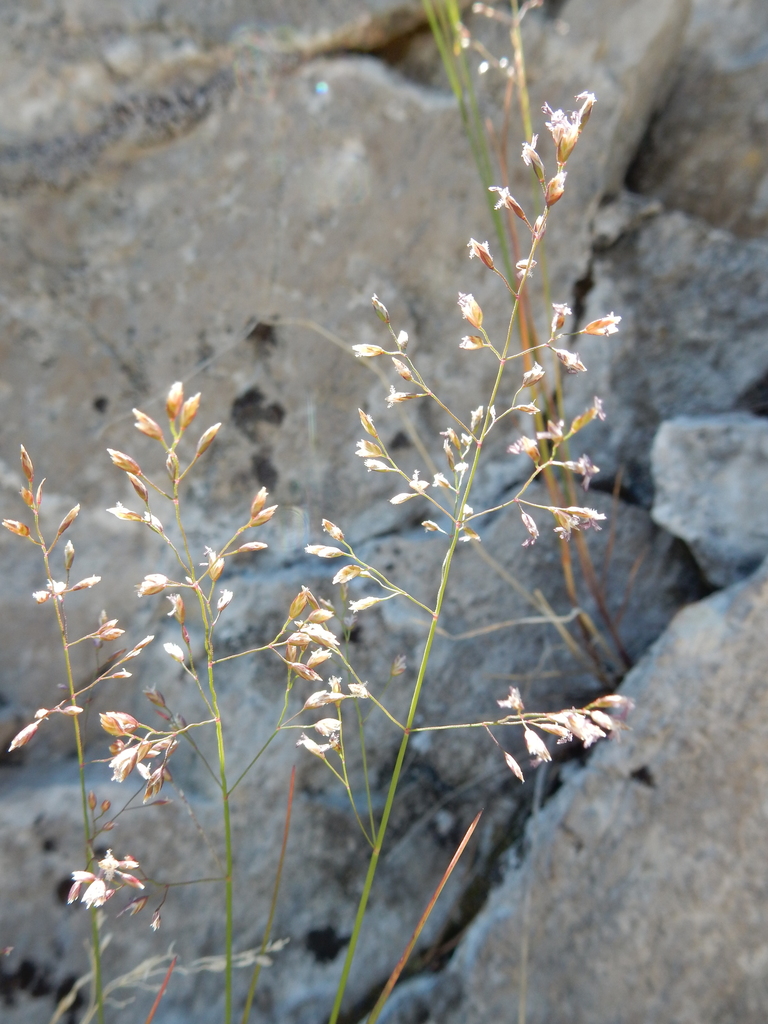
Poa nemoralis, the Wood Bluegrass, is a slender, cool-season bunchgrass with fine leaves and airy, open seed heads. It is unusual among North American plants because it is both native and introduced here. USDA PLANTS splits the species into two subspecies: the native inland bluegrass, Poa nemoralis subsp. interior (also treated as Poa interior), and the European Poa nemoralis subsp. nemoralis, which is introduced.
The native inland bluegrass grows across Alaska and Canada and south through the Rocky Mountains, the northern Great Plains and the upper Great Lakes, on rocky slopes, open woods and mountain grasslands. The European form, often called wood meadow-grass, was brought over as a shade-tolerant lawn and pasture grass and is now naturalized in woods and along roadsides, mainly in the northeastern United States and southeastern Canada. Many wood bluegrass plants in the East are this introduced form.
This page covers the species as a whole, but the range map, native-range notes and regional lists show only the states where USDA records the native inland bluegrass. It explains how to recognize wood bluegrass, where the native plants grow, how to grow it, and why gardeners in the West and North who want a native grass should look for locally sourced subsp. interior.
Identification
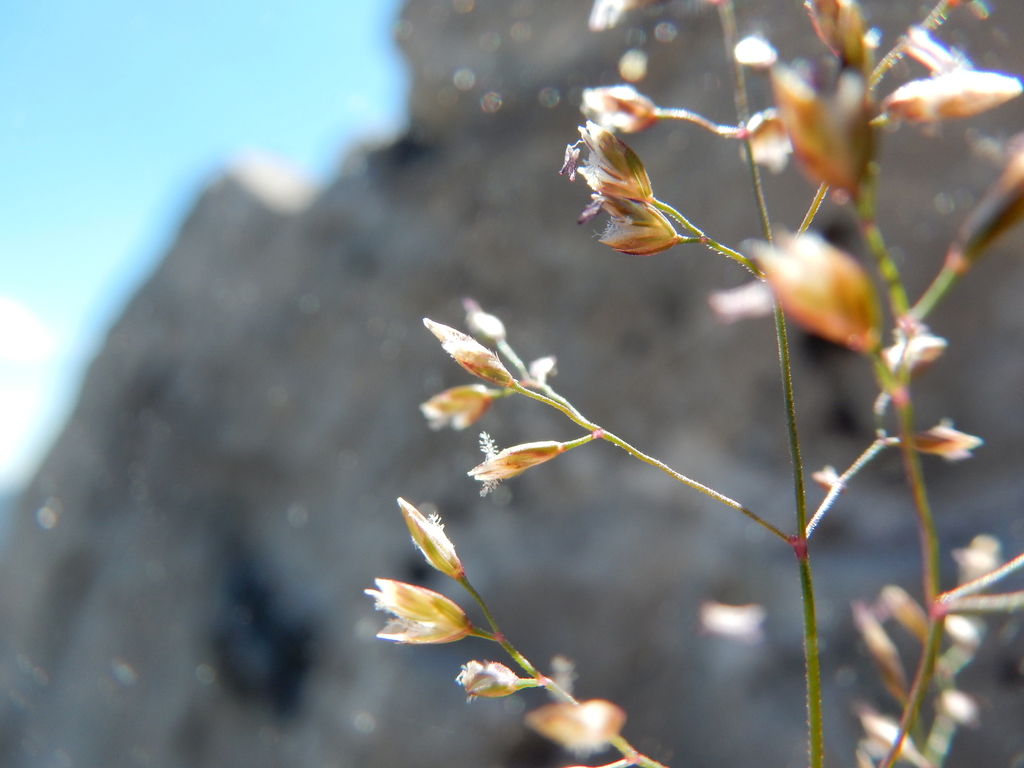
Wood bluegrass is a fine-textured bunchgrass without creeping rhizomes. Like all bluegrasses, it has leaf tips shaped like the bow of a boat and a small tuft of cobwebby hairs at the base of each floret, visible with a hand lens. Bluegrasses are a notoriously difficult group, so confirm identifications with a regional flora.
Stems & Leaves
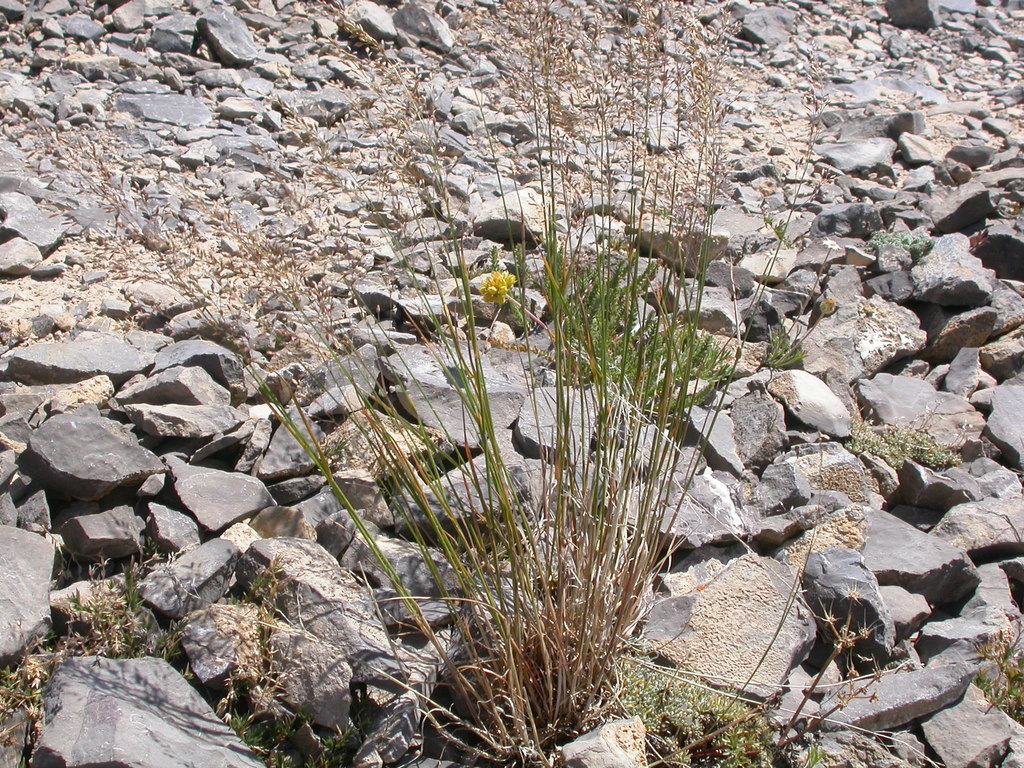
It grows in loose to dense tufts, with slender, upright or slightly arching stems usually 8 to 24 inches tall. The leaves are flat and narrow, about 1/16 to 1/8 inch wide, and soft. The ligule, the small membrane where the leaf blade meets the sheath, is very short (usually well under 1/16 inch), which is a useful field mark. In the European subspecies the upper leaf blades often stick out from the stem at a wide angle, which gave it the German nickname “signpost grass.”
Flowers & Seed Heads
From June to August, each stem ends in a narrow to open, airy panicle 2 to 6 inches long, with thin branches carrying small, pointed spikelets. Each spikelet is about 1/8 to 1/4 inch long and holds two to five florets. The spikelets are green to purplish at first and ripen to straw-tan. The native inland bluegrass usually has a narrower, more compact panicle and stiffer stems than the lax, open panicle of the European form.
Native or Introduced?
Telling the two subspecies apart in the field is difficult and depends on detailed features of the stems, leaves and florets. Habitat and location are helpful clues: in the Rockies, northern Plains, Alaska and boreal Canada, plants on rocky slopes, cliffs and open woods are likely the native subsp. interior. In the Northeast, wood bluegrass in shady lawns, parks, roadside woods and disturbed forest edges is usually the introduced subsp. nemoralis.
Look-alikes
Kentucky Bluegrass spreads by rhizomes to form sod and has wider leaves. Alpine Bluegrass is shorter, with broad leaves and a dense, compact panicle. Sandberg Bluegrass blooms earlier in spring, in drier sagebrush and grassland habitats, and has a narrow, contracted panicle. Fowl bluegrass (Poa palustris) is taller and grows in wet meadows.
Quick Facts
| Scientific Name | Poa nemoralis L.; native subsp. interior (Rydb.) W.A. Weber |
| Family | Poaceae (grass family) |
| Plant Type | Cool-season perennial bunchgrass |
| Mature Height | 8–24 in |
| Mature Spread | 6–12 in |
| Growth Rate | Moderate |
| Sun Exposure | Full sun to partial shade (European form tolerates more shade) |
| Water Needs | Low to medium; well-drained soil |
| Soil Type | Rocky, gravelly, sandy or loamy soils |
| Soil pH | About 5.5–8.0 |
| Bloom Time | June–August |
| Flower Color | Green to purplish spikelets, ripening tan |
| Fall Color | Straw-colored by late summer |
| Fruit | Small grain (caryopsis) |
| Deer Resistant | No; grazed by deer, elk and livestock |
| USDA Hardiness Zones | 2–7 |
Native Range
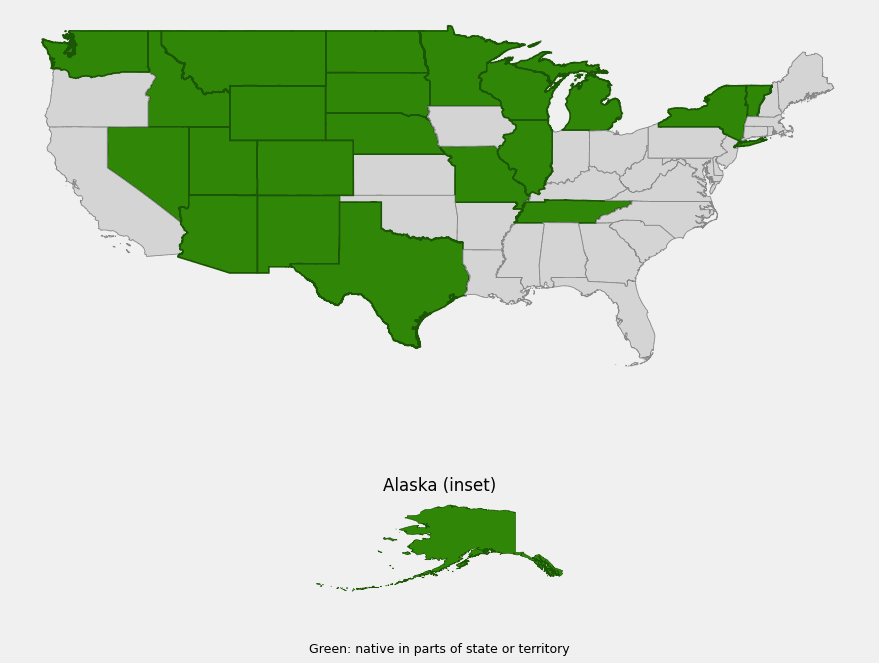
USDA PLANTS lists Poa nemoralis as a whole in 39 states, but most eastern and Pacific Coast records are of the introduced European subspecies. The native subsp. interior (inland bluegrass) is recorded by USDA in Alaska, across the western interior in Washington (east of the Cascades), Idaho, Montana, Wyoming, Colorado, Utah, Nevada, Arizona and New Mexico, on the northern Great Plains in North Dakota, South Dakota and Nebraska, and in the upper Midwest and Great Lakes region in Minnesota, Wisconsin and Michigan. In Canada it ranges from Yukon and the Northwest Territories and British Columbia east to Ontario and Quebec. Our map and regional lists include only these native records.
USDA also has a few scattered county records of the native subspecies farther south and east, including the Guadalupe Mountains of West Texas, and isolated records in Illinois, Missouri, Tennessee, New York and Vermont. These are shown on the map as outlying records; some may represent rare relict populations and others may be worth re-checking by botanists.
Inland bluegrass grows on rocky slopes and cliffs, talus, open coniferous and aspen woods, mountain meadows and grasslands, and in the Black Hills and badlands of the northern Plains, from foothills to the subalpine zone. The introduced European form favors shadier, moister sites: deciduous woods, forest edges, parks and shady lawns.
📋 Regional plant lists featuring Wood Bluegrass: Alaska · Arizona & New Mexico · Montana & Wyoming · Utah & Western Colorado · California & Nevada · Idaho, Eastern Oregon & Eastern Washington · Illinois, Iowa & Missouri · Michigan, Wisconsin & Eastern Minnesota · North Dakota, South Dakota & Western Minnesota · Nebraska, Kansas & Eastern Colorado · New York, Pennsylvania & Northern New Jersey · New Hampshire, Maine & Vermont · Kentucky & Tennessee · South & West Texas
Growing & Care Guide
Wood bluegrass is easy to grow, but what you buy matters. Most “wood bluegrass” or “wood meadow-grass” seed sold for shade lawns is the European subsp. nemoralis, which is not native and can spread into natural woodlands. If you live within the native range in the West, northern Plains or upper Midwest and want a native grass, look for locally sourced inland bluegrass (subsp. interior) from native seed suppliers or restoration nurseries, or choose another native bunchgrass.
Light
Native inland bluegrass grows best in full sun to partial shade, as on open rocky slopes and in thin woods. The European form is known for tolerating fairly deep shade under trees.
Soil & Water
It prefers well-drained, rocky, gravelly or loamy soil. Established native plants handle summer dry spells well and need little or no supplemental water in their native range. Avoid heavy, waterlogged soil.
Planting Tips
Sow seed in fall or early spring on bare, firmed soil, barely covering it, or set plugs about 12 inches apart in rock gardens, dry slopes or among wildflowers. Use it in mixes with other native bunchgrasses rather than as a dense lawn.
Pruning & Maintenance
Little care is needed. Cut old growth back in late winter or early spring if you want a tidy look, or leave it standing. It is a cool-season grass that grows mostly in spring and early summer and may go partly dormant in summer heat and drought.
Propagation
From seed, which germinates readily without special treatment, or by dividing clumps in early spring or fall. Seed for native restoration should be collected or purchased from local populations of subsp. interior.
Landscape Uses
- Native rock gardens and slopes: fine texture among western wildflowers
- Restoration and revegetation: native forage and erosion control in the West and North
- Open woodland gardens: light shade under aspen or pine
- Wildlife forage: cool-season grazing for deer, elk and bighorn sheep
Wildlife & Ecological Value
Native inland bluegrass is a small but widespread part of mountain and northern grasslands and open forests, where cool-season grasses supply early forage.
For Pollinators
Like other grasses, it is wind-pollinated and does not provide nectar. Its tufts and leaf litter offer shelter for ground-nesting insects, and bluegrasses are larval food for some grass-feeding butterflies such as skippers and satyrs.
For Birds
Seed-eating birds such as sparrows, juncos and finches eat bluegrass seed in late summer and fall, and grouse forage in the grasslands and open woods where it grows.
For Mammals
Its green leaves are grazed in spring and early summer by deer, elk, bighorn sheep and livestock, as well as rabbits and rodents. Wood bluegrass is considered nutritious forage.
Ecosystem Role
As a bunchgrass of rocky slopes and open forests, it helps hold thin soils and talus in place. The European subspecies, by contrast, can naturalize in North American forests and compete with native understory plants, so it should not be planted near natural areas.
Cultural & Historical Uses
Carl Linnaeus named Poa nemoralis in 1753. Poa is an ancient Greek word for grass or fodder, and nemoralis means “of the woods.” The native North American plants were described by Per Axel Rydberg as Poa interior, “the inland bluegrass,” and were later reduced to a subspecies of P. nemoralis by William A. Weber.
In Europe, wood meadow-grass has long been used in seed mixes for lawns under trees, because it tolerates shade better than most turf grasses. That trade is how the European subspecies reached North America, where it escaped into woods and roadsides, especially in the Northeast. Some botanists still treat the native inland bluegrass as its own species, Poa interior.
This mixed native-and-introduced status is common among grasses that grow on both sides of the Atlantic. For gardeners and restoration workers, the practical lesson is to check the source: native-range seed of subsp. interior supports local ecosystems, while generic “wood bluegrass” shade seed usually does not.
Frequently Asked Questions
Is wood bluegrass native to North America?
Partly. The species includes a native subspecies, inland bluegrass (Poa nemoralis subsp. interior), that grows in Alaska, Canada, the Rocky Mountains, the northern Plains and the upper Great Lakes, and an introduced European subspecies (subsp. nemoralis) that is naturalized mainly in the Northeast.
Is the wood bluegrass seed sold for shade lawns native?
Usually not. Commercial “wood bluegrass” or “wood meadow-grass” seed is normally the European subspecies. For a native grass, look for locally sourced subsp. interior from native seed suppliers, or another regional native grass.
What is the difference between wood bluegrass and Kentucky bluegrass?
Wood bluegrass is a slender bunchgrass without rhizomes and has a very short ligule. Kentucky bluegrass spreads by rhizomes to form sod and has wider leaves. Both have boat-shaped leaf tips.
Where does native inland bluegrass grow?
On rocky slopes, cliffs, talus, open conifer and aspen woods, and mountain grasslands, from foothills to the subalpine zone in the West, and on rocky sites and open woods in the northern Plains and upper Great Lakes.
Is wood bluegrass invasive?
The European subspecies can naturalize in North American woodlands and roadsides, especially in the Northeast, and is best not planted near natural areas there. The native inland bluegrass is a normal part of western and northern plant communities.

Looking for a nursery that carries Wood Bluegrass?
Browse our native plant nursery directory: Alaska & Arizona · Colorado · Idaho & Illinois · Michigan, Minnesota, Missouri & Montana · Nebraska, Nevada, New Mexico, New York & North Dakota · South Dakota, Tennessee, Texas, Utah & Vermont · Washington · Wisconsin & Wyoming

