Limber Honeysuckle (Lonicera dioica)
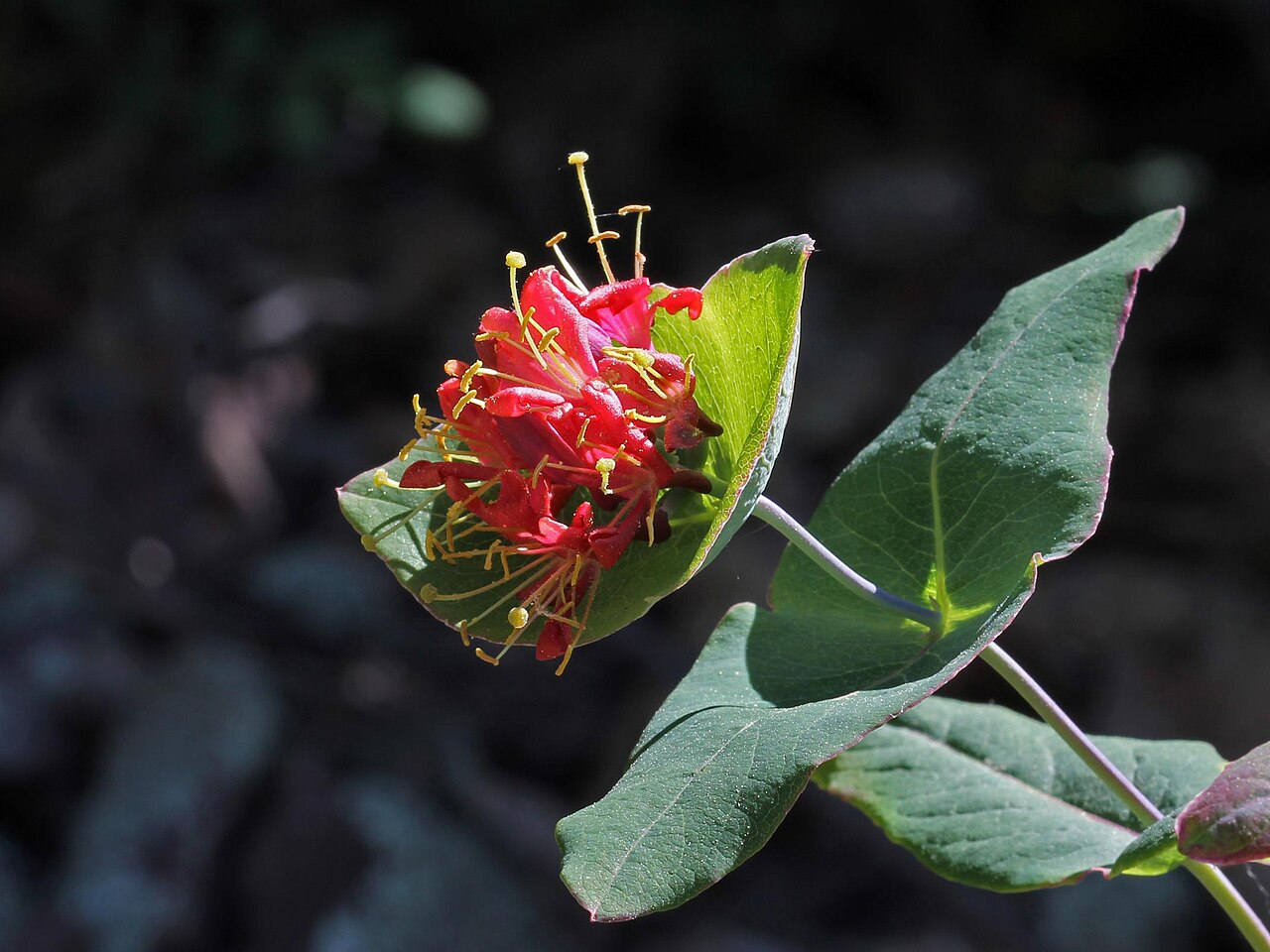
Lonicera dioica, commonly called Limber Honeysuckle (also Glaucous Honeysuckle, Mountain Honeysuckle, or Red Honeysuckle), is a slender, loosely twining native vine found across a huge swath of Canada and the northern and central United States. It is a modest, well-mannered climber compared to the aggressive Asian honeysuckles that have invaded so many American woodlands — limber honeysuckle never forms the dense, light-choking tangles that non-native bush and vine honeysuckles do, and it stays politely within reach instead of smothering trees.
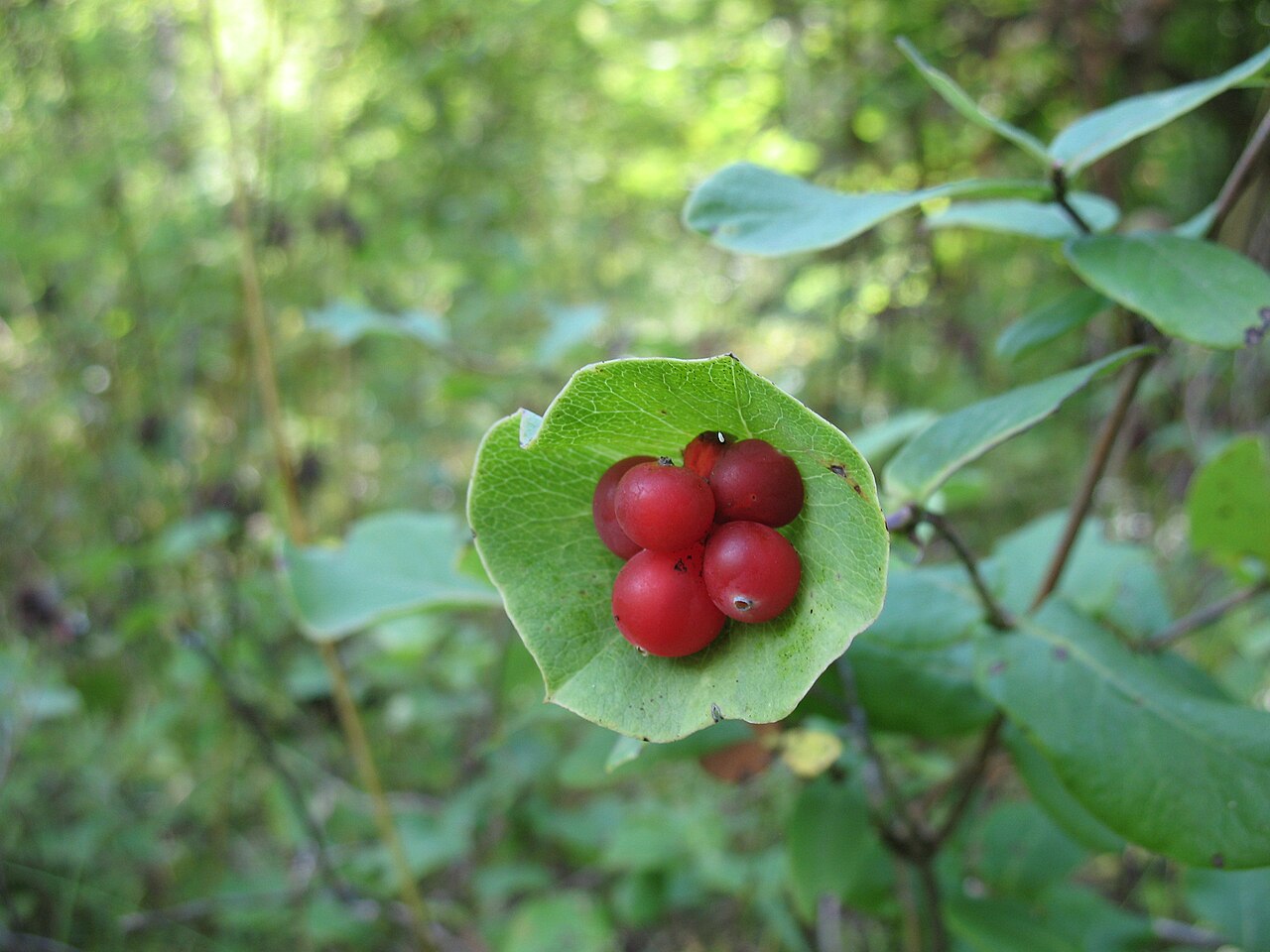
The vine sprawls over shrubs and low branches or loosely twines up to 6–10 feet, with distinctive blue-green (glaucous) leaves, the uppermost pair fused around the stem into a single disc. Clusters of tubular red-to-yellow flowers emerge from the center of that leafy disc in late spring, followed by small red berries in late summer. It is a quiet, useful plant for a woodland-edge or rock-garden setting in cooler climates, valued more for hummingbirds and songbirds than for showy display.
Limber honeysuckle is easy to confuse with the invasive Japanese honeysuckle (Lonicera japonica), Amur honeysuckle (Lonicera maackii), and Tatarian honeysuckle (Lonicera tatarica) that crowd out native plants across much of its range. Those three are non-native, aggressively weedy, and should be removed on sight; limber honeysuckle is the well-behaved native alternative, with blue-green (not plain green) leaves fused into a disc below the flowers, a trait none of the invasive honeysuckles share.
Identification
Limber honeysuckle is a thin, woody, deciduous vine, typically 3 to 10 feet long, that sprawls loosely over neighboring shrubs or twines weakly around supports rather than climbing high or vigorously like the invasive bush honeysuckles.
Stems
Stems are slender, smooth, and reddish-brown to tan, becoming slightly woody with age. They twine loosely but lack the thick, hollow, pith-filled stems typical of invasive Amur and Tatarian honeysuckle shrubs — limber honeysuckle stays thin and vine-like throughout its life.
Leaves
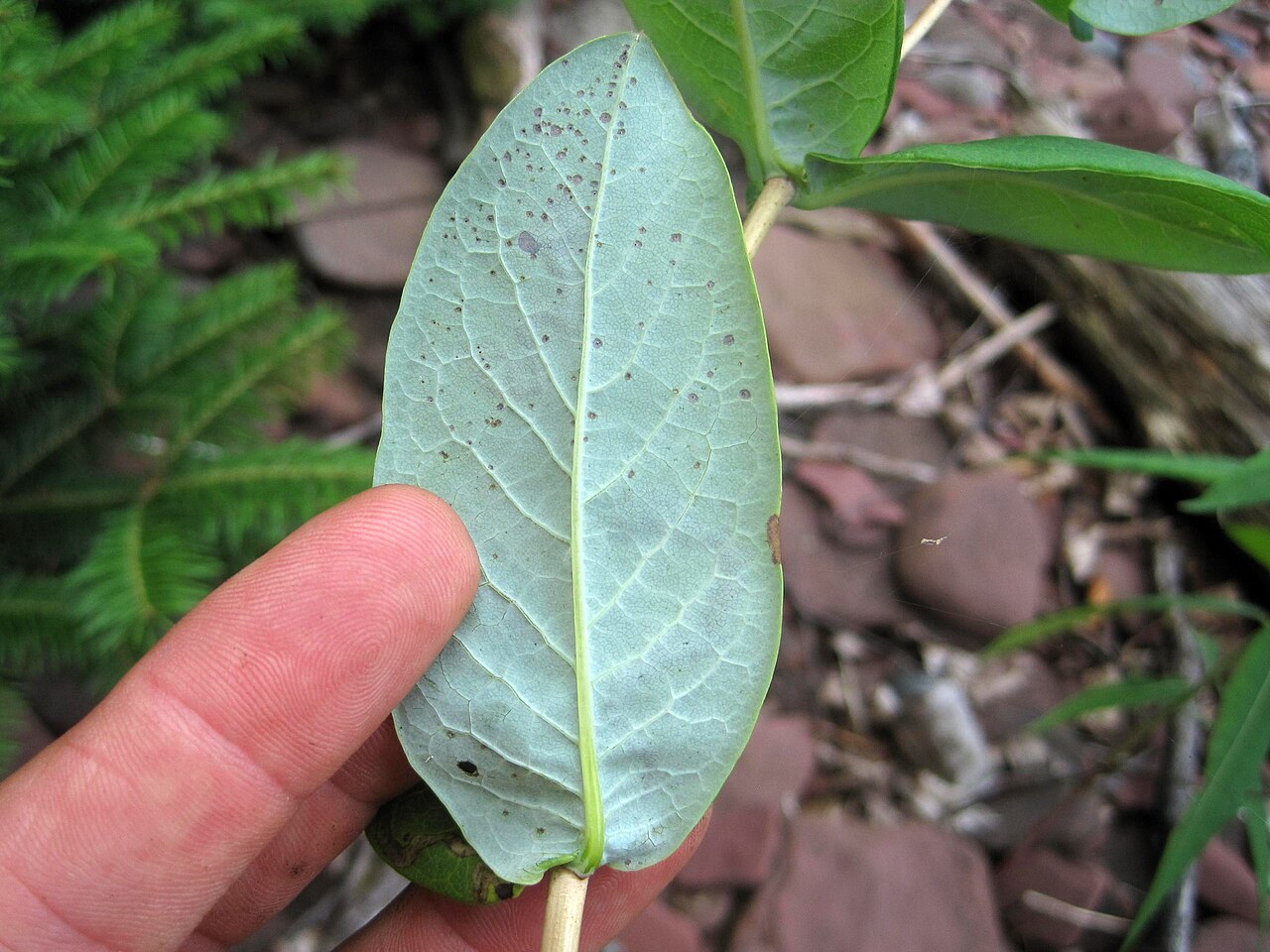
The opposite, oval leaves are 2 to 4 inches long, smooth-edged, and distinctly blue-green or glaucous, especially on the pale underside. The uppermost one or two pairs of leaves below the flower cluster are fused at the base, forming a single round or oval disc (perfoliate) through which the stem appears to pass — a reliable field mark that separates it from non-native honeysuckles.
Flowers
In late spring, whorls of tubular, two-lipped flowers appear in a ring at the center of the uppermost leaf disc. Flowers range from yellow to orange-red, often red in bud and on the outside with yellow throats, about 1 inch long, and only mildly fragrant. They are pollinated mainly by hummingbirds and long-tongued bees.
Fruit & Seeds
Small, round, bright red berries ripen in clusters inside the leaf disc in late summer. They are an important food source for grouse, thrushes, and other songbirds, which spread the seeds, but the berries are mildly toxic to people and should never be eaten or presented as a human food source — treat them strictly as wildlife forage.
Quick Facts
| Scientific Name | Lonicera dioica |
| Family | Caprifoliaceae (Honeysuckle) |
| Plant Type | Deciduous Twining Vine |
| Mature Height | 3–10 ft trailing/climbing length |
| Mature Spread | 3–6 ft |
| Growth Rate | Moderate |
| Sun Exposure | Full Sun to Part Shade |
| Water Needs | Average to Dry |
| Soil Type | Well-drained; rocky, sandy, or loamy |
| Soil pH | 6.0–7.5 (neutral to slightly acidic) |
| Bloom Time | May – June |
| Flower Color | Yellow to orange-red |
| Fall Color | Yellow-green, not notable |
| Fruit | Red berries, wildlife food only (not for people) |
| Deer Resistant | Moderate (browsed occasionally) |
| USDA Hardiness Zones | 3–8 |
Native Range
Limber honeysuckle is native to a very broad band of Canada and the northern-to-central United States, from the Maritime provinces and New England west across the Great Lakes and northern Plains to Wyoming, and south through the Appalachians and Ozarks into Missouri and Tennessee. It is most common in cool, continental climates and becomes scarcer or absent toward the Gulf Coast and the arid West.
Across this range it grows in rocky or sandy open woods, thickets, clearings, bluffs, lakeshores, and the edges of bogs and fens, usually in soils that are well drained rather than wet. It tolerates both acidic and limestone-derived soils and is often found scrambling over neighboring shrubs on exposed, rocky sites where taller competition is limited.
Despite its wide range, limber honeysuckle is rarely abundant anywhere; it typically occurs as scattered individuals rather than dense colonies, and some states near the edge of its range list it as uncommon or rare. It is not weedy or aggressive, unlike the Eurasian honeysuckles that have become serious invasive problems across much of the same region.
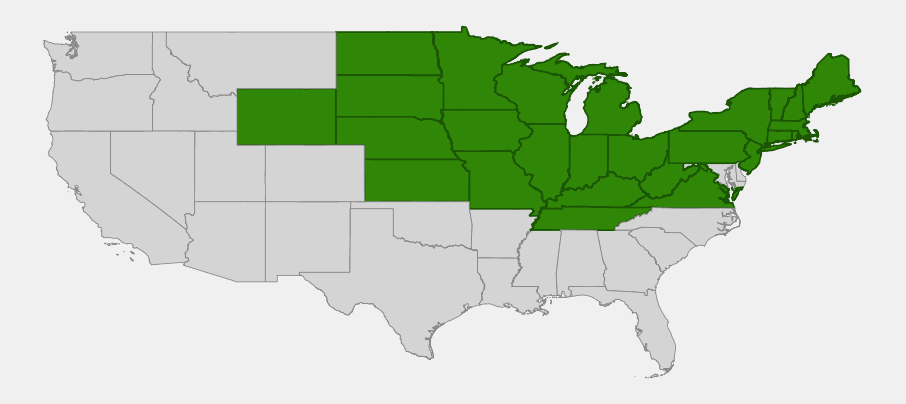
📋 Regional plant lists featuring Limber Honeysuckle: New Hampshire, Maine & Vermont · Connecticut, Massachusetts & Rhode Island · New York, Pennsylvania & Northern New Jersey · Maryland, Virginia & West Virginia · Kentucky & Tennessee · Ohio & Indiana · Illinois, Iowa & Missouri · Michigan, Wisconsin & Eastern Minnesota · North Dakota, South Dakota & Western Minnesota · Nebraska, Kansas & Eastern Colorado · Montana & Wyoming
Growing & Care Guide
Limber honeysuckle is an easygoing, low-key native vine for gardeners in cold-winter regions who want a well-behaved climber instead of an aggressive one. It is not showy in the way invasive honeysuckles can be, but it brings hummingbirds and a long native pedigree to a rock garden, split-rail fence, or woodland edge.
Light
It thrives in full sun to light shade. More sun produces more flowers; in deeper shade the vine grows but blooms sparingly. A site with morning sun and afternoon shade suits it well in warmer parts of its range.
Soil & Water
This species wants well-drained soil — rocky, sandy, or ordinary garden loam all work, but it does not tolerate standing water or heavy, poorly drained clay. It is drought-tolerant once established and needs only occasional watering during extended dry spells its first year or two.
Planting Tips
Give it something low to climb — a split-rail fence, low trellis, or large shrub — since the vine is too thin and lax to support itself on taller structures. Plant in spring or fall, and keep young plants watered until roots establish. It is well suited to rocky slopes and lean soils where showier plants struggle.
Pruning & Maintenance
Minimal pruning is needed. Thin out old or tangled stems in late winter to keep the vine tidy and encourage fresh flowering wood. Because it never grows aggressively, there is no risk of it overtaking a trellis or nearby shrubs the way invasive honeysuckles can.
Propagation
Propagate from softwood cuttings taken in early summer, or from seed collected from ripe berries in late summer and cold-stratified over winter before spring sowing. Germination can be slow and uneven.
Landscape Uses
Good choices for limber honeysuckle include:
- Rock gardens and lean, rocky slopes where it can sprawl naturally
- Low fences and split-rail trellises for a loose, informal climber
- Woodland-edge plantings among native shrubs
- Hummingbird gardens paired with other tubular-flowered natives
- Native alternative for gardeners wanting to replace invasive Japanese, Amur, or Tatarian honeysuckle
Wildlife & Ecological Value
Limber honeysuckle supports wildlife throughout the growing season, from early-summer pollinators to late-summer and fall fruit eaters, without the ecological downsides of the invasive honeysuckles it is often mistaken for.
For Pollinators
The tubular red-and-yellow flowers are especially attractive to ruby-throated hummingbirds and long-tongued bumblebees, both well suited to reach nectar deep in the flower tube. Butterflies and other bees visit occasionally as well.
For Birds
The red berries are eaten by ruffed grouse, cedar waxwings, robins, and other fruit-eating songbirds in late summer and fall, which disperse the seeds widely. The tangled, twining growth also offers modest cover for small nesting birds.
For Mammals
Small mammals occasionally browse the foliage or eat fallen berries, though this species is not a major mammal food source. White-tailed deer will nibble the leaves and stems where populations are high, but it is not a preferred browse.
Ecosystem Role
As an unaggressive native vine, limber honeysuckle fills a niche in rocky, open woodland and thicket communities without crowding out neighboring plants the way non-native bush honeysuckles do. It adds structural diversity to shrub layers and extends the flowering and fruiting calendar for pollinators and birds in cooler regions of North America.
Cultural & Historical Uses
Several Indigenous nations across its range used parts of limber honeysuckle medicinally, including as an infusion applied externally or taken for various complaints; these were traditional uses recorded by ethnobotanists, not guidance for modern self-treatment, and the plant is not used in contemporary herbal medicine.
Limber honeysuckle has never been a significant commercial or horticultural crop. It has occasionally been grown in native plant and rock gardens in its home range, valued more for its modesty and hummingbird appeal than for showy bloom, and it remains a minor presence in the nursery trade compared with ornamental Asian honeysuckle cultivars.
Today, the plant’s main cultural relevance is as a native counterpoint to the invasive Japanese, Amur, and Tatarian honeysuckles that have spread through woodlands across much of its range. Conservation and native-plant groups sometimes highlight limber honeysuckle specifically as a well-behaved substitute when removing invasive honeysuckle shrubs and vines from a landscape.
Frequently Asked Questions
Is limber honeysuckle invasive?
No. Limber honeysuckle is a native North American vine that grows modestly and does not form the dense, smothering thickets associated with non-native Japanese, Amur, or Tatarian honeysuckle. It is a good native alternative when removing those invasive species.
Can you eat the berries?
No. The red berries are mildly toxic to people and should never be presented or used as a human food source. They are valuable food for grouse, thrushes, and other birds, and are best left for wildlife.
How do I tell limber honeysuckle apart from invasive honeysuckles?
Look for blue-green (glaucous), not plain green, leaves, and a round disc formed by fused upper leaves just below the flower cluster — a trait the invasive bush and vine honeysuckles lack. Limber honeysuckle is also a thin, lax vine rather than a dense shrub or aggressively climbing vine.
Does limber honeysuckle need a trellis?
It benefits from something low to lean on, such as a split-rail fence, rock pile, or nearby shrub, since its thin stems do not climb vigorously on their own. It works well left to sprawl over rocks or low structures.
Will it attract hummingbirds?
Yes. The tubular red-and-yellow flowers are well matched to ruby-throated hummingbirds, which visit regularly during the May–June bloom period in gardens within its native range.

Looking for a nursery that carries Limber Honeysuckle?
Browse our native plant nursery directory: Connecticut · Iowa, Illinois, Indiana & Kansas · Kentucky, Maine, Massachusetts, Michigan, Minnesota & Missouri · North Dakota, Nebraska, New Hampshire, New Jersey, New York & Ohio · Pennsylvania, Rhode Island, South Dakota, Tennessee, Vermont & Virginia · West Virginia, Wisconsin & Wyoming