
Prairie Sunflower (Helianthus petiolaris)
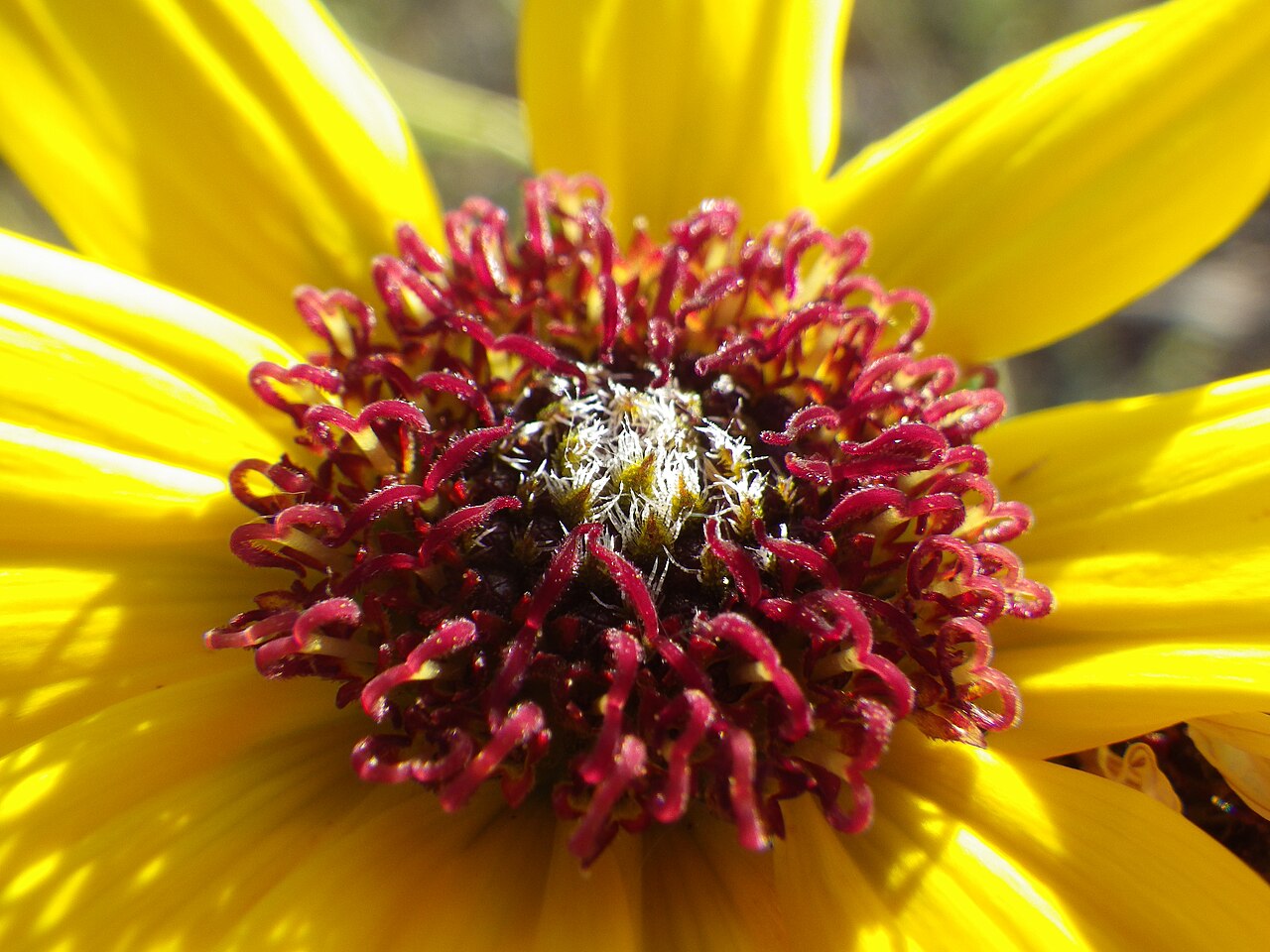
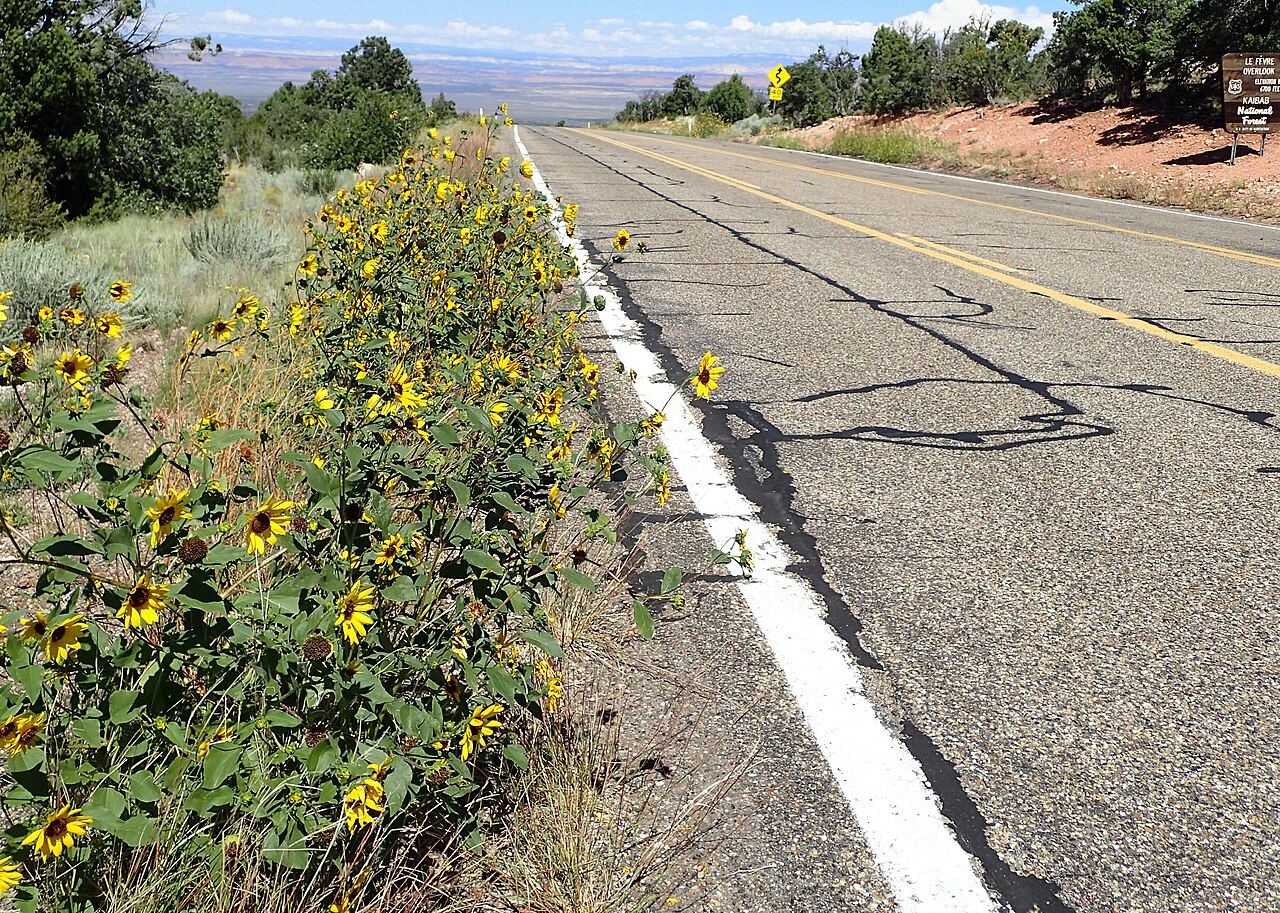
Helianthus petiolaris, known as Prairie Sunflower, plains sunflower or lesser sunflower, is a branching annual sunflower of sandy prairies, dunes and open, disturbed ground across the Great Plains and the interior West. It grows 1 to 4 feet tall and from early summer into fall is covered with cheerful yellow flower heads 1 1/2 to 3 inches across, each with a reddish-purple to brown center.
It looks like a smaller, more delicate version of the common sunflower (Helianthus annuus), with narrower, grayish-green leaves on long stalks; the species name petiolaris means “with a leaf stalk”. The two species often grow together and sometimes hybridize, and ancient crosses between them gave rise to several other sunflower species of the desert Southwest. It belongs to the aster family (Asteraceae).
Prairie sunflower is easy to grow from seed and is a top choice for dry, sandy wildflower meadows, pollinator plantings and wildlife food plots in the West. This guide covers how to identify it, where it is native, how to grow it, and its value to bees, butterflies and seed-eating birds.
Identification
Look for a branching, rough-hairy annual on sandy or disturbed ground with many medium-sized yellow sunflower heads, narrow grayish-green leaves on long stalks, and a tiny white “eye” at the very center of each dark disk.
Growth Habit
It is an erect, taprooted annual, usually 1 to 4 feet tall and occasionally taller, often much branched from the base or middle, so that large plants become bushy. The stems are green to reddish and rough with short, stiff hairs.
Leaves
The leaves are alternate, lance-shaped to narrowly triangular, about 2 to 5 inches long, and usually untoothed or only slightly toothed. They are bluish- to grayish-green, rough to the touch, and held on long leaf stalks that are often as long as or longer than half the blade.
Flowers
Each head is about 1 1/2 to 3 inches across, with roughly 10 to 30 bright yellow ray florets around a reddish-purple to brown disk about 3/4 inch wide. The chaffy scales in the center of the disk have white-hairy tips, giving the very middle of the head a whitish look. The bracts under the head are narrow and lance-shaped. Bloom runs from about June into September or October.
Fruit & Seeds
The seeds (cypselae) are small, about 1/8 to 1/4 inch long, flattened, gray to dark brown and often mottled, and are shed in late summer and fall.
Look-alikes
The common sunflower is usually taller and coarser, with broader, heart-shaped, toothed leaves, broader bracts that narrow abruptly to a tip, and no white-hairy center in the disk. Dune sunflower of the Colorado Plateau dunes has thicker leaves and larger seeds. Perennial sunflowers such as Maximilian sunflower have yellow disks and spread from rhizomes.
Quick Facts
| Scientific Name | Helianthus petiolaris Nutt. |
| Family | Asteraceae (aster family) |
| Plant Type | Annual wildflower |
| Mature Height | 1–4 ft (occasionally to 6 ft) |
| Mature Spread | 1–3 ft |
| Growth Rate | Fast |
| Sun Exposure | Full sun |
| Water Needs | Low; drought tolerant |
| Soil Type | Sandy, gravelly or loamy, well-drained soils; tolerates some clay |
| Soil pH | About 6.0–8.5 |
| Bloom Time | June–September (into October) |
| Flower Color | Yellow rays, reddish-purple to brown disk |
| Fall Color | Not significant; dies after setting seed |
| Fruit | Small, flattened, gray to brown seeds (cypselae) |
| Deer Resistant | Moderately; rough, hairy foliage, but young plants are browsed |
| USDA Hardiness Zones | Annual; grows in zones 3–10 |
Native Range
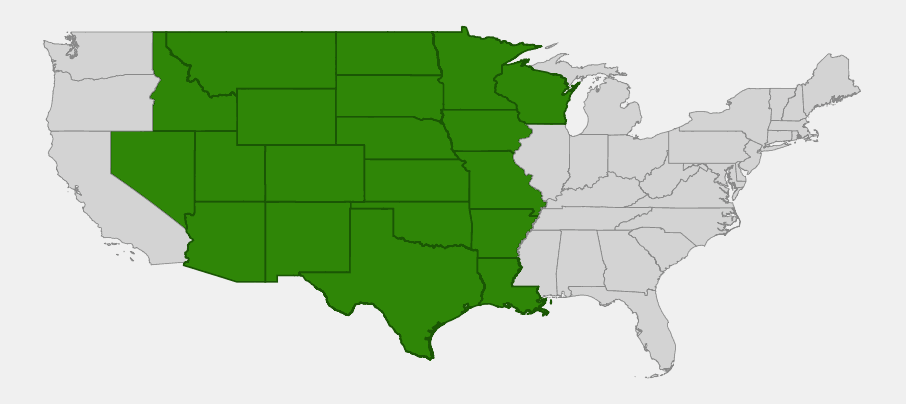
Prairie sunflower is native to the Great Plains and the interior West of North America, from the Prairie Provinces of Canada south through the Dakotas, Nebraska, Kansas, Oklahoma and Texas, and west across the Rocky Mountain and Great Basin states to Idaho, Nevada and Arizona, extending into northern Mexico. Its native range includes Wisconsin, Iowa, Missouri, Arkansas and Louisiana on the eastern edge, though some of those eastern records may be introduced.
Like the common sunflower, it spreads readily along roads, railroads and in fields, and USDA PLANTS also records it in many eastern and Pacific states. NatureServe treats it as non-native (exotic) in states including California, Oregon, Washington, Illinois, Indiana, Michigan, Ohio, Kentucky, New York, the Carolinas and Virginia, and the Native Plant Trust describes it as native to western North America and introduced in New England. Those states, along with New Jersey, Pennsylvania, Tennessee and West Virginia, are left off the map here.
It grows in full sun on sandy prairies, sandhills and dunes, river sandbars, plains grasslands, desert grasslands and open juniper woodland edges, and is very common on disturbed sites such as roadsides, fields and prairie dog towns.
📋 Regional plant lists featuring Prairie Sunflower: Nebraska, Kansas & Eastern Colorado · North Dakota, South Dakota & Western Minnesota · Montana & Wyoming · Utah & Western Colorado · Arizona & New Mexico · South & West Texas · Illinois, Iowa & Missouri · Michigan, Wisconsin & Eastern Minnesota · Arkansas, Louisiana, Eastern Oklahoma & Eastern Texas · Idaho, Eastern Oregon & Eastern Washington · California & Nevada
Growing & Care Guide
Prairie sunflower is one of the easiest native annuals to grow in the Plains and the West. Sow it once on sunny, well-drained ground and it will usually reseed itself year after year, providing a long, late-summer show of yellow flowers and a crop of seeds for birds.
Light
Plant it in full sun. In shade it becomes leggy and flowers poorly.
Soil & Water
It does best in sandy or gravelly, well-drained soil and also grows in loam and lighter clay. It is very drought tolerant and needs no supplemental water in most western climates once seedlings are up; rich, heavily watered soil produces tall, floppy plants.
Planting Tips
Sow seed directly where you want it to grow, in fall or early spring, about 1/4 inch deep on bare, raked soil. Thin seedlings to about 12 to 18 inches apart. It is excellent for filling gaps in new prairie plantings while perennials establish, and for dry meadows, roadside plantings and wildlife food plots.
Pruning & Maintenance
No pruning is needed. Leave the seed heads standing into fall and winter for birds and so the plants can reseed. Pull unwanted seedlings in spring if it spreads further than you like.
Propagation
Grow it from seed. Fall sowing works well, since some seeds benefit from winter cold; for spring sowing, a few weeks of cold, moist stratification improves germination. Use seed from a regional native source, and keep it away from cultivated sunflower fields if you want to avoid hybrids.
Landscape Uses
- Wildflower meadows: fast, reseeding annual color for dry, sunny sites
- Pollinator gardens: abundant pollen and nectar for native bees and butterflies
- Bird and wildlife gardens: seeds for finches, sparrows, doves and small mammals
- Restoration and revegetation: a quick cover for disturbed sandy soils while perennials establish
- Xeriscapes: drought-tolerant summer flowers with no irrigation
Wildlife & Ecological Value
Prairie sunflower is a high-value wildlife plant across the Plains and the West, feeding pollinators in summer and seed-eating birds and mammals in fall and winter.
For Pollinators
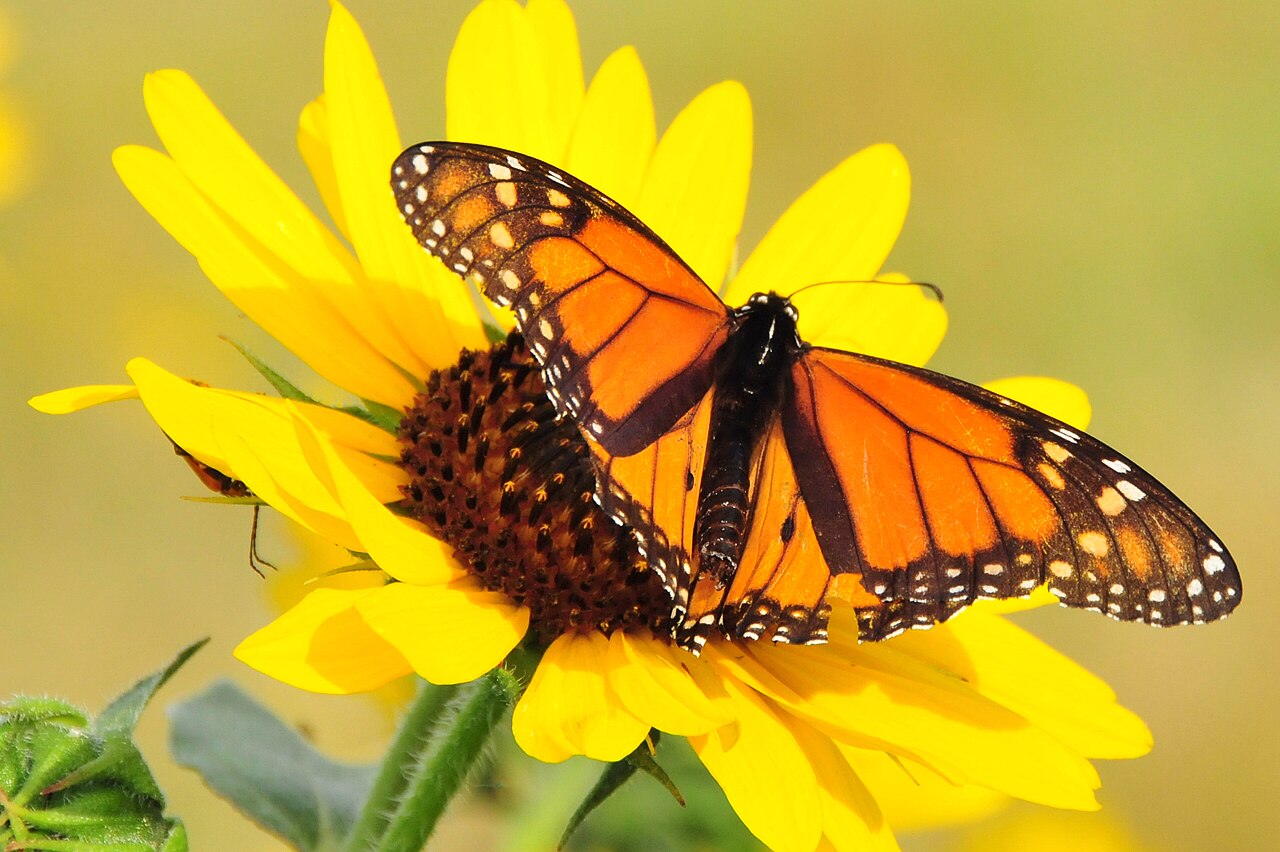
The heads attract many native bees, including sunflower specialist bees such as long-horned bees (Melissodes) and sunflower bees, as well as bumble bees, butterflies and beneficial wasps. It is a larval host plant for the bordered patch and silvery checkerspot butterflies, among other insects.
For Birds
The seeds are eaten by American goldfinches, house finches, sparrows, juncos, mourning doves and other seed-eating birds, and the plants are a valuable seed source in wildlife plantings. Insects on the plants feed many songbirds in summer.
For Mammals
Ground squirrels, mice and other small mammals eat the seeds. Pronghorn, deer and livestock browse young plants.
Ecosystem Role
As a fast-growing annual of bare, sandy and disturbed ground, prairie sunflower helps cover and stabilize soil after drought, fire, flooding or grazing, and it supports a large community of sunflower-feeding insects. Its natural hybrids with the common sunflower are a classic example of how new plant species can arise through hybridization.
Cultural & Historical Uses
The English naturalist Thomas Nuttall described prairie sunflower in 1821, after his travels on the western frontier. Its seeds, like those of the common sunflower, were gathered by Native American peoples of the Plains and Southwest and eaten raw, roasted or ground into meal.
Prairie sunflower is famous among botanists for its role in plant evolution. Research on wild sunflowers has shown that three desert species, dune sunflower (Helianthus anomalus), Helianthus deserticola and Helianthus paradoxus, arose from ancient hybrids between prairie sunflower and the common sunflower, each adapted to habitats that neither parent could occupy.
Plant breeders have also used prairie sunflower as a source of genes for disease resistance and for cytoplasmic male sterility, a trait widely used to produce hybrid seed of cultivated sunflowers.
Frequently Asked Questions
How is prairie sunflower different from common sunflower?
Prairie sunflower is smaller and more branched, with narrower, grayish-green leaves on long stalks, narrow bracts under the head, and white-hairy scales in the center of the disk. Common sunflower is usually larger with broad, heart-shaped leaves and no white center.
Is prairie sunflower an annual?
Yes. It grows from seed, flowers and dies in a single year, but it reseeds readily, so it often comes back in the same spot.
Where is prairie sunflower native?
In the Great Plains and interior West, from the Prairie Provinces and the Dakotas south to Texas and west to Idaho, Nevada and Arizona. It has spread east and to the Pacific Coast, where it is considered introduced.
Does prairie sunflower attract wildlife?
Yes. Its flowers feed native bees and butterflies, and its seeds are eaten by goldfinches, sparrows, doves and small mammals.
How do I grow prairie sunflower?
Sow seed in fall or early spring on bare, sunny, well-drained ground. It needs little or no water once established and usually reseeds itself.

Looking for a nursery that carries Prairie Sunflower?
Browse our native plant nursery directory: Arizona & Arkansas · Colorado · Idaho, Iowa & Kansas · Louisiana, Minnesota, Missouri & Montana · Nebraska, Nevada, New Mexico, North Dakota & Oklahoma · South Dakota, Texas & Utah · Wisconsin & Wyoming

