Prairie Sandreed (Calamovilfa longifolia)
Calamovilfa longifolia, commonly known as Prairie Sandreed, is a tall, robust native grass that is one of the defining plants of the Great Plains sand prairie ecosystem. This impressive rhizomatous grass can reach 5 to 7 feet in height under favorable conditions, forming dense colonies that stabilize vast expanses of sand hills and dunes across the interior of North America. Few native plants are as important as Prairie Sandreed for binding sandy soils and preventing the kind of wind erosion that created the Dust Bowl conditions of the 1930s.
Prairie Sandreed is a tough, highly adaptable species that thrives in some of the most challenging soil conditions found on the Great Plains — the deep, loose, infertile sands of dune fields, ancient lakebeds, and glacial outwash plains. Its extensive underground rhizome system — which can spread 10 feet or more from the parent plant — creates a dense network of roots and rhizomes that can hold even loose, windblown sands in place under extreme conditions. In Montana and Wyoming, it is an important component of sandy riparian areas, sand dune complexes, and open prairie communities on light soils.
Beyond its ecological importance, Prairie Sandreed is increasingly recognized by native plant gardeners and landscape designers for its striking visual presence. The tall, arching culms topped by narrow, feathery plumes sway gracefully in the wind, and the warm tawny-tan color the plants take on in autumn provides season-long interest in naturalistic plantings. Where space permits, its ability to spread via rhizomes makes it ideal for large-scale stabilization and restoration work.
Identification
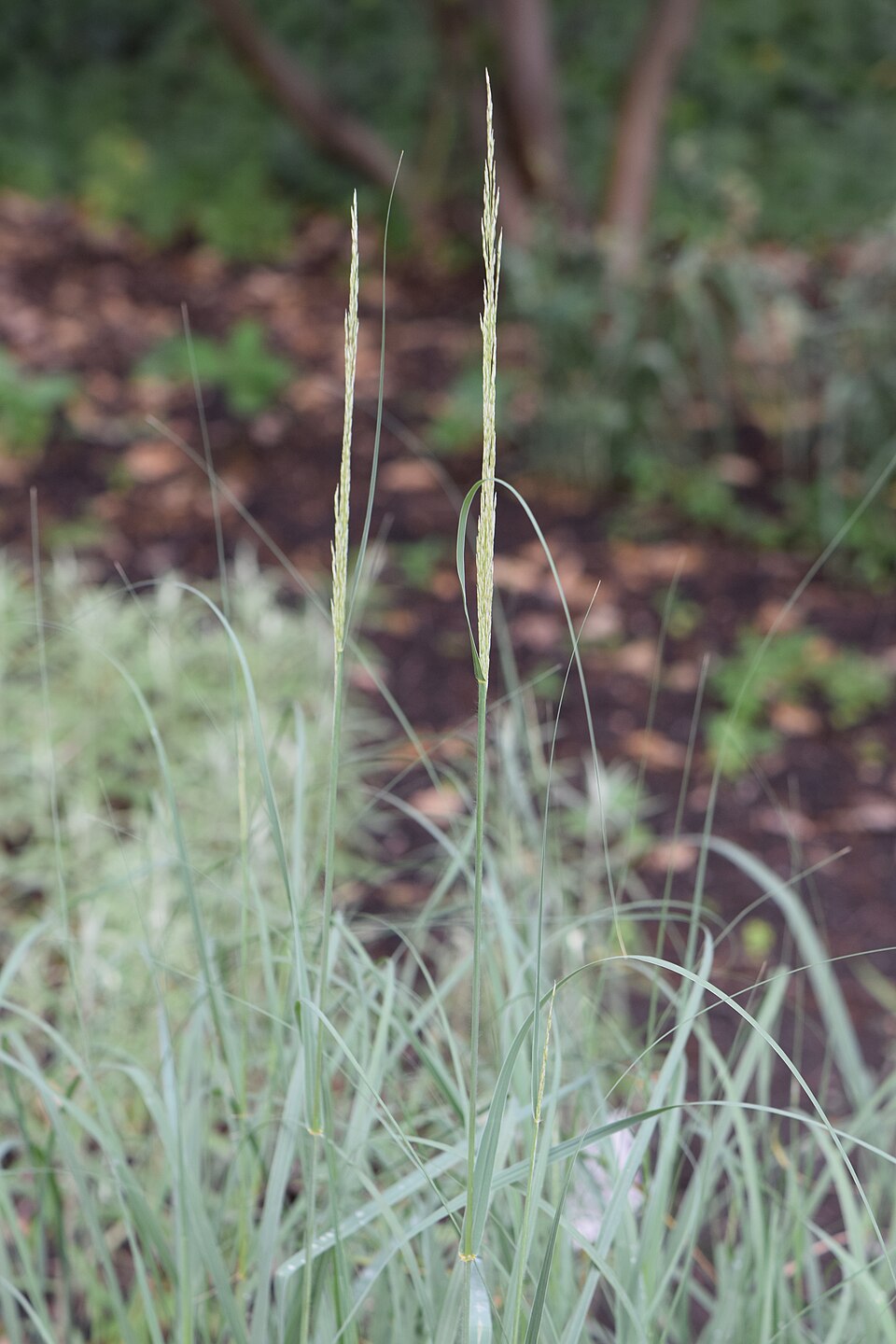
Prairie Sandreed is the tallest native grass in most of its range, reaching 3 to 7 feet tall depending on soil moisture and fertility. It grows in erect, robust clumps or — more commonly — in spreading colonies from underground rhizomes, giving it a decidedly different character from true bunchgrasses. The stems (culms) are stout, hollow, and often pinkish at the base.
Leaves
The leaves are distinctive: long (12 to 24 inches), narrow (3–6 mm wide), flat to slightly inrolled, with a rough texture on the upper surface and a smooth underside. The color is blue-green to gray-green during the growing season, turning straw-tan in autumn and winter. Leaves are arranged alternately along the culm and taper to a sharp, fine point. The leaf sheath is smooth and often longer than the internodes on lower portions of the stem. The ligule (the membrane at the junction of blade and sheath) is a fringe of hairs, a key identification character.
Flowers & Seeds
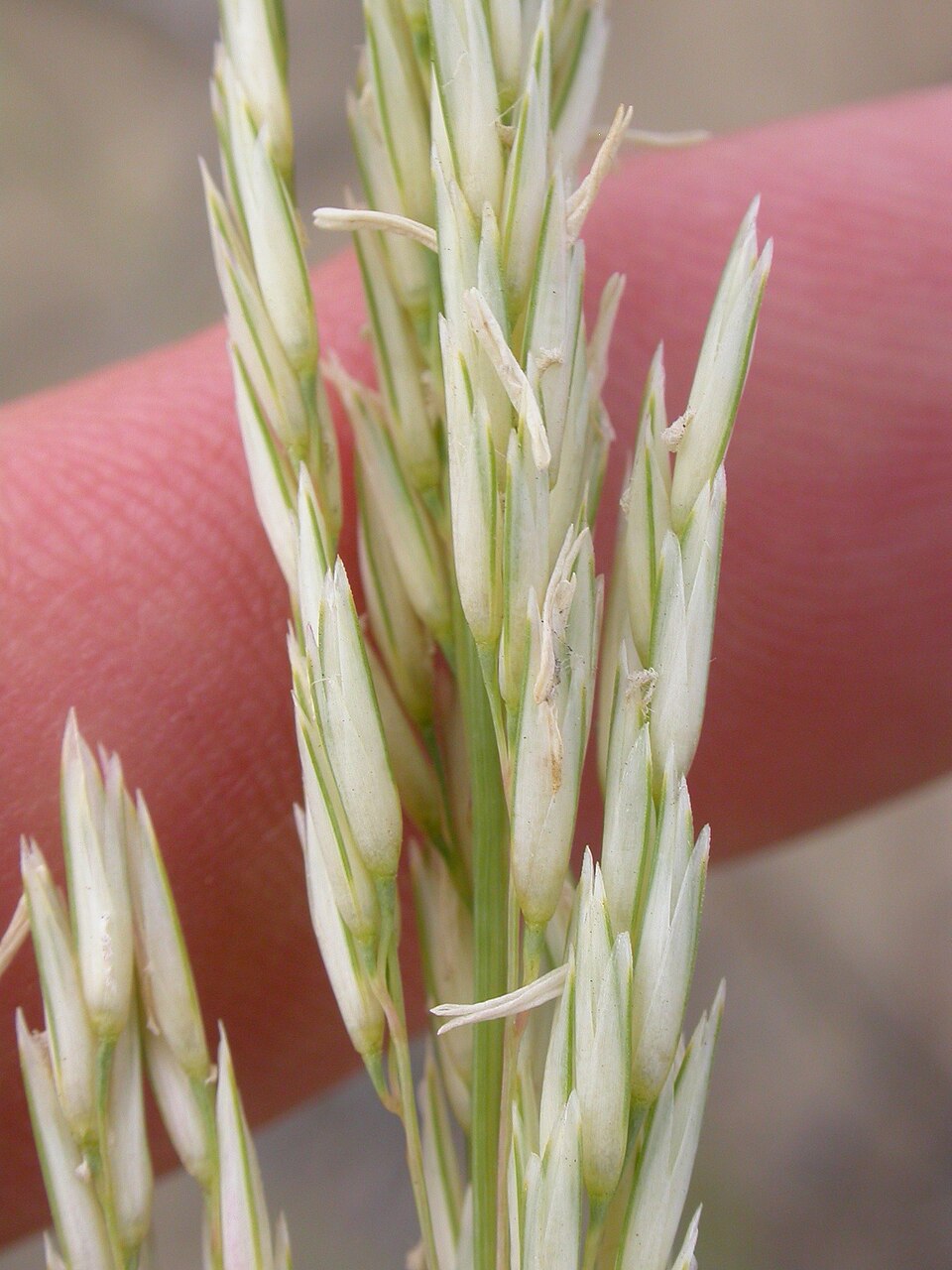
The inflorescence is a narrow, elongated panicle, 8 to 16 inches long, that is relatively tight and upright when young, becoming more open and feathery as it matures. Individual spikelets are small, 1-flowered, and hairy at the base. The overall appearance of the mature seed head is soft and plume-like, similar to reed grasses in texture. Flowering occurs from July through August, and the seed heads remain attractive through winter, catching snow and frost for seasonal interest.
Quick Facts
| Scientific Name | Calamovilfa longifolia |
| Family | Poaceae (Grass) |
| Plant Type | Native Perennial Grass (Rhizomatous) |
| Mature Height | 5–7 ft |
| Sun Exposure | Full Sun |
| Water Needs | Low to Moderate |
| Bloom Time | July – September |
| Flower Color | Tawny/straw (wind-pollinated panicle) |
| Soil Type | Sandy, well-drained; tolerates dry, infertile sand |
| Spread | Rhizomatous; spreads aggressively in sandy soil |
| USDA Hardiness Zones | 3–8 |
Native Range
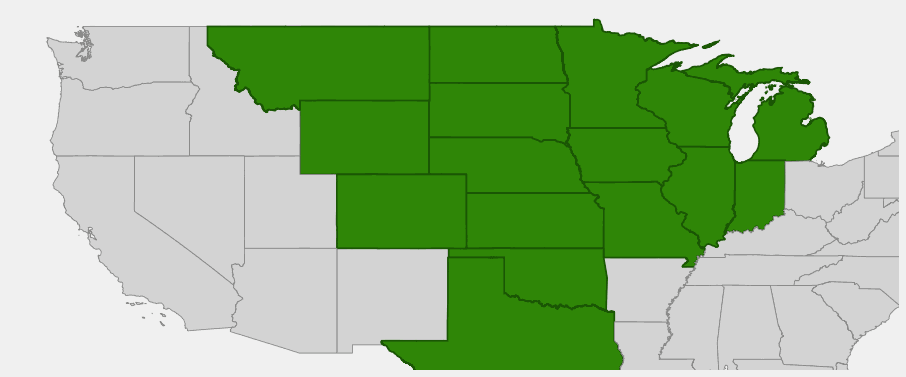
Prairie Sandreed is native to the interior of North America, with its strongest populations concentrated in the Great Plains from Montana and Wyoming south through the Dakotas, Nebraska, and Kansas to Oklahoma and Texas. It extends east into the sand barrens of the upper Midwest — Minnesota, Wisconsin, Michigan, Indiana, and Illinois — wherever sandy soils provide suitable habitat. Isolated populations occur in Missouri and Iowa.
In Montana and Wyoming, Prairie Sandreed is found primarily on sandy soils of river valleys, ancient lake beds, and glacial outwash plains. The Sandhills of Nebraska — one of the largest sand dune systems in the world — represent its most iconic habitat, where it is the dominant grass stabilizing hundreds of square miles of dunes. Here, its extensive rhizome system is directly responsible for holding the sand in place and preventing the kind of catastrophic wind erosion that plagued these areas before the grass re-established after historical disturbances.
Prairie Sandreed grows from near sea level in the upper Midwest to elevations above 5,000 feet in Montana and Wyoming. It is a highly plastic species — meaning it can adjust its growth form substantially depending on conditions — growing relatively short and sparse on dry dunes but tall and dense in moister depressions and river valleys. It associates naturally with blowout grass (Redfieldia flexuosa), sand bluestem (Andropogon hallii), needle-and-thread grass (Hesperostipa comata), and plains cottonwood (Populus deltoides) in riparian settings.
📋 Regional plant lists featuring Prairie Sandreed: Montana & Wyoming
Growing & Care Guide
Prairie Sandreed is relatively easy to establish once you understand its fundamental requirements — full sun and sandy or well-drained soil. Its spreading rhizomatous habit makes it aggressive in the right conditions, so site selection is important. It is an excellent choice for large-scale restoration and naturalization projects on sandy soils, but may require containment in smaller ornamental settings.
Light
Prairie Sandreed is a full-sun grass and does not tolerate shade. Plant it in open, sunny locations where it will receive at least 8 hours of direct sunlight daily. In partial shade, the plant becomes weak, floppy, and much shorter, and spread via rhizomes is greatly reduced. In its natural habitat, it grows on open, windswept terrain where shade is absent.
Soil & Water
The defining requirement of Prairie Sandreed is well-drained, sandy soil. It is specifically adapted to coarse, infertile sand — the looser the better for maximum rhizome spread. It will grow in loamy soils but spread is slower and the plants often shorter. Avoid clay soils entirely — poor drainage will quickly kill established plants. Water needs are low to moderate; once established, the plants are drought-tolerant but will be larger and more vigorous with occasional supplemental water during the driest periods. Do not overwater — consistently moist or wet conditions promote root rot.
Planting Tips
Plant container stock or live plugs in spring for best establishment. Space plants 3 to 4 feet apart for a naturalized prairie planting — they will fill in the gaps within 2 to 3 years via rhizome spread. For large-scale erosion control projects, spacing can be reduced to 18 to 24 inches for faster coverage. Avoid fertilizing — Prairie Sandreed is adapted to infertile soils and excess nitrogen produces rank, floppy growth prone to lodging (falling over).
Pruning & Maintenance
Cut back in late winter or early spring before new growth emerges, reducing plants to 4 to 6 inches. The dried winter stems and seed heads are attractive and provide important wildlife value, so leave them standing through winter. If the colony expands beyond desired boundaries, rhizomes can be severed with a spade in spring or fall. Prairie Sandreed is quite long-lived (20+ years) and generally pest- and disease-free.
Landscape Uses
- Large-scale sand stabilization — ideal for dune restoration and sandy slope erosion control
- Prairie restoration — key component of sand prairie plant communities
- Naturalistic borders — dramatic backdrop grass for large, open landscapes
- Wind breaks and screens — tall growth blocks wind and provides privacy
- Rain gardens on sandy soils — excellent at absorbing runoff
- Riparian buffers on sandy stream banks
Wildlife & Ecological Value
Prairie Sandreed is a keystone species in sand prairie ecosystems, supporting a rich web of wildlife through multiple seasons and ecological functions.
For Birds
The dense colonies provide critical nesting and cover habitat for ground-nesting birds including Grasshopper Sparrows, Dickcissels, Savannah Sparrows, and Northern Harriers, which nest in or near tall grass patches. The seeds attract Horned Larks, Lapland Longspurs (in winter), and various sparrows. Sharp-tailed Grouse and Greater Prairie-Chickens use the tall grass for thermal cover during extreme winter weather. The structural complexity of Prairie Sandreed colonies — with tall stems, dense leaf litter, and underground rhizomes — creates important habitat elements found in few other plants.
For Mammals
Prairie Sandreed is an important forage grass for bison (historically) and is still consumed by cattle, deer, pronghorn, and elk early in the season when it is most nutritious. The dense rhizome systems create ideal burrowing habitat for pocket mice, voles, and thirteen-lined ground squirrels. Prairie dogs and jackrabbits use the tall grass for cover, and coyotes hunt the small mammals that live within sandreed colonies.
For Pollinators
As a wind-pollinated grass, Prairie Sandreed provides no nectar rewards, but the dense colonies provide important structural habitat for ground-nesting native bees and wasps, including many specialist bees that nest in sandy soil. The insect diversity within sandreed colonies in turn supports the insectivorous bird species that nest nearby.
Ecosystem Role
The most critical ecological role of Prairie Sandreed is soil stabilization. In the Nebraska Sandhills and similar dune systems throughout the Great Plains, this grass is literally responsible for keeping millions of acres of sand in place. Studies have shown that removing Prairie Sandreed from stabilized dunes leads to rapid re-activation of blowing sand within months. Its dense rhizome network also sequesters significant amounts of carbon in the soil, contributing to the carbon storage function of native grasslands.
Cultural & Historical Uses
Prairie Sandreed has been used by the Indigenous peoples of the Great Plains for generations, though it lacks the culinary significance of some other native grasses. The Lakota and other Plains nations used the long, tough leaves for thatching the outer walls of structures and for making mats used as sleeping surfaces and floor coverings inside earth lodges and tipis. The flexible stems were also used in basket-making and as structural elements in temporary shelters. Some nations used the stems as drinking straws.
The grass played a more indirect but enormously important cultural role through its stabilization of the sandhills that were home to many Great Plains nations. The Nebraska Sandhills, stabilized primarily by Prairie Sandreed and sand bluestem, provided reliable hunting grounds, reliable water from the many shallow lakes and wetlands perched on the stabilized dunes, and relatively predictable environmental conditions that supported both nomadic and semi-sedentary lifestyles. The loss of these grasslands through overgrazing and plowing was directly connected to the collapse of traditional Plains cultures in the 19th century.
In the 20th century, Prairie Sandreed was extensively used by the U.S. Soil Conservation Service (now the Natural Resources Conservation Service) in revegetation and wind erosion control programs following the Dust Bowl. It remains one of the primary grasses used in federally funded grassland restoration and sand stabilization projects throughout the Great Plains. Commercial seed production of Prairie Sandreed occurs in Nebraska and other Plains states for use in restoration seedings.
Frequently Asked Questions
Is Prairie Sandreed invasive?
Prairie Sandreed is a native species and is not invasive in the sense of threatening natural ecosystems. However, its rhizomatous spreading habit can make it aggressive in garden settings — it will expand steadily into adjacent areas unless contained. In native sandy habitats, this spreading behavior is ecologically beneficial and is exactly why it is so valuable for erosion control and restoration. In smaller ornamental gardens, install root barriers or plan for regular edge control.
How fast does Prairie Sandreed spread?
Spread rate depends heavily on soil conditions. In ideal sandy soils with adequate moisture, a single plant can expand 1 to 2 feet in all directions per year via rhizomes. In drier or less sandy conditions, spread is slower — perhaps 6 to 12 inches per year. In clay or poorly drained soils, spread may be minimal.
Can Prairie Sandreed grow in regular garden soil?
Prairie Sandreed grows best in sandy to loamy soils with good drainage. It will grow in average garden soil but is typically shorter and spreads more slowly than in sandy conditions. It will not perform well in heavy clay or poorly drained soil. If you have clay, consider mixing in coarse sand to improve drainage before planting.
What is the difference between Prairie Sandreed and other tall native grasses?
Prairie Sandreed can be distinguished from other tall native grasses by its combination of sandy habitat preference, hairy ligule (fringe of hairs at leaf-sheath junction), narrow elongated seed head, and strong rhizomatous habit. Big Bluestem (Andropogon gerardii) lacks rhizomes and has a distinctive 3-parted seed head; Switch Grass (Panicum virgatum) grows in wetter conditions and has a broader, more open seed head.
Does Prairie Sandreed need full sun?
Yes, Prairie Sandreed requires full sun to perform well. It is adapted to open, windswept habitats and will become weak, floppy, and short in partial shade. Site it in the sunniest, most open spot available for best results.