
Bigelow’s Sneezeweed (Helenium bigelovii)
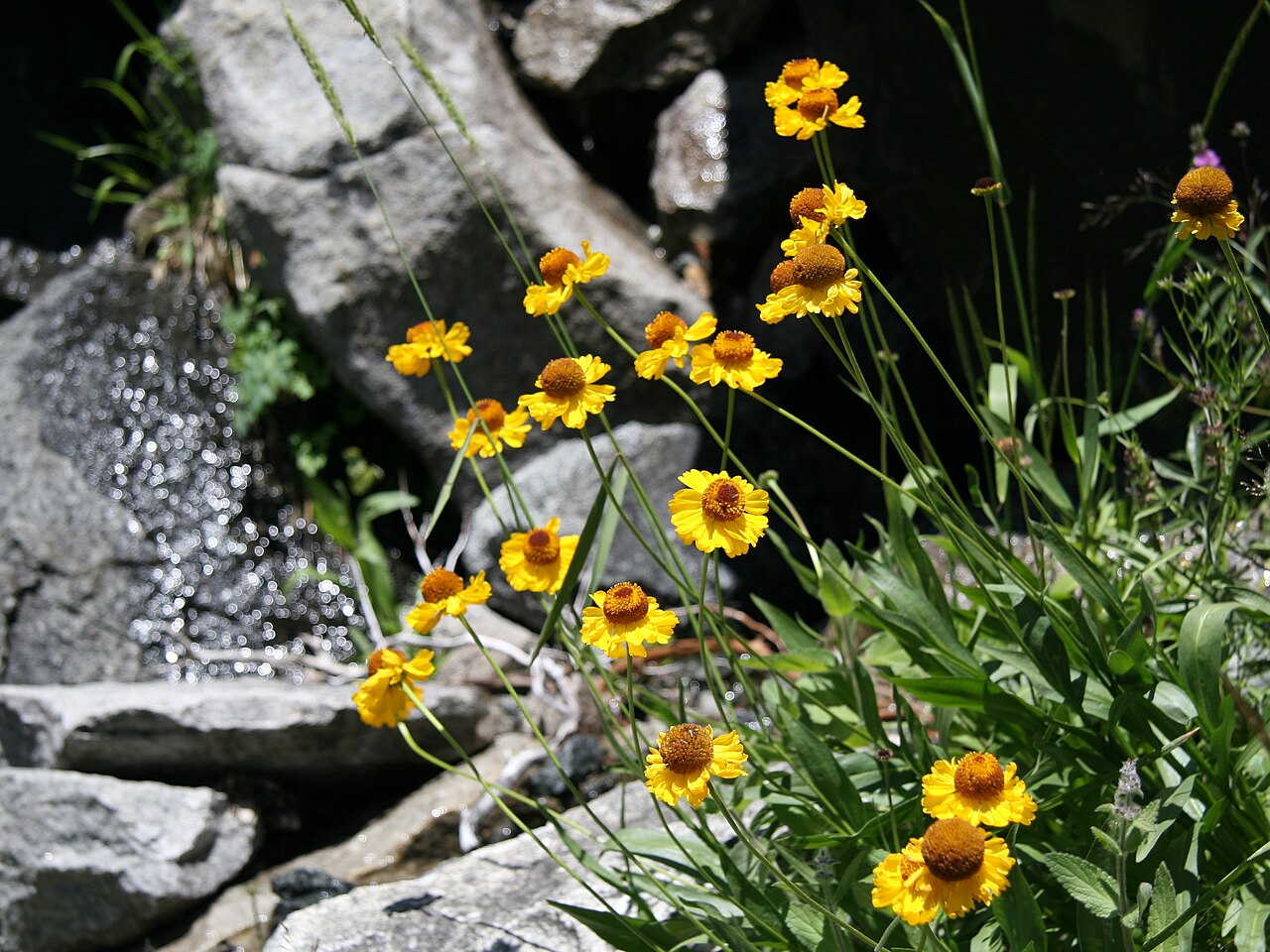
Helenium bigelovii, known as Bigelow’s Sneezeweed, is a showy perennial of wet mountain meadows, seeps and streamsides in California and southwestern Oregon. In summer it carries long-stalked flower heads about 2 inches across, each with a rounded, dark brown dome of disc florets ringed by bright yellow rays that are notched at the tips and often bend back as they age. It belongs to the sunflower family (Asteraceae).
It is one of the classic wildflowers of Sierra Nevada and Klamath Mountains meadows, often growing with corn lilies, leopard lilies and monkeyflowers. Like other sneezeweeds it has stems that are winged by the bases of its leaves, and it attracts a steady stream of bees and butterflies through mid and late summer.
Gardeners should know that sneezeweeds contain bitter compounds that are toxic to livestock and can irritate skin. Bigelow’s sneezeweed is not a plant to plant in pastures, and it should never be eaten. This guide covers identification, native range, safety, and how to grow it in a moist native garden.
Identification
Look in wet, sunny mountain meadows in summer for a sneezeweed with one large flower head per stalk, a dark brown, dome-shaped center and yellow rays. Its stems are winged by narrow strips of leaf tissue running down from each leaf base.
Stems & Roots
Plants grow from a short rootstock and form clumps of one to several upright stems, usually 1 to 3 feet tall and occasionally up to about 4 feet. The stems branch mainly in the upper part, and each leaf base continues down the stem as a narrow green wing.
Leaves
The basal leaves are lance-shaped to oblong, up to about 10 inches long, smooth or nearly so and untoothed, and they often wither by flowering time. The stem leaves are alternate, narrower and smaller upward, and their bases run down the stem to form the wings.
Flowers
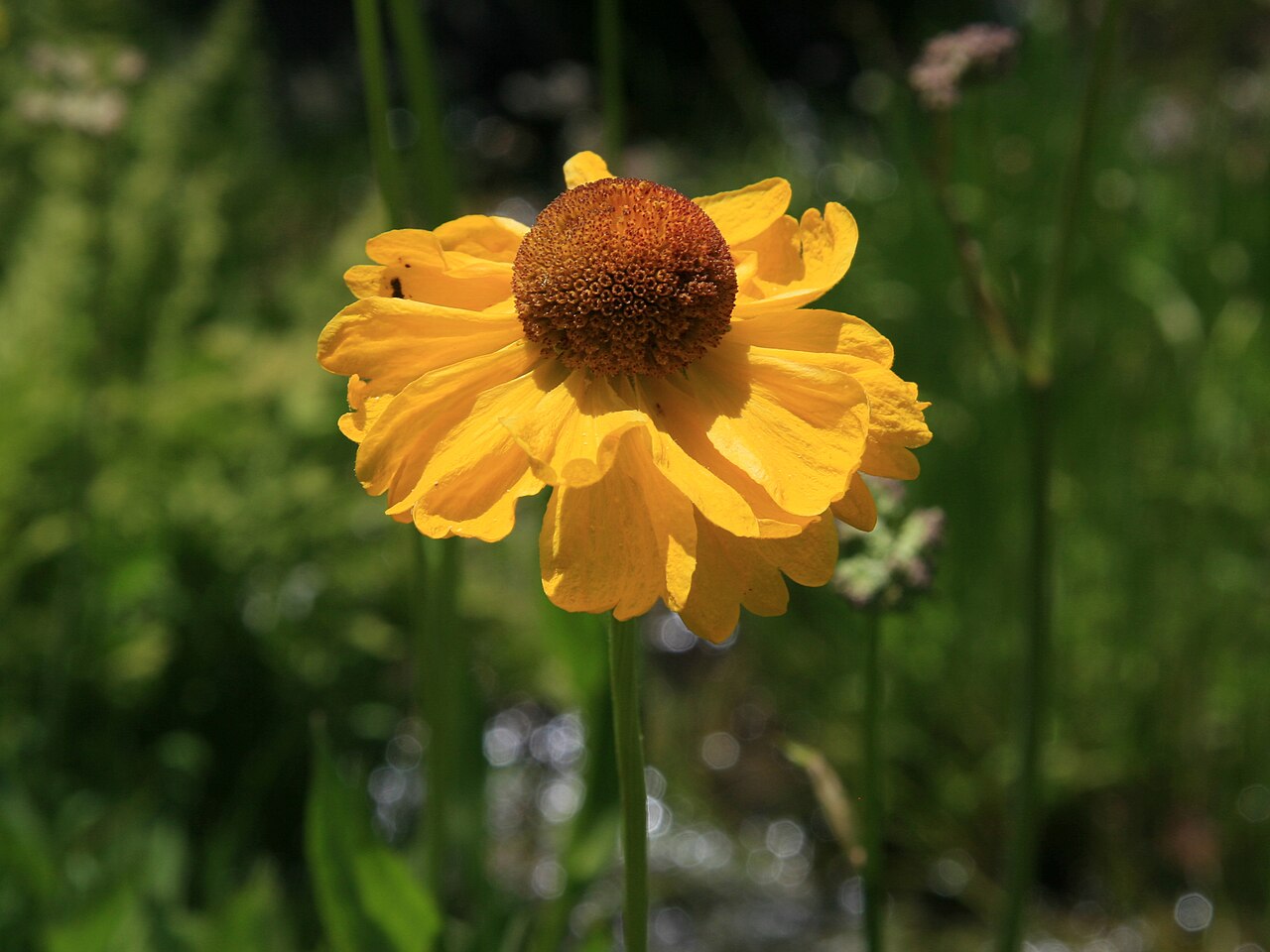
Each plant produces a few to about 20 flower heads, usually borne singly at the tips of long, leafless branches. The disc is hemispheric to nearly globe-shaped, about ¾ to 1¼ inches across, and made up of hundreds of tiny disc florets that are yellow at first but quickly turn dark brown to reddish-brown. Around it are about 14 to 20 yellow ray florets, each with three small teeth at the tip, which spread and then bend backward with age. Bloom time is June to September, depending on elevation.
Fruit & Seeds
Each disc floret produces a small, hairy achene topped with a few thin, pointed scales. The seed heads break apart in late summer and fall.
Look-alikes
Rosilla (Helenium puberulum), which shares much of its range, has a smaller, more globe-shaped disc and very short rays or none at all. Common sneezeweed is a widespread species with many smaller heads per plant and a yellow disc. Mule ears and balsamroots have much larger leaves and grow in drier sites.
Quick Facts
| Scientific Name | Helenium bigelovii A. Gray |
| Family | Asteraceae (sunflower family) |
| Plant Type | Herbaceous perennial |
| Mature Height | 1–3 ft (occasionally to 4 ft) |
| Mature Spread | 1–2 ft |
| Growth Rate | Moderate |
| Sun Exposure | Full sun to light shade |
| Water Needs | High; moist to wet soil through the growing season |
| Soil Type | Moist to wet loam, peat or gravelly soil; meadows, seeps and streambanks |
| Soil pH | About 5.5–7.5 |
| Bloom Time | June–September |
| Flower Color | Yellow rays around a dark brown to reddish-brown disc |
| Fall Color | None notable |
| Fruit | Small hairy achenes with pointed scales |
| Deer Resistant | Yes; bitter and toxic, rarely browsed |
| USDA Hardiness Zones | 6–9 |
Native Range
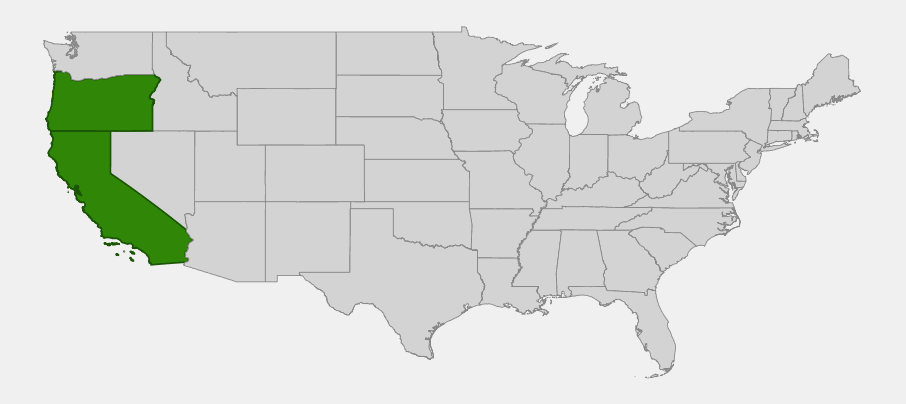
Bigelow’s sneezeweed is native to California and Oregon. It is found through much of the mountainous part of California, including the Sierra Nevada, the Klamath and North Coast Ranges, and the southern Cascades. In Oregon it grows in the southwest, in the Siskiyou Mountains and Rogue River basin and in coastal Curry and Coos counties. USDA PLANTS also lists Arizona, but no specimen or observation records support that, so Arizona is not included here.
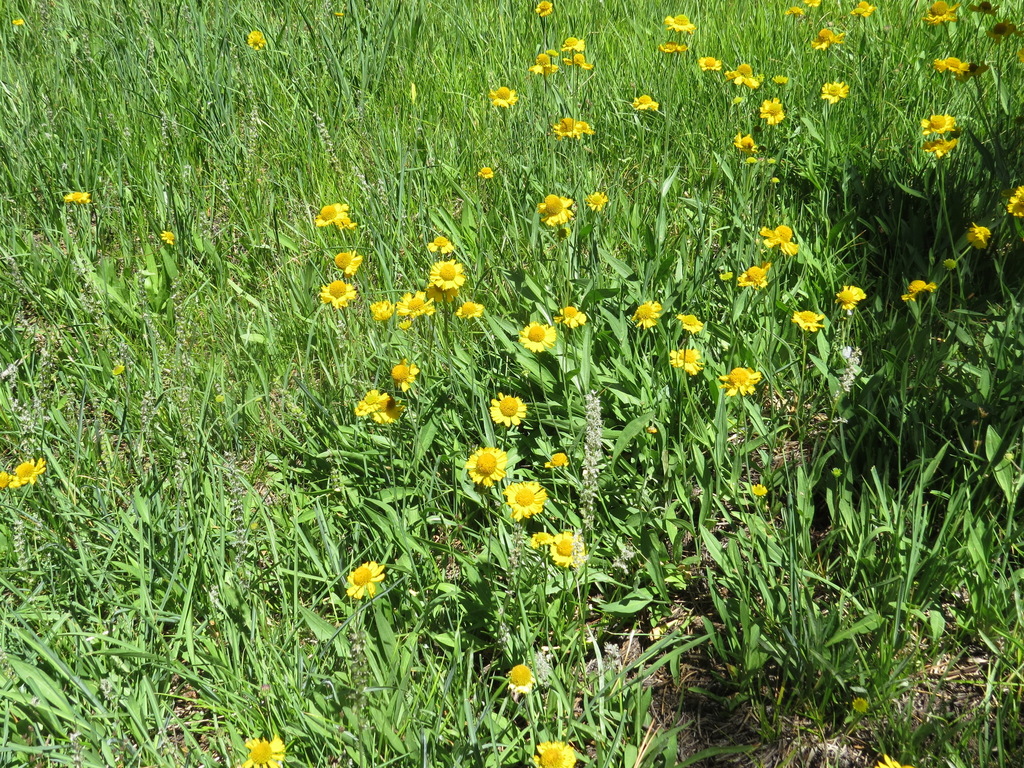
Its habitat is wet, open ground: mountain meadows, fens, seeps, spring-fed slopes, stream and lake margins and boggy openings in conifer forest. In the Klamath-Siskiyou region it also grows in wet serpentine meadows and fens. It occurs from about 1,000 feet near the Oregon coast to about 10,000 feet in the Sierra Nevada.
Because it depends on soils that stay wet into summer, it is a good indicator of healthy, well-watered meadows. Drainage, overgrazing and the drying of meadows can reduce it, while protected meadows in national parks and forests often have large displays in July and August.
📋 Regional plant lists featuring Bigelow’s Sneezeweed: California & Nevada · Western Oregon & Western Washington
Growing & Care Guide
Bigelow’s sneezeweed is occasionally sold by native plant nurseries in California and Oregon, and seed is sometimes available. It is a cheerful choice for a sunny, wet spot such as a rain garden, pond edge or bog margin. Safety note: like other sneezeweeds, it contains bitter sesquiterpene lactones (such as helenalin) that are toxic to livestock, including sheep, cattle and horses, and can cause dermatitis in sensitive people. Do not plant it where animals graze, keep it away from pets that chew plants, wear gloves if your skin is sensitive, and never eat any part of it.
Light
Plant in full sun for the best flowering. It tolerates light shade but becomes floppy and flowers less.
Soil & Water
It needs soil that stays moist to wet through summer. In the wild, snowmelt and springs keep its soil wet, so in a lowland garden plan to water regularly during dry California and Oregon summers, or plant it where water collects naturally. It tolerates a range of soils from loam to gravel and peat, as long as they stay moist.
Planting Tips
Plant in fall or early spring about 12 to 18 inches apart. Group several plants for a stronger display. It works well at the edge of a pond or seasonal stream, or in the wettest zone of a rain garden.
Pruning & Maintenance
Remove spent flower heads to extend bloom, or leave them for the seed. Cut stems back in late fall. Clumps can be divided every few years if they become crowded.
Propagation
Grow it from seed sown in fall or after a few weeks of cold, moist stratification, pressed onto the soil surface since light helps germination. Established clumps can be divided in early spring.
Landscape Uses
- Rain gardens and pond edges: thrives in the wettest sunny parts of the garden
- Wet meadow restoration: a characteristic forb of mountain meadow and fen restoration within its range
- Pollinator gardens: long summer bloom attracts bees and butterflies
- Deer-prone gardens: bitter foliage is rarely browsed by deer
- Cut flowers: the long-stalked heads last well in arrangements; wear gloves if your skin is sensitive
Wildlife & Ecological Value
Bigelow’s sneezeweed is a valuable summer nectar source in western mountain meadows.
For Pollinators
The flower heads attract many native bees, including bumble bees and smaller solitary bees, as well as butterflies, flies and beetles. The Xerces Society notes it as having special value for native bees. Its bloom continues into late summer, when fewer meadow flowers are open.
For Birds
Seed-eating birds may take some seeds in fall, and the insects drawn to the flowers feed meadow birds.
For Mammals
The plant is bitter and toxic, so deer, elk and livestock usually avoid it. Grazing animals that eat large amounts when other forage is scarce can be poisoned.
Ecosystem Role
As a long-lived perennial of wet meadows, it contributes to the dense root mat that holds meadow soils in place and slows erosion along streams. Because grazing animals avoid it, it can remain common in meadows where more palatable plants have been grazed down.
Cultural & Historical Uses
Asa Gray named Helenium bigelovii in the 1850s for John Milton Bigelow, a physician and botanist who collected plants on the United States and Mexican Boundary Survey and on a Pacific Railroad survey across the Southwest to California. The genus name Helenium is traditionally linked to Helen of Troy.
The common name sneezeweed comes from the use of the dried, powdered flower heads and leaves of some species as snuff to cause sneezing. Bigelow’s sneezeweed contains the same kind of bitter, irritating compounds, and it is not a food or medicinal plant.
Today it is valued by native plant gardeners in California and Oregon, and it has occasionally been grown and selected as a garden ornamental. Its summer displays in Sierra Nevada and Klamath meadows are a familiar sight to hikers and backpackers.
Frequently Asked Questions
Is Bigelow’s sneezeweed poisonous?
Yes, to livestock and potentially to pets and people. It contains sesquiterpene lactones such as helenalin, which are toxic to sheep, cattle, horses and other animals if eaten, and the plant can irritate sensitive skin. Do not plant it in pastures, and never eat it.
Does sneezeweed make you sneeze?
Not from its pollen. The name comes from the old practice of using dried, powdered sneezeweed plants as snuff, which caused sneezing. Like other insect-pollinated flowers, its pollen is heavy and not a major cause of hay fever.
Can I grow it in a dry garden?
No. It needs consistently moist to wet soil, like the meadows and seeps where it grows wild. In a dry garden it will decline quickly in summer.
How is it different from rosilla?
Rosilla (Helenium puberulum) has a smaller, nearly round disc and very short rays or none. Bigelow’s sneezeweed has a larger, dark brown dome surrounded by conspicuous yellow rays up to about an inch long.
Where can I see it in the wild?
In wet meadows of the Sierra Nevada, such as in Sequoia and Yosemite National Parks, and in the Klamath Mountains and southwestern Oregon, especially from July to August.

Looking for a nursery that carries Bigelow’s Sneezeweed?
Browse our native plant nursery directory: California · Oregon

