Leopard Lily (Lilium pardalinum)
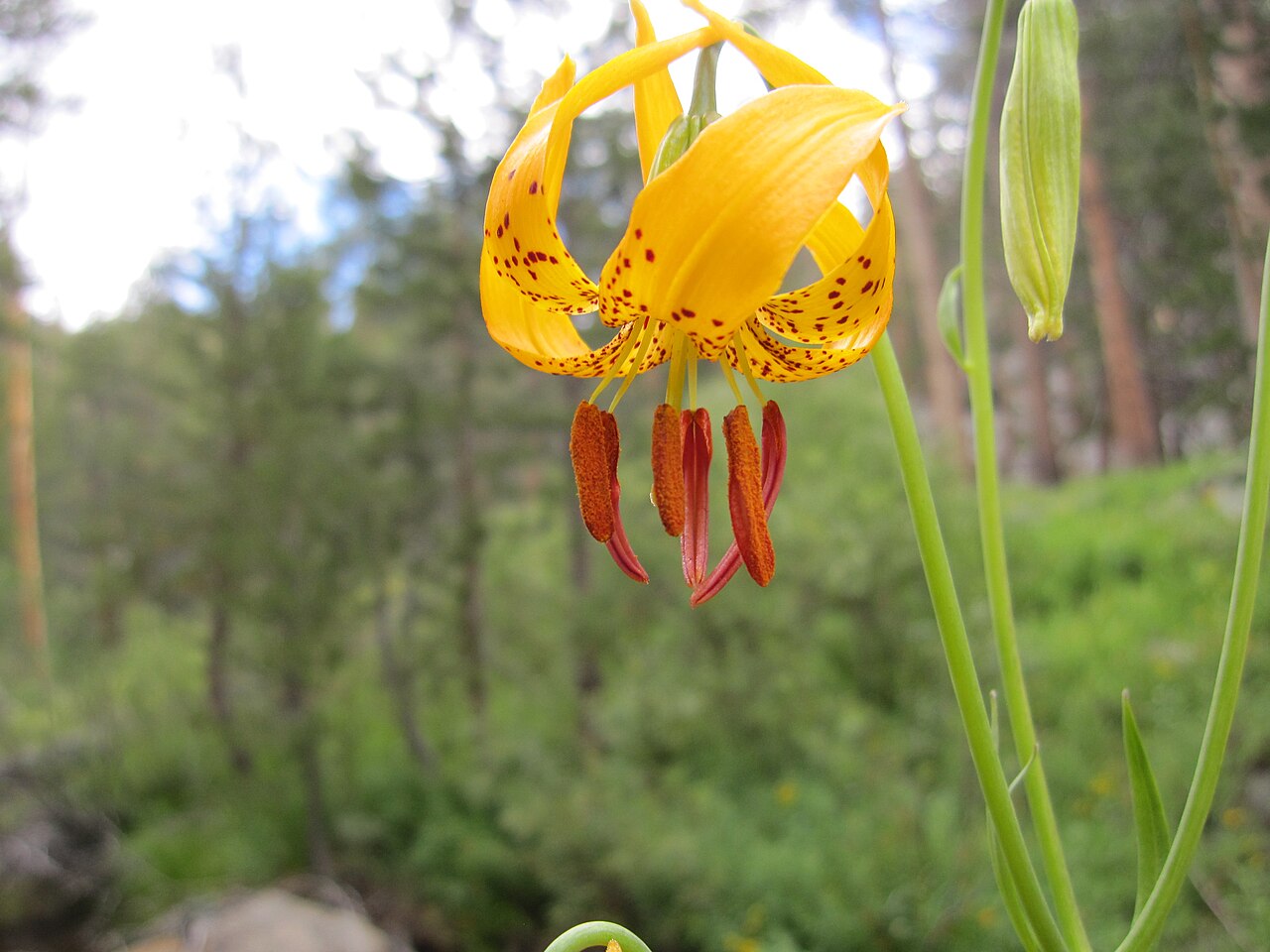
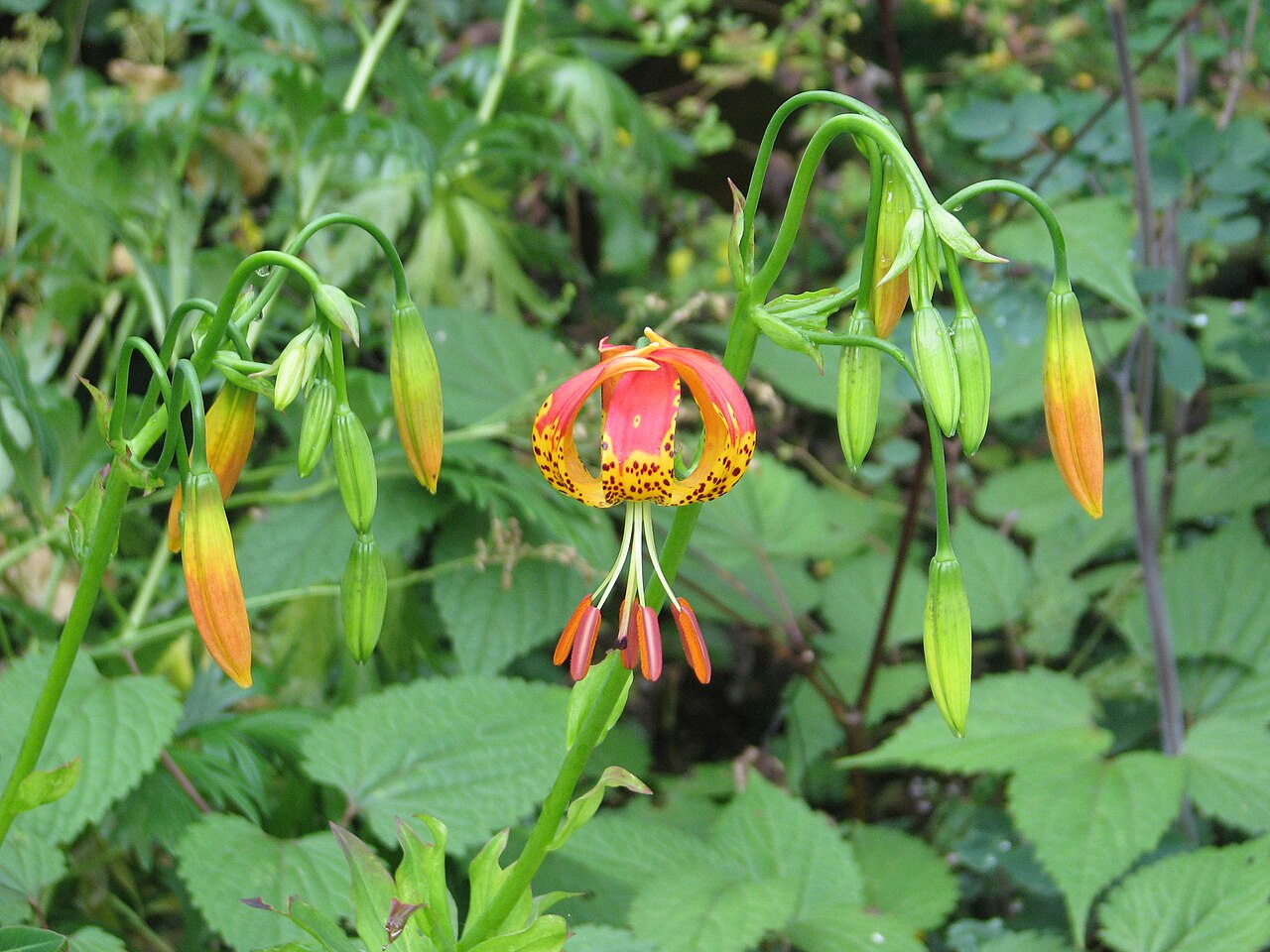
Lilium pardalinum, the Leopard Lily or Panther Lily, is one of the showiest native wildflowers of the Pacific Coast, lighting up streambanks and wet meadows from the Sierra Nevada to the coastal ranges of Oregon and California with its nodding, orange-to-red, leopard-spotted blooms. Each flower is a classic Turk’s-cap lily, its six petals curled sharply backward to expose a cluster of long, dangling stamens tipped in rust-colored pollen — a design built for the hummingbirds and swallowtail butterflies that pollinate it.
A mature clump can send up stems 3 to 8 feet tall, each one carrying anywhere from a handful to more than a dozen flowers in a loose, branching cluster near the top. The bulbs are rhizomatous, creeping slowly outward underground and forming dense colonies over the years in favorable sites — a single long-established patch of leopard lily, found blooming along a shaded Sierra Nevada creek in July, can be an unforgettable sight.
Leopard lily is also one of the easier native lilies to bring into cultivation, provided it gets what it wants: reliably damp soil and at least some shade from the hottest afternoon sun. It has earned the Royal Horticultural Society’s Award of Garden Merit and is a mainstay of West Coast native plant gardens, woodland borders, and pond margins, where its height and color bring a vertical, late-spring-into-summer accent that few other native perennials can match.
Identification
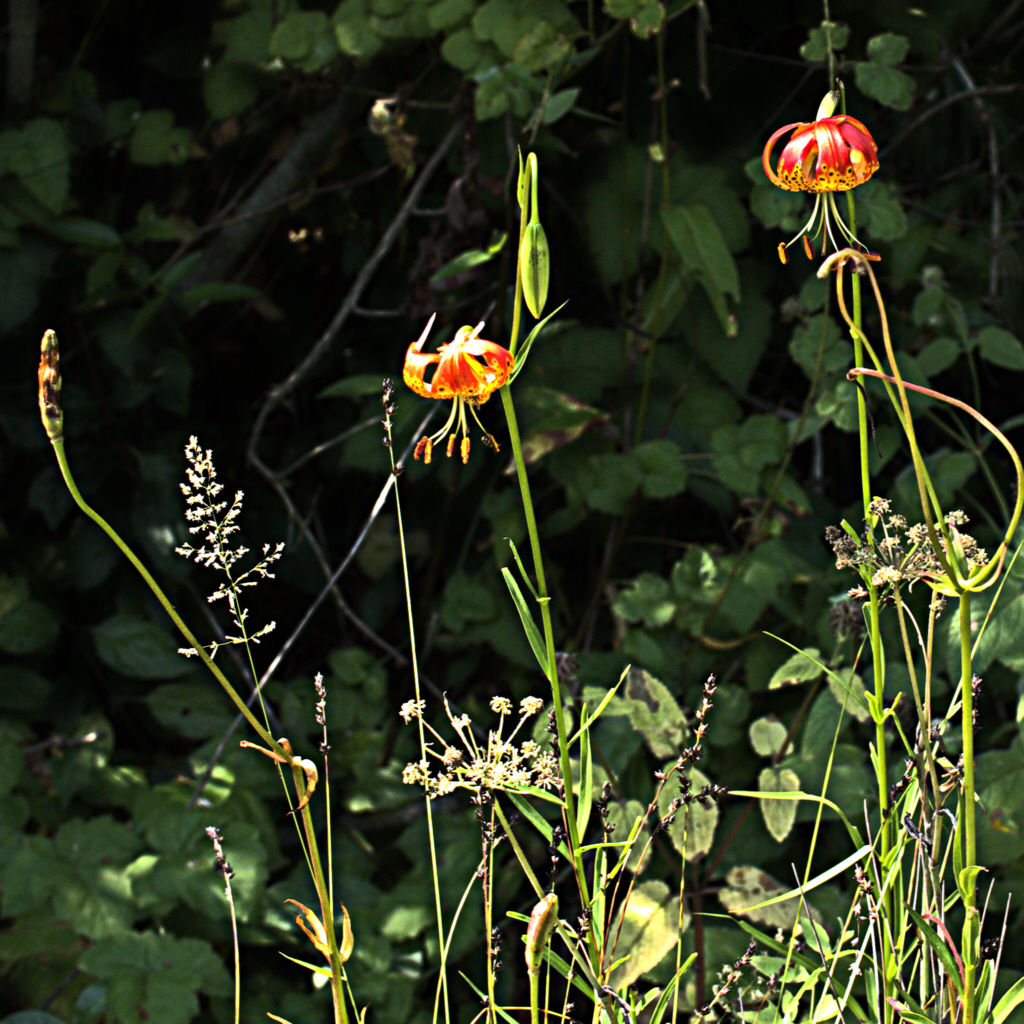
Leopard lily is best recognized by its tall, leafy stems topped with nodding, strongly recurved orange-red flowers covered in dark spots — a combination that, once seen, is hard to mistake for anything else in its native range.
Stems & Leaves
Stems are upright, unbranched below the flower cluster, and typically 3 to 6 feet tall, occasionally reaching as much as 8 feet in the most vigorous plants. Leaves are narrow and lance-shaped, arranged in whorls of six to ten around the stem at regular intervals — a whorled leaf arrangement that is itself a useful identification clue among Western lilies.
Flowers
Flowers nod downward from the top of the stem in a loose, branched cluster of anywhere from a few to upwards of a dozen blooms. Each flower has six strongly reflexed (curled-back) petals, orange to red-orange at the tips and yellow-orange toward the throat, patterned throughout with numerous small brown to maroon spots — the “leopard” pattern that gives the species its common name. Six long stamens hang well below the petals, tipped with rust-brown anthers, and bloom typically peaks in July.
Bulbs
The bulbs are rhizomatous and scaly, made up of many small bulblets clustered along a creeping underground stock rather than forming a single large bulb. This habit allows established colonies to slowly expand outward over the years, forming the dense, multi-stemmed clumps for which the species is known in the wild.
Fruit & Seeds
The fruit is an upright, three-chambered capsule that splits open at maturity to release flat, papery seeds.
Quick Facts
| Scientific Name | Lilium pardalinum |
| Family | Liliaceae (Lily) |
| Plant Type | Bulbous Perennial |
| Mature Height | 3–6 ft (to 8 ft in ideal sites) |
| Mature Spread | 1–2 ft per stem clump, spreading by rhizome |
| Growth Rate | Moderate; forms expanding colonies over years |
| Sun Exposure | Part Sun to Light Shade |
| Water Needs | High; consistently moist soil |
| Soil Type | Moist, humus-rich, well-drained |
| Soil pH | 5.5–6.8 (slightly acidic) |
| Bloom Time | June – July |
| Flower Color | Orange to red-orange with maroon spots |
| Fall Color | Foliage yellows and dies back; dormant in winter |
| Fruit | Upright 3-chambered seed capsule |
| Deer Resistant | No (deer and other browsers eat lilies readily) |
| USDA Hardiness Zones | 5–9 |
Native Range
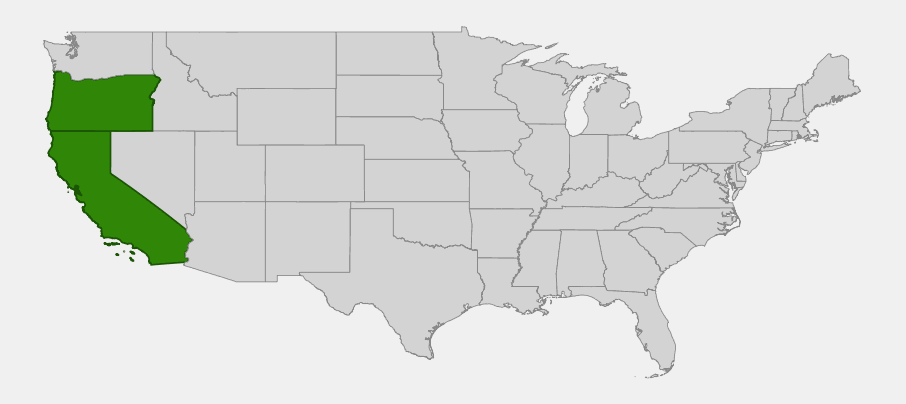
Leopard lily is native to the Pacific Coast of the United States, found from southwestern Oregon south through California’s Coast Ranges and Sierra Nevada foothills and mid-elevations, with its range extending as far south as Baja California, Mexico. Botanists recognize several regional subspecies within this range — including the Shasta lily of northern California and southern Oregon, Vollmer’s and Wiggins’ lilies of southwestern Oregon and northwestern California, and the federally endangered Pitkin Marsh lily, a highly localized subspecies restricted to a handful of wetland sites in Sonoma County, California.
Across its range the species grows in consistently damp ground: streambanks, seeps, wet meadows, and the edges of marshes and bogs, usually in dappled shade beneath oaks, conifers, or streamside shrubs, though it also tolerates more open sun where soil moisture is reliable. It is found from near sea level in coastal canyons up into mid-elevation Sierra Nevada forest, generally below about 6,000 feet.
Because leopard lily depends so heavily on consistent soil moisture, many populations are tied to specific seeps, springs, and streamside microhabitats rather than being spread evenly across the landscape — a pattern worth keeping in mind for gardeners hoping to recreate its growing conditions at home.
📋 Regional plant lists featuring Leopard Lily: California & Nevada · Western Oregon & Western Washington
Growing & Care Guide
Leopard lily rewards gardeners who can give it consistently moist soil and some protection from the hottest sun, forming expanding, long-lived colonies that need very little fuss once established.
Light
Plant in part sun to light, dappled shade — the open, high shade of oaks or conifers mimics its natural streamside habitat well. In cooler coastal climates it tolerates more direct sun as long as soil moisture stays consistent; in hot inland gardens, afternoon shade helps prevent stress.
Soil & Water
This species wants moist, humus-rich, well-drained soil and does not tolerate either standing water around the bulbs or prolonged drought. A site with reliable seasonal moisture — the edge of a pond, a streamside bed, or a spot that receives regular irrigation — comes closest to its native growing conditions. Mulching with leaf litter or compost helps retain soil moisture and keeps the root zone cool.
Planting Tips
Plant bulbs in fall, setting them 4 to 6 inches deep in loosened, humus-rich soil. Because the bulbs are rhizomatous and spread slowly outward, give new plantings room to expand over several years rather than crowding them tightly. Leopard lily transplants best as dormant bulbs or container-grown plants rather than from bare-root stock left exposed to air for long, since the scaly bulbs dry out quickly.
Pruning & Maintenance
Deadhead spent flowers if desired, but allow the foliage to yellow and die back naturally after bloom, since the leaves continue feeding the bulb for next year’s growth. Established clumps need little maintenance beyond consistent watering through summer dry spells; division is rarely necessary but can be done in fall if a colony becomes overcrowded.
Landscape Uses
Leopard lily is well suited to:
- Woodland gardens under open oak or conifer canopy
- Streamside and pond-margin plantings
- Native plant and wildlife gardens seeking summer color and height
- Cut flower borders, where its long stems and Turk’s-cap blooms shine
- Naturalized colonies in consistently moist, partly shaded ground
Wildlife & Ecological Value
Leopard lily’s bright, nectar-rich flowers make it a valuable midsummer resource for a range of West Coast pollinators, especially those with the reach to access its deep, hanging blooms.
For Pollinators
Hummingbirds are frequent visitors, drawn by the tubular shape and bright color of the flowers, and large native bees and swallowtail butterflies also work the blooms for nectar and pollen. The long, exserted stamens are positioned to brush pollen onto visiting hummingbirds and large insects as they feed.
For Birds
Beyond hummingbirds feeding directly on nectar, the dense foliage and flower stalks of established colonies provide cover for small birds moving through streamside vegetation.
Ecosystem Role
As a conspicuous, colony-forming perennial of streambanks and wet meadows, leopard lily helps stabilize damp soil along watercourses and adds structural and bloom diversity to riparian plant communities that might otherwise be dominated by grasses, sedges, and shrubs. Its reliance on consistent soil moisture also makes it something of an indicator species — thriving where streamside hydrology remains healthy and declining where it has been disrupted.
Cultural & Historical Uses
Leopard lily has been admired and collected by botanists and gardeners since the nineteenth century; it was formally described by the pioneering California botanist Albert Kellogg, one of the founders of the California Academy of Sciences, reflecting its early recognition as one of the Pacific Coast’s most striking native wildflowers.
The species has long been valued in horticulture both in North America and in Britain, where it has been grown for well over a century and has received the Royal Horticultural Society’s Award of Garden Merit for its reliable garden performance. It remains a popular subject for cut flowers and native plant landscaping along the entire length of its West Coast range.
The Pitkin Marsh lily, a rare subspecies restricted to a small number of Sonoma County wetland sites, has become a particular focus of California conservation efforts since its federal listing as endangered, underscoring how closely tied the health of the broader leopard lily complex is to the preservation of its specific wetland and streamside habitats.
Frequently Asked Questions
Is Leopard Lily the same as Tiger Lily?
No, though the two are sometimes confused and share a similar spotted, recurved-petal look. “Tiger lily” more often refers to the Asian species Lilium lancifolium cultivated in gardens worldwide; Lilium pardalinum is a distinct North American native, though “tiger lily” is occasionally used informally as a regional nickname for it as well.
How long does it take Leopard Lily to bloom from a new planting?
A newly planted bulb typically takes one to two years to reach flowering size and may not bloom in its first season while it establishes its root system; established colonies bloom reliably every year.
Does Leopard Lily need full sun?
No — it generally performs best with part sun to light shade and consistent moisture, closer to its native streamside and woodland-edge habitat than to a hot, dry, full-sun bed.
Is the Pitkin Marsh lily the same plant as Leopard Lily?
The Pitkin Marsh lily is a federally endangered subspecies of leopard lily (Lilium pardalinum subsp. pitkinense), restricted to a small number of wetland sites in Sonoma County, California, and should not be collected or disturbed in the wild.
What pollinates Leopard Lily?
Hummingbirds are its most visible pollinators, along with large native bees and swallowtail butterflies, all drawn to the nectar-rich, brightly colored, strongly scented flowers.
Is Leopard Lily safe to plant around pets?
Like other true lilies in the genus Lilium, every part of the plant — leaves, flowers, pollen, and bulbs — is highly toxic to cats and can cause fatal kidney failure even in small amounts. Keep it out of reach of cats, and seek emergency veterinary care immediately if a cat chews on or ingests any part of the plant.

Looking for a nursery that carries Leopard Lily?
Browse our native plant nursery directory: California · Oregon