
Stream Violet (Viola glabella)
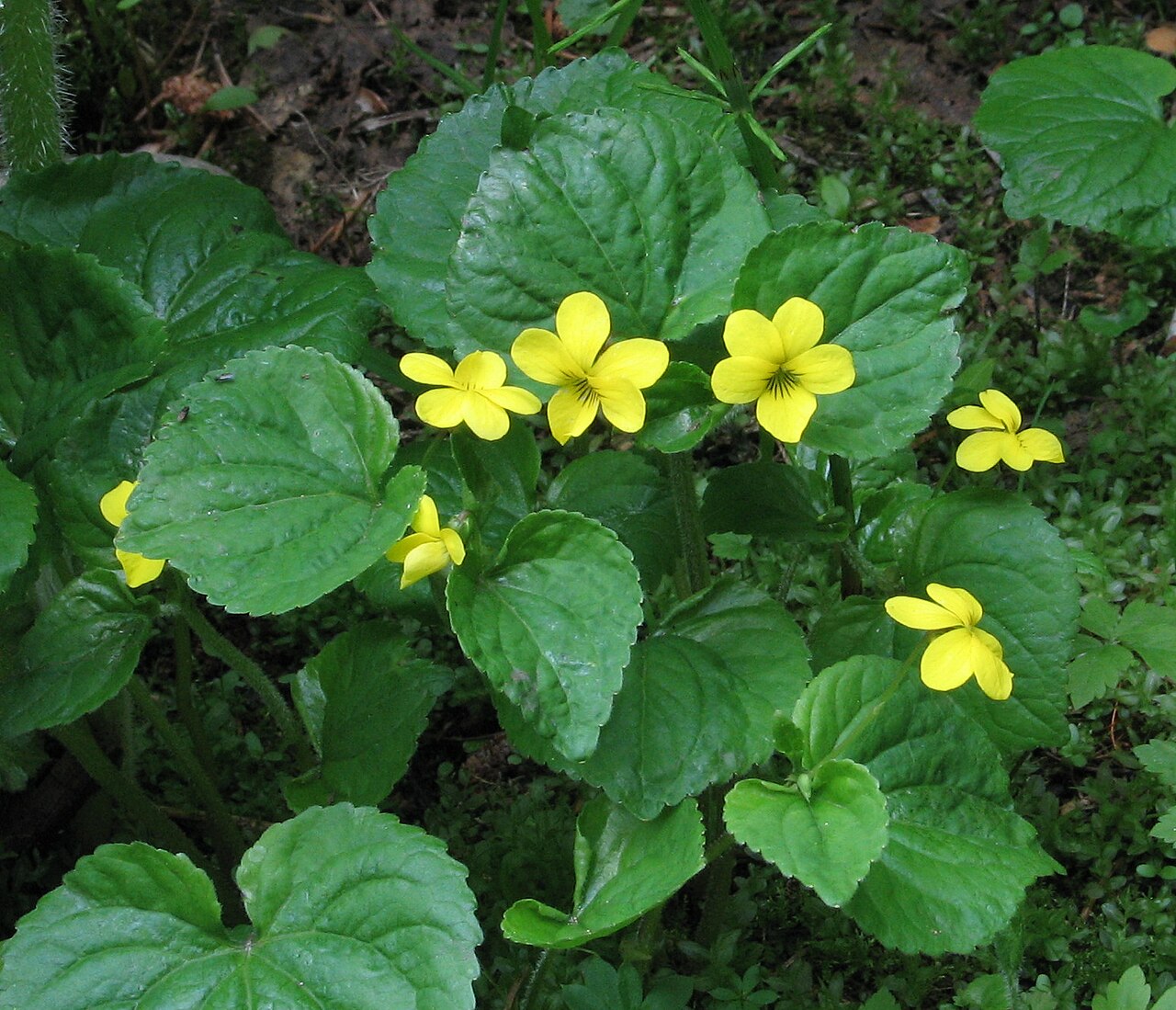
Viola glabella, known as Stream Violet, pioneer violet (the USDA common name), or yellow wood violet, is one of the most familiar spring wildflowers of the Pacific Northwest. In early spring its bright lemon-yellow flowers light up the floors of moist conifer forests, stream banks and shady ravines from Alaska to California. It is a low, leafy-stemmed perennial of the violet family (Violaceae), usually 4 to 12 inches tall, with glossy, heart-shaped leaves.
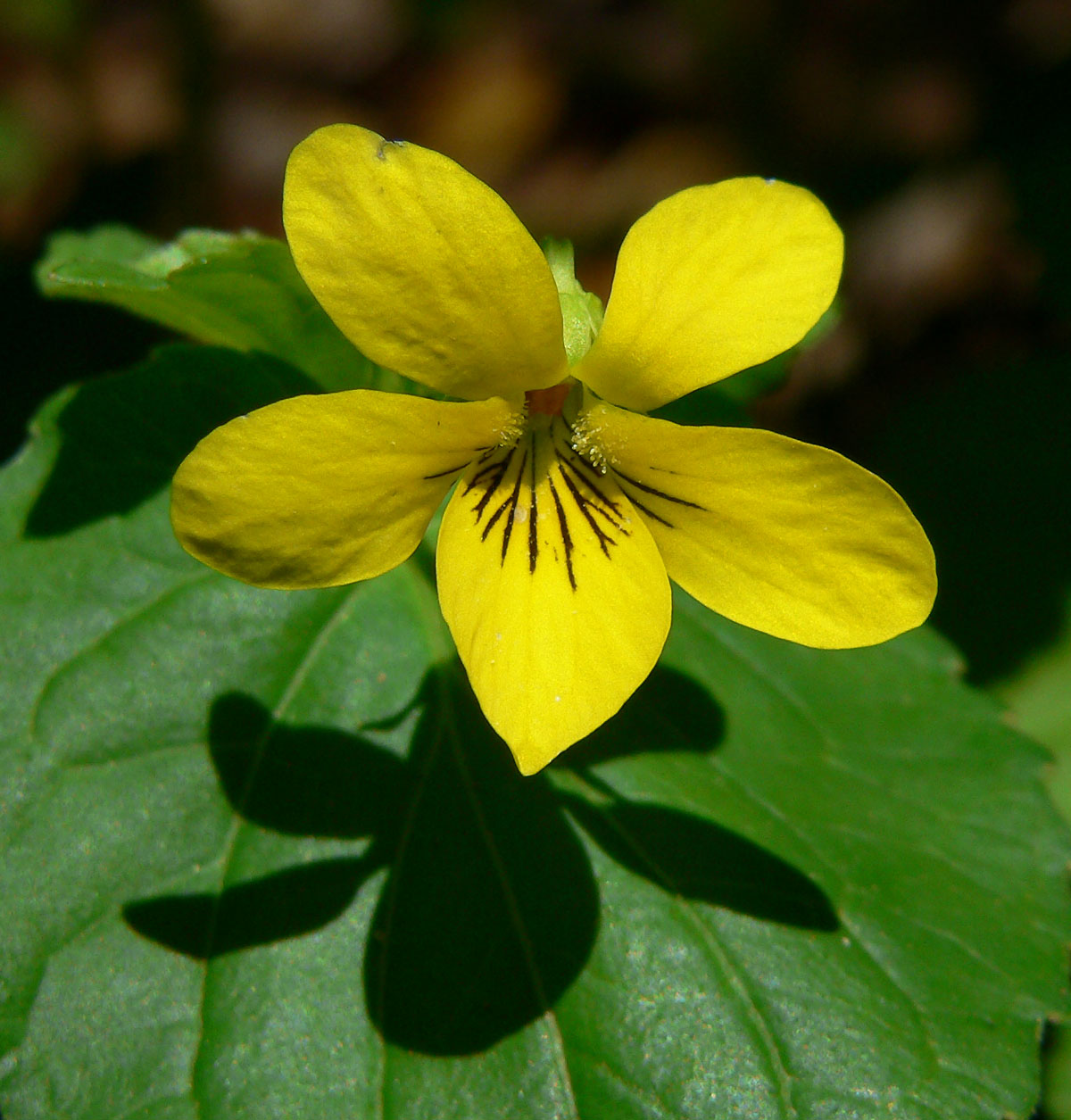
The species name glabella means “smoothish” and refers to the plant’s mostly hairless leaves and stems. Each flower has five yellow petals, and the lower three are marked with fine purple-brown lines that guide bees to the nectar. Stream violet spreads by short underground rhizomes and often forms loose carpets in rich, damp soil, especially along creeks and seeps and in old-growth forest openings.
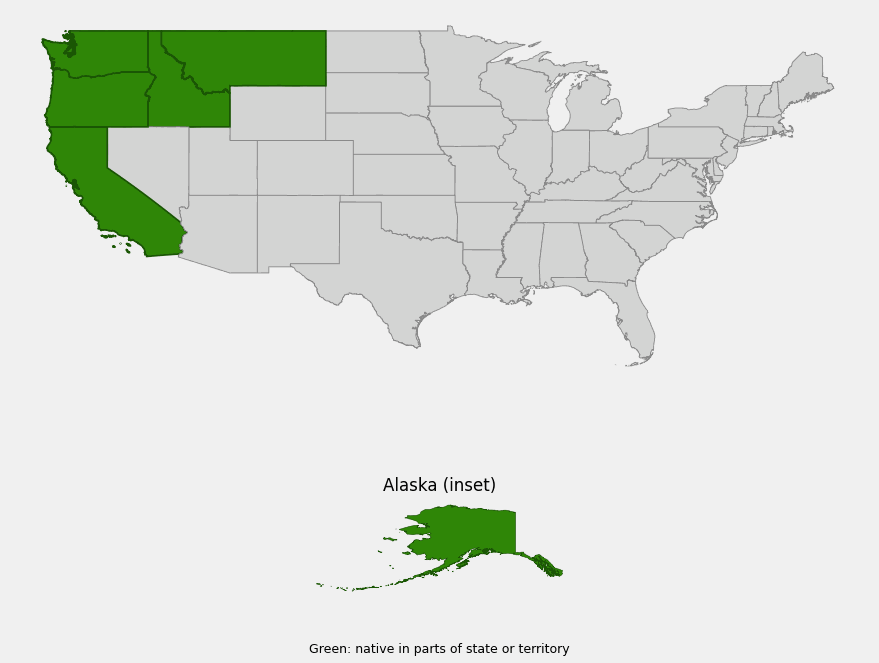
Its native range covers the coast and mountains of western North America from Alaska and British Columbia south through Washington and Oregon to California, and inland to Alberta, Idaho and Montana. It also grows in northeastern Asia. For gardeners in the Pacific Northwest and northern California it is one of the easiest native groundcovers for moist shade, and it is an important food plant for fritillary butterflies. This guide explains how to identify it, where it grows and how to grow it.
Identification
Stream violet is one of a handful of yellow violets in the West. Its combination of a leafy stem, broad heart-shaped leaves crowded near the top of the stem, and clear yellow flowers makes it fairly easy to recognize.
Stems & Roots
Plants grow from short, fleshy, horizontal rhizomes that branch and slowly form patches. Each year they send up one to several smooth, leafy stems 4 to 12 inches tall (occasionally taller in rich, shady sites). The stems are bare below and carry leaves and flowers mainly near the top.
Leaves
The basal leaves are on long stalks, and the stem leaves cluster near the top of the stem on shorter stalks. All are heart-shaped to kidney-shaped with a pointed tip, 1 to 4 inches wide, bright green, thin and smooth or only sparsely hairy, with finely toothed edges. The leaves are often slightly glossy, and they die back by late summer in drier sites.
Flowers
The flowers rise on slender stalks from the axils of the upper leaves. Each is about ½ to ¾ inch across, with five bright yellow petals. The lower three petals carry dark purple-brown lines (nectar guides), the two side petals are bearded with short hairs near the center, and the lowest petal extends back into a short spur that holds nectar. The backs of the upper petals are sometimes tinged purple.
Bloom time depends on elevation and latitude: from about March at low elevations along the coast to June or July in the mountains and in Alaska.
Fruit & Seeds
After flowering the plant forms small, smooth capsules that split into three boat-shaped valves. As the valves dry they squeeze the seeds and shoot them a short distance. Like many violets, the seeds carry an oily appendage (elaiosome) that attracts ants, which carry the seeds away and help spread the plant.
Similar Species
Several other yellow violets grow in the West. Goosefoot violet and Nuttall’s violet (Viola purpurea and V. nuttallii) have narrower leaves and grow in drier, open places. Evergreen violet (V. sempervirens) has small, leathery, evergreen leaves on creeping stems. In the East, Downy Yellow Violet is very similar but has hairier leaves and stems, and Round-Leaved Yellow Violet has no leafy stem.
Quick Facts
| Scientific Name | Viola glabella Nutt. |
| Family | Violaceae (violet family) |
| Plant Type | Herbaceous perennial wildflower spreading by rhizomes |
| Mature Height | 4–12 in |
| Mature Spread | 6–12 in per clump; slowly forms carpets |
| Growth Rate | Moderate |
| Sun Exposure | Part shade to full shade |
| Water Needs | Medium to high; soil should stay moist |
| Soil Type | Rich, humusy loam; moist forest soils and stream banks |
| Soil pH | About 5.0–7.0 (acidic to neutral) |
| Bloom Time | March–July, depending on elevation |
| Flower Color | Bright yellow with purple-brown nectar lines |
| Fall Color | None; leaves die back in late summer or fall |
| Fruit | Small three-valved capsule that ejects seeds |
| Deer Resistant | Low; deer, elk and rabbits browse it |
| USDA Hardiness Zones | 3–8 |
Native Range
Stream violet is a plant of the Pacific Rim. In North America it ranges from southern and southeastern Alaska through British Columbia and western Alberta, south through Washington, Oregon and northern Idaho and western Montana, and into California, where it grows in the Coast Ranges and the Sierra Nevada. USDA PLANTS records it as native in Alaska, California, Idaho, Montana, Oregon and Washington. Across the Pacific it grows in northeastern Asia, including Japan, the Kuril Islands and the Russian Far East.
It is especially common west of the Cascades, in the moist conifer forests of western Washington, western Oregon, coastal British Columbia and southeastern Alaska, where it is one of the most abundant spring wildflowers on forest floors and stream banks. East of the Cascades and in the northern Rocky Mountains it is more local, confined to moist canyons, riparian forests and subalpine meadows. In California it is mostly found in the north and in the Sierra Nevada.
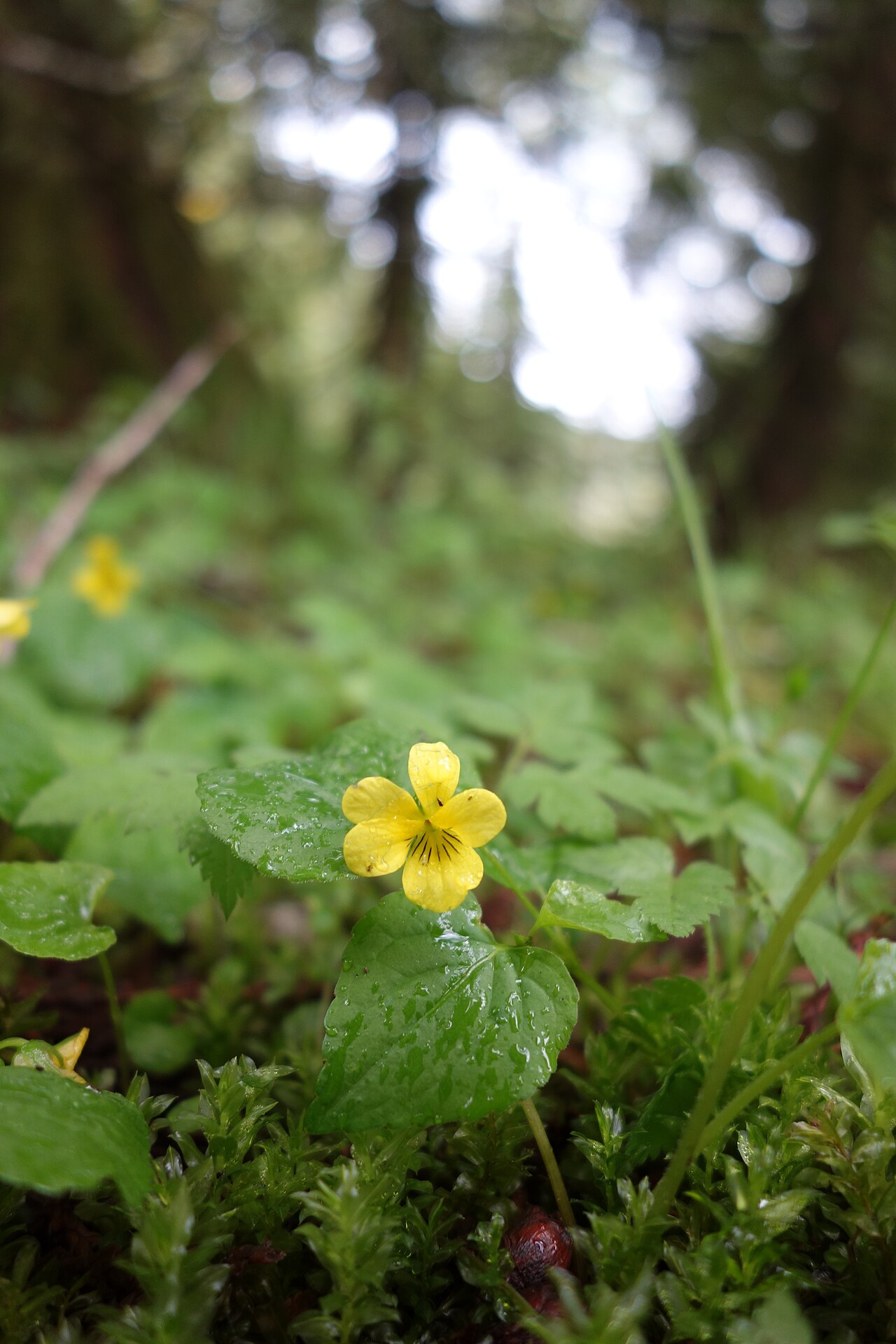
Stream violet grows from sea level to subalpine elevations. Typical habitats include moist coniferous and mixed forests, alder and maple thickets, shaded stream banks, seeps, avalanche chutes and wet subalpine meadows, often in rich soil with abundant leaf litter.
📋 Regional plant lists featuring Stream Violet: Western Oregon & Western Washington · California & Nevada · Idaho, Eastern Oregon & Eastern Washington · Montana & Wyoming · Alaska
Growing & Care Guide
Stream violet is easy to grow in the cool, moist, shady conditions it enjoys in the wild. It is a good choice for woodland gardens in the Pacific Northwest, northern California and similar climates, where it fills in under shrubs and ferns and provides early color.
Light
Give it part shade to full shade. Morning sun with afternoon shade is ideal. In hot, sunny sites the leaves scorch and the plant goes dormant early.
Soil & Water
Plant it in rich, loose, humusy soil that stays moist, especially in spring. A layer of leaf litter or shredded leaf mulch helps keep the roots cool and damp. Water regularly during dry spells in its first year. Established plants tolerate some summer dryness by going dormant, but they look best when soil stays moist into summer. Fertilizer is rarely needed.
Planting Tips
Plant in early spring or fall, spacing plants 8 to 12 inches apart. Stream violet looks natural in drifts under shrubs and ferns, along shady paths, beside streams and ponds, or in a rain garden on the shady side of a house. It combines well with sword fern, western trillium, fringe cups and other forest wildflowers.
Pruning & Maintenance
Little care is needed. Let fallen leaves stay around the plants as mulch, and leave the plants alone in late summer when they die back. Slugs sometimes chew the leaves in wet springs. Keep aggressive groundcovers such as English ivy away, since they will smother it.
Propagation
Divide established clumps in early spring or fall by cutting the rhizomes into pieces with buds and roots. Seeds can be collected just before the capsules split (bag a few capsules to catch them) and sown outdoors in fall, since they need a cold, moist winter period to germinate. Plants will also self-sow modestly in favorable sites.
Landscape Uses
- Woodland gardens: an early-blooming groundcover under conifers, shrubs and ferns
- Stream banks and pond edges: in moist, shady soil along water features
- Shade rain gardens: on the upper edges of rain gardens and bioswales in shade
- Butterfly gardens: larval food plant for native fritillary butterflies
- Restoration: riparian and forest-floor restoration within its native range
Wildlife & Ecological Value
Stream violet is small, but it plays a valuable role in the forests where it grows, both as an early source of nectar and as a host plant for butterflies.
For Pollinators
The early flowers are visited by bumble bee queens, mason bees, small solitary bees, bee flies and other early-season insects. Violets are the caterpillar food plants for the greater fritillaries (Speyeria), and stream violet is among the violets used by fritillaries in western forests and meadows. Planting violets is one of the most direct ways to support these butterflies.
For Birds
Ground-feeding birds such as grouse and juncos may eat violet seeds and leaves, and the insects attracted to the plants provide food for songbirds in spring.
For Mammals
Deer, elk and rabbits browse the leaves, and small rodents eat the seeds. The plant tolerates moderate browsing because it regrows from its rhizomes.
Ecosystem Role
Stream violet is part of the herb layer of moist western forests, where it helps cover and stabilize soil on stream banks and slopes. Its ant-dispersed seeds take part in a mutualism common among woodland wildflowers: ants eat the oily seed appendage and leave the seed in nutrient-rich nest debris, where it can germinate.
Cultural & Historical Uses
The English-American naturalist Thomas Nuttall described Viola glabella in 1838 from specimens collected in the Pacific Northwest. Nuttall collected widely in the West during the 1830s, and the plant became one of the best-known western violets. The names stream violet and yellow wood violet describe its favorite habitats; USDA PLANTS lists it as pioneer violet.
Violet leaves and flowers have been eaten in small amounts as greens and garnishes in many cultures, and some Indigenous peoples of the Northwest are reported to have used violets as food or medicine. Specific uses of stream violet are not well documented, so it is best enjoyed as a garden and wildlife plant rather than an herbal remedy.
For many hikers in the Cascades and Olympic Mountains, stream violets carpeting the forest floor are a sign of spring, and they appear in many regional wildflower guides. In gardens, they are a good substitute for nonnative groundcovers in moist shade.
Frequently Asked Questions
Is stream violet the same as pioneer violet?
Yes. Stream violet, pioneer violet and yellow wood violet are all common names for Viola glabella. USDA PLANTS uses pioneer violet.
Does stream violet spread aggressively?
It spreads slowly by rhizomes and modestly by seed, forming loose carpets in moist shade. It is not invasive and is easy to remove where it is not wanted.
Will stream violet grow in sun?
It prefers part to full shade. In full sun it needs constantly moist soil, and in hot, dry sites it will scorch and go dormant early.
Is stream violet good for butterflies?
Yes. Violets are the caterpillar food plants of fritillary butterflies, and the early flowers provide nectar for bees and other spring pollinators.
When does stream violet bloom?
At low elevations along the Pacific coast it blooms from March to May. In the mountains and in Alaska it blooms later, into June or July, soon after snowmelt.

Looking for a nursery that carries Stream Violet?
Browse our native plant nursery directory: Alaska · California · Idaho · Montana · Oregon · Washington