Western Trillium (Trillium ovatum)
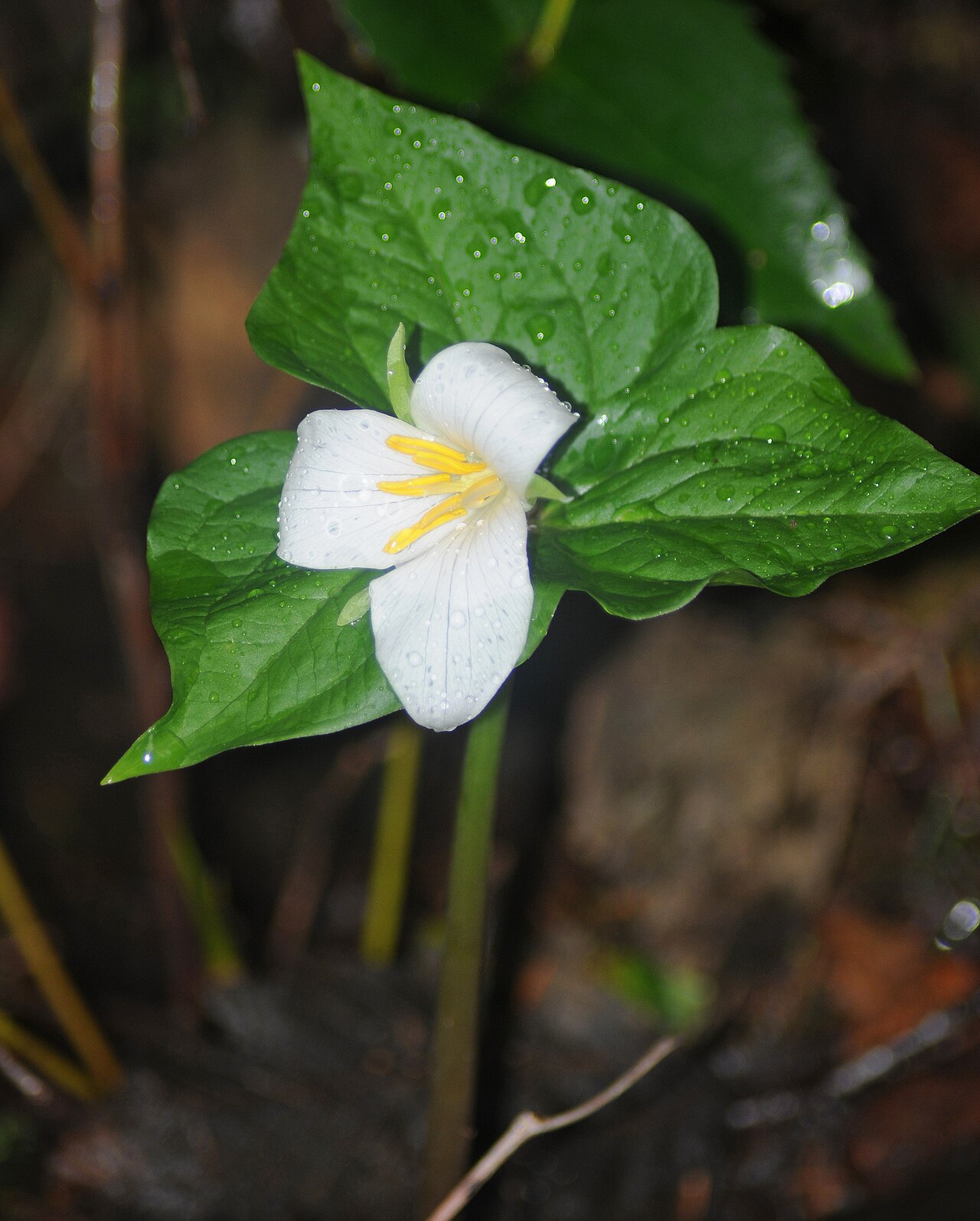
Trillium ovatum, known as Western Trillium or Pacific Trillium, is one of the most beloved wildflowers of Pacific Northwest and northern Rocky Mountain forests — a slow-growing woodland perennial whose single white, three-petaled flower rising above a whorl of three broad leaves is an unmistakable sign of spring in shaded forests from California to British Columbia.
Western Trillium is a true forest-floor specialist. It spends most of the year as an inconspicuous rootstock buried in rich, moist duff, sending up its distinctive three-leaved stalk and single flower for only a few weeks each spring before going dormant again by summer. Plants are remarkably long-lived and extremely slow to mature, often taking seven years or more from seed before producing their first flower.
Western Trillium should never be dug from the wild. Because it takes so many years to reach flowering size and transplants poorly, removing a wild plant essentially destroys it, and most transplanted trilliums fail to establish. Picking the flower is nearly as damaging: trillium leaves are not true leaves but bracts that manufacture the food the underground rhizome needs to survive and bloom again, and removing the flowering stem — which takes the bracts with it — can so deplete the plant’s reserves that it dies or fails to bloom for several years afterward. If you want Western Trillium in your own garden, buy nursery-propagated plants from a reputable native plant nursery, never wild-collected stock, and simply admire and photograph it where you find it growing wild.
Identification
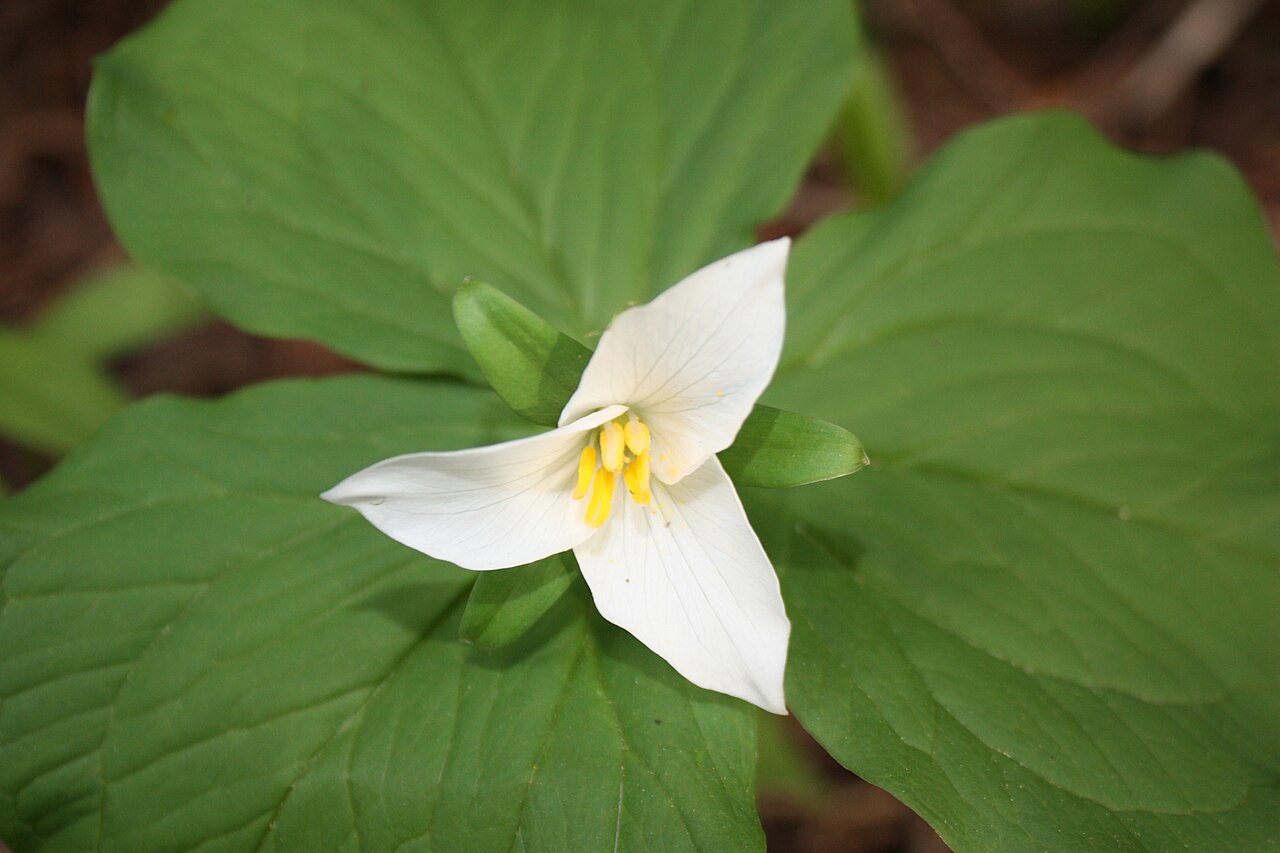
Western Trillium is a low, unbranched perennial typically 4 to 16 inches tall, instantly recognizable by its pattern of threes: three leaf-like bracts, three green sepals, and three petals.
Stems & Leaves
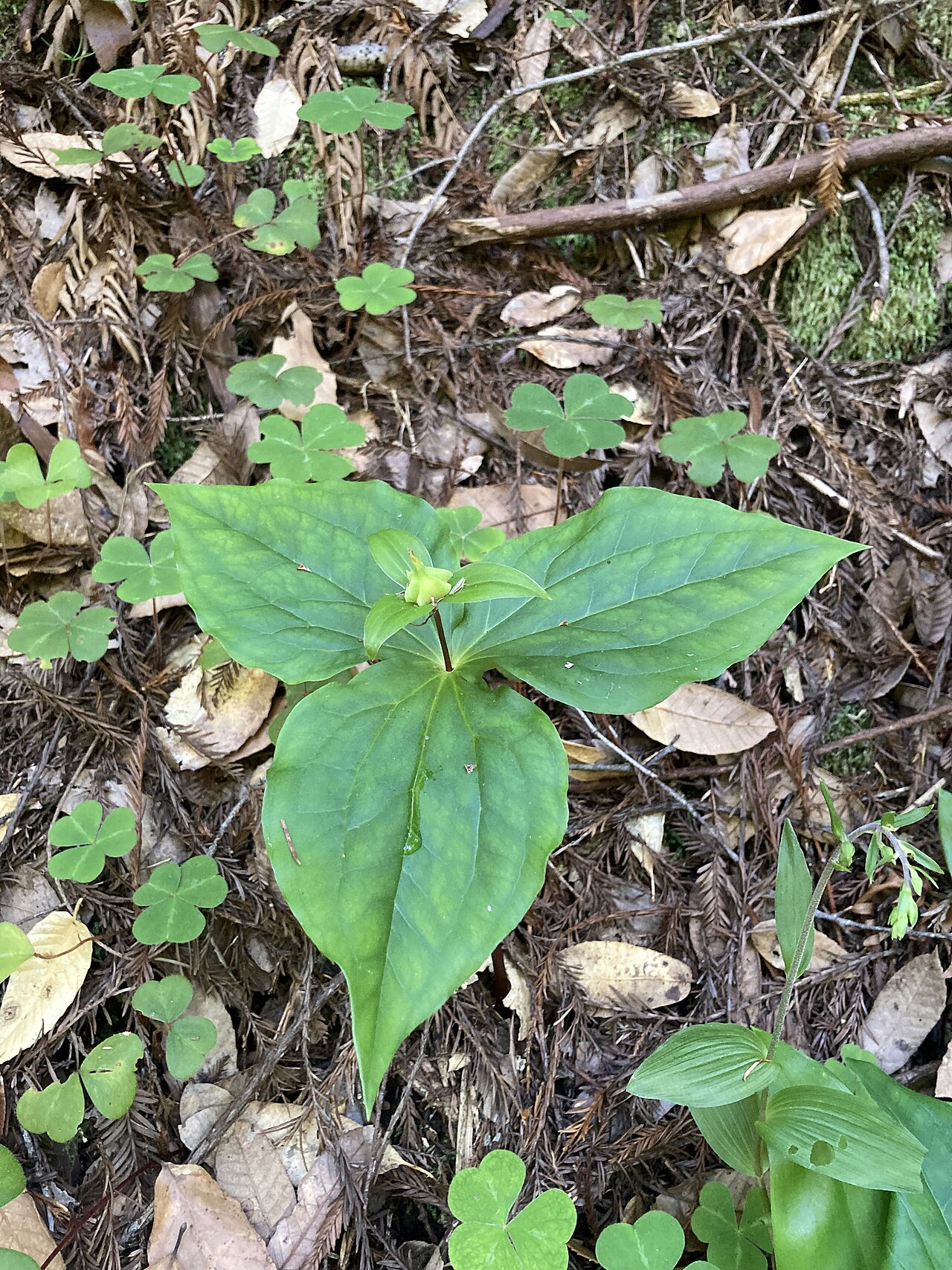
A single, stout, leafless stem rises from an underground rhizome, topped by a whorl of three broad, egg-shaped to diamond-shaped bracts (commonly called “leaves” though they are technically modified bracts) 2 to 6 inches long, with smooth margins and a short or absent stalk. The bracts emerge a fresh yellow-green in early spring and darken as the season progresses.
Flowers
A single flower sits atop a short stalk (pedicel) rising just above the whorl of bracts, with three narrow green sepals and three broader white petals 1 to 2 inches long. The flower typically opens pure white and gradually turns pink to deep rose-purple with age before fading, a color change that makes a single patch of trillium show several flower colors at once later in the bloom season. At the center are six yellow-anthered stamens and a three-parted ovary.
Fruit & Seed
After pollination, the flower develops into a fleshy, three-angled greenish berry that ripens by midsummer. Each seed bears a fatty appendage called an elaiosome, which is the key to the plant’s main method of seed dispersal (see Wildlife & Ecological Value below). Seeds that do germinate take several years to produce a bract-bearing stem and several more after that to flower for the first time.
Quick Facts
| Scientific Name | Trillium ovatum |
| Family | Melanthiaceae (Trillium/Bunchflower) |
| Plant Type | Herbaceous Perennial Wildflower |
| Mature Height | 4–16 in |
| Growth Rate | Very slow; years to reach flowering size |
| Sun Exposure | Part Shade to Full Shade |
| Water Needs | Average to Moist; needs consistent moisture, especially in spring |
| Soil Type | Rich, humus-y, well-drained forest soil |
| Soil pH | 5.5–7.0 (slightly acidic to neutral) |
| Bloom Time | March – May, depending on elevation |
| Flower Color | White, aging to pink or rose-purple |
| Fall Color | None; plant is dormant by midsummer |
| Fruit | Three-angled greenish berry with ant-dispersed seeds |
| Deer Resistant | No (deer and elk browsing is a major threat to wild populations) |
| USDA Hardiness Zones | 5–8 |
Native Range
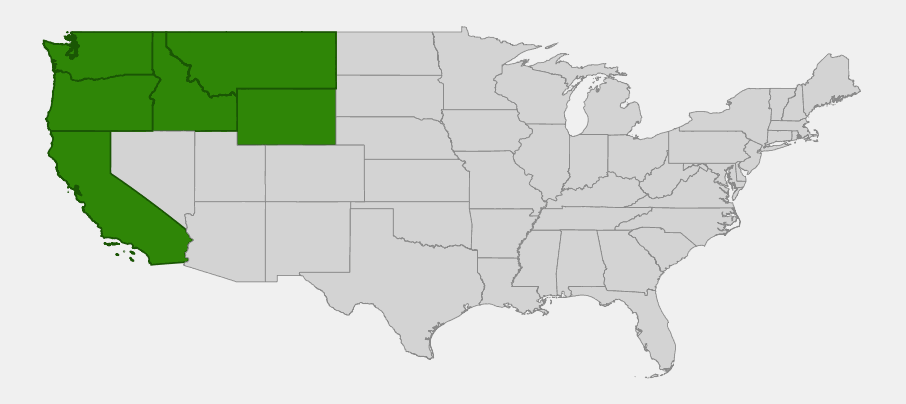
Western Trillium is native to the Pacific Coast and northern Rocky Mountain region, ranging from southern British Columbia south through Washington, Oregon, and California (mostly in the northern two-thirds of the state) and east through Idaho and Montana into Wyoming, where it reaches the eastern edge of its range in scattered, disjunct populations.
Across this range, Western Trillium grows in the understory of moist coniferous and mixed forests, especially in rich alluvial soils along streams, in shaded ravines, and on north-facing slopes where soil moisture persists into early summer. It is often one of the first wildflowers to bloom as the forest floor thaws, frequently appearing while big-leaf maple and other deciduous canopy trees are still leafless, which lets early-spring sunlight reach the forest floor before the canopy closes.
Western Trillium is sensitive to habitat disturbance. Logging, trail widening, off-trail foot traffic, and especially wild collection for the horticultural trade have reduced populations in some areas, and the species’ very slow growth means recovery after disturbance can take decades. Some states and land managers treat heavy trillium harvesting as a conservation concern even where the species is not formally listed as rare, which is part of why the “never dig, never pick” guidance on this page matters.
📋 Regional plant lists featuring Western Trillium: Western Oregon & Western Washington · Idaho, Eastern Oregon & Eastern Washington · Montana & Wyoming
Growing & Care Guide
Western Trillium is a rewarding but patience-testing addition to a shaded native garden. Start only with nursery-propagated plants, since the species is notoriously difficult to establish from wild-dug stock and the industry has a documented history of unsustainable wild collection.
Light
Plant in dappled to full shade, mimicking the forest understory conditions it evolved in. Morning sun with afternoon shade is tolerated, but hot afternoon sun will scorch the bracts and stress the plant.
Soil & Water
Provide rich, humus-heavy soil with excellent drainage but consistent moisture, especially during the spring growth and bloom period. A thick layer of leaf-mold mulch, renewed each fall, helps recreate the natural duff layer the species depends on in the wild. Allow soil to stay slightly drier through the dormant summer months, matching the plant’s natural cycle.
Planting Tips
Plant nursery-grown rhizomes or potted plants in fall, setting the rhizome 2 to 3 inches deep in prepared, humus-rich soil beneath established trees or shrubs. Be patient: a newly planted trillium may take two or three years to settle in and bloom reliably, and it may skip a bloom entirely after an especially stressful year.
Pruning & Maintenance
Western Trillium needs essentially no pruning. Allow the bracts to die back naturally in summer rather than cutting them — like the leaves of spring bulbs, they are feeding the rhizome for next year’s growth. Avoid disturbing the soil around dormant plants, since the rhizome sits relatively near the surface.
Landscape Uses
Western Trillium shines in a handful of specific garden settings:
- Woodland and shade gardens beneath established conifers or deciduous trees
- Native plant collections focused on Pacific Northwest understory species
- Naturalized slopes with consistent soil moisture and light shade
- Streamside or ravine plantings that mimic its wild habitat
- Spring ephemeral displays paired with other early-blooming woodland natives
Wildlife & Ecological Value
Western Trillium plays an outsized ecological role for a small forest-floor plant, particularly through its unusual seed dispersal strategy.
For Pollinators
Flowers are visited by native bees, flies, and beetles, though pollination rates in the wild are often modest, which is part of why seed production and population recovery after disturbance are slow.
For Ants & Seed Dispersal
Western Trillium relies heavily on myrmecochory — ant-mediated seed dispersal. Each seed carries a fatty, nutrient-rich elaiosome that ants find irresistible; they carry the whole seed back to their nest, eat the elaiosome, and discard the intact seed in their waste pile, effectively planting it in a nutrient-enriched spot away from the parent plant. This relationship is a major reason wild trillium populations spread so slowly and recover so sluggishly after the parent plants are removed or damaged.
For Mammals
Deer and elk browse Western Trillium readily, and in areas with high deer densities, browsing pressure alone can prevent plants from ever reaching flowering size, compounding the damage caused by human picking and digging.
Ecosystem Role
As a long-lived indicator of relatively undisturbed, moist forest understory, healthy trillium populations are often used informally by ecologists and naturalists as a sign of forest quality and age, since the species struggles to recolonize heavily logged or repeatedly disturbed sites.
Cultural & Historical Uses
Indigenous peoples throughout the Pacific Northwest and northern Rockies have long recognized Western Trillium as a signal of the turning season, and the plant appears in regional ethnobotanical records as a known but sparingly used species in some communities. Specific historical and traditional uses varied by nation and region; this page does not attempt to summarize medicinal applications, since historical use is not a safety endorsement and should never be read as guidance for self-treatment today.
In more recent cultural history, Western Trillium has become something of a folk emblem of old-growth and mature Pacific Northwest forests, prized by hikers and photographers as one of the first and most photogenic signs of spring on the forest floor. That popularity is itself part of the conservation challenge: the desire to bring a piece of the forest home is exactly what has driven wild collection pressure on the species.
Today, awareness campaigns by native plant societies and state parks across the Pacific Northwest actively discourage picking or digging trillium, framing “leave it where it grows” as both an ecological and an ethical practice — a message this page fully endorses.
Frequently Asked Questions
Can I dig up a Western Trillium I found in the woods to plant in my garden?
No. Wild trilliums transplant very poorly and the species takes years to mature, so digging one essentially destroys that plant without reliably producing a garden specimen. Buy nursery-propagated plants instead, and leave wild trillium exactly where you find it.
Is it really harmful to pick just the flower?
Yes. The three bracts beneath the flower function as the plant’s food-making leaves. Picking the flower typically takes the bracts with it, cutting off the rhizome’s ability to photosynthesize and store energy, which can prevent the plant from blooming again for years or kill it outright.
Why does the flower change color as it ages?
The white petals of Western Trillium gradually shift to pink and then rose-purple as the flower ages over one to two weeks, a natural post-pollination change seen in many trillium species. It is not a sign of stress or disease.
Why is my nursery-grown trillium so slow to bloom?
Western Trillium can take several years from seed, or a couple of seasons from a transplanted rhizome, before it flowers reliably. This is normal for the species and is one reason patience, rather than digging up wild plants for faster results, is so important.
Is Western Trillium endangered?
It is not federally listed as endangered across its range, but it is considered sensitive to disturbance and overcollection in many areas, and some states and land managers treat unauthorized harvesting as a conservation concern. Leaving wild plants undisturbed helps keep populations healthy.

Looking for a nursery that carries Western Trillium?
Browse our native plant nursery directories: California · Oregon · Washington · Idaho · Montana · Wyoming