Barren Strawberry (Waldsteinia fragarioides)
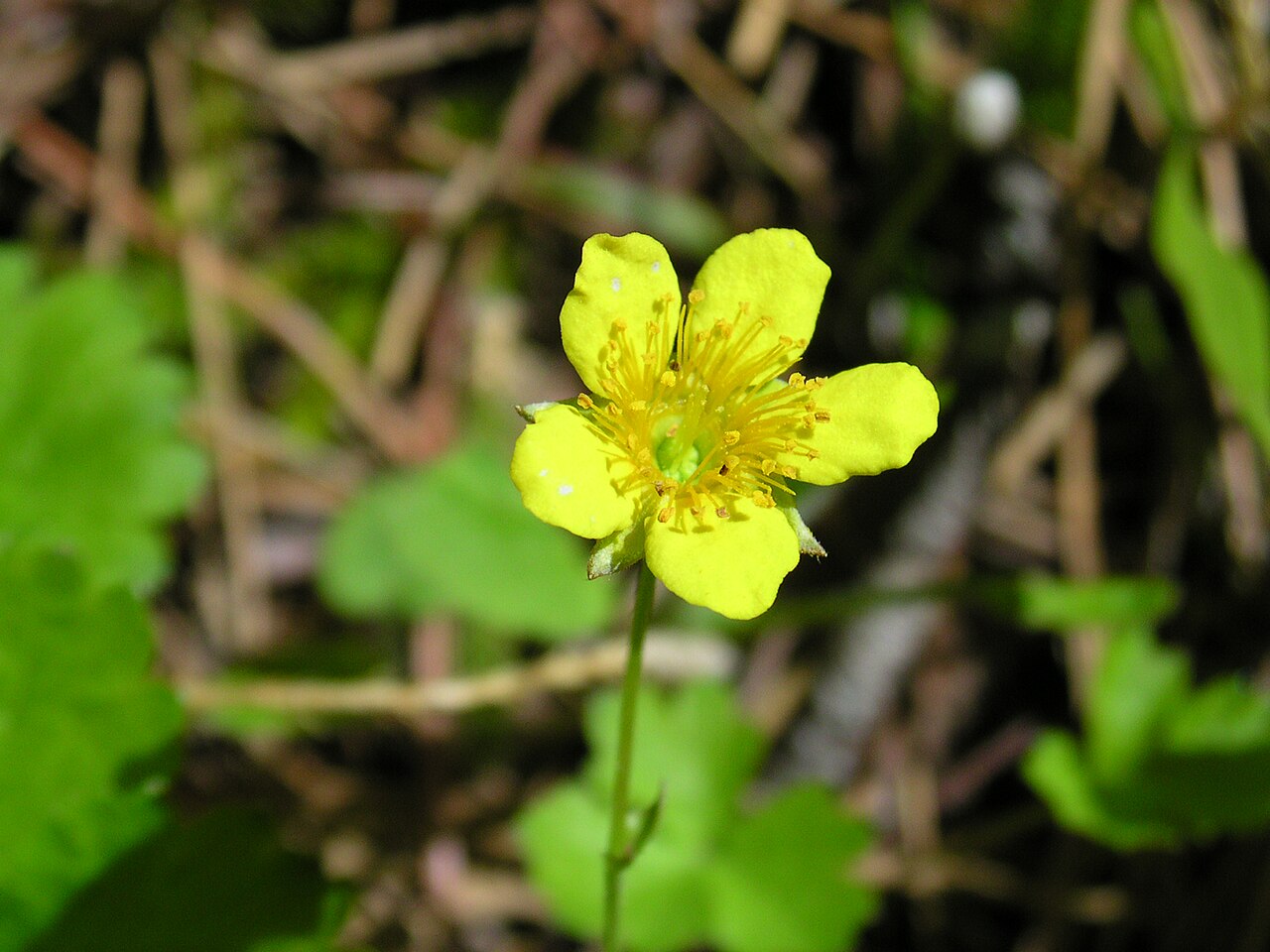
Waldsteinia fragarioides, known as Barren Strawberry or Appalachian Barren Strawberry, is a low, evergreen-to-semi-evergreen groundcover native to the woodlands of eastern North America. It belongs to the rose family (Rosaceae) and closely resembles a wild strawberry at first glance, with glossy, three-part leaves and bright yellow, five-petaled spring flowers — but it is a different genus entirely, and its common name is a direct, honest warning: unlike true strawberries, Barren Strawberry does not produce edible fruit. The small, dry seed-like fruits that follow the flowers are not palatable and are not eaten as a food crop.
What Barren Strawberry lacks in fruit, it makes up for as one of the better low, shade-tolerant groundcovers available to native plant gardeners in the East. It forms dense, slow-spreading mats 3 to 6 inches tall, held together by short rhizomes and surface runners, and its glossy foliage often holds color through much of the winter in milder parts of its range. Planted beneath trees or along a woodland path edge, it knits together bare soil, suppresses weeds, and asks for very little maintenance once established.
Gardeners should be aware of one common point of confusion: nurseries sometimes sell the European species Waldsteinia ternata under the name “barren strawberry,” and the two are frequently mixed up or mislabeled in the trade. Only Waldsteinia fragarioides is native to North America; anyone trying to plant the true native species should confirm the scientific name on the plant tag rather than relying on the common name alone.
Identification
Barren Strawberry is a low, mat-forming perennial that spreads steadily but not aggressively by short rhizomes and surface stolons, typically reaching 3 to 6 inches tall and slowly filling in a patch 1 to 2 feet or more across over several years.
Leaves
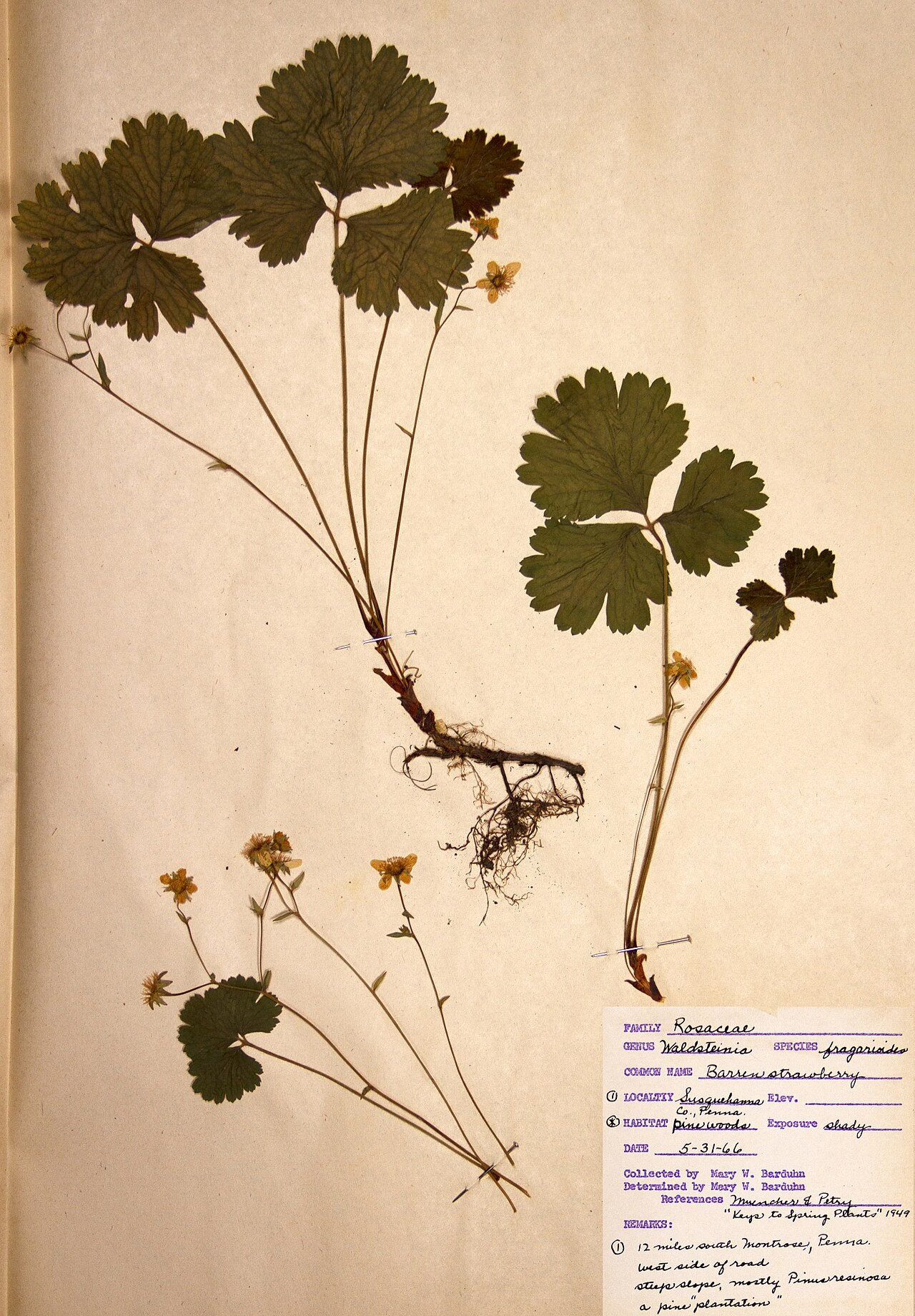
The leaves are trifoliate — divided into three leaflets — closely resembling the foliage of a true wild strawberry (Fragaria) but noticeably glossier and more leathery in texture, with evenly toothed margins. Foliage is evergreen to semi-evergreen depending on climate, often taking on a bronze or burgundy cast through winter before greening up again in spring.
Flowers
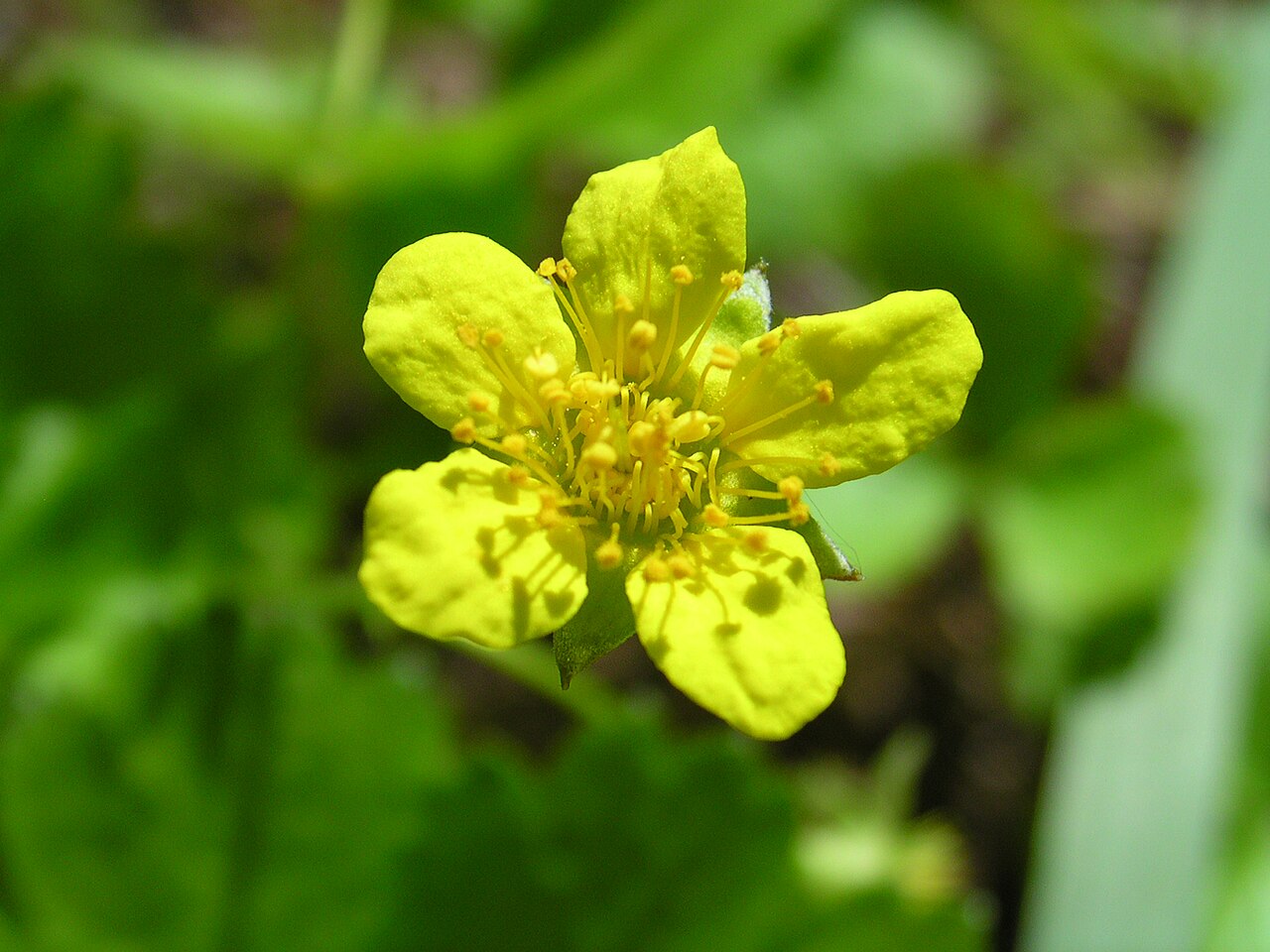
In mid-spring, Barren Strawberry produces bright yellow, five-petaled flowers about ½ to ¾ inch across on short stalks held just above the foliage, closely resembling strawberry blossoms in shape but more vivid yellow than the white flowers of true strawberries. Flowering is often showier and more floriferous than wild strawberry, covering the patch in bloom for several weeks.
Fruit & Seeds
The flowers are followed by small, dry, achene-like fruits — hard, seed-like structures rather than the soft, juicy, edible fruit produced by true strawberries. This is the origin of the “barren” in the common name: the plant flowers generously but does not produce anything worth eating. Gardeners expecting a strawberry-like harvest will be disappointed; this plant is grown purely as an ornamental groundcover.
Quick Facts
| Scientific Name | Waldsteinia fragarioides |
| Family | Rosaceae (Rose) |
| Plant Type | Evergreen to Semi-Evergreen Perennial Groundcover |
| Mature Height | 3–6 in |
| Mature Spread | 1–2 ft per plant, slowly spreading by rhizomes |
| Growth Rate | Slow to Moderate |
| Sun Exposure | Part Shade to Full Shade |
| Water Needs | Moderate |
| Soil Type | Rich, humusy, well-drained woodland soil |
| Soil pH | 5.5–7.0 |
| Bloom Time | April – June |
| Flower Color | Bright yellow |
| Fall Color | Foliage often bronze-tinged through winter |
| Fruit | Small, dry achenes — not edible, unlike true strawberries |
| Deer Resistant | Generally yes |
| USDA Hardiness Zones | 4–8 |
Native Range
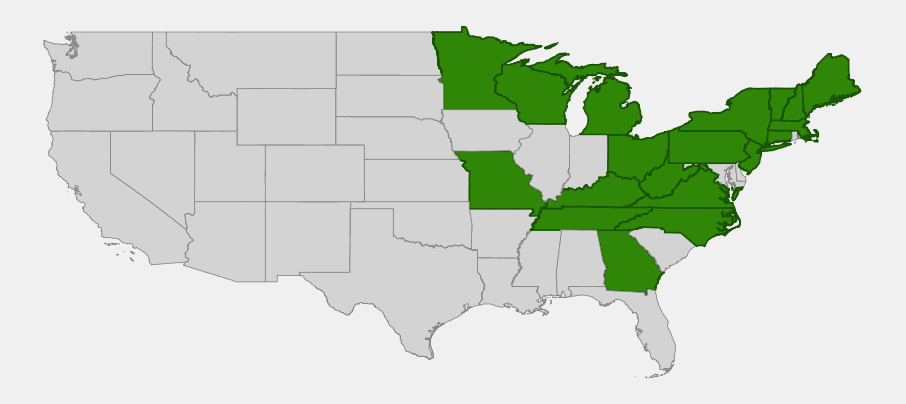
Barren Strawberry is native to eastern North America, found through the Appalachian Mountains and surrounding uplands from West Virginia and Virginia north through Pennsylvania, New York, New Jersey, and New England, and west through Ohio, Kentucky, and Tennessee to the western Great Lakes states of Michigan, Wisconsin, and eastern Minnesota. An isolated, rare population also occurs in the Ozark highlands of Missouri, well outside the main body of the range. It reaches its southern limit in the mountains of North Carolina and north Georgia.
Within this range, Barren Strawberry is a plant of rich, mesic-to-dry deciduous woods, rocky wooded slopes, and ledges, typically growing in the dappled light of a hardwood or mixed forest understory rather than in open ground. It is considered uncommon to rare in several states at the edges of its range, including Missouri and parts of New England, where it is tracked as a species of conservation concern.
Because of its popularity as a groundcover, Barren Strawberry is sometimes planted well outside this native range, and it is frequently confused in the nursery trade with the similar-looking, non-native European species Waldsteinia ternata. Gardeners outside the documented native range above, or anyone buying from a nursery that does not distinguish the two species by scientific name, should treat the plant on offer as uncertain rather than assume it is the native species.
📋 Regional plant lists featuring Barren Strawberry: New Hampshire, Maine & Vermont · Connecticut, Massachusetts & Rhode Island · New York, Pennsylvania & Northern New Jersey · Maryland, Virginia & West Virginia · North Carolina & South Carolina · Georgia, Alabama & Mississippi · Ohio & Indiana · Kentucky & Tennessee · Michigan, Wisconsin & Eastern Minnesota · Illinois, Iowa & Missouri
Growing & Care Guide
Barren Strawberry is a forgiving, low-maintenance groundcover once it is settled into a shaded woodland setting that resembles its native habitat.
Light
Part shade to full shade suits Barren Strawberry best, mimicking the dappled light of a deciduous forest understory. It tolerates a bit more sun in cooler climates or with consistent moisture, but foliage tends to scorch in hot afternoon sun.
Soil & Water
Rich, humusy, well-drained woodland soil produces the best growth, though established plantings tolerate drier soils once their root systems are settled. Moderate, consistent moisture during the first growing season helps the rhizomes spread and knit together a solid patch faster.
Planting Tips
Set plants or divisions 12 to 18 inches apart for a groundcover planting that fills in within two to three years; closer spacing fills in faster but costs more up front. Plant in spring or fall, and mulch lightly with leaf litter to mimic the natural woodland floor while the planting establishes.
Pruning & Maintenance
Very little maintenance is needed. Trim back any winter-damaged foliage in early spring before new growth emerges, and divide crowded patches every few years if denser or wider coverage is wanted elsewhere in the garden.
Propagation
Barren Strawberry is most easily propagated by division of the spreading rhizomes in spring or fall, which also helps control and redirect its slow spread. Seed propagation is possible but slower and less reliable for home gardeners.
Landscape Uses
Barren Strawberry fills several useful niches in a shaded native garden:
- Woodland groundcover beneath trees and large shrubs
- Erosion control on shaded slopes and banks
- Path and border edging along shaded walkways
- Lawn alternative in shaded areas where turf grass struggles
- Rock garden and ledge plantings in part shade
Wildlife & Ecological Value
Barren Strawberry’s value lies less in any single dramatic wildlife relationship and more in the quiet, steady habitat structure it provides as a dense, low groundcover in the forest understory.
For Pollinators
The bright yellow spring flowers attract small native bees and other early-season pollinators at a time when relatively few other woodland wildflowers are yet in bloom.
For Birds
The dense, low foliage mat offers ground-level cover for small birds foraging through leaf litter, though the plant is not a notable direct food source for birds.
For Mammals
Deer generally avoid heavy browsing of Barren Strawberry, which is part of why it has held up well as a durable groundcover in areas with high deer pressure, though it is not entirely immune to browsing.
Ecosystem Role
As a dense, mat-forming groundcover, Barren Strawberry helps stabilize soil on wooded slopes, shades out many weedy annuals, and adds structural cover at ground level that benefits small invertebrates and the predators that feed on them, filling a low-growing niche that complements taller woodland wildflowers and ferns.
Cultural & Historical Uses
Unlike many native plants with long, well-documented histories of food or medicinal use, Barren Strawberry has little recorded ethnobotanical history, almost certainly because its small, dry fruit never offered the food value of a true strawberry. What written history exists is largely botanical rather than practical — the plant was collected and described by early American botanists as a strawberry look-alike, and historical herbarium records from the eighteenth and nineteenth centuries document its presence across the Appalachian and northeastern forests where it still grows today.
In more recent decades, Barren Strawberry’s main documented use has been horticultural: valued by landscapers and native plant gardeners as a tough, low-maintenance groundcover for shaded sites long before it had any significant history as a garden plant. Its rise in popularity has also created the nursery-trade confusion with the unrelated European Waldsteinia ternata, which shares the common name and a similar appearance but is not native to North America.
There are no significant historical medicinal uses documented for this species, and none should be assumed or inferred from its resemblance to true strawberries, which do have their own separate history of food use.
Frequently Asked Questions
Can you eat Barren Strawberry fruit?
No. Barren Strawberry produces small, dry, seed-like fruits that are not edible and bear no resemblance in taste or texture to true strawberry fruit. It is grown purely as an ornamental groundcover, not a food crop.
Is Barren Strawberry the same plant as wild strawberry?
No. Despite the similar common name and strawberry-like leaves and flowers, Barren Strawberry (Waldsteinia fragarioides) is a different genus from true strawberries (Fragaria) and does not produce the soft, edible fruit that true strawberries do.
What is the difference between Waldsteinia fragarioides and Waldsteinia ternata?
Waldsteinia fragarioides is the species native to eastern North America. Waldsteinia ternata is a similar-looking European species frequently sold under the same “barren strawberry” common name; check the scientific name on the plant tag to be sure which one is being offered.
Does Barren Strawberry spread aggressively?
No. It spreads slowly and steadily by short rhizomes and surface runners, filling in a patch over a few years rather than taking over a garden bed the way some more aggressive groundcovers do.
Will Barren Strawberry grow in full sun?
It can tolerate some sun, especially in cooler climates, but it performs best and looks its healthiest in the part-to-full shade conditions of its natural woodland habitat; foliage often scorches in hot, exposed sites.