Yellow Wood Sorrel (Oxalis stricta)
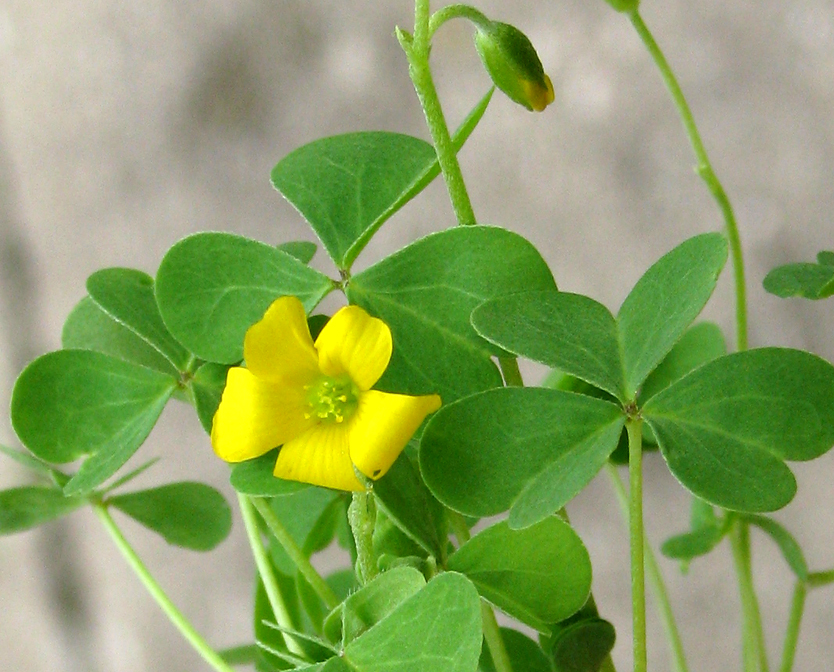
Oxalis stricta, commonly called yellow wood sorrel, common yellow oxalis, or sourgrass, is a low, clover-leaved native herb found across most of the eastern and central United States. It belongs to the wood-sorrel family (Oxalidaceae), a group recognized by its heart-shaped leaflets in groups of three and its sharp, lemony taste. Gardeners usually meet this plant not by invitation but by discovery — it turns up on its own in lawns, flower beds, sidewalk cracks, and the edges of vegetable gardens, often before anyone remembers planting anything like it.
The plant is small and unassuming: a few inches of trailing or upright stems, trifoliate leaves that fold shut at night, and quarter-inch flowers with five bright yellow petals. What it lacks in size it makes up for in persistence. Each slender, upright seed capsule splits open explosively when ripe, flinging seeds several feet away, and the plant can also spread from short rhizomes. Because of this, yellow wood sorrel is widely regarded as a weed of lawns, nursery pots, and garden beds rather than a plant anyone intentionally cultivates — this page is written with that reality in mind, not as a recommendation to plant it.
Despite its weedy reputation, yellow wood sorrel is a true native species with real ecological value: its flowers are visited by small bees and flies, and its foliage and seeds are eaten by a handful of insects and small animals. For gardeners who find it already growing on their property, understanding what it is — and what it is not — is more useful than either cultivating or panicking over it.
Identification
Yellow wood sorrel is a low-growing annual or short-lived perennial herb, usually 4 to 12 inches tall, with slender stems that start upright and become sprawling (decumbent) with age. The whole plant has a sour, tangy taste if chewed, a useful field character for separating it from unrelated clovers and medics that resemble it at a glance.
Leaves
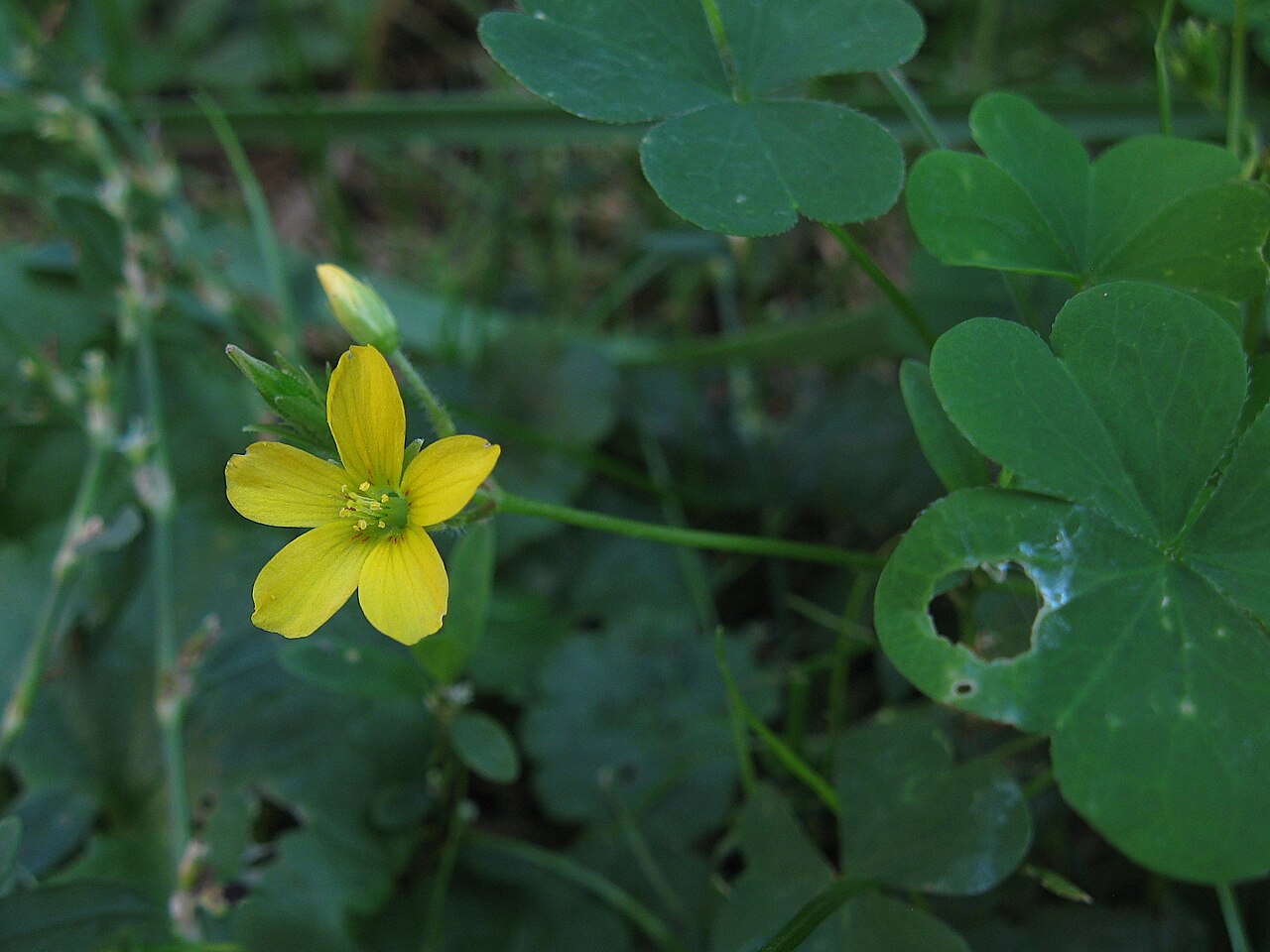
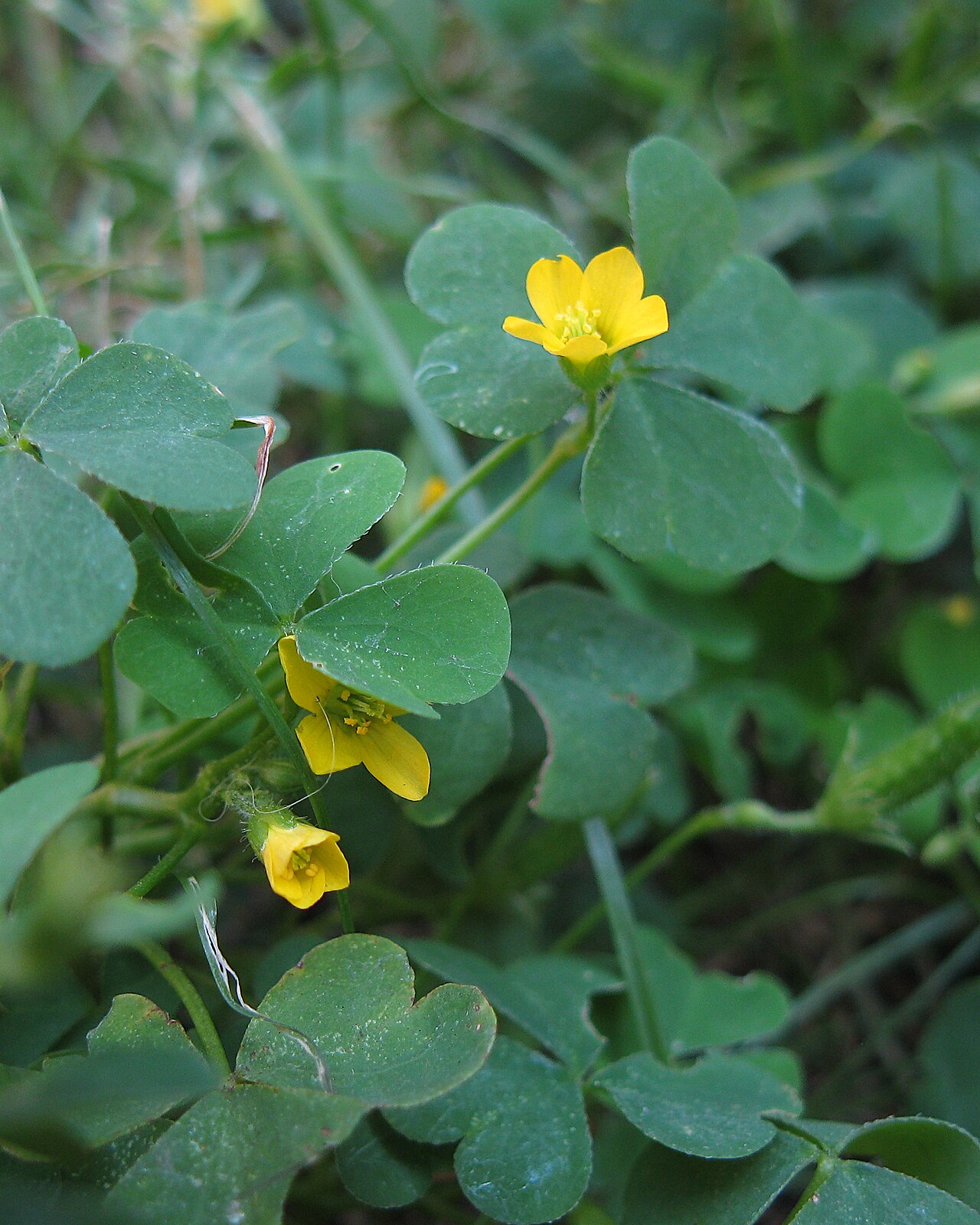
Leaves are alternate and divided into three heart-shaped leaflets, each notched at the tip, closely resembling a four-leaf clover with one leaflet missing. Leaflets fold downward along the midrib at night or in strong midday heat, a movement called nyctinasty, and reopen as light conditions change. Foliage is typically medium green, sometimes tinged with purple-bronze in sunnier or more stressed locations.
Flowers
Flowers are small, about ¼ to ½ inch across, with five bright yellow petals and a cluster of yellow stamens at the center. They are borne in small umbel-like clusters on stalks rising above the leaves and bloom from late spring through fall, often continuously in mild climates. Flowers close at night and on cloudy days.
Fruit & Seeds
The fruit is a narrow, upright, cylindrical seed capsule up to an inch long, standing out sharply from the foliage. When mature, the capsule dries and splits suddenly, ejecting tiny seeds up to several feet away — the main reason this plant spreads so readily through garden beds and container nurseries. A single plant can produce many capsules over a single growing season.
A note on edibility and oxalates: yellow wood sorrel’s sour taste comes from oxalic acid, the same compound found in spinach and rhubarb leaves, and some historical foraging references describe nibbling a leaf or two as a trailside curiosity. However, the plant contains meaningful levels of soluble oxalates, which can interfere with calcium absorption and are a concern for anyone with kidney stones, gout, or other oxalate-sensitive conditions, and the plant can be toxic to grazing livestock and pets in quantity. This page does not present yellow wood sorrel as a food plant, and it should not be treated as a salad green or foraging crop.
Quick Facts
| Scientific Name | Oxalis stricta |
| Family | Oxalidaceae (Wood Sorrel) |
| Plant Type | Herbaceous Annual / Short-Lived Perennial |
| Mature Height | 4–12 in (10–30 cm) |
| Mature Spread | 6–18 in, spreading by seed and short rhizomes |
| Growth Rate | Fast |
| Sun Exposure | Full Sun to Full Shade |
| Water Needs | Moderate; tolerates average garden moisture |
| Soil Type | Adaptable; sandy, loamy, or disturbed soils |
| Soil pH | Prefers slightly acidic to neutral soils |
| Bloom Time | Late spring – fall |
| Flower Color | Yellow |
| Fall Color | None notable; foliage dies back with frost |
| Fruit | Upright explosive seed capsules |
| Deer Resistant | Yes; sour foliage is rarely browsed |
| USDA Hardiness Zones | 3–9 |
Native Range
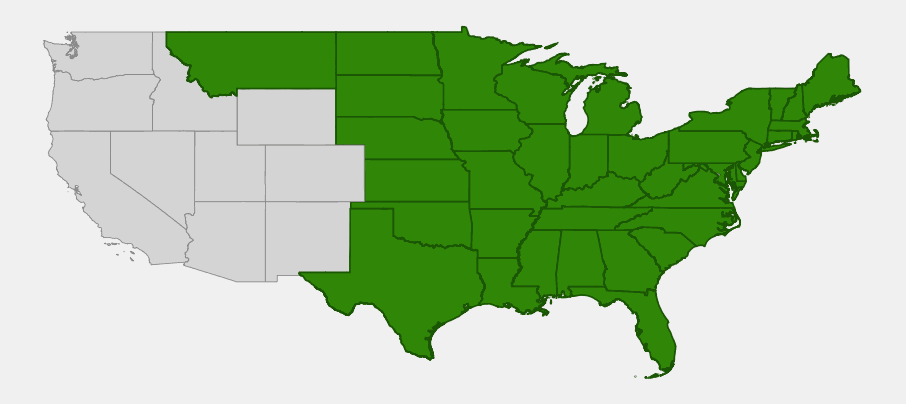
Yellow wood sorrel is native across most of the eastern and central United States, from New England and the Upper Midwest south through the Appalachians and Gulf Coast states, and west to the edge of the Great Plains. It is one of the most familiar low-growing native herbs of this region precisely because it does not require special habitat — it colonizes disturbed ground, lawn edges, garden beds, and open woodland just as readily as undisturbed meadow.
In the western United States, including the Pacific Northwest and much of the Intermountain West, Oxalis stricta is generally considered introduced or naturalized rather than native, and gardeners in those regions should not treat it as a regional native plant. This page covers only the states where botanical sources confirm a native range.
Within its native range, yellow wood sorrel grows in woodland edges, meadows, floodplains, and disturbed soils, tolerating a wide range of light and moisture conditions. It is common in both rural and urban settings, including sidewalk cracks, vacant lots, and the margins of cultivated fields, which is part of why it reads to most people as a weed rather than a wildflower.
📋 Regional plant lists featuring Yellow Wood Sorrel: New Hampshire, Maine & Vermont · Connecticut, Massachusetts & Rhode Island · New York, Pennsylvania & Northern New Jersey · Maryland, Virginia & West Virginia · North Carolina & South Carolina · Georgia, Alabama & Mississippi · Arkansas, Louisiana & Eastern Texas/Oklahoma · Kentucky & Tennessee · Ohio & Indiana · Illinois, Iowa & Missouri · Michigan, Wisconsin & Eastern Minnesota · North Dakota, South Dakota & Western Minnesota · Nebraska, Kansas & Eastern Colorado · Montana & Wyoming · Delaware, Southern New Jersey & Long Island
Growing & Care Guide
Most gardeners encounter yellow wood sorrel because it has already shown up, not because they planted it. It is not sold by native plant nurseries and is rarely recommended for intentional landscaping, since it self-seeds aggressively and can be difficult to remove once established in beds. The guidance below is aimed at gardeners deciding whether to leave existing plants in place, not at cultivating new ones.
Light
Yellow wood sorrel tolerates everything from full sun to fairly deep shade, which is a major reason it turns up in so many different garden situations — sunny vegetable beds, shaded foundation plantings, and everything in between.
Soil & Water
It is not particular about soil type, growing in sandy, loamy, or compacted ground, including disturbed and poor soils where little else thrives. It prefers consistent moisture but survives average garden watering and short dry spells without difficulty.
Managing an Existing Patch
Where yellow wood sorrel is already growing and a gardener wants to keep it as an incidental low groundcover — for example, a shaded corner where little else will grow — simply mowing or trimming spent seed capsules before they split can slow its spread. Hand-pulling is effective for small patches as long as it is done before capsules mature; established plants resprout readily from broken rhizome fragments, so thorough removal of the root is more effective than repeated topping.
Preventing Unwanted Spread
Because seed capsules eject seed explosively, yellow wood sorrel spreads quickly from nursery pots and disturbed beds into surrounding garden areas. Removing flowering stems before capsules form, and avoiding soil disturbance near seeding plants, reduces new seedlings the following season.
Landscape Role
Where it is tolerated rather than encouraged, yellow wood sorrel functions as:
- Incidental low groundcover in shaded, low-traffic areas
- Volunteer nectar source for small native bees in lawns and garden margins
- Soil-stabilizing cover on small patches of disturbed or bare ground
- Indicator species flagging soil disturbance or recent cultivation
Wildlife & Ecological Value
Despite its reputation as a weed, yellow wood sorrel supports a modest but real community of insects and small wildlife wherever it grows.
For Pollinators
The small yellow flowers attract sweat bees, small native bees, and syrphid flies, which visit for both nectar and pollen. Because the plant blooms continuously from late spring through fall, it offers a dependable, if minor, nectar source through much of the growing season.
For Birds
Small seed-eating birds, including sparrows and juncos, will take the tiny seeds when capsules are available, though yellow wood sorrel is a minor food source compared to dedicated seed plants.
For Mammals
Some small mammals browse the foliage lightly, but the sour, oxalate-rich leaves are not a preferred food for deer or rabbits, which is part of why the plant is considered deer-resistant in garden settings.
Ecosystem Role
As an early colonizer of disturbed soil, yellow wood sorrel helps stabilize bare ground and provides quick cover in gaps left by cultivation, construction, or erosion, ahead of longer-lived perennials establishing in the same space.
Cultural & Historical Uses
Indigenous peoples across eastern North America were familiar with Oxalis stricta and related wood sorrels long before European contact, and historical accounts describe the sour leaves being chewed occasionally to quench thirst on long walks, in the way a hiker today might nibble a sour trailside plant out of curiosity rather than as a meal.
Early European settlers in North America, and herbalists in Europe working with related Oxalis species, sometimes used wood sorrel leaves in small amounts to add a lemony tang to salads or as a folk remedy for minor ailments. These are historical practices, not health advice, and given the plant’s oxalate content, they are not recommended today — particularly for anyone with kidney stones, gout, or similar conditions, or for pets and livestock, which can be harmed by eating it in quantity.
In more recent garden history, yellow wood sorrel has been primarily a subject of frustration rather than appreciation — a plant gardeners write to extension offices about, asking how to get rid of it, rather than how to grow it. Its persistence despite centuries of weeding is, in its own way, part of its story.
Frequently Asked Questions
Is yellow wood sorrel the same as clover?
No. Though the three-part leaves look similar to clover at a glance, yellow wood sorrel belongs to a completely different plant family (Oxalidaceae, not Fabaceae) and can be told apart by its heart-shaped, notched leaflets, sour taste, and small yellow five-petaled flowers, which true clovers never have.
Can you eat yellow wood sorrel?
It is not toxic in small, incidental amounts, but it contains oxalic acid and should not be treated as a salad green or food crop. People with kidney stones, gout, or other oxalate-sensitive conditions should avoid it, and it should be kept away from grazing livestock and pets.
How do I get rid of yellow wood sorrel in my garden?
Hand-pull plants before their seed capsules mature, removing as much of the root and rhizome as possible, since broken fragments can resprout. Mulching garden beds helps suppress new seedlings, and persistence over a season or two is usually needed since existing seed in the soil will continue germinating.
Is yellow wood sorrel native everywhere in the United States?
No. It is native to most of the eastern and central states but is generally considered introduced or naturalized in much of the western United States, including the Pacific Northwest. Gardeners in those regions should not treat it as a native species.
Why does yellow wood sorrel keep coming back after I weed it?
Its seed capsules burst and scatter seed several feet when ripe, and the plant can also resprout from rhizome fragments left in the soil. A single season’s growth can leave behind enough seed to produce new plants for several years.