
Gairdner’s Yampah (Perideridia gairdneri)
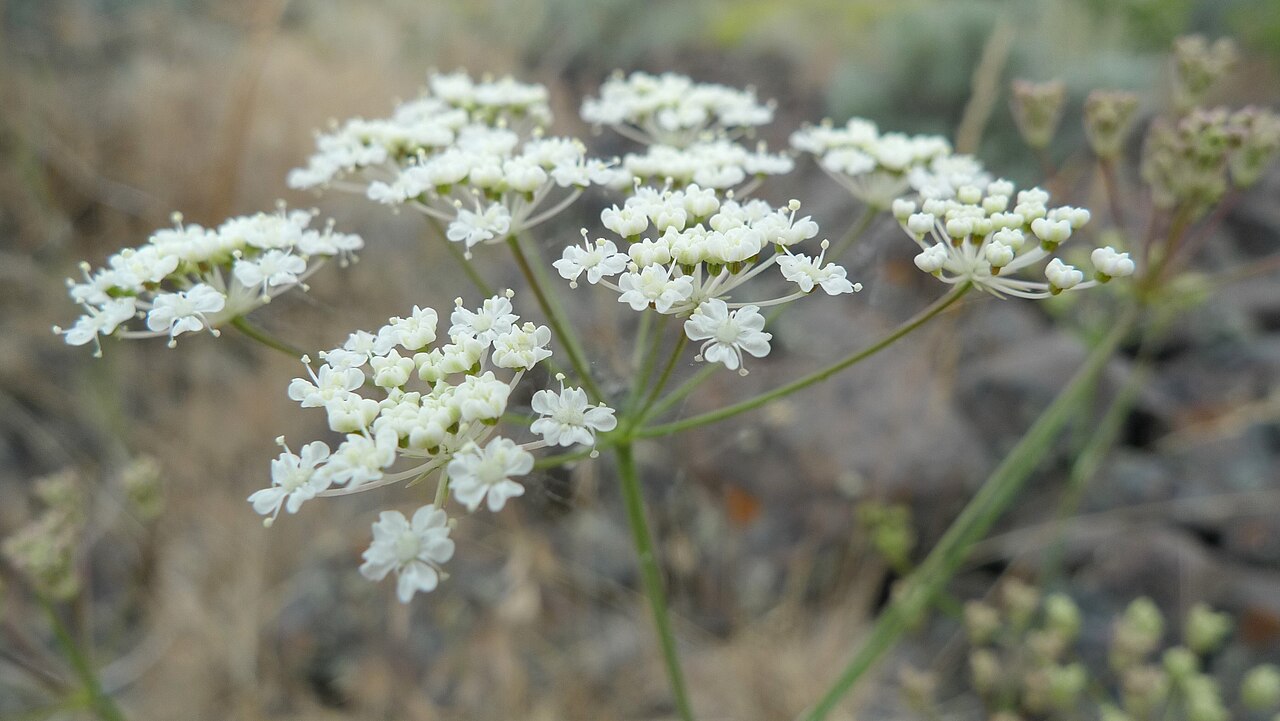
Perideridia gairdneri, known as Gairdner’s Yampah, common yampah or simply yampa, is a slender native wildflower of the carrot family (Apiaceae) found in meadows, prairies and open woodlands across the western United States and southwestern Canada. In mid to late summer, its thin stems, 1 to 4 feet tall, carry delicate, flat-topped umbels of tiny white flowers above grasses that are already turning gold.
Below ground, yampah forms small, finger-shaped tubers that were one of the most important root foods of the American West. Many Indigenous peoples, including the Shoshone, Northern Paiute, Nez Perce, Blackfoot, Cheyenne and Comanche, dug the tubers in large quantities, and Lewis and Clark recorded eating them in 1805 and 1806. The Yampa River in Colorado takes its name from the plant.
Safety note: yampah belongs to the same family as water hemlock and poison hemlock, two of the most poisonous plants in North America, and the plants can look alike. Never eat any wild member of the carrot family unless an expert has identified it with certainty. This guide covers how to identify yampah, where it grows, and how to grow it in a native meadow garden.
Identification
Yampah is easiest to find in bloom, when its lacy white umbels stand above the grass. Before flowering, its few narrow leaves are easily overlooked.
Leaves & Stems
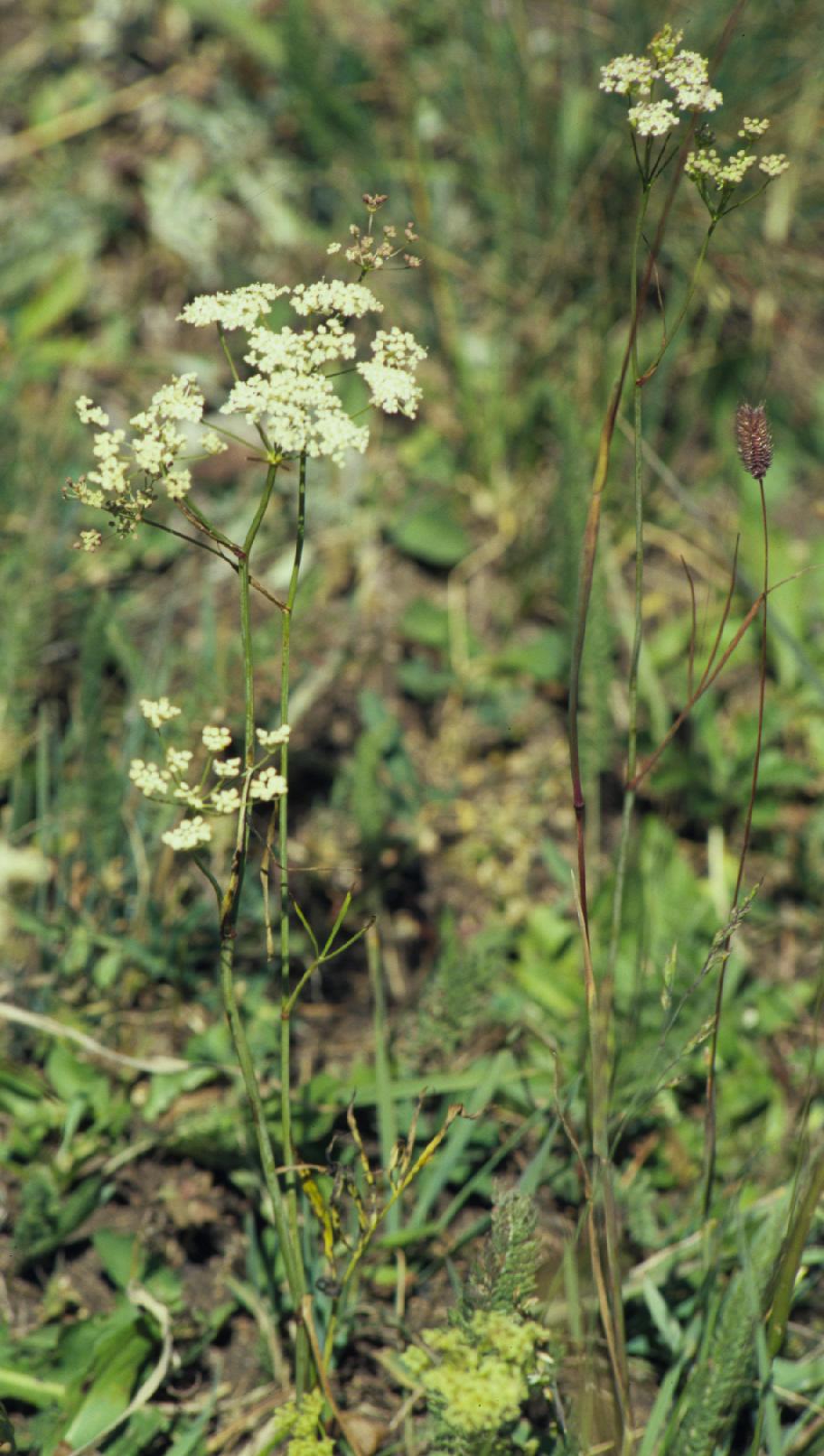
A perennial with a single slender, upright, hairless stem, usually 1 to 4 feet tall, from one or a few small tubers. The leaves are few, alternate and divided into long, narrow, almost grass-like segments, the lower ones up to about a foot long. They often wither by flowering time, leaving a nearly leafless stem.
Flowers
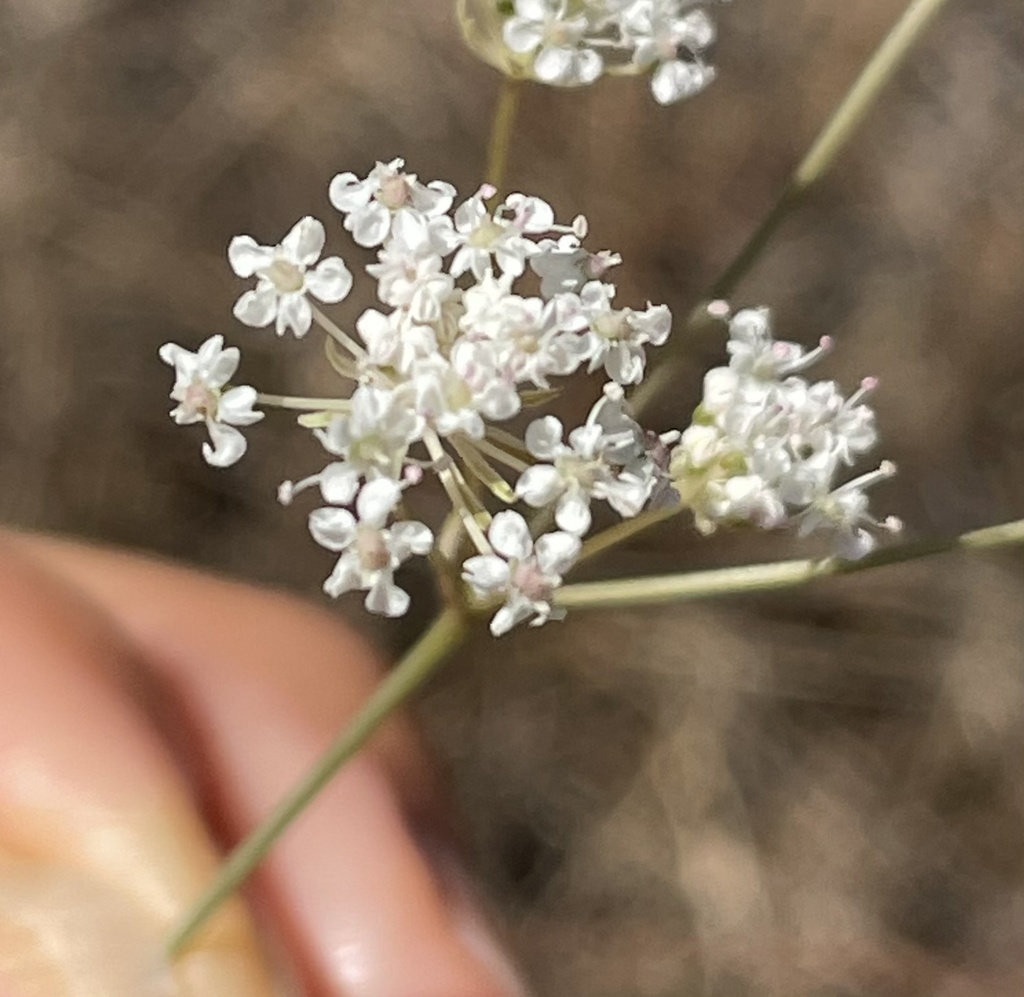
The tiny white flowers are borne in compound umbels 1 to 3 inches across, made up of several rounded umbellets on slender spokes. Each flower is about 1/8 inch wide with five white petals. It blooms from about June to August, later than most spring-flowering members of the carrot family.
Roots & Fruit
The roots are slender, spindle-shaped tubers about 1 to 3 inches long, often in pairs or small clusters. The fruits are small, rounded, ribbed seeds a few millimeters long that ripen in late summer and fall.
Look-alikes & Safety
Water Hemlock (Cicuta species) grows in wet places, has leaves divided into toothed, lance-shaped leaflets and a thick base with chambered cross-walls, and is deadly poisonous. Poison hemlock (Conium maculatum) is a tall, non-native weed with fern-like leaves and purple-spotted stems, also deadly. Other western yampahs, such as Bolander’s yampah, are very similar and best separated with a technical key. The narrow, grass-like leaf segments and slender, tuberous roots help identify yampah, but never rely on a single feature for any plant you might eat.
Quick Facts
| Scientific Name | Perideridia gairdneri (syn. Carum gairdneri, Perideridia montana) |
| Family | Apiaceae (carrot family) |
| Plant Type | Herbaceous perennial wildflower from small tubers |
| Mature Height | 1–4 ft |
| Mature Spread | 6–12 in |
| Growth Rate | Slow to establish |
| Sun Exposure | Full sun to light shade |
| Water Needs | Moist in spring, dry by late summer |
| Soil Type | Loam or clay in meadows and prairies; tolerates seasonally wet soil |
| Soil pH | Slightly acidic to neutral |
| Bloom Time | June–August |
| Flower Color | White |
| Fall Color | Stems dry to tan |
| Fruit | Small, rounded, ribbed dry fruits |
| Deer Resistant | Low; leaves and roots are eaten by wildlife |
| USDA Hardiness Zones | About 3–9 |
Native Range
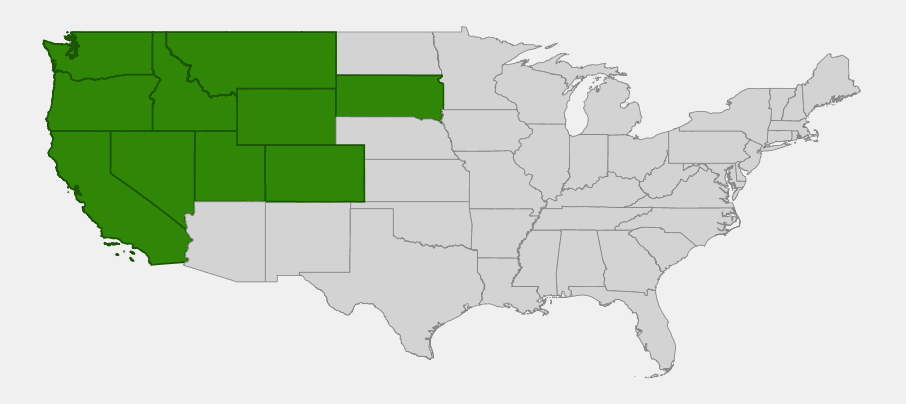
Gairdner’s yampah is native to western North America. USDA PLANTS lists it in Washington, Oregon, California, Idaho, Nevada, Utah, Montana, Wyoming, Colorado and South Dakota, and in Canada in British Columbia, Alberta and Saskatchewan. In South Dakota it reaches the Black Hills, at the eastern edge of its range.
Two subspecies are generally recognized. Subspecies gairdneri grows mainly near the Pacific Coast, from southern British Columbia through western Washington and Oregon to California, while subspecies borealis is the widespread inland form of the Columbia Plateau, Great Basin and Rocky Mountains.
It grows in moist meadows, grasslands, sagebrush steppe, prairies, open pine and oak woodlands, and the edges of aspen groves, from near sea level in Oregon’s Willamette Valley and the Puget Sound prairies to high mountain meadows in the Rockies. It does best where the soil is moist in spring and dries out by late summer.
📋 Regional plant lists featuring Gairdner’s Yampah: California & Nevada · Western Oregon & Western Washington · Idaho, Eastern Oregon & Eastern Washington · Montana & Wyoming · Utah & Western Colorado · North Dakota, South Dakota & Western Minnesota
Growing & Care Guide
Yampah is rarely sold as a garden plant, but native seed suppliers in the West sometimes offer it, and it is a good addition to native meadow and prairie restorations. Grow it from seed rather than digging wild plants, and do not harvest tubers from wild populations.
Light
Full sun to light shade. It grows best in open meadows and prairies.
Soil & Water
It prefers loam or clay that is moist in spring and early summer and dries out later in the season. It tolerates seasonally wet ground but not soil that stays waterlogged all summer. Once established, it needs no summer water in most of its range.
Planting Tips
Sow seed directly in fall where you want plants to grow, in a meadow or prairie planting with native bunchgrasses and wildflowers. Plants are slow to establish and may take two or more years to flower from seed.
Pruning & Maintenance
Little is needed. Let the plants go dormant naturally in late summer and leave the seed heads to drop seed. Avoid mowing meadows until after the seeds ripen.
Propagation
Grow it from seed sown outdoors in fall, or give the seed several weeks of cold, moist stratification before sowing in spring. Small tubers from garden-grown plants can also be divided and replanted in fall.
Landscape Uses
- Native meadows and prairies: lacy white midsummer flowers among native grasses
- Restoration plantings: Pacific Northwest prairies and western rangelands
- Pollinator gardens: nectar and pollen for small bees, flies and wasps
- Ethnobotanical gardens: a historically important Indigenous root food
Wildlife & Ecological Value
Yampah is an important plant for wildlife in western grasslands and meadows.
For Pollinators
Its small, open flowers provide easy nectar and pollen for small native bees, flies, beetles, wasps and butterflies. Native members of the carrot family are also larval host plants for swallowtail butterflies, such as the anise swallowtail.
For Birds
Grassland birds use the open meadows where it grows, and the seeds are eaten by some birds and rodents.
For Mammals
The leaves and stems are grazed by deer, elk and livestock, and the tubers are dug and eaten by pocket gophers, ground squirrels and bears.
Ecosystem Role
Yampah is part of the diverse wildflower community of native western grasslands and meadows. Its tubers store energy for regrowth after summer drought, and populations have declined where meadows have been plowed, heavily grazed or overrun by invasive grasses.
Cultural & Historical Uses
Yampah was a staple food for many peoples of the Great Basin, Columbia Plateau and northern Plains. The tubers have a sweet, nutty flavor often compared to carrots or parsnips, and were eaten raw, boiled, roasted or dried and ground into flour. In Nez Perce the root is called cawíitx, and in Sahaptin sawítk. The Comanche name was yap, and one major Comanche division, the Yamparika, was known as the “yap eaters.”
Members of the Lewis and Clark expedition encountered the plant in 1805 and 1806, and Meriwether Lewis described it in his journal as a kind of fennel. The species name honors Meredith Gairdner, a Scottish physician and naturalist who worked for the Hudson’s Bay Company at Fort Vancouver in the 1830s.
Today, yampah remains a culturally important food for many tribes, who continue to harvest it in traditional gathering places. For everyone else, the risk of confusion with deadly hemlocks means it should be appreciated as a wildflower rather than foraged.
Frequently Asked Questions
Is Gairdner’s yampah edible?
Yes, its tubers were a staple food for many Indigenous peoples of the West. However, it closely resembles deadly water hemlock and poison hemlock, so never eat any wild carrot-family plant unless an expert has identified it with certainty.
Where does yampah grow?
In meadows, prairies, sagebrush steppe and open woodlands from British Columbia and Saskatchewan south to California, Utah and Colorado, and east to the Black Hills of South Dakota.
When does yampah bloom?
From about June to August, usually after the spring wildflowers have finished.
Can I grow yampah in my garden?
Yes, from seed in a sunny meadow or prairie planting within its native range. It is slow to establish and best suited to naturalistic plantings with native grasses.
What is the Yampa River named after?
The Yampa River in Colorado is named after the yampa plant, whose tubers were gathered along its valley.

Looking for a nursery that carries Gairdner’s Yampah?
Browse our native plant nursery directory: California · Colorado · Idaho · Montana · Nevada · Oregon · South Dakota & Utah · Washington · Wyoming

