
Ballhead Waterleaf (Hydrophyllum capitatum)
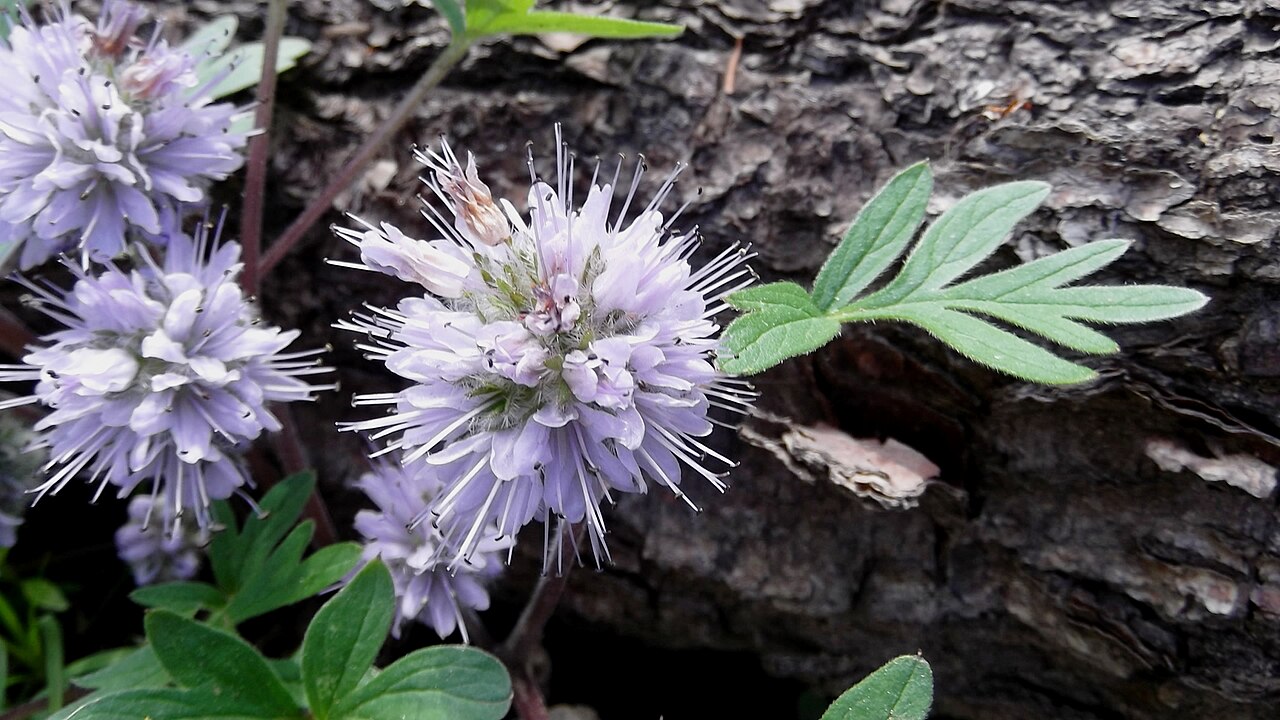
Hydrophyllum capitatum, known as Ballhead Waterleaf or woollen breeches, is a low spring wildflower of the interior West, in the borage family (Boraginaceae; formerly the waterleaf family, Hydrophyllaceae). It grows only 4 to 16 inches tall, with soft, deeply divided leaves and tight, round balls of lavender, blue-violet or white flowers. Long stamens stick out of each flower, giving the heads a fuzzy, pincushion look.
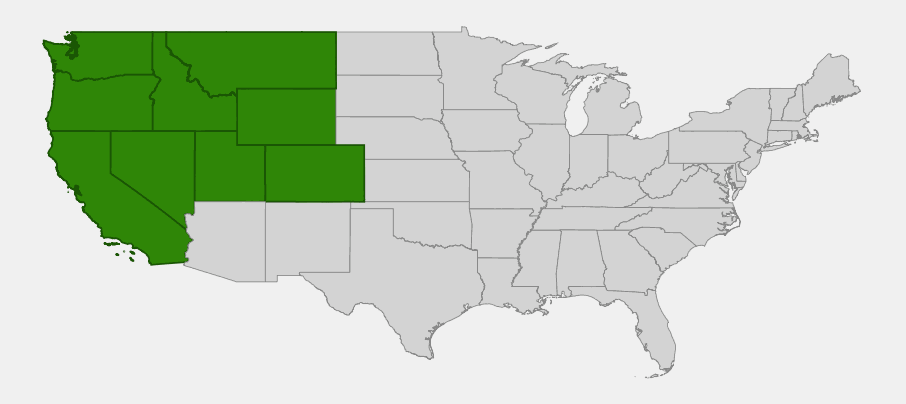
Ballhead waterleaf grows from southern British Columbia and Alberta south through Washington, Oregon, Idaho and Montana to northeastern California, Nevada, Utah, Colorado and Wyoming. It is a plant of the mountains and plateaus, blooming soon after the snow melts in sagebrush steppe, open pine and aspen woods, moist meadows and rocky slopes.
Like many spring ephemerals, it grows quickly in the cool, moist weeks of spring, flowers, sets seed and then goes dormant by midsummer. It is an early source of nectar and pollen for bumble bees and other native bees, and it is a charming plant for naturalistic gardens in the interior Northwest and Rockies.
Identification
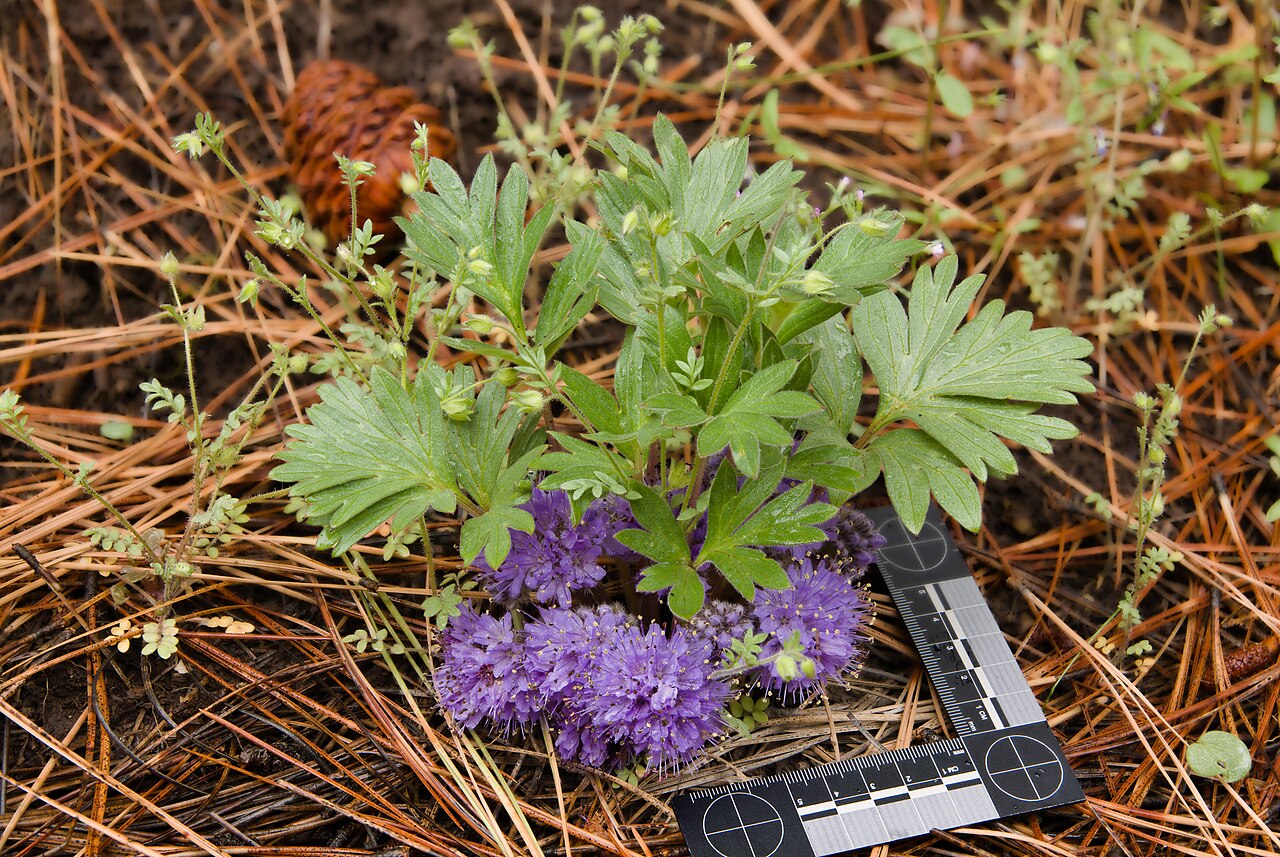
Look for a low cluster of soft, hairy, deeply lobed leaves and dense, round heads of fuzzy lavender to white flowers, often sitting low among or below the leaves.
Growth Habit
Ballhead waterleaf is a herbaceous perennial that grows from a short rootstock with clusters of fleshy roots. Each plant has a few long-stalked leaves and one or more short flowering stems. Plants are usually 4 to 16 inches tall and die back to the ground in early summer.
Leaves
The leaves are 2 to 6 inches long on long stalks, pinnately divided into 7 to 11 lobed leaflets, and covered with soft hairs. The lower leaflets are separate and the upper ones run together. In the typical variety, the leaves rise above the flowers.
Flowers
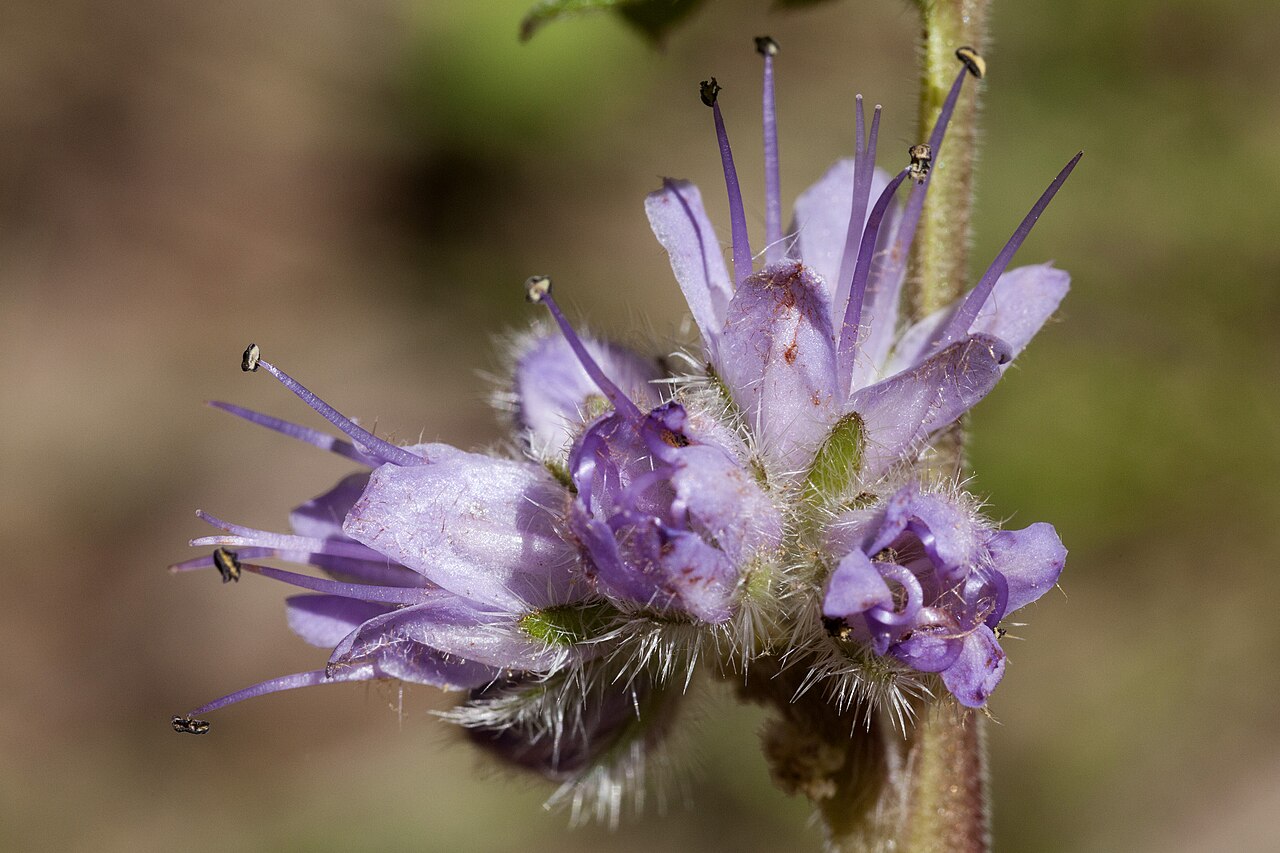
The flowers are packed into a dense, round head about 1 to 2 inches across. Each flower is a small bell, about 1/4 to 3/8 inch long, lavender, blue-violet, purple or white, with five lobes and five long stamens that stick well out of the flower. The calyx is bristly. It blooms from March at low elevations to July in the high mountains, shortly after snowmelt.
Fruit
Each flower produces a small, rounded capsule with one to three seeds, which ripen in early summer as the plant goes dormant.
Varieties
Three varieties are usually recognized. Var. capitatum, the most widespread, has flower heads held below or among the leaves. Var. alpinum, of higher elevations, is smaller and more compact. Var. thompsonii, of the Cascades and Columbia River Gorge, has flower heads on longer stalks that rise above the leaves.
Look-alikes
Pacific waterleaf (Hydrophyllum tenuipes) is a larger plant of moist western forests, with broader leaflets and looser clusters of greenish-white to lavender flowers. Fendler's waterleaf (Hydrophyllum fendleri) is taller, with flowers in loose clusters well above the leaves. Phacelias have flowers in coiled clusters rather than round balls.
Quick Facts
| Scientific Name | Hydrophyllum capitatum |
| Family | Boraginaceae (borage family; formerly Hydrophyllaceae) |
| Plant Type | Low herbaceous perennial; spring ephemeral |
| Mature Height | 4–16 in |
| Mature Spread | 6–12 in |
| Growth Rate | Moderate |
| Sun Exposure | Part shade to full sun |
| Water Needs | Moist in spring; dry in summer |
| Soil Type | Well-drained loam, rocky or gravelly soils |
| Soil pH | Slightly acidic to neutral (about 6.0–7.5) |
| Bloom Time | March–July, soon after snowmelt |
| Flower Color | Lavender, blue-violet, purple or white |
| Fall Color | None; dormant by midsummer |
| Fruit | Small capsules with 1–3 seeds |
| Deer Resistant | No; browsed by deer, elk and livestock |
| USDA Hardiness Zones | 4–8 |
Native Range
USDA PLANTS lists ballhead waterleaf as native in nine western states (California, Colorado, Idaho, Montana, Nevada, Oregon, Utah, Washington and Wyoming) and in British Columbia and Alberta.
It is most common east of the Cascades in Washington and Oregon and in Idaho, Montana and western Wyoming, in the Blue Mountains, the northern Rockies and the mountains of the Columbia Plateau. It extends west into the Columbia River Gorge and the Cascade foothills, and into southwestern Oregon around the Cascade-Siskiyou region. Farther south it grows in the mountains of northeastern California, northern Nevada, Utah and western Colorado.
It grows in sagebrush steppe, open ponderosa pine, Douglas-fir and aspen woods, moist meadows, thickets, rocky slopes and talus, from foothills at about 1,000 feet to subalpine slopes above 9,000 feet.
📋 Regional plant lists featuring Ballhead Waterleaf: Idaho, Eastern Oregon & Eastern Washington · Montana & Wyoming · Utah & Western Colorado · Western Oregon & Western Washington · California & Nevada
Growing & Care Guide
Ballhead waterleaf is rarely sold, but seed-grown plants can be used in naturalistic and rock gardens in the interior West, where its natural rhythm of spring growth and summer dormancy fits the climate.
Light
Part shade under open trees or shrubs is ideal. In cool, high-elevation gardens it also grows in full sun.
Soil & Water
Use a well-drained loam or gritty soil with some organic matter. It needs moisture in spring, from snowmelt or watering, and prefers to be fairly dry in summer while dormant. Avoid heavy summer irrigation, which can rot the roots.
Planting Tips
Plant it under deciduous shrubs or open pines, among bunchgrasses, or in a woodland rock garden, with later-blooming plants nearby to fill the space after it goes dormant. Mark its location so you do not dig into it in summer.
Pruning & Maintenance
No pruning is needed. Let the foliage die back naturally and leave the seed to drop. Keep vigorous groundcovers from smothering it.
Propagation
Sow fresh seed outdoors in fall; it needs a cold, moist winter to germinate. Seedlings may take two or three years to bloom. Established clumps can be divided carefully in early fall while dormant.
Landscape Uses
- Naturalistic gardens: an early spring flower for the interior West
- Woodland and shrub borders: grows under open trees and shrubs
- Rock gardens: a low plant for gritty, well-drained pockets
- Pollinator gardens: early nectar and pollen for bumble bees
- Habitat restoration: a native forb for sagebrush steppe and open pine forest
Wildlife & Ecological Value
Ballhead waterleaf is a small but important part of the early spring flush in western foothills and mountains.
For Pollinators
Bumble bee queens, mason bees, mining bees and other native bees visit the flowers for nectar and pollen early in the season, when few other flowers are open. Flies and early butterflies also visit.
For Birds
The small seeds are of minor importance to birds, but the insects the plant supports are food for spring migrants and nesting birds.
For Mammals
Deer, elk and livestock graze the tender spring foliage, and small mammals such as ground squirrels and pocket gophers may eat the leaves and roots.
Ecosystem Role
As a spring ephemeral, it uses the moisture and light of early spring and then goes dormant, sharing space with grasses and shrubs that grow later in the season.
Cultural & Historical Uses
The genus name Hydrophyllum means “water leaf” in Greek. It refers to the pale, water-stained-looking spots on the leaves of some eastern species, or, by another account, to the water held in the cup-like leaf bases. The species name capitatum means “headed,” for the round flower heads.
The old common name “woollen breeches” refers to the hairy flower heads, which look a little like fuzzy pantaloons. Several Indigenous peoples of the Columbia Plateau and the interior of British Columbia are reported to have eaten the young shoots and roots of waterleaves.
Waterleaves were long placed in their own family, the Hydrophyllaceae, together with phacelias and baby blue-eyes. DNA studies showed that these plants belong within the borage family, and most modern floras now include them in Boraginaceae.
Frequently Asked Questions
Why is it called ballhead waterleaf?
Because its flowers form dense, round heads, or balls, with long stamens that make them look fuzzy.
When does ballhead waterleaf bloom?
In spring, soon after the snow melts: as early as March in the foothills and as late as July at high elevations.
Can I grow ballhead waterleaf in my garden?
Yes, in the interior West, if you can give it moist spring conditions and a dry summer. Grow it from fall-sown seed and plant it under open shrubs or trees.
Why does ballhead waterleaf disappear in summer?
It is a spring ephemeral. It grows and blooms in spring, sets seed and goes dormant by midsummer, coming back the next spring.
Does ballhead waterleaf grow west of the Cascades?
Only locally, in the Columbia River Gorge and in southwestern Oregon. Most plants grow east of the Cascades and in the Rockies.

Looking for a nursery that carries Ballhead Waterleaf?
Browse our native plant nursery directory: California · Colorado · Idaho · Montana · Nevada · Oregon · Utah · Washington · Wyoming