
Pale Evening Primrose (Oenothera pallida)
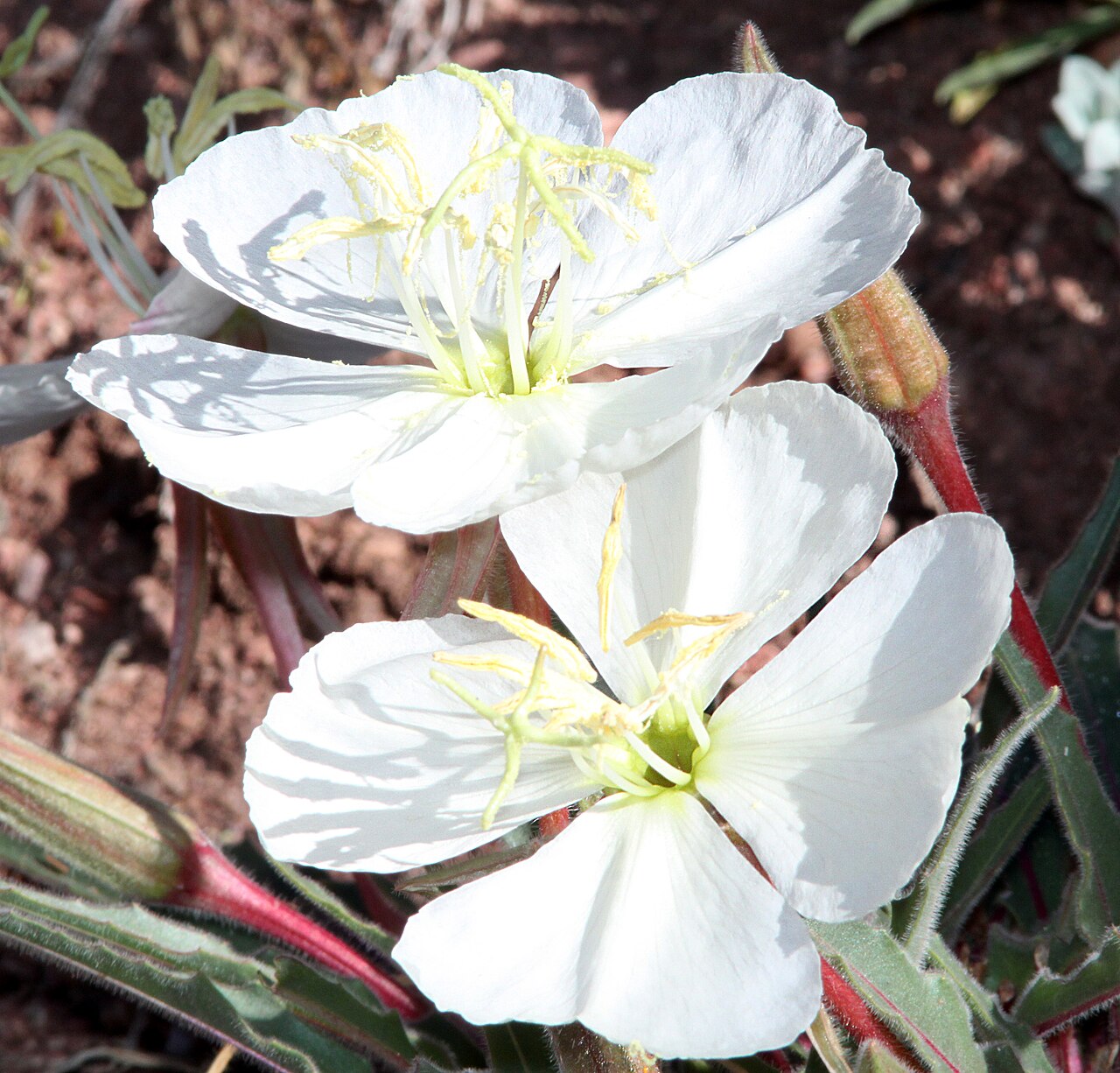
Oenothera pallida, known as Pale Evening Primrose and also as white evening primrose or pale evening-primrose, is a low, spreading wildflower of sand dunes, sandy flats and sagebrush country in the interior West. It belongs to the evening primrose family (Onagraceae).
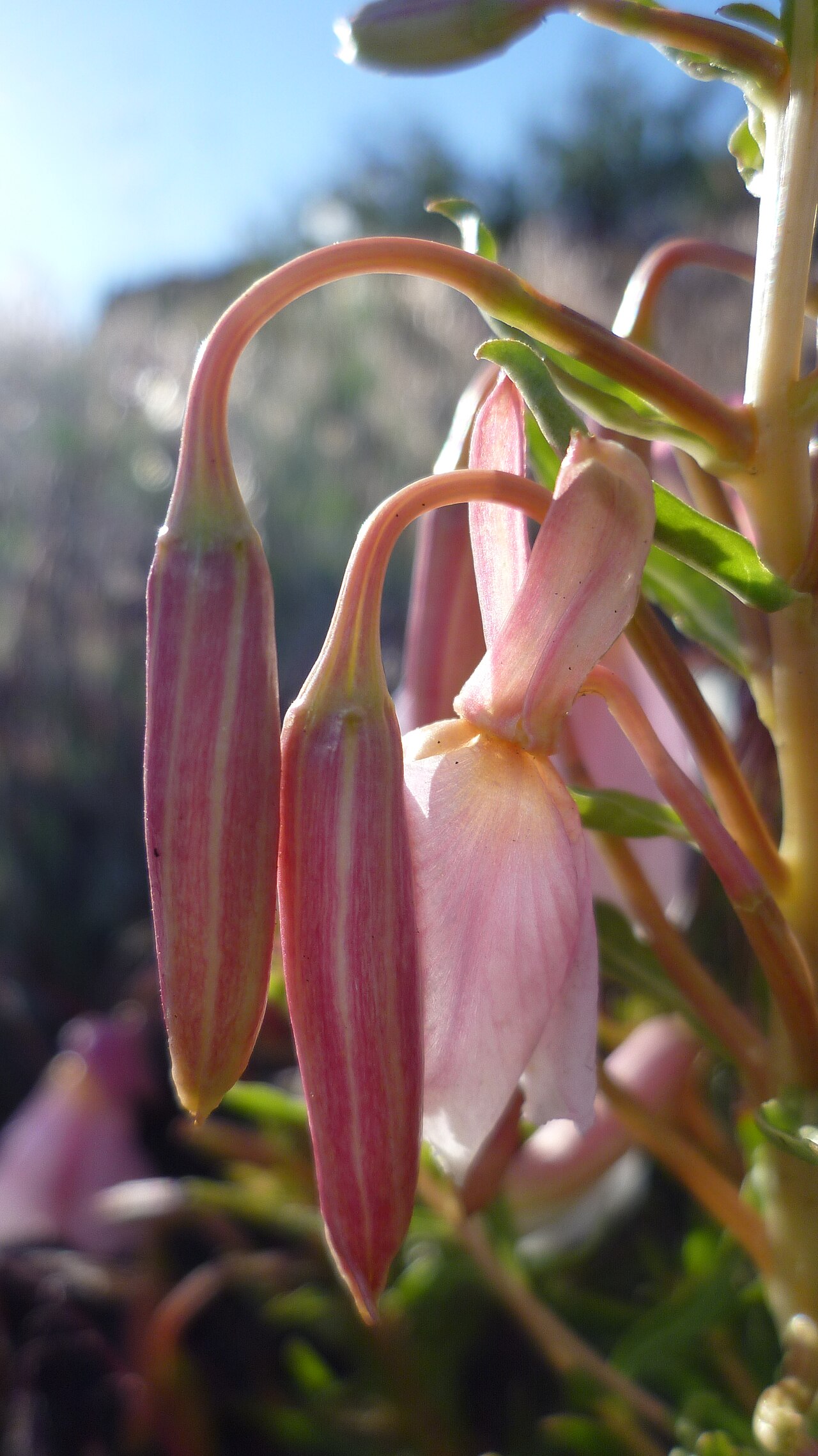
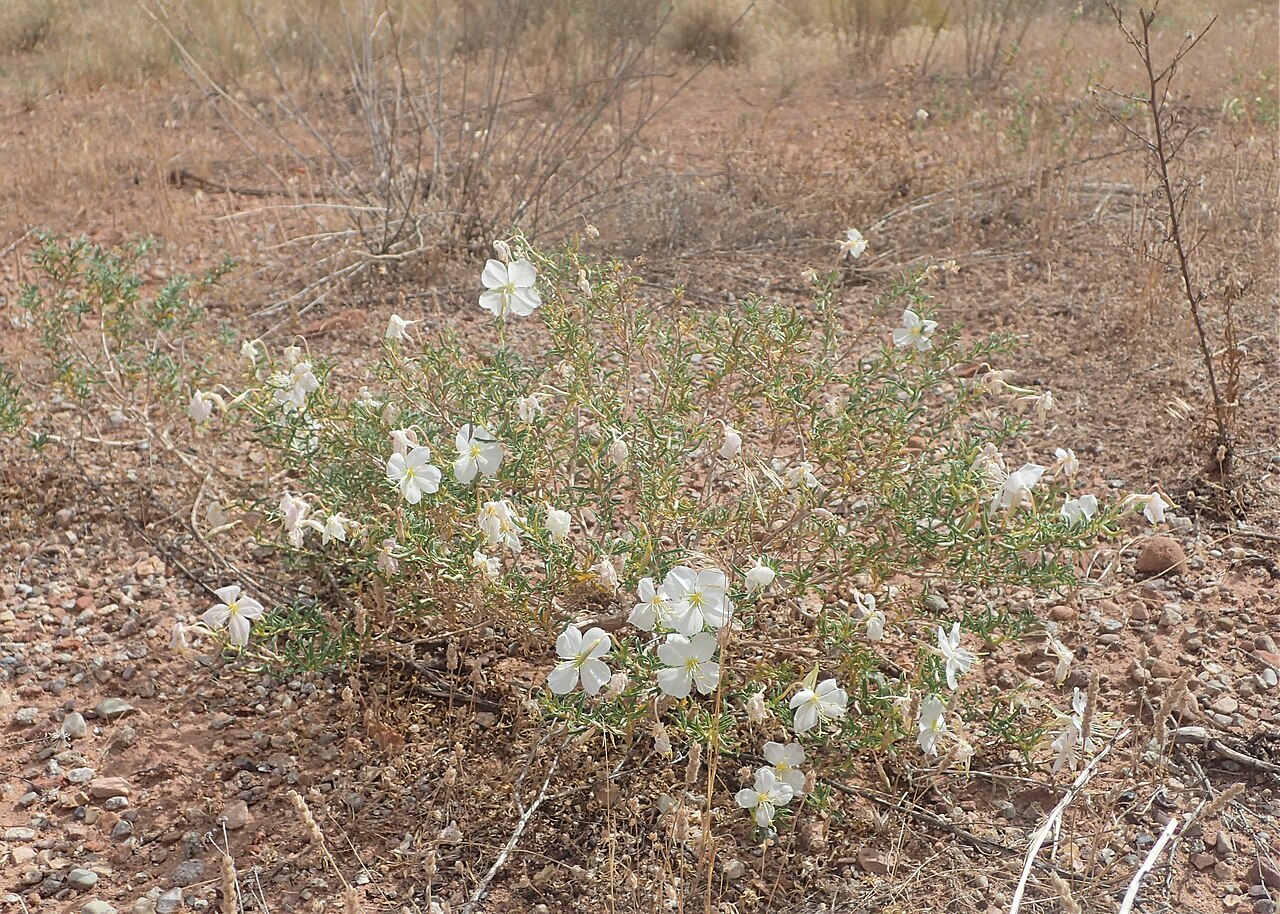
From spring into summer it opens large, fragrant, white flowers 1 1/2 to 3 inches across in the evening. Each flower lasts only one night and the following morning, then fades to pink as it wilts. The flowers rise from nodding, often pinkish buds on whitish, peeling stems with narrow gray-green leaves. Plants spread by creeping roots and can form broad patches on loose sand.
Pale evening primrose is an excellent plant for dry, sandy gardens in the West, where it needs no irrigation once established. It is a valuable nectar plant for night-flying hawkmoths and for early-morning bees.
Identification
Look for large, white, four-petaled flowers on a low, sprawling plant with whitish stems and narrow leaves, growing in sand. Faded flowers turn pink, and the buds nod before opening.
Growth Habit
A perennial, sometimes short-lived or biennial, 4 to 20 inches tall, with several erect to sprawling stems from a branched crown. It spreads by creeping roots that send up new shoots, forming loose colonies in sandy soil. The stems are white to pale pinkish, and their outer skin often peels in thin strips.
Leaves
The leaves are alternate, linear to narrowly lance-shaped, about 1 to 3 inches long, and grayish green. Their edges may be smooth, wavy, toothed or deeply cut, depending on the subspecies. Plants may be smooth or hairy.
Flowers
The flowers grow from the upper leaf axils on a long, slender floral tube about 1 to 1 1/2 inches long. They have four broad, white petals, often notched at the tip, eight pale yellow stamens and a four-lobed stigma. The buds nod before opening. Flowers open near sunset, are sweetly fragrant, and turn pink as they wither the next day. Blooming lasts from about April to September, depending on elevation and rainfall.
Fruit & Seeds
The fruit is a slender, woody capsule about 1 to 2 1/2 inches long, often curved or coiled, that splits to release many small seeds.
Look-alikes
Tufted evening primrose (Oenothera caespitosa) has similar white flowers but is stemless, with flowers growing straight from a basal rosette of leaves. Birdcage evening primrose (O. deltoides) of the southwestern deserts is an annual with a basal rosette and stems that curl into a “birdcage” when dry. The yellow-flowered common evening primrose (O. biennis) is a tall biennial.
Quick Facts
| Scientific Name | Oenothera pallida |
| Family | Onagraceae (evening primrose family) |
| Plant Type | Spreading herbaceous perennial (sometimes biennial) |
| Mature Height | 4–20 in |
| Mature Spread | 1–3 ft; spreads by roots |
| Growth Rate | Moderate to fast in sand |
| Sun Exposure | Full sun |
| Water Needs | Low; very drought tolerant |
| Soil Type | Sandy, gravelly, well-drained soils; dunes |
| Soil pH | Neutral to alkaline (about 6.5–8.5) |
| Bloom Time | April–September |
| Flower Color | White, fading to pink |
| Fall Color | None notable |
| Fruit | Slender, woody, often curved capsule |
| Deer Resistant | Moderate |
| USDA Hardiness Zones | 4–8 |
Native Range
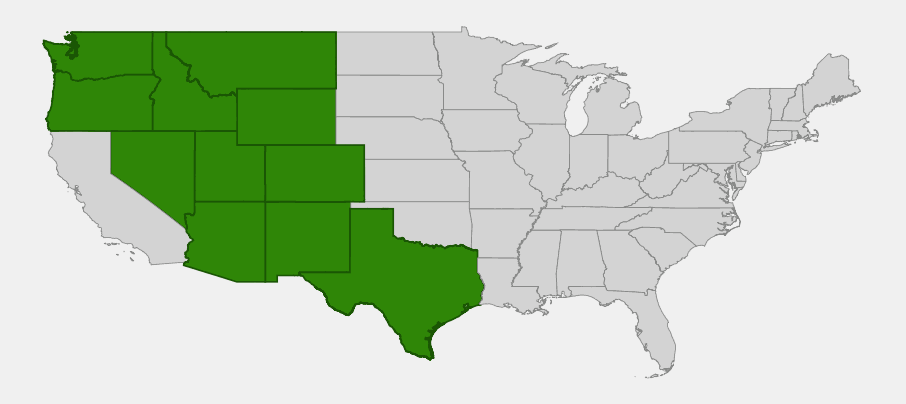
Pale evening primrose is native to the interior western United States. USDA PLANTS lists it from Washington, Oregon, Idaho and Montana south through Wyoming, Nevada, Utah and Colorado to Arizona, New Mexico and Texas.
It is common on the Colorado Plateau, in the Great Basin and in the Wyoming and Columbia basins. In Washington and Oregon it grows east of the Cascades, on the sand dunes and sandy flats of the Columbia Basin, and in Texas it is found in the far western part of the state, including the El Paso region, and on sandy ground in the Panhandle.
It grows on loose or stabilized sand dunes, sandy flats and washes, sagebrush steppe, desert scrub, pinyon-juniper woodland and sandy roadsides, from about 1,000 to 8,000 feet. It often colonizes disturbed sandy soil and recovers quickly after fire.
📋 Regional plant lists featuring Pale Evening Primrose: Idaho, Eastern Oregon & Eastern Washington · Montana & Wyoming · Utah & Western Colorado · Arizona & New Mexico · South & West Texas · California & Nevada
Growing & Care Guide
Pale evening primrose is easy to grow in a hot, dry, sunny garden with sandy or gravelly soil. Its main needs are sharp drainage and no summer watering. In rich, irrigated soil it tends to sprawl, spread too freely or rot.
Light
Full sun. It flowers best with long, hot days.
Soil & Water
Sandy or gravelly, lean, fast-draining soil; it tolerates alkaline soils. Water to establish it, then little or not at all in arid climates. Overwatering and heavy soil lead to crown rot.
Planting Tips
Plant in spring from containers or sow seed in fall. Give it room to spread, or confine it with paths or rocks in small gardens. It combines well with bunchgrasses, sand verbena and other dryland wildflowers. Plant it near a patio or path so you can enjoy the evening fragrance.
Pruning & Maintenance
Cut back old stems in late winter. Pull unwanted shoots that come up from the spreading roots. No fertilizer is needed.
Propagation
Sow seed in fall, or in spring after one to two months of cold, moist stratification, barely covering it. It can also be propagated by digging rooted shoots from the edge of a colony in early spring.
Landscape Uses
- Xeriscapes: a drought-tolerant groundcover for sandy, sunny sites
- Moon gardens: large white flowers that open at dusk and glow in the evening
- Pollinator gardens: nectar for hawkmoths at night and bees in the morning
- Dune and sand stabilization: spreading roots help hold loose sand
- Restoration: a pioneer for disturbed sandy soils and burned areas
Wildlife & Ecological Value
Pale evening primrose is a key nectar plant for night-flying insects in the arid West and helps stabilize loose sand.
For Pollinators
The long floral tube and evening fragrance attract hawkmoths, such as the white-lined sphinx, which hover at the flowers at dusk. Specialist bees that feed on evening primrose pollen visit the flowers early in the morning before they close.
For Birds
Small seed-eating birds may take seeds from the open capsules.
For Mammals
Deer, pronghorn, rabbits and rodents browse the leaves and flowers at times, but rarely enough to harm established colonies.
Ecosystem Role
Its creeping roots help stabilize sand dunes and sandy soils, and it is one of the first plants to return after disturbance or fire. Its leaves feed the caterpillars of several moths and sphinx moths.
Cultural & Historical Uses
The genus name Oenothera is an old Greek plant name of uncertain meaning, often linked to the words for “wine” and “hunt.” The species name pallida means “pale,” for its white flowers and pale stems.
The species was described by the English botanist John Lindley in 1828 It includes several subspecies that differ in leaf shape and hairiness.
Evening primroses are a classic example of flowers adapted to moth pollination: white petals that are easy to see at night, a strong sweet scent and nectar at the bottom of a long tube that only long-tongued moths can reach.
Frequently Asked Questions
When does pale evening primrose bloom?
From about April to September. Each flower opens near sunset, stays open through the night and closes or fades by the next afternoon.
Why do the flowers turn pink?
The white petals turn pink as the flower wilts the day after it opens. A plant often shows white and pink flowers at the same time.
Does pale evening primrose spread?
Yes. It spreads by creeping roots in sandy soil and can form broad patches. In small gardens, confine it with edging or pull extra shoots.
What soil does pale evening primrose need?
Lean, sandy or gravelly, very well-drained soil in full sun. It does poorly in heavy, wet or rich soil.
Which pollinators visit pale evening primrose?
Mainly hawkmoths at night and bees in the early morning.

Looking for a nursery that carries Pale Evening Primrose?
Browse our native plant nursery directory: Arizona · Colorado · Idaho · Montana · Nevada & New Mexico · Oregon · Texas & Utah · Washington · Wyoming

