
Threetip Sagebrush (Artemisia tripartita)
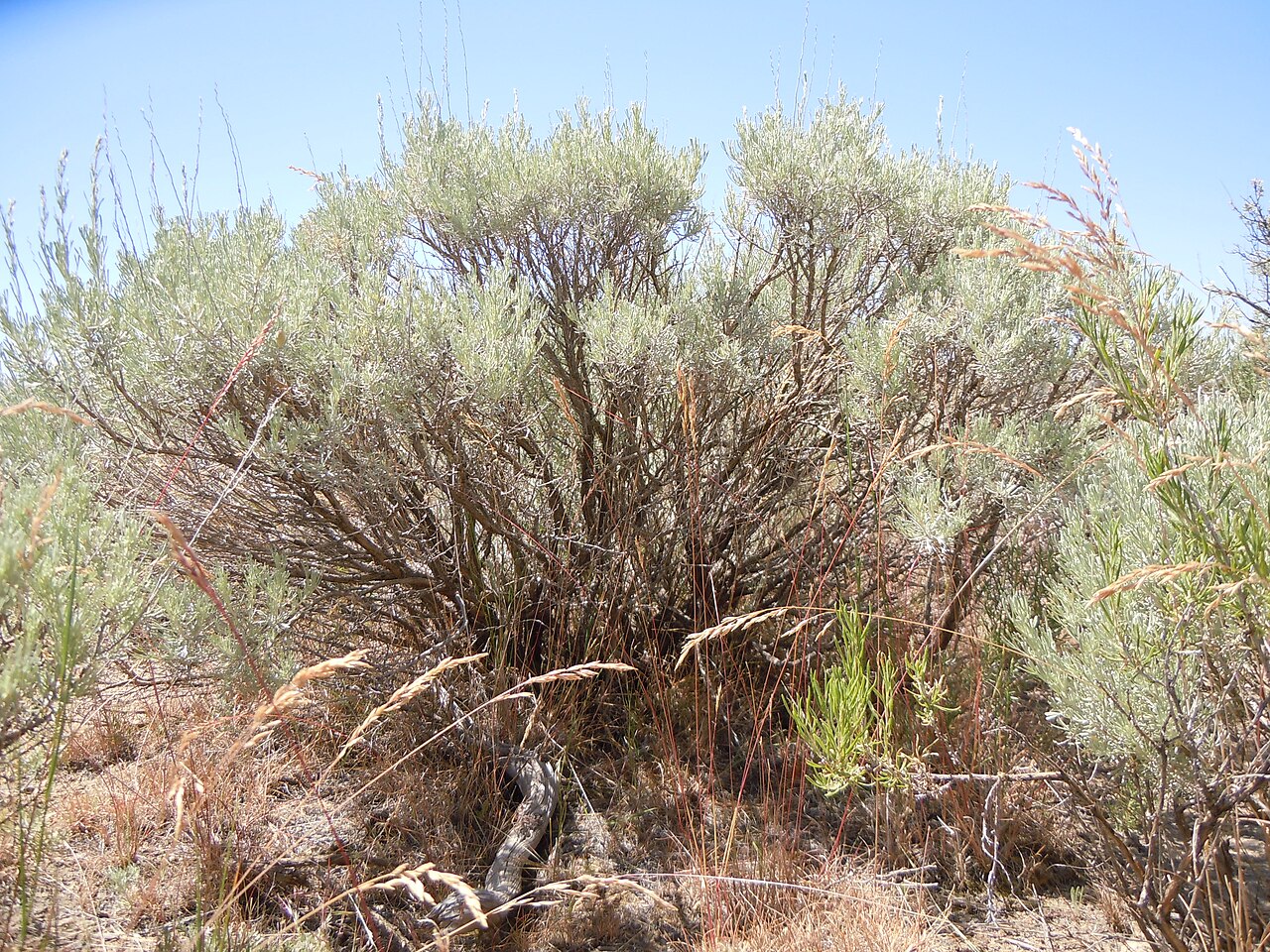
Artemisia tripartita, the Threetip Sagebrush, is an aromatic, silvery evergreen shrub of the interior West. It grows from southern British Columbia through eastern Washington and Oregon, Idaho and Montana to Wyoming, northern Nevada, northern Utah and northwestern Colorado, covering millions of acres of sagebrush steppe.
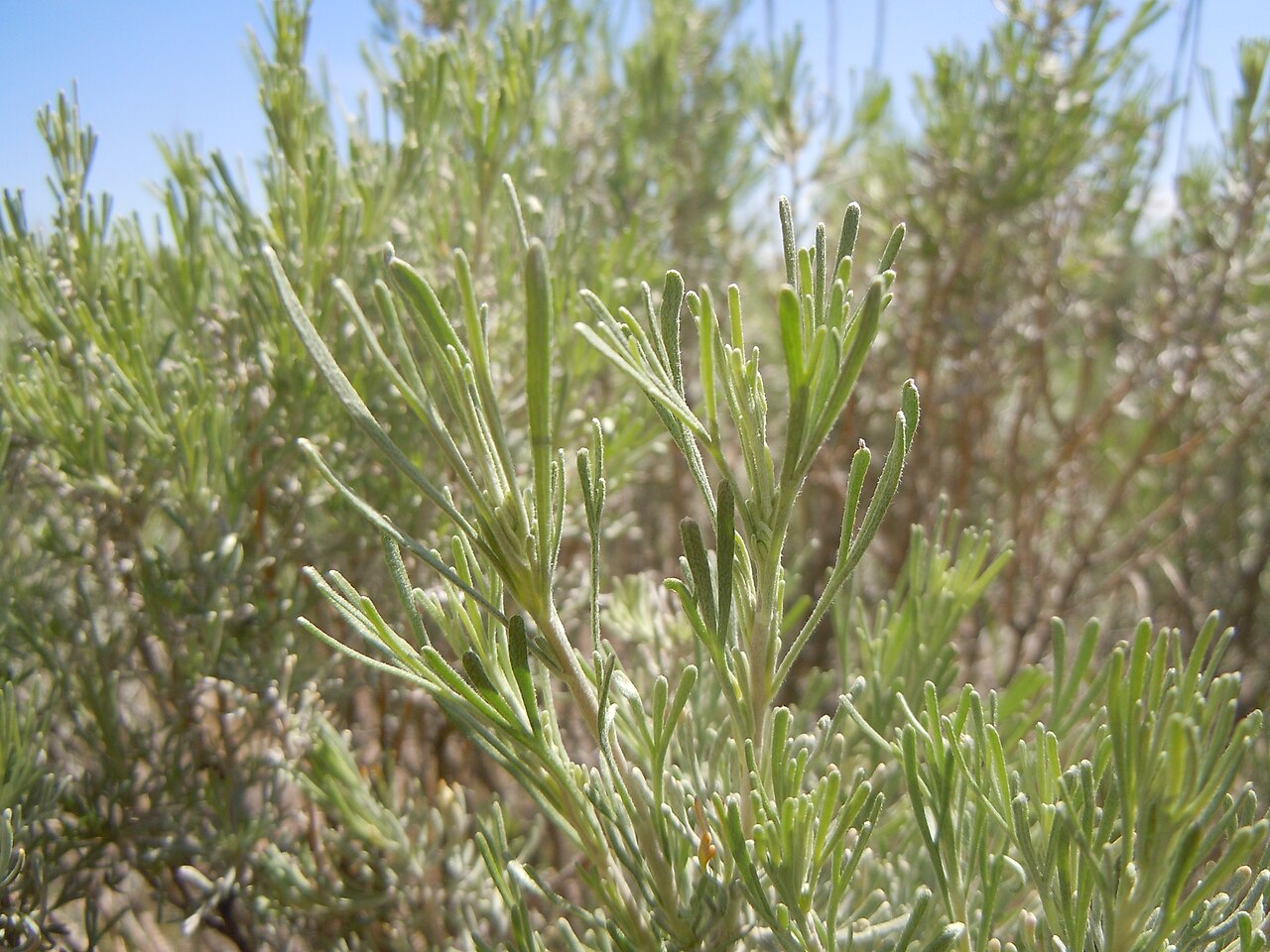
It looks much like its famous relative big sagebrush, but its leaves are split deeply into three long, narrow lobes rather than having three short teeth at the tip. It favors deeper, moister soils and cooler sites than many sagebrushes, often with bunchgrasses such as Idaho fescue and bluebunch wheatgrass.
Unlike most big sagebrushes, threetip sagebrush can resprout from its base after a light fire. This guide covers how to identify it, where it grows, how to grow it in a dry native garden and its value to sage-grouse and other wildlife.
Identification
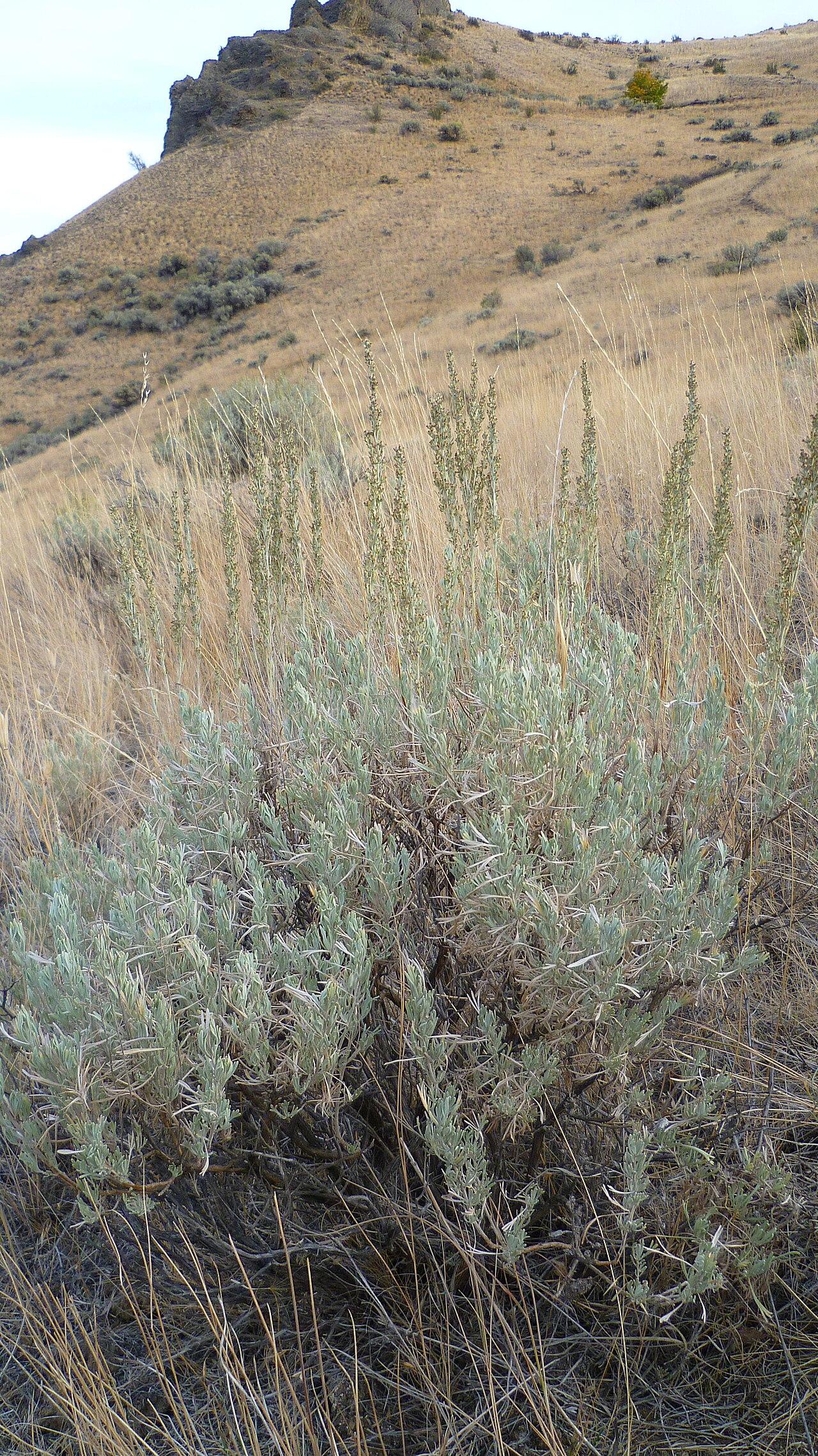
Threetip sagebrush is a gray, aromatic shrub with many slender stems, leaves cleft into three long narrow lobes, and tiny yellowish flower heads in narrow late-summer spikes.
Shape & Stems
It usually grows 1 to 4 feet tall, occasionally to about 6 feet, with many slender, upright to spreading stems from a short trunk and fibrous, shredding gray bark. Wyoming threetip sagebrush (ssp. rupicola) is a dwarf form only a few inches tall that spreads along the ground and roots where its branches touch the soil.
Leaves
The evergreen leaves are about ½ to 1½ inches long, covered with fine gray hairs, and divided nearly to the base into three linear lobes, which may themselves fork again. They smell strongly of sage when crushed. In big sagebrush the leaves are wedge-shaped with three short teeth only at the tip.
Flowers
From late summer into fall, tiny yellowish flower heads, each with a few disk florets and no rays, cluster in narrow, leafy spikes at the branch tips. The flowers are wind-pollinated.
Fruit & Look-alikes
The fruits are tiny, seedlike cypselae (achenes) that ripen in fall and winter and are shed in large numbers. Scabland sagebrush (A. rigida) of eastern Washington and Oregon also has deeply three-cleft leaves, but they are covered in long silky hairs and the plant is lower and deciduous. Low sagebrush and black sagebrush are low shrubs with short-toothed leaves.
Quick Facts
| Scientific Name | Artemisia tripartita Rydb. |
| Family | Asteraceae (aster or sunflower family) |
| Plant Type | Evergreen aromatic shrub |
| Mature Height | 1–4 ft (rarely to 6 ft) |
| Mature Spread | 1–4 ft |
| Growth Rate | Moderate |
| Sun Exposure | Full sun |
| Water Needs | Low; drought tolerant once established |
| Soil Type | Deep, well-drained loam, silt or sandy soil |
| Soil pH | About 6.5–8.0 |
| Bloom Time | August–October |
| Flower Color | Yellowish (inconspicuous) |
| Fall Color | Evergreen; silvery gray year-round |
| Fruit | Tiny achenes, ripening fall to winter |
| Deer Resistant | Moderate; browsed mainly in winter |
| USDA Hardiness Zones | 4–7 |
Native Range
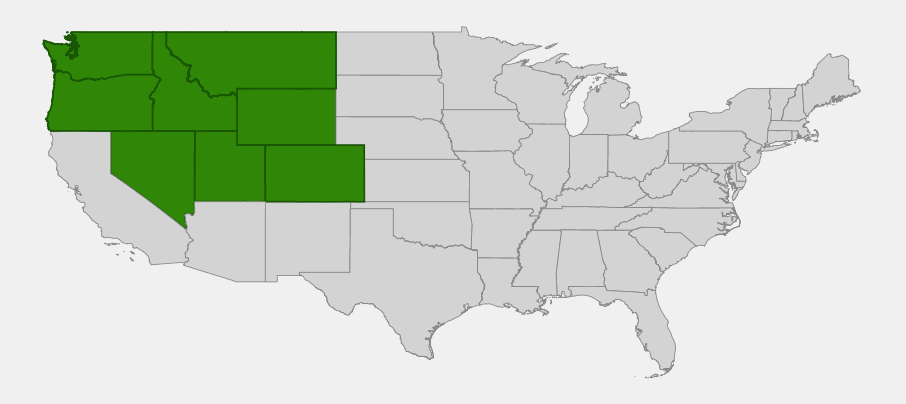
Threetip sagebrush is a plant of the northern Intermountain West. In Canada it grows in the dry interior valleys of southern British Columbia. In the United States, USDA PLANTS lists it in Washington, Oregon, Idaho, Montana, Wyoming, Nevada, Utah and Colorado. It is most abundant in the steppe of eastern Washington, the Snake River Plain and mountain valleys of southern Idaho, and the grass and shrublands of southwestern Montana. A stray USDA record from New York is not part of its native range and is left off the map.
The typical subspecies (ssp. tripartita) covers most of the range. The dwarf Wyoming threetip sagebrush (ssp. rupicola) grows on windswept, rocky ridges and high plateaus in Wyoming and Colorado.
It grows on deep, well-drained loams, silts and sands, including volcanic soils, on foothills, plains, valleys and mountain slopes, usually where winters are snowy and the climate is cooler and moister than in big sagebrush deserts. It often forms open stands with bunchgrasses and can dominate after disturbance.
📋 Regional plant lists featuring Threetip Sagebrush: Idaho, Eastern Oregon & Eastern Washington · Montana & Wyoming · Utah & Western Colorado · California & Nevada
Growing & Care Guide
Threetip sagebrush is used mostly in rangeland restoration and sage-grouse habitat projects, and seed is sold by some western native seed companies. In gardens it makes a fine-textured, silvery, fragrant shrub for dry, sunny sites in the interior West, where it needs no summer water once established.
Light
Full sun. It becomes sparse and leggy in shade.
Soil & Water
Deep, well-drained loam, silt or sandy soil. It tolerates cold winters and dry summers but not heavy, poorly drained clay or irrigation in summer. Water only to establish it during its first season.
Planting Tips
Plant small container seedlings in fall or early spring, 3 to 4 feet apart, with native bunchgrasses and wildflowers between them. Seed can be broadcast on the surface of the snow or soil in late fall or early winter; do not bury it deeply, since it needs light to germinate.
Pruning & Maintenance
Little care is needed. Remove dead stems in spring. Avoid fertilizer and summer watering, which shorten its life. Keep invasive cheatgrass under control around young plants, since it fuels fires.
Propagation
Grow from fresh seed sown on the surface in late fall or with a brief cold stratification; seed viability drops after a year or two. It also layers naturally where low branches touch moist soil.
Landscape Uses
- Sagebrush steppe restoration: especially on cooler, moister sites
- Sage-grouse and wildlife habitat: evergreen winter forage and cover
- Xeriscape and native gardens: silvery, fragrant, drought-tolerant shrub
- Erosion control: fibrous roots and resprouting after light fire
Wildlife & Ecological Value
Like other sagebrushes, threetip sagebrush is a cornerstone of the sagebrush steppe, providing year-round food and shelter.
For Pollinators
It is wind-pollinated and offers little nectar, but its stands shelter the native bees and other insects that visit the wildflowers growing among them. Sagebrush foliage feeds many specialist moths and beetles.
For Birds
Greater sage-grouse eat the evergreen leaves in winter and nest under the shrubs. Sagebrush songbirds such as Brewer’s sparrows and sage thrashers nest and forage in the stands.
For Mammals
Pronghorn, mule deer and elk browse it, mostly in fall and winter, and pygmy rabbits and other small mammals use it for cover.
Ecosystem Role
It anchors soil on foothills and plains, traps snow, and creates cover for grasses and wildflowers. Because it can resprout after light fires, it recovers from burns faster than big sagebrush, which must regrow from seed.
Cultural & Historical Uses
Per Axel Rydberg described Artemisia tripartita in 1900. The name tripartita means “divided into three parts,” referring to the leaves.
Indigenous peoples of the Columbia Plateau and Great Basin used sagebrushes for fuel, smudges, and medicinal teas and washes, though uses of each species were not always recorded separately.
Threetip sagebrush is one of several sagebrush taxa that land managers track in sage-grouse conservation, and its ability to resprout makes it valuable in post-fire restoration.
Frequently Asked Questions
How do I tell threetip sagebrush from big sagebrush?
Look at the leaves: threetip sagebrush leaves are split nearly to the base into three long, narrow lobes, while big sagebrush leaves are wedge-shaped with three short teeth at the tip.
Where does threetip sagebrush grow?
In southern British Columbia, eastern Washington and Oregon, Idaho, Montana, Wyoming, northern Nevada and Utah, and northwestern Colorado, on foothills, plains and valleys with deep, well-drained soils.
Does threetip sagebrush survive fire?
Often, after a light fire. It can resprout from the base, unlike big sagebrush, though hot or repeated fires can still kill it.
Can I grow threetip sagebrush in a garden?
Yes, in the interior West, in full sun and deep, well-drained soil with no summer irrigation once established. It is a good shrub for xeriscapes and wildlife gardens.
Is threetip sagebrush important for sage-grouse?
Yes. Sage-grouse feed on sagebrush leaves through the winter and nest under the shrubs, and threetip sagebrush stands are part of their habitat.


