
Variegated Horsetail (Equisetum variegatum)
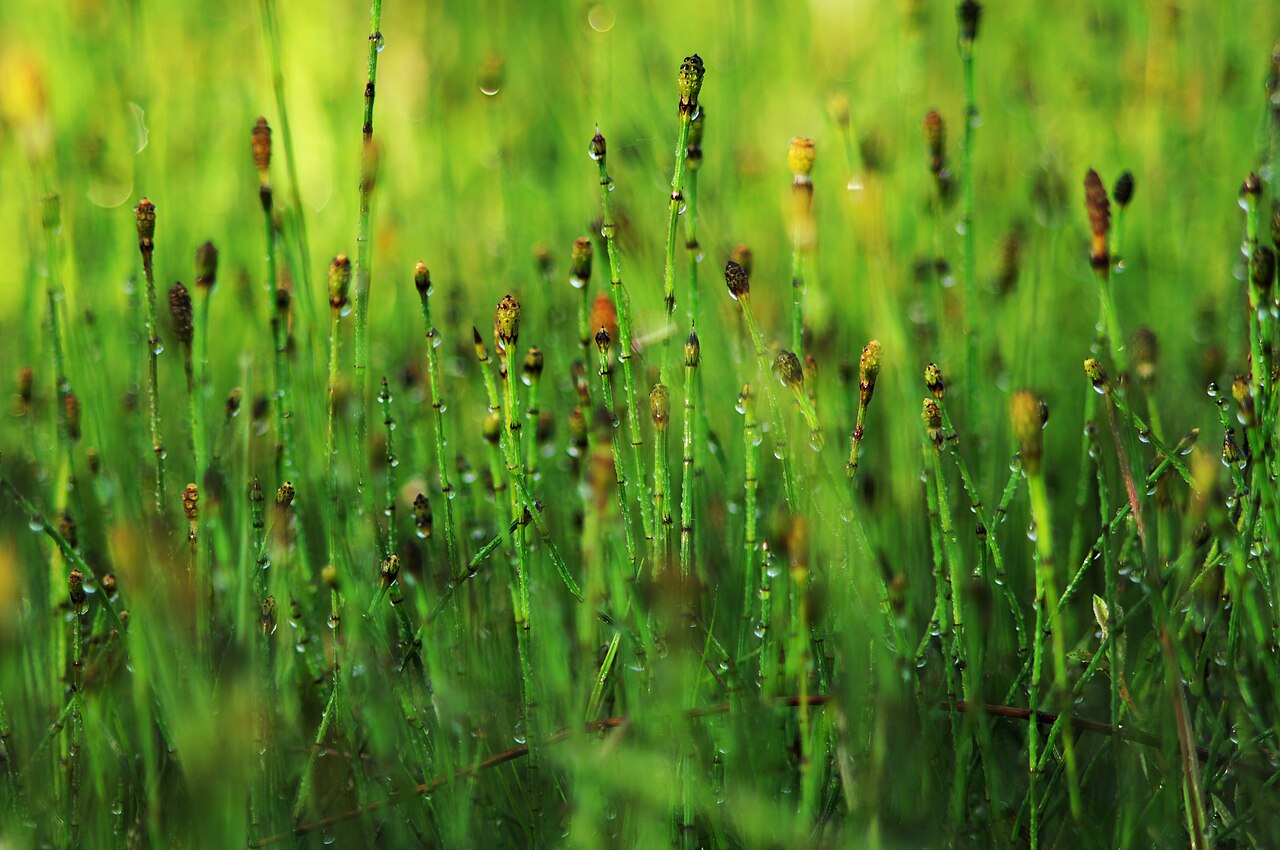
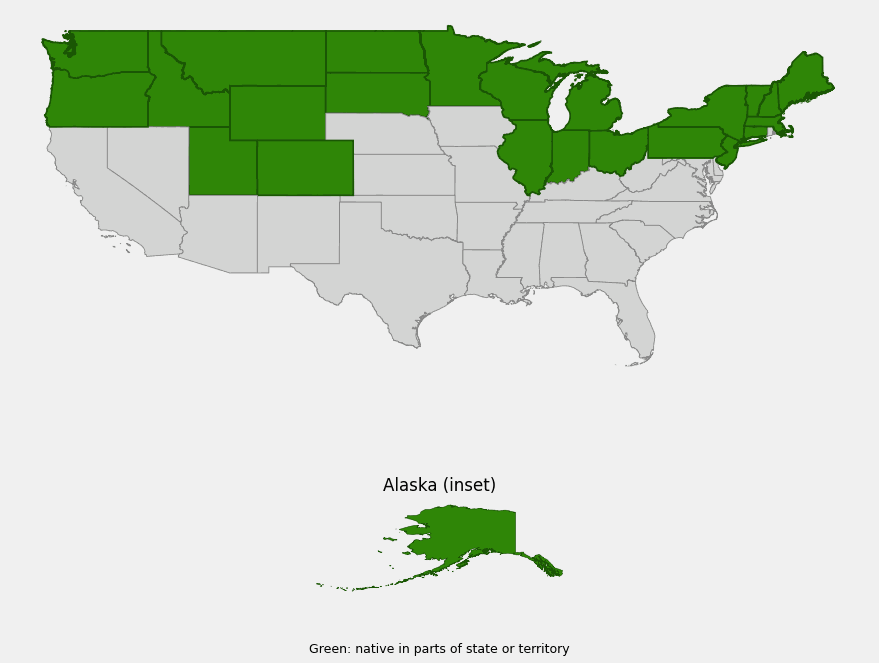
Equisetum variegatum, the Variegated Horsetail (also called variegated scouring rush), is a small, evergreen horsetail of wet, open, often lime-rich places across the northern parts of North America, Europe and Asia. In the United States it grows in Alaska and across the northern states from Washington and Oregon through the Rocky Mountains and the Great Lakes to New England.
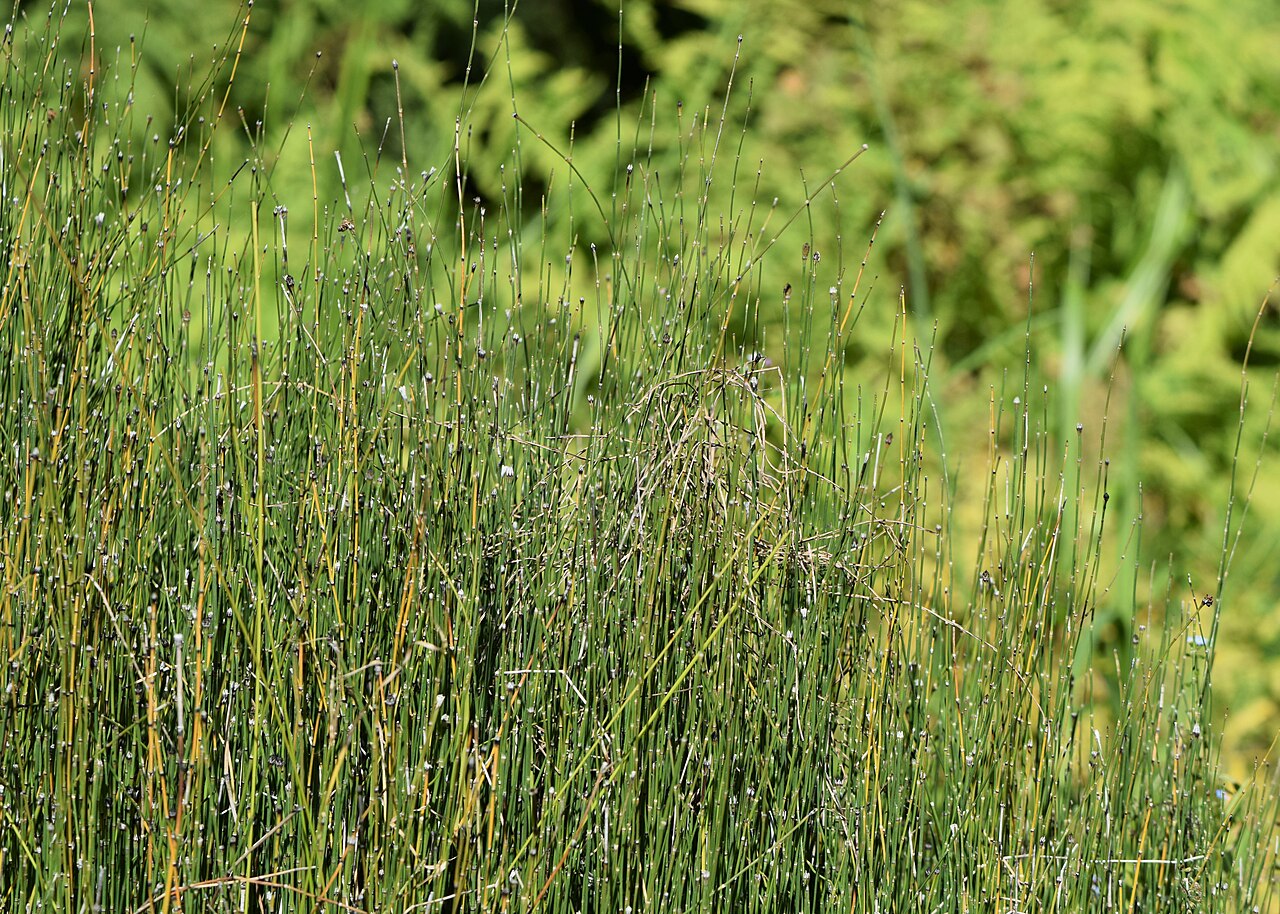
It is one of the smallest scouring rushes, with thin, wiry, dark green stems usually 4 to 16 inches tall, often growing in dense tufts or mats. Its name comes from the black-and-white banded sheaths at each joint of the stem, which give the stems a variegated look. Small, pointed cones form at the stem tips.
Variegated horsetail is a good indicator of calcium-rich wetlands such as fens, wet sandy lake shores and river gravels. This guide covers how to identify it, where it grows, how to use it in a wet garden and its role in northern wetlands.
Identification
Variegated horsetail is a slender, evergreen horsetail with unbranched or base-branched stems, black-and-white banded sheaths with white-margined teeth, and tiny cones tipped with a sharp point.
Stems
The stems are evergreen, dark green and rough to the touch, about 1/16 inch thick and usually 4 to 16 inches tall, occasionally taller. They are hollow, ridged with several (roughly 4 to 12) ridges, and grow upright or creep along the ground. They are usually unbranched, though several stems often arise from the base, forming tufts.
Sheaths
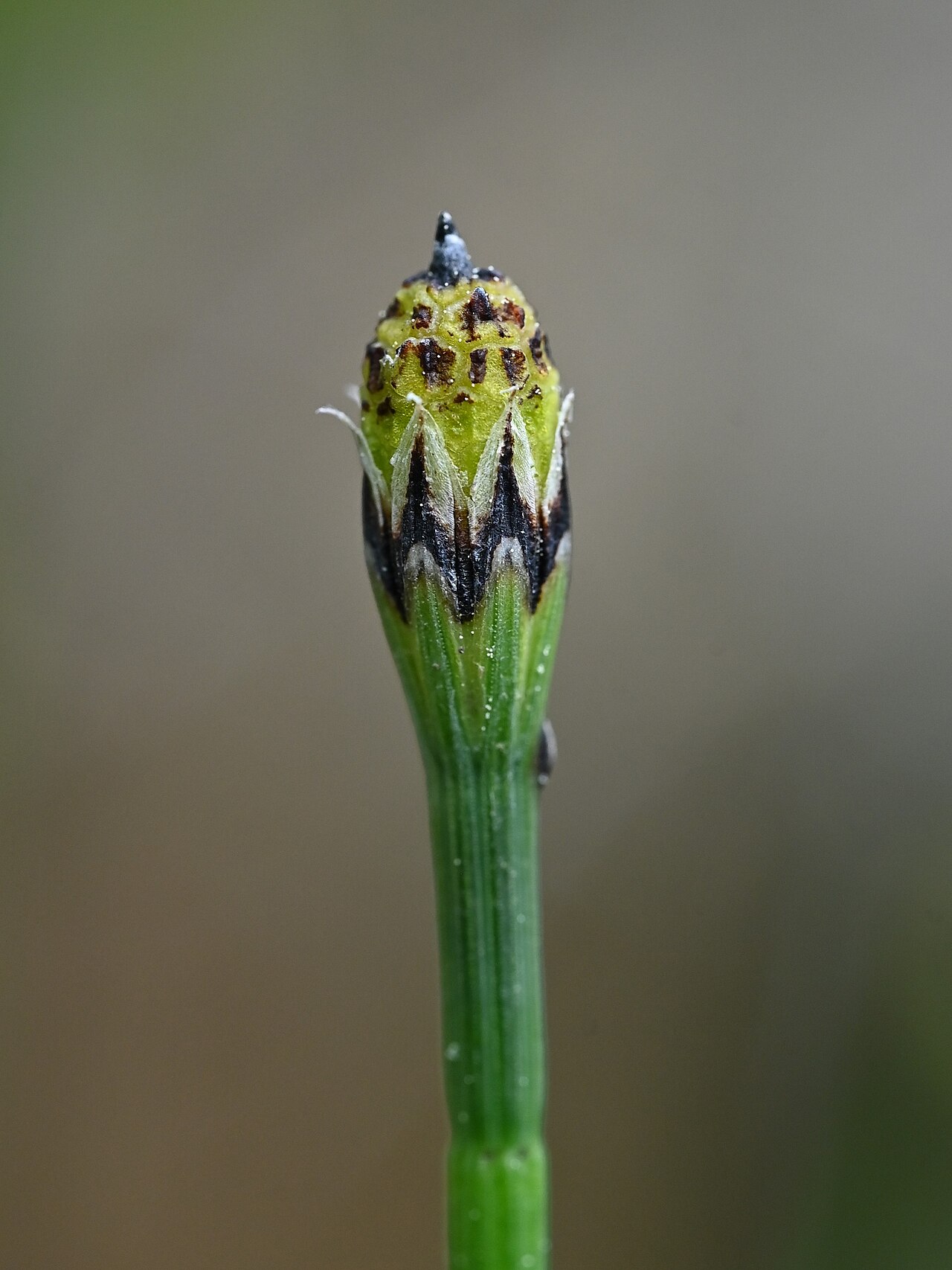
At each joint, a short sheath surrounds the stem. The sheath is green below with a black band at the top and short teeth that are dark in the center with broad white margins. This black-and-white pattern is the best field mark.
Cones
The spore-bearing cones are small, about ⅛ to ¼ inch long, green to yellow and dark-spotted, with a sharp, black, pointed tip. They form at the tips of ordinary green stems in summer and often persist through the winter.
Look-alikes
Dwarf Horsetail (E. scirpoides) is even smaller, with curly, solid stems and only 3 or so ridges. Scouring Rush (E. hyemale) is much taller and thicker. Smooth Horsetail has smooth, often deciduous stems. Hybrids between variegated horsetail and scouring rush (E. × trachyodon) are intermediate in size.
Quick Facts
| Scientific Name | Equisetum variegatum Schleich. ex F. Weber & D. Mohr |
| Family | Equisetaceae (horsetail family) |
| Plant Type | Evergreen horsetail (fern ally) |
| Mature Height | 4–16 in (occasionally to 2 ft) |
| Mature Spread | Spreads by rhizomes into tufts or mats |
| Growth Rate | Moderate |
| Sun Exposure | Full sun to partial shade |
| Water Needs | Wet; saturated soil or shallow water |
| Soil Type | Wet sand, gravel, silt or marl; often calcium-rich |
| Soil pH | Neutral to alkaline, about 6.5–8.0 |
| Bloom Time | None (spore cones in summer) |
| Flower Color | None; produces spores |
| Fall Color | None (evergreen) |
| Fruit | Small spore-bearing cone |
| Deer Resistant | Yes |
| USDA Hardiness Zones | 1–7 |
Native Range
Variegated horsetail is circumboreal, growing across northern North America, Greenland, Iceland, northern Europe and northern Asia. In North America it ranges throughout Alaska and Canada, from the Arctic islands to Newfoundland.
In the lower 48 states, USDA PLANTS lists it from Washington, Oregon and Idaho east through Montana, Wyoming, Utah, Colorado and the Dakotas to Minnesota, Wisconsin, Michigan, Illinois, Indiana and Ohio, and in the Northeast from Pennsylvania, New York and New Jersey to New England. It is most common in the far north and becomes scattered and rare toward the southern edge of its range, where several states treat it as a rare plant.
It favors open, wet, often calcium-rich places: fens, calcareous seeps, marly lake shores, wet sandy beaches and interdunal swales of the Great Lakes, river gravel bars, wet roadside ditches and mountain springs and seeps, from sea level to the alpine zone.
📋 Regional plant lists featuring Variegated Horsetail: Alaska · Connecticut, Massachusetts & Rhode Island · New Hampshire, Maine & Vermont · New York, Pennsylvania & Northern New Jersey · Delaware, Southern New Jersey & Long Island · Illinois, Iowa & Missouri · Ohio & Indiana · Michigan, Wisconsin & Eastern Minnesota · North Dakota, South Dakota & Western Minnesota · Montana & Wyoming · Idaho, Eastern Oregon & Eastern Washington · Western Oregon & Western Washington · Utah & Western Colorado
Growing & Care Guide
Variegated horsetail is occasionally sold by specialty and water-garden nurseries, often as a miniature scouring rush. It is a neat, fine-textured plant for the edge of a pond, a bog or fen garden, or a container kept wet. It is much less invasive than many horsetails, though it does spread slowly by rhizomes.
Light
Full sun to partial shade. In the wild it usually grows in open, sunny wet places.
Soil & Water
It needs constantly wet soil or shallow water. It prefers sandy or gravelly, neutral to alkaline soil, and is one of the few wetland plants that thrive in lime-rich conditions. It tolerates poor soil.
Planting Tips
Plant divisions in spring at the edge of a pond or in a bog garden, or in a container set in a shallow tray of water. Containers also limit spreading. Combine with small sedges and other fen plants.
Pruning & Maintenance
Little care is needed. Remove any brown stems in spring. Thin or divide clumps every few years if they spread beyond their space.
Propagation
Divide the rhizomes in spring. Stem pieces with a node can also root in wet sand. Growing from spores is possible but slow and difficult.
Landscape Uses
- Pond edges and bog gardens: fine, evergreen vertical texture
- Containers and water features: miniature scouring rush look
- Fen and wetland restoration: native cover for calcium-rich wet ground
- Rock gardens with seepage: tufts among wet gravel
Wildlife & Ecological Value
As a non-flowering plant, variegated horsetail offers little to pollinators, but it is part of the specialized plant communities of northern fens and shores.
For Pollinators
Horsetails do not flower and reproduce by spores, so they provide no nectar or pollen.
For Birds
Its dense tufts provide cover for small invertebrates eaten by shorebirds and other wetland birds. Geese and ducks occasionally graze horsetails in the far north.
For Mammals
Horsetails are eaten by some northern grazers such as caribou, moose and bears in spring, although many horsetails contain compounds that can be harmful to livestock in large amounts.
Ecosystem Role
It is one of the first plants to colonize bare, wet sand, gravel and marl, helping stabilize shores and gravel bars. Its presence often signals a high-quality, calcium-rich fen or shoreline habitat.
Cultural & Historical Uses
Horsetails are among the oldest surviving groups of vascular plants. Their relatives, the giant calamites, grew as tall as trees in the coal-forming swamps more than 300 million years ago.
The stems of scouring rushes contain silica, which makes them rough. Variegated horsetail and its larger relatives were used to scour pots and polish wood and metal, the origin of the name “scouring rush.”
The species name variegatum refers to the black-and-white banded sheaths, which give the slender stems a variegated look.
Frequently Asked Questions
Is variegated horsetail a fern?
It is a horsetail, a group of spore-bearing plants closely related to ferns and often grouped with them. It has no flowers or seeds.
How tall does variegated horsetail grow?
Usually 4 to 16 inches, which makes it one of the smallest scouring rushes. It is a good miniature for ponds and containers.
Is variegated horsetail invasive?
It spreads slowly by rhizomes but is much less aggressive than field horsetail or tall scouring rush. Growing it in a container keeps it contained.
Where does variegated horsetail grow?
In wet, open, often lime-rich places such as fens, lake shores, gravel bars and seeps across Alaska, Canada and the northern United States.
How can I recognize variegated horsetail?
Look for thin, evergreen stems with black-and-white banded sheaths at each joint and tiny cones with sharp black tips.

Looking for a nursery that carries Variegated Horsetail?
Browse our native plant nursery directory: Alaska · Colorado & Connecticut · Idaho, Illinois & Indiana · Maine, Massachusetts, Michigan, Minnesota & Montana · New Hampshire, New Jersey, New York, North Dakota & Ohio · Oregon · Pennsylvania, South Dakota, Utah & Vermont · Washington · Wisconsin & Wyoming

