
Common Beargrass (Xerophyllum tenax)
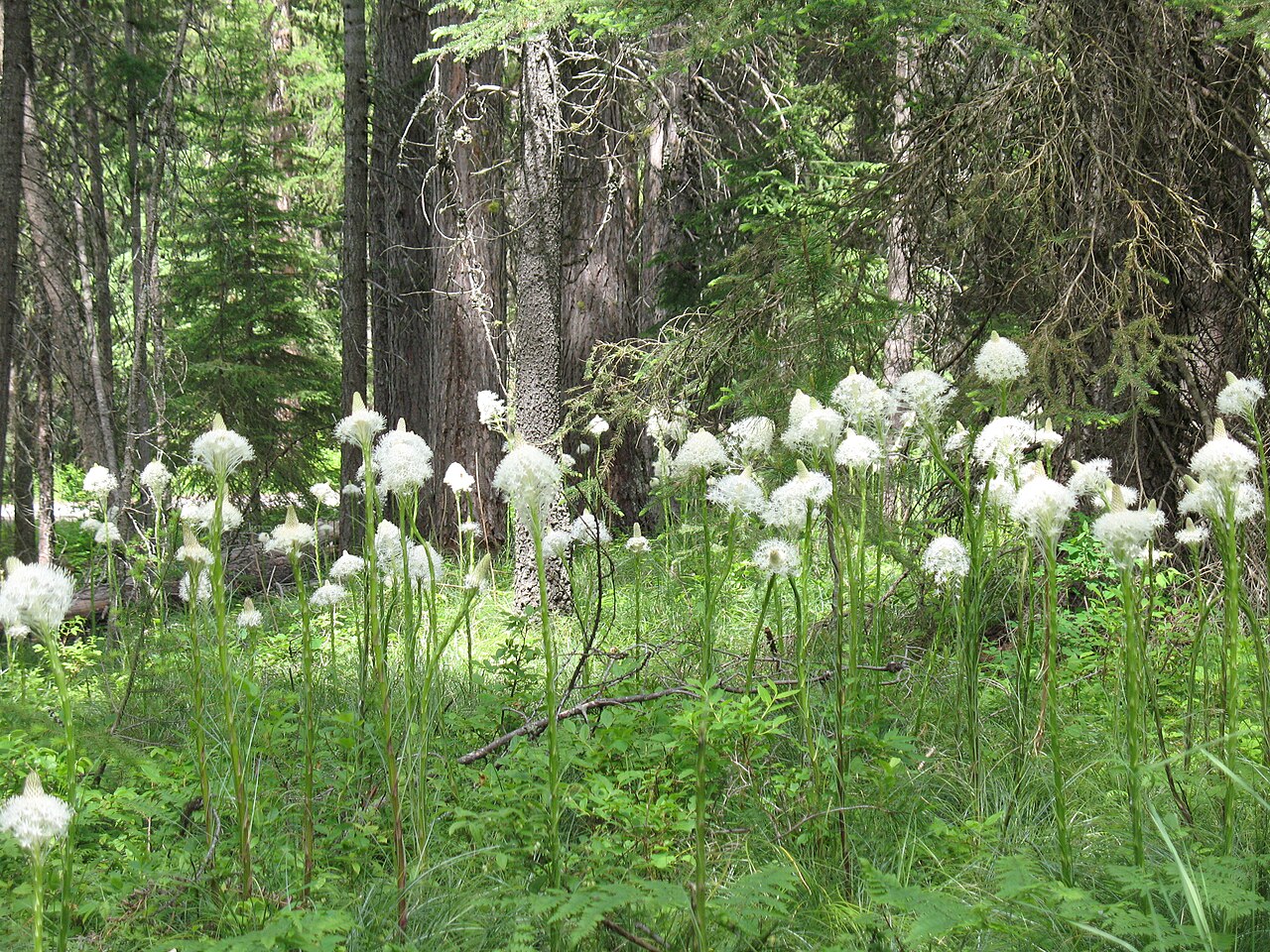
Xerophyllum tenax, known as Common Beargrass (also western turkeybeard, squaw grass or Indian basket grass), is one of the iconic wildflowers of the mountains of the Pacific Northwest and northern Rockies. Despite its name it is not a grass. It belongs to the bunchflower family (Melanthiaceae), with trilliums and false hellebores. It forms large clumps of tough, wiry, grass-like evergreen leaves up to 3 feet long, and in early summer sends up stout stalks 2 to 5 feet tall topped by dense, club-shaped plumes of hundreds of tiny, creamy white, fragrant flowers.
Each rosette blooms only once, usually after several years of growth, and then dies while the clump continues from side shoots. Because many plants in an area often bloom in the same year, beargrass has spectacular “bloom years” every few years, when whole mountainsides are dotted with white plumes. Its leaves have long been one of the most important basketry materials of Indigenous peoples of the Northwest.
This is a different plant from the southwestern “beargrasses” in the genus Nolina, such as Beargrass (Nolina microcarpa), Texas Beargrass and Foothill Beargrass, which are desert plants in the asparagus family. Common beargrass is notoriously difficult in gardens, and it should never be dug from the wild; buy seed or nursery-grown plants.
Identification
Out of bloom, look for large tufts of narrow, stiff, rough-edged leaves on open forest floors, ridges and subalpine slopes. In bloom, the tall white plumes held well above the foliage are unmistakable.
Rhizome & Clump
The plant grows from a short, thick, woody rhizome that produces a cluster of rosettes. Over time a clump can have dozens of rosettes. After a rosette flowers it dies, and new offsets from the rhizome carry on. The plant is fire-adapted: the rhizome can resprout after a ground fire.
Leaves
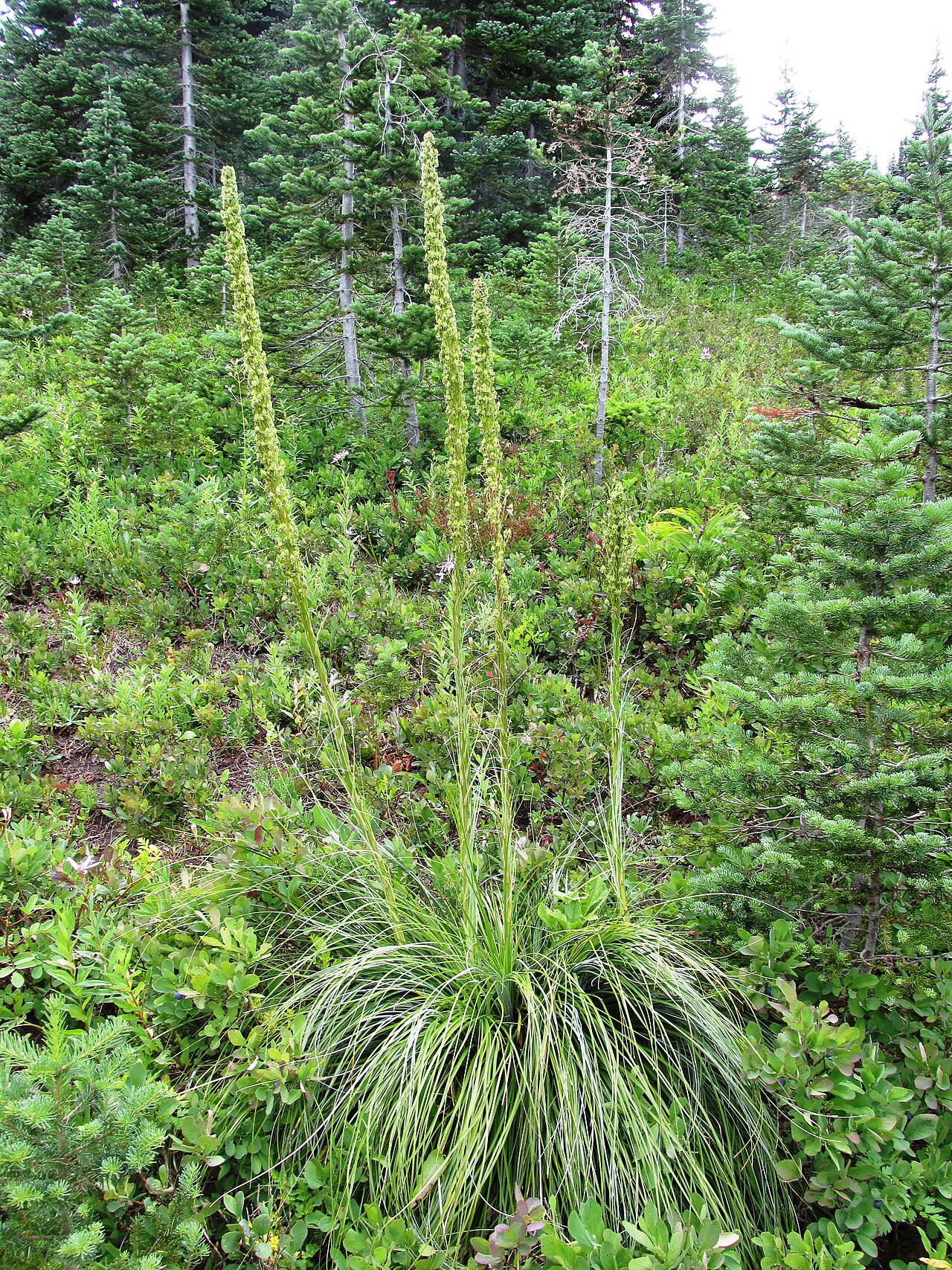
The leaves are evergreen, very narrow (about 1/8 inch wide), stiff and wiry, and up to 2 to 3 feet long, arching outward in a dense fountain. Their edges are finely toothed and rough, and can cut skin. Old leaves persist at the base of the clump. Leaves on the flowering stalk are much shorter and become smaller upward.
Flowers
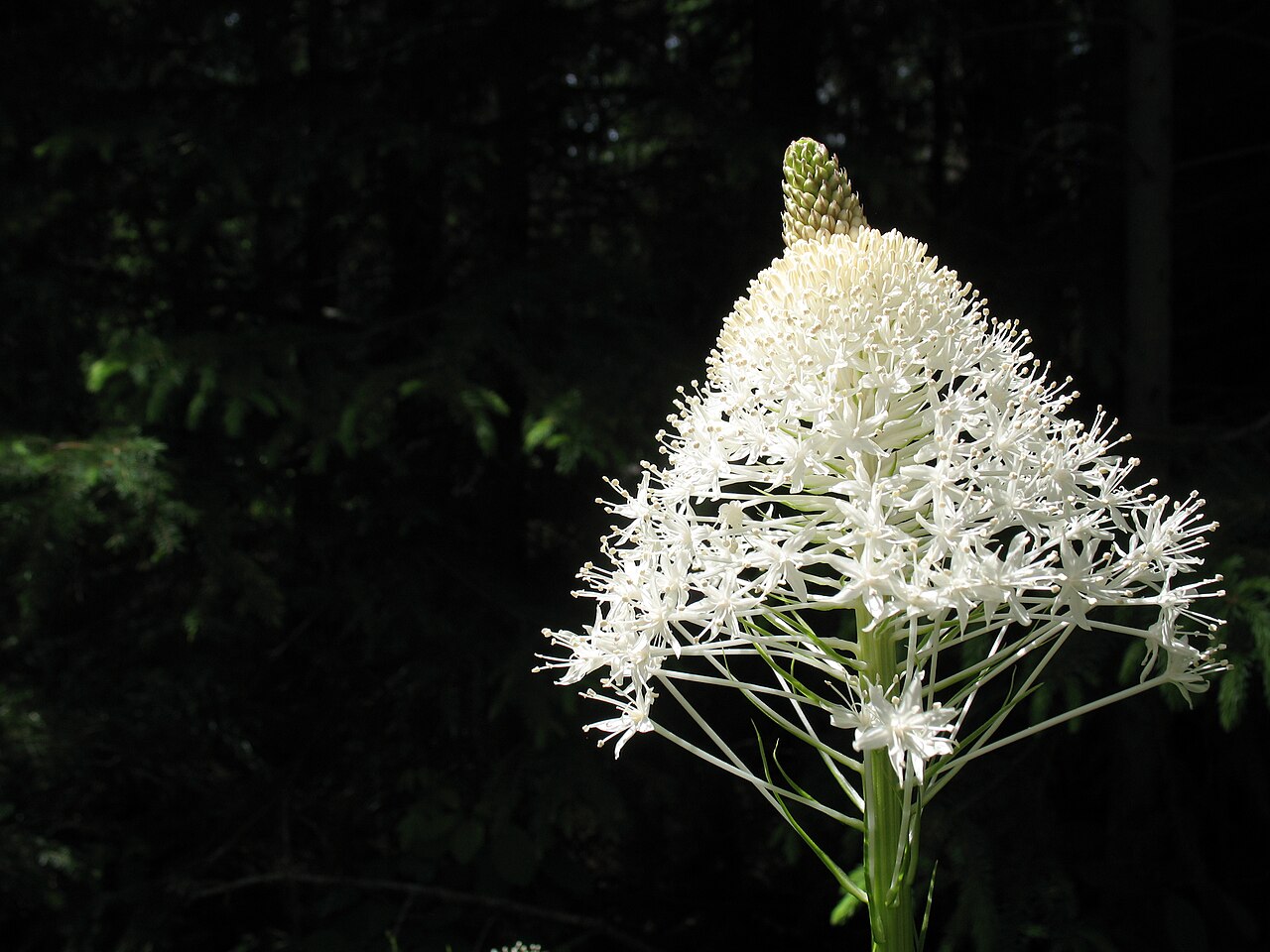
From May at low elevations to August in the high mountains, a stout stalk 2 to 5 feet tall rises from the center of a mature rosette. It ends in a dense raceme, at first conical and later club-shaped, packed with hundreds of small white to cream flowers, each about 1/2 inch across, with six spreading tepals and six stamens. The flowers open from the bottom up and have a sweet fragrance. As the lower flowers fade, the raceme elongates.
Fruit & Seeds
Each flower forms a small, three-lobed capsule about 1/4 inch long. The capsules ripen in late summer and split to release a few seeds each. Dry stalks with capsules often stand into fall.
Look-alikes
Southwestern beargrasses (Nolina) grow in deserts and dry grasslands, have flower stalks with branched clusters of tiny flowers and belong to the asparagus family. Death camas (Toxicoscordion) and false hellebore (Veratrum) are relatives with broader leaves and are poisonous. Out of bloom, beargrass can be mistaken for a large sedge or bunchgrass, but its leaves are stiffer, wiry and rough-edged, and grow from a single crown.
Safety & Conservation
Beargrass is not considered a significant food plant, and some relatives in its family are toxic, so do not eat it. The leaf edges are sharp. The species is common and secure. However, leaves are harvested commercially for the floral greens trade, and heavy, repeated harvest can weaken plants; Indigenous basket weavers have raised concerns about over-harvest and herbicide use in harvest areas. Never dig plants.
Quick Facts
| Scientific Name | Xerophyllum tenax |
| Family | Melanthiaceae (bunchflower family) |
| Plant Type | Evergreen, clump-forming herbaceous perennial |
| Mature Height | Leaves 1–3 ft; flower stalks 2–5 ft |
| Mature Spread | 2–3 ft |
| Growth Rate | Slow |
| Sun Exposure | Full sun to part shade |
| Water Needs | Low to moderate; well drained |
| Soil Type | Well-drained, acidic, rocky, gravelly or sandy soils |
| Soil pH | About 4.5–6.5 |
| Bloom Time | May–August (by elevation) |
| Flower Color | Creamy white |
| Fall Color | Evergreen |
| Fruit | Small three-lobed capsules on tall stalks |
| Deer Resistant | Partly; elk and deer eat the flowers and stalks, but rarely the tough leaves |
| USDA Hardiness Zones | 4–8 |
Native Range
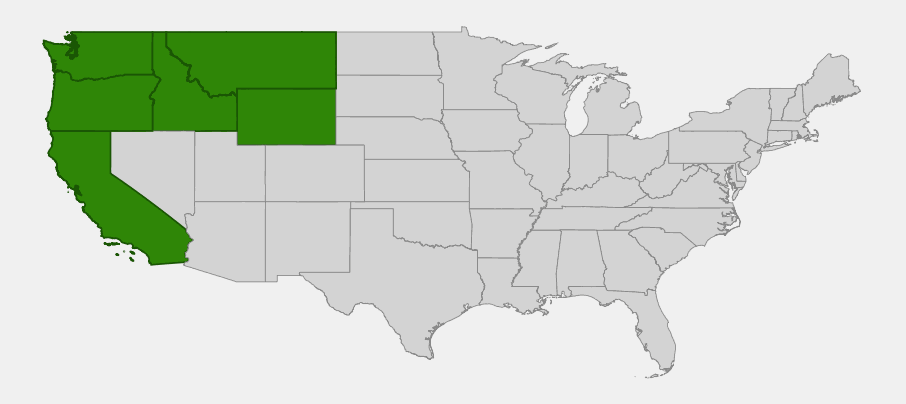
Common beargrass is native to western North America. USDA PLANTS lists it as native in California, Idaho, Montana, Oregon, Washington and Wyoming, and in Alberta and British Columbia. The Lady Bird Johnson Wildflower Center describes its range as the Coast Ranges and interior mountains from northern California to British Columbia, and the Rocky Mountains of Montana, Wyoming and Idaho.
In the Pacific states it grows in the Olympic Mountains, Cascades, Coast Range and Siskiyou and Klamath Mountains, south to the northern Sierra Nevada and Coast Ranges of California. In a few places near the coast it grows at quite low elevations. In the Rockies it is common in the mountains of northern Idaho and western Montana, including Glacier National Park, and extends into northwestern Wyoming. In Canada it is found in southern British Columbia and southwestern Alberta.
It grows in open conifer forests, on dry ridges and slopes, in subalpine meadows and parklands and in burned or logged clearings, generally on acidic, well-drained soils. It is especially abundant after fire, which clears the canopy and stimulates flowering.
📋 Regional plant lists featuring Common Beargrass: Idaho, Eastern Oregon & Eastern Washington · Montana & Wyoming · Western Oregon & Western Washington · California & Nevada
Growing & Care Guide
Common beargrass is admired by many gardeners but grown by few. It is slow from seed, sensitive to transplanting and needs acidic, sharply drained soil. In the right conditions, in cool-summer gardens of the Northwest, its evergreen fountain of leaves is attractive on its own, but do not expect regular flowers. The Lady Bird Johnson Wildflower Center notes that it is not a reliable bloomer in gardens.
Light
Full sun to light shade. In the wild it grows best in open forests, on ridges and in clearings; deep shade suppresses flowering.
Soil & Water
It needs well-drained, acidic, gravelly or sandy soil low in lime. Water young plants regularly; established plants tolerate summer dryness but not wet, heavy soil. Avoid fertilizer and lime.
Planting Tips
Use nursery-grown plants from containers, planted in spring or fall with minimal root disturbance. It suits rock gardens, slopes, woodland edges and naturalistic plantings with conifers and huckleberries.
Pruning & Maintenance
Cut off spent flower stalks if desired; the rosette that flowered will die and can be removed when brown. Leave the rest of the clump alone. Wear gloves, as leaf edges are sharp.
Propagation
Grow it from fresh seed sown in fall outdoors or after a long cold, moist stratification. Seedlings are slow and may take five years or more to reach flowering size. Offsets can be separated carefully from established clumps in nursery settings.
Landscape Uses
- Rock gardens and slopes: an evergreen fountain of fine-textured foliage for acidic, well-drained sites
- Native conifer plantings: with pines, firs and huckleberries in Northwest gardens
- Fire-recovery restoration: a native species that resprouts and flowers after fire
- Wildflower viewing: mass bloom years in Glacier, Mount Rainier and other mountain parks
- Cultural plantings: basketry material for Indigenous weavers
Wildlife & Ecological Value
Beargrass is an important plant in mountain ecosystems, especially after fire, and its flowers attract many insects.
For Pollinators
The fragrant flowers attract many insects, including flies, beetles, hoverflies and bees. Long-horned beetles are frequent visitors, and the plumes are often busy with pollinators during bloom years.
For Birds
The plumes and capsules harbor insects that birds eat, and grouse and other birds may pick at the flowers and seeds.
For Mammals
Despite the name, bears eat little of it, though they may eat the tender leaf bases in spring. Elk, deer and mountain goats eat the flowers and flowering stalks, and rodents use the dry leaves for nests. Its name is often said to come from bears being seen in beargrass meadows.
Ecosystem Role
Beargrass is a fire-adapted plant. It resprouts from its rhizome after fire and often flowers heavily in the years that follow, helping stabilize soils on burned slopes. Large clumps provide cover for small animals on open ridges.
Cultural & Historical Uses
Beargrass leaves have been a key basketry material for many Indigenous peoples, from northern California to British Columbia and Montana. Dried and bleached leaves give a creamy white color used in overlay twining in baskets, hats and other woven work. Weavers traditionally burned beargrass areas to produce young, pliable leaves.
The scientific name Xerophyllum means “dry leaf” in Greek, and tenax means “tenacious” or “tough,” both describing the wiry foliage. Meriwether Lewis collected beargrass during the Lewis and Clark Expedition, and it is one of the plants associated with that expedition.
Beargrass is an unofficial symbol of Glacier National Park, where bloom years draw many visitors. Today it is also harvested as a floral green, sold to florists across the world, which has raised concerns among tribes and land managers about sustainable harvest.
Frequently Asked Questions
Is common beargrass a grass?
No. It is a member of the bunchflower family (Melanthiaceae), related to trilliums and false hellebore. Its narrow, tough leaves only look grass-like.
Is it the same as the beargrass of Arizona and Texas?
No. Southwestern beargrasses are species of Nolina in the asparagus family, which grow in deserts and dry grasslands. Common beargrass grows in the mountains of the Northwest and northern Rockies.
Why does beargrass bloom only some years?
Each rosette needs several years to store enough energy to bloom, and then dies after flowering. Plants in an area often bloom together, often in response to weather or after fire, creating mass bloom years.
Can I dig beargrass to plant in my garden?
No. It transplants poorly and wild plants should be left alone. Buy nursery-grown plants or grow it from seed.
Do bears eat beargrass?
Only a little. Bears may eat the soft leaf bases in spring, but elk, deer and mountain goats eat the flowers more often.

Looking for a nursery that carries Common Beargrass?
Browse our native plant nursery directory: California · Idaho · Montana · Oregon · Washington · Wyoming