Pacific Yew (Taxus brevifolia)
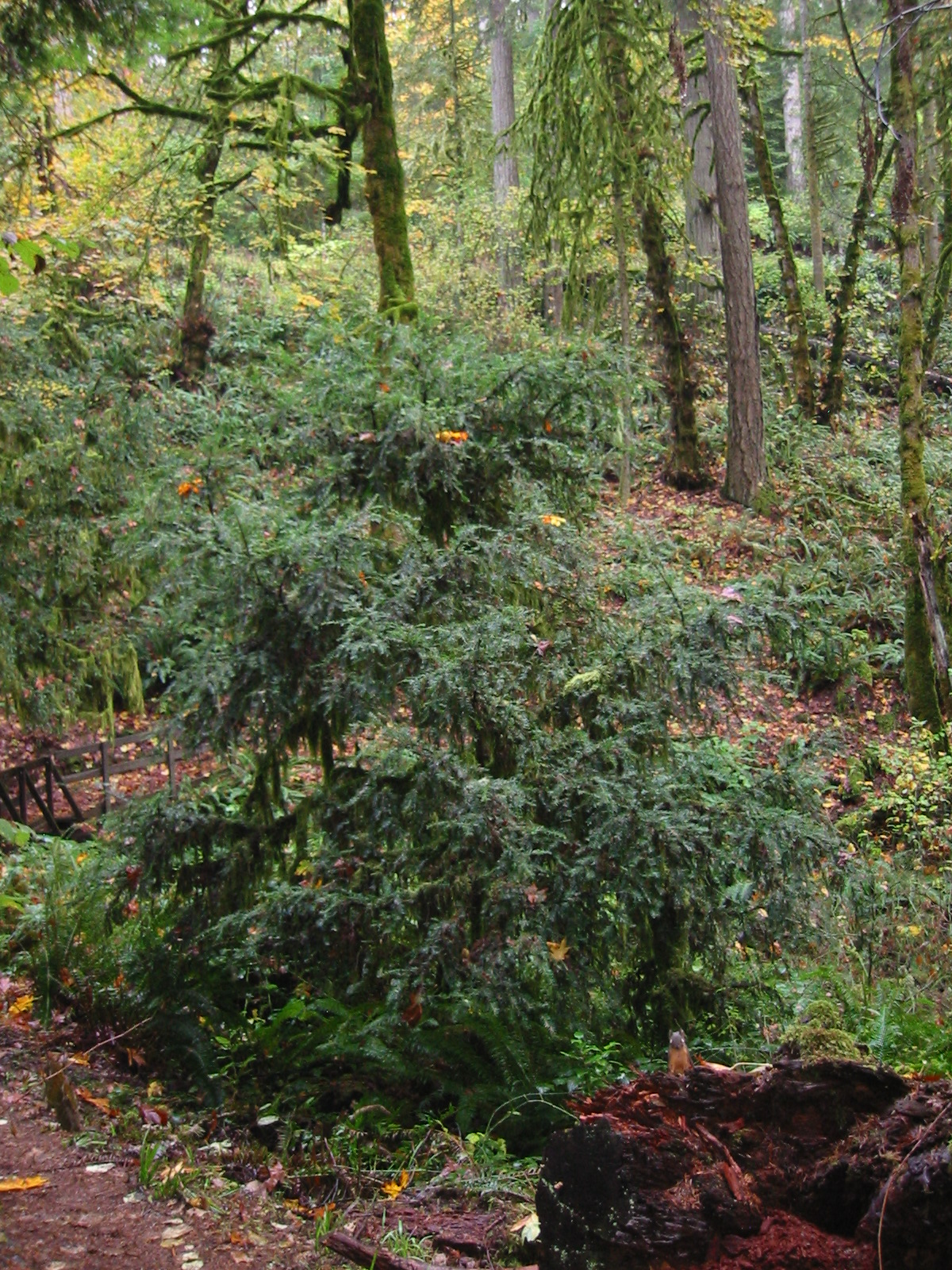
Taxus brevifolia, the Pacific yew (also called western yew), is a slow-growing, shade-tolerant conifer of old-growth and mature forests in the Pacific Northwest and northern Rocky Mountains. Unlike the towering Douglas-firs and hemlocks it grows beneath, Pacific yew is usually a modest, often leaning or multi-stemmed small tree or large shrub, rarely reaching more than 50 feet, that spends decades quietly occupying the forest understory.
Pacific yew is famous today as the original natural source of paclitaxel (marketed as Taxol), one of the most important chemotherapy drugs in modern medicine — a discovery that transformed this once-overlooked “trash tree” of Pacific Northwest logging into a species of major conservation and pharmaceutical interest in the late twentieth century.
Every part of Pacific yew is highly toxic except the fleshy red aril surrounding the seed — and the hard seed inside that aril is itself deadly if chewed or broken open. The needles, bark, wood, and seeds all contain taxane alkaloids that can cause fatal cardiac arrhythmia in people, livestock, and pets. This is a plant to admire and identify, never to sample.
Identification
Pacific yew is typically a small, slow-growing, often irregularly shaped tree 15 to 50 feet (5–15 m) tall, though it can form a sprawling multi-stemmed shrub in deep shade or at higher elevations. Growth is extremely slow, and old individuals with modest trunk diameters can be well over a century old.
Bark & Stems
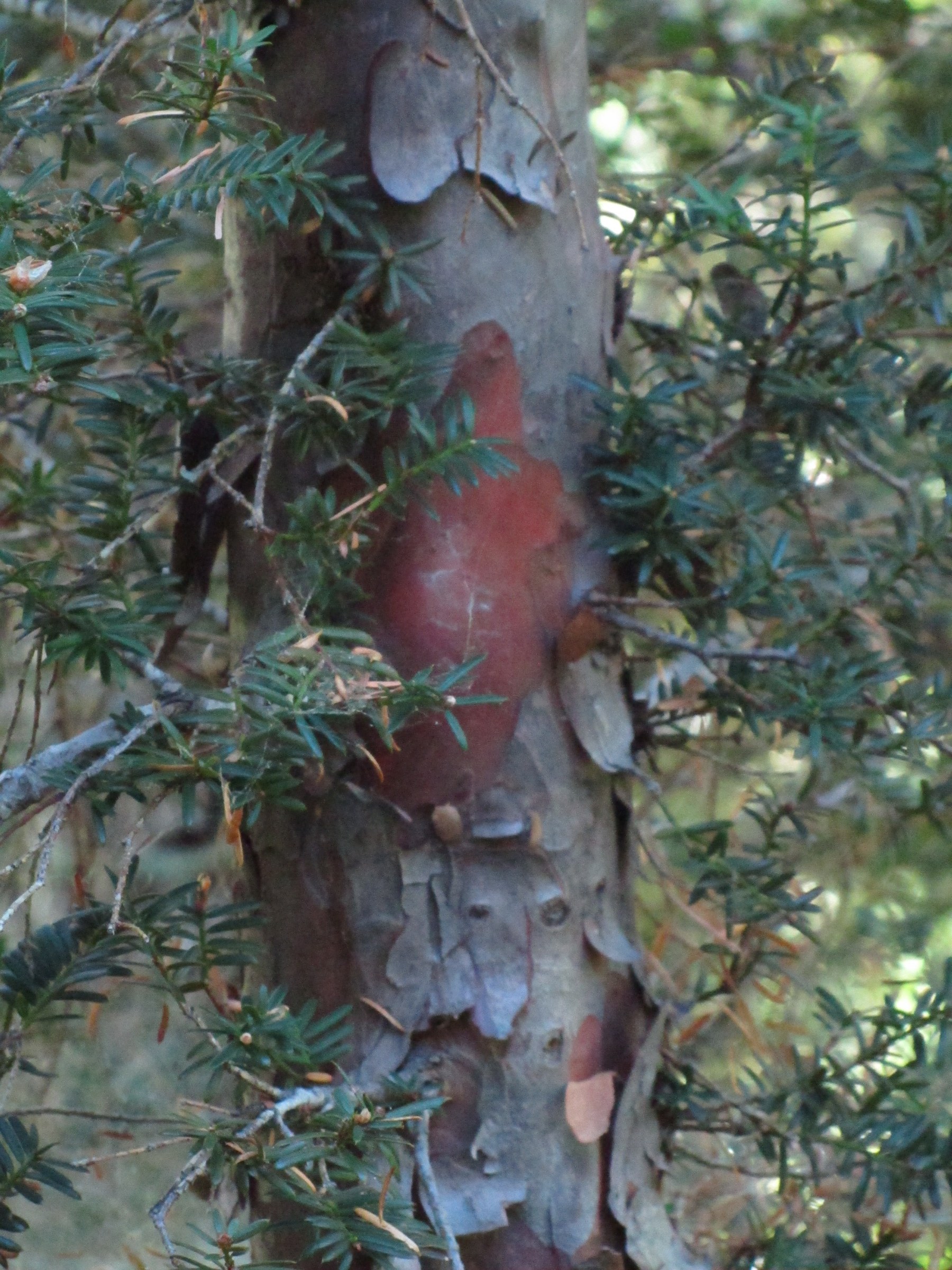
The bark is thin, scaly, and purplish-brown to reddish-brown, peeling in small, papery flakes to reveal a reddish or purplish inner bark — a useful field mark that distinguishes it from the similarly shade-tolerant western hemlock and Pacific silver fir it often grows among. Branches tend to droop and the overall form is often asymmetrical and multi-trunked rather than a single straight bole.
Leaves
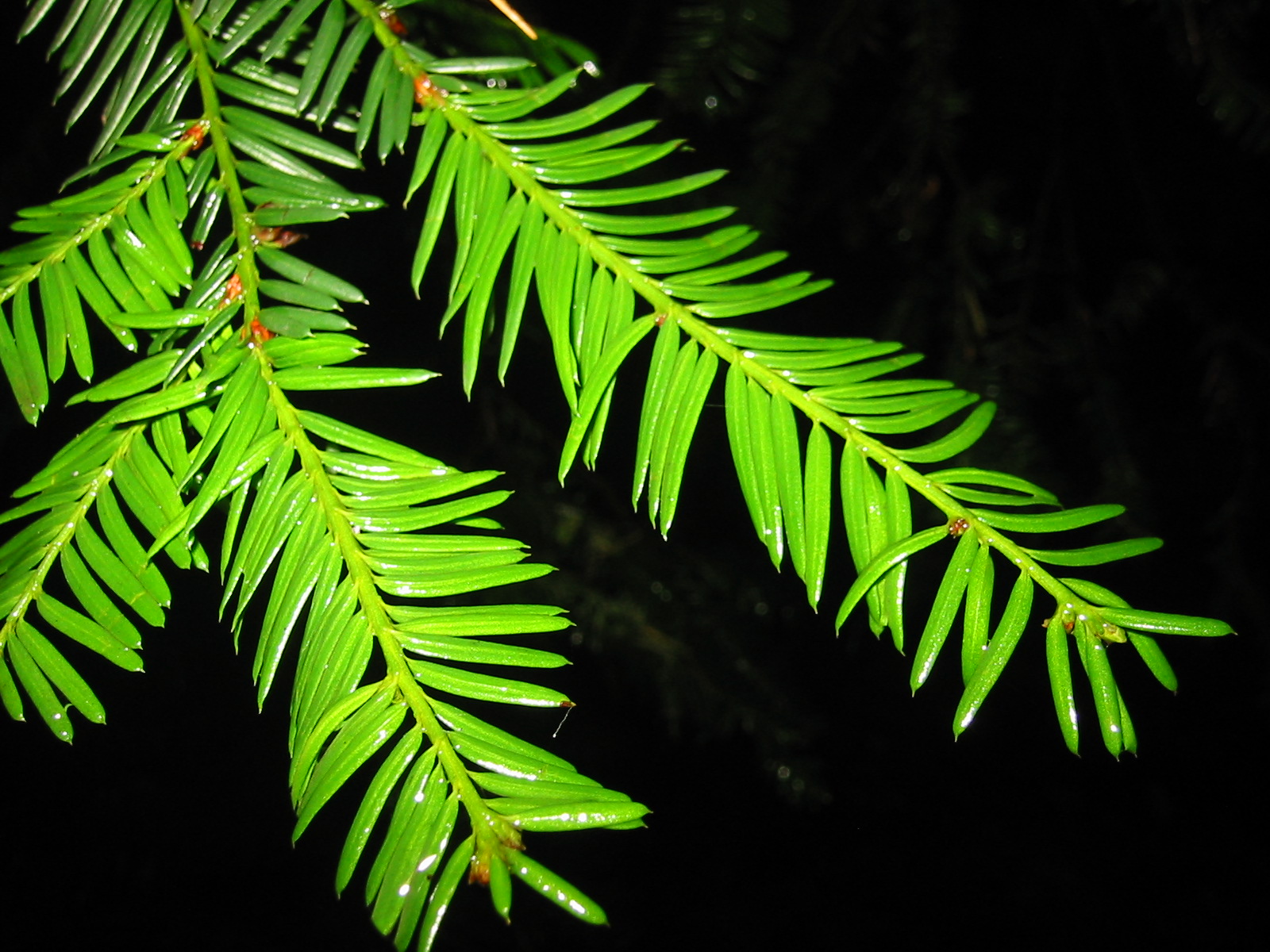
Needles are flat, soft to the touch (unlike spruce), dark yellow-green above and paler beneath, about ½ to 1 inch (1–2.5 cm) long, and arranged in two flat ranks along the twig, giving branches a feathery, flattened spray appearance. Needles taper to a short, sharp point but are not stiff or prickly like spruce needles.
Fruit & Seeds
Pacific yew is dioecious — separate male and female trees. Female trees produce a distinctive fruit in late summer and fall: a single hard seed partly surrounded by a bright red, soft, cup-shaped, fleshy structure called an aril, which is open at the tip rather than fully enclosing the seed. The red aril flesh is the only part of this plant that is not considered poisonous, and even it should never be fed to children or pets, since biting into the seed inside is dangerous. The seed itself, along with the needles, bark, and wood, contains toxic taxane compounds.
Quick Facts
| Scientific Name | Taxus brevifolia |
| Family | Taxaceae (Yew) |
| Plant Type | Evergreen Conifer Tree / Large Shrub |
| Mature Height | 15–50 ft (5–15 m) |
| Mature Spread | 10–20 ft, often multi-stemmed |
| Growth Rate | Very slow |
| Sun Exposure | Full Shade to Part Shade |
| Water Needs | Moderate |
| Soil Type | Moist, well-drained forest soils |
| Soil pH | 5.0–6.5 (acidic) |
| Bloom Time | Early spring (inconspicuous) |
| Flower Color | Not showy; small cones on male trees |
| Fall Color | None (evergreen) |
| Fruit | Red fleshy aril around a highly toxic seed (female trees only) |
| Deer Resistant | Mixed — toxic to most browsers but occasionally eaten |
| USDA Hardiness Zones | 6–8 |
Native Range
Pacific yew is native to the humid coastal and montane forests of the Pacific Northwest, ranging from southeastern Alaska south through coastal and Cascade-range British Columbia (Canada), Washington, Oregon, and into the mountains of northern California. A disjunct inland population occupies the moist, cooler forests of the northern Rocky Mountains, in the Idaho panhandle, far northeastern Oregon, and northwestern Montana.
Within this range, Pacific yew is a true understory specialist, growing beneath taller conifers such as Douglas-fir, western hemlock, and western redcedar along stream bottoms, moist ravines, and north-facing slopes. It generally avoids dry, open, or disturbed sites, and was historically so overlooked in the timber industry — considered a “weed tree” to be cut and burned — that old-growth populations were significantly reduced in some areas before its pharmaceutical value was recognized.
Pacific yew is absent from California’s Central Valley and the dry interior basins of the Pacific Northwest; it is confined to moist forest habitat and does not occur as a naturalized or planted species of note outside its native range, since it is slow-growing and rarely cultivated commercially.
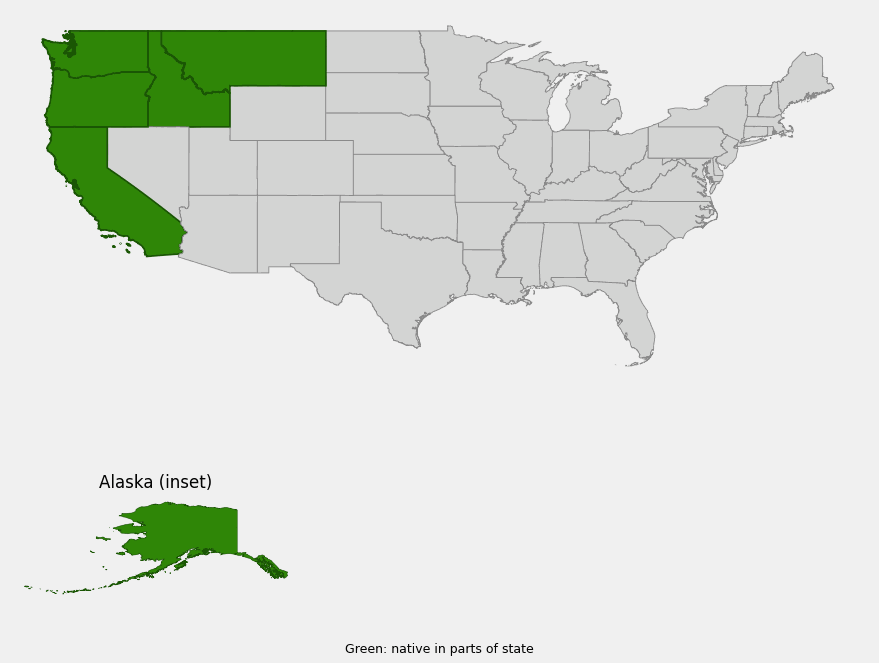
📋 Regional plant lists featuring Pacific Yew: Alaska, Western Oregon & Western Washington, Idaho, Eastern Oregon & Eastern Washington, Montana & Wyoming (native in western Montana only, not Wyoming)
Growing & Care Guide
Pacific yew is a patient, long-term planting for shaded native gardens and woodland restoration in the Pacific Northwest and northern Rockies. It will never be a fast-growing specimen, but it rewards shade gardeners with year-round structure in spots where little else thrives.
Light
Pacific yew is strongly shade-tolerant and often performs best in part to full shade, mimicking its native understory habitat. It can tolerate some filtered sun, especially in cooler coastal climates, but struggles in hot, exposed, full-sun sites.
Soil & Water
Plant in moist, well-drained, humus-rich, acidic soil similar to a natural forest floor. Consistent moisture is important, especially while young; established plants tolerate brief dry spells but do not thrive in droughty or compacted soils. A layer of leaf-litter mulch helps retain moisture and mimics natural conditions.
Planting Tips
Choose a shaded understory site beneath larger conifers or deciduous trees, ideally near — but not directly in — a drainage or streamside area. Growth is extremely slow, so give plants room to develop over decades rather than expecting quick results. Container-grown nursery stock transplants more reliably than wild-collected material, and because growth is so slow, sourcing from a native plant nursery is far more practical than growing from seed.
Pruning & Maintenance
Minimal pruning is needed. Remove dead or damaged branches as needed; because of its slow growth, heavy pruning is rarely necessary and the plant recovers slowly from major cuts. Wear gloves when handling cut branches, since the foliage and bark contain the same toxic compounds as the rest of the plant.
Landscape Uses
Pacific yew fits naturalistic, shaded garden settings:
- Woodland understory plantings beneath established conifers
- Shade gardens where few broadleaf evergreens will grow
- Native forest restoration projects in its historic range
- Year-round structural evergreen in naturalistic landscapes
- Wildlife gardens, with the caution that all plant parts except the aril flesh are toxic
Wildlife & Ecological Value
Despite — or in some cases because of — its toxicity, Pacific yew plays a quiet but real role in Pacific Northwest forest ecosystems.
For Birds
Several bird species, including varied thrushes and other forest songbirds, eat the fleshy red aril around the seed and help disperse seeds through the forest, apparently passing the toxic seed through the digestive tract largely intact.
For Mammals
Deer and elk generally avoid browsing Pacific yew foliage due to its toxicity, though in some areas with heavy browsing pressure animals will eat small amounts, sometimes with fatal results — a pattern well documented in both wild and ornamental yews. This relative unpalatability can make Pacific yew one of the few understory evergreens that survives in areas with high deer populations.
For Pollinators
Pacific yew is wind-pollinated rather than insect-pollinated, so it offers little direct forage value for pollinators, though its dense evergreen foliage provides shelter for insects and the small invertebrates that support the broader forest food web.
Ecosystem Role
As a long-lived, shade-tolerant understory tree, Pacific yew adds structural diversity and habitat complexity to mature and old-growth conifer forests. Because it grows so slowly and was historically removed as a “junk” species during logging operations, surviving old Pacific yew trees are now valued indicators of long-undisturbed forest conditions.
Cultural & Historical Uses
Pacific yew holds deep significance to Indigenous peoples throughout its range, who have long valued its exceptionally hard, strong, fine-grained wood for bows, paddles, tool handles, and other implements requiring durability and flexibility — uses documented among many Pacific Northwest and Plateau nations. The wood’s density and workability made it one of the most prized materials available in forests otherwise dominated by softer conifer wood.
The species’ modern fame comes from a remarkable twentieth-century discovery. In 1962, USDA-sponsored botanical surveys collected Pacific yew bark samples as part of a broad screening program for anticancer compounds, and in 1971 researchers isolated and named the compound paclitaxel from that bark. After extensive clinical development, paclitaxel — marketed as Taxol — was approved by the FDA in 1992 and became one of the most widely used chemotherapy drugs for ovarian, breast, and other cancers. This account describes a documented chapter of pharmaceutical history, not a basis for home use: paclitaxel is a tightly regulated prescription medication, and the tree itself remains dangerously toxic in its natural form.
The demand for yew bark in the early Taxol era (harvesting roughly three mature trees’ worth of bark to treat a single patient) put real pressure on wild Pacific yew populations, since the species regenerates so slowly. That pressure eased substantially once chemists developed a semi-synthetic production method starting from a renewable precursor found in the needles of ornamental European and other yew species, which removed the need to harvest wild Pacific yew bark.
Frequently Asked Questions
Is Pacific yew poisonous?
Yes. Every part of the plant — needles, bark, wood, and especially the seed inside the red fruit — contains toxic taxane alkaloids that can cause fatal heart arrhythmia if ingested. Only the soft red aril flesh surrounding the seed is not considered poisonous, and even that should not be eaten, since biting into the seed is dangerous.
Is Pacific yew the source of the cancer drug Taxol?
Historically, yes — paclitaxel (Taxol) was first isolated from Pacific yew bark in 1971 and was initially produced by harvesting wild trees. Modern Taxol is made semi-synthetically from a precursor compound found in the needles of cultivated yew species, so wild Pacific yew is no longer harvested for this purpose. This is history, not medical guidance; never attempt to use any part of a wild yew as medicine.
How is Pacific yew different from English or Japanese yew sold at garden centers?
Pacific yew is a native North American species found in Pacific Northwest and northern Rocky Mountain forests, while English yew (Taxus baccata) and Japanese yew (Taxus cuspidata) are widely planted ornamental species from Europe and Asia. All yew species share the same general toxicity profile, so the safety caution applies to any yew, native or ornamental.
Will deer eat Pacific yew in my garden?
Usually not — the toxicity that makes yew dangerous to humans also deters most deer browsing, which is one reason it can survive in areas with heavy deer pressure where other shrubs are stripped. Occasional browsing does happen, sometimes with harmful effects on the animal.
How fast does Pacific yew grow?
Very slowly. It can take many decades to reach even modest size, and old individuals with slender trunks may be well over 100 years old. Gardeners should treat it as a long-term structural planting rather than an instant landscape solution.

Looking for a nursery that carries Pacific Yew?
Browse our native plant nursery directory: Alaska · California · Oregon · Washington · Idaho · Montana