Poison Ivy (Toxicodendron radicans)
⚠️ Urushiol warning: Every part of this plant — leaves, stems, roots, and even bare winter twigs — carries urushiol, an oily resin that causes an itchy, blistering rash on most people who touch it, sometimes severely. The oil clings to clothing, garden tools, and pet fur for weeks, so you can get a rash from a leash, a glove, or a dog that brushed past the plant. Never burn Poison Ivy. Urushiol carried in smoke can reach the lungs and cause a dangerous, sometimes life-threatening, internal reaction. This page is for identification and safe avoidance; Plant Native does not recommend planting Poison Ivy in a home garden.
Toxicodendron radicans, commonly known as Eastern Poison Ivy, is one of the most widespread native plants in North America and almost certainly the most feared. A member of the cashew and sumac family (Anacardiaceae), it is not a true ivy at all but a shrub or woody vine that produces urushiol, the same class of skin-irritating compound found in Poison Oak and Poison Sumac. This page exists to help you recognize and avoid it safely — not to recommend growing it.
Poison Ivy is extraordinarily variable in form. In open sun it often grows as a low, bushy shrub 1 to 3 feet tall; in woodlands it climbs trees and structures as a vine using hairy aerial rootlets, reaching 60 feet or more up a mature trunk; and in disturbed ground it can spread as a trailing groundcover. The old warning “leaves of three, let it be” remains the single best field rule, though it is not foolproof — many harmless native plants also have three leaflets, so look for the whole suite of traits described below before deciding what you are looking at.
Despite the misery it causes people, Poison Ivy is an ecologically important native plant. Its berries are a significant winter food source for dozens of bird species, and its dense thickets provide cover for small mammals. The guidance on this page is about managing Poison Ivy responsibly where it already grows wild — on trails, fence lines, and woodland edges — not about adding it to a garden bed.
Identification
Poison Ivy is a deciduous, woody plant that can appear as a low shrub, a trailing groundcover, or a climbing vine depending on habitat and the support available. All forms share the same leaves, flowers, and fruit, which makes the three-leaflet pattern the most reliable field mark across its many growth habits.
Stems & Vines
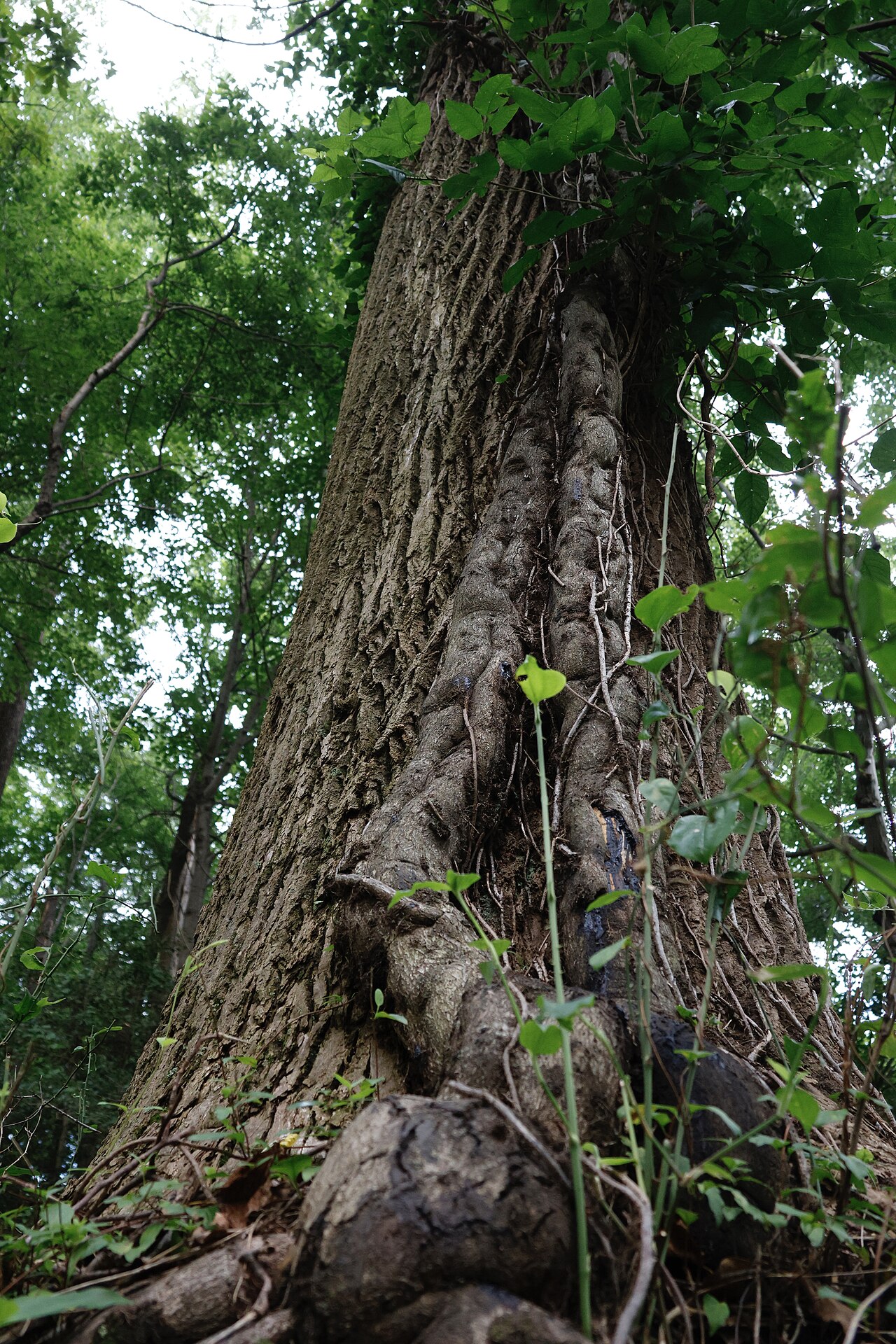
Young stems are reddish and slightly hairy; older woody stems turn gray-brown. Climbing vines develop a shaggy, “hairy rope” appearance from the dense aerial rootlets that grip bark — a useful winter identification clue even after the leaves have dropped, when the plant is just as capable of causing a rash as it is in summer. Vines can grow quite thick, sometimes several inches in diameter, on old trees.
Leaves
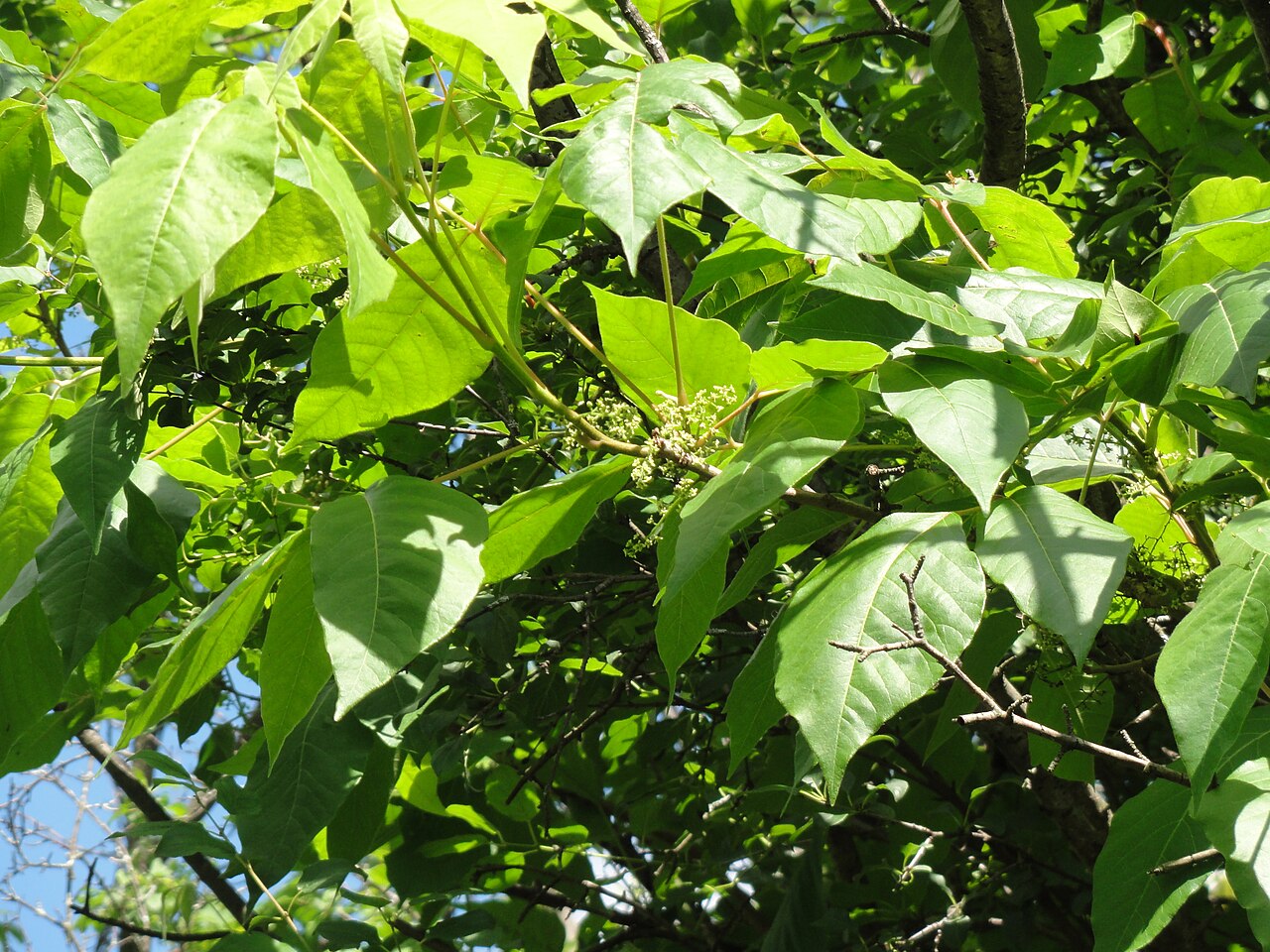
Leaves are compound, with three glossy leaflets per leaf arranged alternately along the stem. The center leaflet usually has a longer stalk than the two side leaflets. Leaflet shape varies — oval to egg-shaped, sometimes with a few irregular lobes or coarse teeth along the margin, sometimes smooth-edged — which is part of why the plant can be mistaken for box elder, Virginia creeper, or bramble seedlings. New spring leaves often emerge reddish before turning green; in fall, the foliage can turn brilliant shades of red, orange, or yellow, which makes autumn Poison Ivy visually attractive but no less hazardous to touch.
Flowers & Fruit
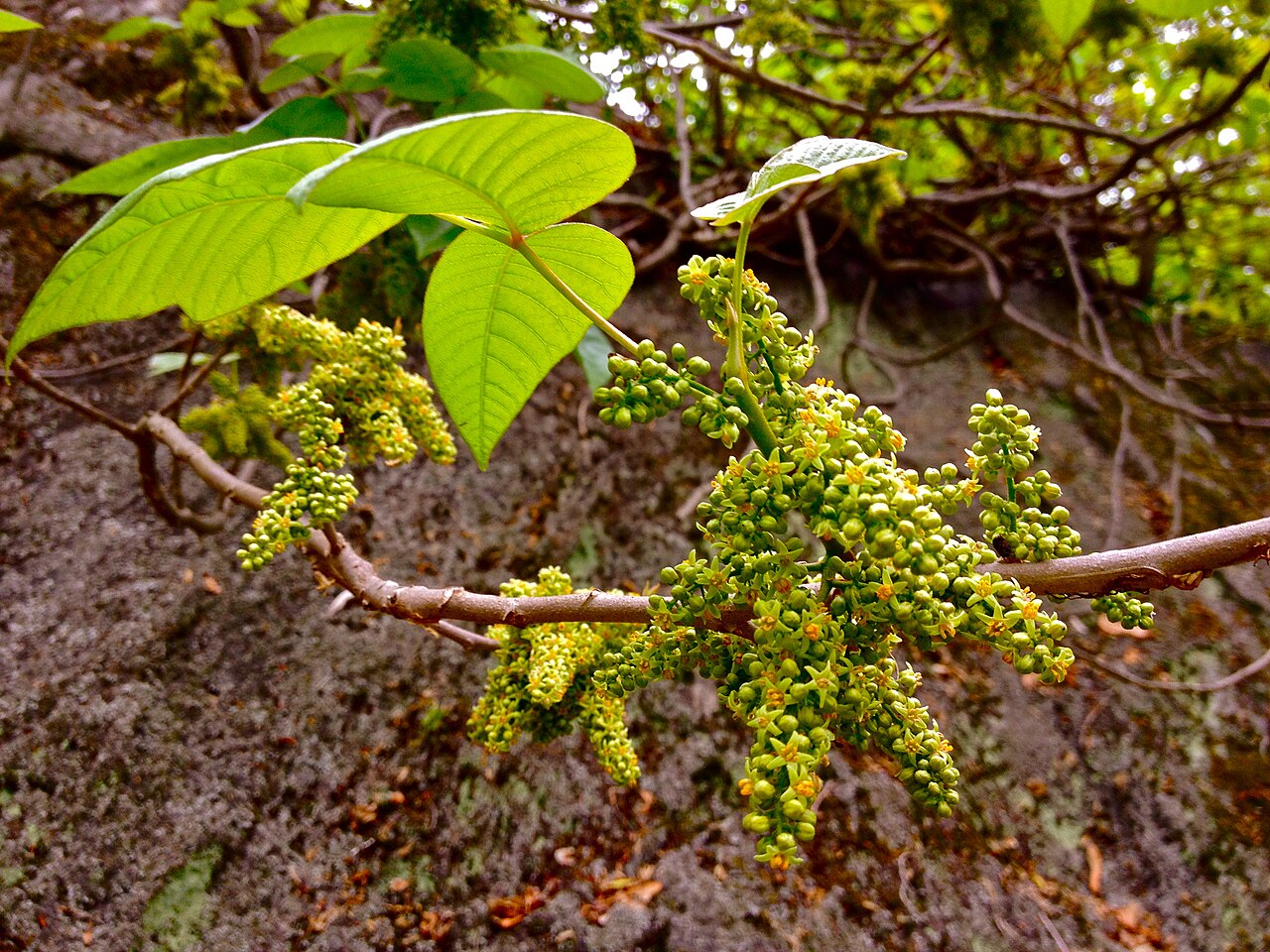
In late spring, Poison Ivy produces small, inconspicuous clusters of yellow-green flowers, about ⅛ inch across, in loose branching clusters (panicles) arising from the leaf axils. These ripen by late summer into clusters of small, round, waxy-white to pale yellow-green berries (drupes) about ¼ inch across, which often persist into winter after the leaves have fallen.
Why Not to Plant It
Plant Native does not recommend Poison Ivy for home landscaping under any circumstances, even in wildlife or native plant gardens. The risk of accidental skin contact to family members, visitors, pets, and neighbors is too high, and the plant spreads readily by root suckers and bird-dispersed seed, making it difficult to contain once established. If you want to support the same pollinators and birds that use Poison Ivy, choose a non-irritating native alternative such as Virginia Creeper (Parthenocissus quinquefolia) for vertical cover, or a native viburnum or dogwood for berries.
If Poison Ivy is already growing on your property, the safest approach for most homeowners is not to attempt removal with bare skin exposed, but to call a professional landscaping or tree service experienced with the plant. If you choose to remove small amounts yourself, wear long sleeves, long pants tucked into boots, and disposable gloves; pull or clip the plant without letting foliage brush exposed skin; bag all plant material for disposal rather than composting it; and wash tools, gloves, and clothing separately in hot, soapy water immediately afterward, since the oil can remain active on surfaces for a long time. Never use a string trimmer or mower on Poison Ivy, since this flings the oil into the air and onto clothing and skin, and never burn the plant or its debris — brush piles that include Poison Ivy are a serious hazard if later burned. For an infestation too large to manage safely by hand, a licensed pest control or landscaping company is the appropriate route; this page does not provide herbicide recommendations or medical treatment advice.
Quick Facts
| Scientific Name | Toxicodendron radicans |
| Family | Anacardiaceae (Cashew/Sumac) |
| Plant Type | Woody vine, shrub, or trailing groundcover |
| Mature Height | 1–10 ft as a shrub; vines to 60+ ft up trees |
| Growth Rate | Fast |
| Sun Exposure | Full Sun to Full Shade |
| Water Needs | Average to Dry; tolerant of most conditions except standing water |
| Soil Type | Adaptable; sand, loam, or clay |
| Bloom Time | Late spring |
| Flower Color | Yellow-green |
| Fall Color | Red, orange, or yellow |
| Fruit | Waxy white to pale green berries, persisting into winter |
| Deer Resistant | No (deer browse it readily and are unaffected by urushiol) |
| USDA Hardiness Zones | 4–9 |
Native Range
Eastern Poison Ivy is native to most of the eastern two-thirds of the United States and adjacent Canada, from New England and the Maritimes south through the Southeast to Florida and the Gulf Coast, and west through the Midwest and Great Plains into eastern Texas, Kansas, and the eastern Dakotas. It is absent as a native plant across most of the Rocky Mountain states and the Pacific Coast, where its close relative Western Poison Oak (Toxicodendron diversilobum) and Western Poison Ivy (Toxicodendron rydbergii) take its ecological place; those are different species and are not covered by this page.
Within its range, Poison Ivy grows in nearly every habitat except the wettest wetlands and the driest deserts: deciduous and mixed forests, woodland edges, fence rows, floodplains, dunes, thickets, and heavily disturbed ground such as roadsides, vacant lots, and abandoned fields. It tolerates deep shade as a low groundcover but grows most vigorously, and fruits most heavily, with at least partial sun along a forest edge or clearing.
Poison Ivy is a pioneer species that thrives on disturbance, which is one reason it has become more common, not less, as land is cleared and fragmented for development and agriculture. Some research also suggests that rising atmospheric carbon dioxide levels are making Poison Ivy grow faster and produce more potent urushiol, a trend worth knowing about if you spend time in the woods or manage land where it occurs.
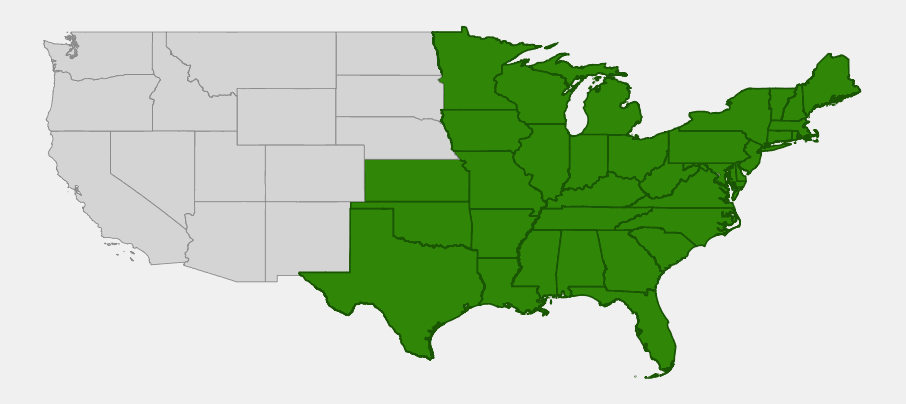
📋 Regional plant lists featuring Poison Ivy: New Hampshire, Maine & Vermont · Connecticut, Massachusetts & Rhode Island · New York, Pennsylvania & Northern New Jersey · Delaware, Southern New Jersey & Long Island · Maryland, Virginia & West Virginia · North Carolina & South Carolina · Georgia, Alabama & Mississippi · Arkansas, Louisiana & Eastern Texas/Oklahoma · Kentucky & Tennessee · Ohio & Indiana · Illinois, Iowa & Missouri · Michigan, Wisconsin & Eastern Minnesota · Nebraska, Kansas & Eastern Colorado
Managing Poison Ivy Around Your Property
Because this is a plant to avoid rather than cultivate, this section focuses on recognition and safe coexistence instead of planting and care.
Where It Tends to Show Up
Poison Ivy favors forest edges, fence lines, the base of trees and shrubs where birds perch and deposit seed, and any patch of disturbed or recently cleared ground. It is common along hiking trails, at the margins of lawns backing onto woods, and climbing utility poles, old fences, and mature trees.
Safe Avoidance in the Field
Learn the three-leaflet pattern, the reddish new growth, and the hairy climbing vine, and teach children and visitors to recognize it too. Stay on cleared trails, wear long pants when walking through brushy areas, and keep pets leashed in areas where it is known to grow, since fur that brushes against the plant can transfer urushiol to anyone who later pets the animal. After any outing where contact is possible, change clothes and wash exposed skin with soap and water as soon as practical.
If You Need to Remove It
Small patches can sometimes be dug out by the root in cool, damp weather when the plant is less likely to release airborne particles, using full protective clothing as described above. Herbicide treatment of larger infestations should follow label directions exactly and is often best handled by a professional, particularly near property lines, septic systems, or waterways. Whatever method you use, never compost, chip, or burn the removed material; bag it for regular disposal.
Living With It
Where Poison Ivy grows in an out-of-the-way corner of woods or fence line and poses no contact risk to people or pets, many land managers simply leave it in place for its wildlife value rather than removing it. Marking the patch clearly, or fencing it off from foot traffic, is often a more practical solution than repeated removal attempts.
Wildlife & Ecological Value
However unwelcome it is in a backyard, Poison Ivy is a genuinely valuable native plant for wildlife, and honest treatment of this species has to include that fact.
For Birds
The waxy white berries are an important winter food source for more than 60 species of birds, including Yellow-rumped Warblers, Eastern Bluebirds, Northern Flickers, American Robins, Northern Cardinals, and many woodpeckers. Because the berries persist on the vine well into winter, they help sustain birds through the leanest months, when fruit is otherwise scarce. Birds are also the plant’s main seed dispersers, which is why it so often appears beneath fence posts, utility lines, and tree canopies where birds perch.
For Mammals
Interestingly, urushiol does not affect most wildlife the way it affects humans. White-tailed Deer, Black Bears, Raccoons, and other mammals browse the leaves, stems, and berries without ill effect, and deer use dense Poison Ivy thickets for cover. Humans and a small number of other primates appear to be unusually sensitive to urushiol.
Ecosystem Role
As an aggressive early colonizer of disturbed ground, Poison Ivy helps stabilize soil on forest edges and clearings and provides dense, low cover that benefits ground-nesting birds and small mammals. Its climbing growth habit adds structural complexity to forest edges, and its persistent winter fruit fills a food gap that few other plants cover as reliably.
Cultural & Historical Notes
Indigenous peoples across Poison Ivy’s range were well aware of the plant long before European contact and generally avoided it, though some groups used related species in very limited, carefully prepared contexts that are not safe or appropriate to reproduce today. Early European colonists, unfamiliar with the plant, wrote some of the first detailed accounts of urushiol dermatitis in North America, and the plant’s common name has been in use in English since at least the 18th century.
Poison Ivy has long been a subject of scientific curiosity because of the specificity of the human allergic reaction it triggers — most other mammals show no response at all. That research has contributed to a broader understanding of contact dermatitis and immune sensitization, but it has not produced any home remedy that this page can responsibly recommend; if you develop a rash, the appropriate step is to follow guidance from a pharmacist or medical provider, not instructions found online.
Today, Poison Ivy is best known simply as the plant to recognize and avoid on any walk in the eastern woods — a reputation well earned, but one that sits alongside its quieter role as a reliable, native source of winter food for wildlife.
Frequently Asked Questions
Is Poison Ivy the same plant as Poison Oak?
No. Eastern Poison Ivy (Toxicodendron radicans) is a distinct species from Atlantic Poison Oak (Toxicodendron pubescens) and Western Poison Oak (Toxicodendron diversilobum), though all three are closely related, produce urushiol, and cause the same type of rash.
Can I get a rash just from being near Poison Ivy without touching it?
Direct skin contact with the plant, or with something that has touched it (clothing, tools, pet fur), is the usual route. However, burning Poison Ivy releases urushiol particles in smoke that can land on skin or be inhaled, which is far more dangerous and can affect airways and lungs — this is why burning it is strongly discouraged.
Will mowing or trimming get rid of it safely?
No. Mowing or string-trimming breaks up the plant and flings urushiol-laden fragments and sap into the air and onto skin and clothing, increasing exposure risk rather than reducing it. Careful hand removal with full protective clothing, or professional treatment, is safer.
Do all the related Toxicodendron species look alike?
They share the three-leaflet pattern and urushiol content, but leaf shape, growth habit, and range differ. Toxicodendron diversilobum (Western Poison Oak) and Toxicodendron rydbergii (Western Poison Ivy) occupy the western states where T. radicans does not naturally occur.
Should I plant Poison Ivy to help wildlife?
No. While it does provide real food and cover value, the risk to people and pets outweighs the benefit in a home landscape. Non-irritating native alternatives such as Virginia Creeper, viburnums, and native dogwoods offer similar wildlife value without the hazard.

Looking for a nursery with safe native alternatives?
Browse our native plant nursery directories: CT, DE, FL, GA · KY, LA, ME, MD, MA, MI, MN, MS, MO · NH, NJ, NY, NC, OH, OK · PA, RI, SC, TN, TX, VT, VA · WV, WI · AL, AR · IL, IN, IA, KS