Organ Pipe Cactus (Stenocereus thurberi)
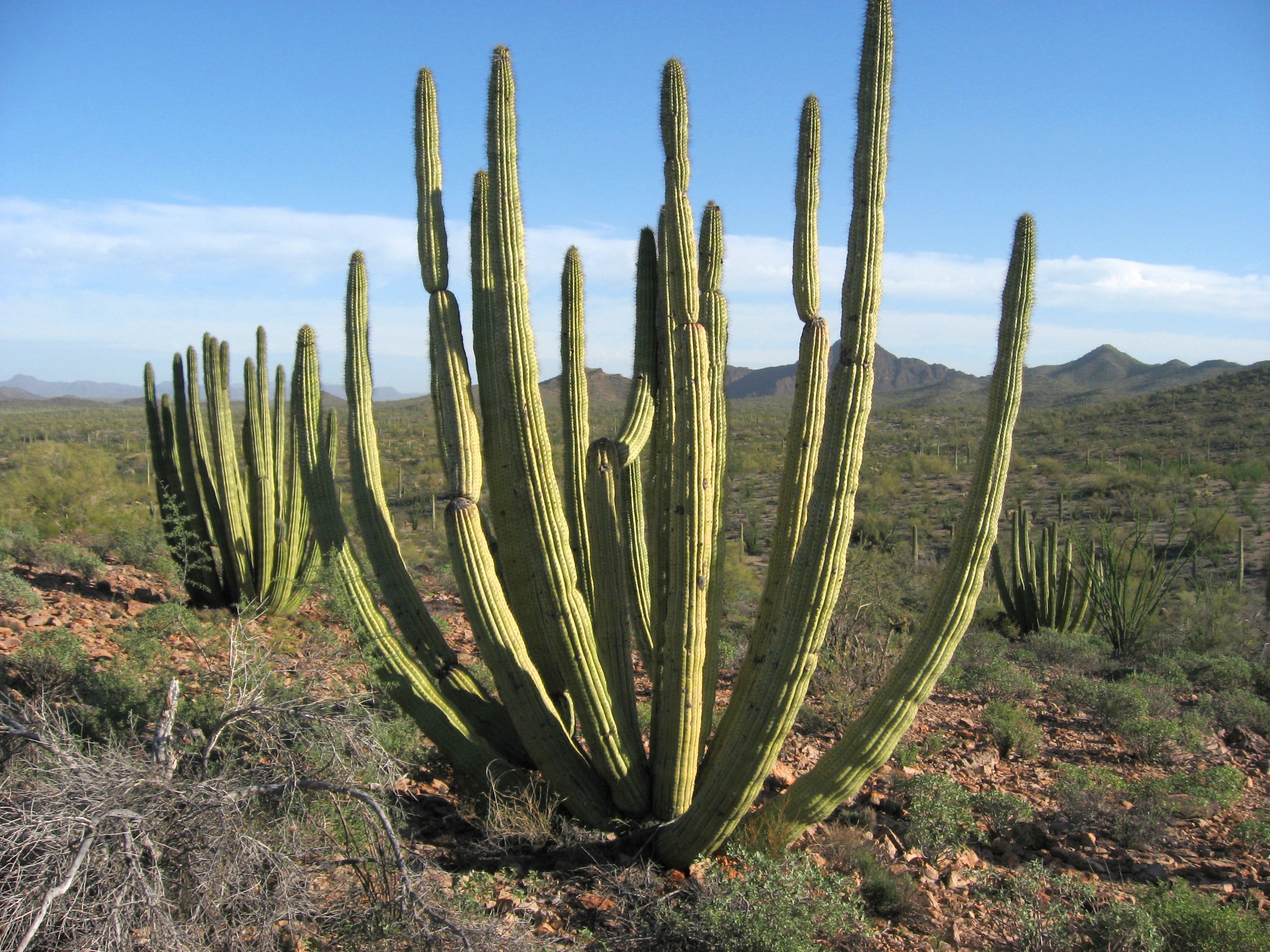
Stenocereus thurberi, commonly known as the organ pipe cactus or pitaya dulce, is a large, many-stemmed columnar cactus of the Sonoran Desert. In the United States it grows natively in only one small corner of the country — the rocky bajadas and south-facing slopes of extreme southern Arizona — making it one of the rarest large cacti in the U.S. flora. Unlike the single-trunked saguaro, organ pipe cactus branches close to the ground into a cluster of a dozen or more slender, upright stems that can resemble a cluster of green pipe organ pillars, which is exactly where its common name comes from.
This is a slow-growing, long-lived plant of truly hot, frost-sensitive desert — it is far more cold-tender than saguaro and is essentially confined in the U.S. to the warmest microclimates near the Mexican border. Large night-blooming white flowers open after dark in late spring and early summer and are pollinated primarily by nectar-feeding bats, followed by sweet, spiny red fruit that splits open to reveal bright red pulp.
Organ pipe cactus is legally protected in Arizona. It is listed as a Highly Safeguarded native plant under the Arizona Native Plant Law, and taking, damaging, or removing a wild plant without a permit from the Arizona Department of Agriculture is illegal. Gardeners who want to grow this species should buy container-grown or salvage-tagged plants from a licensed nursery — never dig or collect one from the desert.
Identification
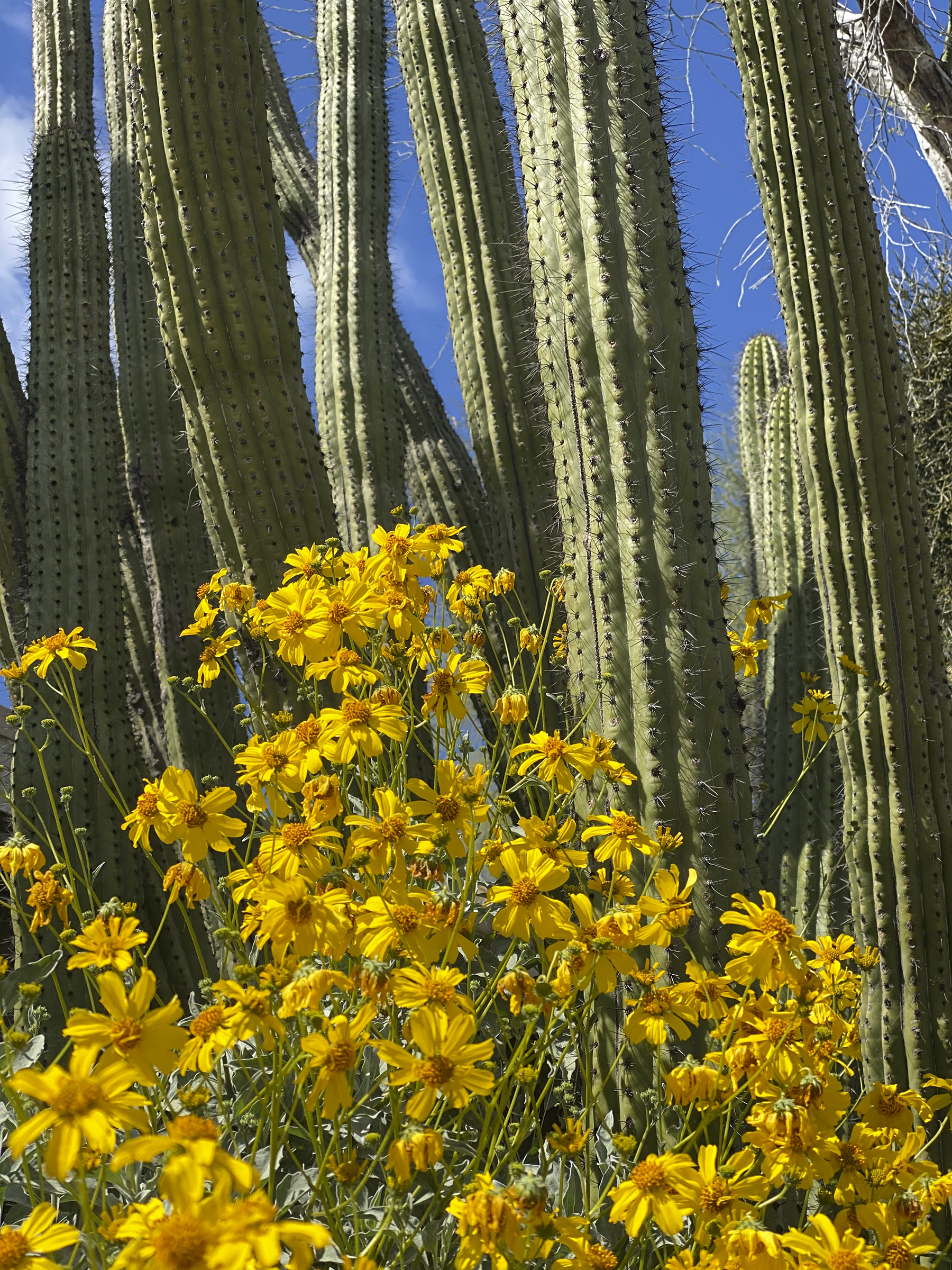
Organ pipe cactus is unmistakable once mature: a dense, upright clump of 5 to over 100 cylindrical stems rising from a short, usually unseen base, reaching 12 to 20 feet (3.5–6 m) tall and often as wide. Young plants start as a single stem and branch repeatedly from near ground level as they age, never developing the thick single trunk of a saguaro.
Stems
Each stem is 4 to 6 inches (10–15 cm) in diameter with 12 to 19 shallow, rounded ribs. The stems are gray-green to blue-green, and areoles along the ribs bear clusters of stiff gray to blackish spines up to 1.5 inches (4 cm) long. Stem tissue is more frost-sensitive than that of saguaro, which is why the species stays confined to warm, rocky, south-facing slopes where cold air drains away on winter nights.
Flowers
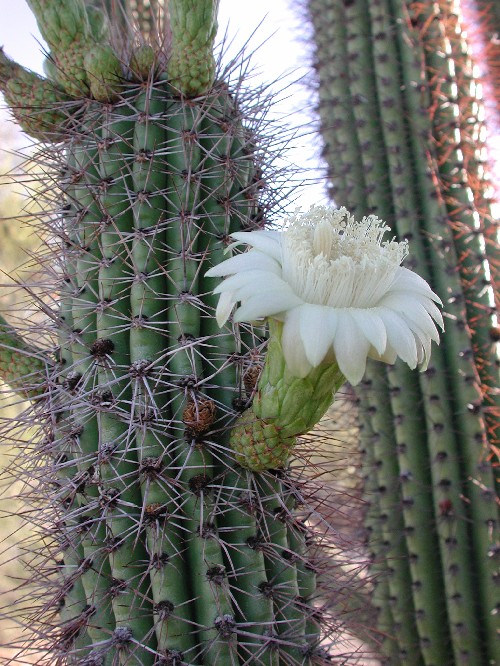
Funnel-shaped flowers 2 to 3 inches (5–8 cm) long open near the stem tips from May through July. They are white to pale pink with a tinge of green or lavender on the outer petals, and they open after dusk and close again by midmorning. The scent and nocturnal timing are adaptations for pollination by the lesser long-nosed bat and the Mexican long-tongued bat, with hawkmoths and bees visiting before the flowers close.
Fruit & Seeds
The fruit, called pitaya dulce (“sweet cactus fruit”) in Mexico, is a spiny, egg-shaped fruit about 2 to 3 inches (5–8 cm) long that ripens from green to reddish-brown in summer and splits open to expose juicy, bright red, sweet pulp studded with tiny black seeds. Wild fruit is an important seasonal food for desert wildlife, and has long been harvested by the Tohono O’odham people on the Mexican side of the border, but on the U.S. side wild plants and their fruit are legally protected and should never be collected.
Quick Facts
| Scientific Name | Stenocereus thurberi |
| Family | Cactaceae (Cactus) |
| Plant Type | Columnar Cactus |
| Mature Height | 12–20 ft (3.5–6 m) |
| Mature Spread | 8–15 ft, multi-stemmed clump |
| Growth Rate | Very slow |
| Sun Exposure | Full Sun |
| Water Needs | Very Low once established |
| Soil Type | Rocky, gravelly, fast-draining |
| Soil pH | 7.0–8.5 (neutral to alkaline) |
| Bloom Time | May – July, night-blooming |
| Flower Color | White to pale pink |
| Fall Color | None (evergreen stem succulent) |
| Fruit | Spiny red fruit with sweet red pulp (pitaya dulce) |
| Deer Resistant | Yes |
| USDA Hardiness Zones | 9b–11 (cold-tender; damaged below ~25°F) |
Native Range
In the United States, organ pipe cactus is native only to extreme southern Arizona, in Pima County near the Mexican border — most famously within and around Organ Pipe Cactus National Monument, plus a few outlying stands in the Ajo Range and nearby bajadas. It is far more widespread south of the border, ranging through most of Sonora and down the Baja California peninsula in Mexico, but the U.S. population represents only the northernmost sliver of that range, confined to a handful of warm, rocky south- and southeast-facing slopes.
The species is strictly a lowland Sonoran Desert plant, found from about 1,000 to 3,000 feet (300–900 m) elevation on rocky bajadas, volcanic hillsides, and desert pavement where cold air drains away at night. It is noticeably absent from the cooler valley bottoms and higher elevations nearby, a direct result of its poor frost tolerance compared to saguaro, which shares much of the same landscape but tolerates colder sites.
Because of its narrow U.S. range and sensitivity to collecting, organ pipe cactus is classified as a Highly Safeguarded native plant under Arizona law. It is not native anywhere else in the United States, and gardeners outside the warmest parts of southern Arizona should not expect it to survive outdoor winters.
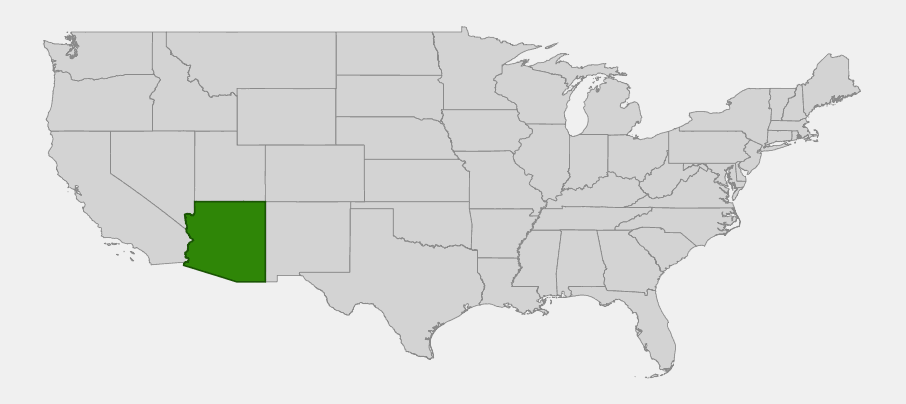
📋 Regional plant lists featuring Organ Pipe Cactus: Arizona & New Mexico (native to Arizona only; not native to New Mexico)
Growing & Care Guide
Organ pipe cactus is a striking specimen for the hottest, most frost-free gardens of the low desert, but it is a poor choice outside that narrow comfort zone. Before planting, buy only nursery-propagated, legally tagged stock — never a plant salvaged or collected without documentation.
Light
Full sun all day is essential. In the wild it occupies some of the sunniest, hottest slopes in the Sonoran Desert, and container plants or young transplants benefit from the same exposure once acclimated. Shade or reflected afternoon heat from pale walls is unnecessary — this plant wants open, unobstructed sun.
Soil & Water
Plant in rocky, fast-draining soil; heavy clay or soil that holds moisture around the base is the most common cause of stem rot. Water deeply but infrequently during the warm growing season and withhold water almost entirely in winter, when the plant is dormant and especially vulnerable to rot in cold, wet soil. Raised beds or slopes that shed water quickly mimic its native bajada habitat.
Planting Tips
Choose the warmest microclimate available — a south-facing slope, a spot near a heat-retaining wall, or any site that avoids cold-air pooling on winter nights. Organ pipe cactus is reliably hardy only in USDA zones 9b–11 and will suffer serious stem damage or die outright in hard freezes; gardeners outside greater Tucson, Phoenix, or similarly mild low-desert climates should not attempt it outdoors. Handle transplants carefully to avoid damaging the spine clusters and areoles.
Pruning & Maintenance
Established plants need essentially no pruning. Remove a stem only if it has been killed by frost or injury, cutting back to healthy green tissue with a clean, sterilized blade and allowing the cut to callus before any contact with moisture. Watch the base of the clump for signs of rot after unusually wet or cold winters.
Propagation
Nurseries propagate organ pipe cactus from stem cuttings, which root readily after the cut end is allowed to callus for one to two weeks in a dry, shaded spot before being set in gritty, fast-draining mix. Seed propagation is slower and typically reserved for conservation and restoration work.
Landscape Uses
Organ pipe cactus works best as a bold accent in true desert-style landscaping:
- Specimen plant in a warm, south-facing desert garden
- Xeriscaping for extremely low-water, low-desert yards
- Wildlife gardens attracting nectar bats and hawkmoths at night
- Rock gardens paired with other Sonoran Desert natives
- Desert museum or botanical-style plantings in frost-free courtyards
Wildlife & Ecological Value
Organ pipe cactus anchors a distinctive slice of Sonoran Desert food web, with its flowers and fruit feeding specialized pollinators and a broad range of desert animals.
For Pollinators
The night-blooming flowers are a critical nectar source for the lesser long-nosed bat and the Mexican long-tongued bat, both of which migrate north each spring timed to the blooming of organ pipe cactus and saguaro. Hawkmoths, native bees, and other night-flying insects also visit before the flowers close in the morning, and daytime visitors such as honeybees take advantage of any nectar left behind.
For Birds
Gila woodpeckers and gilded flickers excavate nest cavities in the stems, which are later reused by elf owls, ash-throated flycatchers, and other cavity-nesting birds. White-winged doves and other birds feed heavily on the sweet red fruit pulp when it ripens in summer, helping disperse the seeds.
For Mammals
Javelina, coyotes, and rodents eat fallen fruit, and the dense cluster of spiny stems provides cover and nest sites for small desert mammals. Bats pollinating at night are the organ pipe cactus’s most important mammal partners, arriving from Mexico each spring in step with the bloom.
Ecosystem Role
As one of the largest, longest-lived plants in its Arizona range, organ pipe cactus provides structure, shade, and food resources in a landscape where few other plants reach comparable size. Its narrow U.S. distribution makes the Organ Pipe Cactus National Monument population ecologically significant out of proportion to its small range, since it represents the entire northern edge of the species’ geographic distribution.
Cultural & Historical Uses
South of the border, organ pipe cactus has long been an important resource for the Tohono O’odham and other Indigenous peoples of the Sonoran Desert, who historically harvested the sweet pitaya dulce fruit as a seasonal food, much as they harvested saguaro fruit farther north and east. The fruit was eaten fresh, dried, or made into syrup, and the woody ribs of dead stems were used much like saguaro ribs — as building material, fencing, and tools.
In the United States, the species’ presence is tied closely to the creation of Organ Pipe Cactus National Monument in 1937, established specifically to protect this plant and the Sonoran Desert landscape it defines at the northern edge of its range. The monument remains the best place in the country to see wild organ pipe cactus, and it was later designated a UNESCO Biosphere Reserve in recognition of the ecological value of this binational desert.
Because the U.S. population is so small and geographically restricted, organ pipe cactus has never supported commercial harvest or trade within Arizona. Its history here is one of protection and scientific interest rather than use, and current Arizona law reflects that: wild plants are safeguarded, and legitimate propagation happens through licensed nurseries rather than wild collection.
Frequently Asked Questions
Is it legal to dig up or collect an organ pipe cactus in Arizona?
No. Organ pipe cactus is classified as Highly Safeguarded under the Arizona Native Plant Law, and removing, damaging, or collecting a wild plant without a permit from the Arizona Department of Agriculture is illegal. Buy only container-grown or properly tagged nursery stock.
How is organ pipe cactus different from saguaro?
Organ pipe cactus branches into many slender stems from near ground level, forming a clump, while saguaro grows a single thick trunk (with arms added only after decades of growth). Organ pipe cactus is also more cold-sensitive and has a much smaller U.S. range, limited to the warmest parts of southern Arizona.
Can I grow organ pipe cactus outside of southern Arizona?
Only in essentially frost-free climates, USDA zones 9b–11. It will suffer serious stem damage or die in hard freezes, so it is not a realistic outdoor choice for most of the U.S. except the warmest low-desert microclimates.
Does organ pipe cactus produce edible fruit?
The ripe fruit, called pitaya dulce, is edible and has long been harvested as food in Mexico, but in Arizona the species is legally protected and wild plants and their fruit should not be collected. Any fruit on cultivated, legally obtained plants is for the gardener to decide about; this article does not provide food-safety guidance.
What pollinates organ pipe cactus flowers?
The flowers open at night and are pollinated primarily by nectar-feeding bats — the lesser long-nosed bat and Mexican long-tongued bat — that migrate north from Mexico each spring timed to the bloom, with hawkmoths and bees also visiting.

Looking for a nursery that carries Organ Pipe Cactus?
Browse our native plant nursery directory: Arizona