Marsh Fern (Thelypteris palustris)
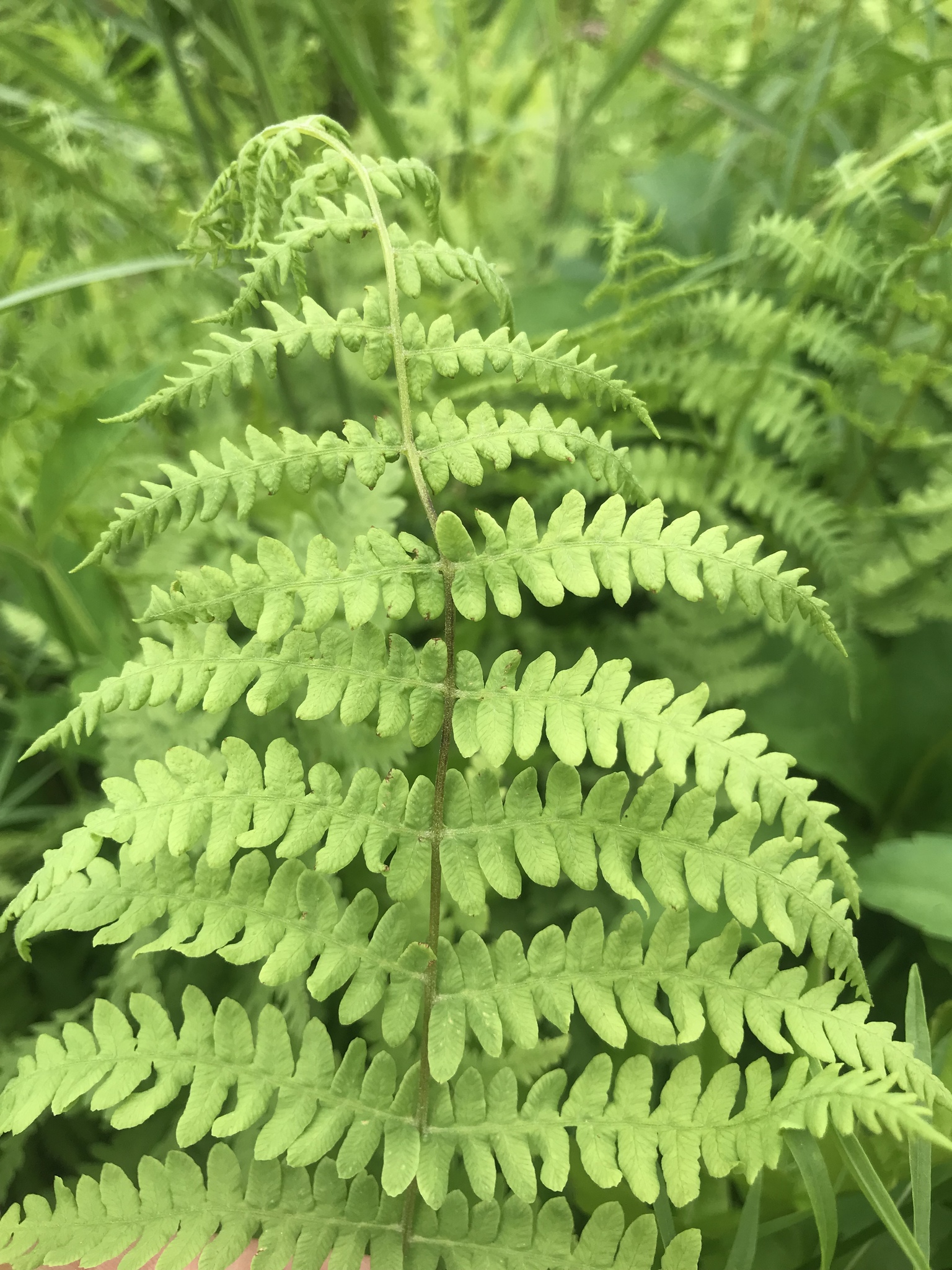
Thelypteris palustris, commonly known as marsh fern or eastern marsh fern, is a deciduous, colony-forming fern of wetlands across most of the eastern United States. True to its name, it is a true wetland specialist, spreading by creeping underground rhizomes to form loose, airy colonies in the full sun to partial shade of marshes, swamps, wet meadows, and pond and stream margins — habitats where many other ferns cannot compete.
Unlike many woodland ferns that need shade, marsh fern tolerates — and often prefers — considerable sun as long as its roots stay wet, which makes it one of the more adaptable native ferns for rain gardens, pond edges, and other consistently moist, open sites. Its finely divided, lance-shaped, bright yellow-green fronds give wetland plantings a soft, airy texture that contrasts nicely with coarser marsh grasses and sedges.
Marsh fern spreads enthusiastically by rhizome in favorable conditions, so it works best where it has room to form a naturalized colony rather than in a tightly controlled formal bed.
Identification
Marsh fern is a medium-sized deciduous fern with fronds arising singly (not in a tight vase-shaped cluster) from long, creeping, blackish rhizomes, which is how it forms spreading colonies rather than discrete clumps.
Fronds
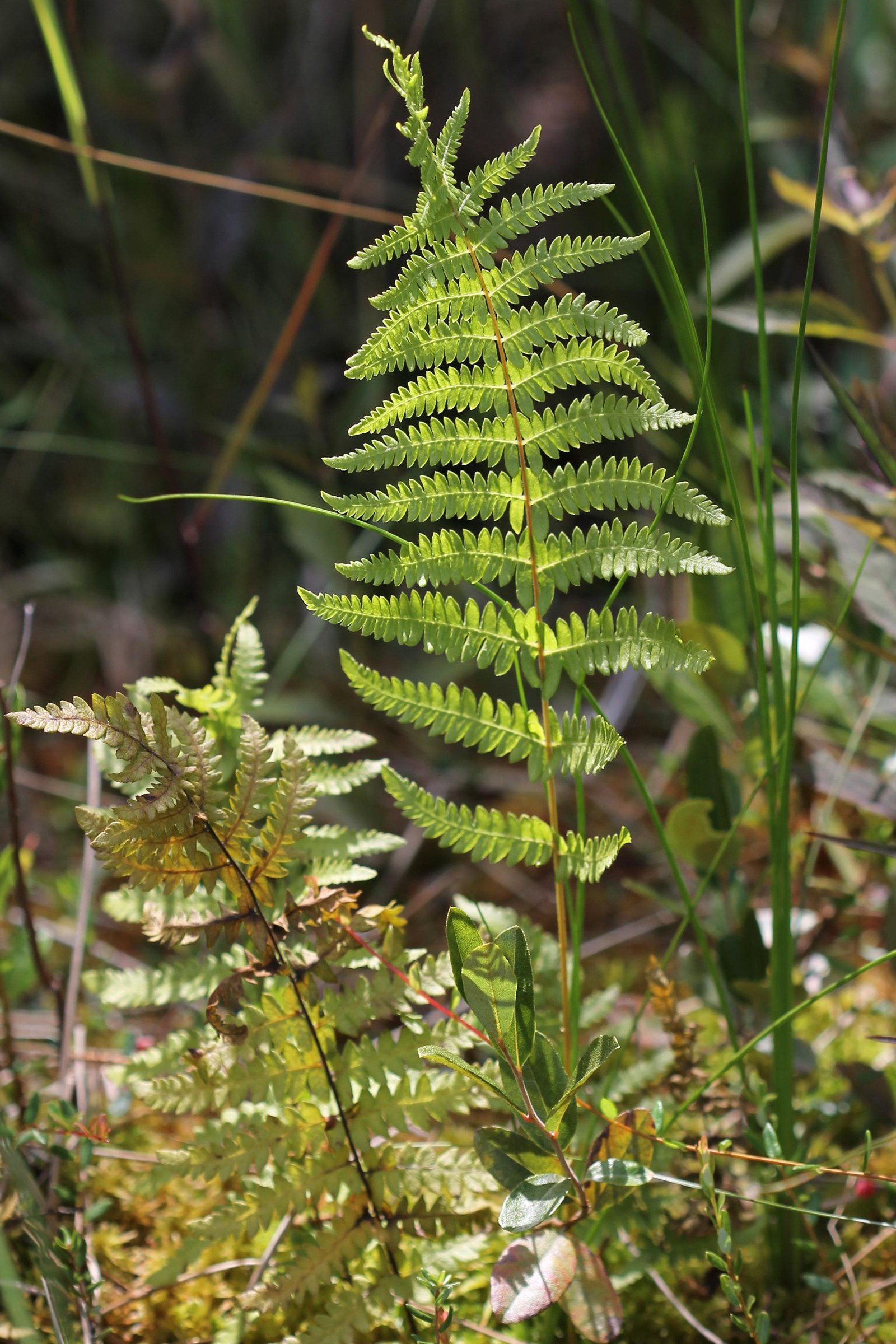
Fronds are erect to slightly arching, lance-shaped to elliptic, 1 to 2.5 feet (30–75 cm) long and 4 to 7 inches (10–18 cm) wide, twice-cut (pinnate-pinnatifid) into 10 to 40 pairs of narrow, tapering pinnae. The blade is thin-textured and bright yellow-green, and the stipe (stem) is tan to light brown and smooth. Fronds die back completely to the ground each winter.
Fertile vs. Sterile Fronds
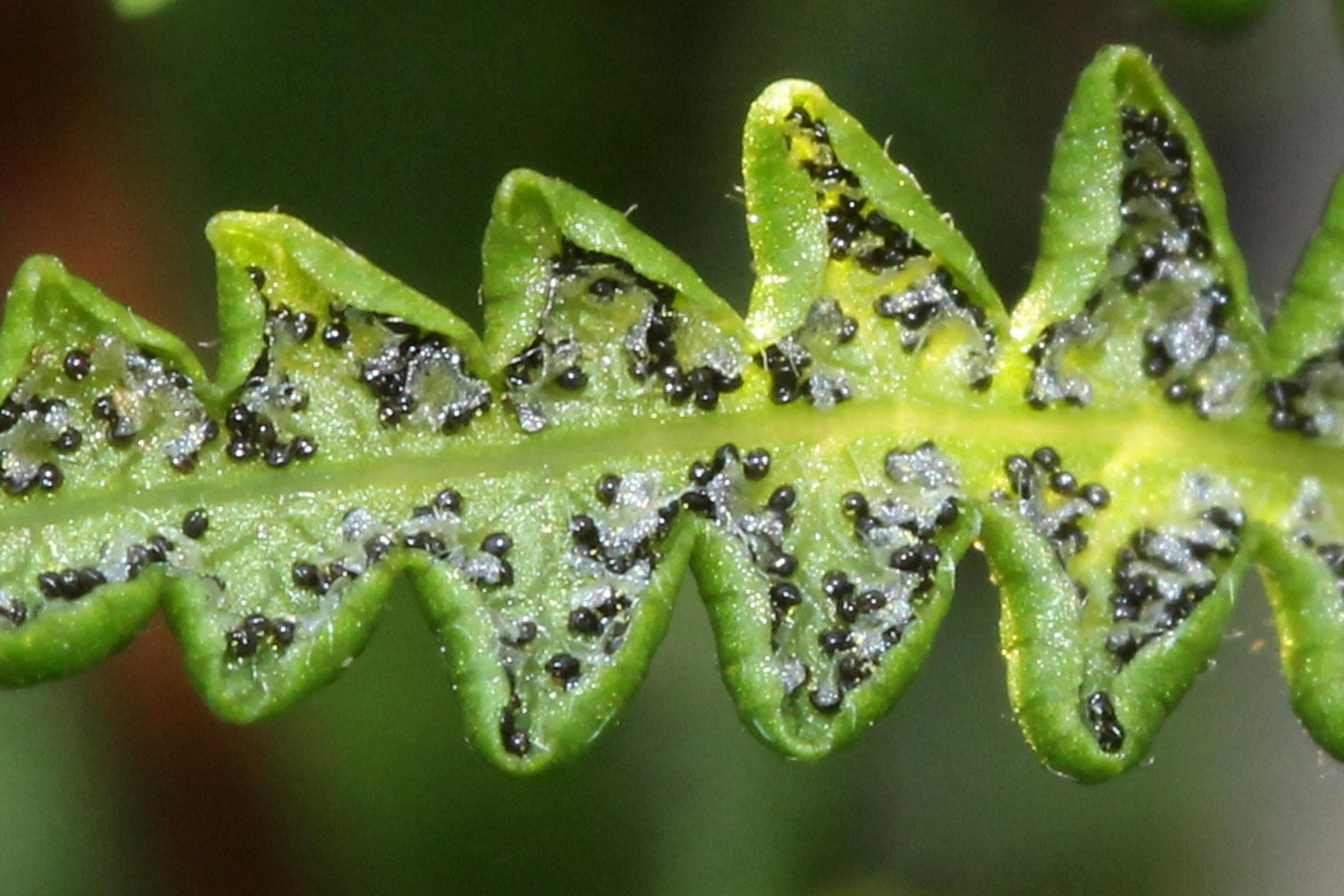
Marsh fern produces two distinct kinds of fronds each season. Sterile fronds, produced earlier, have flat pinnae with margins that lie open. Fertile fronds, produced later in summer, are narrower and taller with pinnae whose margins roll under along the edges, partly covering the round sori (spore clusters) on the underside — a useful identifying feature that separates marsh fern from similar-looking ferns that lack this rolled fertile-frond margin.
Rhizomes & Spread
The slender, wide-creeping, blackish rhizomes run just below the soil surface and send up new fronds at intervals, allowing a single plant to form a loose colony several feet across within a few growing seasons in consistently moist soil.
Quick Facts
| Scientific Name | Thelypteris palustris |
| Family | Thelypteridaceae (Marsh Fern) |
| Plant Type | Deciduous Herbaceous Fern |
| Mature Height | 1–2.5 ft (30–75 cm) |
| Mature Spread | Spreading colony via rhizomes, several feet or more |
| Growth Rate | Fast (spreads readily in wet soil) |
| Sun Exposure | Full Sun to Part Shade |
| Water Needs | High; consistently wet to saturated soil |
| Soil Type | Wet muck, peat, or saturated loam |
| Soil pH | 4.5–7.0 (acidic to neutral) |
| Bloom Time | Not applicable (fern; spores mature late summer) |
| Flower Color | None (ferns do not flower) |
| Fall Color | Fronds die back to tan/brown after frost |
| Fruit | None (reproduces by spores, not seed) |
| Deer Resistant | Yes |
| USDA Hardiness Zones | 4–9 |
Native Range
Marsh fern is native across most of the eastern and central United States, from New England and the Mid-Atlantic south through the Southeast to the Gulf Coast, and west through the Midwest and Great Plains states into the eastern edge of the Rockies’ foothill region. It also occurs in adjacent southern Canada, from the Maritimes west to Manitoba.
Throughout this broad range, marsh fern occupies wetland habitats: freshwater marshes, swamps, bogs, wet meadows, ditches, and the shaded or sunny margins of ponds and slow streams. It tolerates both acidic bog conditions and more neutral mineral-soil wetlands, and it is often one of the more conspicuous ferns in open, sunny wetlands where woodland ferns cannot survive the light levels.
Marsh fern is not native to the western United States; gardeners there should look to regionally native wetland ferns instead. Within its eastern range it is common and not of conservation concern, though wetland habitat loss has reduced its abundance locally in heavily developed areas.
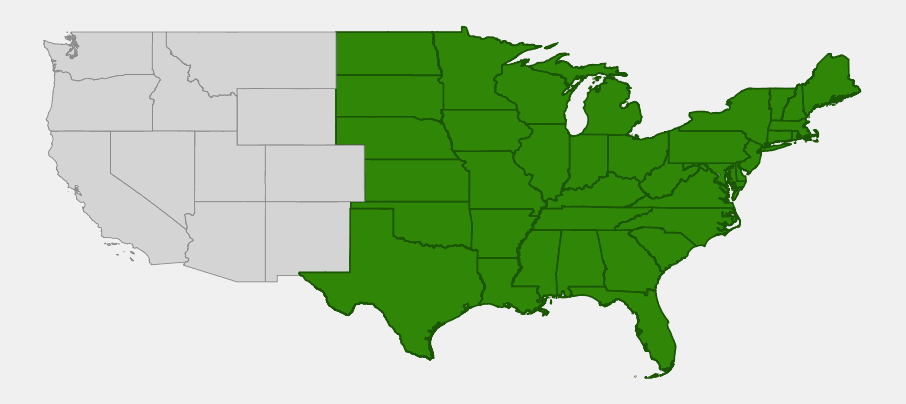
📋 Regional plant lists featuring Marsh Fern: New Hampshire, Maine & Vermont, Connecticut, Massachusetts & Rhode Island, New York, Pennsylvania & Northern New Jersey (no fern table on this list), Delaware, Southern New Jersey & Long Island, Maryland, Virginia & West Virginia, North & South Carolina, Georgia, Alabama & Mississippi, Arkansas, Louisiana, Eastern Oklahoma & Eastern Texas, Kentucky & Tennessee (no fern table on this list), Ohio & Indiana, Illinois, Iowa & Missouri, Michigan, Wisconsin & Eastern Minnesota, North Dakota, South Dakota & Western Minnesota, Nebraska, Kansas & Eastern Colorado (native to Nebraska and Kansas; not confirmed native to eastern Colorado)
Growing & Care Guide
Marsh fern is one of the easiest native ferns to grow in a consistently wet spot, asking only for moisture and tolerating far more sun than most ferns. The main challenge gardeners face is not keeping it alive, but keeping its spread in check.
Light
Marsh fern grows in full sun to part shade as long as soil stays wet; in cooler, consistently moist climates it tolerates quite a bit of direct sun, while in hotter regions some afternoon shade helps prevent frond scorch. This flexibility makes it more versatile than most ferns for open, sunny wetland gardens.
Soil & Water
Plant in consistently wet to saturated soil — the edge of a pond, a rain garden low point, a seasonally flooded swale, or boggy ground are all good fits. It tolerates both peaty, acidic muck and more mineral wet soils, but will not thrive if allowed to dry out for extended periods during the growing season.
Planting Tips
Give marsh fern plenty of room, or plan to contain it, since its creeping rhizomes spread readily in favorable wet soil and it can outcompete less vigorous neighbors. It is an excellent choice for naturalizing a large wet area but a poor choice for a small, mixed perennial bed where spread needs to stay limited. Division in spring is the easiest way to propagate or control existing colonies.
Pruning & Maintenance
Cut back dead fronds in late fall or early spring before new growth emerges; little other maintenance is required. In smaller gardens, periodically dig out spreading rhizomes at the colony’s edge to keep it within bounds.
Propagation
The simplest method is division of the spreading rhizome mats in spring, replanting sections with attached roots and fronds directly into moist soil. Spore propagation is possible but slow and mainly used by specialty native-plant nurseries.
Landscape Uses
Marsh fern’s wetland tolerance and spreading habit make it valuable for:
- Rain gardens and bioswales with consistently moist low points
- Pond and stream margins in sun or part shade
- Naturalized wetland restoration plantings
- Erosion control on wet, soggy slopes where few other plants establish
- Bog gardens paired with sedges and other wetland natives
Wildlife & Ecological Value
Marsh fern’s dense, spreading colonies provide important structure and shelter in wetland habitats, even though — like most ferns — it offers no nectar or pollen.
For Pollinators
As a non-flowering fern, marsh fern provides no direct nectar or pollen resources. Its value to pollinators is indirect, through the cover and humidity it adds to wetland habitat that supports the flowering wetland plants pollinators depend on.
For Birds
Dense marsh fern colonies offer ground-level cover and nesting habitat for wetland and marsh-edge birds, including various sparrows and rails that nest low in dense wetland vegetation.
For Mammals
Marsh fern is largely unpalatable to deer and other browsing mammals, which makes it a reliable, low-conflict choice in areas with heavy deer pressure. Small mammals use its dense colonies for cover near wetland edges.
Ecosystem Role
Marsh fern is specifically host to the larvae of the marsh fern moth (Fagitana littera), which feeds exclusively on this species — a tight ecological relationship that makes marsh fern irreplaceable habitat for that insect. More broadly, its spreading rhizomes help stabilize wet soils and its dense fronds add structural diversity to herbaceous wetland plant communities.
Cultural & Historical Uses
Marsh fern has not been documented as a significant food, medicine, or craft material among Indigenous peoples in the way that some other wetland plants were, and it has no established culinary history — unlike fiddleheads of some other fern species, marsh fern fiddleheads are not a traditional food plant. Its historical interest instead lies mainly in botanical and ecological study, where it has long served as a classic example of a wetland-adapted, colony-forming fern in regional floras of eastern North America.
More recently, researchers have studied marsh fern’s ability to take up heavy metals such as zinc and copper from contaminated water in experimental phytoremediation trials, exploring whether wetland plants like this one could help filter runoff from livestock operations. This research remains experimental and is not a basis for using the species in any treatment capacity in a home garden.
Today, marsh fern’s main human value is horticultural and ecological: it is increasingly used in wetland restoration and rain-garden plantings precisely because it tolerates the wet, sometimes sunny conditions that few other native ferns can handle.
Frequently Asked Questions
Does marsh fern need shade like other ferns?
No — this is one of the more sun-tolerant native ferns, as long as the soil stays consistently wet. It grows well in full sun to part shade, unlike many woodland ferns that need deep shade.
Will marsh fern take over my garden?
It can spread aggressively by rhizome in consistently wet, favorable soil, forming loose colonies several feet across within a few seasons. Give it room to naturalize in a larger wet area, or be prepared to periodically dig out the spreading edges in a smaller bed.
How do I tell marsh fern from other similar wetland ferns?
Look for fronds arising singly (not in a vase-shaped cluster) from creeping black rhizomes, and for the distinctive fertile fronds produced later in the season, which are narrower with pinnae margins rolled under to partly cover the round sori.
Is marsh fern edible?
Marsh fern is not a documented food plant and has no established culinary use, unlike fiddleheads of some other fern species. This guide does not recommend eating any part of it.
What kind of soil moisture does marsh fern need?
Consistently wet to saturated soil is essential — pond edges, rain garden low points, bog gardens, and similar sites. It will decline if the soil is allowed to dry out for extended periods during the growing season.

Looking for a nursery that carries Marsh Fern?
Browse our native plant nursery directory: Alabama & Arkansas · Connecticut, Delaware & Georgia · Illinois, Indiana, Iowa & Kansas · Kentucky, Louisiana, Maine, Maryland, Massachusetts, Michigan, Minnesota, Mississippi & Missouri · Nebraska, New Hampshire, New Jersey, New York, North Carolina, North Dakota & Ohio · Pennsylvania, Rhode Island, South Carolina, South Dakota, Tennessee, Texas & Virginia · West Virginia & Wisconsin