
Aunt Lucy (Ellisia nyctelea)
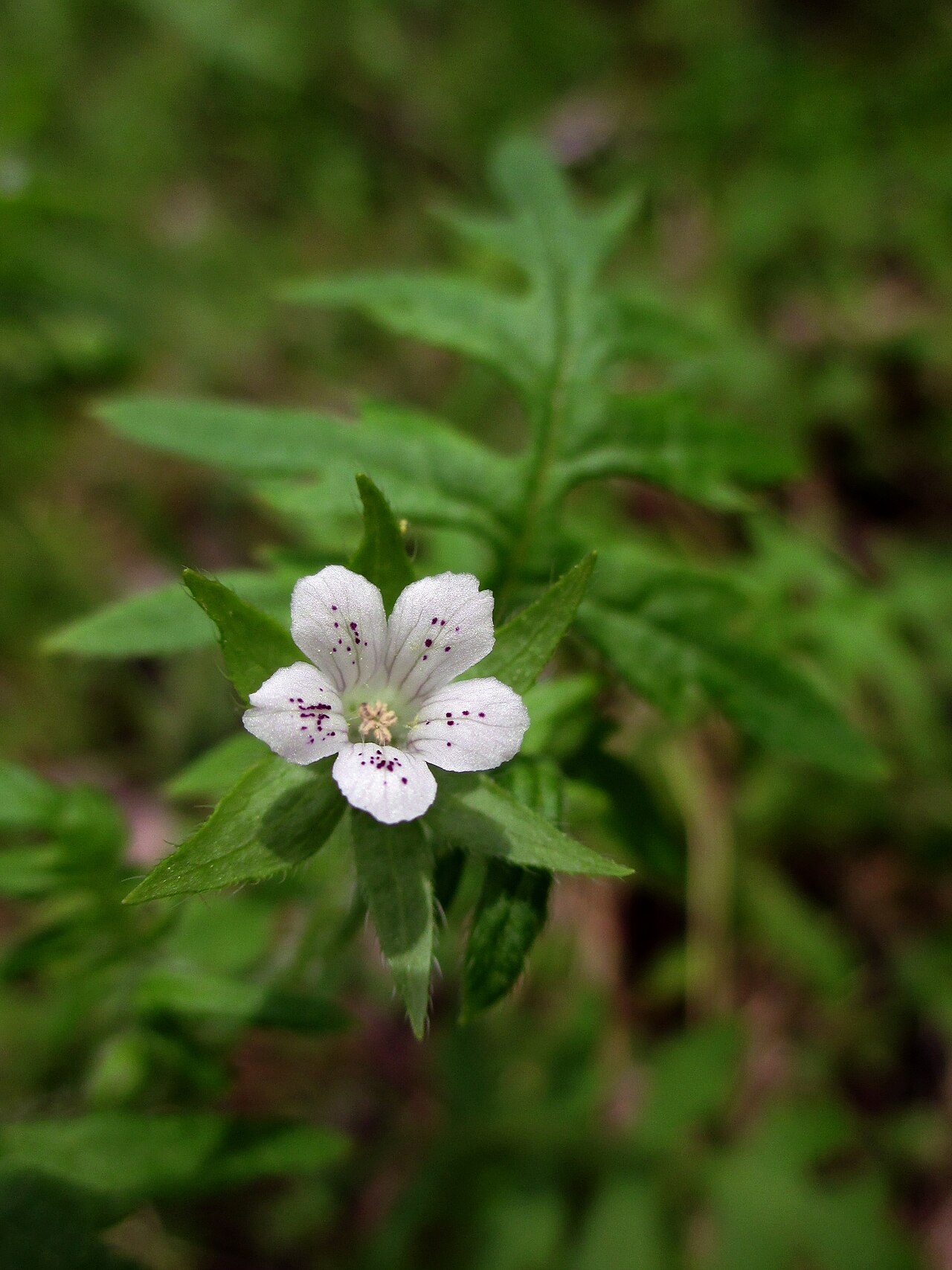
Ellisia nyctelea, known as Aunt Lucy, waterpod or Nyctelea, is a small native annual wildflower of the waterleaf group, now placed in the borage family (Boraginaceae). It is the only species in its genus. Aunt Lucy grows across much of the central United States and the Canadian prairies, from the Rocky Mountain states east through the Great Plains and Midwest to the mid-Atlantic, in moist woods, floodplains, thickets and disturbed open ground.
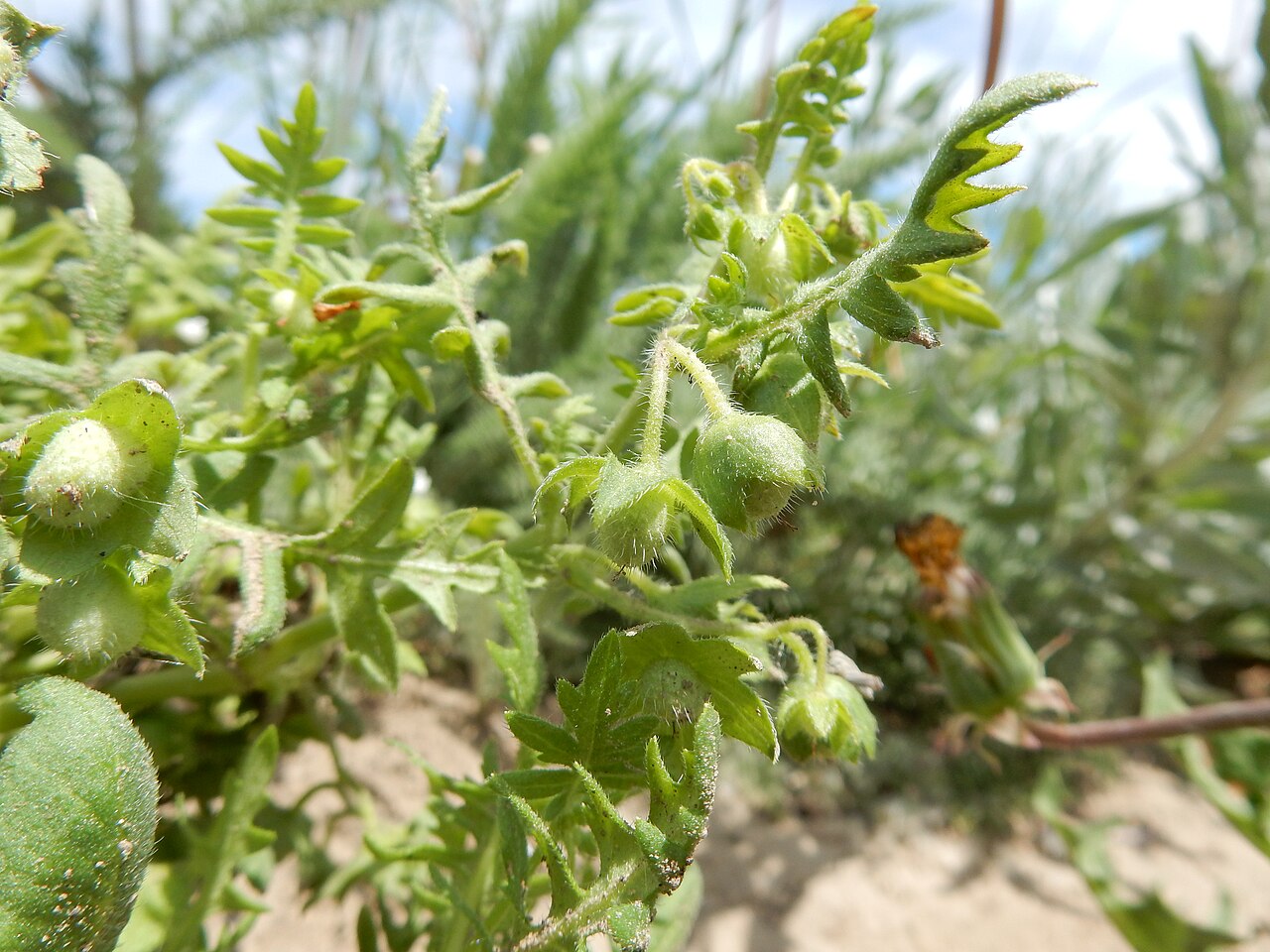
It is a modest plant: low, sprawling stems about 4 to 16 inches long, deeply lobed, hairy leaves, and tiny white to pale lavender, bell-shaped flowers that appear in spring. The most distinctive feature comes after flowering, when the calyx enlarges into a green, star-shaped cup around each round seed capsule, which hangs on a curved stalk.
Aunt Lucy is a spring annual that sprouts in fall or early spring, flowers and sets seed by early summer, and then dies. It is often overlooked or treated as a weed in gardens and fields, but it is a native part of floodplain forests and prairie ecosystems and provides early nectar for small bees and flies. This guide covers how to identify it, where it grows, and its place in native landscapes.
Identification
Aunt Lucy is easiest to identify by its pinnately lobed, hairy leaves combined with small, solitary white flowers and the star-like fruiting calyx.
Growth Habit
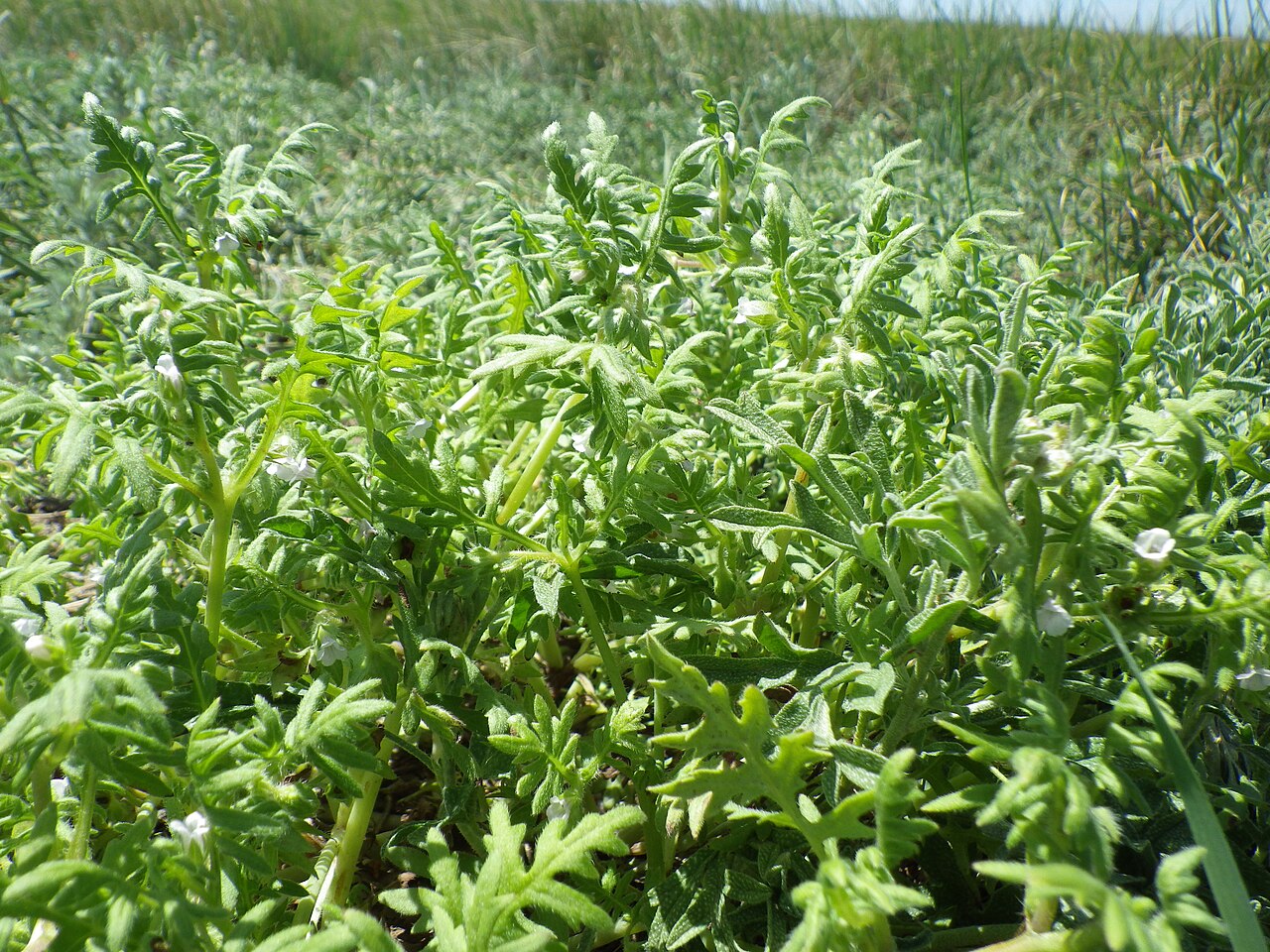
It is an annual with weak, branching stems that are usually 4 to 16 inches long and often sprawl or lean on other plants. The stems and leaves are covered with short, stiff hairs. Plants may grow singly or in dense patches on rich, disturbed soil.
Leaves
The leaves are 1 to 4 inches long and deeply divided, almost to the midrib, into 7 to 13 narrow, toothed or lobed segments, giving them a ragged, fern-like look. Lower leaves are opposite and upper leaves alternate, and the leaf surfaces are rough with hairs.
Flowers
The flowers are borne singly on short stalks opposite the leaves. Each is about 1/4 inch long, bell- to cup-shaped, with five white to pale lavender petals that are often marked with tiny purple dots or lines inside. The five stamens are hidden in the tube. Aunt Lucy blooms from about April to June.
Fruit & Seeds
After flowering, the stalk curves downward and the five green sepals enlarge to about 1/2 inch, spreading into a star around a round, hairy capsule. The capsule contains up to four rounded, pitted seeds. The plant dies back once the seeds ripen in early summer.
Look-alikes
Aunt Lucy can be confused with the waterleafs (Hydrophyllum) when young, but waterleafs are perennials with clustered flowers. It also resembles the nemophilas, such as white nemophila (Nemophila heterophylla), which grow in the West and Southeast; nemophilas have small appendages between the calyx lobes, which Aunt Lucy lacks.
Quick Facts
| Scientific Name | Ellisia nyctelea (L.) L. |
| Family | Boraginaceae (borage family; formerly Hydrophyllaceae, waterleaf family) |
| Plant Type | Annual wildflower (winter or spring annual) |
| Mature Height | 4–16 in (stems often sprawling) |
| Mature Spread | 6–18 in |
| Growth Rate | Fast |
| Sun Exposure | Partial shade to full sun |
| Water Needs | Medium; moist soil in spring |
| Soil Type | Rich loam, alluvial and disturbed soils |
| Soil pH | About 6.0–7.5 |
| Bloom Time | April–June |
| Flower Color | White to pale lavender, often purple-dotted |
| Fall Color | None; annual that dies in early summer |
| Fruit | Round hairy capsule in a star-shaped calyx |
| Deer Resistant | Not well documented |
| USDA Hardiness Zones | 3–8 (as an annual) |
Native Range
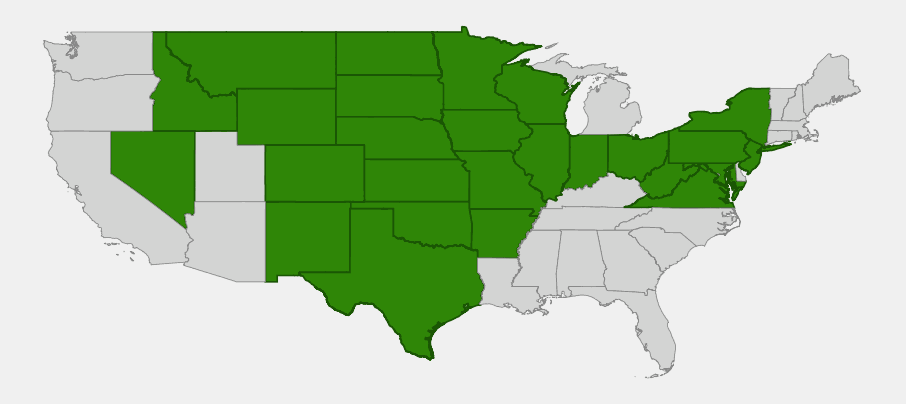
Aunt Lucy is native to central North America. USDA PLANTS records it in 30 states and in the prairie provinces of Canada. Its native range centers on the Great Plains and the Midwest, from Montana, Wyoming, Colorado and New Mexico east through the Dakotas, Nebraska, Kansas, Oklahoma and northern Texas to Minnesota, Wisconsin, Iowa, Missouri, Illinois, Indiana, Ohio and Arkansas, with scattered native populations east to Pennsylvania, New York, New Jersey, Maryland, Virginia and West Virginia, and outlying western records in Idaho and Nevada.
Some eastern records are introductions. Go Botany considers it not native to New England, where it has been found only in Connecticut and Massachusetts, and NatureServe treats populations in Kentucky, Michigan and Ontario as exotic. Those states are left off the map on this page. In New York, New Jersey and West Virginia it is native but rare.
Typical habitats are moist woods and floodplain forests, stream banks, thickets, woodland edges, prairies and disturbed ground such as fields, barnyards, gardens, roadsides and prairie dog towns. It favors rich, moist soil that is open in early spring.
📋 Regional plant lists featuring Aunt Lucy: New York, Pennsylvania & Northern New Jersey · Ohio & Indiana · Montana & Wyoming · Michigan, Wisconsin & Eastern Minnesota · Nebraska, Kansas & Eastern Colorado · Maryland, Virginia & West Virginia · Delaware, Southern New Jersey & Long Island · Illinois, Iowa & Missouri · Arkansas, Louisiana, Eastern Oklahoma & Eastern Texas · North Dakota, South Dakota & Western Minnesota · California & Nevada
Growing & Care Guide
Aunt Lucy is not sold as a garden plant, and most people meet it as a volunteer. If it appears in a shady border, woodland garden or floodplain planting within its native range, it is a harmless native annual that can be left to flower and reseed, or easily pulled where it is not wanted.
Light
It grows in partial shade under deciduous trees and in full sun in open fields and prairies, as long as the soil is moist in spring.
Soil & Water
It prefers rich, moist loam or alluvial soil and tolerates disturbed ground. Spring rain is usually enough; it completes its life cycle before summer drought.
Planting Tips
Collect ripe seed in early summer and scatter it in fall on bare, moist soil in a woodland or floodplain planting. Seeds germinate in fall or early spring.
Pruning & Maintenance
None is needed. Plants die back by early summer. Pull them before the seeds ripen if you do not want more next year, or leave them to reseed under shrubs and trees where little else grows in spring.
Propagation
Aunt Lucy reproduces only from seed. It is self-sowing and usually maintains itself where the soil is open and moist in spring.
Landscape Uses
- Woodland and floodplain gardens: it fills bare ground under trees in spring alongside spring ephemerals such as Virginia bluebells and waterleafs.
- Naturalized areas: it is a harmless native annual in shady, unmown corners, stream banks and woodlots.
- Restoration of floodplain forests: it is part of the native groundcover of bottomland woods in the Midwest and Great Plains.
- Nature study: the unusual star-shaped fruiting calyx is a good teaching example of how flower parts change as fruits develop.
- Early pollinator food: its tiny spring flowers feed small native bees and flies.
Wildlife & Ecological Value
Aunt Lucy is a small but useful early-season plant for insects in woodland and floodplain habitats.
For Pollinators
Small bees, such as sweat bees and mining bees, and small flies visit the flowers for nectar and pollen. Because it blooms early, it offers food when few other flowers are open in the shade.
For Birds
Ground-feeding birds may eat the seeds, and the plant provides cover for insects that feed birds in spring.
For Mammals
Small mammals may eat the seeds. On the Great Plains it often grows on prairie dog towns, where digging and grazing keep the soil open.
Ecosystem Role
As a fast-growing spring annual, Aunt Lucy quickly covers bare soil in floodplains and disturbed areas, helping to hold soil and recycle nutrients before taller summer vegetation shades it out.
Cultural & Historical Uses
The genus is named for John Ellis, an 18th-century British naturalist and correspondent of Carl Linnaeus. The species name nyctelea was also once used as a genus name for the plant.
The origin of the folk name “Aunt Lucy” is not recorded. Other common names include waterpod and Nyctelea.
Botanists once placed Aunt Lucy in the waterleaf family (Hydrophyllaceae). DNA studies have since shown that this group belongs within the borage family, so most current references list it in Boraginaceae.
Frequently Asked Questions
Is Aunt Lucy a weed?
It is a native annual that sometimes appears in gardens, fields and disturbed ground, so it can behave like a weed. It is not invasive and is part of native woodland, floodplain and prairie plant communities in its range.
Where is Aunt Lucy native?
Across the Great Plains and Midwest, from Montana and Colorado east to Ohio, with scattered native populations in Pennsylvania, New York, New Jersey and the mid-Atlantic. It is considered introduced in New England, Kentucky and Michigan.
When does it bloom?
From about April to June. Plants die back by early summer after setting seed.
How do I recognize Aunt Lucy?
Look for sprawling stems with deeply lobed, hairy leaves, small white or pale lavender flowers on single stalks, and later a green star-shaped calyx around each round seed capsule.
Is Aunt Lucy poisonous?
It is not known as a poisonous plant, but it is not a food plant either.

Looking for a nursery that carries Aunt Lucy?
Browse our native plant nursery directory: Arkansas · Colorado · Idaho, Illinois, Indiana, Iowa & Kansas · Maryland, Minnesota, Missouri & Montana · Nebraska, Nevada, New Jersey, New Mexico, New York, North Dakota, Ohio & Oklahoma · Pennsylvania, South Dakota, Texas & Virginia · West Virginia, Wisconsin & Wyoming

