
White Nemophila (Nemophila heterophylla)
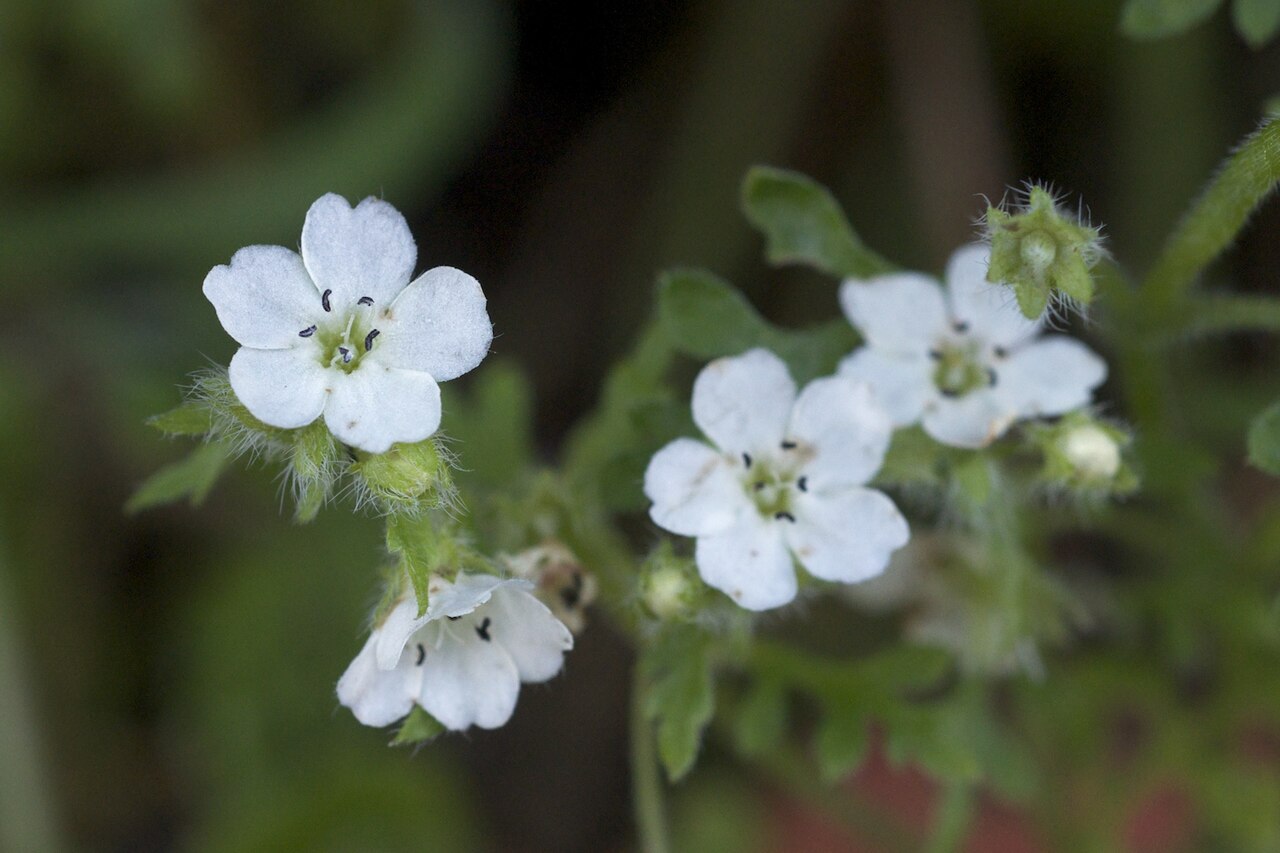
Nemophila heterophylla, known as White Nemophila, small baby blue eyes or canyon nemophila, is a delicate spring annual of shady slopes and woodlands in California and southwestern Oregon. Its weak, sprawling stems carry small, bowl-shaped white flowers, sometimes with a faint blue tint, above soft, deeply lobed leaves.
It is a close relative of the much showier baby blue eyes (Nemophila menziesii) and belongs to the waterleaf group, now usually included in the borage family (Boraginaceae). The species name heterophylla means “different leaves”: the lower leaves are opposite and divided into several lobes, while the upper ones are often alternate and less divided.
White nemophila sprouts with the winter rains, blooms from late winter into early summer, and sets seed before the dry season. It grows under oaks, in chaparral, along streams and on shady road banks, and it reseeds readily in a woodland garden. This guide covers how to identify it, where it grows, how to grow it from seed, and its value to small pollinators.
Identification
White nemophila is a small, easily overlooked plant, but its combination of tiny white bowls and lobed, opposite lower leaves makes it recognizable.
Growth Habit
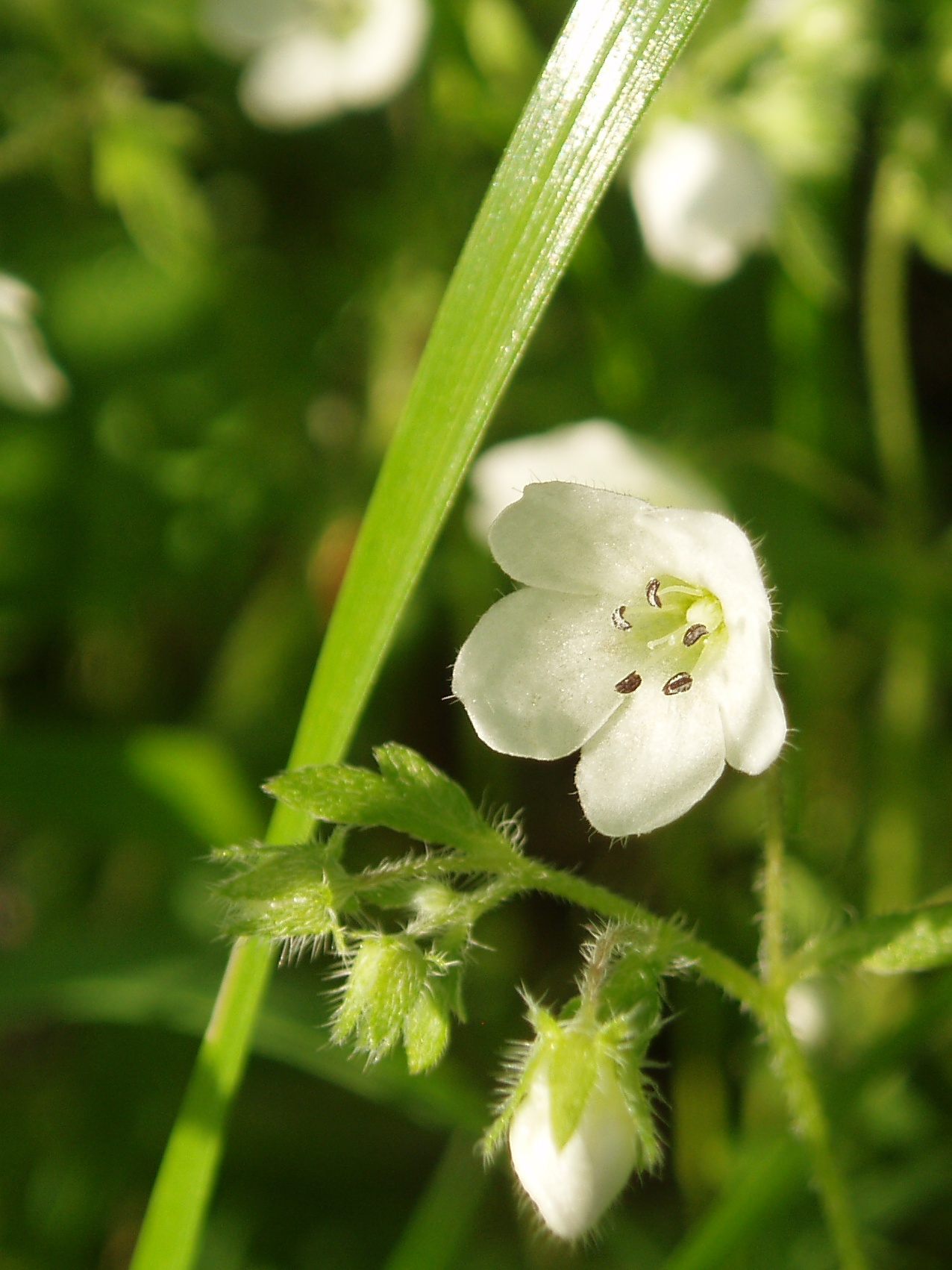
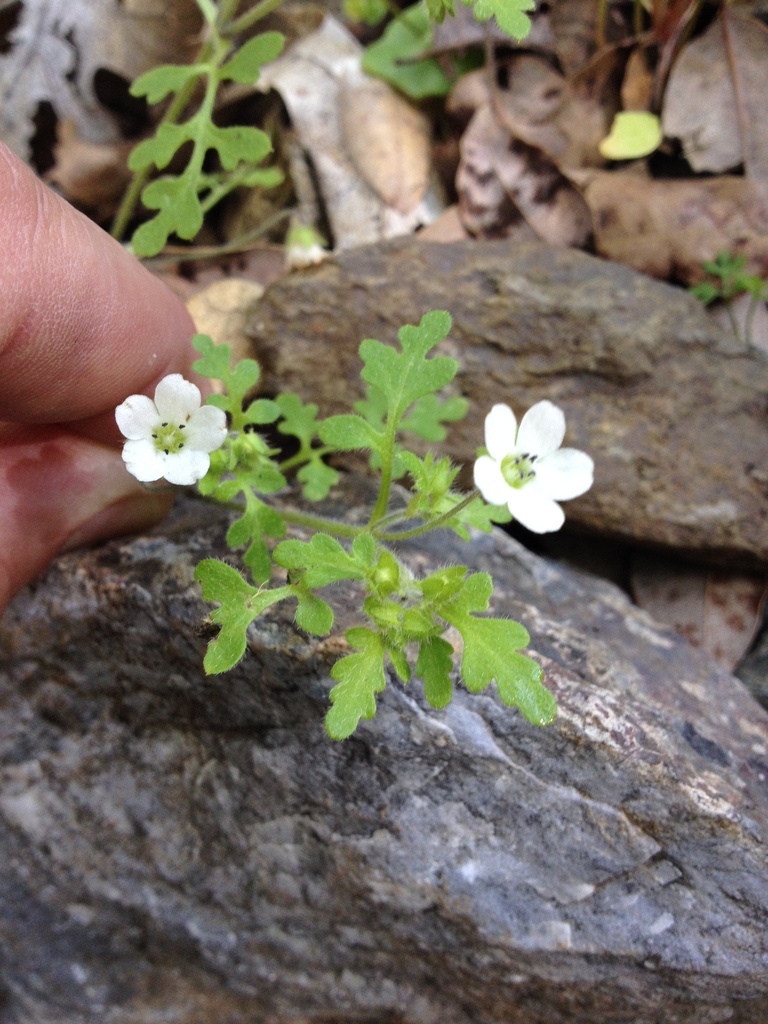
It is a slender annual with weak, branching stems that sprawl or lean on other plants, usually 4 to 12 inches long. The stems and leaves are lightly covered in short, stiff hairs. Plants are often fragile and can form loose mats in shade.
Leaves
The lower leaves are opposite, on stalks, and pinnately divided into about five to seven rounded lobes. Upper leaves are smaller and may be alternate, with three to five lobes. The leaves are soft and bright green.
Flowers
Flowers are borne singly on slender stalks from the leaf axils. They are bowl-shaped, about 1/4 to 1/2 inch across, with five white petals, sometimes tinged pale blue, and no strong spots or veins. Between the five hairy sepals are small, bent-back appendages, a feature of the genus. Bloom is from about February to June.
Fruit & Seeds
The fruit is a small, round, bristly capsule containing one to four seeds. The seeds drop near the parent plant and germinate with the next year’s rains.
Look-alikes
Baby blue eyes (Nemophila menziesii) has larger, usually sky-blue flowers; its white forms are larger and often spotted. Meadow nemophila (Nemophila pedunculata) has tiny white flowers often marked with purple spots and veins. Fivespot (Nemophila maculata) has a large purple spot on each petal.
Quick Facts
| Scientific Name | Nemophila heterophylla Fisch. & C.A. Mey. |
| Family | Boraginaceae (borage family); formerly Hydrophyllaceae |
| Plant Type | Cool-season annual wildflower |
| Mature Height | 4–12 in (stems sprawling) |
| Mature Spread | 6–12 in |
| Growth Rate | Fast |
| Sun Exposure | Part shade to shade |
| Water Needs | Moderate in winter and spring; none in summer |
| Soil Type | Humus-rich loam, rocky slopes, streambanks |
| Soil pH | About 6.0–7.5 |
| Bloom Time | February–June |
| Flower Color | White, sometimes tinged pale blue |
| Fall Color | None; annual dies by early summer |
| Fruit | Small, round, bristly capsule |
| Deer Resistant | Not well documented |
| USDA Hardiness Zones | Annual; grows in winter-rain climates of about zones 7–10 |
Native Range
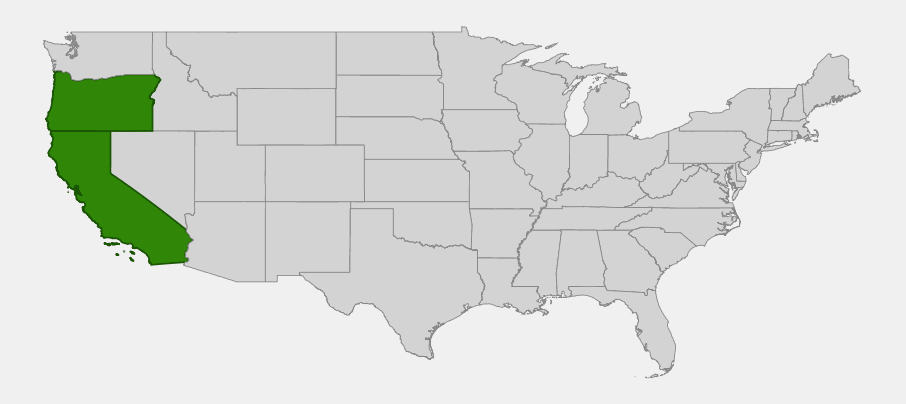
White nemophila is native to California and Oregon. USDA PLANTS lists it in both states. Most of its range is in California, where it is widespread in the Coast Ranges, the San Francisco Bay Area, the foothills of the Sierra Nevada and Cascades, and the Klamath region. In Oregon it is uncommon and limited to the southwest.
In California it is found from the North Coast and Klamath Mountains south through the Bay Area and Central Coast, and along the western Sierra Nevada foothills; it is scarce in the deserts and the Central Valley floor.
It grows in shaded and partly shaded places at low to middle elevations: under oaks and bay laurel, in mixed-evergreen forest and chaparral, along streambanks, on talus and rocky slopes, and on moist road cuts.
📋 Regional plant lists featuring White Nemophila: Western Oregon & Western Washington · California & Nevada
Growing & Care Guide
White nemophila is easy to grow from seed in a shady native garden in California or southern Oregon. Seed is occasionally offered by native seed suppliers. Sow it once in a suitable spot and it usually reseeds itself year after year.
Light
Give it part shade to fairly deep shade, such as under oaks or on the north side of shrubs and buildings. It tolerates morning sun but wilts in hot afternoon sun.
Soil & Water
It grows best in loose, humus-rich soil that stays moist through the rainy season. In normal years winter rain is enough; water during dry spells in spring to extend flowering. No summer water is needed, since the plants die after setting seed.
Planting Tips
Scatter seed on raked soil in fall, before or with the first rains, and press it in lightly or cover it with a thin layer of leaf litter. Seedlings appear within a few weeks. Combine it with other shade annuals and perennials such as Chinese houses, miner’s lettuce, woodland strawberry and Pacific sanicle.
Pruning & Maintenance
No pruning is needed. Let the plants set seed before removing them, or simply leave them to break down. Avoid heavy mulch where you want it to reseed.
Propagation
Grow it from seed only. Collect the small capsules as they ripen in late spring, or let them drop naturally. Seeds stay dormant through the summer and germinate when the rains return.
Landscape Uses
- Woodland and shade gardens: a soft carpet of small white flowers under trees
- Oak woodland restoration: a typical spring annual of the oak understory
- Naturalized plantings: reseeds without becoming aggressive
- Pollinator gardens: early flowers for small native bees and flies
- Under-planting for shrubs: fills bare ground in spring and disappears in summer
Wildlife & Ecological Value
White nemophila is small, but where it carpets the ground in shady woodlands it provides an early source of pollen and nectar.
For Pollinators
The open, bowl-shaped flowers are visited by small native bees, including sweat bees and small solitary bees, and by syrphid flies and other flies. Their open shape makes the pollen easy to reach for short-tongued insects.
For Birds
Ground-foraging birds such as towhees and juncos may eat the small seeds that fall beneath the plants.
For Mammals
Its soft foliage may be eaten by deer, rabbits and rodents along with other spring greens.
Ecosystem Role
As a winter-growing annual, it is part of the shady understory community that greens up after the rains and dies back in summer, adding organic matter to the soil. Its seeds carry the population through the long, dry summer.
Cultural & Historical Uses
The genus name Nemophila comes from the Greek nemos, a wooded pasture or glade, and philos, loving, which fits this woodland species especially well. It was described by the Russian botanists Friedrich Fischer and Carl Anton Meyer in the 1830s, in a seed list of the St. Petersburg botanical garden, from seed collected in California.
Nemophilas have long been popular as garden annuals. Baby blue eyes in particular became a favorite in European gardens in the nineteenth century. White nemophila is less showy, but it fits naturally into shady California gardens where the larger species struggle.
Its common names reflect its habitat and looks: canyon nemophila for the shady canyons where it grows, and small baby blue eyes, the USDA name, for its resemblance to its larger relative.
Frequently Asked Questions
Is white nemophila an annual?
Yes. It germinates with the fall or winter rains, blooms from about February to June, sets seed and dies before summer.
How is it different from baby blue eyes?
White nemophila has smaller, mostly white flowers and grows in shade. Baby blue eyes (Nemophila menziesii) has larger, usually sky-blue flowers and prefers sunnier spots.
Where does white nemophila grow?
Mainly in California, in the Coast Ranges, Bay Area, Sierra Nevada foothills and Klamath region, and uncommonly in southwestern Oregon, in shady woodlands, chaparral and along streams.
How do I grow it?
Scatter seed in fall in a shady spot with loose, humus-rich soil and let the winter rains water it. It usually reseeds on its own.
Does it attract pollinators?
Yes. Small native bees and flies visit its open, bowl-shaped flowers in spring.

Looking for a nursery that carries White Nemophila?
Browse our native plant nursery directory: California · Oregon

