Baby Blue Eyes (Nemophila menziesii)
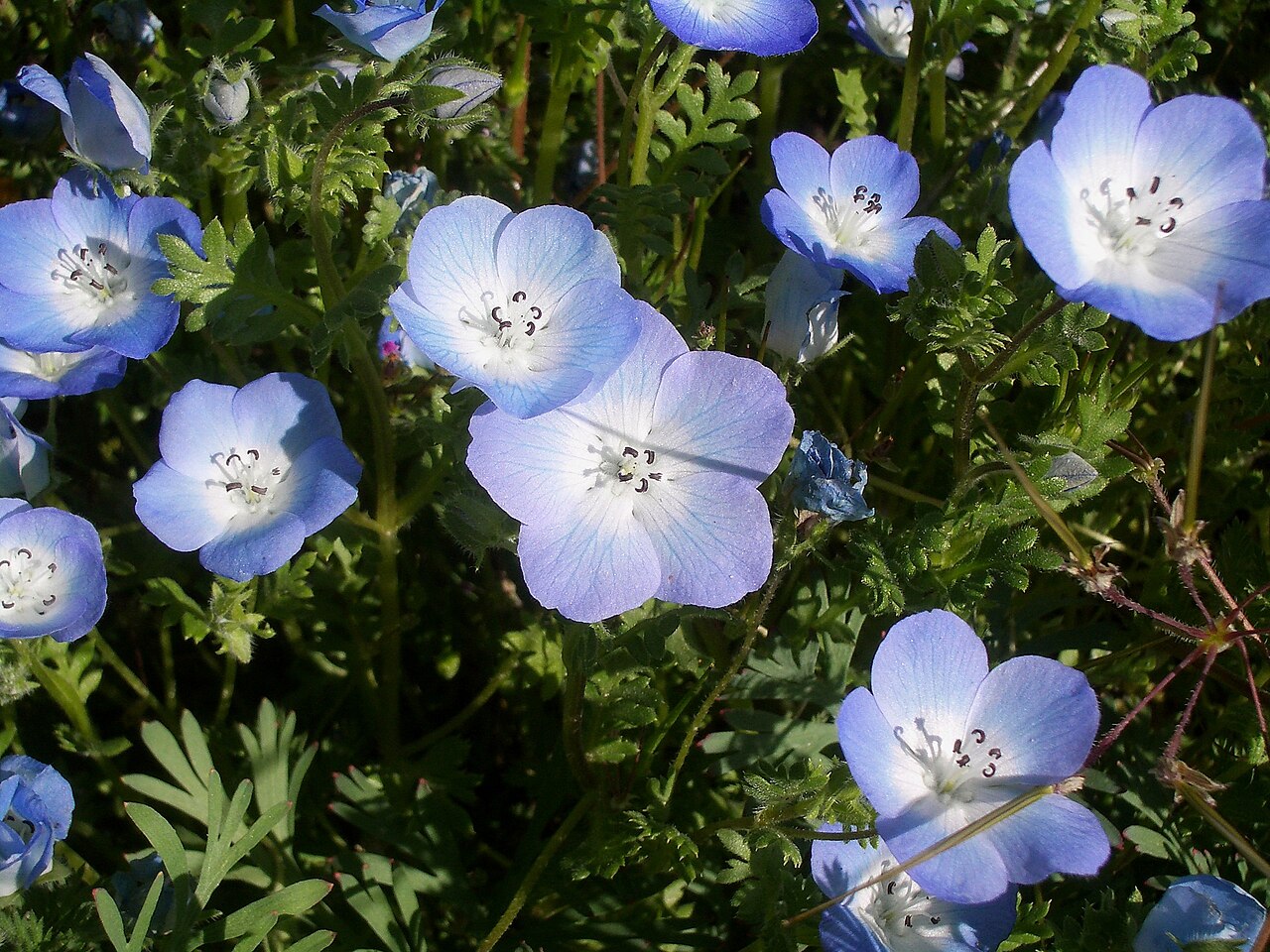
Nemophila menziesii, widely known as baby blue eyes, is a low-growing annual wildflower native to California and the Pacific Coast. A member of the borage family (Boraginaceae), it produces cheerful, sky-blue, cup-shaped flowers with white centers that carpet grassy slopes, open woodlands, and roadsides each spring, often in the company of California poppies and other wildflowers. Few native annuals are easier to grow or more universally loved by gardeners, both for their beauty and for their gentle, non-aggressive nature in the garden.
Baby blue eyes forms a sprawling, low mound of soft, ferny, deeply lobed foliage, usually no more than 6 to 12 inches tall, that spreads loosely along the ground before sending up its distinctive five-petaled flowers from winter through late spring. The species is remarkably adaptable, growing from coastal bluffs to inland valleys and foothill woodlands, wherever winter and spring moisture support an annual wildflower life cycle.
For gardeners, baby blue eyes is an easy, reliable reseeder that fills gaps between other plants, softens the edges of paths and borders, and provides reliable early-season color with essentially no maintenance. It is especially valuable in wildflower meadows, informal borders, and anywhere a soft, naturalistic spring display is wanted.
Identification
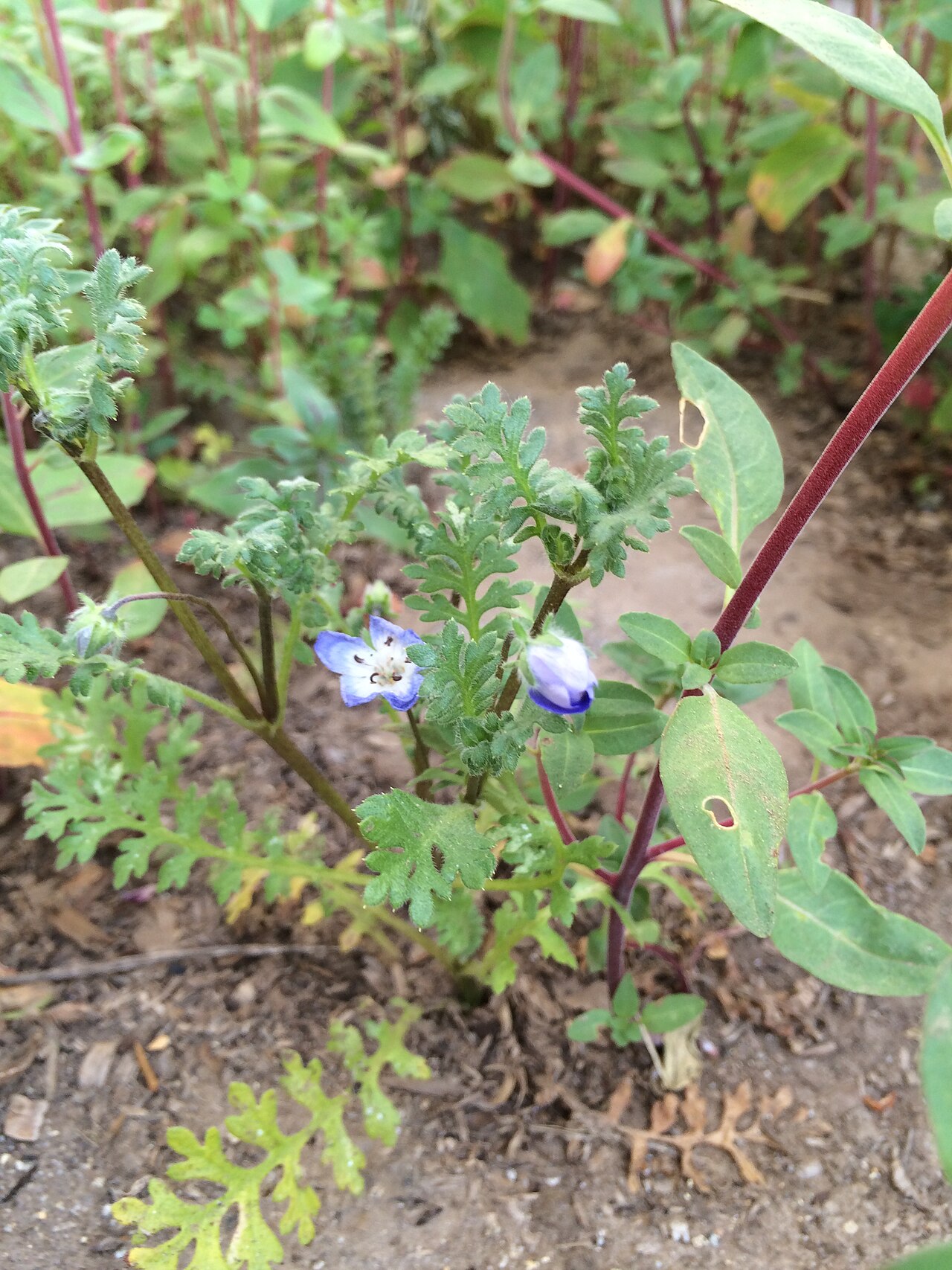
Baby blue eyes is a low-growing, sprawling annual herb, typically 6 to 12 inches tall but spreading 12 to 18 inches wide, with weak, somewhat succulent stems that often lie along the ground rather than standing fully upright.
Stems & Leaves
Stems are slightly fleshy, covered in fine hairs, and branch freely from the base, giving the plant a loose, spreading habit. The leaves are opposite, deeply pinnately lobed into 5 to 9 rounded segments, giving them a soft, almost fern-like or oak-leaf appearance. Both stems and leaves are lightly hairy to the touch.
Flowers
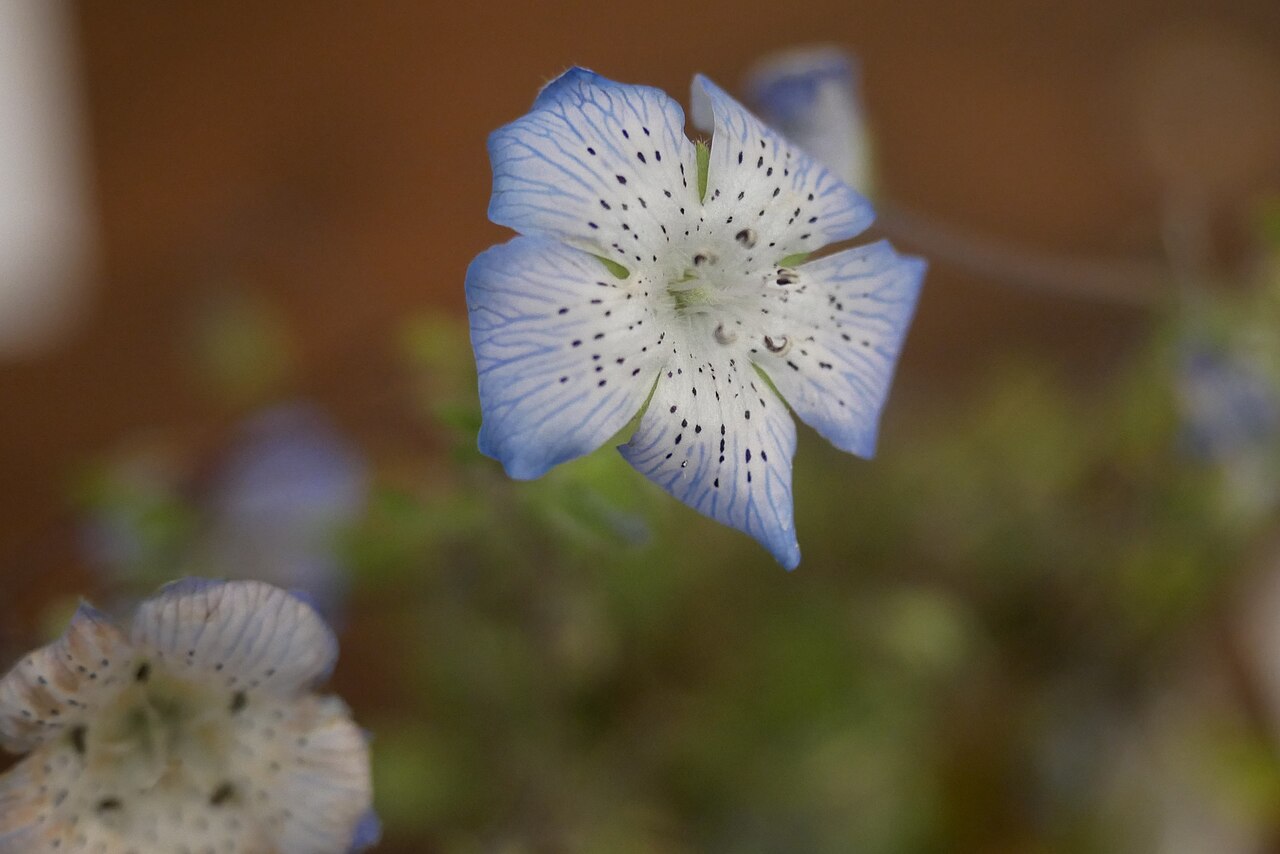
The flowers are the plant’s main attraction: cup- to bowl-shaped, about 1 to 1.5 inches across, with five petals that are typically sky blue toward the outer edge, fading to white at the center, where fine dark speckles or veining often appear near the throat. Flowers are borne singly on stalks arising from the leaf axils and open readily in full sun. Bloom begins as early as February in mild coastal climates and continues into May or June depending on location and rainfall.
Fruit & Seeds
After flowering, baby blue eyes produces a small, round, bristly seed capsule that holds a handful of dark, roughened seeds. The plant reseeds readily where conditions suit it, often returning reliably year after year in gardens and wild areas alike without becoming weedy or aggressive.
Quick Facts
| Scientific Name | Nemophila menziesii |
| Family | Boraginaceae (Borage) |
| Plant Type | Annual Wildflower |
| Mature Height | 6–12 in |
| Mature Spread | 12–18 in |
| Growth Rate | Fast (annual life cycle) |
| Sun Exposure | Full Sun to Part Shade |
| Water Needs | Low to moderate; follows winter–spring rainfall |
| Soil Type | Adaptable; well-drained loam, sand or clay |
| Soil pH | 6.0–7.5 (adaptable) |
| Bloom Time | February – June |
| Flower Color | Sky blue with a white, speckled center |
| Fall Color | Not applicable (annual, dies back in summer) |
| Fruit | Small bristly capsule with dark seeds |
| Deer Resistant | Somewhat (not a preferred browse) |
| USDA Hardiness Zones | Grown as a cool-season annual in most zones |
Native Range
Baby blue eyes is native to California, where it grows virtually throughout the state from the coast to the lower mountain foothills, at elevations from near sea level to around 6,500 feet. Its range also extends along the coast into southwestern Oregon and south into northern Baja California, Mexico.
The species grows in a wide range of open, sunny habitats, including grassy slopes, open woodlands, vernal pool margins, and disturbed ground such as roadsides and trail edges, wherever adequate winter and spring moisture supports its short annual life cycle. It is a familiar component of California’s famous spring wildflower displays, often blooming alongside California poppy, lupines, and other annual wildflowers in grassland and oak woodland settings.
Although baby blue eyes is widely cultivated as a garden annual well beyond its native range, including in gardens across the country and in Europe and Japan, it should be considered a California and southern Oregon coastal native rather than native to other regions; gardeners elsewhere are growing it as an introduced ornamental rather than a regional native.
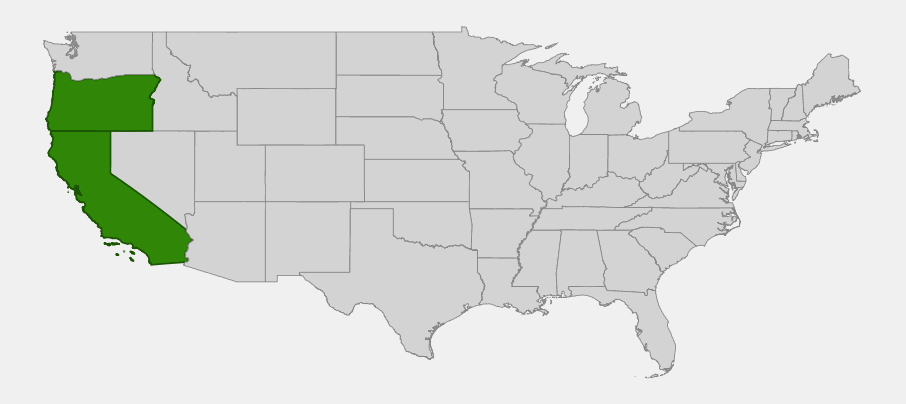
📋 Regional plant lists featuring Baby Blue Eyes: California and Nevada · Western Oregon and Western Washington
Growing & Care Guide
Baby blue eyes is about as easy as native wildflowers get, asking only for sun, reasonable drainage, and the natural rhythm of winter rain followed by a dry summer dormancy. It is an excellent starting point for gardeners new to growing California native annuals from seed.
Light
Full sun produces the most compact plants and heaviest bloom, though baby blue eyes tolerates light shade well, especially in hot inland gardens, where some afternoon shade can extend the bloom season and keep plants from wilting in early heat.
Soil & Water
This wildflower is adaptable to a range of soils, from sandy loam to clay, as long as drainage is reasonable. Water to support germination and establishment through the winter and spring growing season; once the plant sets seed and summer heat arrives, it dies back naturally and needs no further water. Overwatering in summer, after the natural life cycle has ended, serves no purpose and can encourage fungal problems in adjacent plants.
Planting Tips
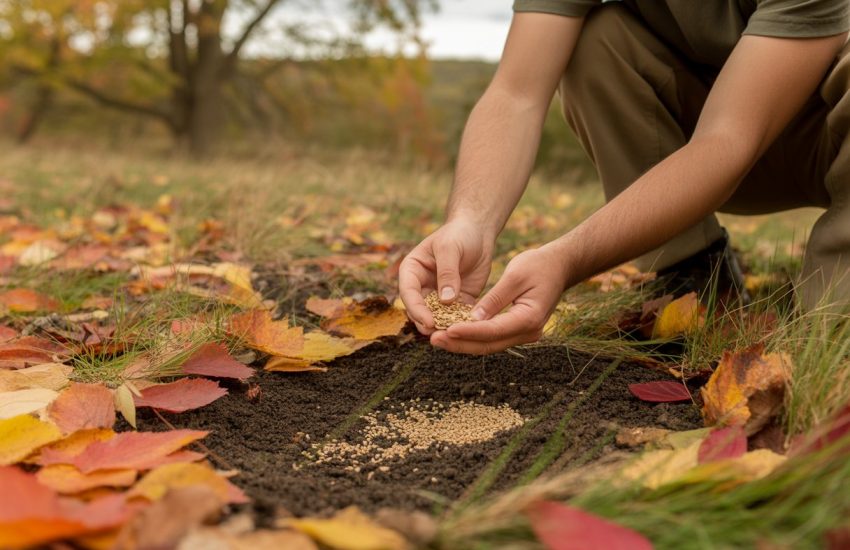
Sow seed directly in the garden in fall, taking advantage of the same autumn rains that trigger germination in the wild. Scatter seed over prepared, weed-free soil and press in lightly rather than burying deeply; germination typically follows the first good soaking rain. Thin seedlings if they come up very densely, though baby blue eyes tends to self-regulate its spacing as it grows. Once established in a garden, it usually self-sows reliably for years to come.
Pruning & Maintenance
Baby blue eyes needs essentially no maintenance. Deadheading is unnecessary and, in fact, counterproductive if you want the plant to reseed; simply let the spent plants dry and drop their seed in place before removing the dead foliage in early summer. No fertilizer is typically needed in reasonably fertile garden soil.
Landscape Uses
Baby blue eyes works well in a variety of informal, naturalistic plantings:
- Wildflower meadows and seed mixes, often paired with California poppy and lupine
- Path and border edges, where its low, spreading habit softens hard lines
- Container and raised bed plantings for an easy, colorful spring display
- Gaps between perennials in a developing native garden, as a temporary filler
- Pollinator and children’s gardens, for its reliable, cheerful bloom
Wildlife & Ecological Value
As one of California’s most abundant and widespread spring annuals, baby blue eyes plays a meaningful role in supporting early-season pollinators across a wide range of habitats.
For Pollinators
The open, bowl-shaped flowers are easily accessed by a wide range of native bees, including small solitary bees, as well as syrphid flies and other beneficial insects, making baby blue eyes a valuable nectar and pollen source during the early spring wildflower season.
For Birds
Seed-eating birds, including sparrows and finches, forage on the seed capsules once they dry and split in early summer, adding a small but useful food source during the transition into California’s dry season.
For Mammals
Baby blue eyes is not a preferred food source for deer or rabbits, making it a reasonably reliable choice in gardens with browsing pressure, though young, tender growth may occasionally be sampled.
Ecosystem Role
As a widespread component of California’s spring wildflower displays, baby blue eyes contributes to the diversity and resilience of grassland and oak woodland plant communities, filling available ground space early in the season before summer-dormant grasses and later-blooming perennials take over. Its short life cycle and reliable reseeding help it persist through the boom-and-bust rainfall patterns typical of California’s climate.
Cultural & Historical Uses
Historical records indicate that baby blue eyes was used as forage for livestock kept by the Kawaiisu people of the southern Sierra Nevada and Mojave Desert region, reflecting the plant’s abundance and palatability in grassland settings. Beyond this documented use, detailed records of widespread traditional uses by California Indigenous peoples are limited, and the species appears to have been valued more as part of the broader grassland forage and wildflower landscape than for a specific, well-documented cultural purpose.
Baby blue eyes gained international horticultural popularity after its introduction to European gardens in the nineteenth century, where its reliable, easy-to-grow nature and charming flowers made it a favorite cottage garden annual. It remains widely sold as seed today under its common name across North America, Europe, and parts of Asia, including Japan, where mass plantings of baby blue eyes have become a popular springtime tourist attraction in public gardens.
Within California, baby blue eyes continues to be one of the most commonly included species in native wildflower seed mixes, prized by restoration projects, schools, and home gardeners alike for its reliability and its role as an accessible entry point into growing California native plants from seed.
Frequently Asked Questions
When should I plant baby blue eyes seed?
Sow seed directly in the garden in fall, so that natural autumn and winter rains trigger germination, just as they do in the wild. Spring sowing can work in cooler climates but generally produces a shorter bloom season.
Does baby blue eyes come back every year?
It is a true annual that completes its life cycle in one season, but it reseeds readily where conditions suit it, so established plantings often return reliably from self-sown seed year after year without needing to be replanted.
Why did my baby blue eyes die in summer?
This is normal. Baby blue eyes is a cool-season annual adapted to California’s winter-wet, summer-dry climate, and it is expected to die back naturally once temperatures rise and seed has set, regardless of watering.
Is baby blue eyes native to Nevada?
No. Its native range is California and the southwestern Oregon coast, extending into northern Baja California; it is not native to Nevada, though it may be grown there as a garden annual.
Will baby blue eyes spread aggressively in my garden?
No, it reseeds gently and is easy to control or remove where not wanted, making it a good choice for gardeners who want reliable self-sowing color without an invasive or weedy habit.

Looking for a nursery that carries Baby Blue Eyes?
Browse our native plant nursery directory: California · Oregon