Chinese Houses (Collinsia heterophylla)
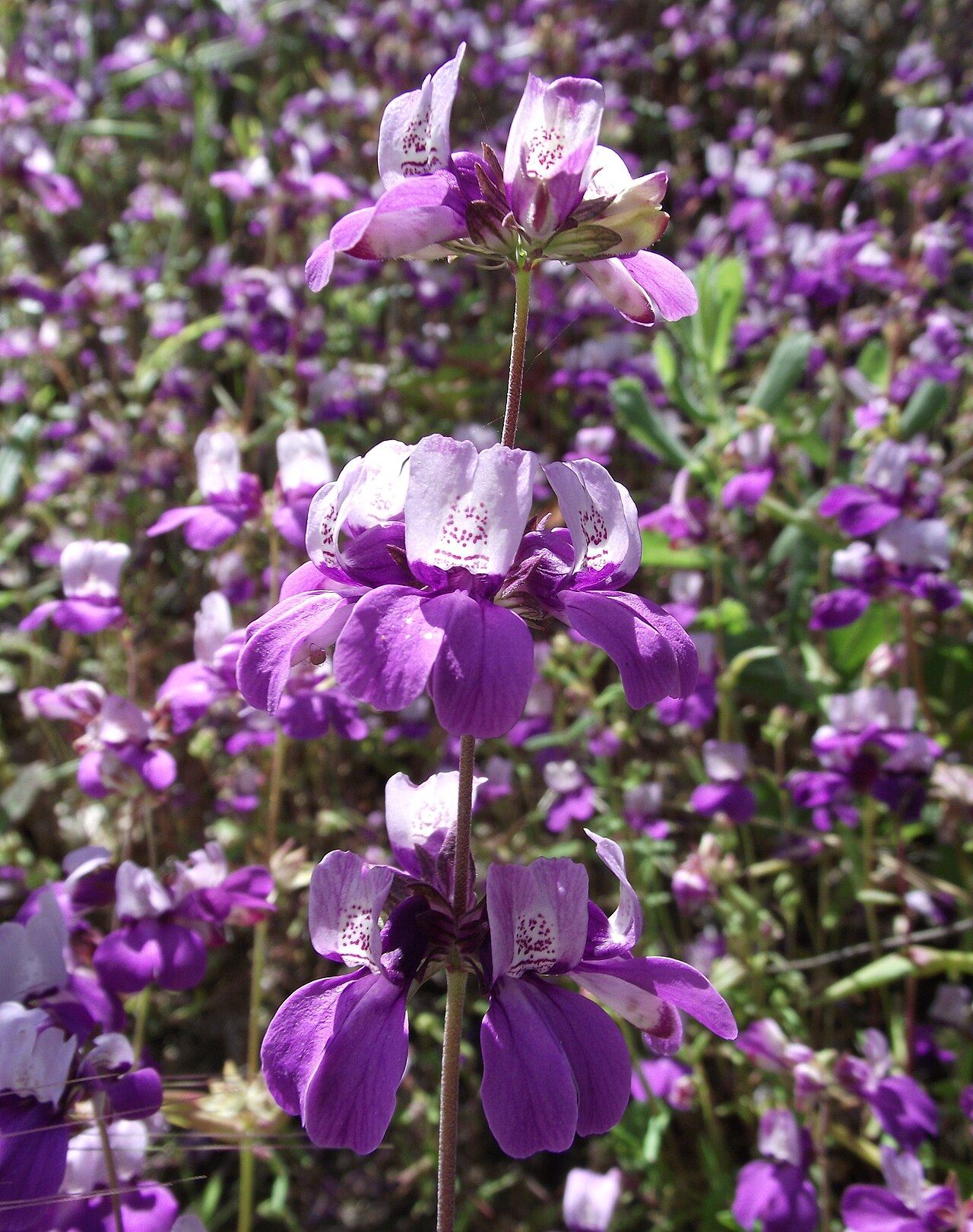
Collinsia heterophylla, widely known as Chinese Houses or Purple Chinese Houses (and sometimes simply “Innocence”), is a charming annual wildflower native to California and the Peninsular Ranges of northern Baja California. Its common name comes directly from its distinctive flower arrangement: small, bicolor purple-and-white flowers are stacked in evenly spaced rings, or whorls, around an upright stem, with each tier flaring outward like the upturned eaves of a pagoda roof.
Chinese Houses is one of California’s most beloved shade-tolerant wildflowers, carpeting the floors of oak woodlands, foothill canyons, and shaded slopes throughout much of the state each spring. Unlike many showy California annuals that demand full sun, Chinese Houses actually prefers dappled light and moist soil, making it an unusually versatile choice for the shadier corners of a native plant garden where few other wildflowers perform well.
Easy to grow from seed and reliably self-sowing, Chinese Houses has long been a favorite of California wildflower gardeners, naturalistic woodland plantings, and pollinator meadows. Its airy towers of purple-and-white blooms pair beautifully with other shade-loving natives and provide weeks of color in a part of the garden that can otherwise be hard to fill with flowering plants.
Identification
Chinese Houses is an upright, branching annual typically 8 to 20 inches (20–50 cm) tall, occasionally taller in especially favorable, moist, shaded conditions. The whole plant has a somewhat delicate, slightly sprawling habit, with square-ish stems and a light covering of fine hairs that can feel slightly sticky.
Stems
Stems are slender, often reddish-tinged, and branch from the base and along their length, giving the plant a loosely bushy form. They are weak enough that plants growing in denser stands tend to lean on and support one another.
Leaves
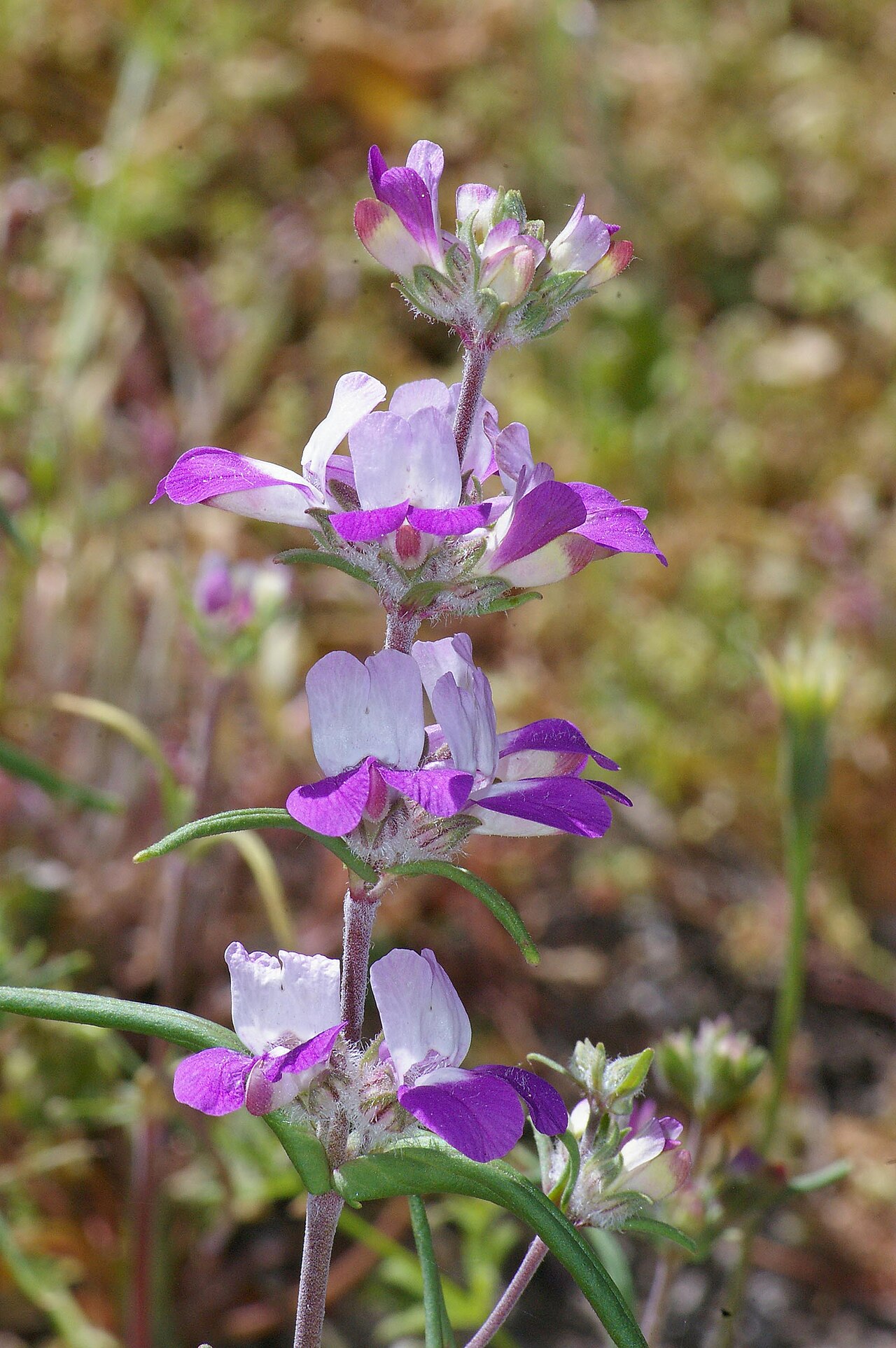
Leaves are opposite, variable in shape (hence the species name heterophylla, meaning “variable-leaved”), ranging from oval and toothed near the base of the plant to narrower and more lance-shaped higher up the stem. Lower leaves are often short-stalked while upper leaves clasp the stem directly. Leaf color is a fresh mid-green, sometimes with a faint reddish cast on the margins.
Flowers
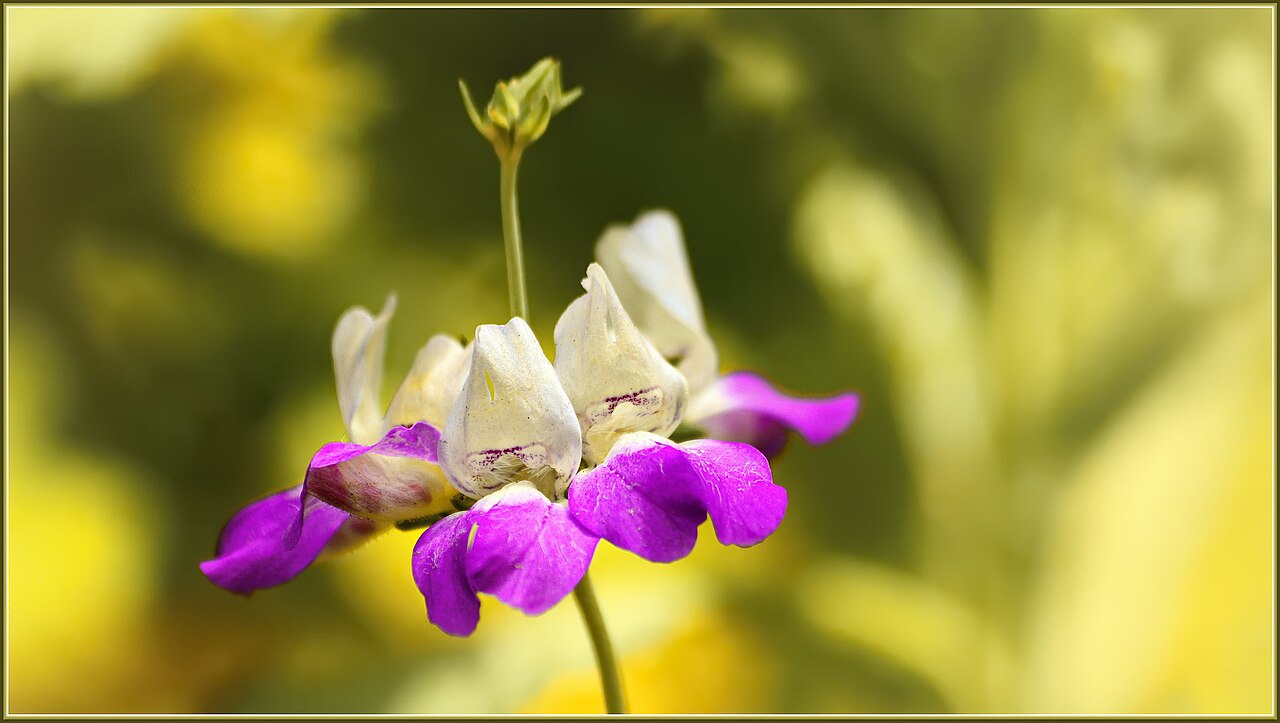
The signature feature of Chinese Houses is its flower arrangement: small, two-lipped, snapdragon-like flowers, each about ½ to ¾ inch (1.3–2 cm) long, are held in whorls of four to several flowers spaced at intervals up the stem. Each flower is strikingly bicolor — typically a white to pale lavender upper lip and a deeper purple to magenta lower lip, though color intensity varies from near-white to deep violet-purple across populations. The stacked whorls bloom from the bottom of the stem upward over several weeks, extending the display considerably. Bloom season runs from March through June depending on elevation and moisture.
Fruit & Seeds
After flowering, each blossom produces a small, dry, two-chambered capsule containing a handful of seeds. Capsules mature and split open by early summer as the plant completes its annual life cycle and dies back, leaving seed to germinate with the following winter’s rains.
Quick Facts
| Scientific Name | Collinsia heterophylla |
| Family | Plantaginaceae (Plantain) |
| Plant Type | Annual Wildflower |
| Mature Height | 8–20 in (20–50 cm) |
| Mature Spread | 8–14 in (20–35 cm) |
| Growth Rate | Fast (annual) |
| Sun Exposure | Part Shade to Full Shade; tolerates some sun with moisture |
| Water Needs | Moderate; benefits from consistent spring moisture |
| Soil Type | Well-drained loam or clay-loam; tolerates a range of soils |
| Soil pH | 6.0–7.5 (slightly acidic to neutral) |
| Bloom Time | March – June |
| Flower Color | White to pale lavender upper lip, purple to magenta lower lip |
| Fall Color | Not applicable (annual, dies back by summer) |
| Fruit | Small dry capsule (not ornamental) |
| Deer Resistant | Somewhat; occasionally browsed |
| USDA Hardiness Zones | Grown as an annual; germinates with winter rains in zones 7–10 |
Native Range
Chinese Houses is native to California, where it occurs in most of the state outside the deserts and high mountains, from the Coast Ranges and Sierra Nevada foothills through the Central Valley margins and into the mountains of Southern California, with its range continuing a short distance south into the Peninsular Ranges of northern Baja California, Mexico.
Within this broad California range, Chinese Houses favors shaded to partly shaded sites with some soil moisture — the understory of oak woodlands, shaded canyon slopes, foothill grasslands under scattered trees, and streamside terraces — generally from near sea level up to about 3,300 feet (1,000 m) elevation. It is a classic companion of Coast Live Oak and Blue Oak woodlands, where it often forms dense colorful drifts on the woodland floor each spring.
The species is common and not considered rare, and because it germinates readily from seed and reliably self-sows, it remains an abundant, easily observed wildflower across much of its native range in a good rain year.
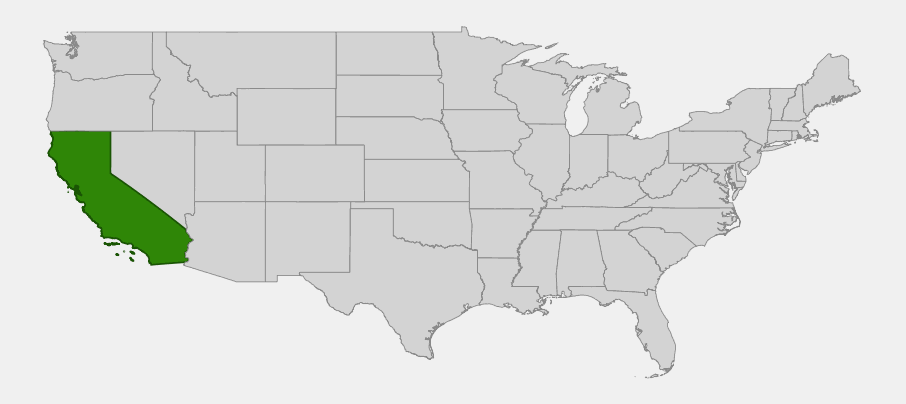
📋 Regional plant lists featuring Chinese Houses: California & Nevada
Growing & Care Guide
Chinese Houses is one of the easiest California native wildflowers to grow from seed, particularly valuable for gardeners looking to add spring color to shaded or partly shaded beds where many sun-loving wildflowers fail.
Light
Part shade to full shade is ideal, especially beneath oaks or other canopy trees, which mimics its natural woodland-floor habitat. It will tolerate more sun if soil moisture is reliably available in spring, but hot, dry, full-sun sites tend to shorten its bloom period and stress the plants.
Soil & Water
Chinese Houses adapts to a range of well-drained soils, from sandy loam to clay-loam, and appreciates consistent moisture through late winter and spring while actively growing and flowering. It does not require summer water, since the plant naturally completes its life cycle and dies back as the dry season begins; in fact, summer irrigation is unnecessary and can promote fungal problems in the dying foliage.
Planting Tips
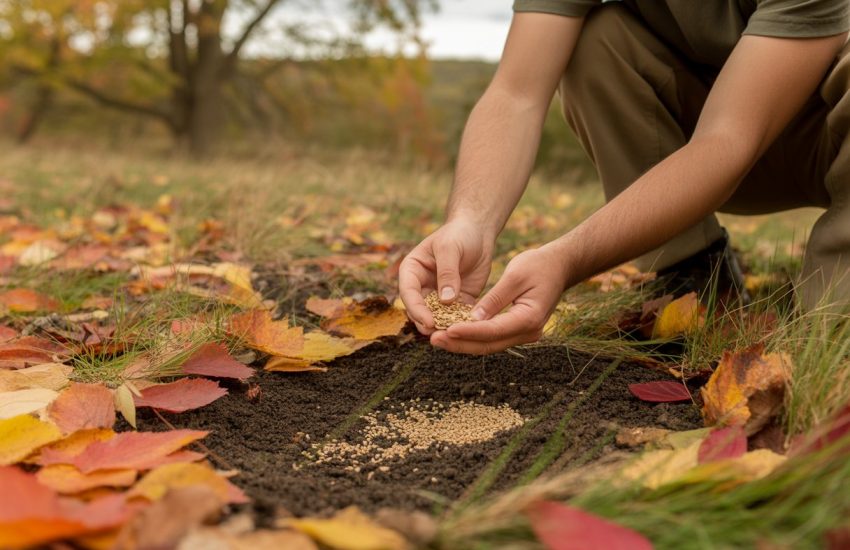
Direct-sow seed in fall, lightly covering it, to take advantage of winter rains for germination — this is by far the easiest and most reliable method. Seeds can also be sown in late winter in mild climates. No stratification is typically needed. Scatter seed generously for a naturalistic drift effect; Chinese Houses looks best in informal masses rather than as isolated specimens.
Pruning & Maintenance
No pruning is needed during the growing season. Once the plant finishes flowering and dies back in early summer, spent plants can simply be left in place to drop seed for next year, or cleared away if a tidier look is preferred — either approach works, since the species self-sows reliably from a light scattering of seed left behind.
Propagation
Propagation is almost always by seed, which Chinese Houses produces abundantly and which germinates readily with fall or winter moisture and cool temperatures. Established plantings typically need no reseeding after the first year or two, as the species maintains itself through natural seed drop.
Landscape Uses
Chinese Houses shines in several garden settings, especially shaded ones:
- Oak woodland understory plantings, where it is naturally at home
- Shaded wildflower meadows and naturalistic drifts
- Pollinator gardens in part-shade locations
- Mixed spring wildflower seed mixes for California gardens
- Woodland garden borders alongside ferns, miner’s lettuce, and other shade natives
Wildlife & Ecological Value
Chinese Houses provides an important early-to-mid spring nectar and pollen source in California’s oak woodlands, at a time when shaded woodland floors can otherwise offer relatively few blooming plants.
For Pollinators
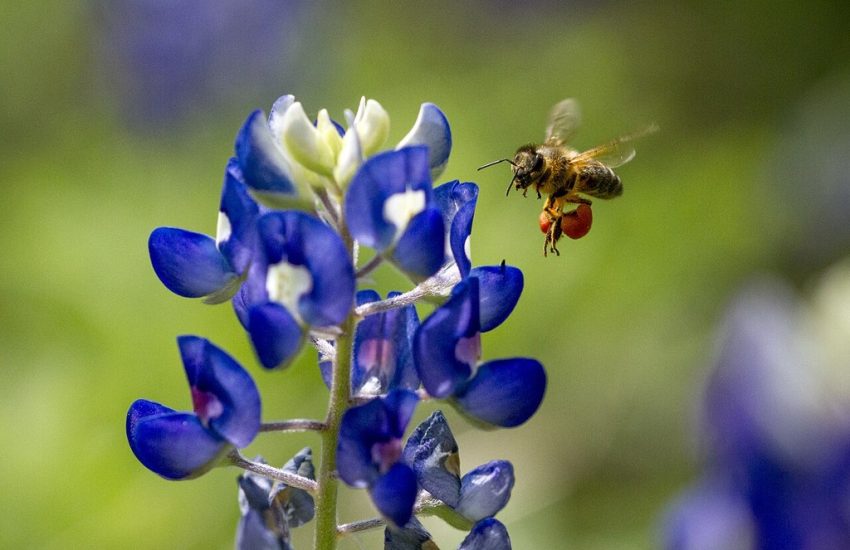
The flowers attract a range of native bees, including bumblebees and smaller solitary bees, which are well suited to accessing nectar within the two-lipped flower structure. Butterflies and other nectar-feeding insects also visit, making dense colonies of Chinese Houses a lively pollinator destination during peak bloom.
For Birds
While not a major bird food plant, the dense low growth habit of Chinese Houses provides some ground-level cover for small birds foraging in the woodland understory, and seed-eating birds may take some of the tiny seeds once capsules mature in early summer.
Ecosystem Role
As a reliable, fast-establishing annual wildflower, Chinese Houses contributes to the diversity and resilience of California’s oak woodland understory community, helping fill the seasonal niche of early-spring-blooming herbaceous plants before shadier summer conditions set in. Its reliable self-sowing habit helps it persist as a stable part of the woodland floor flora year after year.
Cultural & Historical Uses
Chinese Houses has long been admired by California naturalists and wildflower enthusiasts and has been a documented part of California floras since the nineteenth century. Its distinctive whorled, tiered flower arrangement made it a favorite subject for botanical illustration, and the plant’s charming common name — inspired by the resemblance of its flower tiers to pagoda-style rooflines — has been in use for well over a century.
The species has been cultivated in gardens, both in California and internationally, since at least the mid-1800s, valued as an easy, colorful annual for shaded beds. It remains a popular component of California native wildflower seed mixes today, prized by home gardeners and restoration practitioners alike for its reliability and its unusual tolerance of shade among showy native annuals.
There is no significant documented traditional food or medicinal use of Chinese Houses; its historical and cultural value has centered on its ornamental appeal and its role as one of California’s signature spring wildflowers.
Frequently Asked Questions
Why is it called Chinese Houses?
The common name comes from the way the small flowers are arranged in evenly spaced whorls up the stem, each tier flaring outward like the upturned eaves of a traditional pagoda roof, which early observers likened to stacked Chinese houses.
Does Chinese Houses need full sun?
No — unlike many California wildflowers, Chinese Houses actually prefers part shade to full shade, making it one of the best choices for the shadier parts of a native wildflower garden, such as beneath oak trees.
How do I grow Chinese Houses from seed?
Direct-sow seed in fall, scattering it over prepared soil and lightly raking it in. No special pretreatment is usually needed; the seed will germinate with the first good winter rains and bloom the following spring.
Will Chinese Houses come back every year?
It is an annual, so individual plants complete their life cycle and die within one growing season, but established plantings reliably self-sow and return from seed year after year as long as the site is not heavily disturbed or overwatered in summer.
Is Chinese Houses toxic or edible?
No significant toxicity is documented, but it is not known as a food plant and should not be eaten; its value is entirely ornamental and as a pollinator-support wildflower.

Looking for a nursery that carries Chinese Houses?
Browse our native plant nursery directory: California