Spiny Hopsage (Grayia spinosa)
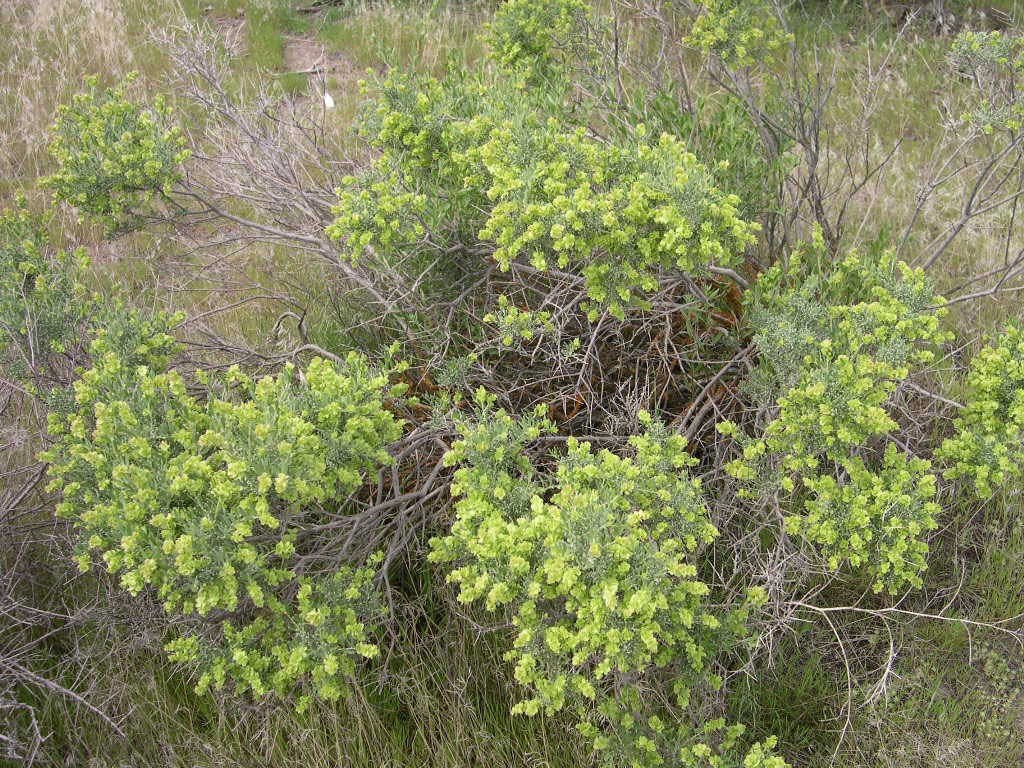
Grayia spinosa, commonly known as Spiny Hopsage, is a rounded, spine-tipped desert shrub of the Great Basin and the cold deserts of the interior West. A member of the Amaranthaceae (the amaranth and goosefoot family), it is one of the earliest shrubs to green up each spring, flushing out bright yellow-green foliage and flowers while most of its sagebrush-steppe neighbors are still dormant. That early burst of color, followed in late spring by the shrub’s most distinctive feature — dense clusters of papery, rose-pink to magenta winged fruiting bracts on female plants — makes spiny hopsage one of the most visually striking shrubs of its season in an otherwise muted desert landscape.
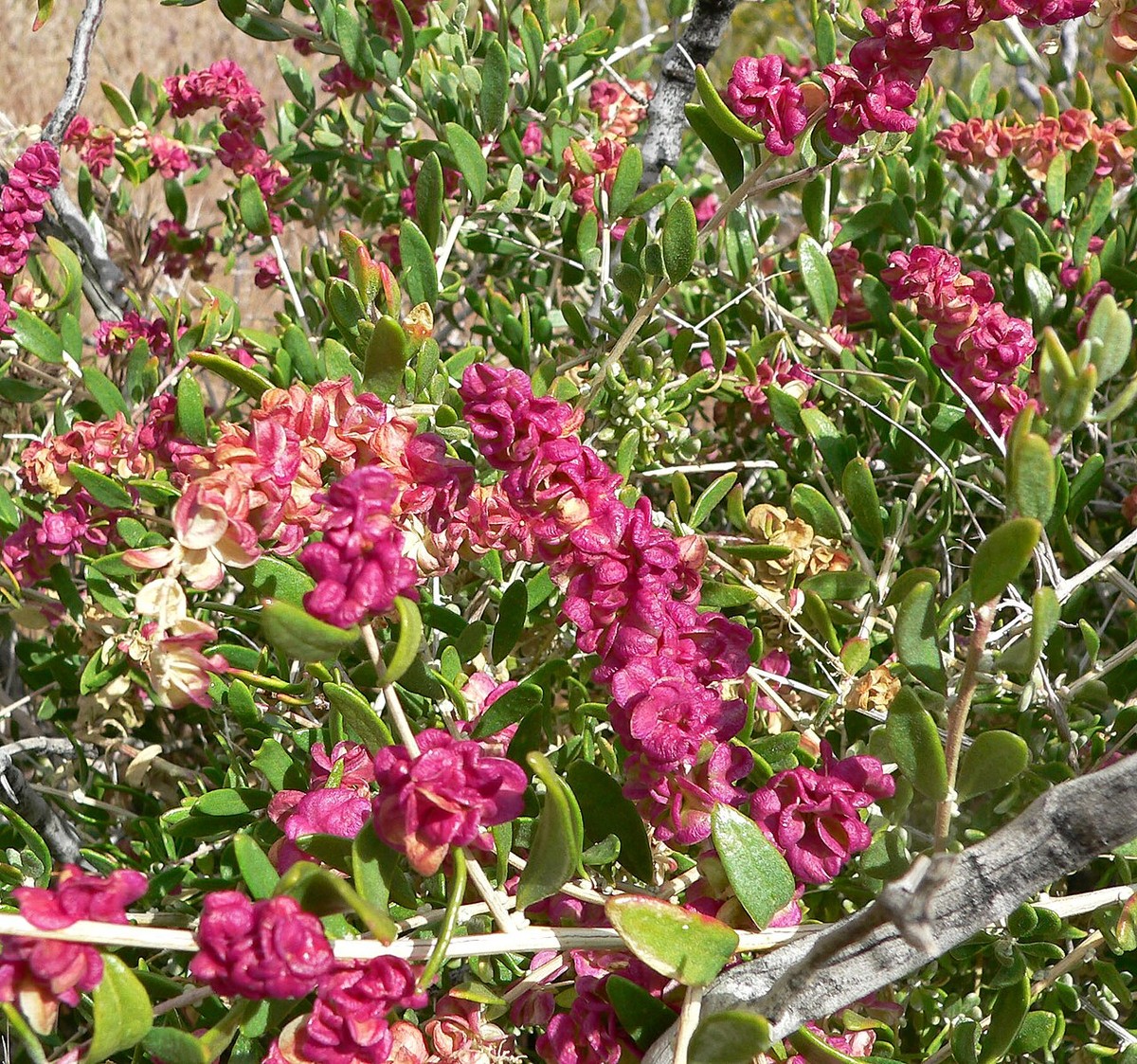
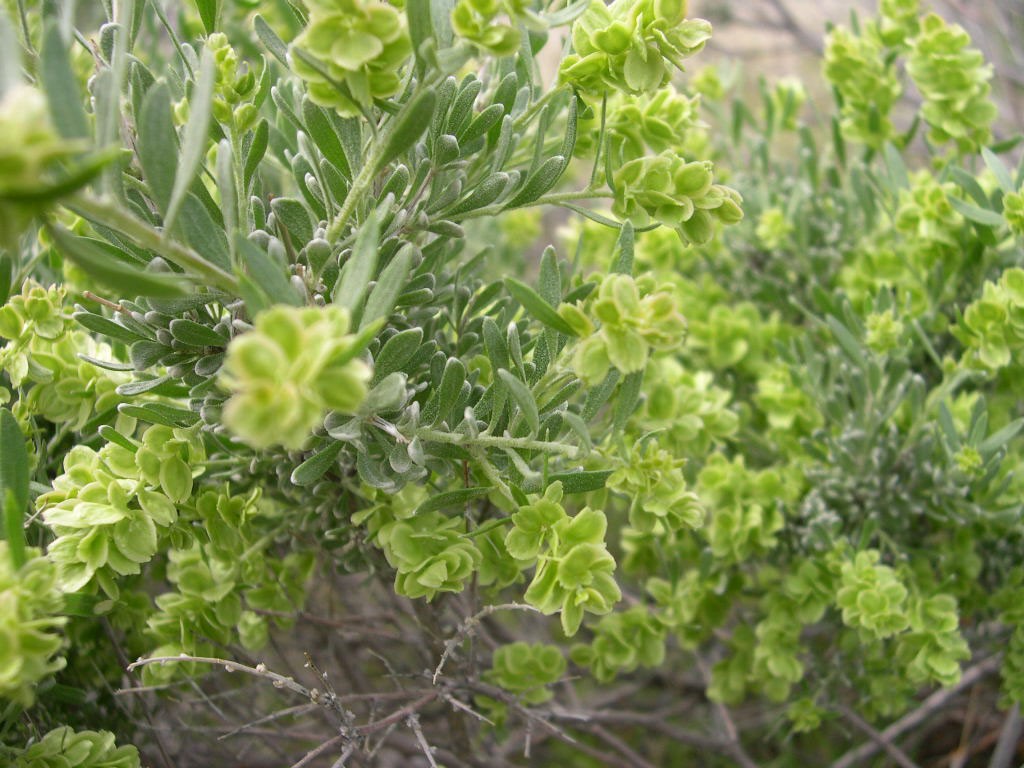
Spiny hopsage forms a rounded, densely branched shrub typically 1 to 3 feet tall, with rigid, spine-tipped twigs beneath its soft early foliage. Like many of its saltbush relatives it is dioecious, with separate male and female plants, and only the females produce the showy pink bracts that give the species its “hopsage” name — an allusion to the way the papery, hop-like clusters resemble the fruit of true hops. By midsummer the foliage drops and the plant takes on a gray, spiny, deciduous-looking aspect that is easy to overlook for the rest of the year.
For gardeners in the Great Basin and intermountain West, spiny hopsage is a valuable, low-water native for high-desert and xeriscape plantings, prized both for its brief but brilliant spring display and for its importance as wildlife forage. It is not a plant for humid or heavily irrigated gardens, but in the dry climates where it belongs, it is an easy, long-lived, and ecologically significant shrub.
Identification
Spiny hopsage grows as a rounded, intricately branched shrub, usually 1 to 3 feet tall and similar in spread, with numerous rigid branches ending in short, sharp spines. The overall form is dense and twiggy, becoming more open and gray after the deciduous summer leaf drop.
Leaves
The leaves are small, fleshy, and narrowly oblong to spoon-shaped, usually under 1 inch long, with smooth margins. They emerge bright yellow-green in early spring, among the first color to appear in the cold-desert shrub-steppe, and are shed by mid to late summer as the plant enters a leafless, dormant phase for the rest of the growing season.
Flowers & Fruit
Spiny hopsage is dioecious, with male and female flowers on separate plants. The inconspicuous, petal-less flowers appear in spring in small clusters along the branches. Male plants produce only small yellowish flower clusters, but female plants develop the species’ signature feature: dense clusters of flattened, papery, winged bracts enclosing the seed, which turn a vivid rose-pink to magenta as they mature in late spring before fading to tan and persisting into summer. These colorful fruiting clusters are the easiest and most reliable way to identify the species at a distance.
Quick Facts
| Scientific Name | Grayia spinosa (syn. Atriplex spinosa) |
| Family | Amaranthaceae (Amaranth/Saltbush) |
| Plant Type | Deciduous (drought-deciduous) spiny shrub |
| Mature Height | 1–3 ft (occasionally to 4 ft) |
| Mature Spread | 1–3 ft, rounded form |
| Growth Rate | Slow to moderate |
| Sun Exposure | Full Sun |
| Water Needs | Very low; highly drought tolerant |
| Soil Type | Sandy, gravelly or alkaline desert soils |
| Soil pH | Neutral to alkaline |
| Bloom Time | March – May |
| Flower Color | Yellow-green flowers; rose-pink to magenta female fruiting bracts |
| Fall Color | None (leafless by late summer) |
| Fruit | Papery pink to tan winged bracts, spring–summer |
| Deer Resistant | No (important browse for deer, pronghorn and livestock) |
| USDA Hardiness Zones | 4–8 |
Native Range
Spiny hopsage is native across the Great Basin and the cold deserts of the interior West, from eastern California, central and eastern Washington, and eastern Oregon through Nevada, Idaho, Utah, western Wyoming, and western Montana. It is most abundant and characteristic in the sagebrush-steppe and salt-desert shrub communities of Nevada and Utah.
Across this range, spiny hopsage typically grows on dry, sandy, gravelly, or alkaline flats and slopes between roughly 2,000 and 7,000 feet in elevation, often alongside big sagebrush, shadscale, and other saltbushes. It tolerates soils too dry and alkaline for many associated shrubs, and it is frequently one of the first species to colonize disturbed desert ground.
Because of its drought tolerance and early-season nutritional value, spiny hopsage is considered a desirable rangeland shrub throughout its range, and healthy stands are often used by land managers as an indicator of good-quality salt-desert and sagebrush-steppe habitat.
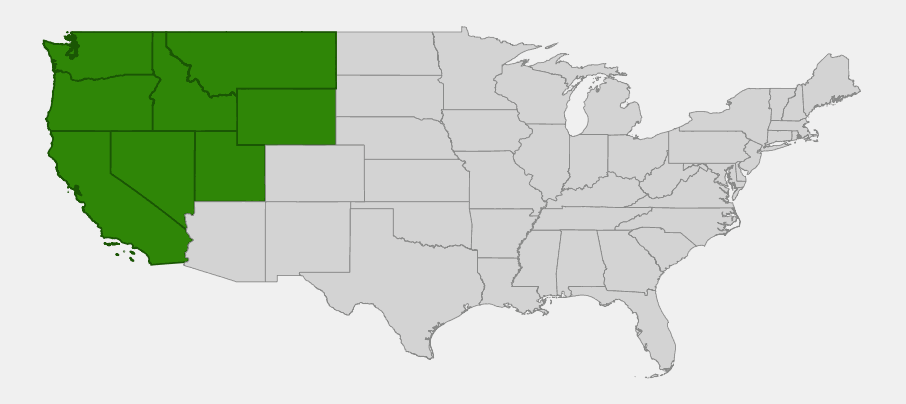
📋 Regional plant lists featuring Spiny Hopsage: California & Nevada · Idaho, Eastern Oregon & Eastern Washington · Utah & Western Colorado · Montana & Wyoming
Growing & Care Guide
Spiny hopsage is an easy, low-care shrub for gardeners working within its dry, cold-desert native climate. It rewards lean, well-drained conditions and needs very little once established.
Light
Give spiny hopsage full sun. It grows naturally on open flats and slopes with no shade cover, and full sun is essential for the dense, compact form and the best spring color.
Soil & Water
Plant in sandy, gravelly, or alkaline soil with excellent drainage; the species is naturally suited to the lean, low-organic-matter soils of the salt-desert shrub zone. Once established, spiny hopsage needs no supplemental irrigation and performs poorly, with a tendency toward root rot, in rich or regularly watered garden soil. Water new plants modestly through their first season only.
Planting Tips
Set out container-grown plants in fall or very early spring so they can establish a deep root system before summer heat. Because spiny hopsage is dioecious, only female plants produce the showy pink fruiting bracts; if that seasonal display is a priority, confirm with the nursery whether plants are known to be female, or plant several individuals to increase the odds. Avoid crowding, since the spiny branches benefit from room to form their natural rounded shape.
Pruning & Maintenance
Spiny hopsage needs little pruning. Remove dead wood in late winter if desired, but otherwise let the plant keep its naturally dense, rounded, spiny form. It has few pest or disease problems in appropriate dry soils and does not need fertilizer. Because the plant drops its leaves by mid- to late summer, don’t mistake the leafless, gray, spiny summer appearance for a dead or struggling plant — this is normal drought-deciduous behavior.
Landscape Uses
- High-desert and xeriscape gardens for early-spring color and low water use
- Wildlife habitat plantings for forage and cover
- Rangeland and restoration seeding on disturbed alkaline or sandy soils
- Rock gardens in cold, dry climates
- Barrier or informal hedge plantings, taking advantage of the spiny branches
- Erosion control on dry slopes and disturbed desert ground
Wildlife & Ecological Value
Spiny hopsage plays an outsized ecological role for its modest size, offering some of the most nutritious early-season forage in the cold-desert shrub-steppe.
For Pollinators
Like other members of the amaranth/saltbush family, spiny hopsage is wind-pollinated and offers little nectar, but its early, abundant spring growth provides cover and habitat structure for insects active before most other desert plants have leafed out.
For Birds
Sage-grouse and other ground-nesting, sagebrush-associated birds use spiny hopsage stands for cover alongside sagebrush, and seed-eating birds forage on the dried fruiting bracts and seeds later in the season.
For Mammals
Spiny hopsage is considered one of the most valuable browse shrubs in the Great Basin, prized especially for its highly nutritious, high-protein spring foliage, which appears earlier than most other forage and is heavily used by mule deer, pronghorn, and domestic livestock, particularly sheep and cattle on winter and spring range. Its forage value declines after the leaves drop in summer, making the spring growth period especially important to browsing wildlife.
Ecosystem Role
As an early colonizer of disturbed, sandy, and alkaline ground, spiny hopsage helps stabilize soil on sites too harsh for many other shrubs, and its nitrogen-rich spring foliage contributes nutrients back to desert soils as it decomposes. Healthy stands of spiny hopsage are often used as an indicator of good-condition salt-desert shrub rangeland.
Cultural & Historical Uses
Spiny hopsage has long been valued by ranchers across the Great Basin as an exceptionally nutritious spring and early-summer browse plant, particularly for sheep, and its early green-up made it an important indicator of range readiness in traditional grazing management. The common name “hopsage” reflects the resemblance of its papery, clustered fruiting bracts to the fruit of true hops, though the species is unrelated to hops botanically.
Documented traditional uses by Indigenous peoples of the Great Basin are limited in available records, though the species would have been a recognizable, seasonally conspicuous part of the high-desert landscape used by Northern Paiute, Shoshone, and other peoples of the region for subsistence and travel across the sagebrush-steppe.
Today spiny hopsage remains primarily significant as a rangeland and restoration species, widely seeded in revegetation projects on disturbed or burned salt-desert shrub and sagebrush-steppe sites across the interior West.
Frequently Asked Questions
Why does my spiny hopsage lose its leaves in summer?
This is normal. Spiny hopsage is drought-deciduous, flushing out bright yellow-green leaves in early spring and dropping them by mid- to late summer as soil moisture declines. The leafless, gray, spiny summer form is a healthy dormancy response, not a sign of a dying plant.
Why are some spiny hopsage plants pink and others not?
Spiny hopsage is dioecious, meaning individual plants are either male or female. Only female plants develop the showy rose-pink to magenta winged fruiting bracts in late spring; male plants produce only small, inconspicuous yellow-green flower clusters.
Is spiny hopsage related to hops?
No. The name comes only from the visual resemblance of its papery, clustered fruiting bracts to hop cones. Botanically, spiny hopsage belongs to the amaranth/saltbush family, while true hops are in the hemp family.
Are the spines on spiny hopsage dangerous?
The spine-tipped branches can scratch or snag clothing and skin, so it is worth planting away from paths, but they are not toxic or otherwise hazardous. Many gardeners actually use the spiny structure to their advantage as an informal barrier planting.
Can spiny hopsage grow outside the Great Basin?
It can succeed in other cold, dry, sunny climates with sharp drainage, but it is a poor fit for humid regions or heavy, poorly drained soils regardless of climate zone, since excess moisture is its main limiting factor in cultivation.

Looking for a nursery that carries Spiny Hopsage?
Browse our native plant nursery directory: California · Nevada · Oregon · Washington · Idaho · Utah · Wyoming · Montana