Muskflower (Mimulus moschatus)
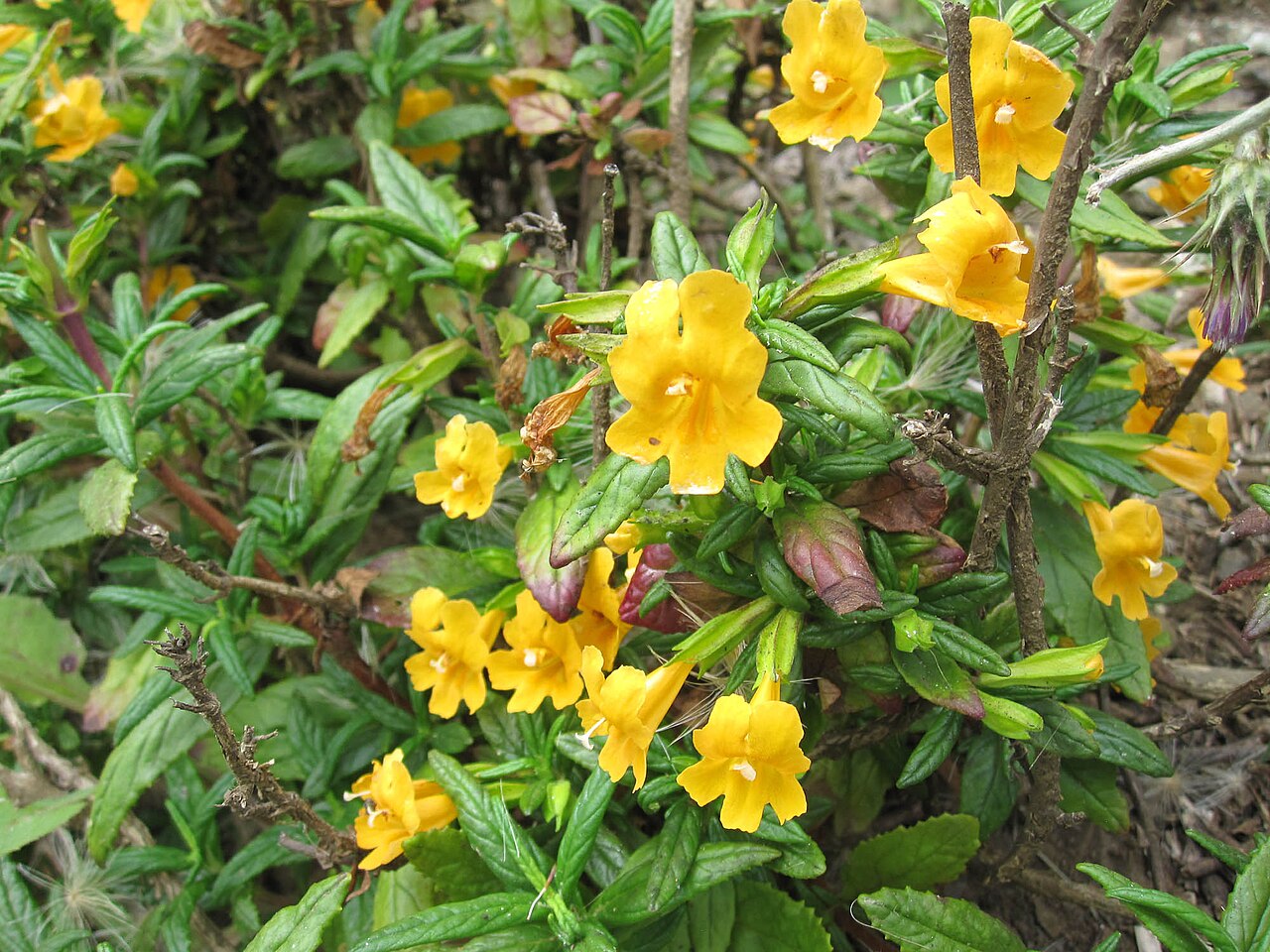
Mimulus moschatus, the Muskflower or Musk Monkeyflower, is a low, sprawling perennial wildflower native to wet, shaded seeps, springs, and streambanks across the mountains and coastal ranges of western North America. First collected by the botanist David Douglas along the Columbia River in the 1820s, the plant became a Victorian houseplant sensation for its strongly musky fragrance — a scent that, in one of botany’s odder footnotes, mysteriously and almost completely disappeared from cultivated stock worldwide in the early 20th century, a change scientists still don’t fully explain.
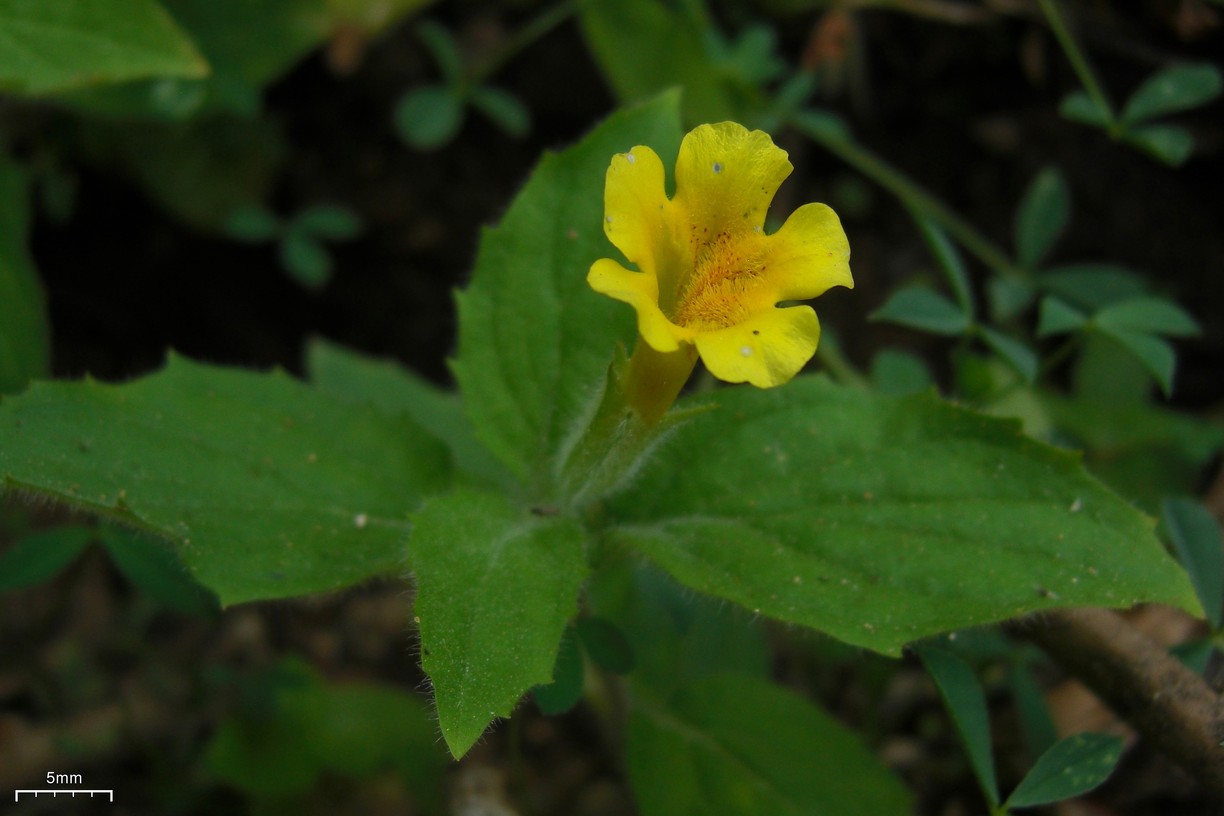
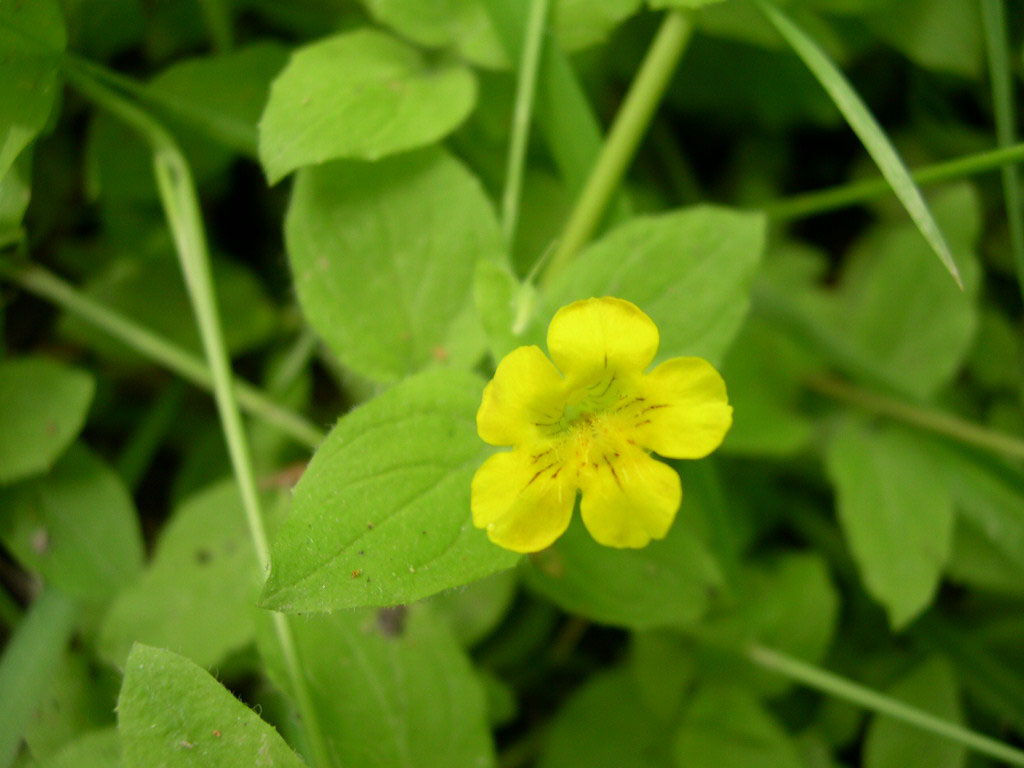
In the wild, Muskflower is a modest but charming plant: soft, hairy foliage with a faintly sticky, musky smell, and small, bright yellow, snapdragon-like flowers dotted with fine reddish freckles in the throat. It spreads by creeping, rooting stems to form loose mats in the saturated soil of seeps and streambanks, often alongside mosses and other obligate wetland species.
For gardeners in the Pacific states and the Northern Rockies with a shaded, perpetually damp spot — the edge of a spring, a shaded bog garden, or a container kept consistently wet — Muskflower is an easy, low-growing native that fills in quickly and blooms over a long season. It is not a plant for dry beds or sunny borders; give it the wet shade it wants and it asks for little else.
Identification
Muskflower is a low, spreading to sprawling herbaceous perennial, usually only 4 to 12 inches tall but spreading several feet wide via creeping stems that root at the nodes.
Stems
Stems are weak, often prostrate or decumbent, rooting readily where they touch moist soil. They are covered in soft, glandular hairs that give the whole plant a faintly sticky texture and a musky scent when crushed, especially noticeable in warm weather.
Leaves
Leaves are opposite, oval to broadly lance-shaped, 1 to 2 inches long, with shallowly toothed margins and a covering of soft hairs on both surfaces. Leaf veins are prominent, and the foliage has a slightly rough, matte texture distinct from the smoother leaves of many other monkeyflowers.
Flowers
Flowers arise singly from the leaf axils on short stalks. The corolla is tubular at the base and opens into five rounded, slightly unequal lobes in the classic snapdragon-like monkeyflower shape, roughly ¾ to 1¼ inches across. Color is clear yellow, with the throat marked by fine reddish-brown dots or lines that serve as nectar guides for visiting insects. Bloom runs from late spring through summer, often into early fall in reliably wet sites.
Fruit & Seeds
Flowers are followed by small, narrow, two-chambered capsules containing numerous tiny seeds. Because the plant also spreads vegetatively by rooting stems, a single patch can expand and persist for years even where seed production is limited.
Quick Facts
| Scientific Name | Mimulus moschatus |
| Family | Phrymaceae (Figwort/Lopseed) |
| Plant Type | Herbaceous Perennial Wildflower |
| Mature Height | 4–12 in |
| Mature Spread | 1–3 ft (spreads by rooting stems into mats) |
| Growth Rate | Fast in wet conditions |
| Sun Exposure | Part Shade to Full Shade |
| Water Needs | High; requires consistently saturated soil |
| Soil Type | Wet, mucky soils of seeps, springs and streambanks |
| Soil pH | 6.0–7.0 (neutral to slightly acidic) |
| Bloom Time | Late spring – early fall |
| Flower Color | Yellow with reddish throat speckling |
| Fall Color | None notable; foliage dies back |
| Fruit | Small two-chambered seed capsule |
| Deer Resistant | Moderate |
| USDA Hardiness Zones | 4–9 |
Native Range
Muskflower is native to the mountains and coastal ranges of western North America, from Washington and Oregon south through California and east into Idaho, Montana, Wyoming, and Utah. Within this range it follows the distribution of reliably wet, shaded seeps and springs rather than any single climate zone, so its presence is patchy and tied closely to water.
Although this species has also been found growing in parts of eastern North America, botanists and regional floras there have long disagreed about whether those populations are truly native or represent plants that escaped cultivation after the species’ 19th-century popularity as a houseplant; this page follows the consensus treatment of Muskflower as native only to its western mountain and coastal range.
Typical habitat includes the saturated soil directly alongside springs, seeps, and small streams, often in part shade to full shade beneath a broken forest canopy, from low valleys up into subalpine meadows. It is frequently found growing with mosses, sedges, and other obligate wetland plants in places where groundwater reaches the surface year-round.
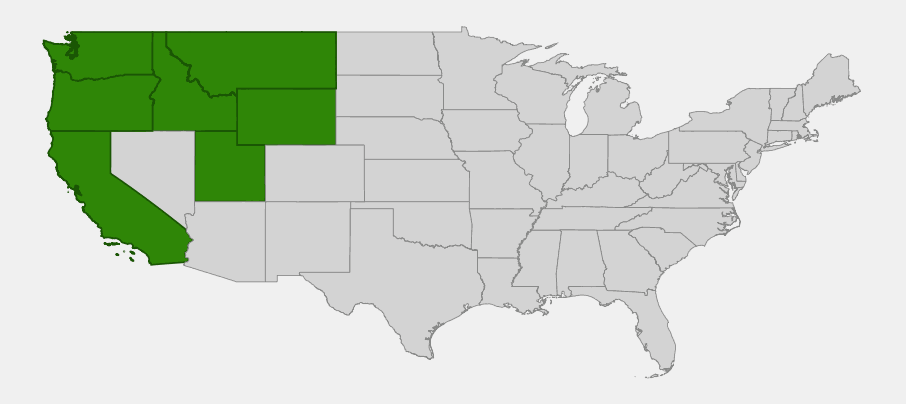
📋 Regional plant lists featuring Muskflower: Idaho, Eastern Oregon & Eastern Washington · Western Oregon & Western Washington · Montana & Wyoming · Utah & Western Colorado
Growing & Care Guide
Muskflower is undemanding as long as its one essential requirement is met: soil that never dries out. Give it a permanently wet, shaded spot and it will spread happily with almost no further attention.
Light
Part shade to full shade suits this species best, mimicking the broken canopy of the forested seeps and streambanks where it grows naturally. It can tolerate more sun in consistently cool, wet sites, such as near the coast, but inland gardens should keep it shaded to prevent the thin foliage from wilting in the heat.
Soil & Water
This is a true wet-soil specialist. Muskflower wants soil that is saturated or very nearly so at all times — the muddy margin of a spring, the edge of a shaded pond, or a consistently moist container garden. It does not tolerate drought even briefly; soil that dries out for more than a day or two in warm weather will quickly stress or kill the plant.
Planting Tips
Plant container stock in spring directly into saturated soil, spacing plants 8 to 12 inches apart to allow the creeping stems to knit together into a mat. A shaded spring box, the margin of a garden pond, or a bog garden kept wet by a slow drip are all good settings. Avoid planting where soil moisture fluctuates seasonally.
Pruning & Maintenance
Little maintenance is required beyond occasionally thinning dense mats if growth becomes congested. Cut back spent growth in fall; new growth emerges readily from the rooted stems the following spring.
Propagation
Muskflower is easiest to propagate by dividing rooted stem sections in spring and replanting them directly into wet soil, where they establish quickly. Seed can also be surface-sown onto saturated, bare soil, though division is the more reliable method for home gardeners.
Landscape Uses
- Shaded bog gardens and spring boxes
- Pond and stream margins in shade
- Wet container plantings kept consistently saturated
- Wetland and spring restoration projects in its native range
- Groundcover for permanently damp shaded ground where turf won’t grow
Wildlife & Ecological Value
Though a modest plant underfoot, Muskflower contributes to the small but important web of life around the springs and seeps it calls home.
For Pollinators
The tubular yellow flowers, marked with nectar-guide speckling, attract small native bees and other insects that work the cool, shaded microhabitats where this species grows. Because many wet-shade sites have fewer blooming plants overall, Muskflower provides a locally valuable nectar source through much of the growing season.
For Birds
Small songbirds foraging in moist understory habitat may take seeds from the capsules, and the dense mats provide minor cover for insects that birds in turn feed on.
For Mammals
Browsing pressure is generally light; the soft, musky-scented foliage is not a preferred forage for deer or elk, though it may be incidentally grazed in wet meadow habitat.
Ecosystem Role
As an obligate wetland species, Muskflower is a reliable indicator of permanent groundwater discharge at seeps and springs. Its mat-forming, rooting growth habit helps stabilize saturated soil at these sensitive spring and streambank sites, reducing erosion in places where the ground is otherwise easily disturbed.
Cultural & Historical Uses
Muskflower holds a genuinely unusual place in horticultural history. After its discovery by Scottish botanist David Douglas along the Columbia River in the 1820s, the plant was brought into cultivation in Britain and quickly became a popular Victorian houseplant, prized specifically for the strong, musky fragrance of its foliage — musk was a fashionable scent note at the time, and a houseplant that produced it naturally was a novelty.
Then, in a phenomenon documented by botanists and gardeners across Europe and North America in the early 20th century, cultivated Muskflower plants lost their characteristic scent almost entirely, and within a few decades scentless stock had effectively replaced the fragrant form in cultivation worldwide. The cause has never been fully resolved; proposed explanations range from a spontaneous genetic mutation that spread through vegetatively propagated stock to subtler environmental or physiological factors, and the “lost fragrance of musk” remains a well-known minor mystery in botanical history.
Beyond this curious chapter, Muskflower has no significant documented history of medicinal or culinary use; its interest has always been primarily horticultural and, for a brief period, aromatic.
Frequently Asked Questions
Why is it called Muskflower if it doesn’t smell musky?
Wild populations and some garden stock still carry the musky scent the plant was named for, but most cultivated plants descend from stock that lost the fragrance in a widely documented early-20th-century change. The name persisted even as the scent largely disappeared from gardens.
Is Muskflower native to the eastern United States?
No. Botanists disagree about scattered historical eastern occurrences, which are generally considered garden escapes from its 19th-century popularity as a houseplant rather than a natural native range. Its confirmed native range is the mountains and coastal ranges of the western United States and British Columbia.
How wet does the soil need to be for Muskflower?
Very wet, essentially saturated at all times. This is one of the more water-demanding native wildflowers available; even brief drying out can stress or kill the plant, so it is best reserved for spring boxes, bog gardens, or pond margins rather than typical garden beds.
Will Muskflower spread aggressively?
It spreads readily by rooting stems in consistently wet soil, forming dense mats, but it stays confined to saturated ground and will not spread into drier parts of a garden. In the right wet spot it is a vigorous, reliable groundcover rather than a problem plant.
Can Muskflower grow in full sun?
It is best suited to part or full shade. It can tolerate more sun in cool, consistently wet coastal sites, but in most inland gardens, shade helps prevent the thin leaves from wilting and keeps the soil from drying between waterings.

Looking for a nursery that carries Muskflower?
Browse our native plant nursery directory: Idaho to Kansas · Oregon · Washington · California · Kentucky to Montana · West Virginia to Wyoming · Pennsylvania to Virginia