
Elk Thistle (Cirsium scariosum)
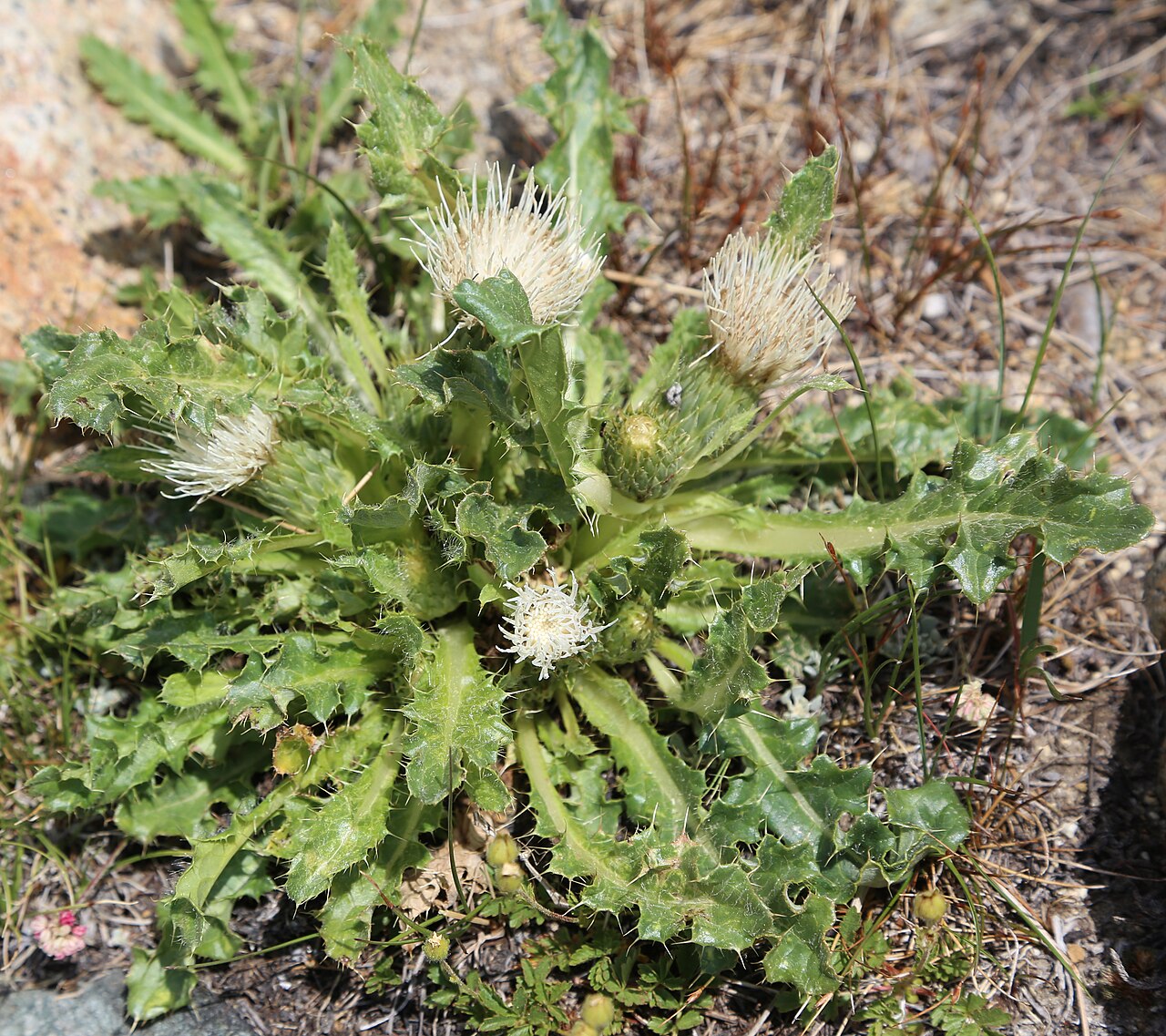
Cirsium scariosum, known as Elk Thistle, meadow thistle (the USDA name) or Everts thistle, is a native thistle of mountain meadows, streambanks and sagebrush openings across the western United States and southwestern Canada. Unlike the weedy thistles introduced from Europe, it is a valued part of western plant communities, and it is not a noxious weed.
Elk thistle is famous for its variable form. Many plants are stemless, forming a flat rosette of spiny, wavy leaves up to 2 or 3 feet across, with a tight cluster of white, cream, pink or pale purple flower heads sitting right in the middle. Others send up a thick, leafy stem 1 to 3 feet tall or more, crowded with heads at the top. Botanists recognize a number of varieties across its range, and plants were once lumped with the related Cirsium foliosum and Cirsium drummondii.
Its flower heads are rich in nectar and pollen and are busy with bumble bees in summer, and its seeds feed goldfinches and other birds. The thick taproot was eaten by Native peoples and, famously, by a lost explorer in Yellowstone. This guide covers how to identify it, where it grows, how to grow it and its value to wildlife.
Identification
Elk thistle is the native thistle most often found as a flat, stemless rosette with flowers in the center. Taller forms are best identified by their crowded heads, pale flowers and the leafy bracts surrounding the cluster.
Growth Habit
Elk thistle is a biennial or short-lived perennial that grows from a thick, fleshy taproot. It spends one or more years as a rosette of leaves and dies after it flowers and sets seed. Flowering plants may be completely stemless, with heads nestled among the leaves at ground level, or they may produce a stout, unbranched, leafy stem 1 to 3 feet tall, occasionally taller. Both forms can occur in the same region.
Leaves
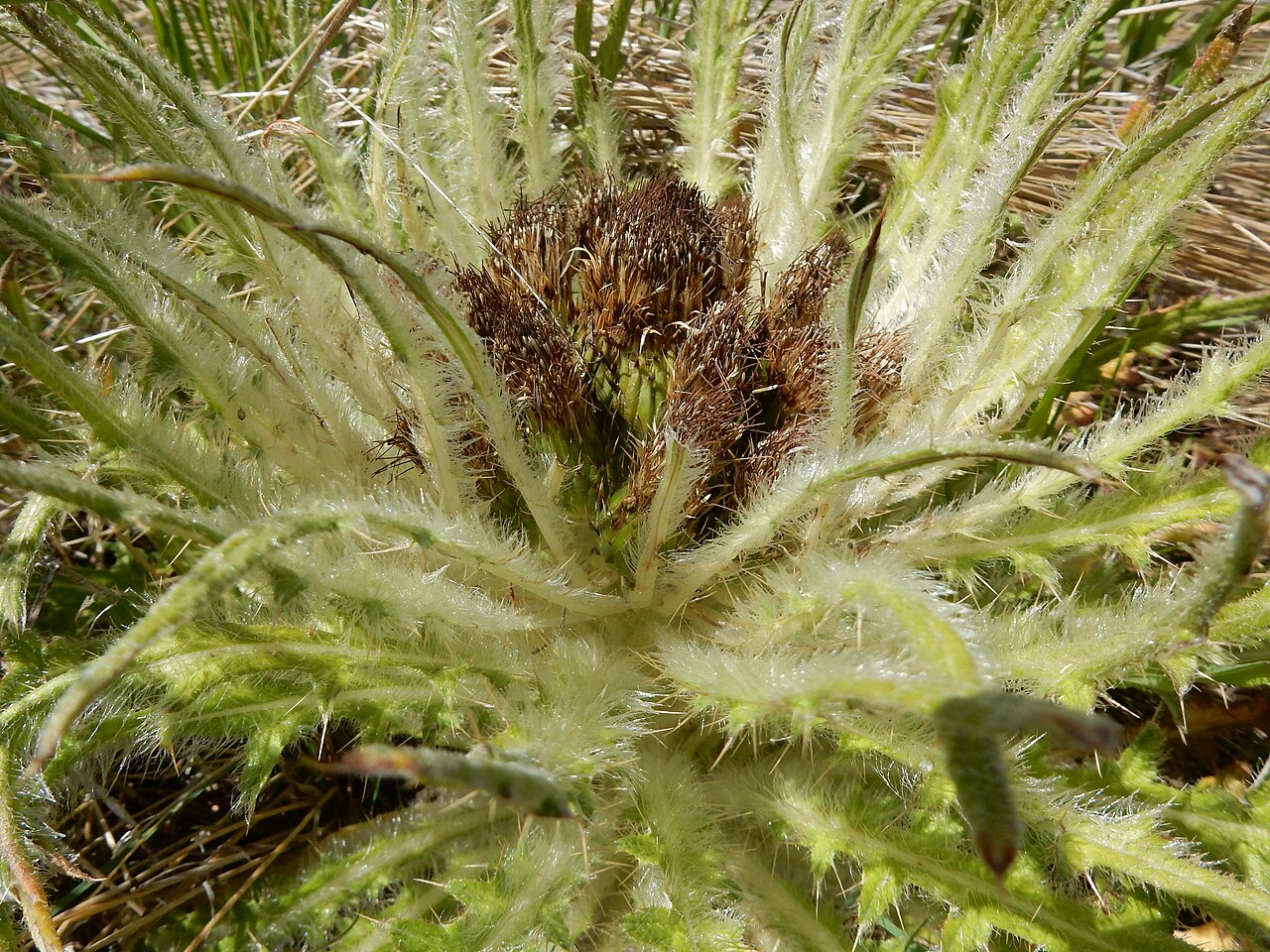
The leaves are long and narrow to oblong, often a foot or more long, with wavy, shallowly to deeply lobed margins tipped with yellowish spines. They are green above and range from nearly smooth to covered with cobwebby or long, soft hairs, depending on the variety. On stemmed plants, the upper leaves are crowded just below the flower heads and often surround them like a collar.
Flowers
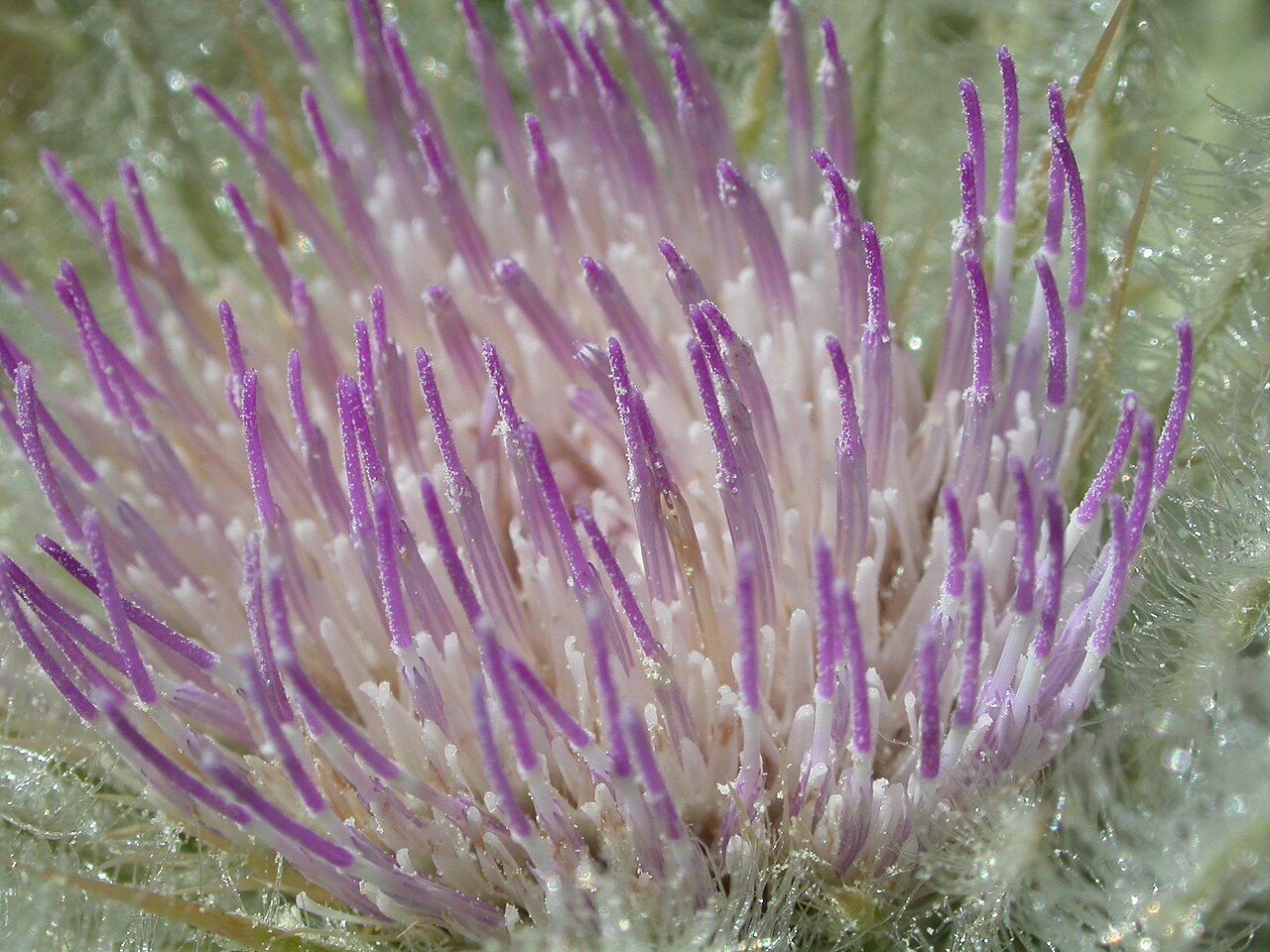
The flower heads are about 1 to 2 inches long and are tightly clustered, either at the top of the stem or at the center of the rosette. The florets range from white and cream to pink or pale lavender. The bracts around each head are narrow, often with a spiny tip, and in some varieties they have papery (scarious) edges, which gave the species its name. Bloom time is mainly June to September.
Fruit & Seeds
Each head produces many smooth, brownish achenes topped with a fluffy, feathery pappus that carries them on the wind in late summer and fall.
Look-alikes
Wavyleaf thistle (Cirsium undulatum) has gray-woolly leaves and fewer, larger, usually pink-purple heads on branched stems. Cobwebby thistle is covered in white cobwebby hairs. The introduced bull thistle (Cirsium vulgare) has very spiny winged stems and deep purple heads, and Canada thistle (Cirsium arvense) spreads by creeping roots and has many small purple heads. Elk thistle has neither spiny winged stems nor creeping roots.
Quick Facts
| Scientific Name | Cirsium scariosum Nutt. |
| Family | Asteraceae (sunflower family) |
| Plant Type | Biennial or short-lived perennial from a thick taproot; dies after flowering |
| Mature Height | Stemless to about 3 ft (occasionally taller) |
| Mature Spread | 1–3 ft |
| Growth Rate | Moderate |
| Sun Exposure | Full sun to light shade |
| Water Needs | Moderate; moist in spring and early summer |
| Soil Type | Moist meadow loams, streambanks, gravelly or rocky soils |
| Soil pH | About 6.0–8.0 |
| Bloom Time | June–September |
| Flower Color | White, cream, pink or pale purple |
| Fall Color | None; flowering plants die after seeding |
| Fruit | Achenes with a feathery, white pappus |
| Deer Resistant | Spiny, but browsed by elk, deer and livestock at times |
| USDA Hardiness Zones | 3–8 |
Native Range
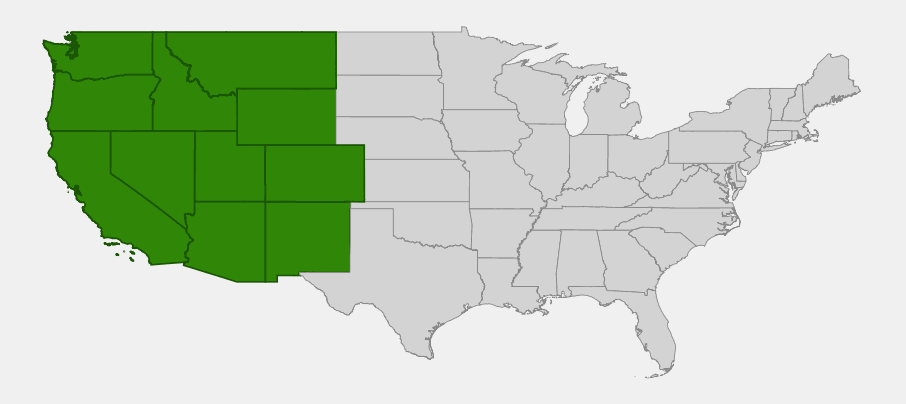
Elk thistle is native to the mountains and high valleys of the western United States and Canada. USDA PLANTS lists it in Arizona, California, Colorado, Idaho, Montana, Nevada, New Mexico, Oregon, Utah, Washington and Wyoming, and in Canada it grows in Alberta and British Columbia. A disjunct population on the Mingan Islands in the Gulf of St. Lawrence, Quebec, once called the Mingan thistle, is also included in this species.
It is most common in the Rocky Mountains, the Great Basin ranges, the Sierra Nevada and the mountains of eastern Oregon. In Oregon and Washington it grows mainly east of the Cascades, including the Klamath Basin and the Blue Mountains. Several regional varieties occur, from small stemless alpine forms in the Sierra Nevada and White Mountains to tall, leafy plants in moist valleys. The La Graciosa thistle of the central California coast, treated by some botanists as a variety of this species (var. loncholepis) and by others as a separate species, is federally listed as endangered.
Typical habitats are moist mountain meadows, streambanks, springs and seeps, sagebrush steppe, aspen groves and openings in conifer forest, from mid-elevation valleys up to the alpine zone.
📋 Regional plant lists featuring Elk Thistle: Idaho, Eastern Oregon & Eastern Washington · Montana & Wyoming · Utah & Western Colorado · Arizona & New Mexico · California & Nevada
Growing & Care Guide
Elk thistle is rarely sold, but it can be grown from seed in native meadow and wildlife gardens in the West, especially at higher elevations. It is not invasive like the European thistles: it does not spread by roots, and each plant dies after it flowers.
Light
Grow it in full sun or light shade. In the wild it grows in open meadows and sagebrush, and at the edges of aspen and conifer groves.
Soil & Water
It prefers deep, moist loam that stays damp through spring and early summer, but it also grows in drier gravelly soils in sagebrush. Water young rosettes during dry spells in their first season. Established plants rely on their taproot and need little care.
Planting Tips
Sow seed where you want the plants, since the taproot makes transplanting difficult. Place it in a meadow planting, a moist swale or a wildlife garden away from paths, where its spiny leaves will not be in the way. Because each plant dies after flowering, let some seed ripen so new rosettes replace the old ones.
Pruning & Maintenance
No pruning is needed. Wear gloves when handling it. Leave seed heads standing for goldfinches, then remove the dead stalks in fall or winter if you wish. Do not spray it with herbicides aimed at weedy thistles; learn to tell it apart from bull thistle and Canada thistle.
Propagation
Grow it from seed. Collect seed heads as the pappus begins to fluff out in late summer and sow outdoors in fall, which gives the seed a natural cold period over winter. Seedlings form a rosette the first year and usually flower in the second year or later.
Landscape Uses
- Mountain meadow gardens: a striking rosette with pale flowers for moist, sunny sites at higher elevations
- Pollinator gardens: abundant nectar and pollen for bumble bees and butterflies in summer
- Bird gardens: seeds and thistle down for American goldfinches and other finches
- Meadow and riparian restoration: a native thistle for meadow, streambank and sagebrush restoration in the West
- Educational plantings: shows the difference between native thistles and invasive European thistles
Wildlife & Ecological Value
Native thistles are among the most valuable wildflowers for western insects and birds, and elk thistle is no exception.
For Pollinators
The flower heads are heavily visited by bumble bees, which collect both nectar and pollen. The U.S. Fish and Wildlife Service has photographed Nevada and Hunt’s bumble bees foraging on elk thistle at Seedskadee National Wildlife Refuge in Wyoming. Butterflies, other native bees and flies also visit. Thistles in general are larval hosts for the painted lady and the Mylitta crescent.
For Birds
American goldfinches and other finches eat the seeds and use the thistle down to line their nests in mid to late summer. Seed-eating birds glean the fallen achenes into fall.
For Mammals
As its common name suggests, elk graze the plant, and deer and livestock also browse it, especially the flower heads and young growth. Bears, rodents and pocket gophers may dig the fleshy taproots.
Ecosystem Role
Elk thistle adds a pulse of nectar, pollen and seed to mountain meadows in midsummer. As a biennial or short-lived perennial, it occupies small openings in meadows and sagebrush without spreading aggressively, unlike the invasive thistles that crowd out other plants.
Cultural & Historical Uses
The species was described by Thomas Nuttall. The name scariosum refers to the thin, dry, papery (scarious) margins of the bracts on some plants. The genus name Cirsium comes from the Greek kirsos, a swollen vein, from an old belief that thistles could cure them.
The thick taproots of elk thistle and related native thistles were eaten raw or cooked by several Native peoples of the West, including the Shoshone, and the journals of the Lewis and Clark Expedition mention Shoshone people eating thistle roots. In 1870 Truman Everts, lost for more than a month in Yellowstone, survived largely on thistle roots, which is why it is also known as Everts thistle. Foraging is not recommended, since many populations are small and a dug plant cannot recover.
The common name elk thistle reflects its importance as summer forage for elk in mountain meadows. Its many local forms, from tiny alpine rosettes to tall, leafy valley plants, have made it one of the most taxonomically complicated thistles in North America.
Frequently Asked Questions
Is elk thistle a noxious weed?
No. Elk thistle is a native plant and is not listed as a noxious weed. It does not spread by creeping roots, and each plant dies after it flowers. Learn to tell it from invasive bull thistle and Canada thistle before controlling thistles.
Why does elk thistle sometimes have no stem?
Many plants of this species are naturally stemless, with the flower heads sitting in the center of a flat rosette. Other plants and varieties produce a leafy stem 1 to 3 feet tall.
Is elk thistle the same as meadow thistle?
Yes. USDA PLANTS calls Cirsium scariosum meadow thistle. It is also called elk thistle and Everts thistle.
Are elk thistle roots edible?
Native peoples and early travelers ate the roots, and Truman Everts survived on them when lost in Yellowstone in 1870. Digging plants is not recommended today, and you should never eat any wild plant without expert identification.
What wildlife uses elk thistle?
Bumble bees and butterflies visit the flowers, goldfinches eat the seeds and use the down for nests, and elk, deer and livestock graze the plants.

Looking for a nursery that carries Elk Thistle?
Browse our native plant nursery directory: Arizona · California · Colorado · Idaho · Montana · Nevada & New Mexico · Oregon · Utah · Washington · Wyoming

