
Cobwebby Thistle (Cirsium occidentale)
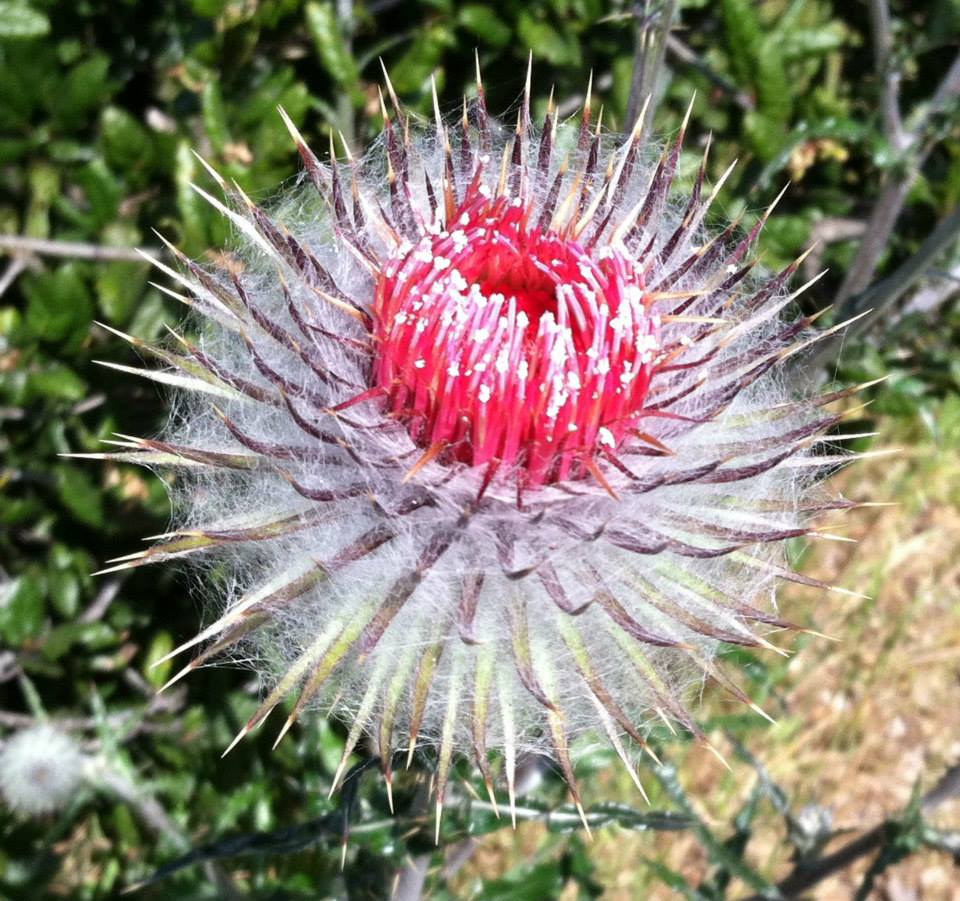
Cirsium occidentale, known as Cobwebby Thistle or cobweb thistle, is a striking native thistle of California, western Nevada and southern Oregon, in the sunflower family (Asteraceae). It is usually a biennial: in its first year it forms a rosette of deeply lobed, spiny leaves covered in silvery white wool, and in its second year it sends up a branched, woolly stem 1 to 6 feet tall topped with large flower heads, usually in vivid crimson to rose-purple.
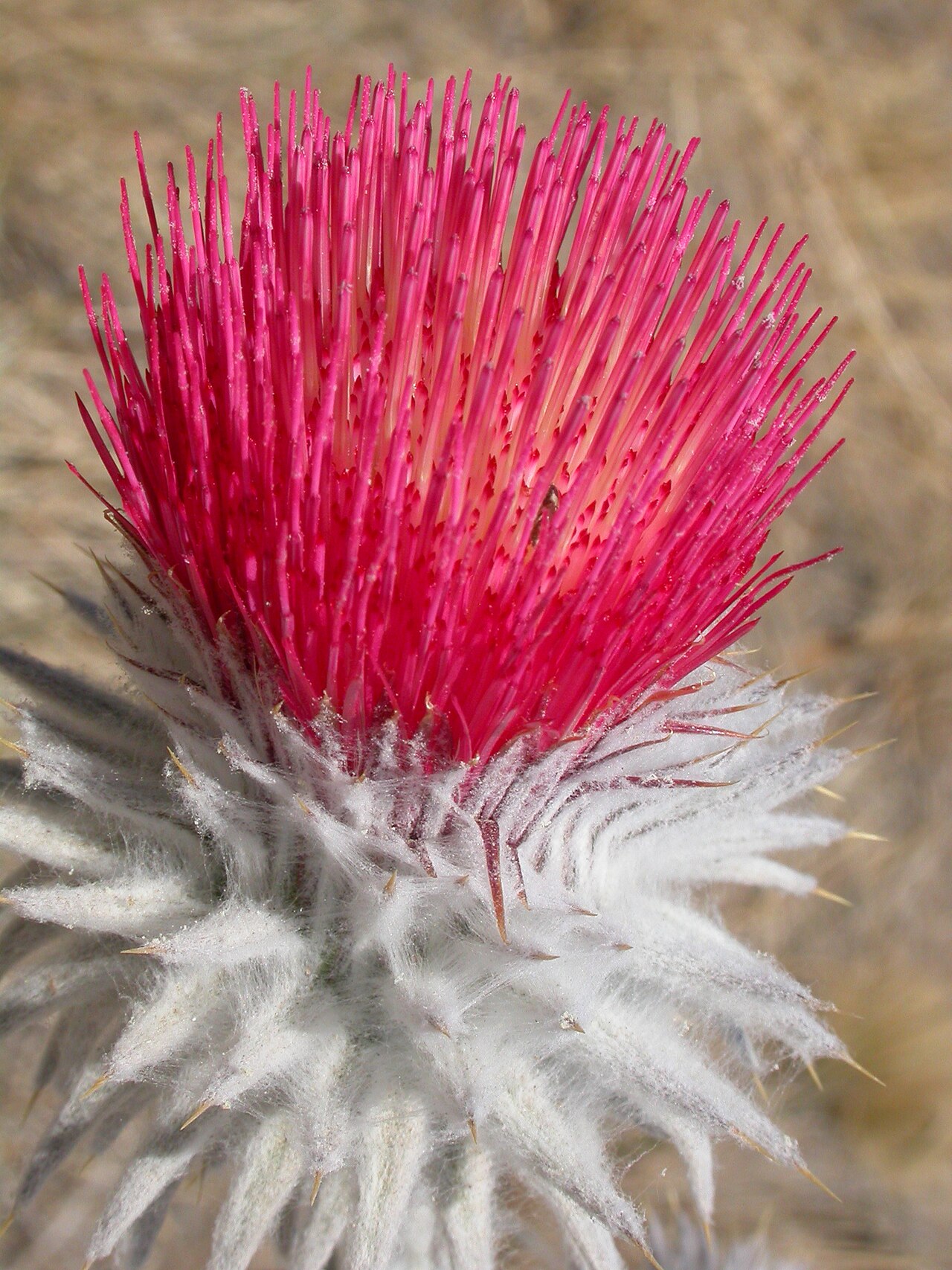
The plant gets its name from the fine white hairs that stretch between the spine tips of the bracts around each flower head, as if a spider had spun a web over the bud. Against these silvery heads the red, pink or purple flowers are dramatic, and many people who think of thistles only as weeds are surprised that this is a native wildflower. It is visited by hummingbirds, bees and butterflies, and its seeds feed finches.
Cobwebby thistle is highly variable, and botanists recognize several varieties, from the red-flowered snowy thistle of the eastern Sierra and western Great Basin to compact coastal forms and the showy Venus thistle of the inner Coast Ranges. This guide covers identification, how to tell it from weedy introduced thistles, where it grows, how to grow it in a wildlife garden, and its ecology.
Identification
Cobwebby thistle is easy to recognize among western thistles by its combination of white-woolly foliage, cobwebbed flower heads and, in most varieties, red to crimson flowers. It is important to distinguish it from several introduced weedy thistles that share its range.
Leaves
First-year rosettes are often 1 to 2 feet across. The leaves are long, deeply and irregularly lobed, and edged with stiff yellowish spines. They are densely covered, especially on the underside and often on both sides, with soft white to gray wool, which gives the plant a silvery or snowy look. Stem leaves are similar but smaller, and their bases may extend down the stem as short spiny wings.
Stems
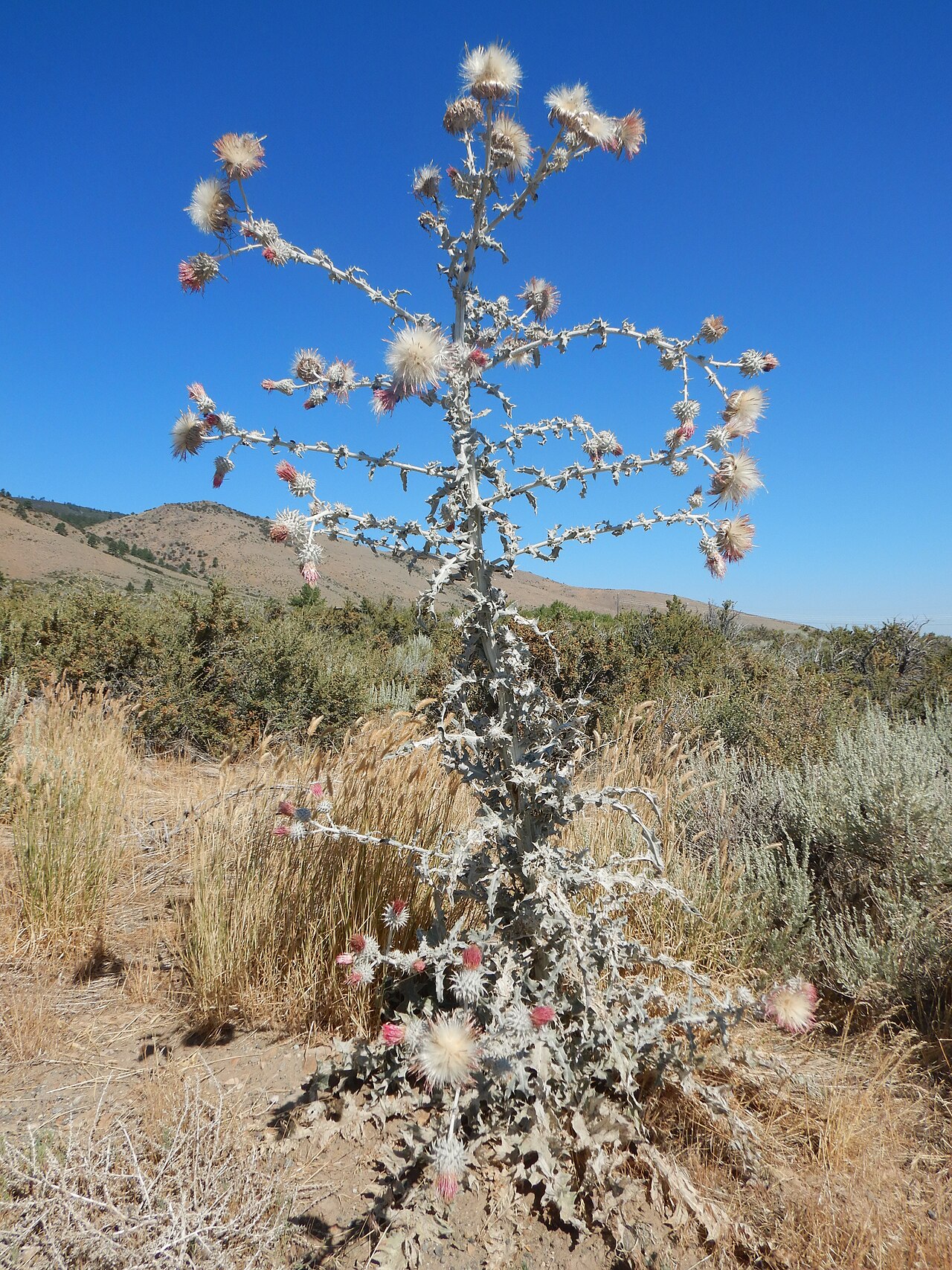
In its flowering year the plant produces one or a few stout, erect, branching stems, usually 1 to 6 feet tall depending on the variety and conditions; some plants grow even taller. The stems are covered in white, cobwebby wool. Coastal varieties are often shorter and more compact.
Flower Heads
The flower heads are large, roughly 1½ to 2½ inches across, and sit singly at the ends of the branches. The bracts (phyllaries) that form the base of each head end in long, slender spines and are laced together with fine, white, cobweb-like hairs. The flowers are all tubular disk florets, crimson to deep red in many populations, but rose, purple, pink or rarely whitish in others. Bloom time is mostly April to July, extending later in the mountains and Great Basin.
Fruit & Seeds
After flowering, each head produces many small, smooth seeds (achenes), each topped with a fluffy, feathery pappus that carries it on the wind. The plant usually dies after setting seed.
Similar Species
Bull thistle (Cirsium vulgare), an invasive European weed, has spiny-winged stems, leaves with rough, prickly upper surfaces and purple flowers on heads without cobwebby hairs. Italian thistle and milk thistle are also introduced and have purple flowers. Yellow star-thistle (Centaurea solstitialis) is a different, invasive plant with yellow flowers. Several other native thistles grow in the same region, including Cirsium andersonii and Cirsium cymosum, which have less cobwebbed heads.
Quick Facts
| Scientific Name | Cirsium occidentale |
| Family | Asteraceae (sunflower family) |
| Plant Type | Biennial or short-lived perennial herb |
| Mature Height | 1–6 ft in flower (varies by variety) |
| Mature Spread | 1–3 ft |
| Growth Rate | Fast in its flowering year |
| Sun Exposure | Full sun to light shade |
| Water Needs | Low; drought tolerant |
| Soil Type | Well-drained sandy, gravelly, rocky or clay-loam soil |
| Soil pH | About 6.0–8.0 |
| Bloom Time | April–July (later at higher elevations) |
| Flower Color | Crimson to red; also rose, purple or pink |
| Fall Color | None; dried stems and rosettes are silvery gray |
| Fruit | Achenes with feathery, wind-dispersed pappus |
| Deer Resistant | Yes; spiny and woolly foliage is seldom browsed |
| USDA Hardiness Zones | 7–10 |
Native Range
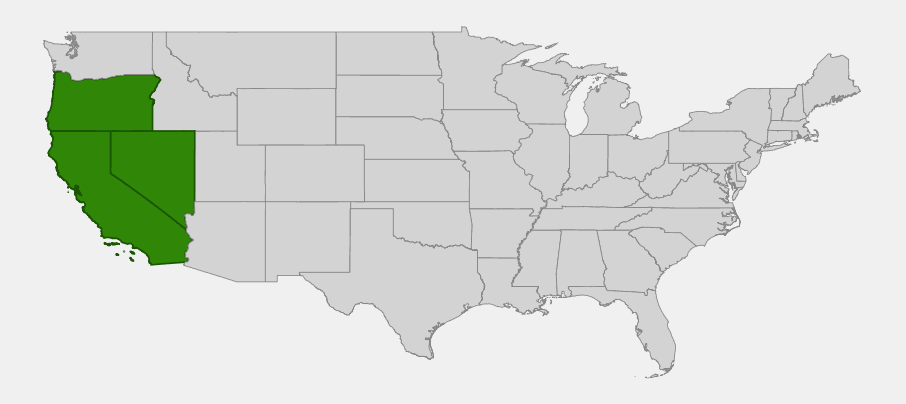
Cobwebby thistle is native to the far western United States and northern Baja California. USDA PLANTS records it in California, Nevada and Oregon. California is the center of its range: it grows in the Coast Ranges, the Sierra Nevada foothills, the Transverse and Peninsular Ranges, the Central Valley margins and the Channel Islands, and it extends across the eastern Sierra into western Nevada and north into southern Oregon.
Its varieties are tied to different regions and habitats. Snowy thistle (var. candidissimum), with dense white wool and red flowers, grows on the east side of the Sierra and Cascades, in northeastern California, western Nevada and southern Oregon, often in disturbed sites in sagebrush and open pine country. Venus thistle (var. venustum) grows in the inner Coast Ranges, and coastal forms such as var. compactum grow on sandy bluffs and dunes along the central coast. Some coastal varieties are rare and tracked by California conservation agencies.
Across this range it grows in open, sunny, well-drained places: coastal scrub, coastal bluffs and dunes, chaparral and oak woodland openings, grassy slopes, sagebrush steppe and pine forest openings, often on sandy or rocky soil or in disturbed ground such as road cuts. It ranges from sea level to roughly 7,000 feet.
📋 Regional plant lists featuring Cobwebby Thistle: Idaho, Eastern Oregon & Eastern Washington
Growing & Care Guide
Cobwebby thistle is an easy and striking plant for sunny, dry wildlife gardens in California and the western Great Basin. It is a native, non-invasive thistle: it spreads only by seed and does not creep by roots like Canada thistle. Plant it where its spines will not be a nuisance, and let it self-sow in moderation.
Light
Plant it in full sun. It tolerates light shade, but in shade it becomes leggy and flowers poorly.
Soil & Water
Give it well-drained soil, ideally sandy, gravelly or rocky. It tolerates poor soils and clay on slopes where water does not pool. Water seedlings and young rosettes through their first dry season if needed. After that, natural winter rainfall is usually enough. Summer water is unnecessary and can shorten its life.
Planting Tips
Sow seed in fall on bare, open soil, or plant small container-grown rosettes in fall or winter. Space plants 2 to 3 feet apart. Place them away from paths and play areas, toward the back of a dry border or in a meadow or habitat garden where their silvery rosettes and bold flowers can be seen.
Pruning & Maintenance
Wear gloves when handling it. If you want to limit self-sowing, cut off some flower heads after they fade, but leave others for goldfinches and other seed-eating birds. Remove the dead stems after seed has dispersed. Pull unwanted seedlings while they are small.
Propagation
Grow it from seed. Fresh seed sown in fall generally germinates with winter rains. Because it is a biennial or short-lived perennial, allowing a few plants to set seed each year keeps it in the garden.
Landscape Uses
- Wildlife and pollinator gardens: hummingbirds, bees, butterflies and seed-eating birds
- Dry meadows and habitat gardens: a bold accent among native grasses and wildflowers
- Coastal and chaparral gardens: silvery rosettes and red flowers among coastal shrubs
- Restoration of disturbed sites: within its native range, on dry, open soils
- Silver-foliage plantings: the woolly rosettes provide year-round silver color
Wildlife & Ecological Value
Native thistles are among the most valuable wildflowers for wildlife, and cobwebby thistle is no exception. Its large, nectar-rich flower heads, abundant seeds and spiny protection support a wide range of animals.
For Pollinators
The red-flowered forms are visited by hummingbirds, an unusual trait among thistles. Native bees, including bumblebees and long-horned bees, and butterflies such as swallowtails and painted ladies also visit the flowers. Thistles are larval host plants for the painted lady and mylitta crescent butterflies.
For Birds
Lesser goldfinches, American goldfinches and other finches eat the seeds and use the soft, downy pappus to line their nests. Hummingbirds feed on the nectar of the red flowers.
For Mammals
The spiny, woolly foliage discourages deer, rabbits and livestock from browsing. Small mammals may eat fallen seeds.
Ecosystem Role
Cobwebby thistle is an early colonizer of open and disturbed ground in its native habitats, where it supports pollinators and seed-eaters. Native thistles have declined in some areas because of habitat loss and because they are often mistakenly removed along with invasive weedy thistles, so learning to recognize them helps protect them.
Cultural & Historical Uses
The genus name Cirsium comes from the Greek kirsion, a name used for a kind of thistle, and occidentale means “western.” The species was described in the nineteenth century from California plants, and its many varieties have been named and renamed as botanists sorted out its variation.
Several California Indigenous peoples used native thistles as food, peeling and eating the young stems and leaf midribs, and some used thistle roots or seeds. These uses relied on careful knowledge of local plants and are not recommended for casual foraging.
Today cobwebby thistle is valued by native plant gardeners and wildlife enthusiasts. It is also an important example for land managers: not every thistle is a weed, and removing native thistles along with invasive ones harms the pollinators, butterflies and birds that depend on them.
Frequently Asked Questions
Is cobwebby thistle native?
Yes. Cirsium occidentale is native to California, western Nevada, southern Oregon and northern Baja California. It is not one of the invasive European thistles, though it is sometimes mistaken for them.
Is cobwebby thistle invasive?
No. It is a native species that spreads only by seed and does not creep by roots. It may self-sow in sunny, open ground but does not form large, aggressive patches like Canada thistle or bull thistle.
How can I tell cobwebby thistle from bull thistle?
Cobwebby thistle has woolly white foliage and flower heads wrapped in cobweb-like hairs, and its flowers are often crimson. Bull thistle has green leaves with rough, prickly upper surfaces, strongly spiny-winged stems, and purple flowers without cobwebby hairs.
Do hummingbirds visit cobwebby thistle?
Yes. Its red-flowered forms are regularly visited by hummingbirds, which is unusual for thistles. Bees and butterflies visit too.
Is cobwebby thistle safe to have in a garden with children or pets?
It is not known to be poisonous, but its leaves and bracts are spiny. Plant it away from paths and play areas and wear gloves when handling it.

Looking for a nursery that carries Cobwebby Thistle?
Browse our native plant nursery directory: California · Nevada · Oregon