
Dwarf Spikerush (Eleocharis parvula)
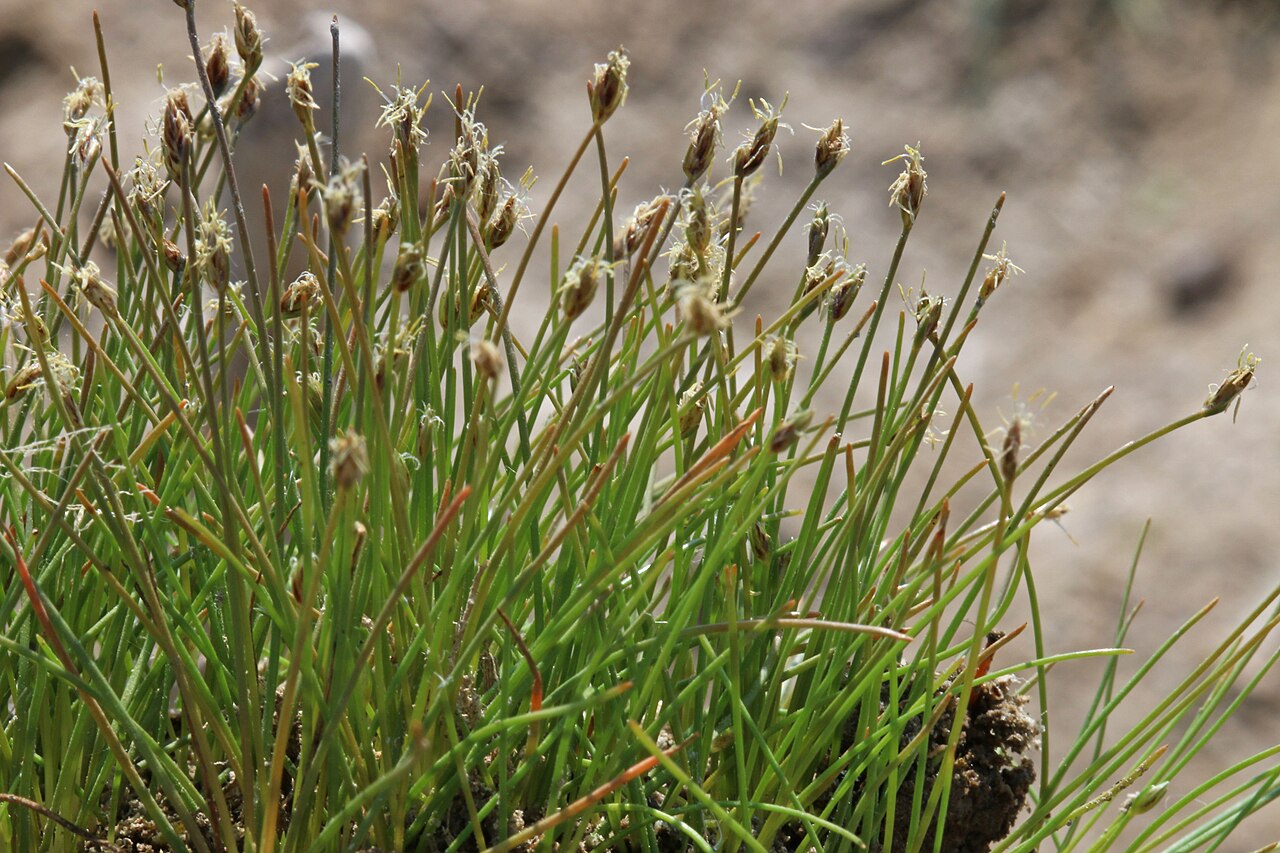
Eleocharis parvula, Dwarf Spikerush, also called small spikerush, is one of the smallest members of the sedge family in North America. It forms low tufts and turf-like mats of hair-thin, bright green stems, usually only 1 to 3 inches tall, each tipped with a single tiny spikelet. It spreads by thread-like rhizomes that end in small tubers, and it often carpets wet mud where little else grows.
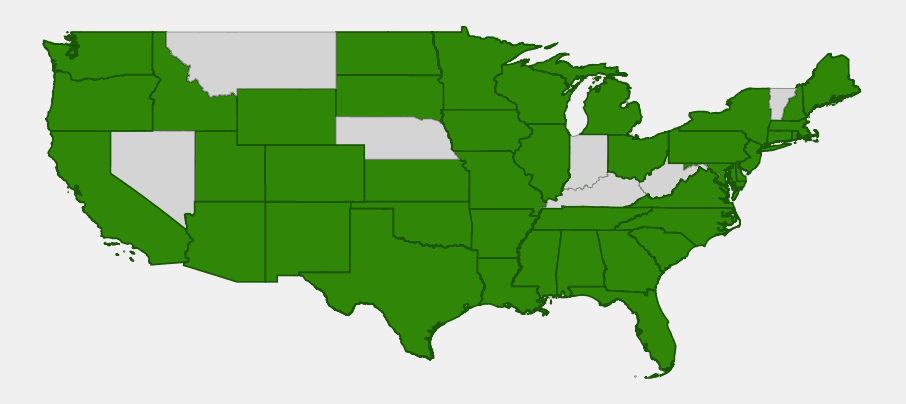
It is a plant of salty and brackish places. Along the Atlantic, Gulf and Pacific coasts it grows on tidal mud flats, salt marsh pannes and brackish shores, and inland it appears on the shores of saline and alkaline lakes, salt springs and seasonally flooded flats, from the Great Salt Lake and the alkaline wetlands of the Great Plains to scattered inland salt springs in the East. USDA PLANTS records it as native in 41 states and across southern Canada, and it also grows in Europe, Africa and Asia.
Aquarium keepers know it in another form: it is one of the plants sold as dwarf hairgrass, used to make a lawn-like carpet in planted tanks. This guide covers how to identify dwarf spikerush in the wild, where it grows, its value for waterfowl, and how to grow it in a pond, wetland or aquarium.
Identification
Many spikerushes have a single spikelet at the tip of each leafless stem. Dwarf spikerush stands out for its tiny size, its salty or alkaline habitat, and the small tubers on its rhizomes. It is easiest to confirm with a hand lens and mature fruit.
Growth Habit
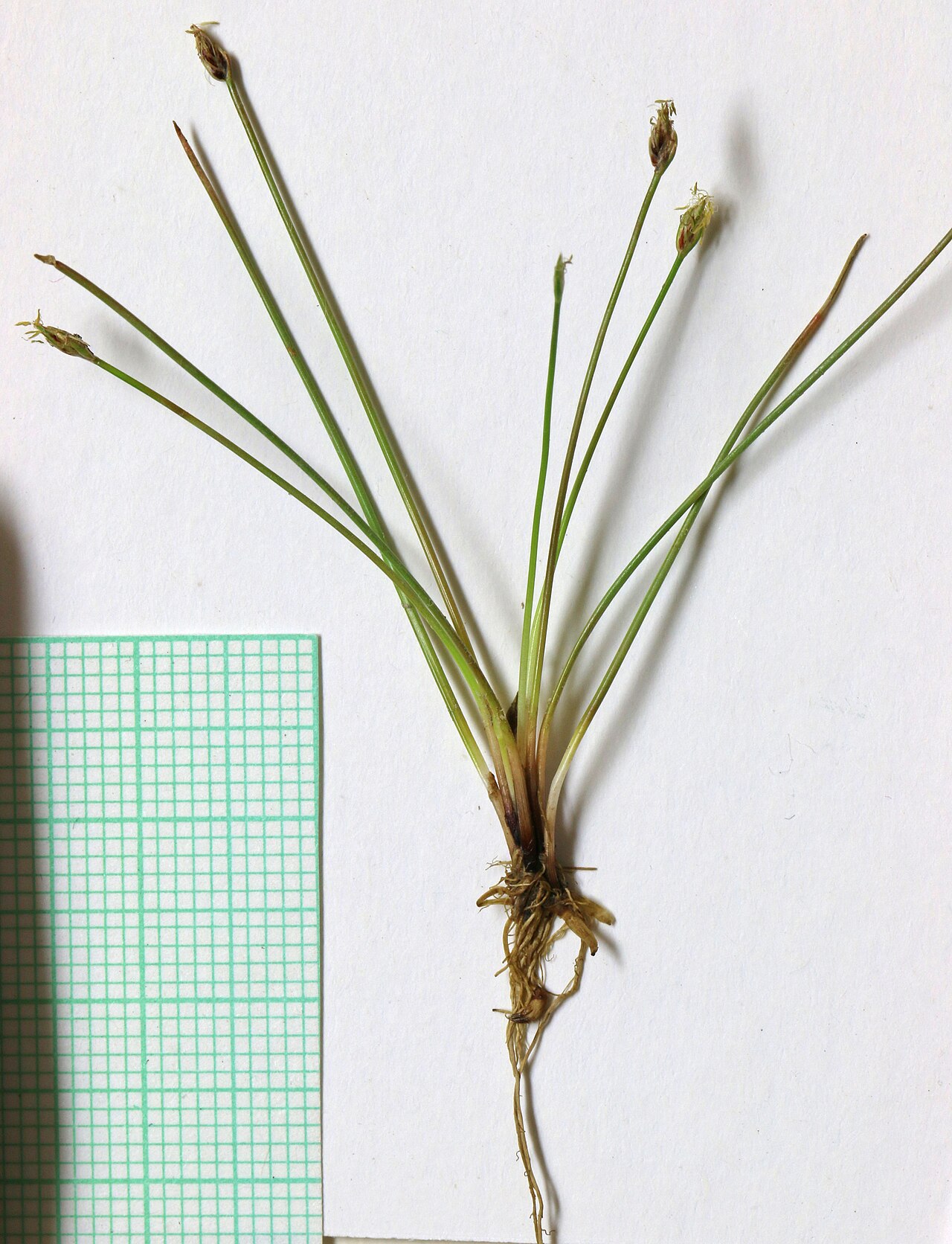
Plants are tufted, with many stems arising from fine, creeping rhizomes that form loose mats. The rhizomes end in small, hooked or curved whitish tubers, which help the plant survive dry or cold periods. Plants under water may be sterile and grass-like, forming a dense, green turf.
Stems & Leaves
The stems are thread-like, about 0.2 to 0.5 mm thick and usually 1 to 3 inches (2 to 8 cm) tall, soft, round in cross-section and bright green. As in other spikerushes, there are no leaf blades; the leaves are reduced to thin, membranous sheaths at the stem bases.
Spikelets
Each stem ends in a single small, egg-shaped to narrowly ovoid spikelet about 2 to 4 mm long, with a few green to pale brown, membranous scales. Flowering and fruiting occur from late spring through fall.
Fruit
The fruit (achene) is tiny, about 1 mm long, three-angled, smooth and straw-colored to yellowish brown, topped by a small, low cap (tubercle) that is barely distinct from the body of the fruit. Several fine bristles are usually present at its base.
Similar Species
Needle spikerush (E. acicularis) is similar in size and is the other main “dwarf hairgrass” of the aquarium trade, but it grows mainly in fresh water, has angled stems and lacks rhizome tubers, and its achenes have fine raised ridges. Larger species such as common spikerush are much taller.
Quick Facts
| Scientific Name | Eleocharis parvula |
| Family | Cyperaceae (sedge family) |
| Plant Type | Tiny perennial sedge; emergent or submersed |
| Mature Height | 1–3 in |
| Mature Spread | Forms mats; spreads by rhizomes |
| Growth Rate | Moderate to fast in suitable sites |
| Sun Exposure | Full sun |
| Water Needs | High; wet mud or shallow water |
| Soil Type | Mud, sand or silt; tolerates brackish, saline and alkaline conditions |
| Soil pH | About 6.5–9.0 |
| Bloom Time | Late spring to fall |
| Flower Color | Inconspicuous; green to pale brown spikelets |
| Fall Color | None |
| Fruit | Tiny three-angled achene |
| Deer Resistant | Not usually browsed |
| USDA Hardiness Zones | 3–10 |
Native Range
Dwarf spikerush has a broad but patchy range. USDA PLANTS records it as native in 41 states, from Maine to Florida, along the Gulf Coast to Texas, across the interior from the Great Lakes to the Great Plains and Rocky Mountains, and on the Pacific coast from Washington to California. In Canada it grows from the Maritime provinces and Newfoundland to British Columbia. It also occurs in Europe, Africa and Asia.
Along the coasts it is a plant of salt marsh pannes, tidal flats, brackish shores and the edges of coastal ponds. Inland it is concentrated in saline and alkaline places, such as the shores of the Great Salt Lake and Utah Lake, alkaline playas and prairie wetlands on the Great Plains, and inland salt springs and saline seeps in parts of the Northeast and Great Lakes region. It also turns up on freshwater shores and in drawdown zones of reservoirs.
Because it is tiny and easily overlooked, it is probably more widespread than herbarium records show, and in several eastern inland states it is known from only a few sites.
📋 Regional plant lists featuring Dwarf Spikerush: New York, Pennsylvania & Northern New Jersey · Idaho, Eastern Oregon & Eastern Washington · Ohio & Indiana · Montana & Wyoming · Michigan, Wisconsin & Eastern Minnesota · Kentucky & Tennessee · Nebraska, Kansas & Eastern Colorado · Utah & Western Colorado · Connecticut, Massachusetts & Rhode Island · New Hampshire, Maine & Vermont · Maryland, Virginia & West Virginia · Delaware, Southern New Jersey & Long Island · Arizona & New Mexico · Illinois, Iowa & Missouri · Alabama, Georgia & Mississippi · North & South Florida · North & South Carolina · Arkansas, Louisiana, Eastern Oklahoma & Eastern Texas · South & West Texas · North Dakota, South Dakota & Western Minnesota · Western Oregon & Western Washington · California & Nevada
Growing & Care Guide
Dwarf spikerush is rarely sold for outdoor gardens, but it is easy to grow where its needs are met: full sun, constant moisture and little competition. It is most often grown in aquariums, where plants sold as dwarf hairgrass may be this species or needle spikerush. Do not collect it from wild salt marshes; buy aquarium or wetland nursery stock instead.
Light
Full sun outdoors. In aquariums it needs strong lighting to stay compact and form a dense carpet; in low light it grows tall and thin.
Soil & Water
Outdoors, grow it in wet sand or mud at the edge of a pond, bog garden or rain garden, or in water up to a few inches deep. It tolerates brackish and alkaline water better than most plants. In an aquarium, use a fine-grained substrate, ideally a nutrient-rich one; extra carbon dioxide helps it carpet quickly.
Planting Tips
Divide a pot into small clumps of a few stems each and press them into the substrate about an inch apart. They will join into a mat within weeks to a few months. Keep taller plants from shading it.
Pruning & Maintenance
Outdoors, little care is needed beyond removing competing plants. In aquariums, trim the turf with scissors to keep it short and dense, and remove trimmings so they do not decay.
Propagation
Divide clumps or cut runners, each with a few stems and roots. In the wild it also spreads by its small rhizome tubers and by seed carried in mud on the feet of waterbirds.
Landscape Uses
- Pond and bog margins: a fine-textured groundcover for wet, sunny mud
- Brackish and saline wetland restoration: one of few plants that colonizes bare, salty mud flats
- Aquariums: a carpet plant sold as dwarf hairgrass
- Rain gardens and stormwater basins: covers bare, periodically flooded soil in sun
- Wildlife wetlands: its tubers and seeds feed waterfowl and shorebirds
Wildlife & Ecological Value
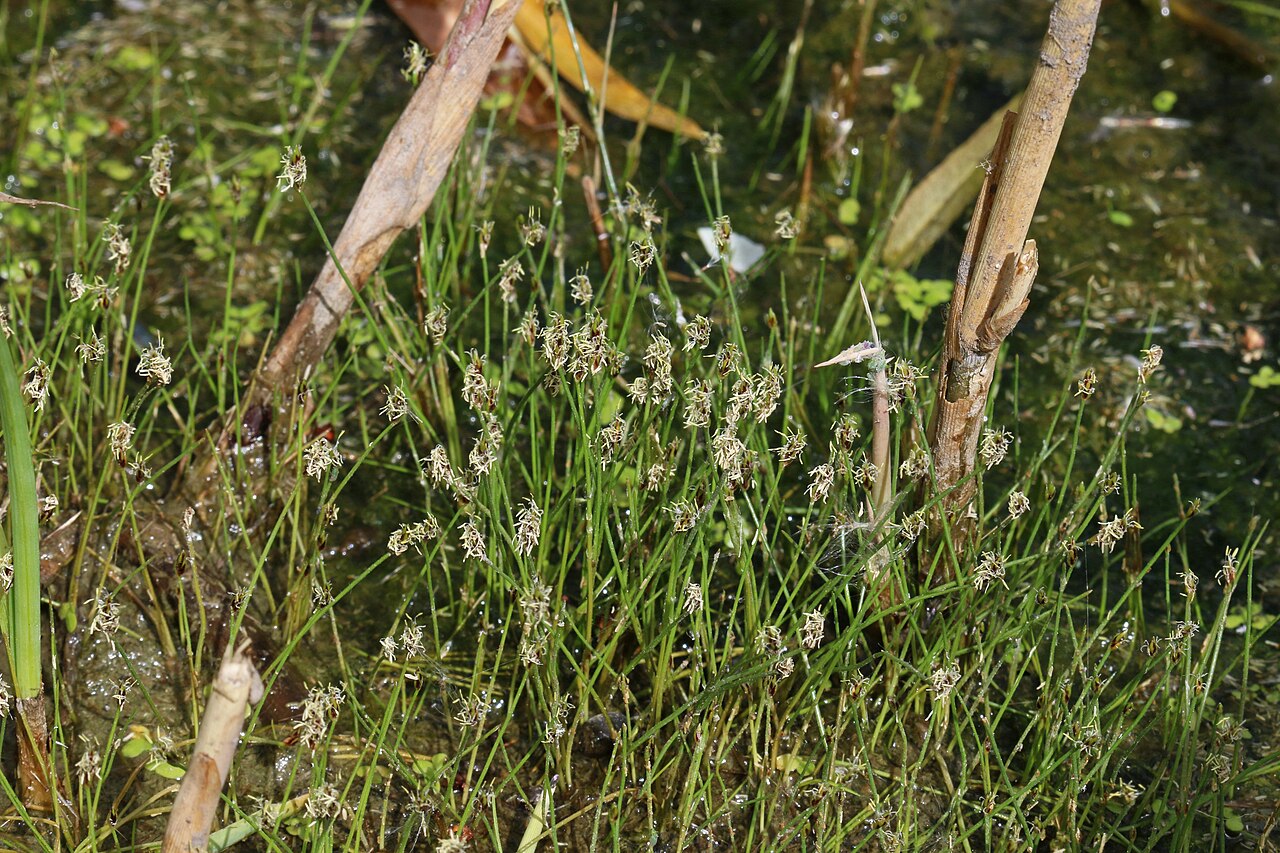
Dwarf spikerush is small, but in salt marshes and alkaline wetlands it can cover large areas of open mud and feeds many birds.
For Pollinators
Like other sedges, it is wind-pollinated and does not provide nectar.
For Birds
Ducks and geese eat its small tubers, rhizomes and seeds, and spikerush seeds are a known food of dabbling ducks, rails and shorebirds. The open mud flats it carpets are prime feeding areas for migrating shorebirds.
For Mammals
Muskrats and other wetland mammals may graze it, but it is too small to be important food for large mammals.
Ecosystem Role
It is one of the first plants to colonize bare, salty or alkaline mud, binding fine sediment with its mats of rhizomes. Its seeds and tubers, carried on the feet and in the guts of waterbirds, help explain how it reaches widely scattered inland salt marshes and alkaline lakes.
Cultural & Historical Uses
The species was first described in the early 19th century as Scirpus parvulus and was later moved to Eleocharis, a genus name from Greek words meaning “marsh” and “grace.” Its epithet, parvula, means “very small.” Other names applied to it, or to plants now included in it, include Eleocharis coloradoensis and Scirpus nanus.
In much of Europe it is a scarce plant of coastal mud flats and brackish lagoons, habitats that have shrunk through drainage and coastal development. In North America, it is also tracked as rare in several inland states where its saline habitats are naturally few.
Its most visible modern role is in aquascaping, where tiny spikerushes are planted to imitate lawns and meadows in miniature underwater landscapes. Aquarium names are not always reliable, and plants sold as dwarf hairgrass may be E. parvula, E. acicularis or cultivated selections of either.
Frequently Asked Questions
Is dwarf spikerush the same as dwarf hairgrass?
Often. Dwarf hairgrass is an aquarium trade name used for both Eleocharis parvula and needle spikerush (E. acicularis). Both are native to North America.
Does dwarf spikerush grow in salt water?
It grows in brackish water and on salt marsh mud, as well as on alkaline inland shores and some fresh-water shores. It does not grow in open seawater.
How tall does dwarf spikerush get?
Usually only 1 to 3 inches, which makes it one of the smallest sedges in North America.
Can I grow dwarf spikerush in a pond?
Yes. Plant it in wet mud or very shallow water in full sun, and keep taller plants from crowding it.
How do I make dwarf hairgrass carpet in my aquarium?
Plant small clumps close together in fine substrate, give it bright light and good nutrients (CO2 helps), and trim it regularly to keep it short and dense.

Looking for a nursery that carries Dwarf Spikerush?
Browse our native plant nursery directory: Alabama, Arizona & Arkansas · California · Colorado, Connecticut, Delaware, Florida & Georgia · Idaho, Illinois, Iowa & Kansas · Louisiana, Maine, Maryland, Massachusetts, Michigan, Minnesota, Mississippi & Missouri · New Hampshire, New Jersey, New Mexico, New York, North Carolina, North Dakota, Ohio & Oklahoma · Oregon · Pennsylvania, Rhode Island, South Carolina, South Dakota, Tennessee, Texas, Utah & Virginia · Washington · Wisconsin & Wyoming

