
American Red Raspberry (Rubus idaeus)
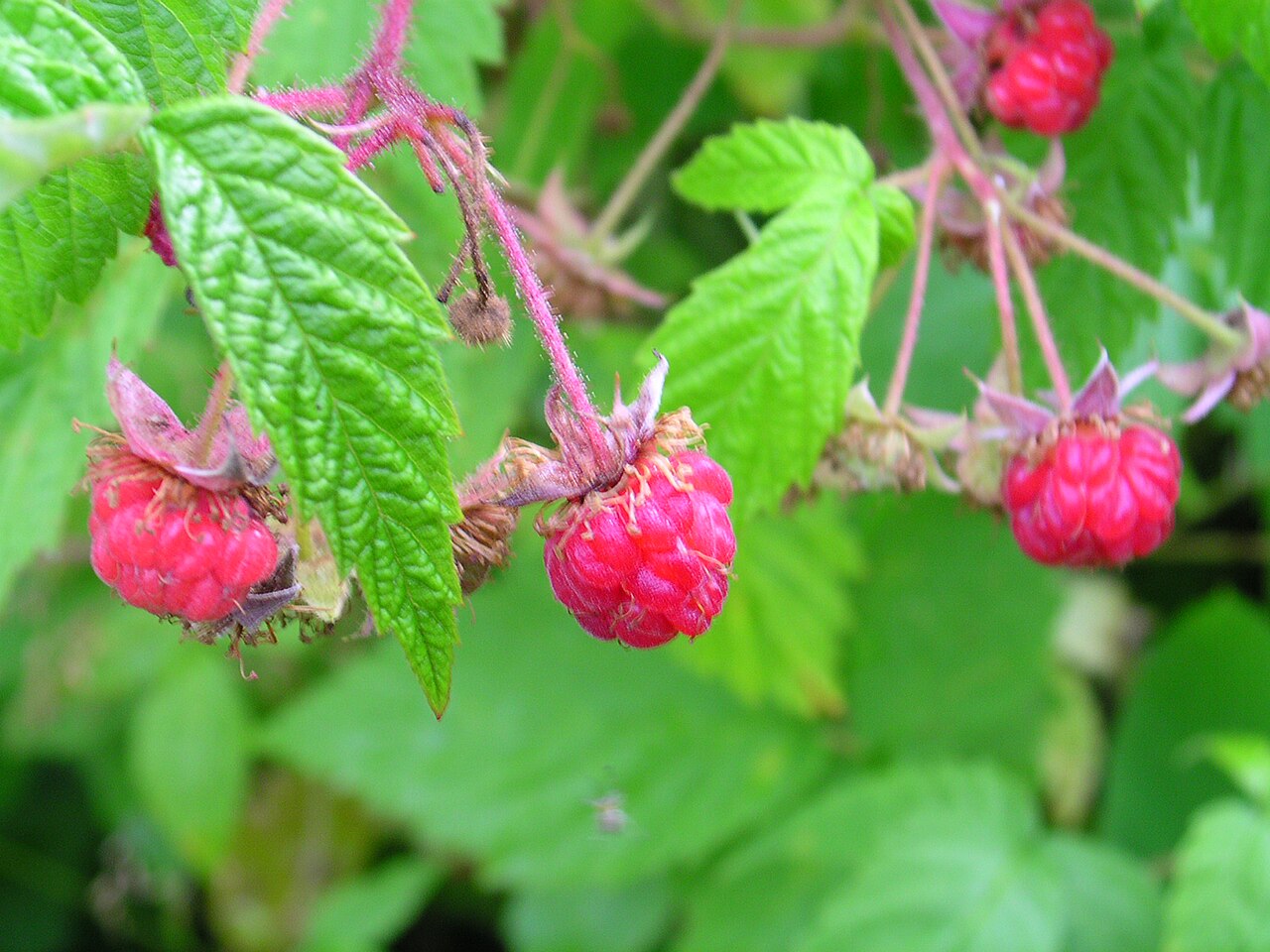
Rubus idaeus, known as American Red Raspberry or wild red raspberry, is a thicket-forming shrub of the rose family (Rosaceae) and the wild ancestor of many garden raspberries. Its native North American form is Rubus idaeus subsp. strigosus, which many botanists treat as a separate species, Rubus strigosus. USDA PLANTS keeps it within Rubus idaeus and lists the species as native in Alaska, Canada and the lower 48 states, while noting that the European subspecies idaeus, grown in gardens, is introduced.
Like other brambles, it has a perennial root system that sends up biennial canes. A cane grows leaves in its first year, then flowers, fruits and dies in its second. The canes are covered in slender bristles and, in the American plant, many gland-tipped hairs. In early summer they bear small white flowers, followed in July and August by the familiar red, sweet, slightly tart berries that pull away from their core.
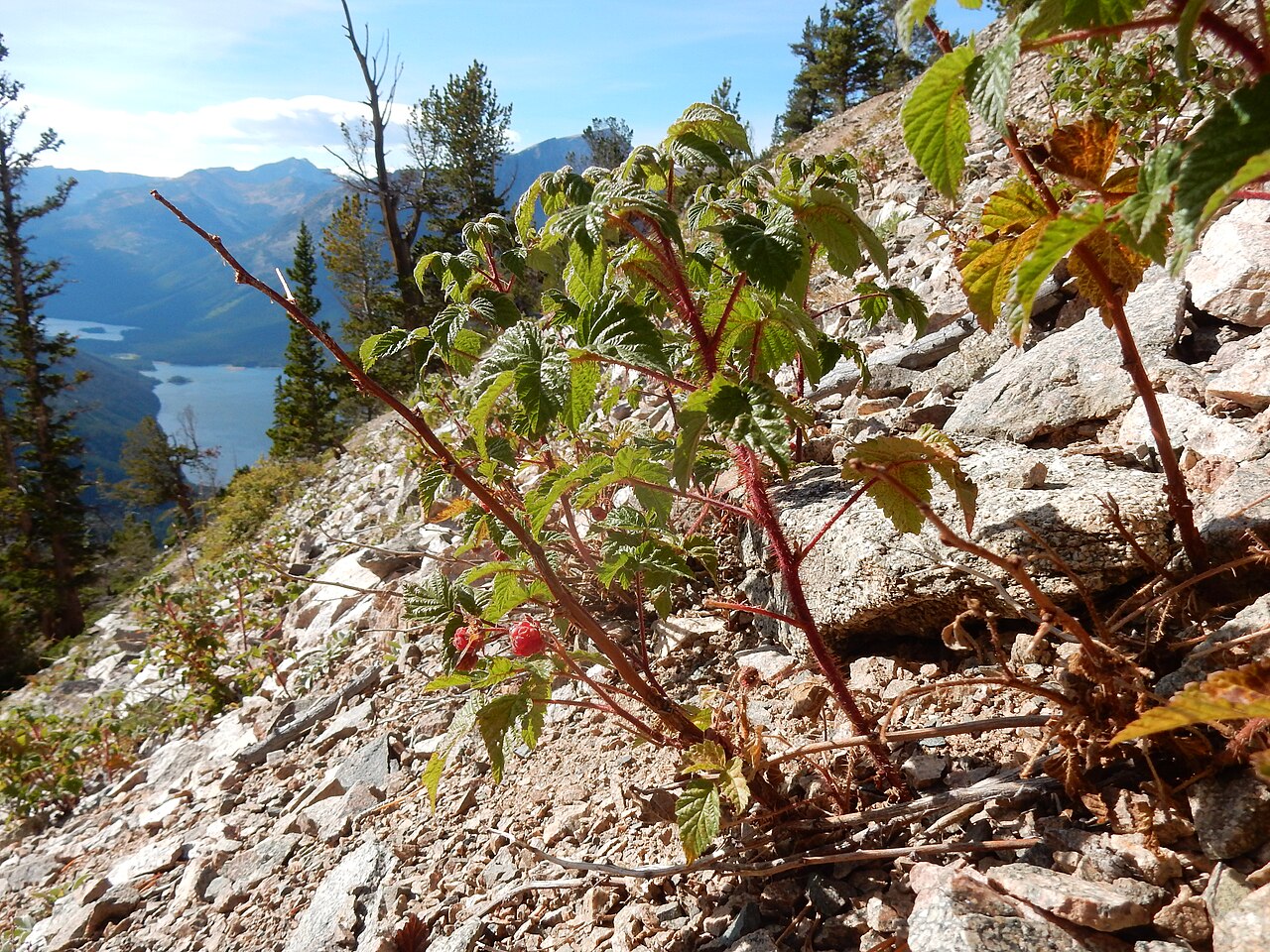
Wild red raspberry is a classic pioneer of burns, clearcuts, forest edges, rocky slopes and roadsides from Alaska and Canada south through the northern states and the mountains. It is a valuable wildlife plant, feeding birds, bears and small mammals and sheltering them in its thickets. In gardens it suits wild edges, hedgerows and naturalized areas where a spreading, prickly thicket and a crop of wild berries are welcome.
Identification
American red raspberry is easiest to identify by its combination of bristly, upright canes, compound leaves that are whitish underneath, small white flowers and red fruit that comes off as a hollow cap.
Canes & Habit
Canes grow 2 to 6 feet tall (about 0.5 to 2 m), upright to slightly arching, and spread by root suckers into dense patches. First-year canes are green to reddish-brown and densely covered with fine, straight bristles; in the native subspecies many of these hairs end in tiny glands. Second-year canes become woody and reddish-brown with peeling bark, and die after fruiting. Unlike black raspberry, the canes are not strongly whitened (glaucous) and do not arch over to root at their tips.
Leaves
Leaves are alternate and pinnately compound. First-year canes usually carry leaves with 5 leaflets; fruiting branches on second-year canes usually have 3. The leaflets are oval to lance-shaped, 2 to 4 inches long, sharply and doubly toothed, green above and white-felted underneath. The end leaflet is larger and often slightly lobed.
Flowers
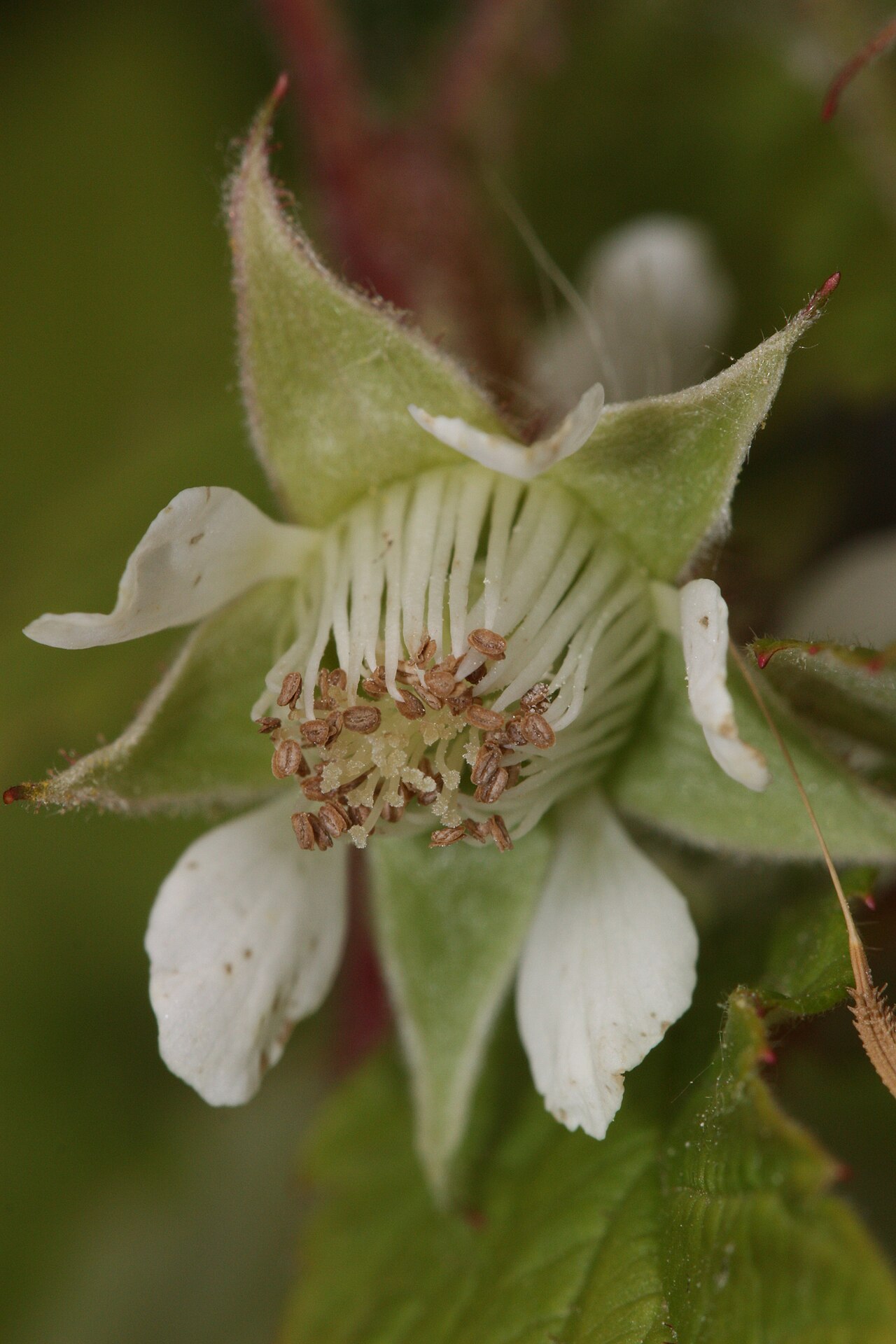
Flowers appear from late May to July, in small clusters at the ends of short side branches on second-year canes. Each is about 1/2 inch across, with five small, narrow, white petals that stand upright and drop quickly. The five sepals are longer than the petals, pointed and bent backward, and are often glandular-hairy. Many stamens surround a cluster of green pistils.
Fruit
The fruit is an aggregate of many small, juicy red drupelets, about 1/2 inch across, ripening from July into August. When picked, it separates from the dry, white core (receptacle), leaving the berry hollow like a thimble. Wild fruit is smaller than cultivated raspberries but often more intensely flavored.
Look-alikes
Black Raspberry (Rubus occidentalis) has strongly whitened, arching canes with hooked prickles and black fruit. Purple-Flowered Raspberry (R. odoratus) and Thimbleberry (R. parviflorus) have no prickles and large, maple-like simple leaves. Wineberry (R. phoenicolasius), an invasive Asian species, has canes densely covered in red, glandular hairs. Blackberries and dewberries have fruit that keeps its core when picked. Garden raspberries that escape usually lack the gland-tipped hairs of the native plant.
Safety
The fruit is edible and widely eaten. The canes are bristly rather than strongly thorny, but gloves and long sleeves make picking and pruning more comfortable. As with any wild food, be sure of your identification and avoid plants along heavily sprayed roadsides.
Quick Facts
| Scientific Name | Rubus idaeus (native subsp. strigosus; syn. Rubus strigosus) |
| Family | Rosaceae (rose family) |
| Plant Type | Deciduous shrub with biennial canes; forms thickets |
| Mature Height | 2–6 ft |
| Mature Spread | Spreads by root suckers into colonies several feet or more across |
| Growth Rate | Fast |
| Sun Exposure | Full sun to partial shade |
| Water Needs | Medium; dry to moist, well-drained soil |
| Soil Type | Loam, sandy, gravelly or rocky soils |
| Soil pH | About 5.5–7.0 (moderately acidic to neutral) |
| Bloom Time | Late May–July |
| Flower Color | White |
| Fall Color | Leaves turn yellow to dull red |
| Fruit | Red aggregate berry, July–August; edible |
| Deer Resistant | No; deer, elk and moose browse the canes |
| USDA Hardiness Zones | 2–7 |
Native Range
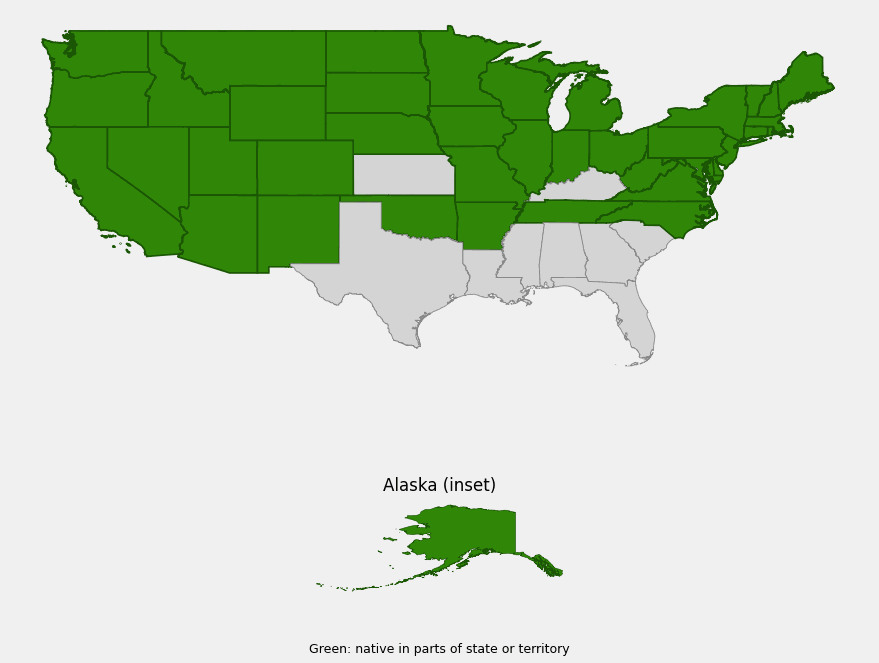
American red raspberry is one of the most widespread shrubs of northern North America. USDA PLANTS lists Rubus idaeus in Alaska, every Canadian province and territory, Saint Pierre and Miquelon, and 40 of the lower 48 states. The native plants are subsp. strigosus; some botanists also include related raspberries of eastern Asia in this group.
It is most common across the boreal forest, the Great Lakes region, New England and the Northeast, the northern Great Plains and the western mountains. It follows the Appalachians south to North Carolina and Tennessee, and the Rocky Mountains and other western ranges south to Arizona, New Mexico, Nevada and California. USDA also records it at scattered sites in Missouri, Arkansas and Oklahoma, which are outlying records at the southern edge of its range. Because European garden raspberries also escape near settlements, some lowland records in settled areas may represent escaped plants rather than the native subspecies.
Habitats include recently burned or logged forest, forest openings and edges, rocky slopes and talus, stream banks, old fields, clearings and roadsides, from sea level in the North to high subalpine slopes in the West. Seeds can survive for many years in forest soil, so raspberry often appears quickly after fire or logging and then fades as trees close the canopy.
📋 Regional plant lists featuring American Red Raspberry: New York, Pennsylvania & Northern New Jersey · Idaho, Eastern Oregon & Eastern Washington · Ohio & Indiana · Montana & Wyoming · Michigan, Wisconsin & Eastern Minnesota · Kentucky & Tennessee · Nebraska, Kansas & Eastern Colorado · Utah & Western Colorado · Connecticut, Massachusetts & Rhode Island · New Hampshire, Maine & Vermont · Maryland, Virginia & West Virginia · Delaware, Southern New Jersey & Long Island · Arizona & New Mexico · Illinois, Iowa & Missouri · Alaska · North & South Carolina · Arkansas, Louisiana, Eastern Oklahoma & Eastern Texas · North Dakota, South Dakota & Western Minnesota · Western Oregon & Western Washington · California & Nevada
Growing & Care Guide
American red raspberry is easy to grow and very hardy. The main challenge is controlling it: it spreads by suckers and can form a large thicket. Give it room in a wild garden, hedgerow or woodland edge, or contain it with mowing or an edging barrier. Buy plants or seed sold as native wild raspberry (subsp. strigosus or Rubus strigosus) if you want the native form rather than a garden cultivar.
Light
It fruits best in full sun but grows well in partial shade. In deeper shade, plants become sparse and produce little fruit.
Soil & Water
It tolerates sandy, gravelly, rocky and loamy soils that are dry to moist but not waterlogged. Moderately acidic to neutral soil suits it. Once established it handles short dry spells well, but steady moisture during flowering and fruiting gives the best berries. Mulching with leaves or wood chips keeps the roots cool and moist.
Planting Tips
Plant dormant canes or potted plants in spring, 2 to 3 feet apart, in a spot where spreading is acceptable. Keep it away from cultivated raspberries if you want to limit shared pests and diseases. It combines well with elderberries, serviceberries, wild roses and other shrubs in a mixed wildlife hedgerow.
Pruning & Maintenance
Each cane lives two years. After fruiting, cut the dead second-year canes to the ground in late summer or winter to keep the patch vigorous and tidy. Thin crowded first-year canes in spring and mow or dig out suckers where they are not wanted. Wild plants need no fertilizer.
Propagation
The easiest method is to dig rooted suckers in early spring or fall. Root cuttings also work. Seeds need warm then cold stratification and can be slow and irregular to germinate, but in the wild they persist in the soil for years and germinate after disturbance.
Landscape Uses
- Wildlife hedgerows: a thicket that gives birds food and safe cover
- Edible landscapes: wild berries for fresh eating, jam and pies
- Woodland edges and clearings: a native shrub for sunny gaps and edges
- Erosion control: quick cover for disturbed slopes and burned or logged ground
- Naturalized areas: a low-maintenance colonizer where spreading is welcome
Wildlife & Ecological Value
Few shrubs feed as many animals as wild raspberry. Its flowers, fruit, leaves, canes and thickets all support wildlife.
For Pollinators
The flowers are visited by many bees, including bumble bees, mining bees, sweat bees and honey bees, as well as flies and other insects. Pollination is mostly by insects, and well-pollinated flowers produce larger, fuller berries. Dead, pithy raspberry canes are used as nesting sites by small stem-nesting bees such as small carpenter bees (Ceratina). Many moth caterpillars feed on the leaves.
For Birds
The berries are eaten by a long list of birds, including American robins, gray catbirds, thrushes, cedar waxwings, orioles, grosbeaks, tanagers, woodpeckers and grouse. Thickets provide nesting sites and escape cover for sparrows, warblers and other songbirds.
For Mammals
Black bears and grizzly bears feed heavily on wild raspberries in summer, as do raccoons, foxes, chipmunks, squirrels and mice. Deer, elk and moose browse the leaves and canes, and rabbits and hares eat the canes in winter.
Ecosystem Role
Raspberry is an important early-successional plant. After fire, logging or windthrow, it springs up from buried seed and from surviving roots, protecting soil, holding nutrients and feeding wildlife until trees regrow and shade it out.
Cultural & Historical Uses
Wild red raspberries were gathered across their range by many Native American and First Nations peoples, who ate them fresh, dried them in cakes for winter or mixed them with other foods. Leaves and roots were used in teas and traditional medicines. Settlers also picked wild raspberries, and the fruit is still a favorite summer forage food in the North.
Many commercial raspberry cultivars come from crosses between the American red raspberry and the European red raspberry (Rubus idaeus subsp. idaeus). The American plant contributed hardiness and other traits to these cultivars. Raspberry leaf tea, usually made from cultivated or European plants, remains a popular herbal tea.
The species name idaeus refers to Mount Ida, and the European raspberry has been known by that name since ancient times. The name of the American subspecies, strigosus, means covered with stiff, bristly hairs, which describes its canes well.
Frequently Asked Questions
Is American red raspberry the same as the garden raspberry?
Not exactly. The native plant is Rubus idaeus subsp. strigosus (or Rubus strigosus). Garden raspberries mostly come from the European subspecies or from hybrids between the two. Wild plants have smaller, often more flavorful berries and gland-tipped hairs on the canes.
How do I tell a raspberry from a blackberry?
Pick a ripe berry. A raspberry comes off its core and is hollow inside; a blackberry keeps the core inside the fruit. Red raspberry canes are also bristly rather than armed with large, hooked thorns.
Will wild red raspberry take over my garden?
It can spread steadily by root suckers. Plant it where a thicket is welcome, or control it by mowing around the patch, digging suckers and removing old canes each year.
When is the fruit ripe?
Wild raspberries usually ripen from July into August, depending on latitude and elevation. Ripe berries are fully red and slip easily off the core.
Is it good for wildlife?
Yes. Bees visit the flowers, birds and bears eat the fruit, deer and moose browse the canes, and the thickets give cover and nesting sites to many songbirds.

Looking for a nursery that carries American Red Raspberry?
Browse our native plant nursery directory: Alaska, Arizona & Arkansas · California · Colorado, Connecticut & Delaware · Idaho, Illinois, Indiana & Iowa · Maine, Maryland, Massachusetts, Michigan, Minnesota, Missouri & Montana · Nebraska, Nevada, New Hampshire, New Jersey, New Mexico, New York, North Carolina, North Dakota, Ohio & Oklahoma · Oregon · Pennsylvania, Rhode Island, South Dakota, Tennessee, Utah, Vermont & Virginia · Washington · West Virginia, Wisconsin & Wyoming