
American Trailplant (Adenocaulon bicolor)
Adenocaulon bicolor, known as American Trailplant (also pathfinder or silver-green), is a shade-loving woodland perennial of western and northern North America. It belongs to the aster family (Asteraceae), though you would hardly guess it: its flower heads are tiny and white, and the plant is grown, and noticed, for its leaves. These are large, triangular or heart-shaped and bright green on top, with a dense coat of white, woolly hairs underneath. That two-toned leaf gives it the name bicolor.
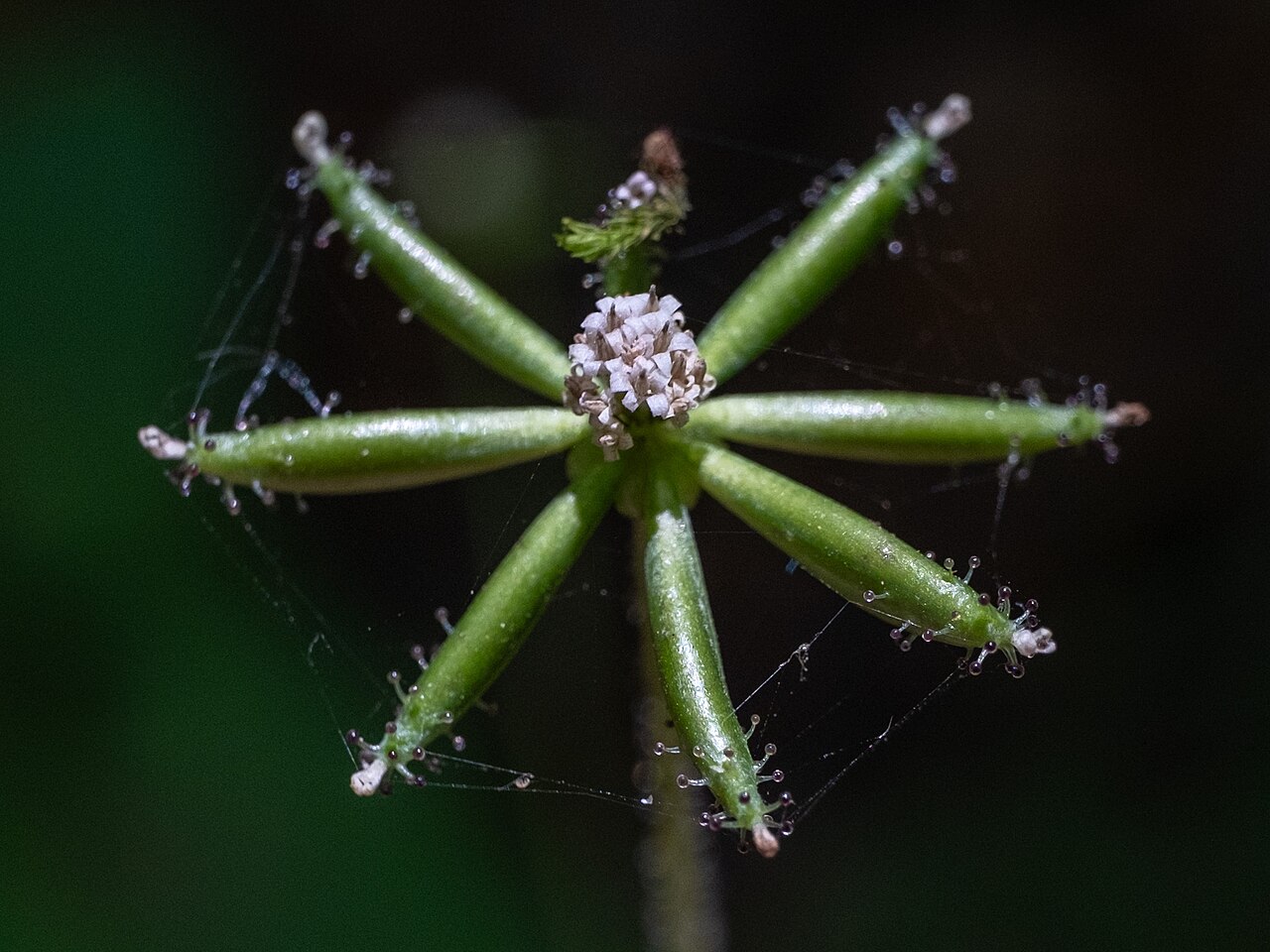
The name pathfinder comes from a nice bit of woodland lore. When people or animals walk through a patch, they turn some of the leaves over, exposing the silvery undersides and marking the route like a trail of breadcrumbs. Hunters and hikers were said to be able to follow the path that way, until the leaves slowly turn back to face the light. The tiny fruits do their own traveling: they are covered with sticky glands and cling to fur, feathers and socks.
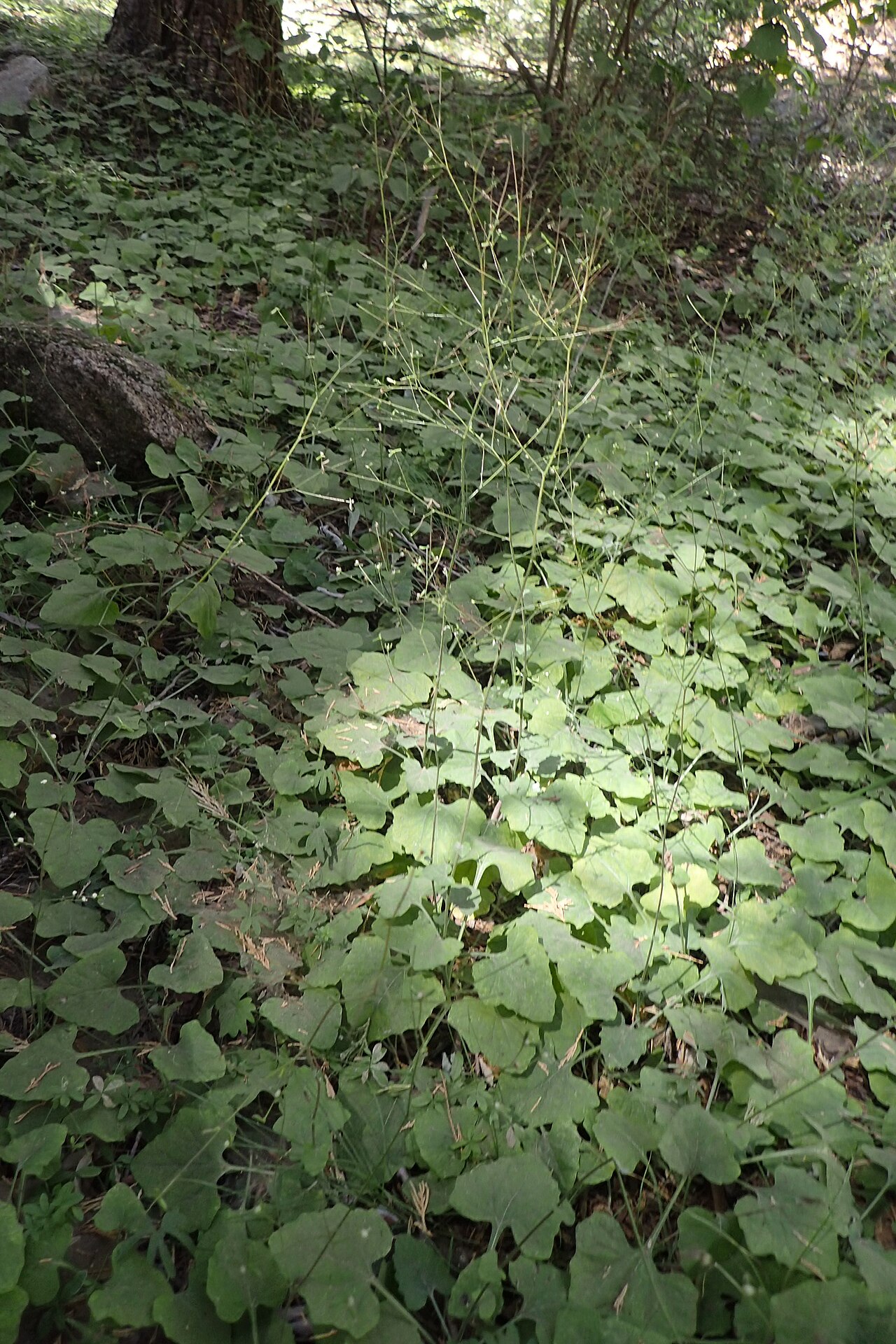
Trailplant is common in moist, shady forests from British Columbia south to central California and east to the northern Rockies, with outlying populations in the Black Hills and around the upper Great Lakes. It is an easy, adaptable groundcover for dry to moist shade in western gardens, especially under conifers.
Identification
Look for a low cluster of triangular, long-stalked leaves that are green above and white-woolly below, on the floor of a shady forest, with thin, branched flower stalks rising above in summer.
Roots & Stems
The plant grows from a short, fibrous-rooted crown and spreads slowly. In summer it sends up one or more slender, branching flower stalks 1 to 3 feet tall. The upper stems are glandular, which is the meaning of the genus name Adenocaulon (“glandular stem”).
Leaves
The leaves are mostly basal or on the lower stem, on long stalks. The blades are triangular to heart-shaped, about 2 to 6 inches (5 to 15 cm) wide, with coarse, wavy teeth or shallow lobes. The upper surface is thin and bright green; the lower surface is covered with dense, white, cottony hairs. Turned-over leaves flash silvery-white on the forest floor.
Flowers
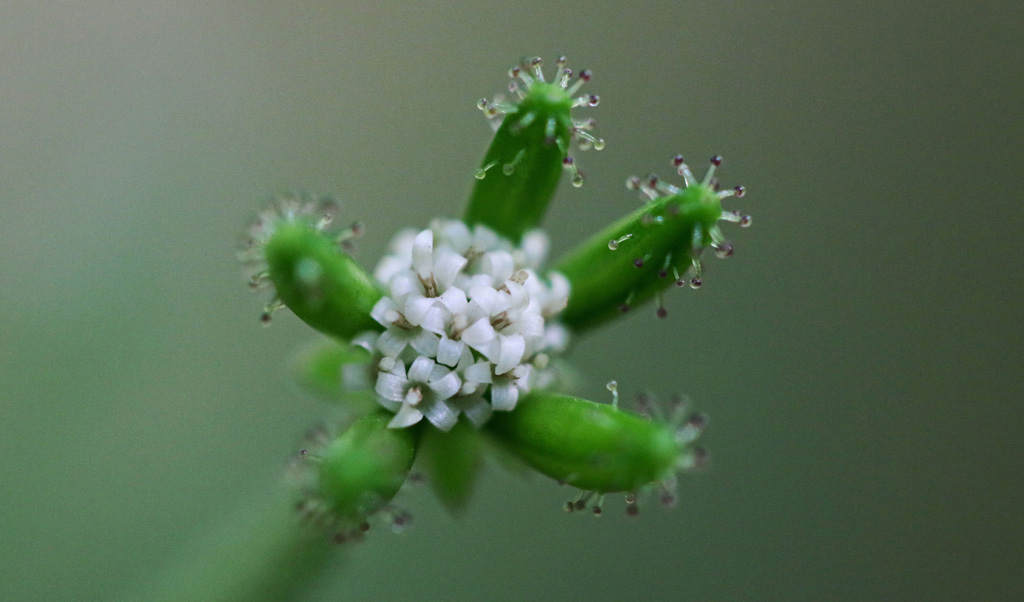
From June to September, the flower stalks branch widely and end in very small, rounded heads only about 1/8 inch across. Each head has a few tiny, white to pinkish disk florets and no showy rays. The flowers have a faint smell and are visited by small flies and other insects. They are easy to overlook.
Fruit & Seeds
The outer florets form club-shaped fruits (cypselae) about 1/4 to 3/8 inch long that spread into a star around the head. The thick upper end of each fruit is covered with stalked, sticky glands. They stick to fur, feathers and clothing, carrying the seeds along trails, another reason for the name trailplant.
Look-alikes
Coltsfoot (Petasites frigidus) has similar white-woolly leaf undersides but grows in wetter places and has larger, fragrant flower heads in early spring. Wild ginger (Western Wild Ginger) has heart-shaped leaves that are green on both sides and hairy, with hidden maroon flowers at ground level. Vanilla leaf has leaves divided into three fan-shaped leaflets.
Safety & Conservation
Trailplant is not known to be toxic, but it is not used as food. It is common and secure in the Pacific Northwest and California. The disjunct populations around the Great Lakes and in the Black Hills are rare and protected in some states, so leave wild plants alone and buy nursery-grown plants or seed.
Quick Facts
| Scientific Name | Adenocaulon bicolor |
| Family | Asteraceae (aster family) |
| Plant Type | Herbaceous perennial; woodland groundcover |
| Mature Height | Leaves 6–12 in; flower stalks 1–3 ft |
| Mature Spread | 1–2 ft |
| Growth Rate | Moderate |
| Sun Exposure | Part shade to full shade |
| Water Needs | Low to moderate; tolerates dry shade once established |
| Soil Type | Humus-rich forest loam, sandy or gravelly woodland soils |
| Soil pH | About 5.0–7.0 |
| Bloom Time | June–September |
| Flower Color | White, tiny |
| Fall Color | None notable; dies back in winter |
| Fruit | Club-shaped, sticky-glandular cypselae in a star |
| Deer Resistant | Moderately; seldom heavily browsed |
| USDA Hardiness Zones | 4–9 |
Native Range
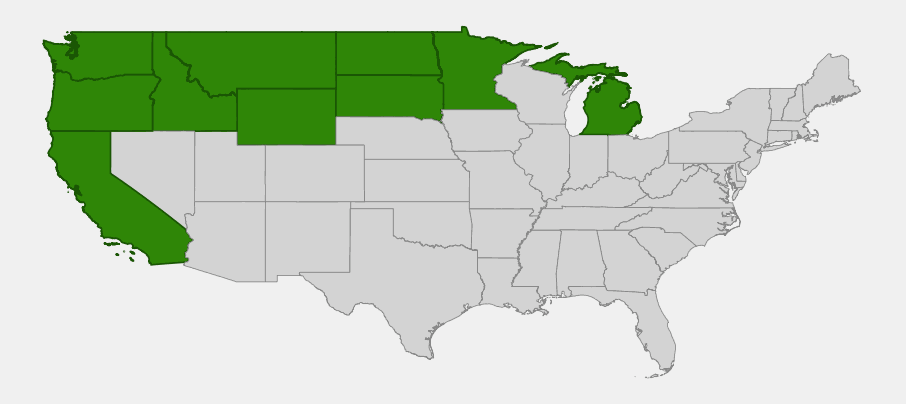
American trailplant is native to western and north-central North America. USDA PLANTS lists it as native in California, Idaho, Michigan, Minnesota, Montana, North Dakota, Oregon, South Dakota, Washington and Wyoming, and in Alberta, British Columbia and Ontario. The Lady Bird Johnson Wildflower Center describes its range as British Columbia and Alberta south through the Cascades, Coast Ranges and Sierra Nevada to San Luis Obispo County, California, and across the northern United States to Minnesota and Michigan.
Its main range is the Pacific Northwest and California, where it is one of the most common herbs in shady forests, and the northern Rocky Mountains of Idaho, Montana and northwestern Wyoming. East of the Rockies it is disjunct: there are outlying populations in the Black Hills of South Dakota and in the upper Great Lakes region of Minnesota, Michigan and Ontario, far from the main range.
It grows in moist to fairly dry conifer and mixed forests, redwood and mixed evergreen forests, streambanks and shady openings, often along trails, from near sea level to about 6,500 feet (1,980 m).
📋 Regional plant lists featuring American Trailplant: Idaho, Eastern Oregon & Eastern Washington · Montana & Wyoming · Michigan, Wisconsin & Eastern Minnesota · North Dakota, South Dakota & Western Minnesota · Western Oregon & Western Washington · California & Nevada
Growing & Care Guide
American trailplant is an easy, unfussy groundcover for shade in western gardens. It fills in under trees, tolerates root competition and summer dryness once established, and its two-toned leaves brighten dark corners.
Light
Part shade to full shade. It grows well under conifers and large shrubs. Morning sun is fine in cool climates, but hot afternoon sun scorches the thin leaves.
Soil & Water
It prefers humus-rich, well-drained woodland soil but tolerates sandy and gravelly soils. Water regularly the first year. Once established, it tolerates summer-dry shade in the Pacific Northwest and coastal California, though it looks best with occasional summer water.
Planting Tips
Plant in spring or fall, about 12 inches apart, and mulch with leaf litter or conifer needles. Combine it with ferns, wild ginger, vanilla leaf, inside-out flower and other woodland plants for a natural forest-floor planting.
Pruning & Maintenance
Very little care is needed. Cut back the flower stalks after seed set if you want to limit self-sowing or keep the sticky fruits from catching on clothing along paths. Leave the leaf litter to feed the soil.
Propagation
It self-sows readily in good conditions. Sow fresh seed outdoors in fall; it germinates in spring. Clumps can also be divided in early spring.
Landscape Uses
- Woodland groundcover: a two-toned carpet for dry to moist shade under trees
- Native shade gardens: with ferns, wild ginger and other forest perennials
- Forest restoration: understory plantings in Pacific Northwest and California forests
- Trailside plantings: a classic plant along woodland paths
- Nature education: the turned-leaf “pathfinder” trick and sticky hitchhiking seeds
Wildlife & Ecological Value
Trailplant is a modest but widespread part of the forest floor community, and its seeds travel with the animals that pass by.
For Pollinators
The tiny flowers are visited by small flies, small bees and other insects. Their faint odor is thought to attract flies.
For Birds
Ground-foraging birds may pick up the sticky fruits on their feathers and feet, helping disperse them. The plant also provides cover for insects that forest birds eat.
For Mammals
Deer and other mammals walk through patches and carry the sticky fruits in their fur, spreading the seeds along trails and game paths.
Ecosystem Role
As a widespread groundcover, it helps hold soil and recycle nutrients on the forest floor. Its spread along trails is a good example of epizoochory, seed dispersal by hitchhiking on animals.
Cultural & Historical Uses
The common names pathfinder and trailplant come from the way the leaves flip to show their white undersides when someone walks through a patch, marking the route. It is often said that hunters and trackers used this to follow animals or other people through the forest.
Trailplant has few recorded uses. It was not an important food plant, and its value today lies mainly in forest-floor gardens and restoration plantings, where its silver-backed leaves and tiny hitchhiking seeds make it a favorite plant for teaching children about how seeds travel.
Adenocaulon is a small genus with species in North America, South America and eastern Asia. A. bicolor is the only species native to the United States and Canada. Its isolated populations around the Great Lakes and in the Black Hills may be remnants of a wider range in cooler past climates.
Frequently Asked Questions
Why is it called pathfinder?
When people or animals walk through a patch, they flip some leaves over, showing the white undersides and marking the route. Over time the leaves turn back green side up.
Is American trailplant a good groundcover?
Yes, for shade in western gardens. It tolerates dry shade and root competition once established and spreads slowly by self-sowing.
Why do the seeds stick to my clothes?
The club-shaped fruits are covered with sticky, stalked glands. They catch on fur, feathers and fabric, which spreads the seeds along trails.
Does it grow in the East?
Only in a few disjunct populations around the upper Great Lakes (Michigan, Minnesota and Ontario) and in the Black Hills. Its main range is the West.
Is trailplant related to asters?
Yes. Despite its tiny, rayless flower heads, it belongs to the aster family (Asteraceae).

Looking for a nursery that carries American Trailplant?
Browse our native plant nursery directory: California · Idaho · Michigan, Minnesota & Montana · North Dakota · Oregon · South Dakota · Washington · Wyoming