
Redwhisker Clammyweed (Polanisia dodecandra)
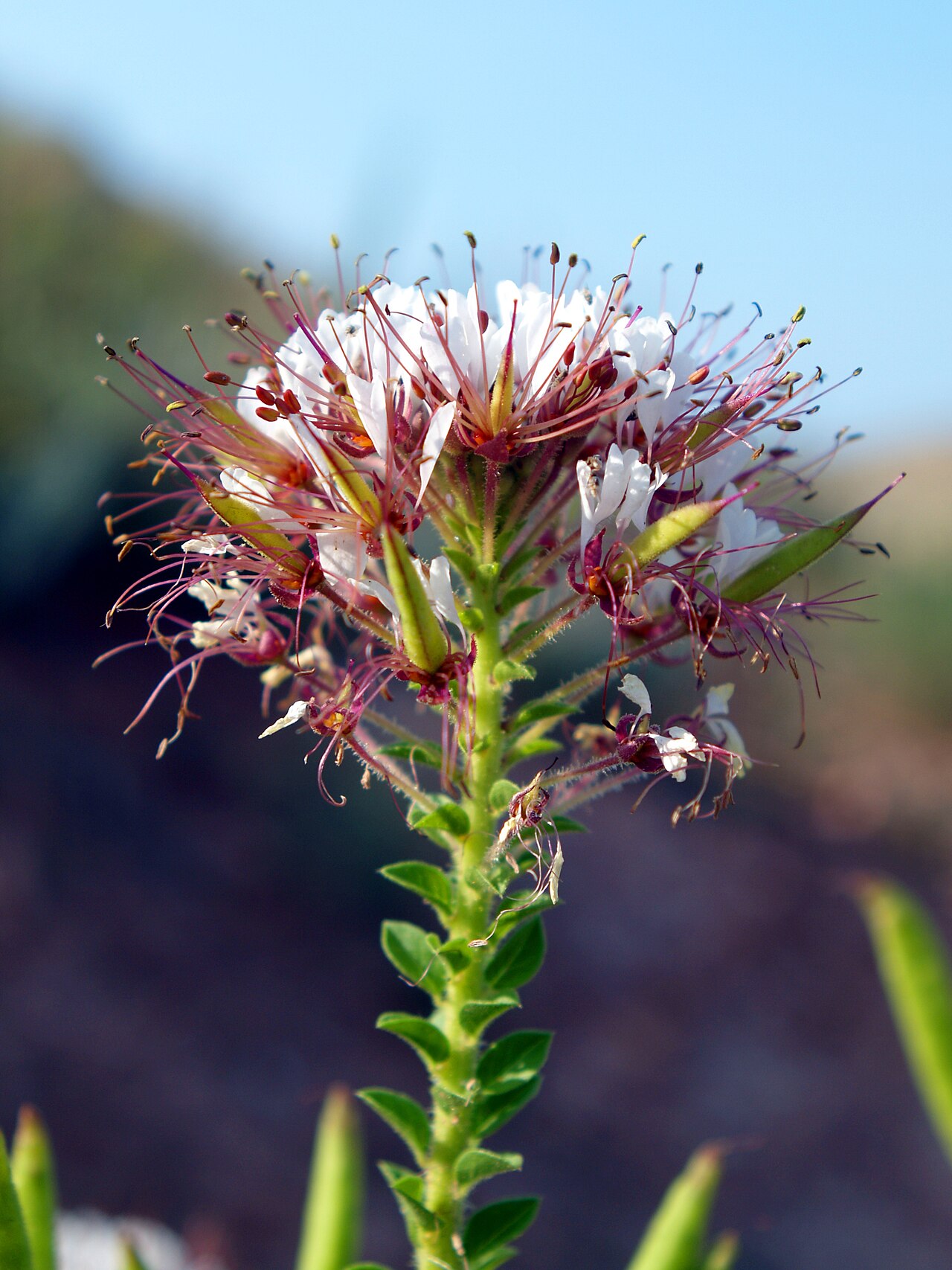
Polanisia dodecandra, Redwhisker Clammyweed, is a native annual wildflower of sandy and gravelly ground across much of North America, from southern Canada to northern Mexico. It belongs to the cleome family (Cleomaceae), the same family as Rocky Mountain bee plant, and like its relatives it bears showy clusters of flowers with long, protruding stamens. The “red whiskers” are those stamens: purple-red filaments that stick out well beyond the white to pale pink petals.
The other half of its name is just as descriptive. The stems, leaves and pods are covered in short, sticky glandular hairs that make the plant feel clammy to the touch and give it a strong, skunky or musky smell. That scent and stickiness probably help protect it from grazing animals and insects. Despite the unappealing name, clammyweed is an attractive, long-blooming plant that thrives in hot, dry places where few other wildflowers grow.
This guide covers how to identify redwhisker clammyweed and its subspecies, where it grows across its wide range, how to grow it from seed in a dry garden, and why it is valuable to bees and other insects in summer.
Identification
Clammyweed is easy to recognize when in bloom: a bushy annual with three-parted leaves, a sticky, strongly scented surface, and clusters of white flowers with long red-purple stamens, followed by upright, bean-like pods.
Stems & Growth Form
Redwhisker clammyweed is a taprooted annual, usually 6 inches to 2 feet tall and occasionally to about 3 feet. It may grow as a single stem or branch freely into a bushy plant. The stems are green to reddish and densely covered in short glandular hairs that leave a sticky residue and a strong odor on your fingers.
Leaves
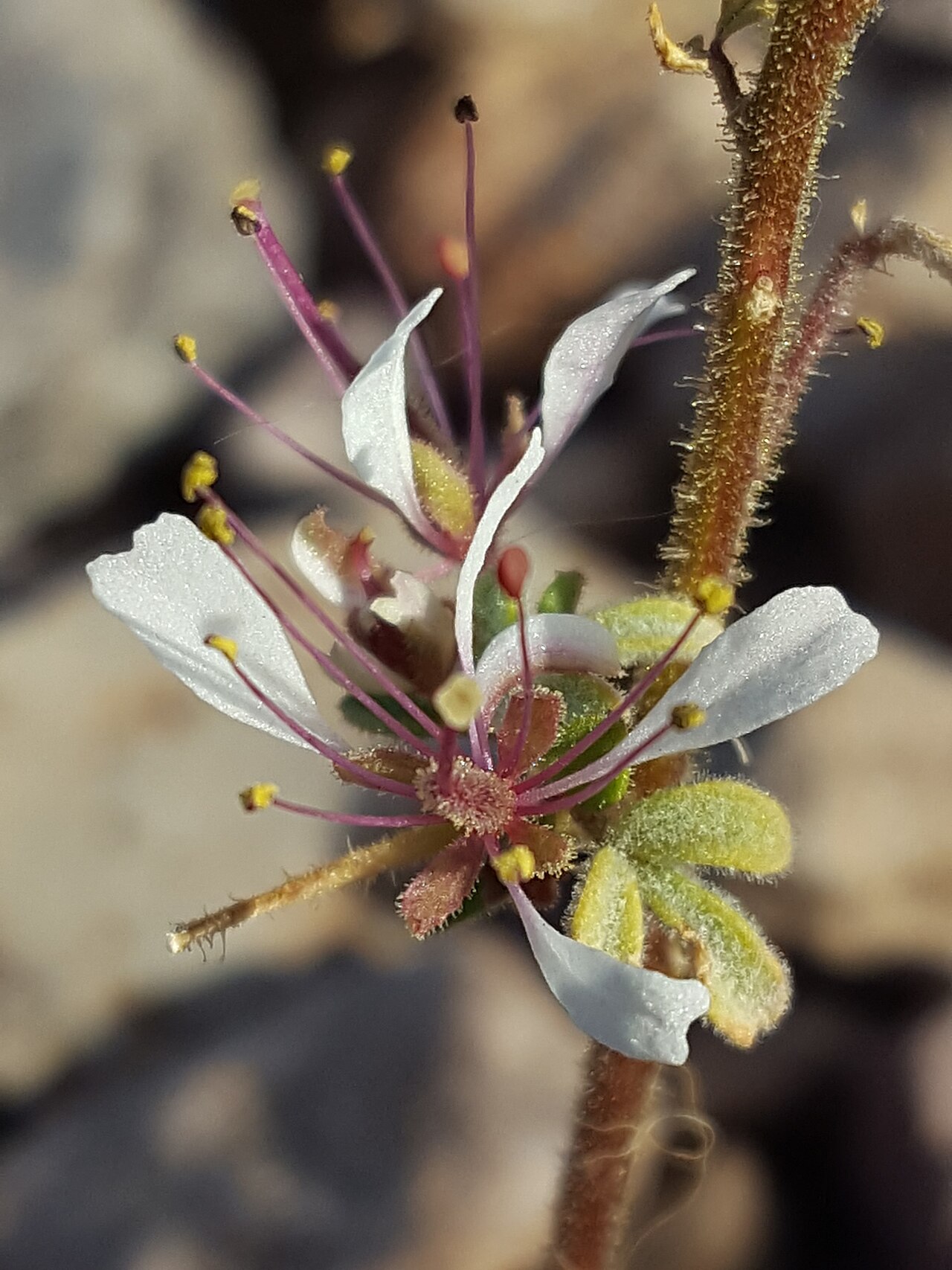
The leaves are alternate and palmately compound, divided into three leaflets on a stalk about as long as the leaflets. The leaflets are elliptic to oblong, about ½ to 1½ inches long, with smooth margins, and are grayish-green and glandular-hairy. Upper leaves become small and simple, forming leafy bracts in the flower cluster.
Flowers
The flowers are borne in a dense raceme at the tops of the stems, which keeps elongating as new flowers open. Each flower has four white to cream or pinkish petals with narrow stalks (claws) and notched tips, and a cluster of 8 to more than 20 stamens with long purple to red filaments. The species name dodecandra means “twelve stamens.” Clammyweed blooms from late spring to fall, mainly June through September.
Pods & Subspecies
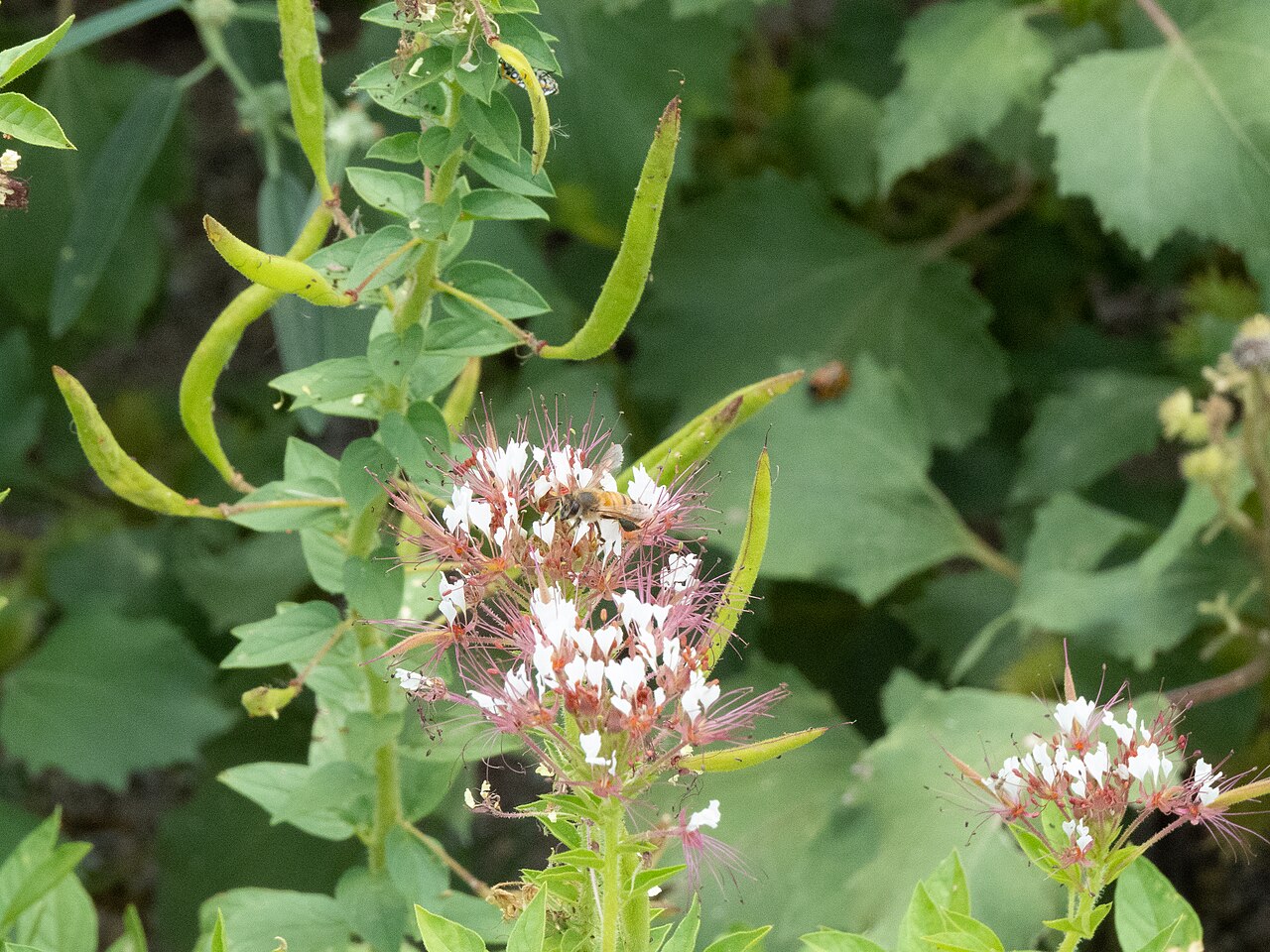
Pollinated flowers produce upright, oblong, slightly flattened pods about 1 to 3 inches long that are also glandular and sticky. They split open at the top to release rough, dark seeds. Three subspecies are usually recognized. Subsp. dodecandra, found mostly in the East and Midwest, has smaller flowers with stamens barely longer than the petals. Subsp. trachysperma, widespread in the West and Great Plains, has larger flowers with long-protruding stamens. Subsp. riograndensis grows in Texas and northern Mexico. The related Rocky Mountain Bee Plant is taller, with pink flowers and long, dangling pods.
Quick Facts
| Scientific Name | Polanisia dodecandra (incl. P. trachysperma) |
| Family | Cleomaceae (cleome family) |
| Plant Type | Annual herb with a taproot |
| Mature Height | 6 in–2 ft (occasionally to 3 ft) |
| Mature Spread | 6–18 in |
| Growth Rate | Fast |
| Sun Exposure | Full sun |
| Water Needs | Low; very drought tolerant |
| Soil Type | Sandy, gravelly or rocky, well-drained soil |
| Soil pH | About 6.0–8.5 |
| Bloom Time | May–October, mainly June–September |
| Flower Color | White to cream or pale pink, with purple-red stamens |
| Fall Color | None; annual |
| Fruit | Upright, sticky, oblong pod (capsule) |
| Deer Resistant | Yes; strong-smelling, sticky foliage is rarely browsed |
| USDA Hardiness Zones | Annual; grows in zones 3–10 climates |
Native Range
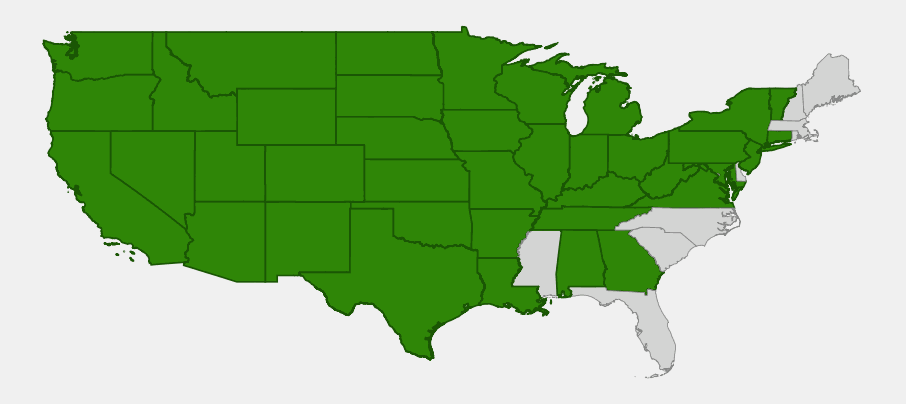
Redwhisker clammyweed has one of the widest ranges of any North American annual wildflower. The Lady Bird Johnson Wildflower Center describes its native range as southeastern Oregon east across the northern states to Minnesota, and south to northeastern California, southern Arizona, northern Mexico and most of Texas. In Canada it grows in Alberta, Saskatchewan, Manitoba, Ontario and Quebec. It is most common on the Great Plains and in the interior West, where it is a familiar plant of sandy roadsides, washes and riverbanks.
East of the Mississippi it becomes scattered and local, growing on sandbars and gravel bars of large rivers, sand prairies, shale barrens, limestone and dolomite outcrops, lakeshores and railroad ballast. In New England, Go Botany (Native Plant Trust) treats the eastern subspecies as native in Connecticut and Vermont, where it is rare (Connecticut lists it as historical), but as introduced in Massachusetts and New Hampshire. Those two states are therefore not shown on our map. It has also spread along roads and railways into some areas beyond its original range.
This page shows the states where USDA PLANTS lists it as native, minus the New England states where it is considered introduced. Within that range it is found mostly in open, sunny, disturbed or naturally shifting sandy and gravelly habitats.
📋 Regional plant lists featuring Redwhisker Clammyweed: New York, Pennsylvania & Northern New Jersey · Idaho, Eastern Oregon & Eastern Washington · Ohio & Indiana · Montana & Wyoming · Michigan, Wisconsin & Eastern Minnesota · Kentucky & Tennessee · Nebraska, Kansas & Eastern Colorado · Utah & Western Colorado · Connecticut, Massachusetts & Rhode Island · New Hampshire, Maine & Vermont · Maryland, Virginia & West Virginia · Delaware, Southern New Jersey & Long Island · Arizona & New Mexico · Illinois, Iowa & Missouri · Alabama, Georgia & Mississippi · Arkansas, Louisiana, Eastern Oklahoma & Eastern Texas · South & West Texas · North Dakota, South Dakota & Western Minnesota · California & Nevada
Growing & Care Guide
Redwhisker clammyweed is an easy annual for the hottest, driest, sandiest spots in a garden. It is rarely sold as a plant but is simple to grow from seed, and once established it usually reseeds itself in open, sunny ground.
Light
Give it full sun. Clammyweed grows on open sand and gravel in the wild and becomes weak and sparse in shade.
Soil & Water
Plant it in sandy, gravelly or rocky, well-drained soil. It tolerates poor, alkaline and disturbed soils and does not need fertilizer. Once seedlings are established it is extremely drought tolerant and needs no supplemental water except in prolonged drought. Heavy, wet clay soils are the main thing to avoid.
Planting Tips
Sow seed directly where you want plants, in late fall or early spring, on bare or lightly raked soil. Cover it only lightly. Seedlings grow quickly in warm weather and bloom by early summer. Because of its taproot, clammyweed does not transplant well once large, so start it in place or move seedlings while small. It is a good choice for gravel gardens, sandy road edges, and the gaps in dry rock walls.
Pruning & Maintenance
No pruning is needed. Leave some pods to ripen and split if you want the plant to return next year. Pull plants at the end of the season or let them stand. Wash your hands after handling it, since the sticky hairs leave a strong odor.
Propagation
Propagate by seed. Collect pods as they turn tan and begin to split, dry them, and store the seed in a cool, dry place. Fall sowing outdoors gives natural cold stratification. Seed sown in spring may germinate more evenly after a few weeks of cold, moist treatment.
Landscape Uses
- Dry and gravel gardens: thrives in hot, sandy or gravelly spots where few annuals grow
- Pollinator gardens: long-blooming summer nectar for bees and other insects
- Prairie and sand-prairie restoration: an annual that fills bare openings in sandy sites within its native range
- Roadside and disturbed-site plantings: tolerates poor, alkaline and disturbed soils
- Deer-resistant plantings: the sticky, strong-smelling foliage is rarely browsed
Wildlife & Ecological Value
Clammyweed often grows in harsh, open habitats where little else blooms in midsummer, which makes its flowers especially important to insects in those places.
For Pollinators
The flowers produce nectar and are visited by bumblebees, honey bees and many native bees, as well as wasps, flies and some butterflies. The long stamens dust visiting insects with pollen as they reach the nectar. Because the plant flowers continuously from early summer into fall, it supplies nectar over a long season in sandy and dry habitats.
For Birds
Seed-eating birds may take the small seeds, and the insects attracted to the flowers provide food for insect-eating birds. The plant is not a major bird food.
For Mammals
The sticky, strong-smelling foliage discourages browsing by deer, rabbits and livestock, so clammyweed often survives in grazed and heavily browsed areas.
Ecosystem Role
Clammyweed is a pioneer of shifting and disturbed sandy and gravelly ground. It quickly colonizes river sandbars after floods, blowouts in dunes and freshly disturbed soil, providing early cover and flowers. Its sticky glandular hairs and strong odor are typical of the chemical and physical defenses that help annuals of open, exposed habitats survive grazing.
Cultural & Historical Uses
Linnaeus first described this plant in 1753 as a species of Cleome, the genus of spider flowers. It was later placed in Polanisia, a name from the Greek for “many” and “unequal,” referring to the numerous stamens of different lengths. For many years the genus was included in the caper family (Capparaceae); today most botanists place it in the cleome family (Cleomaceae).
We have not found well-documented traditional uses of clammyweed. The plant has a strong, unpleasant smell and taste and should not be eaten. Its relative, Rocky Mountain bee plant, has a much richer history as a food and dye plant in the Southwest.
Today clammyweed is valued mainly by native gardeners and restoration ecologists as a tough, pollinator-friendly annual for sandy and gravelly sites. It is a reminder that “weed” in a common name usually says more about where a plant grows than about its value.
Frequently Asked Questions
Why is it called clammyweed?
Its stems, leaves and pods are covered in short, sticky glandular hairs that feel damp or “clammy” and give off a strong, musky odor. “Redwhisker” refers to the long, purple-red stamens that stick out of the flowers.
Is redwhisker clammyweed invasive?
No. It is a native annual across much of North America. It colonizes disturbed sandy and gravelly ground and has spread along roads and railways in a few areas, such as parts of New England, but it is not an aggressive invader.
Is clammyweed the same as cleome or spider flower?
It is a close relative. Both belong to the cleome family and have flowers with long stamens. Garden spider flowers are tropical Cleome species, while clammyweed is a smaller native annual with sticky leaves and upright pods.
Does clammyweed attract bees?
Yes. Its flowers produce nectar and are visited by bumblebees, many native bees and other insects from early summer into fall.
How do I grow clammyweed?
Sow seed directly in full sun and sandy or gravelly, well-drained soil in fall or early spring. Water only until seedlings are established. Let some pods ripen so it reseeds.

Looking for a nursery that carries Redwhisker Clammyweed?
Browse our native plant nursery directory: Alabama, Arizona & Arkansas · California · Colorado, Connecticut & Georgia · Idaho, Illinois, Indiana, Iowa & Kansas · Kentucky, Louisiana, Maryland, Michigan, Minnesota, Missouri & Montana · Nebraska, Nevada, New Jersey, New Mexico, New York, North Dakota, Ohio & Oklahoma · Oregon · Pennsylvania, South Dakota, Tennessee, Texas, Utah, Vermont & Virginia · Washington · West Virginia, Wisconsin & Wyoming