
Texas Toadflax (Nuttallanthus texanus)
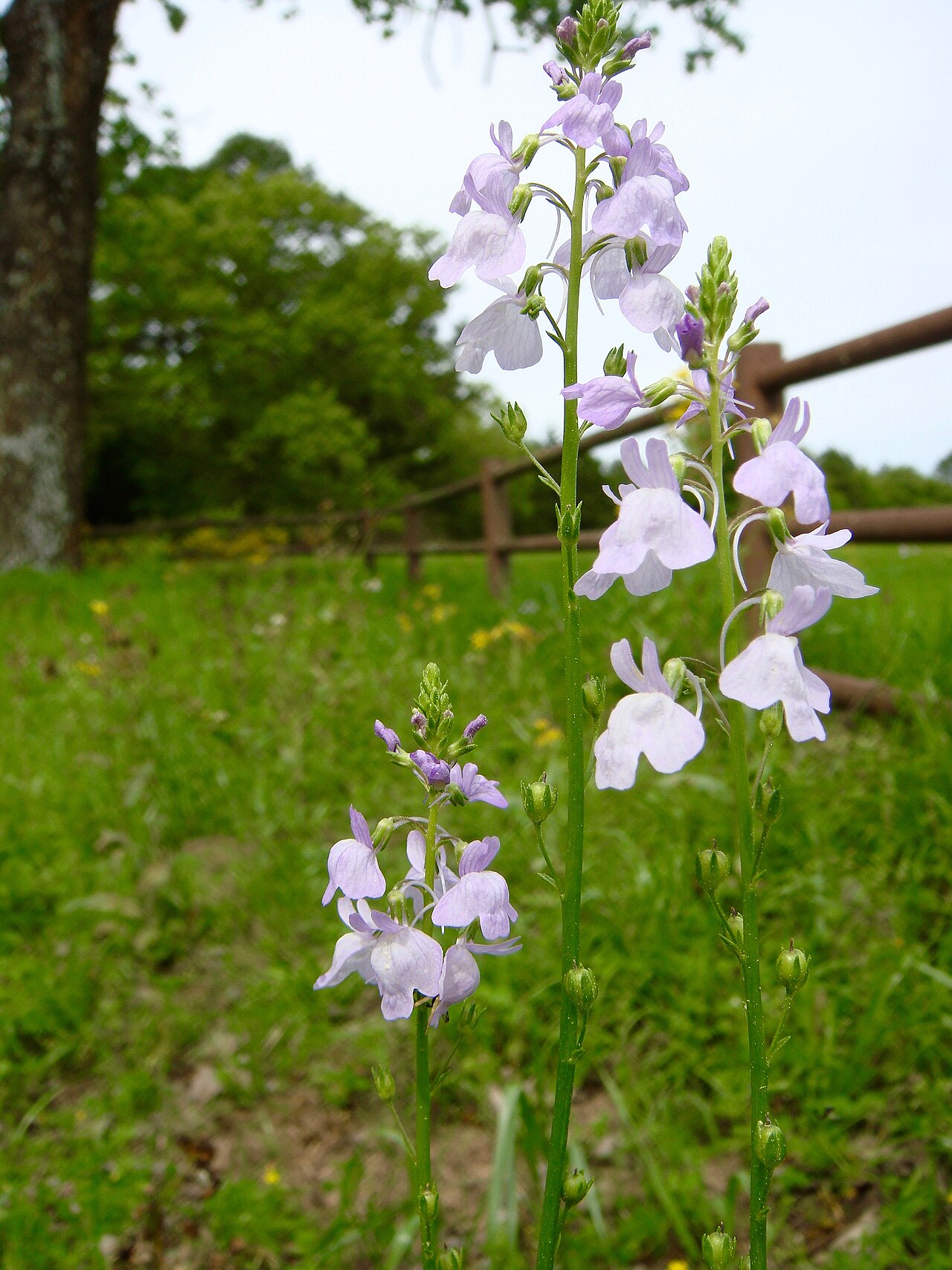
Nuttallanthus texanus, known as Texas Toadflax, southern toadflax or large blue toadflax, is a slender native annual in the plantain family (Plantaginaceae). In spring, wiry stems 6 to 30 inches tall rise from a low rosette and carry loose spikes of small, pale lavender to blue-violet snapdragon-like flowers, each with a white, two-humped palate and a thin, curved spur.
It is a plant of open, sunny ground with thin or sandy soil: old fields, pastures, roadsides, prairies, open woods, desert grasslands and sandy flats. Its range is very wide, from Virginia and the Carolinas west through the southern states to Texas and the desert Southwest, and north along the Great Plains and western mountains to the Dakotas, Montana, Washington and southern Canada. It was long known as Linaria texana or as a variety of Linaria canadensis, and those names still appear in many field guides.
Texas toadflax is delicate and easy to overlook alone, but in a good spring it can tint whole fields lavender. It is a host plant for the common buckeye butterfly and an early nectar source for bees. This guide covers how to tell it from its close relative Canada toadflax, where it grows and how to encourage it in a wildflower meadow.
Identification
Two very similar native toadflaxes are widespread in the United States: Texas toadflax and Canada toadflax (N. canadensis). Texas toadflax generally has larger flowers with longer spurs, and the two are best separated with a hand lens.
Rosette & Stems
Plants start as a small rosette of short, trailing, leafy shoots that hug the ground; these non-flowering shoots are a good clue that you are looking at a native toadflax. One or a few erect flowering stems rise from the rosette, usually 6 to 30 inches tall. They are thin, smooth and mostly unbranched below the flowers.
Leaves
The stem leaves are alternate, very narrow and linear, ½ to 1½ inches long, smooth and slightly fleshy, and spaced well apart along the stem. Leaves on the trailing rosette shoots are shorter and often opposite or whorled.
Flowers
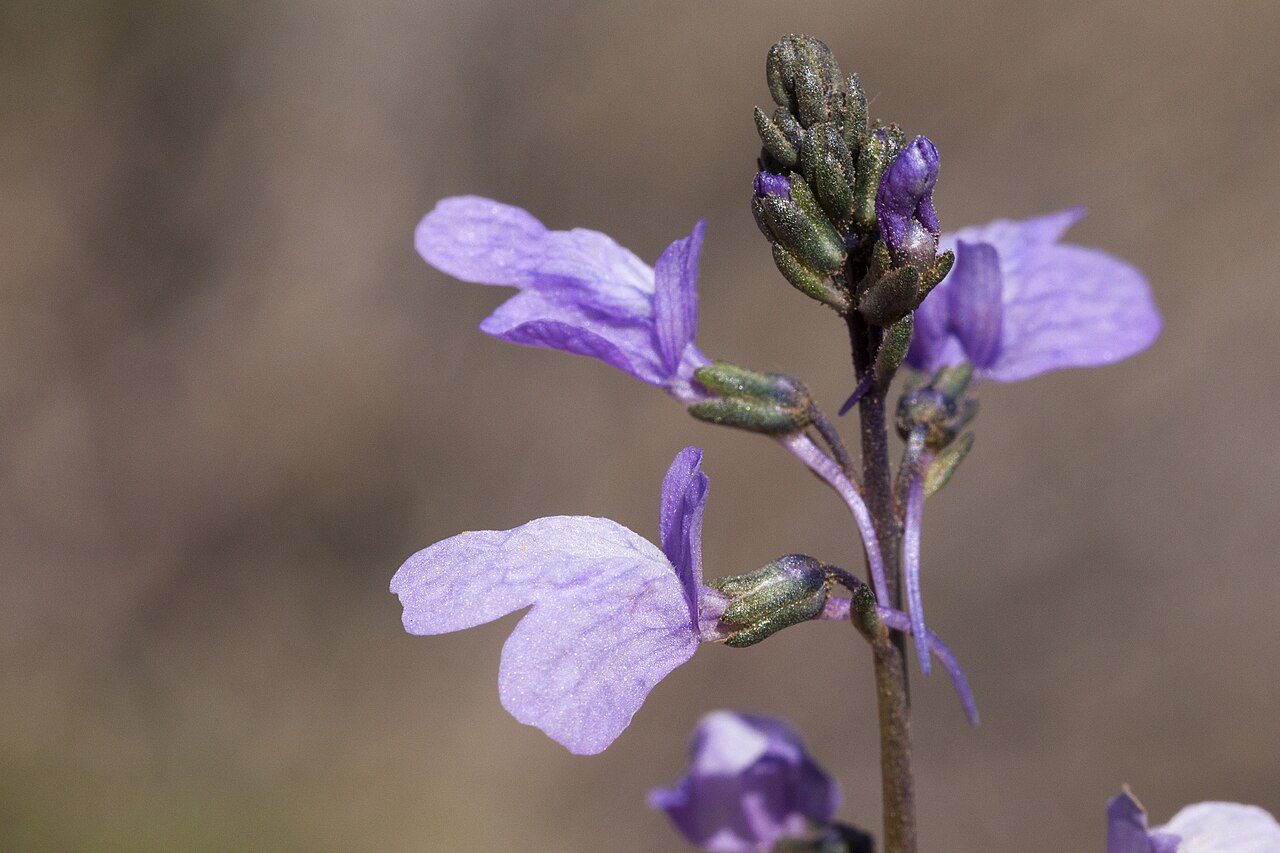
The flowers are borne in a loose, elongating spike at the top of the stem. Each is two-lipped, like a tiny snapdragon, and lavender to blue-violet. The upper lip has two small lobes. The larger lower lip has three spreading lobes and a raised, white, two-ridged palate in the throat. A slender spur curves down and back from the base of the flower. In Texas toadflax the whole flower is usually about ½ to ¾ inch long including the spur, and the spur itself is generally about ¼ inch or more long. Canada toadflax has smaller flowers with shorter spurs. Bloom runs mainly from March to May in the South and into early summer farther north.
Fruit & Seeds
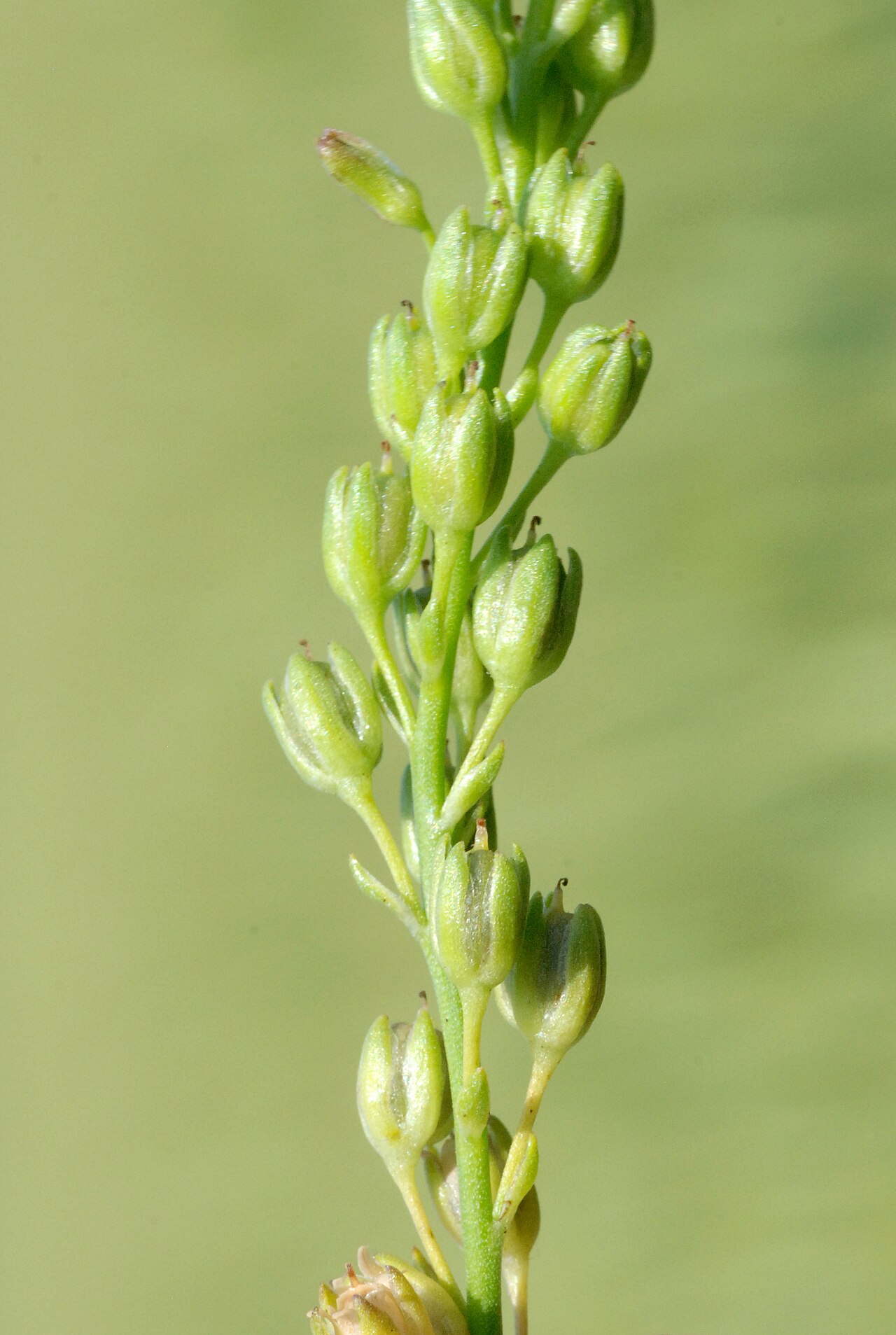
The fruit is a small, rounded capsule that opens at the top to release many tiny, dark seeds. Seed surface texture is one of the technical features botanists use to separate the native toadflax species.
Quick Facts
| Scientific Name | Nuttallanthus texanus (syn. Linaria texana, Linaria canadensis var. texana) |
| Family | Plantaginaceae (plantain family; formerly Scrophulariaceae) |
| Plant Type | Annual or winter annual (sometimes biennial) wildflower |
| Mature Height | 6–30 in in flower |
| Mature Spread | 3–8 in |
| Growth Rate | Fast |
| Sun Exposure | Full sun |
| Water Needs | Low; prefers well-drained, dry to moderately moist soil |
| Soil Type | Sand, sandy loam, gravel and thin rocky soils |
| Soil pH | About 5.5–8.0 |
| Bloom Time | March–May in the South; into June or July farther north and at higher elevations |
| Flower Color | Pale lavender to blue-violet with a white palate |
| Fall Color | None; plants die after setting seed |
| Fruit | Small rounded capsule with tiny seeds |
| Deer Resistant | Mostly; it is seldom browsed |
| USDA Hardiness Zones | Annual; grows wild in areas equivalent to zones 4–10 |
Native Range
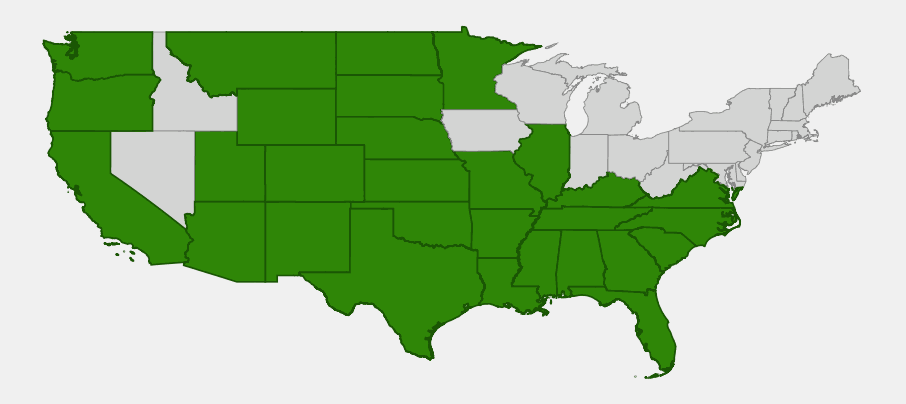
USDA PLANTS records Texas toadflax as native in 29 states, from Virginia, the Carolinas and Florida west across the South to Texas, New Mexico, Arizona and California, and north through the Great Plains and Rocky Mountain states to Minnesota, the Dakotas, Montana, Oregon and Washington. In Canada it reaches southern Alberta, British Columbia and Saskatchewan. It also grows in Mexico. USDA lists it as introduced in Hawaii, so that state is not included on this page.
It is most common in the southern Great Plains and the Southwest, particularly in Texas and Oklahoma, where it can carpet sandy fields and roadsides in early spring. In the Southeast it is scattered on sandy soils, and in the northern Plains and the Northwest it is local, often on sandy or gravelly ground.
Its range overlaps broadly with Canada toadflax, which is more common in the eastern states and on the Atlantic Coastal Plain. Both are pioneers of open, disturbed ground, and they are often found in the same fields.
📋 Regional plant lists featuring Texas Toadflax: Idaho, Eastern Oregon & Eastern Washington · Montana & Wyoming · Michigan, Wisconsin & Eastern Minnesota · Kentucky & Tennessee · Nebraska, Kansas & Eastern Colorado · Utah & Western Colorado · Maryland, Virginia & West Virginia · Arizona & New Mexico · Illinois, Iowa & Missouri · Alabama, Georgia & Mississippi · North & South Florida · North & South Carolina · Arkansas, Louisiana, Eastern Oklahoma & Eastern Texas · South & West Texas · North Dakota, South Dakota & Western Minnesota · Western Oregon & Western Washington · California & Nevada
Growing & Care Guide
Texas toadflax is easy to grow from seed in a sunny spot with sandy or gravelly soil. As a short-lived annual it suits wildflower meadows, prairie plantings and naturalized areas, where it reseeds each year in open ground. Seed is offered by some native seed companies, especially in Texas and the southern Plains.
Light
Full sun. It becomes weak and sparse in shade.
Soil & Water
Give it well-drained, lean soil: sand, sandy loam or gravel. It tolerates drought and does poorly in rich, heavy, wet soil, where larger plants crowd it out. No fertilizer is needed.
Planting Tips
Sow seed in fall, from September to November, on bare or lightly raked soil, and press it in without covering it deeply; the seeds are tiny. Seedlings form rosettes over winter and bloom in spring. Mix it with other spring annuals such as bluebonnets and Indian blanket for a longer show.
Pruning & Maintenance
Very little care is needed. Let plants set seed before mowing; in meadows, wait until late spring or early summer, after the capsules have opened. Light disturbance that keeps some soil bare helps it reseed.
Propagation
Grow it from seed only. Collect capsules when they turn tan, shake out the seeds and store them dry. Fall sowing outdoors gives the best results because the seeds benefit from a period of cool, moist conditions.
Landscape Uses
- Wildflower meadows: spring lavender color with bluebonnets, paintbrushes and other annuals
- Butterfly gardens: a native host plant for common buckeye caterpillars
- Prairie and roadside plantings: a self-sowing annual for sandy, sunny sites
- Xeriscapes and sandy gardens: a delicate, drought-tolerant filler for lean soil
- Restoration of disturbed sandy sites: a native pioneer on bare or thin soil
Wildlife & Ecological Value
Texas toadflax is small, but it plays a real part in the spring wildflower community, feeding insects when many perennials are just starting to grow.
For Pollinators
The flowers hold nectar in their slender spurs, and the closed palate must be pushed open to reach it. Bees, including small native bees, and butterflies with long tongues are the main visitors. The flowers bloom early, in March and April in the South, when nectar is scarce.
For Birds
The seeds are tiny and of minor importance to birds. The caterpillars that feed on the plant are food for insect-eating birds.
For Mammals
The plant is small and seldom browsed. It has little direct value for mammals.
Ecosystem Role
Texas toadflax is a larval host for the common buckeye butterfly (Junonia coenia), whose caterpillars feed on native toadflaxes, plantains and related plants. As a pioneer annual, it quickly colonizes bare sand and disturbed ground and helps hold soil before longer-lived plants move in.
Cultural & Historical Uses
The plant was first described in the late 1840s by the German botanist Georg Scheele as Linaria texana, from Texas specimens. For more than a century most botanists placed it in Linaria, often as a variety of Canada toadflax. In 1988 the British botanist David Sutton separated the American species into a new genus, Nuttallanthus, named for the naturalist Thomas Nuttall, and this is the name now used by USDA PLANTS and most floras.
The common name “toadflax” originally belonged to the European Linaria vulgaris (butter-and-eggs), whose narrow leaves resemble those of flax and whose flowers have a mouth, said to look like a toad’s, that opens when pinched. The native toadflaxes share the same flower shape.
Texas toadflax has no well-documented history of human use. Today it is valued in Texas and the Plains as part of the spring wildflower display, often appearing with bluebonnets and paintbrushes in pastures and along roadsides.
Frequently Asked Questions
How is Texas toadflax different from Canada toadflax?
They are very similar. Texas toadflax usually has larger flowers, about ½ to ¾ inch long, with a longer spur, while Canada toadflax has smaller flowers and a shorter spur. Seed details are also used to separate them, and some older books treat Texas toadflax as a variety of Canada toadflax.
Is Texas toadflax native?
Yes. It is native across much of the southern, central and western United States, southern Canada and Mexico. It is introduced in Hawaii.
Is it invasive like butter-and-eggs?
No. Butter-and-eggs (Linaria vulgaris) and Dalmatian toadflax are invasive European species. Texas toadflax is a native annual that does not spread by roots or form dense colonies.
When does Texas toadflax bloom?
Mostly from March to May in the South and Southwest, and into June or July in the northern Plains and the Northwest.
Does it attract butterflies?
Yes. Butterflies and bees visit the flowers, and the plant is a host for common buckeye caterpillars.

Looking for a nursery that carries Texas Toadflax?
Browse our native plant nursery directory: Alabama, Arizona & Arkansas · California · Colorado, Florida & Georgia · Illinois & Kansas · Kentucky, Louisiana, Minnesota, Mississippi, Missouri & Montana · Nebraska, New Mexico, North Carolina, North Dakota & Oklahoma · Oregon · South Carolina, South Dakota, Tennessee, Texas, Utah & Virginia · Washington · Wyoming