Blue Flax (Linum lewisii)
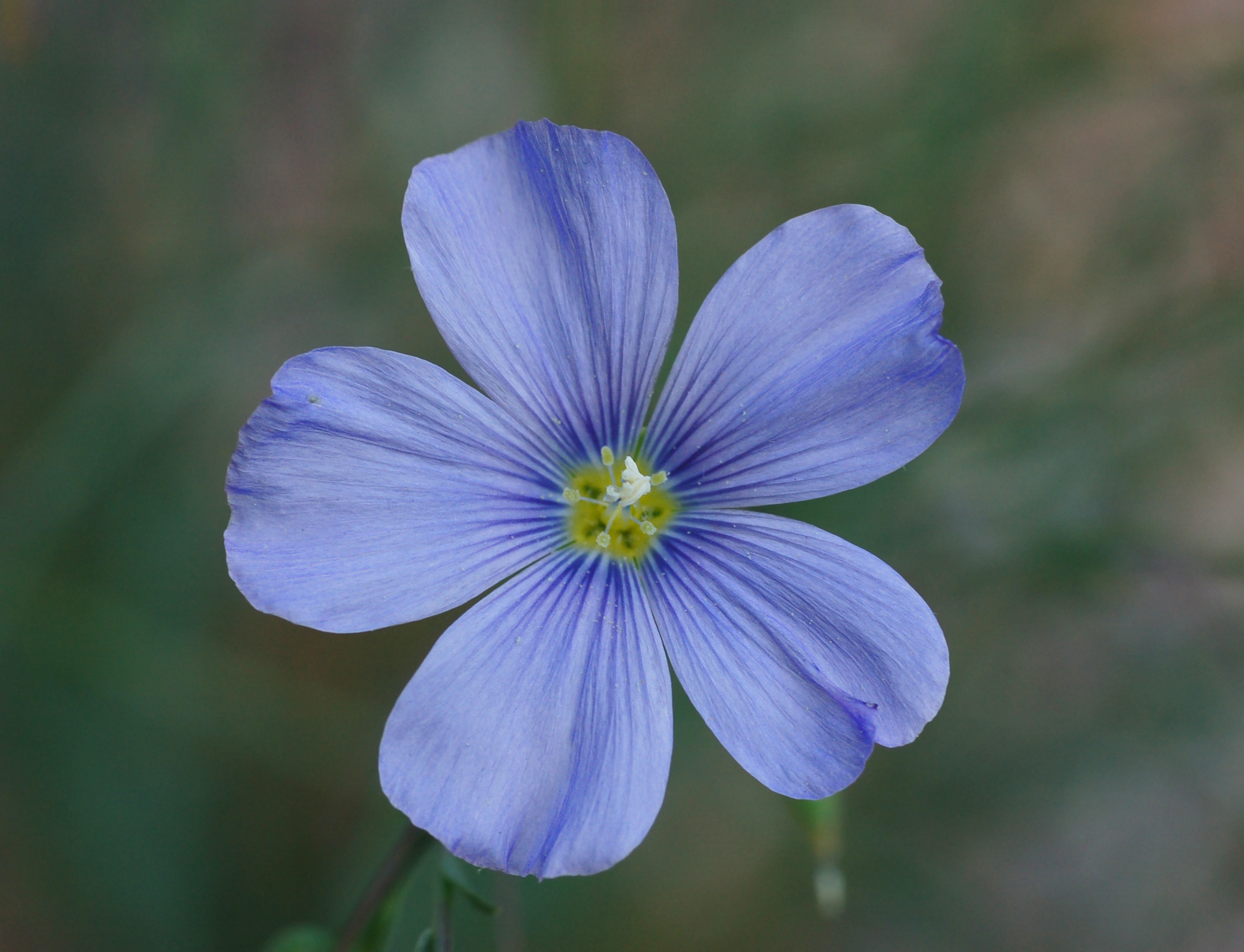
Linum lewisii, commonly known as Blue Flax or Lewis Flax, is one of the most charming and ecologically significant wildflowers of the American West. Named in honor of Meriwether Lewis, who collected specimens during the famous Lewis and Clark Expedition of 1804–1806, this graceful perennial herb has been brightening meadows, prairies, and roadsides across western North America long before European contact. Its delicate sky-blue to pale lavender five-petaled flowers open fresh each morning and drop their petals by afternoon — a fleeting beauty that nonetheless returns day after day throughout a long summer bloom season.
Despite the ephemeral nature of individual blooms, Blue Flax is a tough, adaptable, and long-lived perennial. Each plant produces slender, wiry stems that grow in a distinctive vase-shaped form, reaching about 2 feet tall. A single established plant can live for many years, spreading gradually by self-seeding to form loose colonies of swaying blue flowers across open ground. It is drought-tolerant, thriving in lean, well-drained soils where more demanding plants struggle, making it an invaluable choice for xeriscape gardens, prairie plantings, and habitat restoration projects throughout the Great Plains, Rocky Mountains, and Intermountain West.
Blue Flax is closely related to Common Flax (Linum usitatissimum), the Old World species cultivated for millennia for both linen fiber and linseed oil. Native peoples across the West likewise made use of Linum lewisii: the strong stem fibers were twisted into cordage, nets, and snares, while the seeds provided a nutritious food source. Today, Blue Flax is prized as an ornamental wildflower and essential habitat plant that supports native bees, butterflies, and a diverse array of seed-eating birds. It is one of the most widely available native wildflower seeds in commercial mixes for western restoration plantings.
Identification
Blue Flax is a slender, upright perennial herb that grows 1 to 2 feet (30–60 cm) tall, forming a distinctive vase-shaped clump of wiry stems from a woody base. The plants have a light, airy appearance — almost delicate — yet are surprisingly long-lived and resilient. Individual stems are thin, slightly branching toward the top, and often have a faint blue-green color. The overall growth habit is graceful and open rather than dense or bushy.
Stems & Leaves
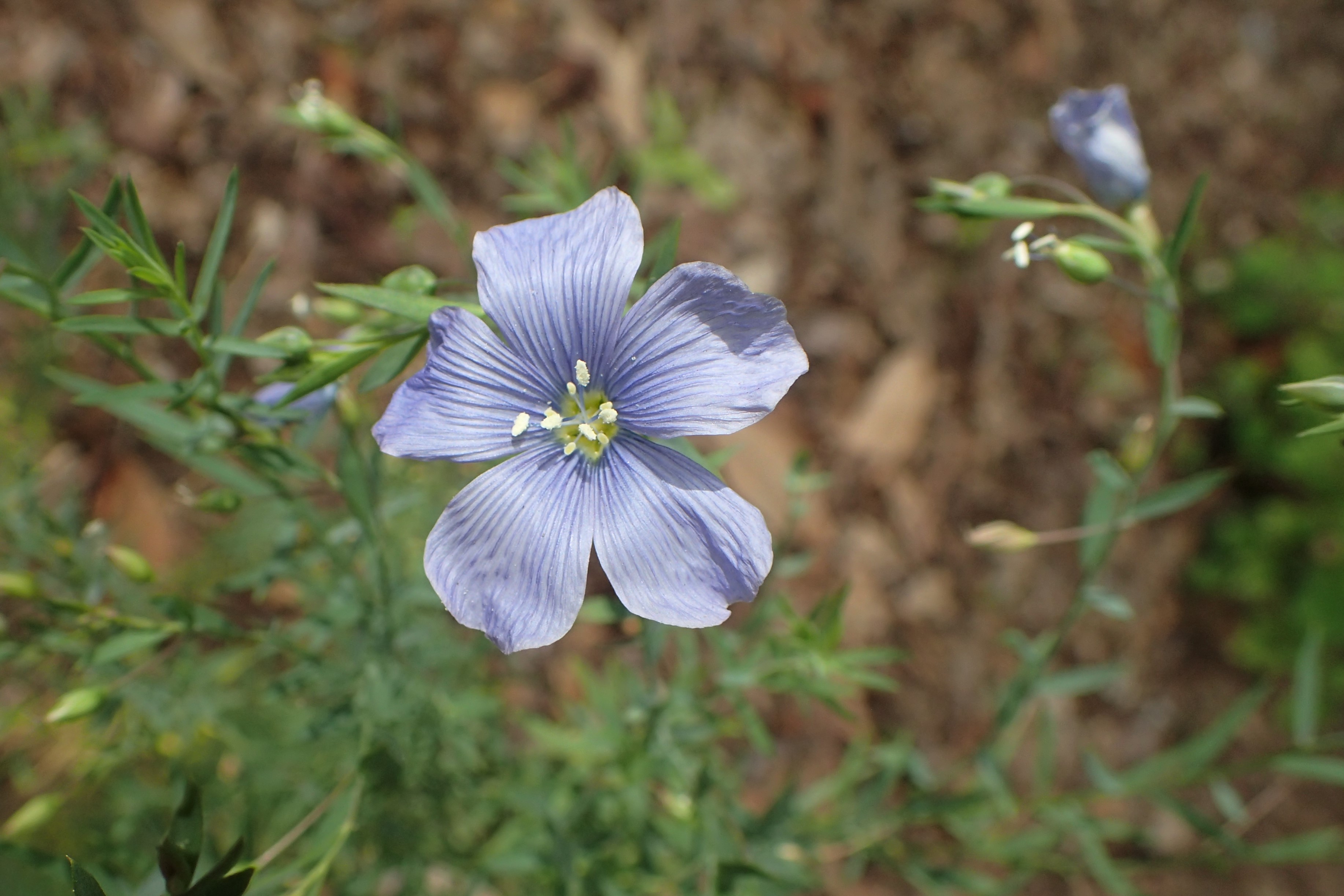
The stems are slender and flexible, with a slight tendency to nod in the breeze. Leaves are small, linear to narrowly lanceolate, 0.5 to 1.5 inches (1.5–4 cm) long, alternate, and arranged spirally along the stem. They are sessile (lacking a stalk), with a gray-green color and smooth margins. The leaves are quite narrow — resembling pine needles in width — which is an adaptation to reduce water loss in dry, exposed habitats. The entire plant has a somewhat blue-green cast that distinguishes it from many other wildflowers.
Flowers
The flowers are the plant’s most spectacular feature: saucer-shaped, 1 to 1.5 inches (2.5–4 cm) in diameter, with five rounded petals that are sky-blue to pale lavender-blue, often with darker blue veins radiating from the center. The petals have a translucent, silky quality that gives the blooms an almost luminescent appearance in morning sunlight. Each flower has five stamens with blue or purple anthers, and five distinct styles. Crucially, each individual flower lasts only a single day — petals fall by early afternoon — but a healthy plant produces dozens of new buds daily, maintaining a continuous display from late spring through midsummer. Flowers open in the morning and close or drop by afternoon.
Fruit & Seeds
After pollination, each flower produces a small, rounded capsule about ¼ inch (6 mm) in diameter, divided into 10 chambers, each containing a single flat, brown, glossy seed. The capsules persist on the plant after ripening and split open to release seeds, which fall near the parent plant or are dispersed by wind and small animals. The seeds contain oils similar to those of cultivated flax and have historically been used as a food source by Indigenous peoples. A single plant can produce hundreds of seeds annually, allowing Blue Flax to naturalize and spread through self-seeding in favorable locations.
Quick Facts
| Scientific Name | Linum lewisii |
| Family | Linaceae (Flax) |
| Plant Type | Perennial Herb / Wildflower |
| Mature Height | 2 ft |
| Sun Exposure | Full Sun |
| Water Needs | Low (Drought Tolerant) |
| Bloom Time | May – August |
| Flower Color | Sky-blue to pale lavender-blue |
| Growth Habit | Vase-shaped with light blue blossoms |
| USDA Hardiness Zones | 3–9 |
Native Range
Blue Flax is one of the most widely distributed native wildflowers of western North America, ranging from Alaska and the Yukon south through British Columbia, Alberta, and Saskatchewan to Baja California and northern Mexico, and east across the Great Plains to Manitoba, Nebraska, Kansas, and the Dakotas. Within the United States, it is native to virtually every western state — from Washington, Oregon, and California through the Rocky Mountain states to the edges of the central plains. It is a defining wildflower of open country across its enormous range.
Throughout this vast territory, Blue Flax occupies a remarkably consistent set of habitats: open, sunny sites with well-drained to dry soils. It thrives on rocky slopes, dry meadows, sagebrush plains, open pine woodlands, roadsides, and disturbed ground. It is particularly abundant at mid-elevations in the Rocky Mountains and throughout the sagebrush steppe of the Great Basin and Intermountain West. In Montana and Wyoming, it is a reliable component of native prairie, foothills meadows, and open conifer forest understories.
Blue Flax readily colonizes disturbed sites and is widely used in erosion control and reclamation seedings throughout the West. Its deep taproot system anchors soil on steep slopes, while its prolific seed production allows it to quickly establish on bare ground following disturbances such as fire, road construction, or overgrazing. It is also notably adaptable to a wide range of elevations — from near sea level along the Pacific Coast to above 10,000 feet in the high Rockies.
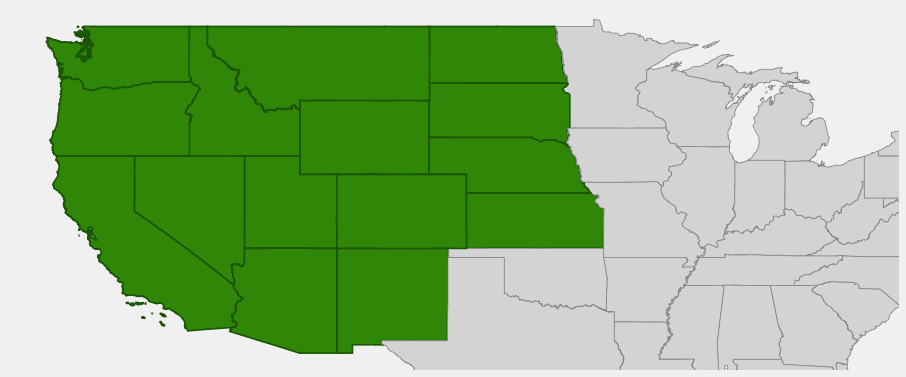
📋 Regional plant lists featuring Blue Flax: Montana & Wyoming
Growing & Care Guide
Blue Flax is one of the easiest native wildflowers to establish in a western garden, and once growing, it requires almost no care. Its combination of drought tolerance, long bloom season, and graceful beauty makes it a top choice for naturalistic plantings, wildflower meadows, and xeriscapes throughout its native range and beyond.
Light
Blue Flax is strictly a sun-lover. It requires full sun — at least 6 hours of direct sunlight daily — to thrive and bloom prolifically. In shade or partial shade, plants become leggy, produce fewer flowers, and are more susceptible to fungal diseases. Choose the sunniest location available in your garden for best results. In hot, low-elevation gardens, some afternoon shade may help extend the bloom season, but morning sun is essential.
Soil & Water
The most important cultural requirement for Blue Flax is excellent drainage. It absolutely will not tolerate standing water or persistently wet soils — these conditions quickly cause root rot and plant death. Blue Flax thrives in lean, sandy, gravelly, or rocky soils that dry out between rain events. Rich, fertile garden soils tend to produce overly lush, floppy plants that bloom less freely. Once established (after the first season), Blue Flax is highly drought-tolerant and typically requires no supplemental irrigation in regions with at least 12 inches of annual precipitation. In drier areas or during establishment, water deeply but infrequently — once every 1–2 weeks during dry spells in the first growing season, then tapering off in subsequent years.
Planting Tips
Blue Flax can be started from seed or transplanted from container stock. For best results with seed:
- Fall sowing: Direct sow seeds outdoors in fall (September–November) for best germination. Seeds require cold stratification — natural winter conditions provide this in most of the West.
- Spring sowing: If sowing in spring, cold-stratify seeds for 4–6 weeks in the refrigerator before planting, or purchase pre-stratified seed.
- Surface sowing: Scatter seeds on the soil surface and press lightly into contact with the soil — do not bury, as Blue Flax needs light to germinate.
- Spacing: Space transplants 12–18 inches apart; they will fill in through self-seeding over time.
- Soil prep: If your soil is heavy clay, amend with coarse sand or fine gravel to improve drainage before planting.
Blue Flax is also commonly included in native wildflower seed mixes for western landscapes and is readily available from specialty native plant nurseries and seed suppliers.
Pruning & Maintenance
Blue Flax is a low-maintenance plant that benefits from minimal intervention. In late summer after flowering is complete, you can cut plants back by one-third to encourage fresh growth, or leave them standing to allow seed to ripen and naturalize. The dried seed capsules provide visual interest through fall and winter and feed birds. In early spring, remove any dead or winter-killed stems. Established clumps may decline after 3–5 years; allowing self-seeded offspring to replace old plants ensures continuous coverage. Avoid heavy mulching around the base, as Blue Flax prefers exposed mineral soil for self-seeding.
Landscape Uses
- Wildflower meadows and prairie gardens — a classic component of western wildflower mixes
- Xeriscape plantings — thrives with minimal water once established
- Rocky slopes and dry banks — excellent for erosion control
- Pollinator gardens — attracts native bees, butterflies, and beneficial insects
- Border plant — airy texture contrasts beautifully with bolder-leaved perennials
- Naturalized plantings — self-seeds to create naturalistic drifts
- Reclamation seedings — widely used in post-disturbance revegetation
Wildlife & Ecological Value
Blue Flax plays an important role in western ecosystems, supporting a diverse range of pollinators, seed-eating birds, and small mammals across its broad native range.
For Birds
The small, oily seeds of Blue Flax are relished by a variety of seed-eating birds. Ground-foraging species like Horned Larks, Vesper Sparrows, Savannah Sparrows, and other grassland sparrows actively seek out the ripe seed capsules. American Goldfinches occasionally visit the plants as well. The upright stems and seed capsules provide good foraging structure for small birds in open prairie and meadow habitats, especially in fall and winter when food is scarce.
For Pollinators
Blue Flax is an excellent pollinator plant, attracting a wide variety of native bees including small mining bees (Andrena spp.), sweat bees (Halictus and Lasioglossum spp.), and bumble bees. Butterflies — including fritillaries, blues, and sulphurs — visit the flowers for nectar. Because each flower lasts only one morning, pollinators must visit early in the day to access fresh nectar and pollen. The bright blue color and UV patterns on the petals are particularly attractive to bees, which see into the ultraviolet spectrum.
For Mammals
Small mammals including deer mice, voles, and ground squirrels eat the seeds of Blue Flax. Pronghorn and deer occasionally browse the foliage, though they typically prefer other plants. In Montana and Wyoming rangelands, Blue Flax is considered a moderately palatable forage species — grazed by livestock when young but generally not heavily utilized by cattle or sheep due to the small leaf size and wiry stems.
Ecosystem Role
Blue Flax plays an important structural role in western plant communities. Its deep taproot system helps stabilize soil on slopes and in disturbed areas, while its prolific seed production allows rapid colonization of open ground after disturbances. As a component of sagebrush steppe, dry grassland, and open woodland communities, it contributes to plant diversity and provides habitat structure for ground-nesting insects and other invertebrates. Its nitrogen-fixing root associations are modest compared to legumes, but the plant’s overall contribution to soil health and ecosystem diversity is significant.
Cultural & Historical Uses
Indigenous peoples across western North America made extensive use of Blue Flax long before European contact. The plant’s most important cultural use was for its strong stem fibers, which were harvested in late summer, retted (soaked in water to soften), dried, and then twisted or braided into strong cordage. This cordage was used to make fishing nets, snares for small mammals, bags, and other woven items. The quality of Lewis Flax fiber is comparable to that of cultivated flax (Linum usitatissimum), and Indigenous weavers valued it highly for its strength and flexibility.
Several Native American groups also used Blue Flax seeds as food. The seeds are rich in oils and proteins — nutritional qualities similar to flaxseed. They were eaten raw, roasted, or ground into a meal and mixed with other foods. The Blackfoot, Crow, and other Plains tribes used the seeds as a calorie-dense, storable food source. The oil-rich seeds were also used medicinally: seed poultices were applied to skin sores and burns, and seed oil was used as a hair dressing and skin conditioner.
Meriwether Lewis collected Blue Flax specimens during the Corps of Discovery Expedition and noted its abundance and potential utility. The species was formally described and named Linum lewisii in his honor by Frederick Pursh in 1814. Today, Blue Flax is among the most widely used native plants in western habitat restoration, erosion control, and revegetation seedings. It is included in numerous commercial wildflower seed mixes and is cultivated by native plant nurseries across the West. Its combination of beauty, drought tolerance, and ecological value makes it an enduring favorite of gardeners, land managers, and ecologists alike.
Frequently Asked Questions
Is Blue Flax the same as common flax or linseed?
No, but they are closely related. Blue Flax (Linum lewisii) is a native western North American species, while common flax (Linum usitatissimum) is an Old World species cultivated for thousands of years for linen fiber and linseed oil. Both belong to the same genus and have similar uses, but Blue Flax is smaller and native to the West. Some taxonomists treat L. lewisii as a subspecies of the European perennial flax Linum perenne, which it closely resembles.
Why do Blue Flax flowers only last one morning?
Each individual Blue Flax flower is designed for rapid, efficient pollination. The petals open in the morning, attract pollinators, and then fall by early afternoon — a strategy that maximizes pollen transfer while minimizing energy investment per flower. However, a healthy plant continues producing new buds daily for weeks, maintaining a continuous display throughout its long bloom season. This “one-day flower” strategy is characteristic of the entire flax family (Linaceae).
How do I get Blue Flax to self-seed?
Allow the seed capsules to ripen fully and open naturally in late summer — resist the urge to deadhead spent flowers. Once ripe, the small seeds fall near the parent plant or are scattered by wind and small animals. They need contact with bare mineral soil to germinate, so lightly rake the area around existing plants in fall to expose soil, or disturb the soil surface slightly. Avoid heavy mulch in areas where you want Blue Flax to naturalize, as seeds cannot penetrate thick mulch layers.
Will Blue Flax grow in my region if I’m outside its native range?
Blue Flax is adaptable and can be grown as an ornamental in many regions outside its native range, as long as you provide full sun and excellent drainage. It performs best in climates with dry summers and is not well-suited to humid southeastern regions. It is hardy in USDA Zones 3–9 and can tolerate cold winters, but needs well-drained soil and full sun regardless of climate.
How long does a Blue Flax plant live?
Individual plants are typically perennial but relatively short-lived — 3 to 5 years on average. However, because Blue Flax self-seeds freely, established colonies are long-lived as new seedlings continuously replace aging plants. Plant a few individuals and, given the right conditions (full sun, good drainage), you’ll soon have a self-renewing colony that persists indefinitely with minimal care.