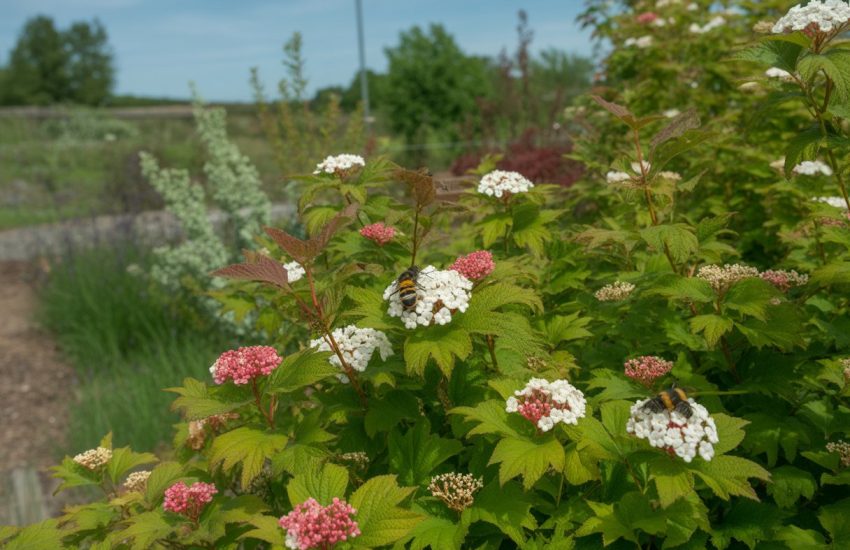
Squashberry (Viburnum edule)
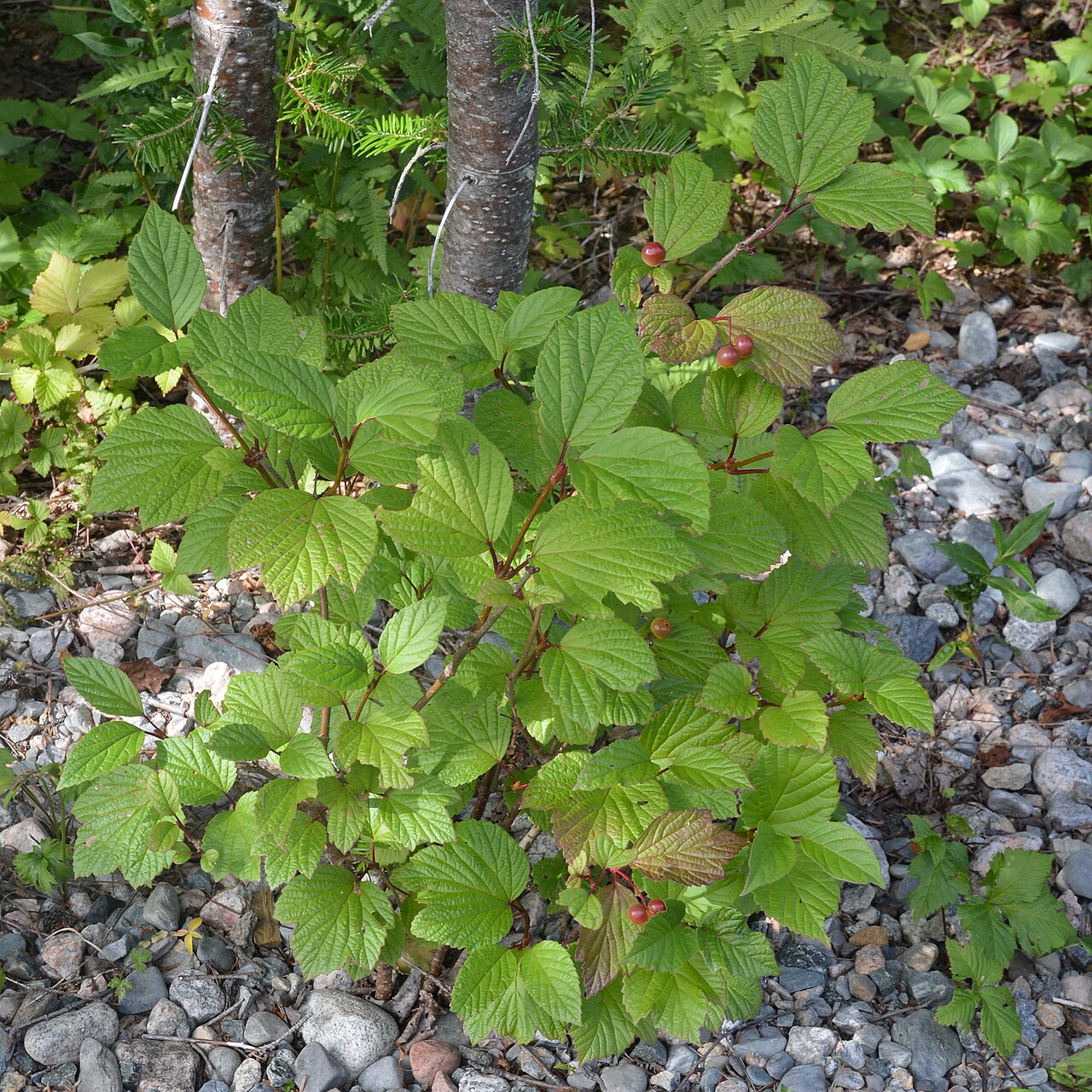
Viburnum edule, commonly called Squashberry, Mooseberry, or Highbush Cranberry (a name it shares confusingly with the unrelated Viburnum opulus and Viburnum trilobum), is a low, sprawling native shrub of cold forests across the northern United States and Canada. It is one of the most widely distributed native viburnums on the continent, found from Alaska across the boreal forest to Newfoundland and south through the Rocky Mountains, Pacific Northwest, and a scattering of cooler outposts in the northern Midwest and Northeast. Despite the broad range, squashberry rarely tops 6 feet and often forms low, open, thicket-like colonies rather than a single dominant shrub.
In the wild, squashberry is a modest but reliable presence in moist northern woods, forest edges, and streambanks, with maple-like, three-lobed leaves, flat clusters of small white flowers in late spring, and bright red, tart berries that ripen in late summer. The berries are genuinely edible — tart and a little musky, closer to a cranberry than a sweet fruit — and have a long history of use among northern Indigenous communities for jam, sauce, and winter stores.
For gardeners in cold-climate regions, squashberry is a tough, low-maintenance native shrub well suited to naturalistic plantings, wildlife gardens, and shaded or partly shaded spots where many ornamental shrubs struggle. Compared to the showier native viburnums of warmer regions, it is understated — but that modesty, combined with real cold-hardiness and reliable fruit for wildlife, makes it a quietly valuable choice across a huge swath of northern North America.
Identification
Squashberry is a deciduous shrub, usually 2 to 6 feet (0.6–1.8 m) tall, occasionally reaching 8 feet in favorable sites, with an open, sprawling, multi-stemmed habit. Stems often root where they touch moist ground, helping colonies spread slowly outward.
Bark & Stems
Young twigs are smooth, slender, and reddish-gray, becoming grayish-brown with age; older stems show no particularly showy bark character, staying smooth rather than developing the plated or peeling bark of some shrubs.
Leaves
Leaves are opposite, simple, 2 to 4 inches long, broadly oval to maple-like, usually with three shallow lobes (though unlobed leaves also occur on the same plant), coarsely and irregularly toothed, with a prominent set of veins radiating from the leaf base. The upper surface is medium to dark green; the underside is paler, and leaves turn shades of red, orange, or purple in fall — one of the shrub’s more attractive seasonal features.
Flowers
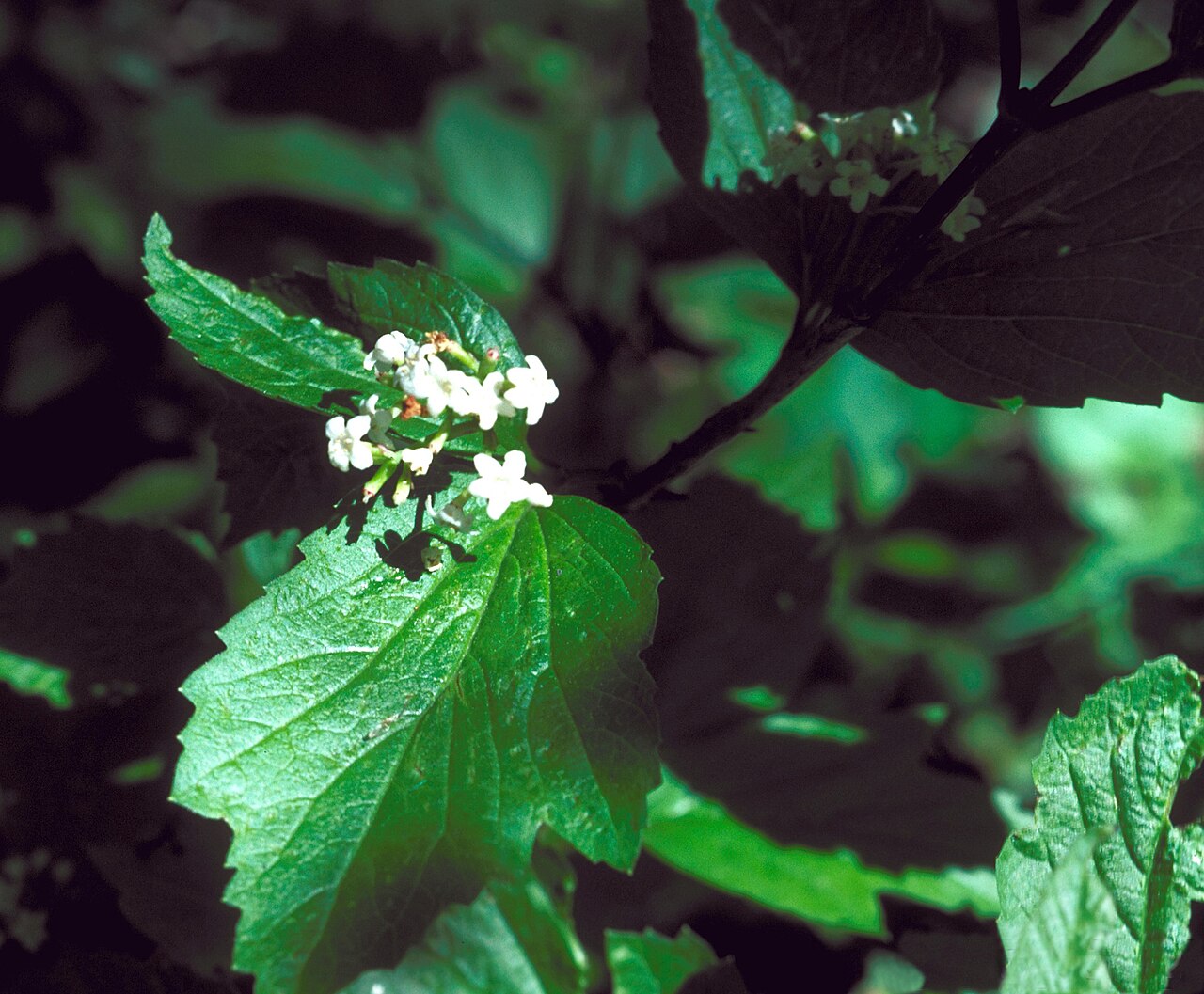
Small, white, five-lobed flowers are packed into flat-topped to slightly rounded clusters (cymes) about 1 to 1.5 inches across, held above or among the leaves at branch tips. They bloom in May and June, later than many showier ornamental viburnums, and are not especially conspicuous from a distance, though they draw a steady stream of small pollinators up close.
Fruit & Seeds
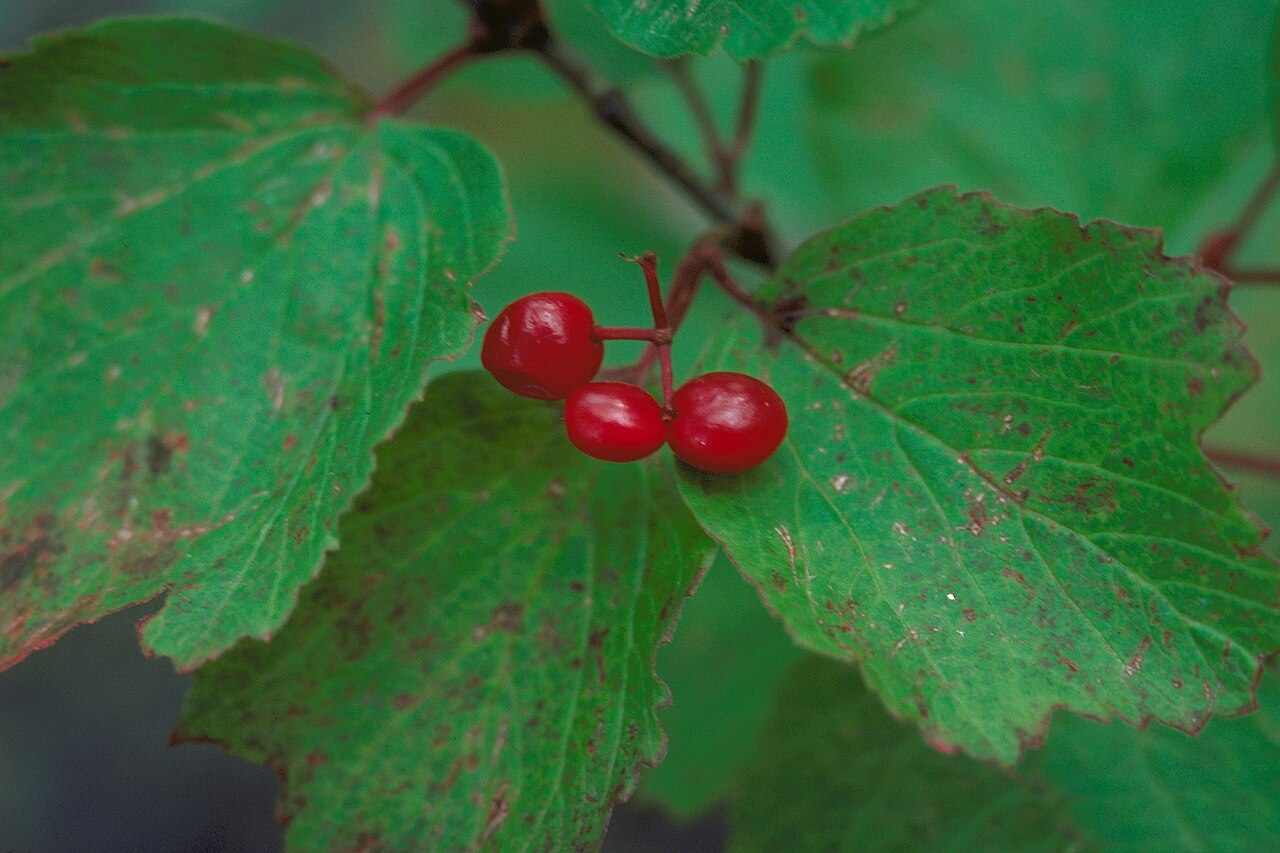
The fruit is a small, single-seeded drupe, about ⅓ to ½ inch long, ripening from green to bright red or orange-red in late summer, borne in loose, drooping clusters. The berries have a tart, somewhat musky flavor fresh off the shrub but mellow and sweeten slightly with light frost, which is when many foragers prefer to pick them; each berry contains one flattened stone.
Quick Facts
| Scientific Name | Viburnum edule |
| Family | Adoxaceae (Moschatel, formerly Caprifoliaceae) |
| Plant Type | Deciduous Shrub |
| Mature Height | 2–6 ft (0.6–1.8 m) |
| Mature Spread | 3–6 ft (1–1.8 m) |
| Growth Rate | Slow to moderate |
| Sun Exposure | Part Shade to Full Shade |
| Water Needs | Moderate to High |
| Soil Type | Moist, well-drained, humus-rich forest soils |
| Soil pH | 5.0–6.5 (acidic) |
| Bloom Time | May – June |
| Flower Color | White |
| Fall Color | Red, orange, and purple |
| Fruit | Tart red to orange-red berries, edible |
| Deer Resistant | No (moose and deer browse foliage and stems) |
| USDA Hardiness Zones | 1–6 |
Native Range
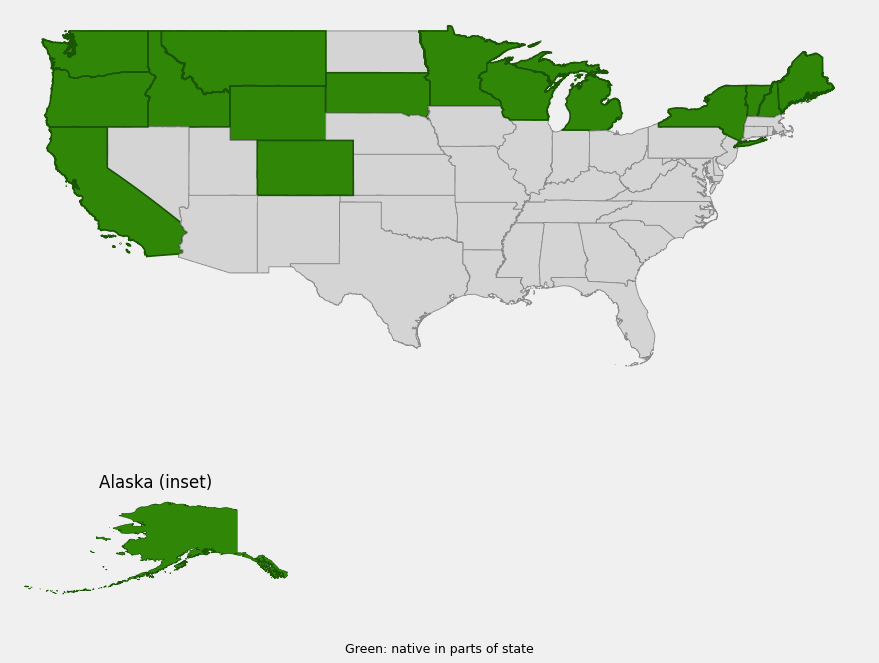
Squashberry has one of the broadest native ranges of any North American viburnum, running across the boreal forest from Alaska through Canada to Newfoundland, and dipping south into the United States along several disconnected corridors: the Pacific Northwest and northern Rockies (Washington, Oregon, Idaho, Montana, Wyoming, and the mountains of Colorado), the northern Great Lakes and upper Midwest (Michigan, Wisconsin, and a sliver of South Dakota), and the northern Appalachians and New England (New York, Vermont, New Hampshire, and Maine), with a small, disjunct, high-elevation presence in far northern California near the Oregon border. Within all of these areas it is generally found only at higher latitudes or elevations, tracking cool, moist, boreal-influenced conditions rather than occurring generally across each state.
Typical habitat is moist coniferous or mixed forest understory, streambanks, lake margins, swamp edges, and cool, shaded slopes, often alongside other boreal shrubs and small trees. It tolerates fairly deep shade better than many fruiting shrubs, which is part of why it persists as an understory plant across such a wide range of northern forest types.
Gardeners well south of this range, or in regions without the cool, consistently moist conditions squashberry needs, will generally have better luck with a viburnum native to their own region rather than pushing this boreal species outside its comfort zone.
📋 Regional plant lists featuring Squashberry: Alaska · Western Oregon & Western Washington · Idaho, Eastern Oregon & Eastern Washington · Montana & Wyoming · Utah & Western Colorado · California & Nevada · North Dakota, South Dakota & Western Minnesota · Michigan, Wisconsin & Eastern Minnesota · New York, Pennsylvania & Northern New Jersey · New Hampshire, Maine & Vermont
Growing & Care Guide
Squashberry is an easy, forgiving shrub as long as it gets the cool, moist, shaded conditions it evolved for — it is not a plant to push into a hot, dry, sunny bed, but it thrives where many sun-loving shrubs struggle.
Light
Part shade to full shade suits squashberry best, matching its native understory habitat. It tolerates more sun in consistently cool, moist climates, but foliage can scorch and fruiting may decline in hot, dry, exposed sites.
Soil & Water
Give it moist, humus-rich, well-drained, acidic soil, similar to typical northern forest floor conditions. It does not tolerate prolonged drought well and performs best with steady moisture, particularly through summer; a woodland setting with natural leaf litter mulch replicates its preferred conditions closely.
Planting Tips
Plant in spring or fall in a shaded to partly shaded site with reliable moisture, such as near a north-facing foundation, under tree canopy, or along a shaded streambank. Because squashberry spreads slowly by rooting stems and seed, give it room to form a loose colony over time rather than expecting a single tidy shrub. For good fruit set, plant more than one individual where possible, since cross-pollination between plants improves berry production.
Pruning & Maintenance
Minimal pruning is needed. Remove dead, weak, or overly congested stems in late winter to maintain an open form and encourage new growth from the base. Squashberry is generally free of serious pest or disease problems within its native cool-climate range.
Landscape Uses
Squashberry fits naturally into several northern garden settings:
- Woodland understory planting beneath conifers or other shade trees
- Streamside and wetland-edge restoration
- Wildlife and foraging gardens — the tart berries are edible for people and valuable for wildlife
- Naturalistic shaded borders in cold-climate landscapes
- Fall color accent in shaded sites where few shrubs reliably color well
Wildlife & Ecological Value
Squashberry punches above its modest size as a wildlife food source across its huge northern range.
For Birds
Grouse, thrushes, waxwings, and other fruit-eating birds feed on squashberry’s red berries through late summer and fall, and into winter where fruit persists, helping disperse seed across the forest.
For Mammals
Moose are among the shrub’s most significant browsers, feeding on twigs and foliage, which is reflected in one of the plant’s alternate common names, mooseberry. Black bears and grizzly bears also eat the fruit readily in late summer, and small mammals forage on fallen berries and seed.
For Pollinators
The small white flower clusters attract native bees, flies, and other short-tongued pollinators during the relatively brief northern flowering season, providing an early- to mid-summer nectar source in forest understory habitats where flowering shrubs are limited.
Ecosystem Role
As a shade-tolerant, fruit-bearing shrub distributed across such a broad swath of boreal and subalpine forest, squashberry contributes meaningfully to the structure and food web of northern forest understories, offering both browse and fruit across a long season in habitats where plant diversity is often limited by cold and short growing seasons.
Cultural & Historical Uses
Squashberry has a long history of use among Indigenous peoples across its northern range, from Alaska Native and First Nations communities through the boreal forest to the Pacific Northwest. The tart berries were traditionally gathered in late summer and fall, often after a light frost sweetened them, and used fresh, dried, or cooked into sauces, jams, and preserves; in some regions they were mixed with fat or other foods for winter storage. Various common names reflect this food use and regional language traditions, including mooseberry, moosomin, and pembina.
The shrub’s wood and stems saw more limited use compared to its fruit, though flexible young stems were sometimes used in basketry or small craft work by northern communities with access to the plant. Its close association with moose, both as browse and as a namesake, reflects its ecological role as much as any direct human use.
Today, squashberry remains a minor but genuine foraged fruit in parts of Alaska, western Canada, and the northern United States, and it is increasingly available from native plant nurseries for gardeners interested in low-maintenance, wildlife-friendly shrubs with a useful, edible harvest.
Frequently Asked Questions
Can you eat squashberries?
Yes — the berries are edible and traditionally harvested across the species’ northern range, with a tart, somewhat musky flavor. They are most often cooked into jam or sauce rather than eaten fresh in quantity, and many foragers find their flavor and texture improve after a light frost.
Is squashberry the same as highbush cranberry?
The name “highbush cranberry” is applied to several unrelated viburnums, which causes real confusion. Squashberry (Viburnum edule) is a distinct species from both American Highbush Cranberry (Viburnum trilobum) and the non-native European highbush cranberry (Viburnum opulus), though all three share tart, cranberry-like red fruit and a similar three-lobed leaf shape.
Why won’t my squashberry fruit well?
Poor fruiting is usually a sign of too much shade, too little moisture, or only a single plant present — squashberry fruits best with some sun exposure, consistent moisture, and more than one individual nearby to improve cross-pollination.
Does squashberry tolerate full sun?
Only in consistently cool, moist climates. In most garden settings it performs better in part to full shade, which more closely matches the forest understory conditions it grows in throughout its native range.
How is squashberry different from other native viburnums grown farther south?
Squashberry is adapted to a much colder, shorter growing season than most garden viburnums, staying smaller and more sprawling, with less showy flowers but excellent cold-hardiness and reliable fruiting in climates where many other viburnums, native or otherwise, simply cannot survive the winter. See our overview of the benefits of planting native viburnum for why these shrubs are worth choosing over non-native look-alikes wherever you garden.

Looking for a nursery that carries Squashberry?
Browse our native plant nursery directory: Alaska · California · Colorado · Idaho · Maine, Michigan & Montana · New Hampshire & New York · Oregon · South Dakota & Vermont · Washington · Wisconsin & Wyoming