
Curlycup Gumweed (Grindelia squarrosa)
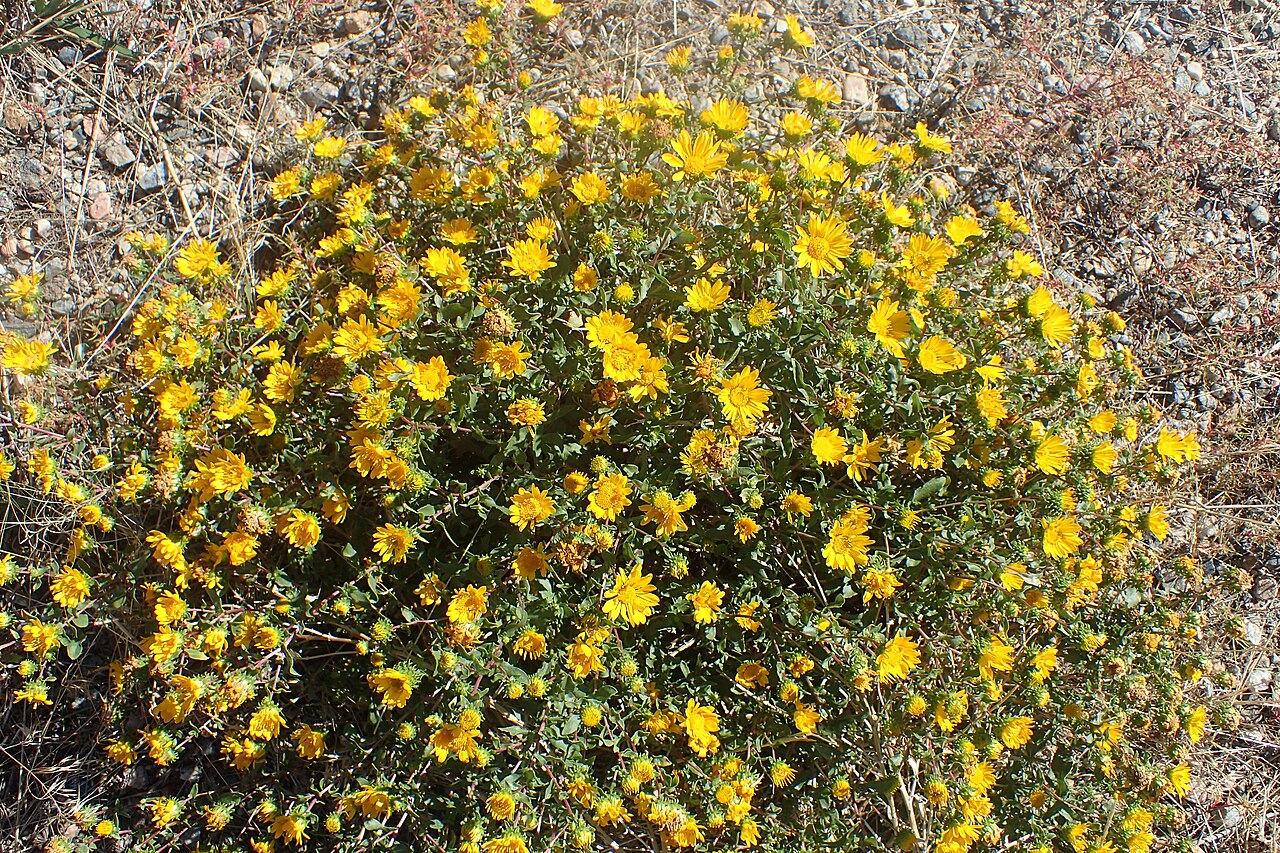
Grindelia squarrosa, known as Curlycup Gumweed (USDA: curlycup gumweed), is a sturdy, sticky wildflower of the Great Plains and the West. It belongs to the aster family (Asteraceae) and is also called curly-top gumweed, gumplant and resinweed. It is usually a biennial or short-lived perennial, 1 to 3 feet tall, with many branches, stiff, toothed leaves dotted with resin glands and a long taproot that lets it thrive in dry, hard soils.
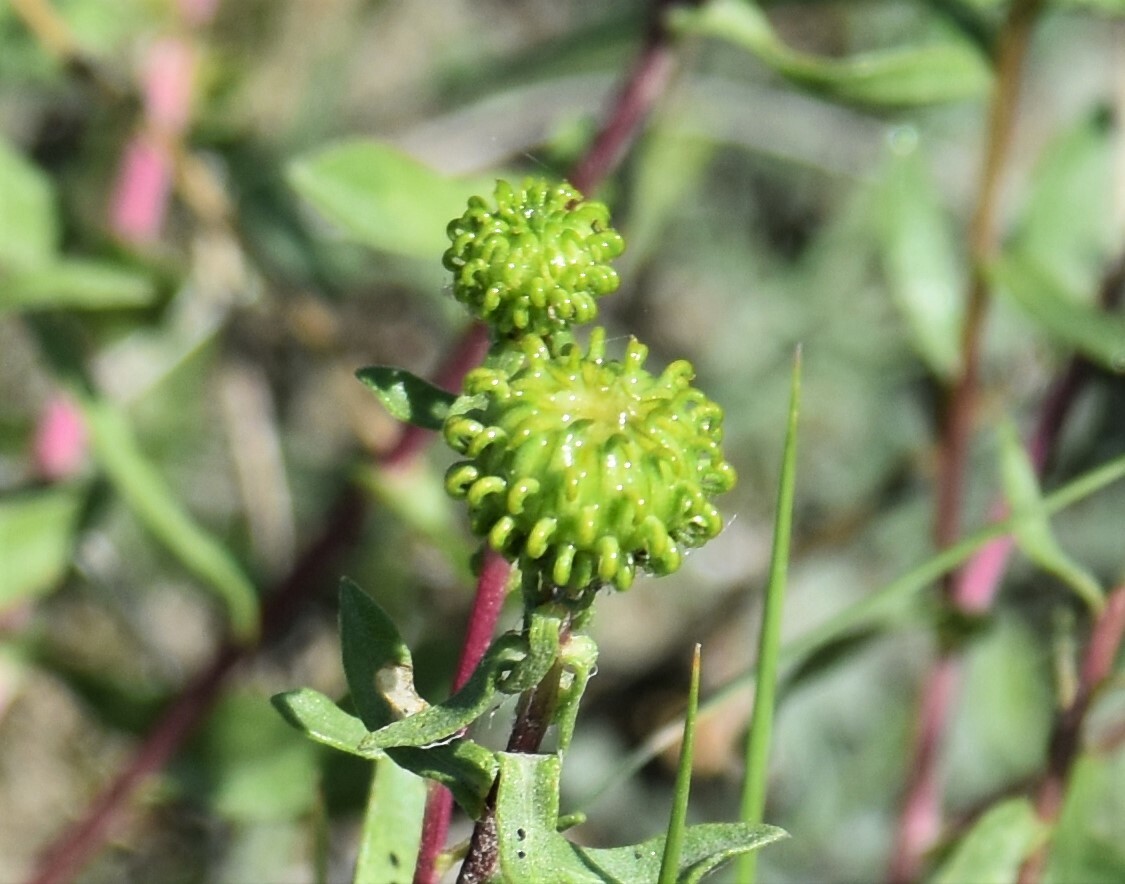
From midsummer to fall, each branch ends in a bright yellow, daisy-like flower head about 1 to 1 1/2 inches across. The buds are its best field mark: the green bracts around each head have tips that curl sharply backward, like a ring of tiny hooks, and the whole bud is coated in a sticky, white, aromatic resin, the “gum” in its name. The resin makes the plant bitter, and livestock generally avoid it.
Curlycup gumweed is native to the Great Plains and much of the western United States and Canada, where it grows in prairies, sagebrush steppe, roadsides and other open, disturbed ground. It often increases on overgrazed rangeland. It has also spread east of its native range as a roadside and railway weed. In dry, sunny native gardens within its range it is a tough, long-blooming plant for pollinators.
Identification
Curlycup gumweed is easy to recognize once you touch it: the buds and flower heads are sticky with resin, and the bracts beneath them are strongly curled back.
Stems & Growth Habit
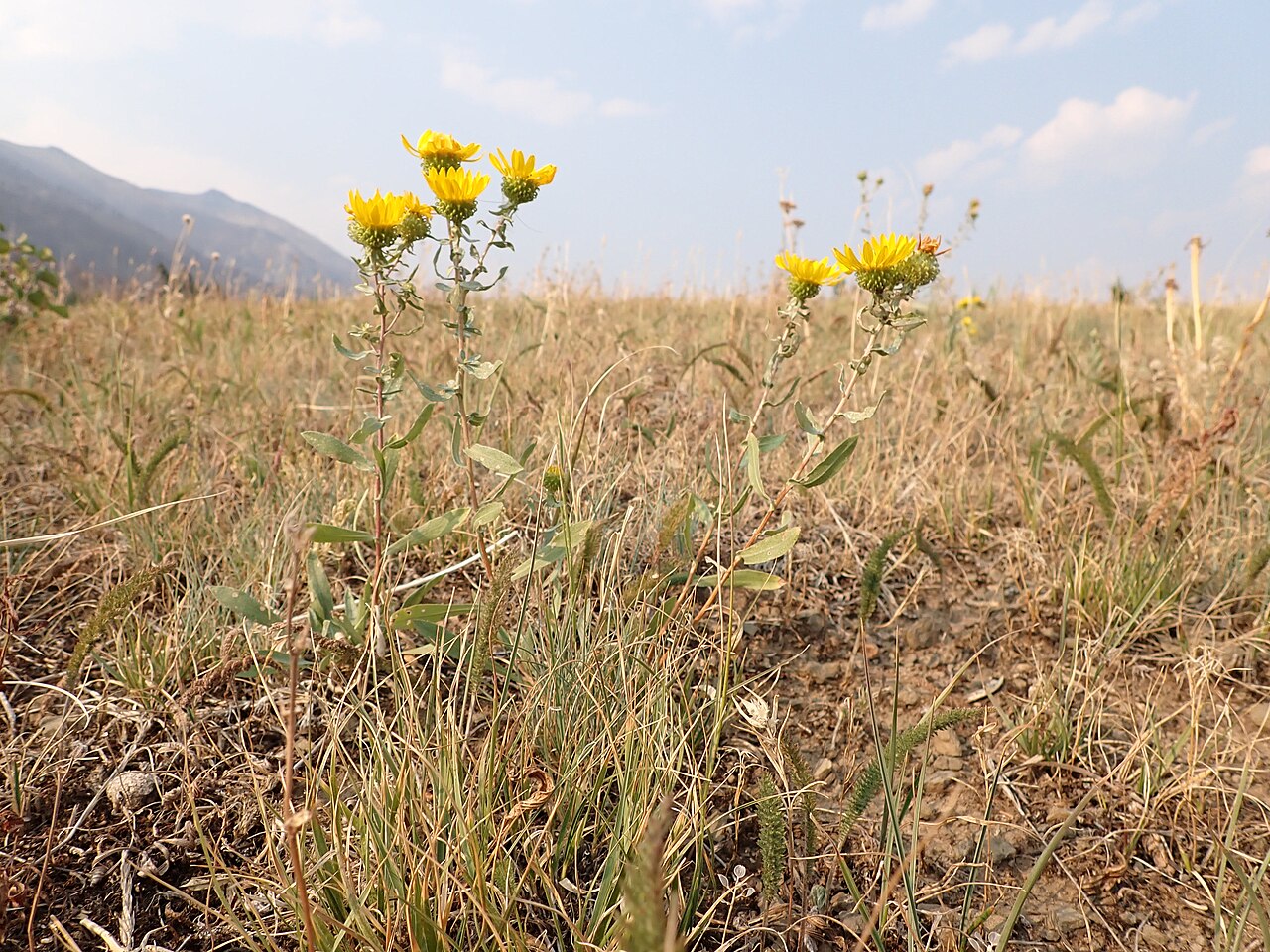
The plant usually forms a low rosette the first year and sends up one to several stiff, branching, often reddish stems the second year. Mature plants are 1 to 3 feet tall and about as wide, with a rounded, bushy outline. The stems are smooth or slightly rough and grow from a deep taproot.
Leaves
The leaves are alternate, oblong to spoon-shaped, 1 to 3 inches long, with toothed or sometimes smooth edges. Upper leaves are stalkless and clasp the stem. The leaves are thick, stiff and dotted with tiny resin glands, so they look slightly shiny and feel a little sticky, and they have a strong resinous smell when crushed.
Flowers
From about July to September (sometimes into October), each branch ends in a flower head about 1 to 1 1/2 inches across, with 25 to 40 bright yellow ray florets around a yellow center of disk florets. Some plants have heads with no rays at all. The head sits in a cup of overlapping green bracts with strongly curled tips, coated in white, gummy resin, especially in bud.
Fruit & Seeds
The seeds (achenes) are small, brown and angular, topped with two to eight stiff, short bristles that fall off easily. They drop near the plant or are carried by animals, vehicles and machinery, which helps explain its spread along roads and railways.
Look-alikes
Other gumweeds such as Coastal Gumplant and Great Valley Gumplant have similar sticky heads but bracts that are less strongly curled and grow mainly on the Pacific coast and in California. Hairy Golden Aster has smaller, hairy, non-sticky heads. Broom Snakeweed has tiny heads and thread-like leaves.
Safety Note
Curlycup gumweed is bitter and seldom eaten by livestock. On selenium-rich soils in the West it can absorb selenium and become toxic to animals that eat it in quantity, so it should not be fed to livestock or allowed to dominate pastures. The resin is sticky and can irritate sensitive skin. Do not use it as a home remedy.
Quick Facts
| Scientific Name | Grindelia squarrosa |
| Family | Asteraceae (aster family) |
| Plant Type | Biennial or short-lived perennial wildflower |
| Mature Height | 1–3 ft |
| Mature Spread | 1–2 ft |
| Growth Rate | Fast |
| Sun Exposure | Full sun |
| Water Needs | Low; dry, well-drained soil |
| Soil Type | Clay, loam, sand, gravel; tolerates poor and saline soils |
| Soil pH | About 6.0–8.5 |
| Bloom Time | July–September |
| Flower Color | Bright yellow |
| Fall Color | Stems turn reddish brown |
| Fruit | Small achene with a few short bristles |
| Deer Resistant | Yes; bitter, resinous foliage is rarely browsed |
| USDA Hardiness Zones | 3–9 |
Native Range
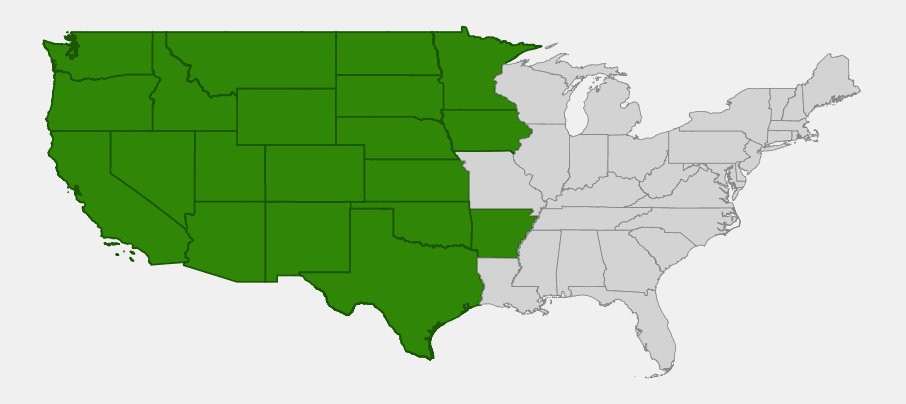
Curlycup gumweed is native to the Great Plains and the interior West. USDA PLANTS lists it as native in the lower 48 states and Canada. Its native range runs from Alberta, Saskatchewan and Manitoba south through Montana, the Dakotas and Minnesota, across Wyoming, Nebraska, Iowa, Colorado and Kansas, and south to Utah, Nevada, Arizona, New Mexico, Oklahoma, Texas and Arkansas. It also grows in Idaho and east of the Cascades in Washington and Oregon, and in parts of California.
It has spread well beyond that range along roads and railways. USDA records it in about 40 states, but NatureServe, Go Botany and other state flora sources treat the populations in New England, New York, Pennsylvania, New Jersey, the Mid-Atlantic, the Ohio Valley and the Great Lakes states east of Minnesota as introduced, so those states are not shown on the map. It is also introduced in Ontario and Quebec and in parts of Europe and Asia.
Habitats include mixed-grass and shortgrass prairie, sagebrush steppe, dry meadows, badlands, river terraces, open pinyon-juniper and pine woodlands, overgrazed pastures, roadsides, railways and other disturbed ground. It is especially common where the soil has been grazed hard, burned or bared, and it tolerates clay, alkaline and mildly saline soils.
📋 Regional plant lists featuring Curlycup Gumweed: Idaho, Eastern Oregon & Eastern Washington · Montana & Wyoming · Michigan, Wisconsin & Eastern Minnesota · Nebraska, Kansas & Eastern Colorado · Utah & Western Colorado · Arizona & New Mexico · Illinois, Iowa & Missouri · Arkansas, Louisiana, Eastern Oklahoma & Eastern Texas · South & West Texas · North Dakota, South Dakota & Western Minnesota · California & Nevada
Growing & Care Guide
Curlycup gumweed is rarely sold as a garden plant, but it is easy to grow from seed in dry, sunny sites within its native range. It is best used in informal prairie, meadow and xeric plantings, where its long bloom and pollinator value matter more than a tidy look. Outside the Plains and the West, plant other native asters instead.
Light
Plant it in full sun. It becomes leggy and floppy in shade.
Soil & Water
It grows in almost any well-drained soil, including heavy clay, gravel and alkaline or mildly saline soils, and prefers lean ground. Once established, its deep taproot makes it very drought tolerant; it needs no watering except in the driest deserts. Rich soil and frequent watering make it tall and weak.
Planting Tips
Scatter seed on bare soil in fall or early spring and press it lightly into the surface; it needs light to germinate. Seedlings form a rosette the first year and bloom the second. Combine it with bunchgrasses such as blue grama and other late-season prairie flowers. Because the taproot is deep, move young plants only while they are small.
Pruning & Maintenance
No routine care is needed. As a biennial or short-lived perennial, individual plants live only a few years, but they reseed in open soil. Cut back seed heads before they ripen if you do not want volunteers. Leave dead stems standing in winter for cover, or cut them in spring.
Propagation
Grow it from seed. Fresh seed usually germinates without treatment, though a few weeks of cold, moist stratification can improve germination. Collect the seed heads in fall as they dry, wearing gloves because of the sticky resin.
Landscape Uses
- Prairie and meadow plantings: late-summer yellow color in dry, sunny ground
- Xeriscapes: very drought-tolerant once established
- Pollinator gardens: a long-blooming nectar and pollen source for native bees and butterflies
- Disturbed-site revegetation: quick native cover on roadsides, burns and bare ground within its range
- Nature education: the sticky resin and curled bracts are memorable features to show
Wildlife & Ecological Value
Curlycup gumweed blooms late in the season, when prairies are often dry and flowers scarce, so it is an important late-summer resource for insects.
For Pollinators
The flowers attract many native bees, including sweat bees, leafcutter bees and long-horned bees, as well as butterflies, flower flies and beetles. Several native bees are known to visit gumweeds heavily, and the plants bloom for many weeks.
For Birds
Seed-eating birds such as sparrows and finches eat some of the seeds, and the bushy plants offer cover for ground-nesting birds in open grasslands.
For Mammals
Because of its bitter resin, deer, pronghorn and livestock rarely eat it, which is why it increases on heavily grazed land. Small mammals may eat the seeds.
Ecosystem Role
As a pioneer on bare and disturbed soil, it helps protect the ground from erosion and provides flowers on sites where few other plants grow. Its abundance on rangeland is often a sign of past overgrazing or disturbance. It declines again as perennial grasses recover.
Cultural & Historical Uses
Many Plains Indigenous peoples used gumweed medicinally. Go Botany notes that it was widely used as a cough medicine, and the Cheyenne rubbed the gum around the eyes to treat snow blindness. Other traditional uses included washes for skin sores and treatments for poison ivy rashes and bronchitis.
Gumweed later became a standard medicine in the United States. Dried leaves and flowering tops of Grindelia were listed in the United States Pharmacopeia and used in cough syrups and asthma remedies in the 19th and early 20th centuries. Modern research has studied its resin for possible industrial and biofuel uses.
The genus name Grindelia honors David Hieronymus Grindel, an 18th- and 19th-century Baltic German botanist and pharmacist. The species name squarrosa means “with spreading or recurved tips,” describing the curled bracts that give the plant its common name.
Frequently Asked Questions
Why is curlycup gumweed sticky?
Its buds, flower heads and leaves produce a resin that coats the plant. The resin makes it bitter, protects it from many grazing animals and may help it conserve water.
Is curlycup gumweed native or a weed?
It is native to the Great Plains and much of the West. It does spread on overgrazed and disturbed land, and it is introduced in the East, where it grows mainly on roadsides and railways.
Is curlycup gumweed poisonous?
It is not considered highly toxic, but it is bitter, and on selenium-rich western soils it can absorb enough selenium to harm livestock that eat it in quantity. Do not use it as a home remedy.
How long does curlycup gumweed live?
It is usually a biennial or short-lived perennial. It forms a rosette in the first year, blooms in the second, and may persist a few more years, reseeding in open soil.
Does curlycup gumweed help pollinators?
Yes. It blooms from midsummer into fall and attracts many native bees, butterflies and other insects when few other prairie flowers are open.

Looking for a nursery that carries Curlycup Gumweed?
Browse our native plant nursery directory: Arizona & Arkansas · California · Colorado · Idaho, Iowa & Kansas · Minnesota & Montana · Nebraska, Nevada, New Mexico, North Dakota & Oklahoma · Oregon · South Dakota, Texas & Utah · Washington · Wyoming