Great Valley Gumplant (Grindelia camporum)
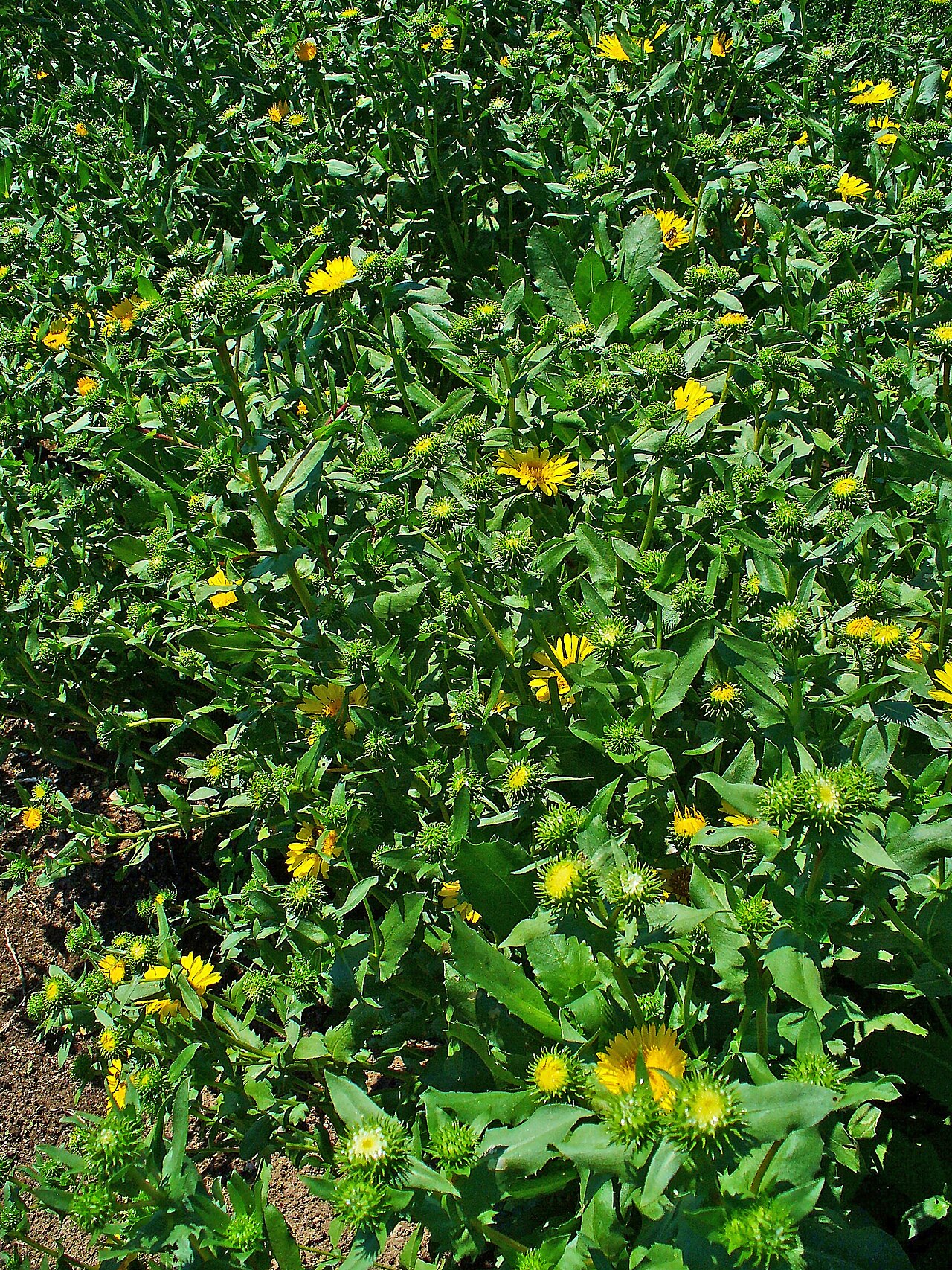
Grindelia camporum, commonly known as Great Valley Gumplant or great valley gumweed, is a tough, sunflower-yellow perennial of California’s interior valleys and foothills. It belongs to Asteraceae and takes both its common and scientific names from its signature trait: flower buds coated in a thick, sticky white resin, or “gum,” that beads up on the tightly curled, spine-tipped bracts before the flower opens. The species name camporum, Latin for “of the fields,” points to its home in the open grasslands and fields of the Central Valley and nearby foothills.
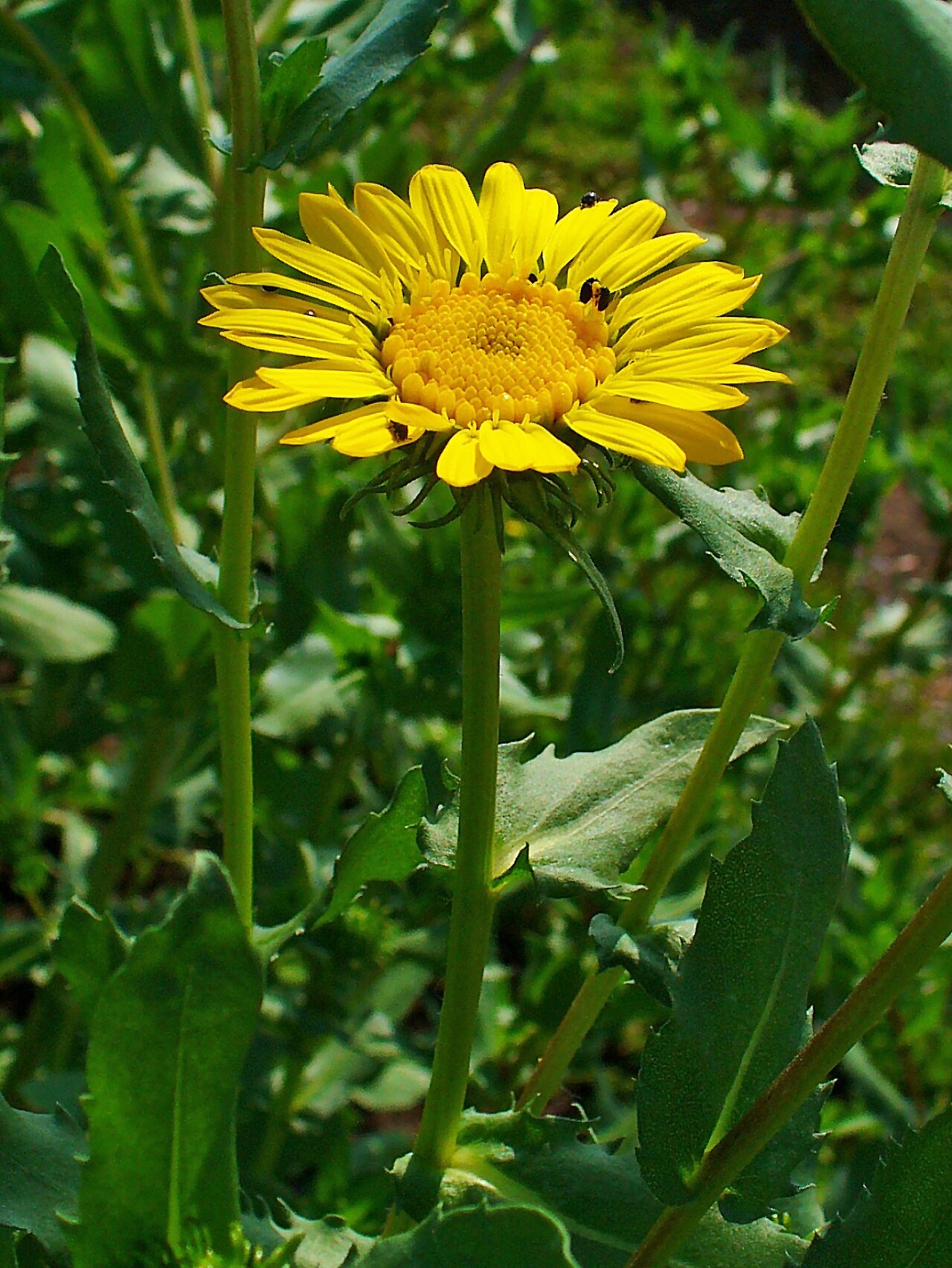
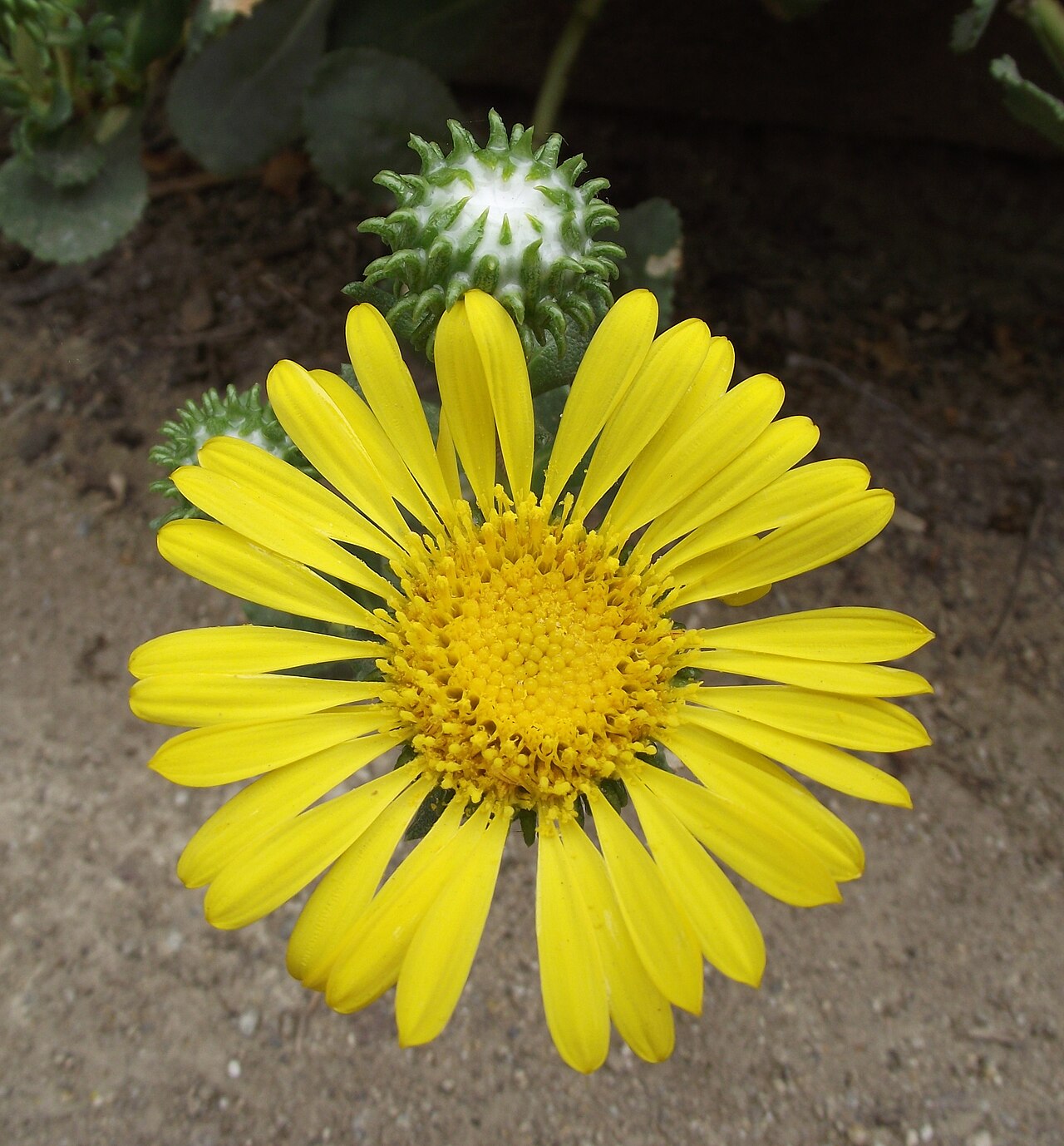
Gumplant typically grows 2 to 4 feet tall as an herbaceous to semi-woody perennial, with upright, branching stems and bright green, somewhat leathery leaves. From summer into fall it produces an abundance of cheerful, daisy-like yellow flower heads, each with a ring of narrow rays around a dense, golden disc center. The buds are unmistakable: round, resinous, and covered in curling, hooked bracts that look almost like a green sea urchin before the petals unfurl.
Gumplant is a reliable, low-water choice for California gardeners working with heavy clay soils, seasonally wet-then-dry sites, or disturbed ground that needs a tough, fast-establishing native. Its long summer-to-fall bloom period and resistance to deer and drought make it a practical workhorse in valley and foothill native plant gardens, where it attracts a steady stream of bees and butterflies through the hottest months of the year.
Identification
Great Valley gumplant is most easily identified by its sticky, resin-coated flower buds and its bright yellow, daisy-like flower heads blooming through the heat of summer and into fall.
Bark & Stems
Stems are herbaceous to somewhat woody at the base, upright to spreading, and freely branching, typically reaching 2 to 4 feet tall. They are smooth, often slightly reddish or green, and generally hairless, giving the plant a clean, almost waxy look.
Leaves
Leaves are alternate, oblong to lance-shaped, 1 to 4 inches long, with toothed to spiny-toothed margins and a leathery, somewhat thick texture. Lower leaves often clasp the stem at their base, while upper leaves become smaller and more bract-like near the flower heads. The foliage is a deep, glossy green and, like the buds, can feel slightly sticky to the touch.
Flowers
Flower heads are 1 to 2 inches across, with 20 to 40 narrow yellow ray florets surrounding a dense, golden-yellow disc center. Before opening, each bud is tightly wrapped in overlapping, incurved, spine-tipped bracts coated in a conspicuous white, gummy resin — the feature that gives the plant its common name. Bloom extends from June through October, later than most California wildflowers, making gumplant an important late-season nectar source.
Fruit & Seeds
Fruits are small, ribbed achenes without a true pappus, or with only a few deciduous bristles, typical of the genus. Seed heads dry to a tan, bristly disc that persists on the plant after the petals drop, often remaining visible into winter.
Quick Facts
| Scientific Name | Grindelia camporum |
| Family | Asteraceae (Sunflower) |
| Plant Type | Herbaceous to Semi-woody Perennial |
| Mature Height | 2–4 ft |
| Mature Spread | 2–3 ft |
| Growth Rate | Fast |
| Sun Exposure | Full Sun |
| Water Needs | Low to Moderate |
| Soil Type | Clay, loam or sand; tolerates heavy, seasonally wet soils |
| Soil pH | 6.5–8.0 (neutral to alkaline) |
| Bloom Time | June – October |
| Flower Color | Bright yellow |
| Fall Color | None (foliage dies back to the crown in late fall) |
| Fruit | Small ribbed achenes |
| Deer Resistant | Yes |
| USDA Hardiness Zones | 8–10 |
Native Range
Great Valley gumplant is native to California’s Central Valley and surrounding foothills, ranging through the Sacramento and San Joaquin Valleys and into the adjacent Coast Ranges and Sierra Nevada foothills. It is most abundant in the open grasslands and disturbed ground of the Great Valley for which it is named.
Within this range it favors open fields, grasslands, roadsides, and seasonally moist sites such as vernal pool margins and swales that are wet in winter and dry by summer, conditions that would stress many other perennials. It often grows alongside saltgrass and other valley grassland species in alkaline or seasonally saturated soils.
While Grindelia species in general occur more widely across the West, this particular species is centered on California’s interior valleys; plantings well outside that range and its Mediterranean climate pattern of wet winters and dry summers are garden introductions rather than native occurrences.
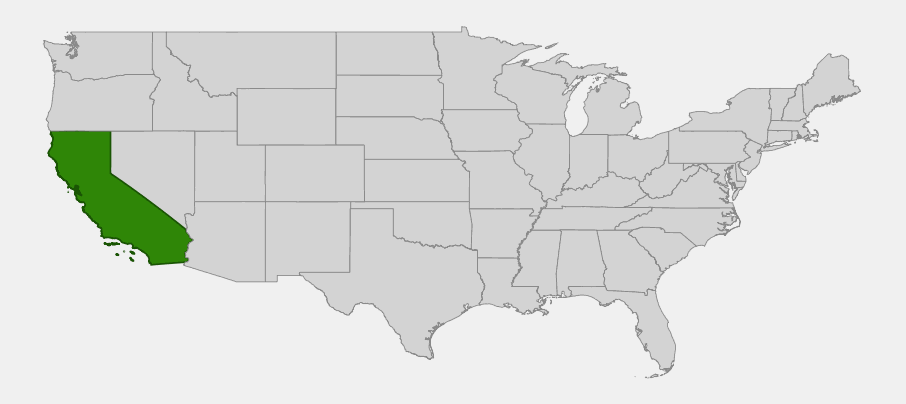
📋 Regional plant lists featuring Great Valley Gumplant: California & Nevada
Growing & Care Guide
Great Valley gumplant is an easygoing, fast-establishing perennial well suited to California valley and foothill gardens, especially on heavier soils that frustrate more finicky natives.
Light
Give it full sun. Gumplant flowers most heavily and stays compact in full sun; in partial shade, stems tend to stretch and flop over, and bloom is noticeably reduced.
Soil & Water
Gumplant is adaptable, growing well in clay, loam, or sandy soils and tolerating both seasonally wet winter conditions and dry summer heat without special amendments. Once established, it needs little supplemental irrigation and handles California’s dry season well, though occasional deep watering during extended summer heat extends and improves bloom. It is notably tolerant of heavy, poorly drained clay that causes root rot in many other perennials.
Planting Tips
Plant from containers in fall or early spring to allow roots to establish ahead of summer heat. Space plants 2 to 3 feet apart, as gumplant spreads readily and can self-seed into open or disturbed ground. It is an excellent, fast-filling choice for new native plantings or restoration sites where quick establishment and summer color are priorities.
Pruning & Maintenance
Cut plants back to the basal crown in late fall or winter after bloom finishes and foliage dies back, to tidy the planting and encourage vigorous new growth in spring. Deadheading spent flower heads during the bloom season can encourage additional flowering, though it is not required for plant health.
Landscape Uses
Gumplant’s toughness and long bloom season suit a range of practical garden roles:
- Low-water perennial borders in valley and foothill gardens
- Clay-soil plantings where other perennials struggle
- Pollinator gardens, extending bloom through the hot summer months
- Roadside and disturbed-ground restoration
- Vernal pool margin and seasonal wetland edge plantings
- Meadow and grassland restoration mixes
Wildlife & Ecological Value
Gumplant’s long, late-summer bloom period makes it one of the more valuable nectar sources in California valley gardens during the hottest, driest part of the year, when many other flowering plants have gone dormant.
For Pollinators
The abundant yellow flower heads draw large numbers of native bees, honeybees, and butterflies throughout summer and fall, at a time when nectar sources elsewhere in the valley landscape are scarce. The sticky resin on the buds is thought to help deter crawling insects and seed predators, protecting the developing flowers for pollinators.
For Birds
Seed heads left standing through fall and winter provide forage for seed-eating birds, while the dense summer foliage offers cover for small birds foraging among the insects the flowers attract.
For Mammals
Gumplant’s bitter, resinous foliage is unpalatable to deer and most browsing mammals, making it reliably deer-resistant in gardens where browsing pressure is a problem for other perennials.
Ecosystem Role
As a fast-establishing perennial of disturbed and seasonally wet-then-dry ground, gumplant plays a useful early-succession role in Central Valley grasslands, stabilizing open soil and providing structure and late-season bloom in plant communities otherwise dominated by grasses. Its tolerance for both winter saturation and summer drought lets it persist in habitats, like vernal pool margins, that few other native perennials can occupy.
Cultural & Historical Uses
Several Grindelia species, gumplant among them, have a long history of use among Indigenous peoples of California, who historically prepared the resinous leaves and flower buds as a treatment for skin irritation from plants like poison oak, and for respiratory complaints. These were traditional ethnobotanical practices documented by anthropologists and ethnobotanists, not modern medical guidance.
In the nineteenth and early twentieth centuries, gumweed species including Grindelia camporum were used in American and European folk and homeopathic preparations, generally for skin and respiratory applications, reflecting the same resinous, aromatic compounds that give the buds their sticky texture. These historical uses are not a recommendation for modern self-treatment.
Today, Great Valley gumplant is valued mainly by native plant gardeners and restoration practitioners for its toughness and reliable late-season color, rather than for any continuing traditional use.
Frequently Asked Questions
Why is it called “gumplant”?
The unopened flower buds are coated in a thick, sticky white resin or “gum” on their curled, spine-tipped bracts, a distinctive feature of the genus Grindelia that gives the plant its common name.
Is Great Valley gumplant the same as other Grindelia species sold as “gumweed”?
Not necessarily. Several related Grindelia species share the “gumweed” or “gumplant” common name across the West; Grindelia camporum specifically refers to the Central Valley California species, distinct from coastal or Great Plains relatives.
Does gumplant need a lot of water?
No. Once established, it is quite drought-tolerant and well adapted to California’s dry summers, though it also tolerates the seasonally wet, heavy soils common in valley grasslands during winter.
Is gumplant deer resistant?
Yes, its bitter, resinous foliage generally discourages deer browsing, making it a reliable choice in gardens with significant deer pressure.
When should I cut gumplant back?
Cut plants to the basal crown in late fall or winter once bloom has finished and foliage has died back, to tidy the plant and promote vigorous new growth the following spring.

Looking for a nursery that carries Great Valley Gumplant?
Browse our native plant nursery directory: California