Coastal Gumplant (Grindelia stricta)
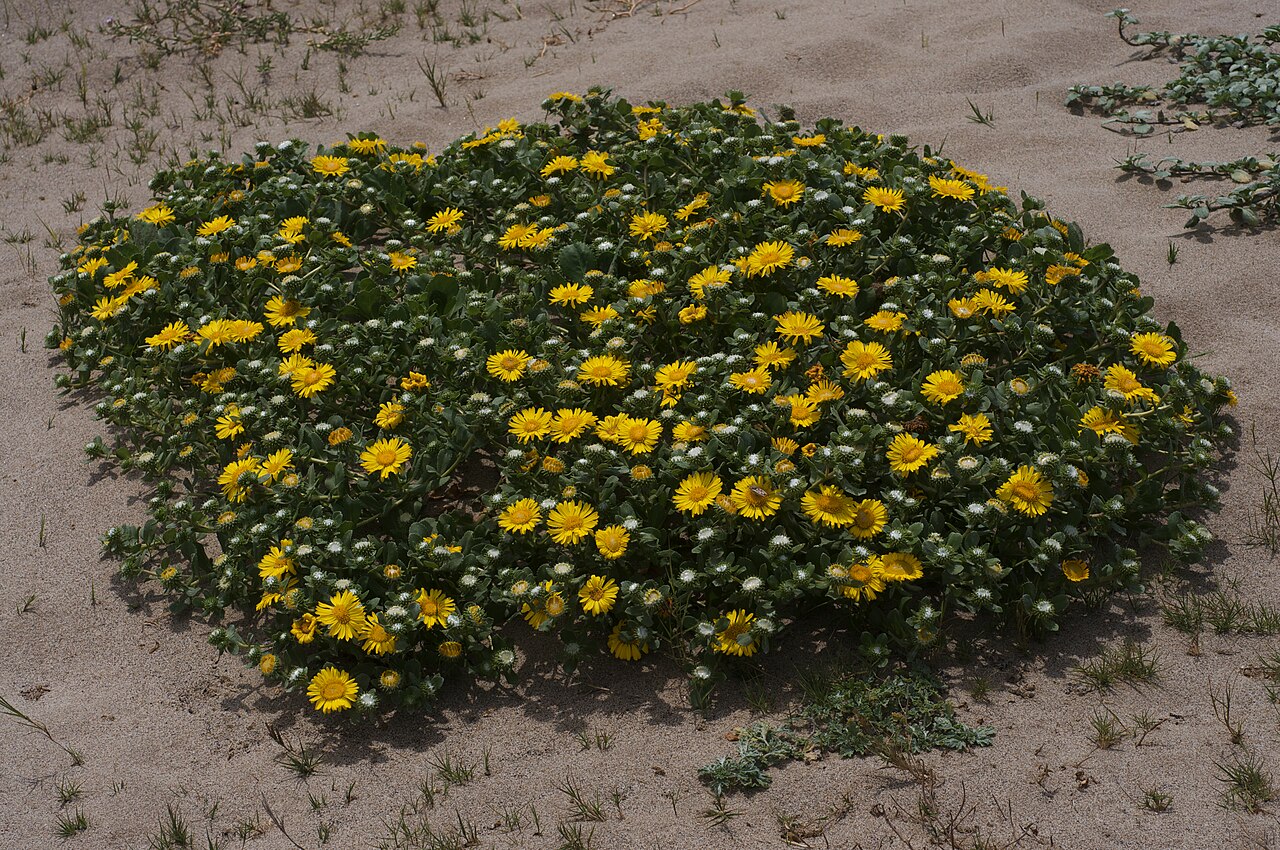
Grindelia stricta, commonly known as Coastal Gumplant or Oregon gumweed, is a salt-tolerant perennial that thrives right at the edge of the Pacific Ocean, from beach dunes to the upper margins of tidal salt marshes. Like its inland relative Great Valley gumplant, it belongs to Asteraceae and shares the signature sticky, resinous flower buds that give the genus its “gum” name. But coastal gumplant is built for a very different world: constant salt spray, shifting sand, and the twice-daily rhythm of the tides.
The plant typically forms a low, spreading mound 1 to 2 feet tall, with fleshy, toothed leaves and an abundance of bright yellow, daisy-like flowers from mid to late summer into fall. Several botanical varieties are recognized along the coast, varying in leaf width and hairiness, but all share the same low, salt-tolerant growth habit and cheerful late-season bloom that lights up otherwise muted dune and marsh-edge landscapes.
For gardeners along the immediate Pacific Coast, coastal gumplant is one of the few reliable flowering perennials for truly harsh, salt-exposed, sandy sites. It is an excellent choice for dune stabilization, coastal bluff gardens, and the upper edges of restored salt marshes, where its tolerance for salt, wind, and poor sandy soil lets it succeed where most other perennials, native or otherwise, simply cannot.
Identification
Coastal gumplant is recognized by its low, spreading mound form, fleshy toothed leaves, and bright yellow flower heads with sticky, resin-coated buds, found growing directly on beach sand or at the upper edge of salt marshes.
Bark & Stems
Stems are herbaceous, often somewhat fleshy, and low-spreading to semi-prostrate, forming a dense mound or mat typically 1 to 2 feet tall and considerably wider. Stems are smooth to slightly hairy and green to reddish, branching repeatedly to build the plant’s characteristic low, rounded form.
Leaves
Leaves are alternate, oblong to spoon-shaped, thick and somewhat fleshy, with coarsely toothed to smooth margins depending on variety. This fleshy texture, similar to other salt marsh and dune plants, helps the plant conserve moisture and tolerate salt exposure. Leaves are a deep, glossy green and, like the flower buds, often feel slightly sticky.
Flowers
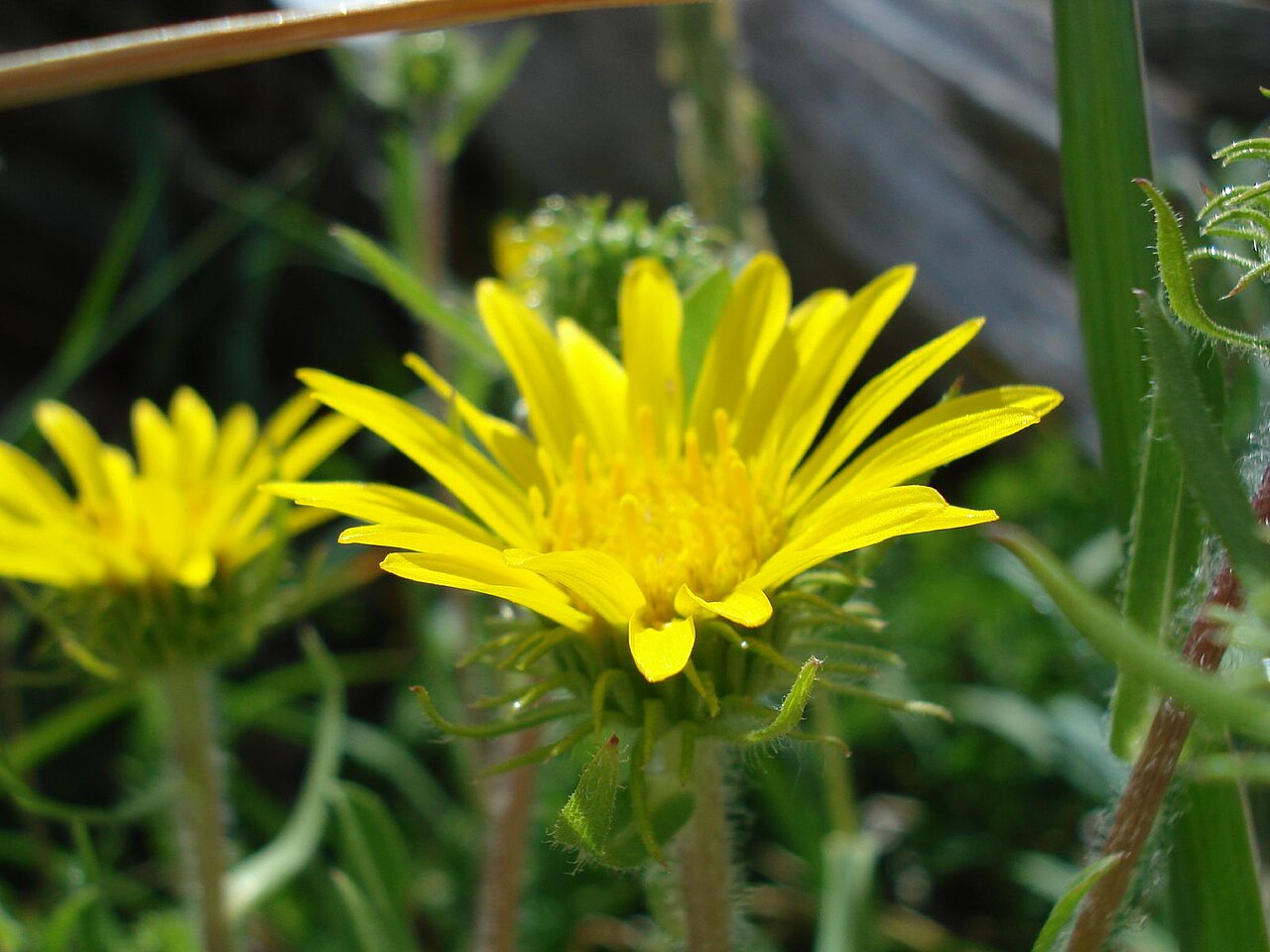
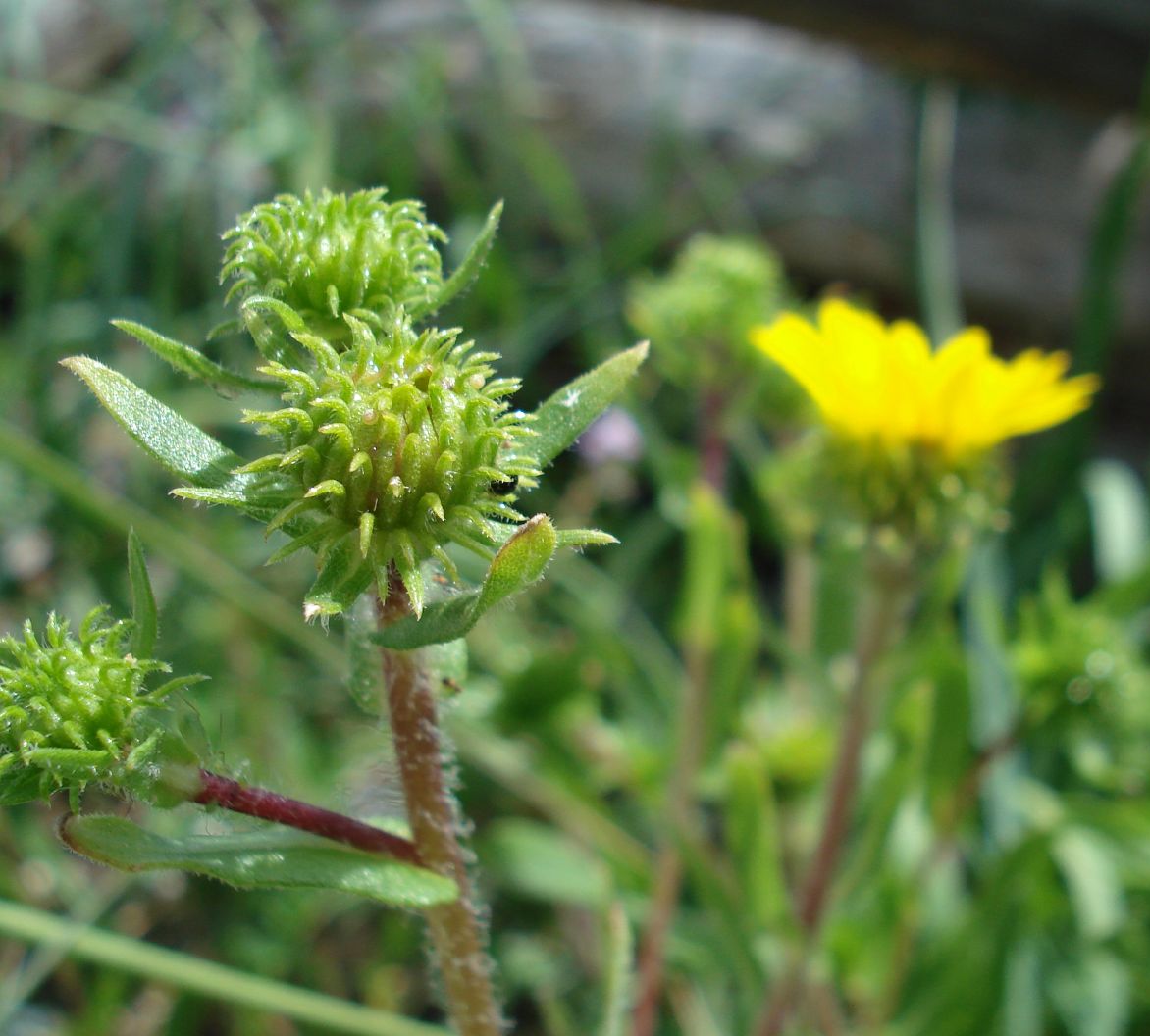
Flower heads are 1 to 2 inches across, with numerous narrow yellow ray florets surrounding a dense yellow disc center, closely resembling the related Great Valley gumplant. Buds are tightly wrapped in curling, resin-coated bracts before opening. Bloom runs from July through October, later than most other coastal wildflowers, providing color and nectar through the fall.
Fruit & Seeds
Fruits are small, ribbed achenes, largely lacking a persistent pappus, typical of the genus. Dried seed heads remain on the plant into winter, adding texture to the dune or marsh-edge landscape after the petals have faded.
Quick Facts
| Scientific Name | Grindelia stricta |
| Family | Asteraceae (Sunflower) |
| Plant Type | Herbaceous Perennial |
| Mature Height | 1–2 ft |
| Mature Spread | 2–4 ft |
| Growth Rate | Moderate to Fast |
| Sun Exposure | Full Sun |
| Water Needs | Low to Moderate |
| Soil Type | Sandy or saline; fast-draining dune or marsh-edge soils |
| Soil pH | 6.5–8.0 (neutral to alkaline) |
| Bloom Time | July – October |
| Flower Color | Bright yellow |
| Fall Color | None (foliage persists or dies back depending on site) |
| Fruit | Small ribbed achenes |
| Deer Resistant | Yes |
| USDA Hardiness Zones | 7–10 |
Native Range
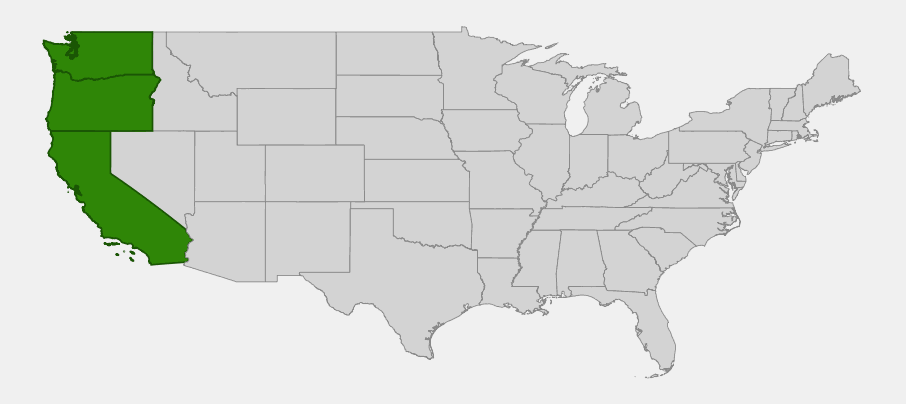
Coastal gumplant is native to the immediate Pacific Coast, occurring in a narrow coastal band from Washington’s outer coast and Puget Sound shoreline, south through coastal Oregon, to the central and northern California coast. It is strictly a coastal species, essentially absent from interior valleys and inland areas of its home states.
Within this coastal strip it grows directly on open sand dunes and beaches, on coastal bluffs, and along the upper edges of tidal salt marshes and estuaries, often forming dense, low mounds in pure sand or sandy-saline soils. Its ability to tolerate salt spray, periodic tidal influence, and constant onshore wind defines its narrow but well-populated habitat niche.
Because coastal gumplant is adapted specifically to maritime, salt-influenced conditions, it is not found and should not be planted in interior, inland portions of Oregon or Washington east of the Cascades; it belongs to the immediate coastal strip of its native states.
📋 Regional plant lists featuring Coastal Gumplant: California & Nevada · Western Oregon & Western Washington
Growing & Care Guide
Coastal gumplant is built for the toughest coastal conditions and is an excellent, low-maintenance choice for gardens directly exposed to salt spray, wind, and sandy soil along the Pacific Coast.
Light
Plant in full sun. Coastal gumplant flowers most heavily and holds its naturally low, dense mound form with at least six hours of direct sun; in shadier sites, growth becomes sparse and flowering is reduced.
Soil & Water
It is highly tolerant of pure sand and saline soils and needs little to no amendment. Once established, coastal gumplant requires minimal supplemental water, relying on coastal fog and seasonal rainfall, though occasional watering helps new plantings establish faster in dry dune sites. Good drainage is important; it does not tolerate standing fresh water for extended periods, though it handles brief tidal inundation at marsh margins.
Planting Tips
Set out container plants in fall or early spring so roots can establish before summer dryness and wind set in. Space plants 2 to 3 feet apart for a filled-in mounding groundcover effect on dunes or bluffs. It is an excellent choice for stabilizing loose sand, as its spreading root system helps knit dune soil together while the plant tolerates ongoing sand burial and shifting.
Pruning & Maintenance
Little pruning is needed. Cutting plants back lightly after the fall bloom fades can tidy their appearance and encourage denser regrowth the following season, but coastal gumplant generally maintains an attractive, low mounded form on its own with minimal intervention.
Landscape Uses
Coastal gumplant’s extreme salt and sand tolerance make it ideal for:
- Dune stabilization and beachfront restoration
- Salt marsh margin restoration
- Coastal bluff gardens directly exposed to ocean spray
- Low-growing groundcover in sandy coastal gardens
- Late-season pollinator plantings near the coast
- Erosion control on loose, shifting sand
Wildlife & Ecological Value
Along the coast, where few other native perennials flower through late summer and fall, coastal gumplant is a critical nectar resource and a key stabilizer of fragile dune and marsh-edge habitats.
For Pollinators
The late-summer and fall flower heads attract native bees, honeybees, and butterflies at a time when coastal pollinator forage is otherwise limited, making coastal gumplant an important late-season nectar source directly on the beach and dune front.
For Birds
Shorebirds and small coastal songbirds use the dense mounding growth for cover on otherwise open, exposed dunes and bluffs, while the insects drawn to the flowers provide a reliable food source nearby.
For Mammals
Small mammals living in dune and marsh-edge habitats use the dense foliage for cover from predators and wind. The resinous, bitter foliage generally discourages heavy browsing, contributing to the plant’s deer resistance.
Ecosystem Role
Coastal gumplant plays an outsized role in stabilizing loose, mobile dune sand and the fragile upper edges of salt marshes, where its spreading roots help hold soil in place against wind and tidal action. As one of relatively few flowering perennials able to tolerate this harsh, salt-influenced zone, it also supports a disproportionate share of the pollinator activity in coastal dune and marsh-edge plant communities.
Cultural & Historical Uses
Coastal Grindelia species, including this one, share the ethnobotanical history documented for gumweeds more broadly among coastal Indigenous peoples of the Pacific Northwest and California, who historically used the resinous leaves and buds as a topical treatment for skin irritation, including reactions to poison oak, and for respiratory complaints. These were traditional practices passed down through generations, not modern medical treatments.
European and American settlers along the coast likewise incorporated gumweed into folk remedies during the nineteenth century, following patterns similar to those recorded for inland Grindelia species. These historical uses are a matter of ethnobotanical record rather than a present-day recommendation.
Today, coastal gumplant’s practical value lies mainly in dune and salt marsh restoration work, where its unmatched tolerance for salt, sand, and wind makes it one of the few native perennials capable of anchoring these difficult coastal zones.
Frequently Asked Questions
Is coastal gumplant the same species as Great Valley gumplant?
No, though they are closely related and share the sticky “gum” bud feature. Coastal gumplant (Grindelia stricta) is restricted to the immediate Pacific Coast, while Great Valley gumplant (Grindelia camporum) is native to California’s interior Central Valley.
Can coastal gumplant tolerate salt spray and tidal flooding?
Yes, it is highly salt-tolerant and commonly grows directly on beach dunes and at the upper edges of tidal salt marshes, handling salt spray and brief tidal inundation better than most other flowering perennials.
Will coastal gumplant grow away from the immediate coast?
It is best suited to coastal and near-coastal gardens with maritime influence; it is not adapted to and should not be planted in interior, inland areas east of the Cascades or away from coastal conditions.
How much water does coastal gumplant need?
Very little once established. It relies on coastal fog and seasonal rainfall and generally needs no supplemental irrigation beyond occasional watering while new plantings get established.
Is coastal gumplant good for dune stabilization?
Yes, its spreading root system and tolerance for sand burial make it one of the more effective native perennials for stabilizing loose, shifting dune sand along the Pacific Coast.

Looking for a nursery that carries Coastal Gumplant?
Browse our native plant nursery directory: California · Oregon · Washington