Coast Goldenbush (Isocoma menziesii)
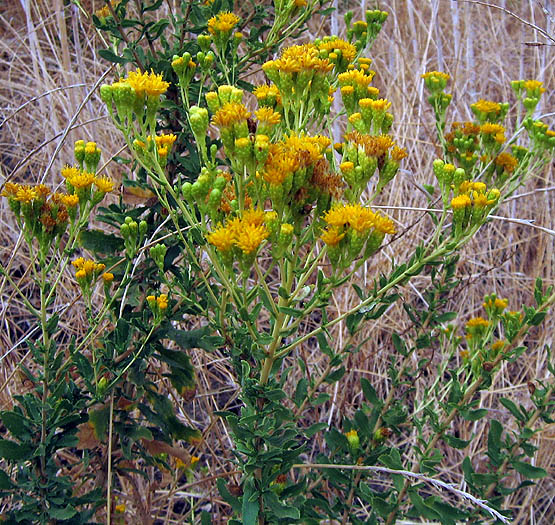
Isocoma menziesii, commonly called Coast Goldenbush or Menzies’ goldenbush, is a resinous, rounded shrub of the California coast, known for the bursts of bright yellow, aster-family flowers it produces from late summer into fall, just when many other coastal natives have finished blooming. It belongs to Asteraceae and is closely related to the interior rabbitbrushes and other goldenbushes, sharing their tolerance for salt, wind, and poor soil.
Growing 2 to 4 feet tall and often as wide, coast goldenbush forms a dense, twiggy mound of narrow, slightly sticky green leaves. Through most of the year it is an unassuming background shrub, but in fall its tips erupt in flat-topped clusters of small, bright yellow flower heads that are irresistible to bees and other pollinators fueling up before winter. Several botanical varieties are recognized across its range, varying somewhat in leaf shape and hairiness, but all share the same basic look and late-season bloom.
In the garden, coast goldenbush is valued by coastal California gardeners for exactly the conditions that make many other plants struggle: salt spray, sandy or claying soil, strong onshore wind, and long dry summers. It fits naturally into coastal sage scrub and dune restoration plantings, and its fall color is a welcome, late-season nectar source for local pollinators.
Identification
Coast goldenbush is best recognized by its rounded, resinous shrub form and its dense, flat-topped clusters of small yellow flower heads appearing in late summer and fall, when little else in the coastal scrub is in bloom.
Bark & Stems
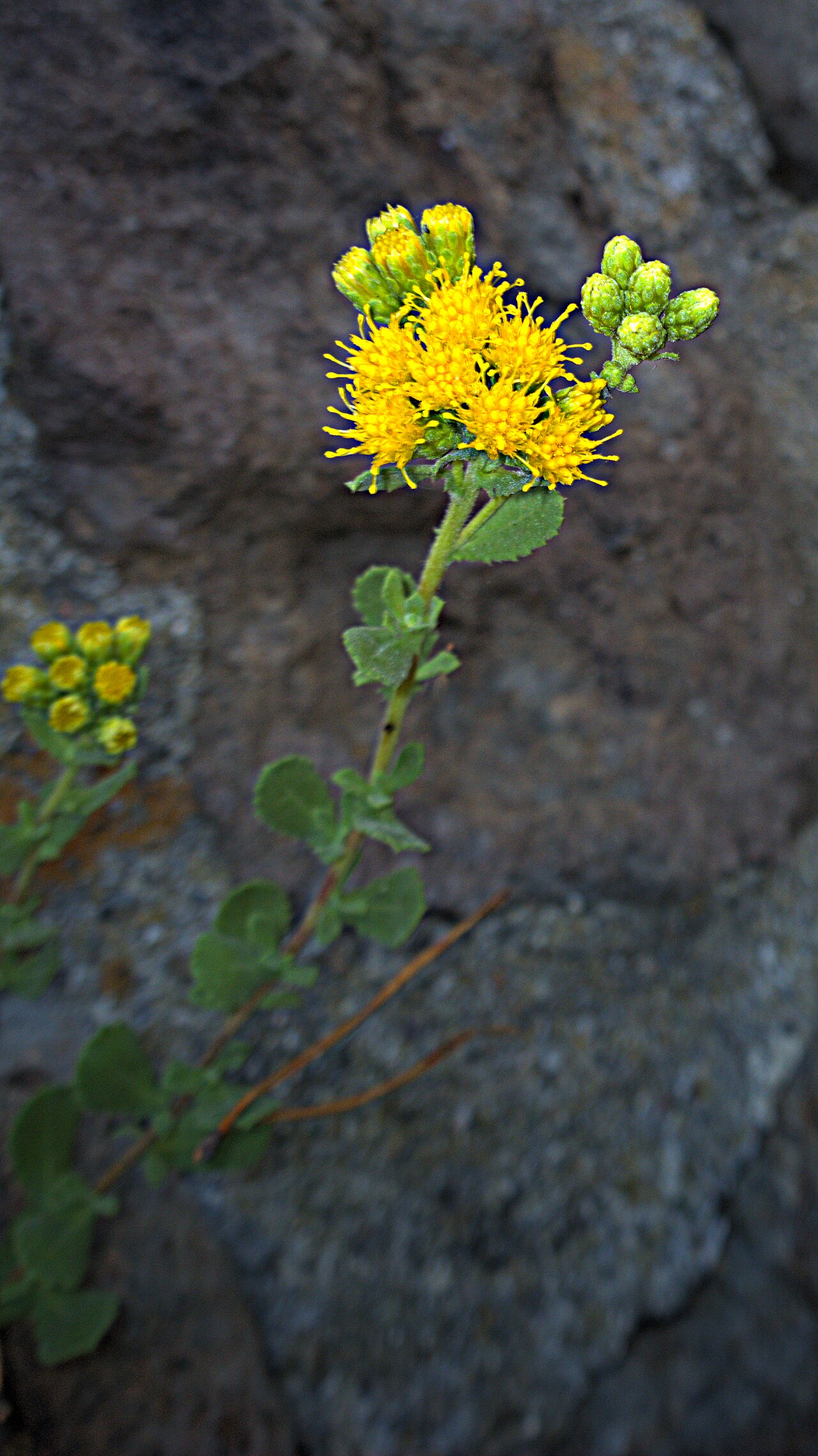
Stems are slender, woody at the base, and herbaceous toward the tips, often somewhat sticky or resinous to the touch. The shrub branches freely from a woody crown, building a dense, rounded to irregular mound. Young stems are green and finely ridged, aging to tan-gray and becoming more rigid with time.
Leaves
Leaves are narrow, linear to oblanceolate, typically ½ to 1½ inches long, with smooth or slightly toothed margins. They are bright to grayish green, somewhat fleshy, and often gummy with resin, a trait shared across the genus and part of what gives the plant its slightly aromatic character when brushed or crushed. Leaves are arranged alternately and persist through most of the year, thinning somewhat during the driest months.
Flowers
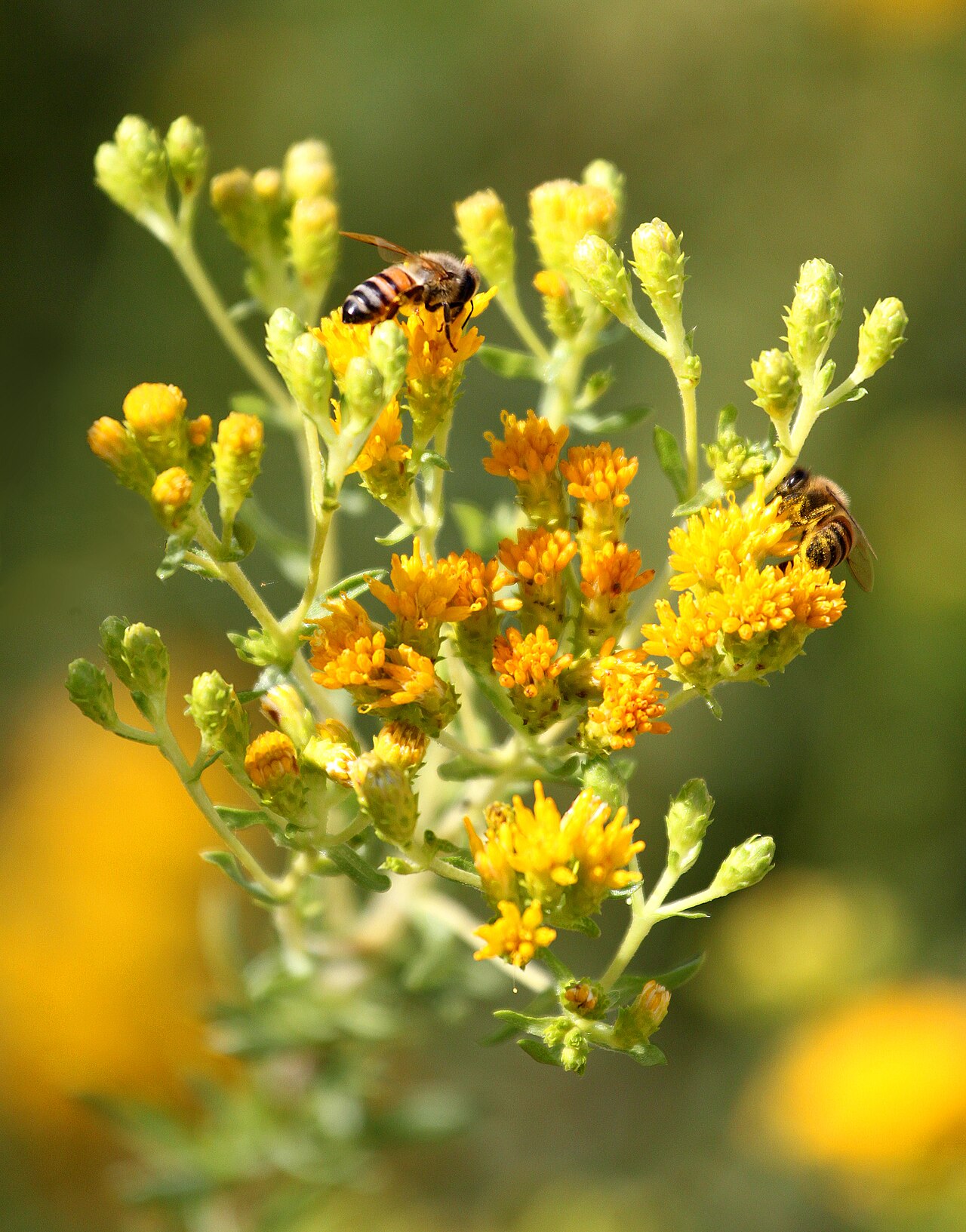
Flower heads are small, about ¼ to ⅓ inch across, composed entirely of disc florets in bright golden yellow, without the showy ray petals seen in daisy-like composites. Heads are borne in dense, flat-topped to rounded clusters at the branch tips, creating a strong burst of color against the plant’s green foliage. Bloom is concentrated from August through November, later than most other coastal sage scrub shrubs, making it an important late-season nectar source.
Fruit & Seeds
Fruits are small, dry achenes tipped with a tuft of whitish bristles (a pappus), typical of the sunflower family, allowing wind dispersal once the flower heads dry and open. Seed set generally follows the fall bloom, with seed heads persisting into winter.
Quick Facts
| Scientific Name | Isocoma menziesii |
| Family | Asteraceae (Sunflower) |
| Plant Type | Evergreen Shrub |
| Mature Height | 2–4 ft |
| Mature Spread | 2–4 ft |
| Growth Rate | Moderate to Fast |
| Sun Exposure | Full Sun |
| Water Needs | Low |
| Soil Type | Sandy, loamy or clay; tolerates poor, saline soils |
| Soil pH | 6.0–8.0 (neutral to alkaline) |
| Bloom Time | August – November |
| Flower Color | Bright yellow |
| Fall Color | None (evergreen foliage; fall is bloom season) |
| Fruit | Small bristle-tipped achenes |
| Deer Resistant | Yes |
| USDA Hardiness Zones | 9–11 |
Native Range
Coast goldenbush is native to coastal California, from the San Francisco Bay Area south through the Central and South Coast ranges to San Diego County, including the Channel Islands. It is a characteristic shrub of coastal bluffs, dunes, and coastal sage scrub, generally staying within a few miles of the immediate coast and adjacent foothills.
Within its range it grows on coastal bluffs, stabilized dunes, salt marsh margins, and dry coastal scrub slopes, often alongside California sagebrush (Artemisia californica) and coyote bush (Baccharis pilularis) in classic coastal sage scrub plant communities. It tolerates salt spray and periodic inundation by brackish water near marsh edges better than most other shrubs in this plant community.
Coast goldenbush is strictly a coastal California species and is not documented as native in Nevada or any other state; plantings outside its mild, coastal California climate are ornamental introductions rather than native range extensions.
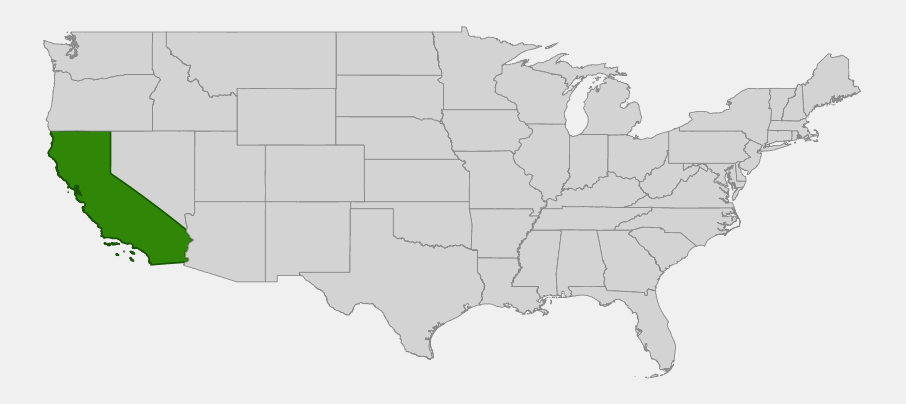
📋 Regional plant lists featuring Coast Goldenbush: California & Nevada
Growing & Care Guide
Coast goldenbush is an easy, forgiving shrub for coastal and near-coastal California gardens, prized for thriving in sandy, salty, windswept sites where many other ornamentals fail.
Light
Plant in full sun. Coast goldenbush flowers most heavily and holds its naturally dense, rounded form best with at least six hours of direct sun a day; in shadier spots it tends to grow leggy and open with fewer flowers.
Soil & Water
It tolerates a wide range of soils, from beach sand to heavier clay, and is notably tolerant of salty, alkaline conditions near the coast. Once established, it needs little supplemental water and handles the region’s dry summers well, though it also tolerates occasional wet conditions near marsh edges. Good drainage is helpful but not essential, unlike many other California natives.
Planting Tips
Set out container plants in fall or winter so roots can establish during the rainy season before summer drought. Space plants 2 to 4 feet apart for a filled-in hedge or massed planting, or further apart for individual specimens. It establishes quickly and tolerates coastal wind and salt spray from the time of planting, making it a reliable choice for exposed bluff-top or dune sites.
Pruning & Maintenance
Lightly shear or prune after the fall bloom fades to keep the shrub compact and encourage dense new growth for the following year. Without occasional pruning, plants can become loose and sprawling. Coast goldenbush is otherwise low-maintenance and generally free of serious pests or diseases.
Landscape Uses
Coast goldenbush’s salt and wind tolerance make it especially useful for:
- Coastal gardens exposed to salt spray and onshore wind
- Dune stabilization and restoration plantings
- Coastal sage scrub restoration
- Late-season pollinator gardens, extending nectar availability into fall
- Low hedges or massed plantings on bluff-top sites
- Low-water, low-maintenance landscaping near the coast
Wildlife & Ecological Value
Coast goldenbush’s late bloom time makes it one of the more valuable wildlife plants in coastal California gardens, filling a nectar gap that opens up after most spring- and summer-blooming natives have finished.
For Pollinators
The fall flower clusters draw large numbers of honeybees, native bees, and other small pollinating insects at a time of year when nectar sources are otherwise scarce along the coast. This makes coast goldenbush an especially important late-season resource for pollinators building up reserves before winter.
For Birds
The dense, twiggy growth offers cover and nesting structure for small coastal birds, while the abundant insect activity the flowers attract provides a reliable food source for insectivorous species foraging nearby.
For Mammals
Small mammals use the shrub’s dense branching for cover from predators. The plant is not a primary browse species, and its resinous, aromatic foliage likely discourages heavy grazing, contributing to its general deer resistance.
Ecosystem Role
As part of the coastal sage scrub and dune plant community, coast goldenbush helps stabilize sandy and bluff-top soils with its root system while contributing structural and floral diversity alongside California sagebrush and coyote bush. Its late bloom extends the overall flowering season of the coastal scrub community, supporting pollinator populations into the fall months when few other native plants are still flowering.
Cultural & Historical Uses
Coast goldenbush does not carry the extensive documented ethnobotanical record of some other California natives, but as a common member of coastal sage scrub, it would have been a familiar plant to the Chumash, Tongva, and other Indigenous peoples of coastal California, who were deeply knowledgeable about the many plants within this community.
The genus name Isocoma, from Greek roots meaning “equal hair,” refers to the uniform bristles of the seed’s pappus, a technical botanical feature used to distinguish it from related genera. The species epithet menziesii honors Archibald Menzies, a Scottish naturalist who collected plants along the Pacific Coast in the late eighteenth century.
In more recent decades, coast goldenbush has become a go-to plant in California native plant horticulture and coastal restoration work, valued less for any traditional use and more for its practical toughness in difficult coastal sites where few other plants, native or introduced, perform as reliably.
Frequently Asked Questions
Is coast goldenbush the same as rabbitbrush?
No, though they are related and resemble each other. Rabbitbrush (Ericameria nauseosa) is an interior and high-desert shrub with grayer, often felted foliage, while coast goldenbush is restricted to the California coast and has greener, more resinous leaves.
Why does coast goldenbush bloom so late?
Its fall bloom timing, from August through November, lets it take advantage of a nectar niche left open after most spring- and summer-flowering coastal natives have finished, reducing competition for pollinators.
Does coast goldenbush tolerate salt spray?
Yes, it is notably salt-tolerant and is commonly found on coastal bluffs and dunes directly exposed to ocean spray, making it a reliable choice for seaside gardens where many other plants struggle.
How much pruning does coast goldenbush need?
A light shearing after the fall bloom fades each year helps keep the shrub dense and compact; without it, plants tend to become loose and sprawling over time.
Can coast goldenbush grow outside coastal California?
It is adapted specifically to the mild, coastal California climate and is not native or reliably hardy outside that zone; it is best reserved for gardens within or very near its native coastal range.

Looking for a nursery that carries Coast Goldenbush?
Browse our native plant nursery directory: California