Bigleaf Sedge (Carex amplifolia)
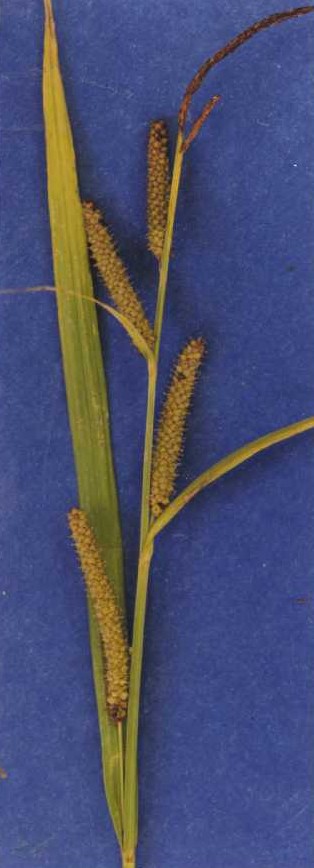
Carex amplifolia, commonly called bigleaf sedge, is a coarse, rhizomatous wetland sedge of the Pacific Northwest and northern Rocky Mountains. A member of the Cyperaceae (sedge family), it is named for its unusually broad leaves — among the widest of any western North American sedge — which set it apart at a glance from the many narrow-leaved sedges sharing its wet habitats.
Bigleaf sedge forms loose colonies along stream banks, spring seeps, and in the saturated soils of coniferous forest wetlands, spreading gradually by creeping rhizomes rather than forming a tight, solitary clump. Its stout stems, reaching 20 to 39 inches tall, carry long, cylindrical, drooping seed spikes well above the broad basal leaves, giving mature plants a distinctive shaggy, textured silhouette at the margins of forest streams and wet meadows.
Though rarely sold commercially and seldom grown as a conventional ornamental, bigleaf sedge is valuable in native plant and restoration contexts for stabilizing streambanks, filtering runoff, and providing structure in shaded wetland plantings where few other sedges offer its combination of broad foliage and reliable spread.
Identification
Bigleaf sedge is a robust, colony-forming perennial sedge spreading by stout rhizomes, with flowering culms 20 to 39 inches (50–100 cm) tall, triangular in cross-section as typical of the sedge family.
Stems & Rhizomes
Stems arise singly or in small groups from creeping, horizontal rhizomes rather than forming dense tussocks, allowing the species to spread gradually through wet soil and form loose colonies along stream margins and in forested seeps over time.
Leaves
The leaves are notably broad for a sedge — typically ⅜ to ¾ inch (1–2 cm) wide, among the widest of any sedge native to the region — flat, bright to deep green, and arranged mostly toward the base of the plant, with a few shorter leaves along the lower stem.
Flowers & Fruit
Like all sedges, bigleaf sedge produces no petals; its flowers are reduced and wind-pollinated, arranged in distinct male (staminate) and female (pistillate) spikes on the same plant. The pistillate spikes are long, cylindrical, and drooping, often 2 to 4 inches long, giving the inflorescence a pendulous, almost tassel-like appearance that is a useful field mark. Staminate spikes are narrower and borne above the pistillate spikes on the same stem. Flowering occurs in late spring to early summer, with the small, lens-shaped achenes maturing inside inflated perigynia (the sac-like structures enclosing each seed) by mid to late summer.
Quick Facts
| Scientific Name | Carex amplifolia |
| Family | Cyperaceae (Sedge) |
| Plant Type | Rhizomatous Perennial Sedge |
| Mature Height | 20–39 in (50–100 cm) |
| Mature Spread | Spreading colony, slowly expanding by rhizome |
| Growth Rate | Moderate |
| Sun Exposure | Light Shade to Partial Sun |
| Water Needs | High; wet to consistently moist soil |
| Soil Type | Saturated to consistently moist loam or muck |
| Soil pH | 5.5–7.0 |
| Bloom Time | May – July |
| Flower Color | Green to brown (inconspicuous) |
| Fall Color | Tan as foliage cures |
| Fruit | Small achenes in inflated perigynia |
| Deer Resistant | Generally yes (low browse preference) |
| USDA Hardiness Zones | 5–9 |
Native Range
Bigleaf sedge is native to the Pacific Northwest and northern Rocky Mountains, occurring from Washington and Oregon through California, and inland across Idaho and western Montana, with additional disjunct populations in New Mexico. Within this range it is closely tied to the moist, shaded habitats created by coniferous forest hydrology, from coastal lowlands to mid-elevation mountain drainages.
Across its range, bigleaf sedge is a characteristic plant of wet coniferous forest: streambanks, spring seeps, forest-floor wetlands, and the margins of ponds and slow-moving creeks beneath a Douglas-fir, western hemlock, or mixed-conifer canopy. It tolerates considerable shade, unlike many wetland sedges that require more open sun, making it a useful indicator of consistently saturated forest soils.
Because it depends on reliably wet, often forested ground, bigleaf sedge is sensitive to water table changes from logging, development, or stream channelization. It remains locally common within intact forest wetlands across its range but should always be sourced from reputable native plant nurseries rather than collected from the wild.
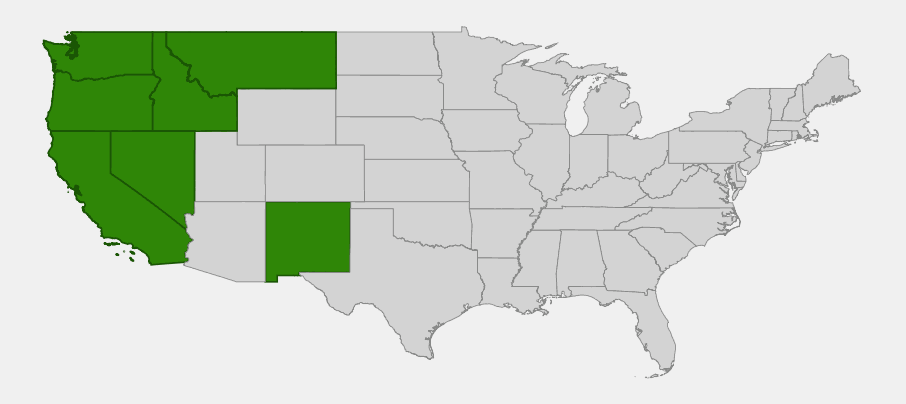
📋 Regional plant lists featuring Bigleaf Sedge: California & Nevada · Western Oregon & Western Washington · Idaho, Eastern Oregon & Eastern Washington · Montana & Wyoming · Arizona & New Mexico
Growing & Care Guide
Bigleaf sedge is best suited to gardeners with a naturally wet or seasonally saturated site — a streambank, pond margin, rain garden low point, or shaded seep — rather than typical border conditions. Given consistent moisture and some shade, it requires little further care.
Light
This sedge tolerates more shade than most wetland sedges, thriving in the dappled light beneath open forest canopy. It also grows well in partial sun along open streambanks, provided soil moisture remains high; deep, dry shade and full, hot sun with dry soil are both best avoided.
Soil & Water
Bigleaf sedge needs consistently wet to saturated soil and does not tolerate drought. It is well suited to the margins of ponds, streams, and rain gardens where water collects, as well as spring-fed seeps. Rich, organic, loamy soils that hold moisture are ideal; avoid planting it in free-draining or seasonally dry ground.
Planting Tips
Plant container stock in spring or fall directly into consistently moist to wet soil, spacing plants 12 to 18 inches apart to allow for slow rhizome spread into a loose colony over several years. It is an excellent choice for streambank stabilization projects and the damp, shaded edges of constructed wetlands or rain gardens.
Pruning & Maintenance
Minimal maintenance is needed. Cut back old foliage in late winter if a tidier appearance is wanted before new growth emerges in spring. Established colonies require no dividing unless a gardener wishes to control spread or propagate new plantings elsewhere.
Landscape Uses
Bigleaf sedge’s broad leaves and tolerance for wet, shaded ground suit several restoration and garden roles:
- Streambank and pond-margin stabilization in shaded riparian settings
- Rain gardens and bioswales with consistently wet low points
- Forest wetland restoration plantings beneath conifer canopy
- Shaded native plant gardens seeking bold, broad-leaved texture
- Erosion control on consistently moist slopes and seeps
Wildlife & Ecological Value
Bigleaf sedge contributes structure and food resources to the forested wetlands it inhabits, playing a quiet but meaningful ecological role in Pacific Northwest and Rocky Mountain riparian systems.
For Birds
The seeds provide food for waterfowl and other wetland-associated birds, while the dense basal foliage and colony structure offer cover for ground-foraging and nesting birds along stream corridors.
For Mammals
Various small mammals use sedge colonies like this one for cover near water, and the foliage is grazed to a limited extent by deer and elk, particularly where more preferred forage is scarce.
For Pollinators
As a wind-pollinated sedge, bigleaf sedge offers no floral reward to pollinators, but its presence supports the broader wetland insect community that depends on structurally diverse streamside vegetation.
Ecosystem Role
By spreading via rhizomes along saturated soils, bigleaf sedge helps stabilize streambanks and forest wetland margins, reducing erosion and filtering sediment and nutrients from runoff before it reaches open water. Its tolerance of shade allows it to persist in forest conditions where few other wetland graminoids compete effectively, making it an important structural component of intact coniferous forest riparian zones.
Cultural & Historical Uses
Bigleaf sedge is not well documented for specific traditional food, medicinal, or material uses, unlike some larger, more widespread sedge species. Sedges in general were used by Indigenous peoples of the Pacific Northwest for basketry and matting material, and it is plausible that bigleaf sedge’s broad, pliable leaves were among the many wetland graminoids gathered for such purposes, though specific documented use of this species is limited.
In more recent decades, bigleaf sedge has gained attention primarily through its role in forest and range inventories, where botanists and land managers have used it as an indicator of saturated, forested wetland conditions in field guides to Pacific Northwest and Intermountain plant communities.
Today its significance is chiefly ecological and restorative: land managers plant bigleaf sedge in riparian and wetland restoration projects for its reliable establishment in shaded, saturated soils where few other native sedges perform as well.
Frequently Asked Questions
How is bigleaf sedge different from other native sedges?
Its leaves are unusually broad for a sedge — up to ¾ inch wide — compared with the narrow, grass-like leaves of most Carex species. Combined with its long, drooping seed spikes, this broad foliage makes it relatively easy to distinguish in the field.
Can bigleaf sedge grow in a regular garden bed?
Only if the soil stays consistently wet to saturated. It is not drought tolerant and will struggle or die back in typical well-drained garden soil. It is best reserved for streambanks, pond edges, rain gardens, and other reliably wet sites.
Does bigleaf sedge spread aggressively?
It spreads by rhizomes but does so gradually, forming loose colonies over several years rather than aggressively overtaking a planting. It is generally considered well behaved in restoration and garden settings within its native range.
Will bigleaf sedge grow in full sun?
It can, provided soil remains consistently saturated, such as directly along an open stream or pond margin. However, it also tolerates considerable shade, which is less common among wetland sedges and makes it especially useful beneath forest canopy.
Is bigleaf sedge easy to find at nurseries?
It is less commonly offered than some popular garden sedges, since it is used mainly in restoration and specialty wetland plantings. Native plant nurseries within its range are the best source; check regional directories for growers who carry wetland and riparian species.

Looking for a nursery that carries Bigleaf Sedge?
Browse our native plant nursery directory: California · Oregon · Washington · Idaho · Nevada & New Mexico · Montana