
Common Arrowgrass (Triglochin maritima)
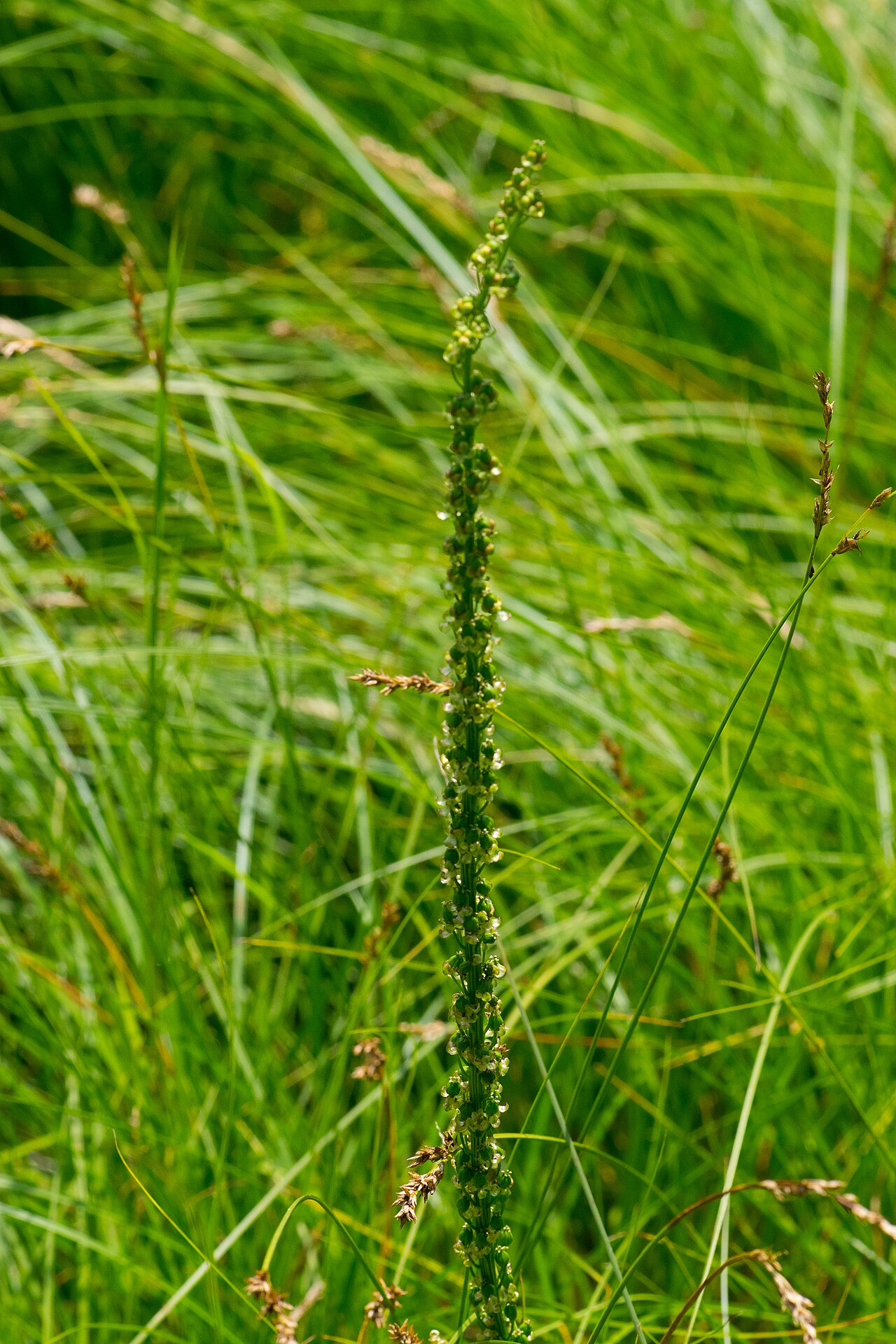
Triglochin maritima, known as Common Arrowgrass or seaside arrowgrass (the name used by USDA PLANTS), is a grasslike perennial of salt marshes, alkaline meadows and fens across the Northern Hemisphere. It forms tufts of narrow, fleshy, half-round leaves and sends up slender spikes, 1 to 3 feet tall, crowded with tiny greenish flowers with feathery stigmas, followed by small, ribbed fruits.
Despite its name and appearance, it is not a true grass. It belongs to the arrowgrass family (Juncaginaceae), a small family of marsh plants more closely related to water-plantains and pondweeds than to grasses. It is one of the most widespread wetland plants in North America, found from the Arctic coast of Alaska and northern Canada south along both coasts and through the interior West to Arizona and New Mexico, wherever salty, alkaline or mineral-rich wet soils occur.
Common arrowgrass is poisonous to livestock. Its leaves contain a cyanogenic compound that releases hydrogen cyanide when the plant is chewed or damaged, and it has caused deaths of cattle and sheep. This guide covers how to identify common arrowgrass, its native range and habitats, its toxicity, and its value in wetland restoration.
Identification
Common arrowgrass is easy to overlook among grasses, sedges and rushes, but its fleshy, half-round leaves and long, slender spikes of tiny flowers or fruits are distinctive once you know them.
Growth Habit
Plants grow in dense tufts from a short, thick rhizome, often forming clumps or patches. Old leaf bases form a fibrous sheath at the base of the clump. Flowering stems (scapes) are leafless, 8 to 36 inches tall, and usually taller than the leaves.
Leaves
The leaves are all basal, narrow (about 1/16 to ⅛ inch wide), 4 to 20 inches long, fleshy, flat on one side and rounded on the other (half-round in cross-section). They are bright to dark green and have a sheathing base.
Flowers
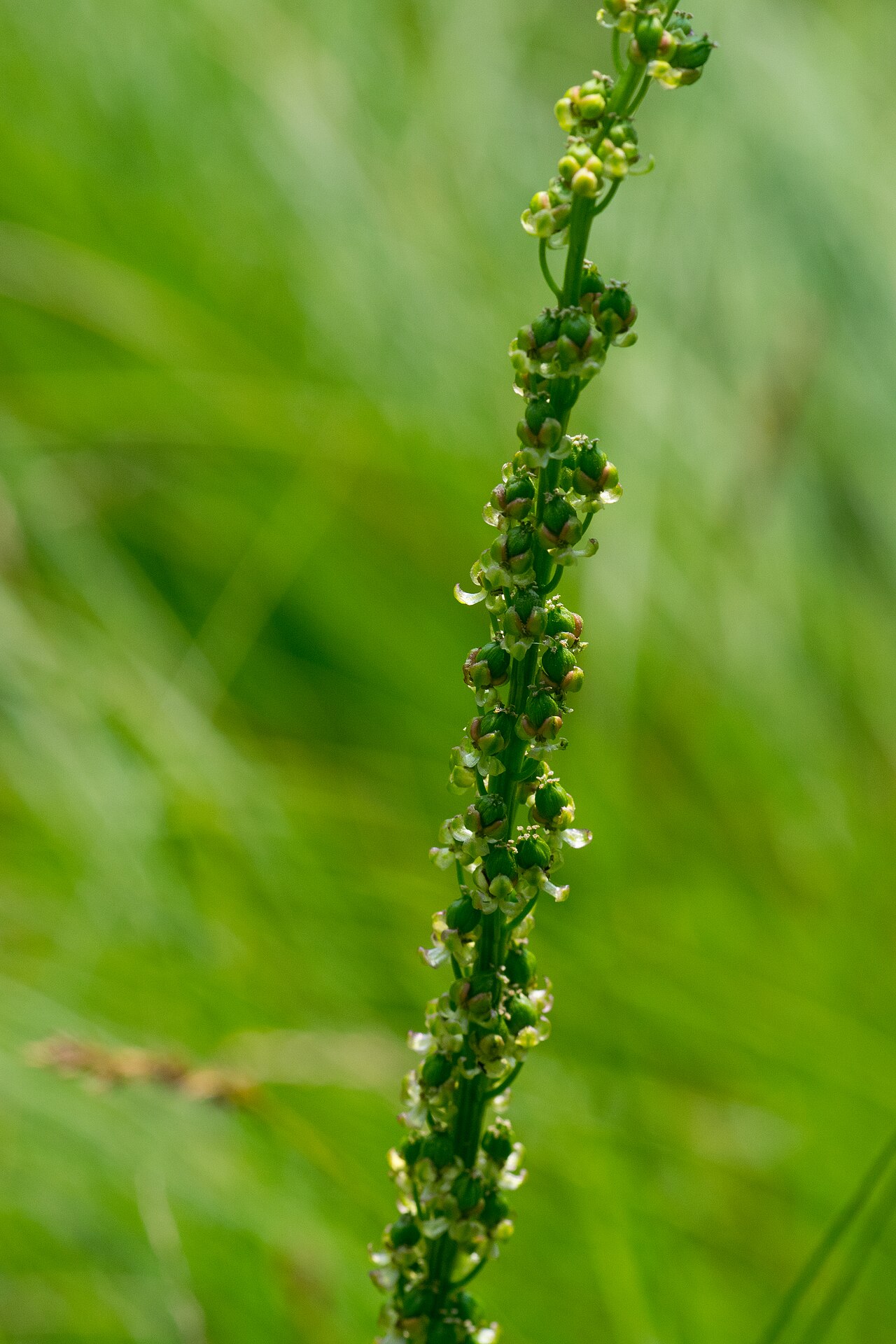
From about May to August, each scape bears a long, narrow, spike-like raceme packed with dozens to hundreds of tiny flowers on short stalks. Each flower is about 1/8 inch across, with six greenish tepals and six stamens, and six white, feathery stigmas that help catch wind-borne pollen.
Fruit & Seeds
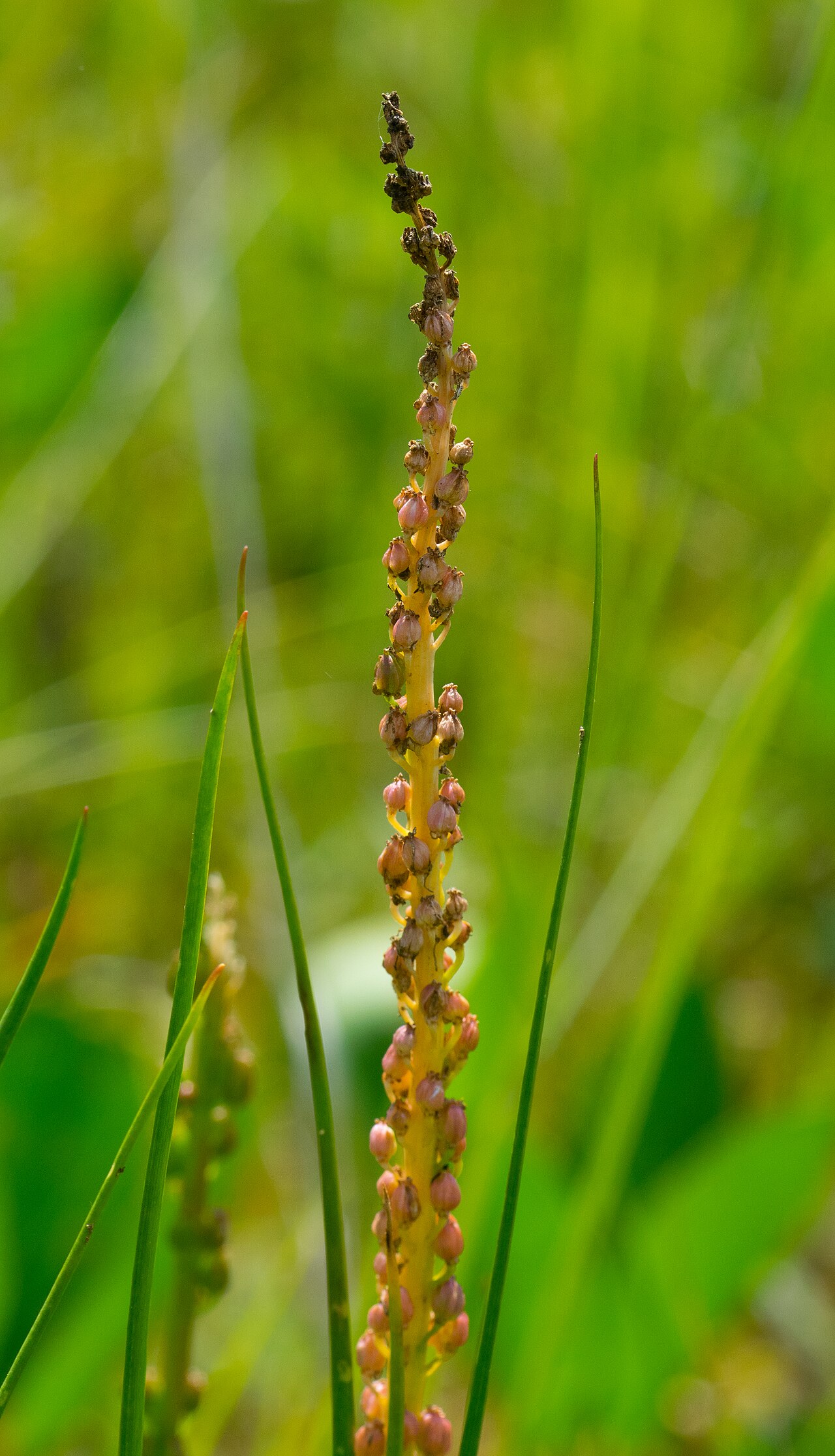
Each flower develops into an oblong to egg-shaped fruit about ¼ inch long, made of six ribbed segments that separate when ripe. The fruits turn green to orange-brown or tan in late summer. The seeds can float, which helps them spread along shorelines and in wet meadows.
Look-alikes
Marsh arrowgrass (Triglochin palustris) is a smaller, more slender plant with narrow, club-shaped fruits of three segments that pull apart from the base. Rushes and grasses lack the fleshy, half-round leaves and dense spike of tiny flowers. Seaside plantain (Plantago maritima) also has fleshy leaves but has dense, short flower spikes.
Safety Note
Common arrowgrass is toxic to livestock. The leaves contain triglochinin, a cyanogenic compound that releases hydrogen cyanide when the plant is chewed or crushed. Cattle and sheep can be poisoned if they eat large amounts, especially when the plants are stressed by drought or frost and cyanide levels are high. Poisoning can be rapid and fatal. Do not let livestock graze heavily where it is abundant, and keep it out of hay. People should not eat any part of the plant.
Quick Facts
| Scientific Name | Triglochin maritima (syn. T. maritimum, T. elata) |
| Family | Juncaginaceae (arrowgrass family) |
| Plant Type | Grasslike perennial herb; not a true grass |
| Mature Height | 8–36 in in flower |
| Mature Spread | 6–18 in; forms clumps |
| Growth Rate | Moderate |
| Sun Exposure | Full sun |
| Water Needs | High; wet to saturated soils |
| Soil Type | Wet, salty, alkaline or calcareous soils; mud, peat, sand |
| Soil pH | About 6.5–9.0 (neutral to alkaline) |
| Bloom Time | May–August |
| Flower Color | Greenish, with white feathery stigmas |
| Fall Color | Fruiting spikes turn tan to orange-brown |
| Fruit | Six-parted, ribbed fruit about ¼ in long |
| Deer Resistant | Generally avoided; toxic to livestock |
| USDA Hardiness Zones | 1–8 |
Native Range
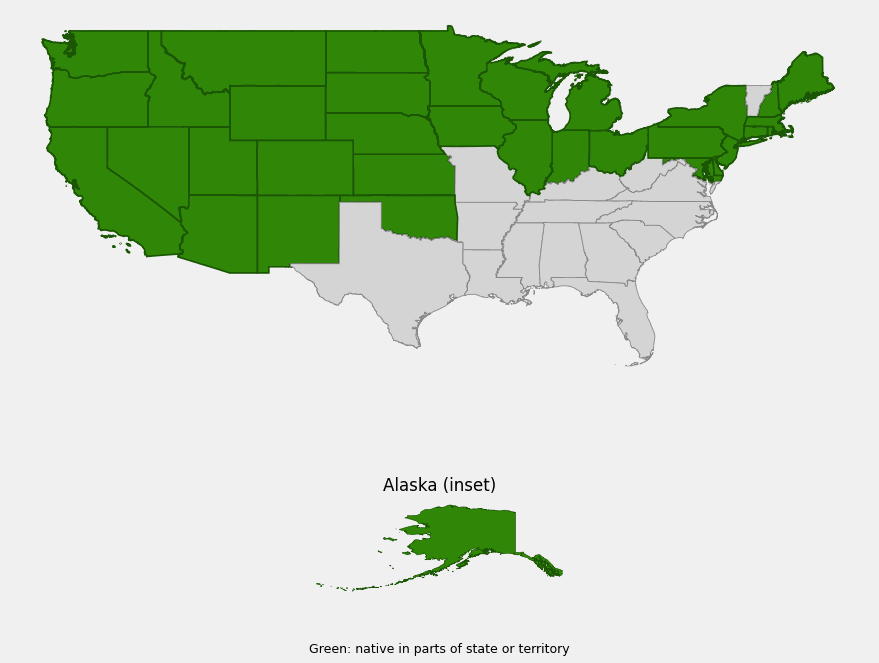
Common arrowgrass is circumboreal, growing across northern North America, Europe and Asia. In North America it is native from Alaska and all of Canada’s provinces and territories south along the Atlantic coast to Delaware and Maryland, along the Pacific coast to California, through the Great Lakes states and northern Great Plains, and through the interior West to Arizona and New Mexico. USDA PLANTS lists it as native in 34 states.
On the coasts it grows in salt and brackish marshes, often in the upper marsh with saltgrass, seaside plantain and rushes. Inland, it grows in alkaline and saline meadows, salt flats, the edges of alkaline lakes, calcareous fens, marl wetlands and wet prairies, where mineral-rich water supports its growth. In the Midwest and Great Lakes states it is mostly found in fens and around marl lakes, and in the Great Plains and western states in alkaline meadows and around springs.
In Oklahoma and Kansas it is near the southern edge of its interior range and is found in scattered saline wetlands, mainly in the western parts of those states. In Washington and Oregon it grows both in coastal salt marshes on the west side and in alkaline wetlands east of the Cascades.
📋 Regional plant lists featuring Common Arrowgrass: New York, Pennsylvania & Northern New Jersey · Idaho, Eastern Oregon & Eastern Washington · Ohio & Indiana · Montana & Wyoming · Michigan, Wisconsin & Eastern Minnesota · Nebraska, Kansas & Eastern Colorado · Utah & Western Colorado · Connecticut, Massachusetts & Rhode Island · New Hampshire, Maine & Vermont · Maryland, Virginia & West Virginia · Delaware, Southern New Jersey & Long Island · Arizona & New Mexico · Illinois, Iowa & Missouri · Alaska · North Dakota, South Dakota & Western Minnesota · Western Oregon & Western Washington · California & Nevada
Growing & Care Guide
Common arrowgrass is not a typical garden plant, and its toxicity makes it a poor choice near pastures or hay fields. It is valuable in wetland and salt marsh restoration, and it can be grown in a bog garden or the wet margin of a pond with salty or alkaline water, where few other plants grow. Use nursery-grown plants or seed, not plants dug from the wild.
Light
Full sun. It grows in open marshes and meadows and does not tolerate much shade.
Soil & Water
It needs constantly wet to saturated soil, including mud, peat or sand, and tolerates salty, brackish and alkaline conditions. It also grows in fresh, mineral-rich water, as in fens. It does not tolerate drying out.
Planting Tips
Plant plugs in spring in wet soil at the edge of a pond, bog garden or restored marsh. Space them about 12 inches apart. Combine with other wetland plants such as rushes, bulrushes and sedges. Keep plantings away from areas where livestock graze.
Pruning & Maintenance
Little care is needed. Remove old flower stalks if you wish. In wetland restorations, control invasive plants such as common reed (Phragmites) and purple loosestrife, which can crowd out native marsh plants.
Propagation
Grow it from seed sown on wet soil in fall or after a period of cold, moist stratification, or divide established clumps in spring. Seedlings need constant moisture.
Landscape Uses
- Salt marsh and wetland restoration: a native component of coastal and inland saline marshes
- Bog gardens and pond margins: for wet, alkaline or brackish sites
- Fen and alkaline wetland conservation: a characteristic species of calcareous fens and alkaline meadows
- Shoreline stabilization: its dense clumps help hold wet soils
- Wildlife habitat: seeds and cover for waterfowl and marsh birds
Wildlife & Ecological Value
Common arrowgrass is a small but widespread part of salt marsh and alkaline wetland communities, providing food and cover for wildlife despite its toxicity to livestock.
For Pollinators
It is wind-pollinated and offers little to pollinators, although small insects may visit the flowers.
For Birds
Ducks, geese and other waterfowl eat the seeds, and the dense clumps provide cover for marsh birds. Geese also graze the leaves in coastal marshes.
For Mammals
It is toxic to livestock, which may be poisoned if they eat large amounts. Wild grazers such as muskrats, geese and deer may eat it in small amounts.
Ecosystem Role
As a salt-tolerant perennial, common arrowgrass helps stabilize soils in salt marshes and alkaline wetlands. Its presence often indicates mineral-rich or saline water, and it is a characteristic plant of high-quality fens and alkaline meadows, many of which are rare habitats.
Cultural & Historical Uses
The genus name Triglochin comes from Greek words meaning “three points,” referring to the fruits of some species. The species name maritima means “of the sea,” referring to its coastal habitats. The common name arrowgrass refers to the arrow-like shape of the fruits in some species.
Some Indigenous peoples of the Pacific Northwest and the Arctic used the fleshy leaf bases or seeds as food after careful preparation, and the seeds were reportedly roasted as a coffee substitute in some places. Because of the plant’s cyanide content, these uses are not recommended.
Common arrowgrass is well known to ranchers and veterinarians in the West and northern plains as a cause of livestock poisoning, especially in hay cut from wet meadows. Range management guides recommend recognizing it and limiting grazing where it is abundant.
Frequently Asked Questions
Is common arrowgrass a true grass?
No. Despite its name and grasslike leaves, it belongs to the arrowgrass family (Juncaginaceae), not the grass family.
Is common arrowgrass poisonous?
Yes. It contains a compound that releases hydrogen cyanide, and it can poison cattle, sheep and other livestock. People should not eat it.
Where does common arrowgrass grow?
In salt and brackish marshes along the coasts, and in alkaline meadows, fens and saline wetlands inland, across northern North America, Europe and Asia.
What is seaside arrowgrass?
Seaside arrowgrass is another common name for Triglochin maritima, and it is the name used by USDA PLANTS.
How do I tell common arrowgrass from marsh arrowgrass?
Common arrowgrass is larger, with a dense spike of six-parted, egg-shaped fruits. Marsh arrowgrass (T. palustris) is smaller and more slender, with narrow three-parted fruits.

Looking for a nursery that carries Common Arrowgrass?
Browse our native plant nursery directory: Alaska & Arizona · California · Colorado, Connecticut & Delaware · Idaho, Illinois, Indiana, Iowa & Kansas · Maine, Maryland, Massachusetts, Michigan, Minnesota & Montana · Nebraska, Nevada, New Hampshire, New Jersey, New Mexico, New York, North Dakota, Ohio & Oklahoma · Oregon · Pennsylvania, Rhode Island, South Dakota & Utah · Washington · Wisconsin & Wyoming

