
Q-Tips (Micropus californicus)
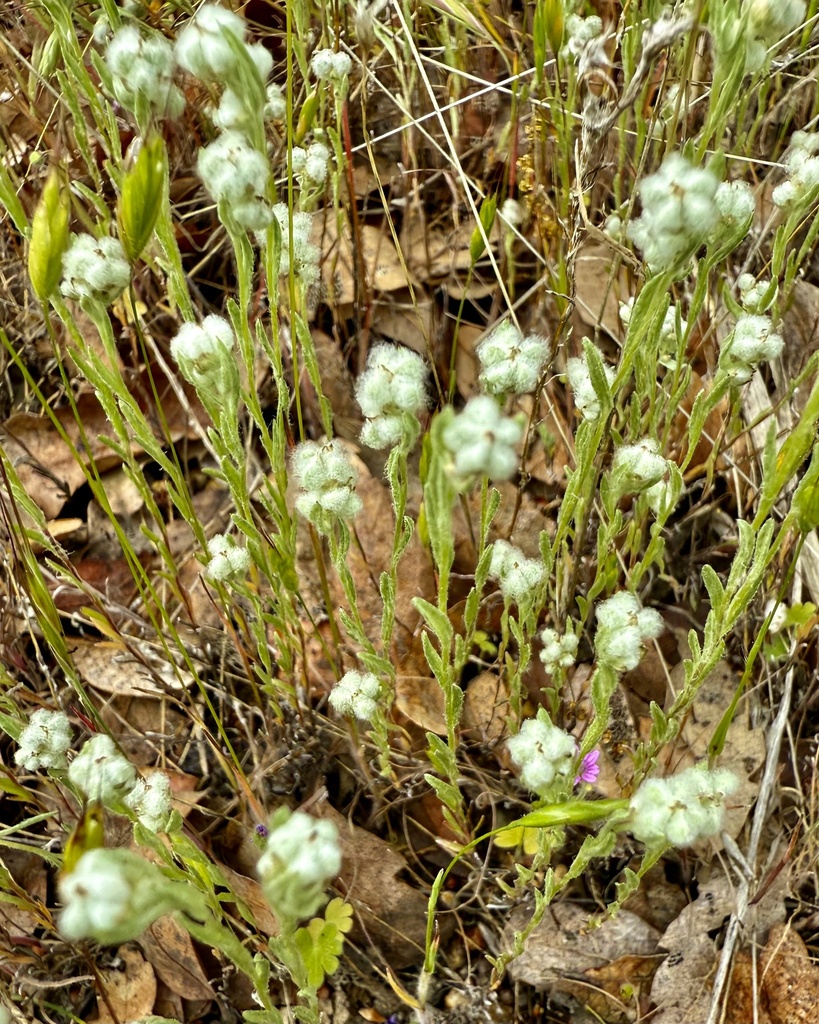
Micropus californicus, known as Q-Tips or slender cottonweed, is a tiny, woolly annual of the sunflower family (Asteraceae) that grows in dry grasslands, open woodlands and rocky openings of California and western Oregon. It is one of the “belly plants” of western springs: small enough that you have to kneel down to appreciate it.
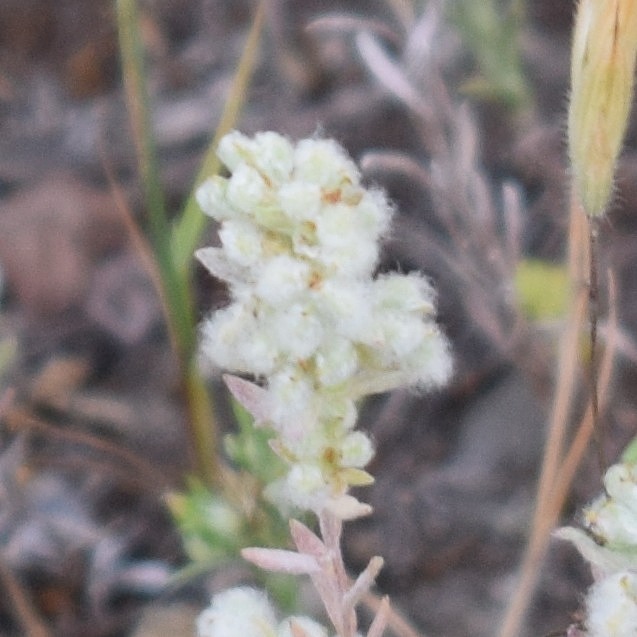
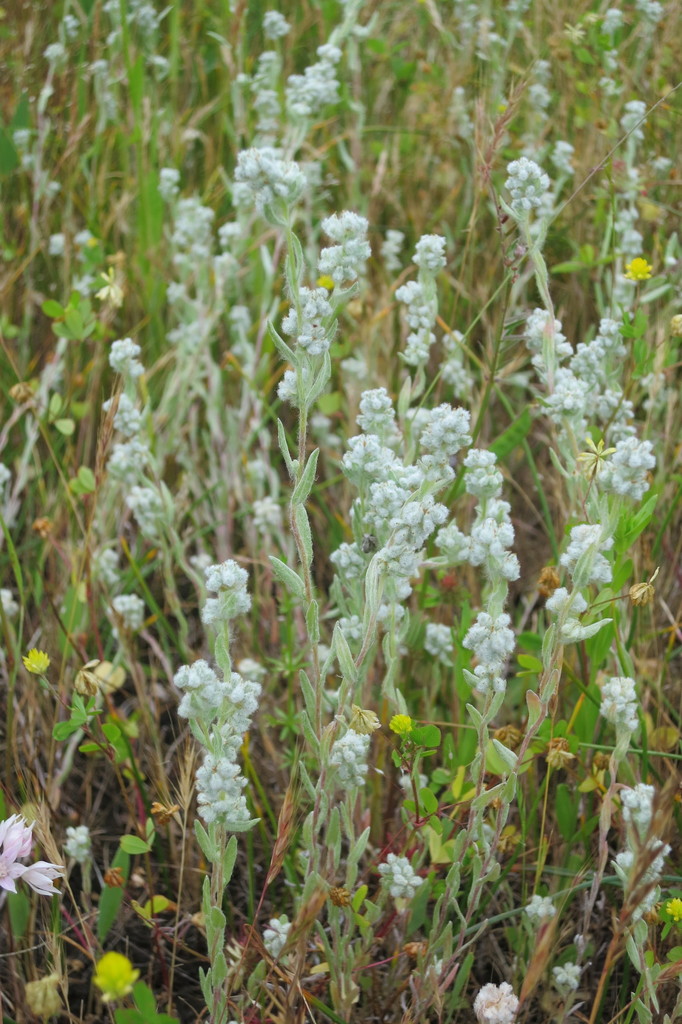
Each plant is a slender, silvery-gray stem, usually 2 to 8 inches tall, lined with narrow woolly leaves and topped by small clusters of round, white, cottony flower heads. The heads look remarkably like the cotton tips of a swab, which gave the plant its common name. It has no showy petals; the cotton comes from dense hairs on the bracts that wrap each tiny fruit.
Q-tips is not a garden plant in the usual sense, but it is a characteristic member of California’s native annual wildflower community and is worth knowing on spring walks. It can be included in seed mixes for grassland restoration. This guide covers how to identify it, where it grows, how to grow it and its role in the ecosystem.
Identification
Q-tips is easy to overlook among grasses, but once you notice its white cotton balls, you will find it in many dry, open places. Look for the combination of a single slender woolly stem and round, cottony heads.
Growth Habit
Q-tips is a small annual with one main stem or a few stems branching from the base, usually 2 to 8 inches tall and occasionally taller. The whole plant is covered with soft, gray to whitish wool, giving it a silvery look. It germinates with the fall and winter rains, flowers in spring and dries out by early summer.
Leaves
The leaves are alternate, narrow, oblong to spoon-shaped, and only about 1/4 to 1/2 inch long. They are densely woolly and stalkless, and are spaced along the stem up to the flower clusters.
Flowers
The flower heads are tiny and are grouped in round clusters, either at the tip of the stem or in the leaf axils along it. There are no rays and the individual flowers are minute and inconspicuous. What you see is the dense, white wool on the cupped bracts that enclose the outer flowers, forming a ball about 1/4 inch across. It blooms mainly from March to June.
Fruit & Seeds
Each fertile outer flower produces a small, smooth achene wrapped in a woolly, hood-like bract. The whole woolly unit falls off together, and the wool may help it catch the wind or cling to animals.
Look-alikes
Several other small woolly annuals grow in the same places, including the cottontops and filagos (Logfia, Filago), the evaxes (Hesperevax), the woolly marbles (Psilocarphus) and the nest straws (Stylocline). Q-tips is recognized by its upright, unbranched or sparsely branched stem with round, bright white cottony heads; telling the others apart requires a hand lens and a botanical key.
Quick Facts
| Scientific Name | Micropus californicus Fisch. & C.A. Mey. |
| Family | Asteraceae (sunflower family) |
| Plant Type | Annual herb |
| Mature Height | 2–8 in (occasionally to about 1 ft) |
| Mature Spread | 1–3 in |
| Growth Rate | Fast |
| Sun Exposure | Full sun |
| Water Needs | Very low; grows on winter rain |
| Soil Type | Dry, thin, rocky, sandy or clay soils, including serpentine |
| Soil pH | About 5.5–8.0 |
| Bloom Time | March–June |
| Flower Color | Inconspicuous; heads look white and cottony |
| Fall Color | None; plants dry by early summer |
| Fruit | Small achenes wrapped in woolly bracts |
| Deer Resistant | Not well documented; too small to matter as browse |
| USDA Hardiness Zones | Annual; native range roughly zones 7–10 |
Native Range
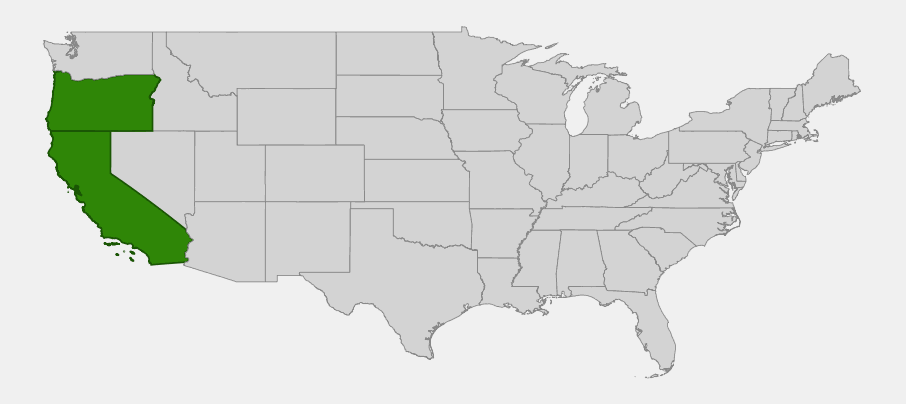
Q-tips is native to California and Oregon, and its range extends south into northern Baja California. USDA PLANTS lists it in both states. In California it is widespread west of the deserts, in the Coast Ranges, the Sierra Nevada and Cascade foothills, the Central Valley margins and the hills and mountains of southern California, including the Santa Monica Mountains.
In Oregon it grows west of the Cascades, in the Rogue and Illinois valleys of southwestern Oregon, around Grants Pass, Medford and the Table Rocks, and north into the Umpqua and Willamette valleys. Two varieties are often recognized, differing mainly in how woolly the plants are.
Typical habitats are dry, open grasslands, oak savannas and woodlands, chaparral openings, rocky outcrops and thin soils, including serpentine, mostly at low to middle elevations. It often grows in sparse spots between bunchgrasses where competition is light.
📋 Regional plant lists featuring Q-Tips: Western Oregon & Western Washington · California & Nevada
Growing & Care Guide
Q-tips is rarely sold, and it is more a plant to recognize and conserve than to plant. Seed is occasionally included in grassland restoration mixes. If you have it on your land, the best care is simply to leave sunny, open patches undisturbed in spring.
Light
It needs full sun and open ground. Shade from taller plants or a thick layer of grass thatch will crowd it out.
Soil & Water
It grows in thin, poor, well-drained soils, including rocky, sandy, clay and serpentine soils. It relies entirely on winter rain and finishes its life cycle before summer drought. Do not water it in summer.
Planting Tips
Scatter seed in fall on bare, open soil among bunchgrasses, other spring annuals and bulbs, ideally in a meadow or rock garden that mimics a dry grassland. Keep vigorous non-native annual grasses down, as they are the main competition for small native annuals.
Pruning & Maintenance
No maintenance is needed. Avoid mowing or raking areas with Q-tips until after the plants have dried and dropped their seed in early summer.
Propagation
Grow it from seed. Collect the dry, woolly heads in late spring and sow them in fall where you want them. Like many native annuals, it is best maintained by letting it reseed in place.
Landscape Uses
- Grassland restoration: a native annual of California and Oregon grasslands for restoration seed mixes
- Rock gardens and meadows: an unusual silvery texture among spring wildflowers
- Serpentine and thin-soil sites: tolerates poor, shallow and rocky soils
- Education and nature study: a classic small “belly plant” for spring wildflower walks
- Wildflower photography: its cotton-ball heads make an appealing close-up subject
Wildlife & Ecological Value
Small as it is, Q-tips is part of the diverse spring annual community that forms the foundation of western grassland food webs.
For Pollinators
The flowers are tiny and inconspicuous, and its pollination is little studied. Small insects may visit the heads, but it is not an important nectar plant.
For Birds
Seed-eating birds such as sparrows and finches may glean the small seeds from the ground along with those of other grassland annuals.
For Mammals
Small rodents gather and eat the seeds of grassland annuals, and Q-tips seeds are likely among them.
Ecosystem Role
Q-tips is one of many native annuals that fill the spaces between bunchgrasses in western grasslands and oak savannas. These small annuals cover bare soil in winter and spring, contribute seeds to the soil seed bank and indicate grassland that has not been completely taken over by non-native grasses.
Cultural & Historical Uses
The genus name Micropus comes from the Greek mikros, small, and pous, foot, probably referring to the small, foot-like shape of the woolly bracts. The species was described by the Russian botanists Friedrich Fischer and Carl Anton von Meyer from material collected in California.
The common name Q-tips, after the brand of cotton swabs, is a modern one that has caught on with naturalists because the resemblance is so obvious. An older name is slender cottonweed.
Q-tips is a good example of the small, easily overlooked annuals that make up much of California’s native plant diversity. Many of these plants have declined as non-native annual grasses have spread, so finding a healthy patch is a sign of a well-preserved grassland.
Frequently Asked Questions
Why is it called Q-tips?
Its round, white, cottony flower heads on slender stems look like the cotton tips of a swab.
Where does Q-tips grow?
In dry, open grasslands, oak woodlands, chaparral openings and rocky or serpentine soils of California and western Oregon, south into northern Baja California.
When does Q-tips bloom?
Mainly from March to June. The plants dry out by early summer.
Does Q-tips have petals?
No. Its flowers are tiny and have no petals or rays. The white cotton comes from woolly hairs on the bracts that wrap each small fruit.
Can I grow Q-tips?
Yes, from seed sown in fall on open, poor, well-drained soil in full sun. It is best used in grassland restoration or a meadow planting where it can reseed.

Looking for a nursery that carries Q-Tips?
Browse our native plant nursery directory: California · Oregon

