
Scheuchzer’s Cottongrass (Eriophorum scheuchzeri)
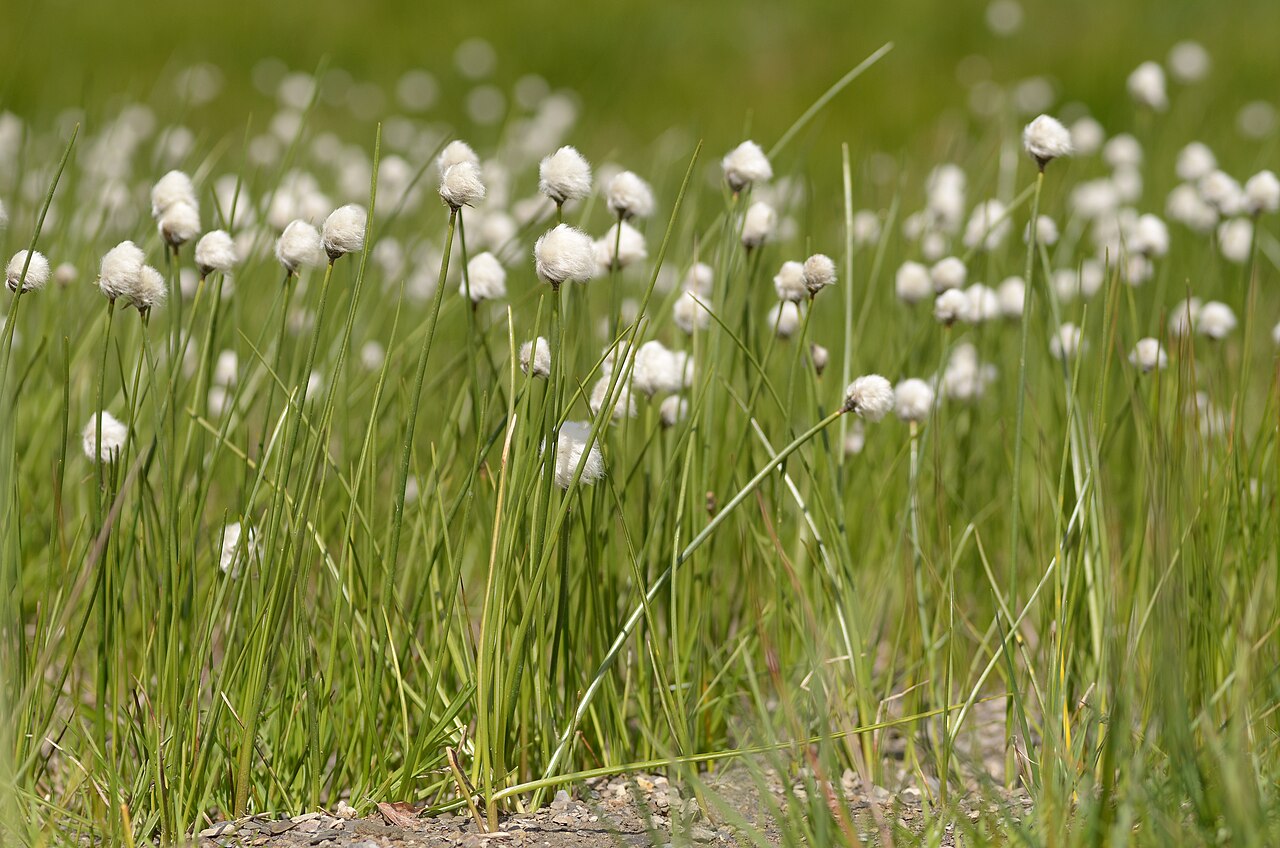
Eriophorum scheuchzeri, Scheuchzer’s Cottongrass (USDA: white cottongrass), is a small arctic and alpine sedge that lights up wet tundra and mountain meadows with bright white, cotton-ball heads in summer. Unlike the common cottongrass, which carries a cluster of drooping heads, each stem of Scheuchzer’s cottongrass carries a single, round, upright head, so a colony looks like a field scattered with tiny snowballs.
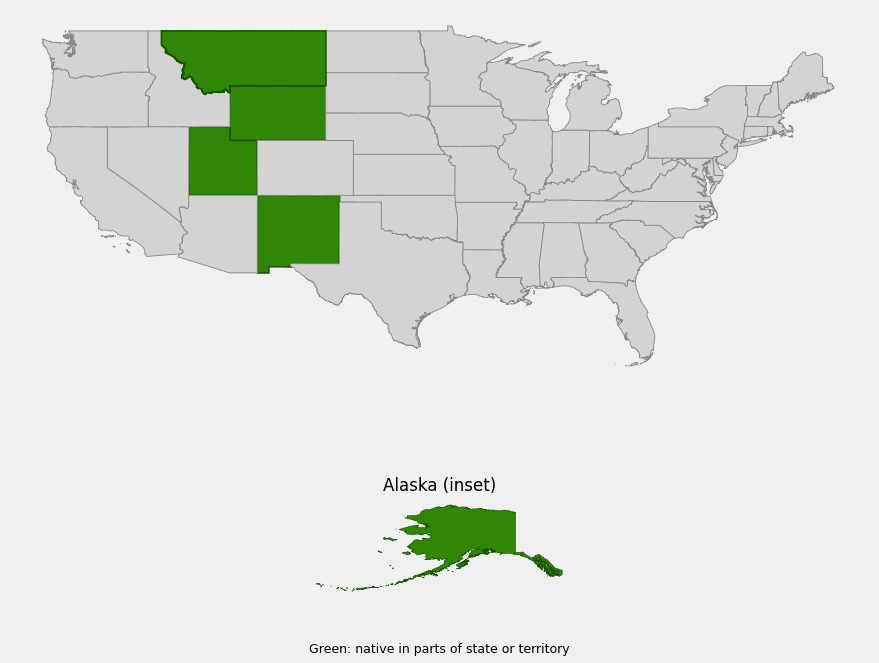
It is one of the most widespread plants of the far north, found all around the Arctic in North America, Greenland, Europe and Asia, and southward in high mountains such as the Alps and the Rocky Mountains. In the United States it is common across Alaska and grows in scattered alpine wetlands of Montana, Wyoming, Utah and New Mexico.
It spreads by creeping rhizomes to form loose colonies on the shores of ponds, in wet sedge meadows, along streams and on wet gravel. This guide covers how to tell it from other cottongrasses, where it grows, how it can be grown in cold-climate bog and water gardens, and its role in arctic and alpine wetlands.
Identification
Scheuchzer’s cottongrass is a slender, grass-like sedge with smooth, round stems, a few narrow leaves and a single terminal spikelet. The key features are one round head per stem, pure white bristles, and creeping rhizomes that form colonies rather than dense tussocks.
Stems & Leaves
The plants spread by long, slender rhizomes, sending up single stems or small groups of stems 4 to 16 inches tall (occasionally taller). The stems are smooth and round. The leaves are few, short and very narrow, often rolled or channeled, and mostly near the base; the uppermost stem leaf is often reduced to an inflated sheath with little or no blade.
Flowers & Seed Heads
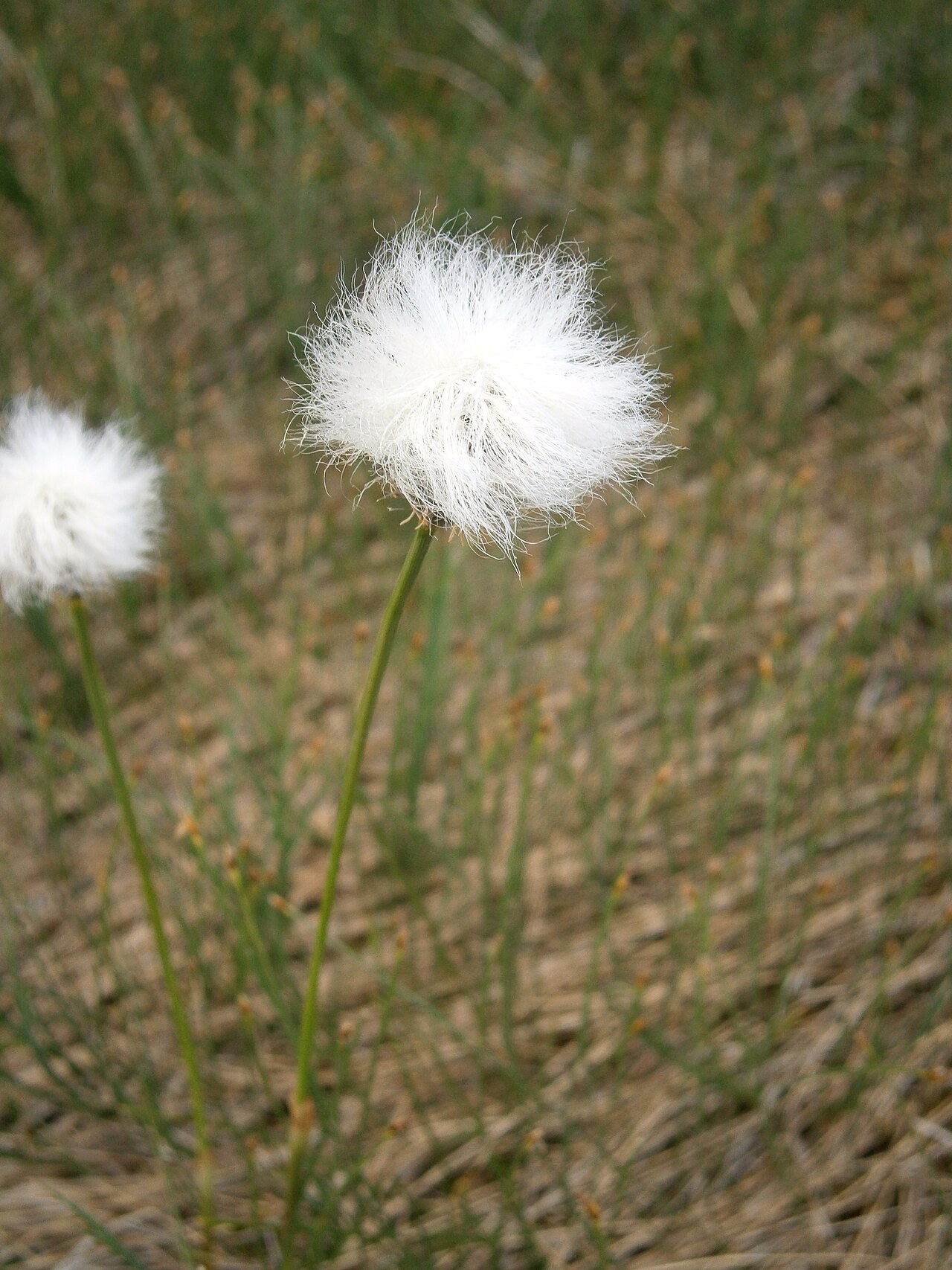
Each stem ends in one spikelet. At flowering in early summer, it is a small, dark gray to blackish oval head with protruding yellow anthers. After flowering, the many fine bristles around each small seed lengthen into a nearly spherical, bright white head about ¾ to 1¼ inches across. The heads are showiest from July into August.
Fruit
The seeds are small, dark brown achenes. Each is attached to a tuft of silky bristles that carries it on the wind, like a dandelion seed.
Look-alikes
Common Cottongrass has a cluster of 2 to 10 nodding heads on each stem. Tussock Cottongrass also has one head per stem but grows in dense, raised tussocks rather than spreading colonies. Arctic Cottongrass (E. callitrix) has one head per stem but is tufted and has a long, inflated upper sheath. Chamisso’s cottongrass (E. chamissonis) spreads by rhizomes like Scheuchzer’s but usually has rusty or tawny bristles. Tawny Cottongrass of eastern bogs has coppery heads.
Quick Facts
| Scientific Name | Eriophorum scheuchzeri Hoppe |
| Family | Cyperaceae (sedge family) |
| Plant Type | Rhizomatous, colony-forming perennial sedge |
| Mature Height | 4–16 in |
| Mature Spread | Spreads slowly by rhizomes into colonies |
| Growth Rate | Slow to moderate |
| Sun Exposure | Full sun |
| Water Needs | Wet; saturated soil or shallow water |
| Soil Type | Wet peat, silt, sand or gravel |
| Soil pH | About 5.0–7.5 |
| Bloom Time | June–August (white seed heads July–August) |
| Flower Color | Dark gray spikelet with yellow anthers; white bristle heads in fruit |
| Fall Color | Foliage turns tan to reddish brown |
| Fruit | Small achene with long white silky bristles |
| Deer Resistant | Moderate; grazed by caribou and other herbivores |
| USDA Hardiness Zones | 1–6 |
Native Range
Scheuchzer’s cottongrass is circumpolar. It grows across arctic and subarctic North America, Greenland, Iceland, northern Europe and Asia, and in high mountains farther south, including the Alps, the Pyrenees and the mountains of Central Asia. In North America it ranges across Alaska and every Canadian province and territory from British Columbia and the Yukon to Nunavut, Labrador and Newfoundland.
In the United States, USDA PLANTS lists it as native in Alaska, Montana, Wyoming, Utah and New Mexico. In Alaska it is widespread, from the North Slope and Brooks Range to the Interior, the Alaska Range and the Aleutians. In the Lower 48 it is a rare plant of high mountains, found in alpine and subalpine wetlands of the northern Rockies in Montana and Wyoming, in mountains of Utah, and at its southern limit in the high peaks of northern New Mexico.
Its habitats are cold and wet: the margins of tundra ponds and lakes, wet sedge meadows, streamsides, springs and seeps, gravel bars and the wet ground left by melting snowbanks. It is often among the first plants to colonize wet, bare silt and gravel, for example on glacial outwash and in drained lake basins in the Arctic.
📋 Regional plant lists featuring Scheuchzer’s Cottongrass: Alaska · Montana & Wyoming · Utah & Western Colorado
Growing & Care Guide
Scheuchzer’s cottongrass is rarely sold by nurseries in the U.S., though seed or plants are occasionally available from specialist alpine or bog-plant growers and from Alaskan sources. It is best suited to cold climates. In warm summers it struggles. Never dig plants from the wild; in the Lower 48 it is rare and grows in fragile alpine wetlands.
Light
Full sun. In the wild it grows in open tundra and meadows with no shade.
Soil & Water
It needs constantly wet soil, such as saturated peat, silt or sandy gravel, or shallow water an inch or two deep. Cool roots are important. It does best where summers are cool and nights are cold; hot, humid summers and warm water usually kill it.
Planting Tips
In Alaska, Canada and the high-elevation West, plant it at the edge of a natural or lined pond, in a bog garden or a wet depression that stays moist through summer. Combine it with other cold-climate wetland plants such as marsh marigolds and sedges. In warmer regions, try it in a container bog kept in light shade during the hottest part of the day, but expect it to be short-lived.
Pruning & Maintenance
Little maintenance is needed. Leave the seed heads for their beauty and to self-sow. Cut back old foliage in early spring if desired, and remove competing weeds that could shade small colonies.
Propagation
Divide rhizomes in spring as new growth begins. Seed can be sown fresh on the surface of a wet, peaty mix and kept cool; cottongrass seed often germinates best with light and after cold storage.
Landscape Uses
- Cold-climate pond edges and bog gardens: bright white heads in mid to late summer
- Wetland and tundra restoration: colonizes bare wet silt and gravel
- Alpine and rock gardens with water features: for gardeners in cool-summer climates
- Natural dried arrangements: cottony heads hold well when cut before they shatter
Wildlife & Ecological Value
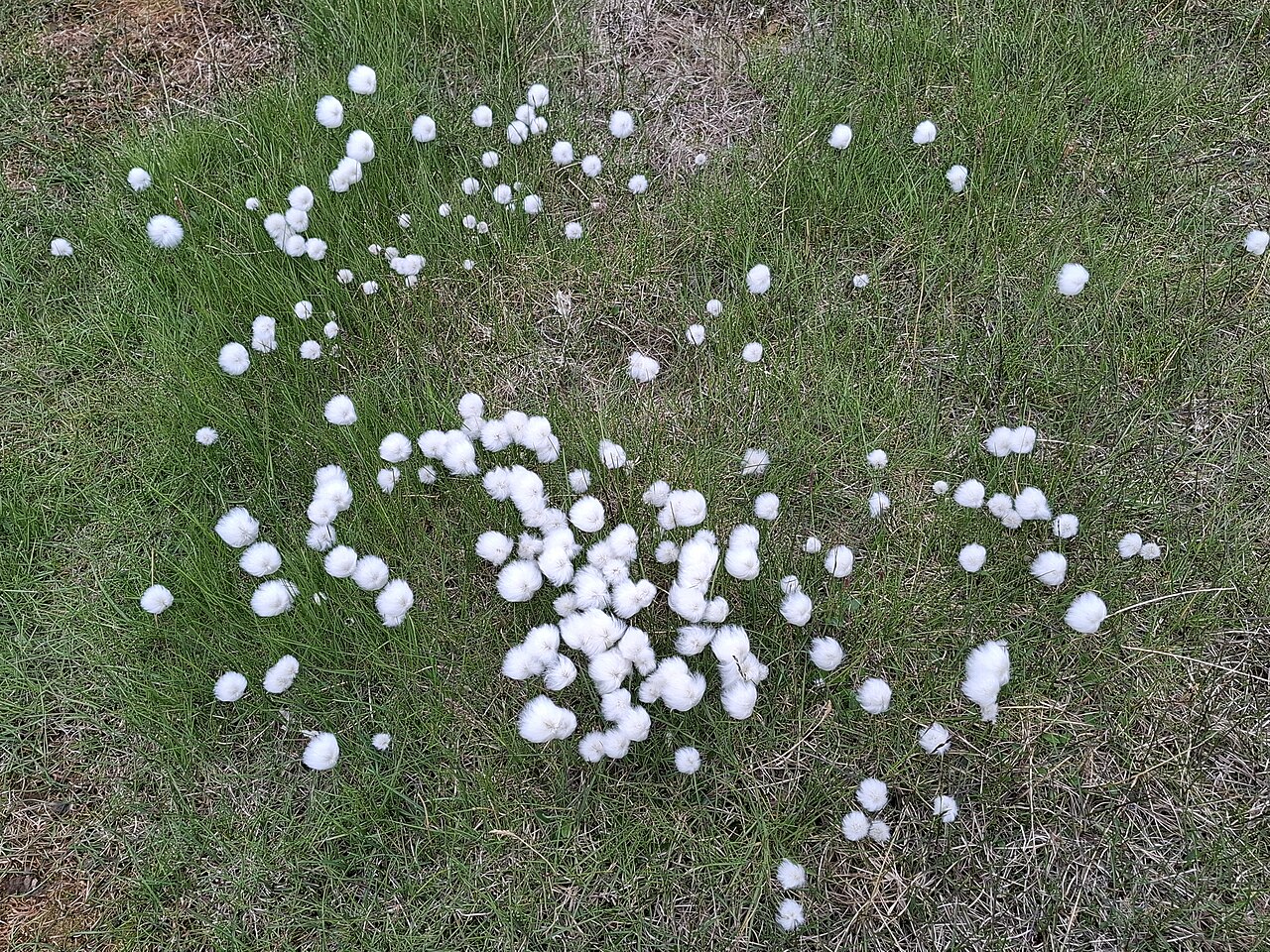
Scheuchzer’s cottongrass is a common part of arctic and alpine wetlands, where it helps stabilize wet ground and provides food for many northern animals.
For Pollinators
Like other sedges, it is wind-pollinated. Its pollen may be collected by bumble bees and flies in the Arctic, where flowering plants are few, but it is not an important nectar source.
For Birds
Its colonies are part of the wet tundra and pond-margin habitats where shorebirds, waterfowl and ptarmigan nest and feed. Some birds use the cottony bristles to line nests, and geese graze the young shoots.
For Mammals
Caribou, muskoxen, lemmings and voles graze cottongrasses, especially their tender new shoots in spring.
Ecosystem Role
Its rhizomes bind wet silt and gravel, and it is an early colonizer of disturbed or newly exposed wet ground, such as drained lake basins and glacial outwash. Cottongrasses as a group are major components of arctic wetlands, contributing to peat formation and the cycling of carbon in tundra soils.
Cultural & Historical Uses
David Heinrich Hoppe described Eriophorum scheuchzeri in 1800, naming it for the Swiss naturalist Johann Scheuchzer (1684–1738), an early student of grasses and sedges, and brother of the better-known Johann Jakob Scheuchzer. Eriophorum comes from Greek words meaning “wool-bearing.”
Across the Arctic, cottongrass fluff has long been gathered by Indigenous peoples. It has been used as wicks for seal-oil lamps, as tinder and as absorbent padding. Its abundance and bright white heads make it one of the signature sights of the arctic summer.
Scientists use cottongrasses to study how tundra responds to a warming climate. Changes in the timing of flowering and in the extent of wet sedge meadows are tracked at research sites across Alaska and the circumpolar Arctic.
Frequently Asked Questions
How do I tell Scheuchzer’s cottongrass from common cottongrass?
Look at the top of the stem. Scheuchzer’s cottongrass has a single, upright, almost perfectly round white head. Common cottongrass has a cluster of several heads that usually nod on short stalks.
Where does Scheuchzer’s cottongrass grow in the U.S.?
It is widespread in Alaska and rare in alpine wetlands of Montana, Wyoming, Utah and northern New Mexico.
Is cottongrass a grass?
No. Despite the name, cottongrasses are sedges (family Cyperaceae). The “cotton” is made of long bristles attached to each seed.
Can I grow Scheuchzer’s cottongrass in my garden?
In cool-summer climates, yes, in a bog garden or at a pond edge with constantly wet soil and full sun. It rarely survives long in hot, humid summers. Buy seed or plants from nurseries, and never dig it from the wild.
When do the white heads appear?
In July and August in most of its range. The heads appear after the small dark flowers fade, when the bristles around each seed lengthen.

Looking for a nursery that carries Scheuchzer’s Cottongrass?
Browse our native plant nursery directory: Alaska · Montana · New Mexico · Utah · Wyoming

