
Semaphore Pricklypear (Consolea corallicola)
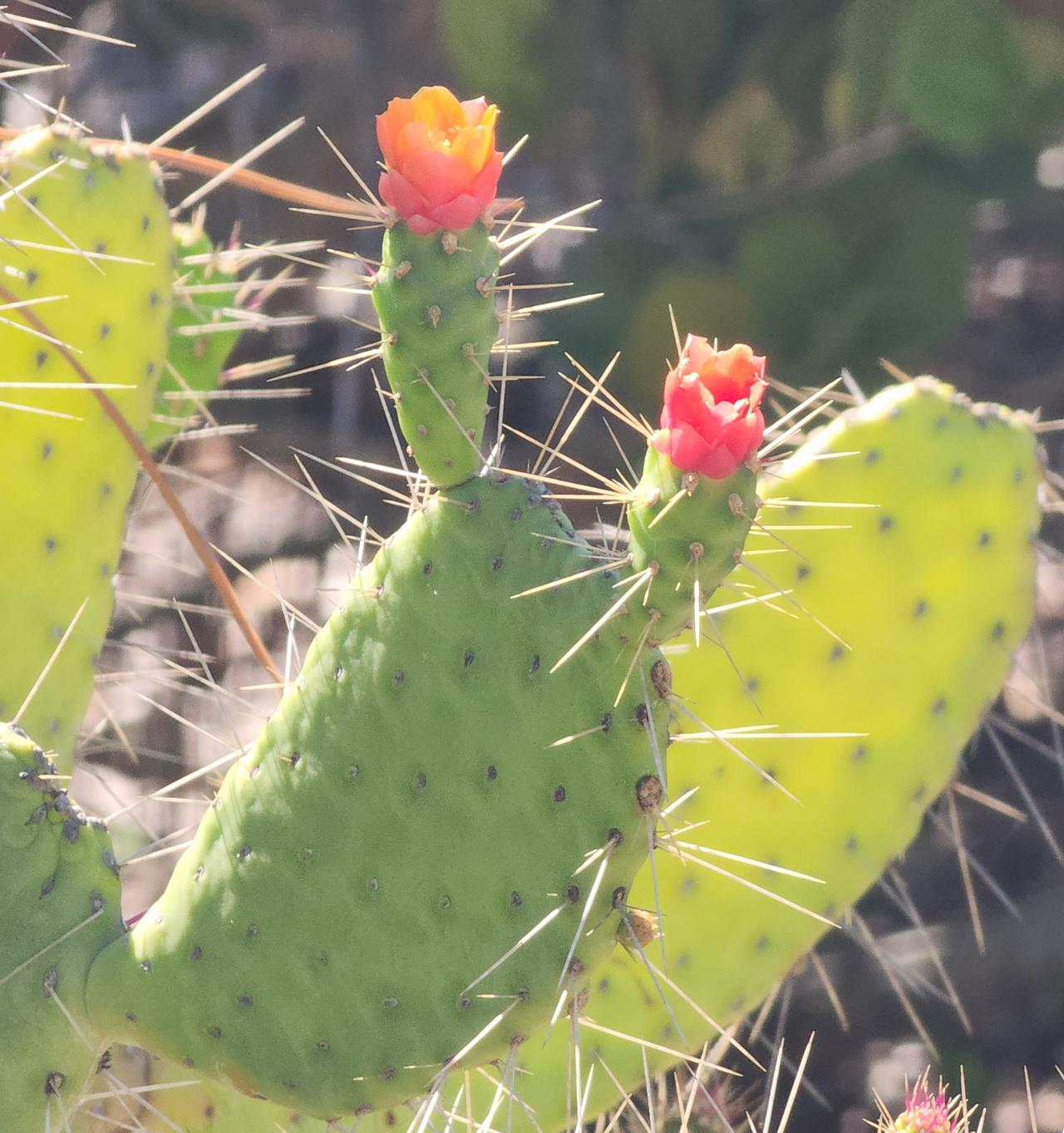
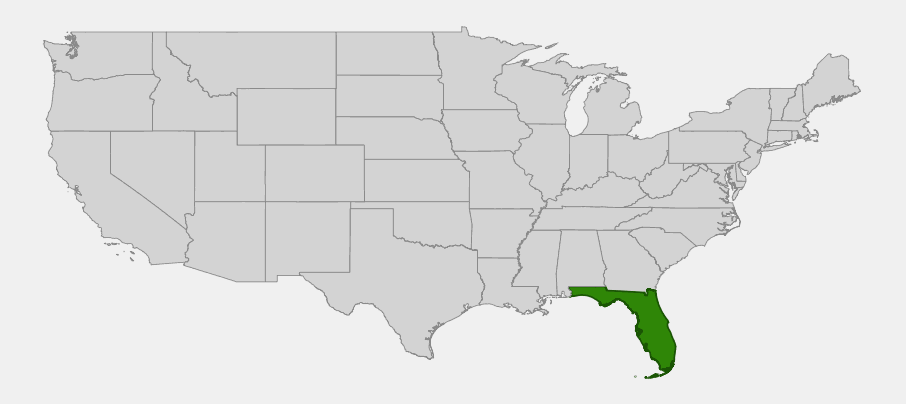
Consolea corallicola, the Semaphore Pricklypear or Florida semaphore cactus, is one of the rarest plants in the United States. It is a tree-like cactus that grows in the United States only in the Florida Keys and on islands in southern Biscayne Bay, where it is listed as endangered under the federal Endangered Species Act (listed in 2013) and by the State of Florida.
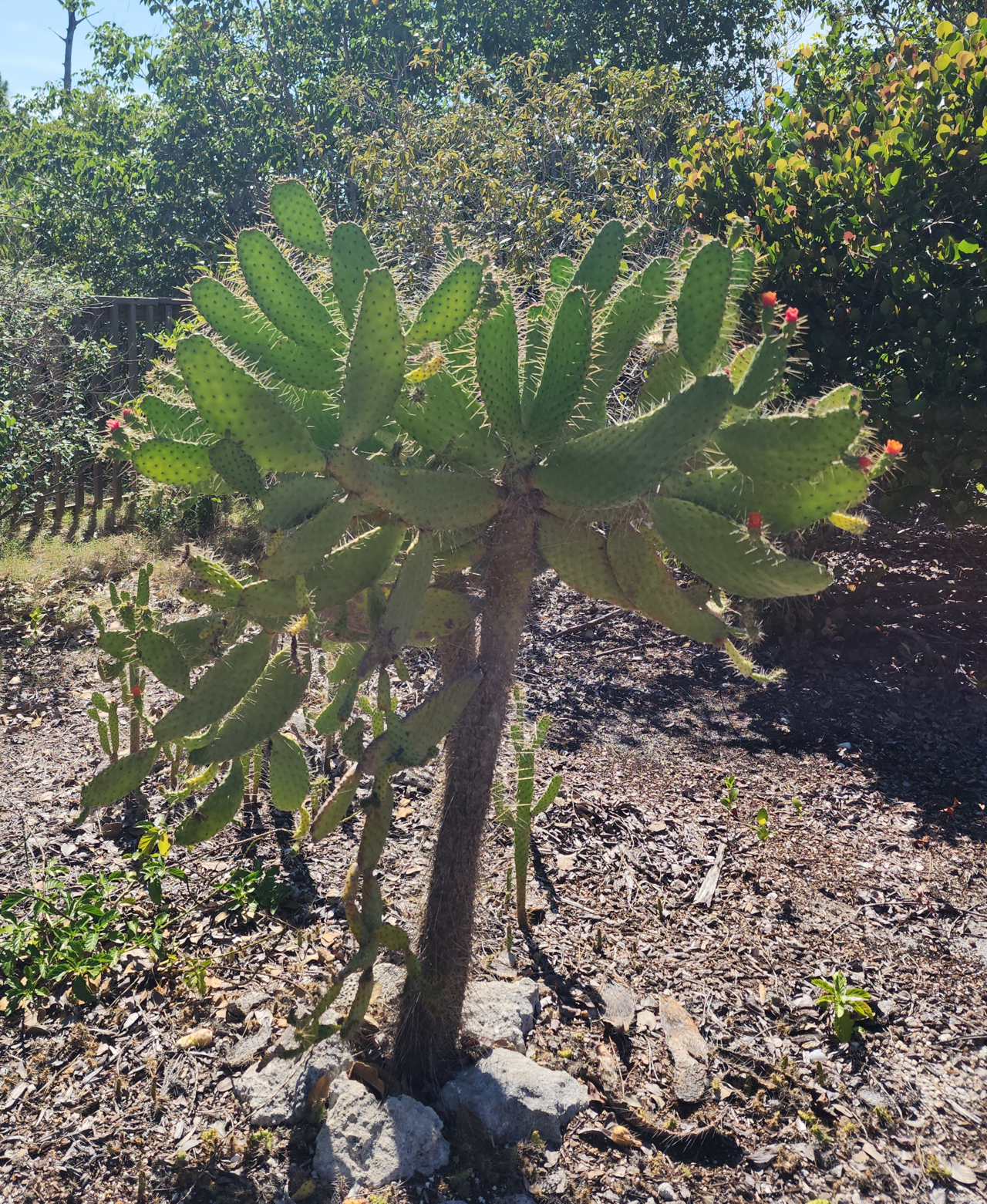
It gets its name from its striking shape: a single upright, spiny trunk up to about 6 feet tall, topped with narrow, flattened pads that stick out sideways in roughly one plane, like the arms of a semaphore signal. Small orange-red to red flowers grow from the edges of the pads, followed by yellow fruits.
Only a few small natural populations survive, and the species depends on conservation work by federal and state agencies, botanic gardens and partners. This page is an identification and appreciation guide. The plant is protected, is not sold by nurseries, and wild plants and pads must never be collected or disturbed.
Identification
Semaphore pricklypear looks like no other native Florida cactus. Look for a tall, unbranched, spiny trunk with a crown of narrow, oblong pads held more or less in one plane.
Trunk & Pads
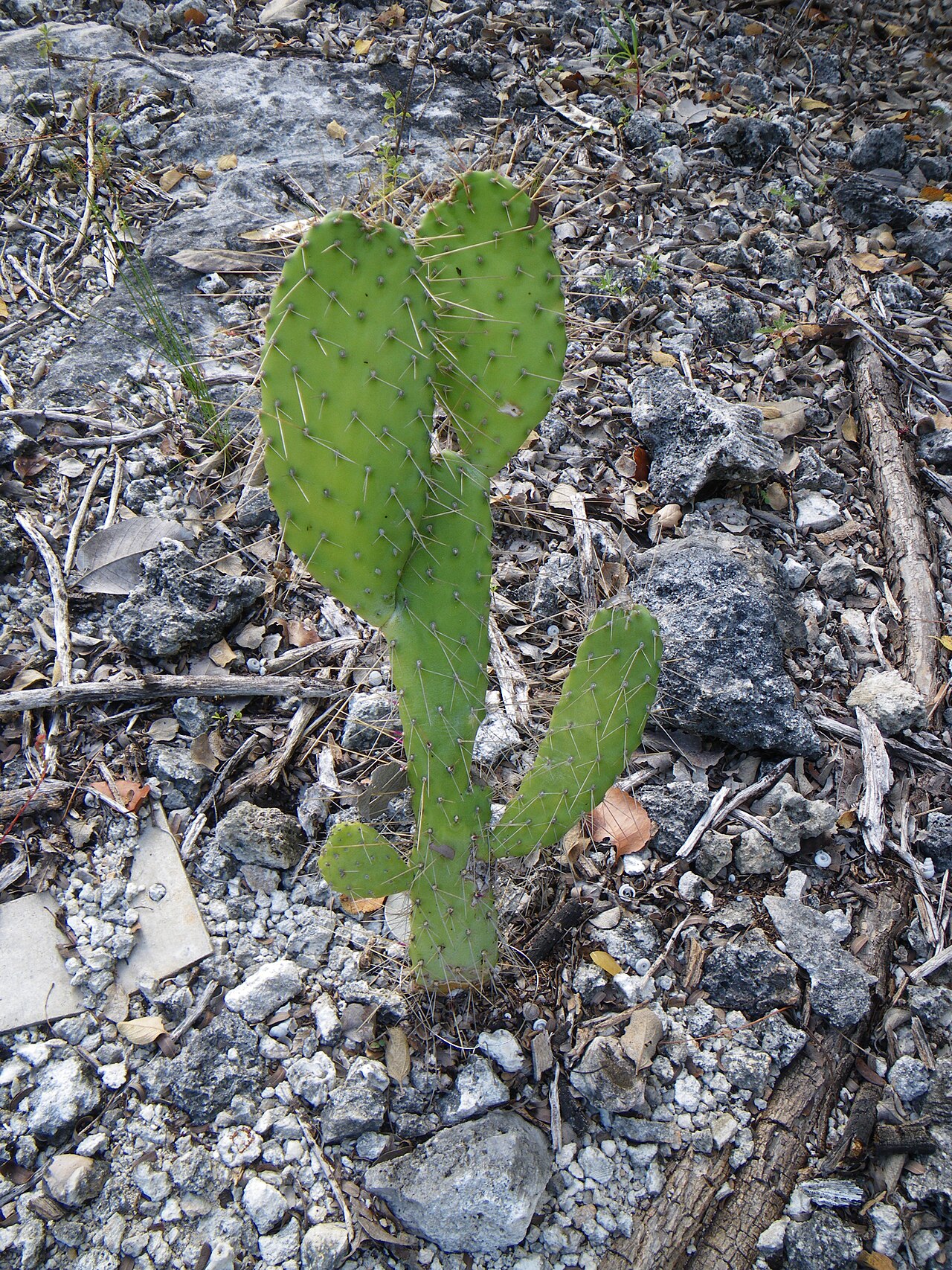
Mature plants grow up to about 6 feet tall, rarely more, with a cylindrical, upright trunk covered in long, sharp spines. The pads (flattened stem segments) at the top are narrow and oblong, roughly 4 to 12 inches long, bright to dark green, and bear clusters of spines and tiny barbed bristles (glochids) at small, regularly spaced areoles.
Flowers
The flowers are small for a pricklypear, about ½ to ¾ inch across, and orange-red to scarlet. They grow from the edges of the pads, often several at a time. In Florida they appear mainly in spring and summer.
Fruit
The fruits are yellow, egg-shaped and fleshy, often forming from the edges of the pads. Florida plants rarely produce viable seed, and the populations reproduce mainly when pads break off and root where they fall.
Look-alikes
The native Erect Pricklypear (Opuntia stricta) and other Keys pricklypears are low, sprawling or shrubby plants without a trunk, with broader pads and yellow flowers. Columnar cacti such as Keys Tree Cactus and Triangle Cactus have ribbed or angled stems, not flattened pads.
Quick Facts
| Scientific Name | Consolea corallicola Small |
| Family | Cactaceae (cactus family) |
| Plant Type | Tree-like cactus with a single trunk |
| Mature Height | Up to about 6 ft |
| Mature Spread | 2–4 ft |
| Growth Rate | Slow |
| Sun Exposure | Full sun to partial shade |
| Water Needs | Low; well-drained limestone |
| Soil Type | Thin soil over coral (oolitic) limestone rock |
| Soil pH | Alkaline |
| Bloom Time | Mainly spring and summer |
| Flower Color | Orange-red to scarlet |
| Fall Color | None; evergreen |
| Fruit | Yellow, egg-shaped fleshy fruit |
| Deer Resistant | Not applicable; protected wild plant |
| USDA Hardiness Zones | 11 (frost-free Florida Keys) |
Native Range
In the United States, semaphore pricklypear grows only in the Florida Keys and on small islands in southern Biscayne Bay in Monroe and Miami-Dade counties. Natural populations have been documented on only a few islands, including Little Torch Key in the lower Keys and Swan Key in Biscayne National Park. Its relationship to similar Consolea species in Cuba and other Caribbean islands is still studied by botanists.
It grows on low limestone ground near the coast: the edges of rockland hammocks, buttonwood woodlands and coastal berms, often in thin soil over coral rock. These habitats sit only a few feet above sea level, which makes the plant very exposed to storm surge and rising seas.
The species declined because of habitat loss to development, storm surge from hurricanes, poaching, and the invasive cactus moth (Cactoblastis cactorum), whose caterpillars tunnel inside pricklypear pads. Today, conservation partners grow plants from pads of the wild populations and plant them into protected sites, including pine rocklands on Big Pine Key, to spread the risk across more locations.
📋 Regional plant lists featuring Semaphore Pricklypear: North & South Florida
Can You Grow It?
Semaphore pricklypear is federally endangered and is not available from nurseries. Plants in cultivation are kept by botanic gardens and conservation programs for recovery work. Never collect wild plants, pads or fruits: it is illegal under federal and Florida law to remove listed plants from federal or state land, and every wild plant matters to the survival of the species.
Light
In the wild it grows in full sun to light shade at the edges of hammock and buttonwood woodland. Recovery plantings are placed where they get bright light without being overgrown by shrubs.
Soil & Water
It needs very well-drained, alkaline ground, such as thin soil over limestone. It is adapted to the seasonal drought of the Keys and does not tolerate prolonged flooding or salty floodwater.
Planting Tips
Conservation programs grow new plants from pads cut from protected plants, root them in nurseries, and then plant them into protected sites. Because natural seed production is so low, this is the main way the species is being increased.
Pruning & Maintenance
Recovery sites are monitored for cactus moth, scale insects and storm damage. Moth-infested pads are removed by trained staff, and invasive plants are controlled so they do not shade out the cacti.
Propagation
Only by licensed conservation programs, mainly from pad cuttings. If you want a native Keys cactus in your garden, consider nursery-grown Erect Pricklypear or Triangle Cactus instead.
Where to See It
- Florida Keys conservation lands: some recovery plantings on Big Pine Key and other protected sites; view from trails only
- Biscayne National Park: home to one of the natural populations, on islands closed or remote to most visitors
- South Florida botanic gardens: conservation collections sometimes display plants
- Respectful viewing: never touch, cut or take pads, and report damaged plants to land managers
Wildlife & Ecological Value
Although it is rare, semaphore pricklypear is part of the unique tropical plant community of the Florida Keys.
For Pollinators
The small red flowers are visited by bees and other insects, and possibly by birds. Because Florida plants rarely set viable seed, pollination does not seem to lead to new seedlings in the wild.
For Birds
Birds may eat the fleshy yellow fruits, and the spiny crown can offer protected perches.
For Mammals
Small mammals may feed on fallen fruit. In the Lower Keys, recovery plantings are sometimes fenced or caged to protect them from damage.
Ecosystem Role
It is part of the coastal and hammock-edge plant community of the Keys. Its decline reflects the pressures on these low-lying habitats, and its recovery work is helping botanists learn how to protect other rare coastal species from sea-level rise and storms.
Cultural & Historical Uses
The New York botanist John Kunkel Small described Consolea corallicola around 1930 from plants growing on the Florida Keys. The genus Consolea honors the Italian botanist Michelangelo Console, and corallicola means “living on coral,” a reference to the coral limestone of the Keys.
The cactus has had a close call with extinction. Its natural populations shrank to very small numbers, and storm surge, cactus moth and other damage have killed many of the remaining wild plants. Botanists rescued pads and grew them in nurseries, which is the basis of today’s recovery plantings.
Its story illustrates the threats facing low-lying island species: development, invasive insects, hurricanes and sea-level rise. Federal listing in 2013 brought more resources to protect it and to establish new populations on higher, protected ground.
Frequently Asked Questions
Why is it called semaphore cactus?
Because its narrow pads stick out from the top of a single trunk in roughly one plane, like the arms of a semaphore signal or flag.
Is semaphore pricklypear endangered?
Yes. It is listed as endangered under the federal Endangered Species Act (since 2013) and by the State of Florida. Only a few natural populations survive in the Florida Keys and Biscayne Bay.
Can I buy or grow semaphore pricklypear?
No. It is not sold by nurseries, and plants are grown only by botanic gardens and conservation programs. Never collect pads or plants from the wild.
What threatens semaphore pricklypear?
Habitat loss, storm surge and sea-level rise, poaching, and the invasive cactus moth, whose caterpillars tunnel inside pricklypear pads.
Where can I see a semaphore cactus?
Some recovery plantings grow in protected areas of the Florida Keys, and some South Florida botanic gardens hold plants in conservation collections. View them only from trails and never touch or take pads.

Looking for a nursery that carries Semaphore Pricklypear?
Browse our native plant nursery directory: Florida

